Your Toyota Tacoma’s correct tire pressure is the cold PSI printed on the Tire and Loading Information label on the driver’s doorjamb. It is not one universal number for every Tacoma. The recommended pressure can change by model year, trim, factory tire size, and front or rear axle, so use the placard before relying on a chart or another truck owner’s setting.
Quick Answer
Check the driver’s doorjamb label and inflate each tire to the listed cold pressure. Many Tacomas use a value near 30–35 PSI, but the exact number varies. Measure before driving or after the truck has been parked for at least three hours, and do not use the tire sidewall’s maximum pressure as your target.
Key Takeaways
- Use the Tacoma’s doorjamb placard, not a generic online PSI chart.
- Check pressure when the tires are cold and include the spare if your truck has one.
- A TPMS warning means you should inspect and measure every tire, not simply add air to the one that looks low.
- Aftermarket tires require verified load capacity, wheel fitment, clearance, and an appropriate cold-pressure setting.
Understanding Tacoma Tire Pressure
Tire pressure is measured in pounds per square inch, or PSI. Toyota specifies a recommended cold tire inflation pressure for the original tire and wheel package. “Cold” generally means the truck has been parked for at least three hours or has traveled no more than about one mile at low speed.
Correct inflation supports stable handling, predictable braking, tread life, ride comfort, and fuel economy. Underinflation creates extra heat and rolling resistance. Overinflation can reduce the tire’s ability to absorb impacts and may concentrate wear toward the center of the tread. Proper inflation can improve fuel efficiency by an average of about 0.6% and by as much as 3% in some conditions, according to the U.S. Department of Energy. You can learn more about the fuel-efficiency benefits of proper tire inflation.
Warning: Do not inflate your Tacoma to the maximum PSI molded on the tire sidewall. That number is the tire’s maximum cold pressure at its stated load, not Toyota’s recommended operating pressure for your truck.
Toyota Tacoma Tire Pressure Recommendations
The correct number is vehicle-specific. Check the Tire and Loading Information label on the driver’s door edge or B-pillar. The label lists the original tire size and recommended cold pressure for the front and rear tires. The owner’s manual provides the same type of information and may also list the spare-tire pressure.
Do not assume that every Tacoma from the same year uses 32 PSI. For example, Toyota’s official 2024 Tacoma specifications list different pressures for different factory tire packages:
| 2024 Factory Tire Example | Recommended Cold Pressure |
|---|---|
| 245/70R17 | 35 PSI for listed configurations |
| 265/70R17 | 30 PSI for listed configurations |
| 265/65R18 | 32 PSI for listed configurations |
These examples show why a universal year-by-year chart can be misleading. Your placard remains the controlling reference. For a broader explanation, see how to identify the correct recommended pressure for a specific vehicle.
Note: Front and rear pressures may be the same on many Tacoma configurations, but do not assume they match. Read both values on the label.
How to Check Tacoma Tire Pressure Correctly
At a Glance
| Time Required | About 5–10 minutes |
| Difficulty | Easy |
| Tools Needed | Accurate tire-pressure gauge and an air source |
| Cost | Usually free if you already have a gauge and compressor |
- Park long enough for a cold reading. Check before driving in the morning or after the truck has sat for at least three hours.
- Read the doorjamb label. Note the front, rear, and spare pressures instead of relying on memory.
- Remove the valve cap. Press the gauge squarely onto the valve stem until air stops hissing.
- Compare the reading with the placard. Add air in short bursts when the reading is low. Release a small amount if it is high.
- Recheck the pressure. Repeat until the gauge matches the recommended cold PSI.
- Inspect the tire. Look for nails, cuts, bulges, cracking, or uneven tread wear.
- Replace the valve cap. Check the remaining tires and the spare.
Pro Tip: Use the same gauge each time. Consumer gauges can vary slightly, so consistency makes changes easier to spot.
[Products Worth Considering]
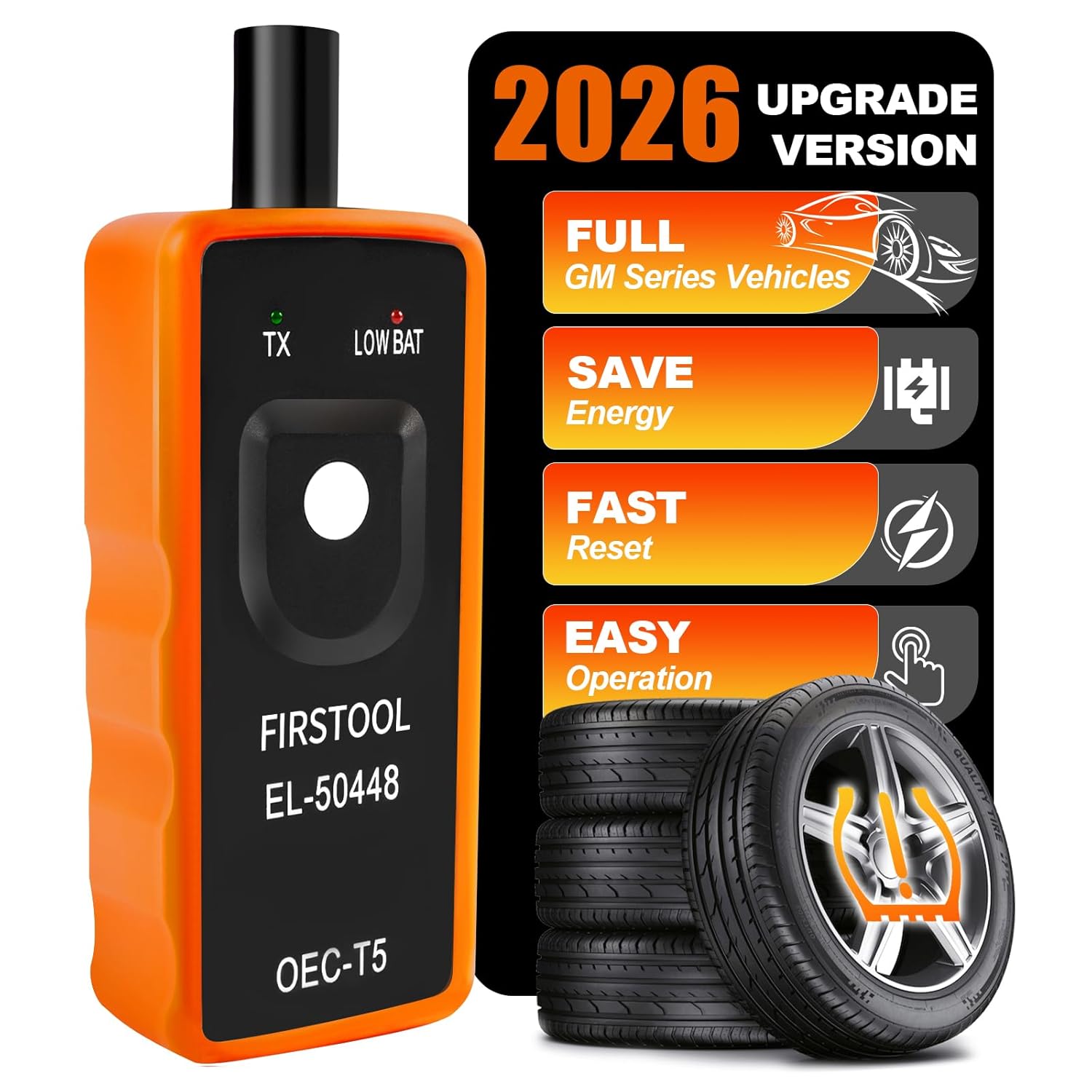
This TPMS relearn tool helps you quickly activate, match, and reset GM tire pressure sensors to keep the vehicle monitoring system working properly. It clears tire pressure alarms and dashboard warning lights after sensor replacement or tire rotation, and supports learning for common 315/433 MHz TPMS sensors. Designed for simple one-button operation, it can help you avoid unnecessary trips to repair shops.

These aluminum alloy tire valve stem caps with an O-ring seal help protect valve stems from corrosion while adding a clean, stylish look to your vehicle. The universal fit works across cars, trucks, motorcycles, bicycles, and more, making them an easy upgrade for everyday driving and off-road use. Installation is quick, and the included four-pack keeps all your tires dressed and protected.

Upgrade your Toyota tire setup with these corrosion-resistant, leak-proof valve stem caps designed to help protect the valve core from water, snow, and road grime. The caps feature a snug rubber seal and durable copper alloy construction to resist rust and oxidation while maintaining stable tire pressure. Ideal for replacing worn original caps and keeping your wheels looking clean and stylish.
Why Proper Pressure Matters for Tacoma Performance
Proper inflation helps the tire maintain its intended contact patch and sidewall shape. That supports steering response, braking, traction, ride comfort, and heat control. It also helps your Tacoma deliver predictable on-road behavior and more consistent off-road performance.
Underinflated tires flex more, build heat, and increase rolling resistance. They may wear faster along both shoulders. Overinflated tires can feel harsh, reduce impact compliance, and may wear more quickly near the center. Correct pressure supports fuel efficiency and traction without guessing at a higher number.
The right PSI is the pressure Toyota specifies for your exact tire package, measured cold, not the highest pressure the tire can hold.
Common Tacoma Tire Pressure Warning Signs
Check the tires promptly if the TPMS light appears, the truck pulls to one side, steering feels unusually heavy, the ride becomes rough, or a tire looks visibly low. A sudden pressure loss, vibration, thumping, or a bulge in the sidewall requires immediate attention. Keep every tire within the recommended pressure range shown by the vehicle manufacturer.
What the TPMS Light Means
A steady tire-pressure warning light usually means one or more tires are significantly underinflated. Stop in a safe location, inspect all tires, and measure them with a gauge. Do not rely on appearance alone. A rapid leak or blowout may occur too quickly for the system to warn you immediately.
If the light flashes for about a minute and then stays on, the TPMS may have a fault or an unregistered sensor. Follow the owner’s manual or have the system inspected. After a tire rotation, pressure change, sensor replacement, or wheel-set change, some Tacoma models require TPMS initialization or wheel-position registration.
Uneven Tire Wear Indicators
Tread wear can reveal a pressure or mechanical problem:
- Wear on both shoulders: Often linked to chronic underinflation, although loading and driving conditions also matter.
- Center wear: Can be associated with excessive inflation or a tire and wheel mismatch.
- One-sided wear: More often points to alignment, worn suspension parts, or a bent component.
- Cupping or scalloping: May indicate imbalance, worn shocks, loose suspension parts, or alignment trouble.
Pressure correction will not reverse existing wear. If the pattern is severe or returns quickly, have the alignment, balance, wheel, and suspension inspected.
Checking Tire Pressure With the Toyota Display or App
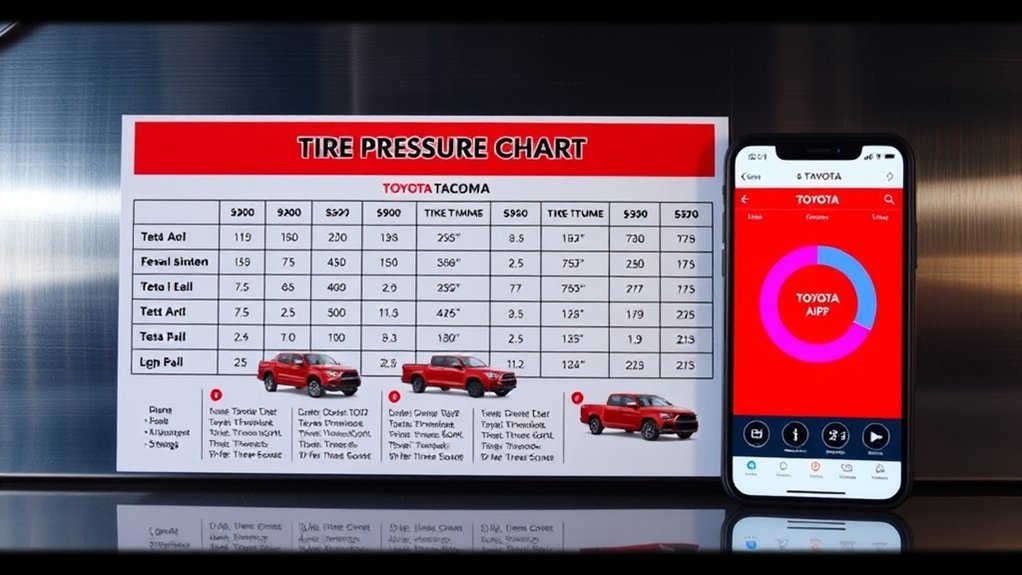
Some Tacoma configurations can show individual tire pressures in the multi-information display, and certain connected vehicles may make related vehicle information available through Toyota services. Availability depends on model year, trim, hardware, subscription status, and region. Check your owner’s manual and the vehicle’s menus rather than assuming the feature is present.
Even when a digital reading is available, verify questionable readings with a handheld gauge. Displayed pressure can differ slightly from a gauge because tire temperature changes while driving. For a general checking method, see this guide to checking tire pressure with a gauge.
Additional Tire Maintenance Tips for Your Tacoma
Pressure checks work best as part of a broader tire routine. Inspect the tread and sidewalls monthly, before long trips, and after hard impacts. Check more often during major seasonal temperature changes because pressure rises and falls with tire temperature. This guide explains why checking tire pressure regularly matters.
Regular Pressure Checks
- Measure all road tires at least once a month when cold.
- Check before towing, carrying a heavy load, or starting a long highway trip.
- Inspect the spare and use its separately listed pressure.
- Investigate a tire that repeatedly loses pressure instead of repeatedly topping it off.
- Recheck after a sharp temperature change or a pothole impact.
Consistent pressure checks support predictable handling and make slow leaks easier to identify.
Tire Rotation Schedule
Rotate tires at the interval shown in your Tacoma’s warranty and maintenance guide. A 5,000-mile service interval is common in Toyota maintenance schedules, but the required pattern and timing can vary with model year, drivetrain, tire type, use, and whether the tires are directional or staggered.
| Setup | Rotation Guidance |
|---|---|
| Same-size, non-directional tires | Use the pattern specified in the maintenance guide. |
| Directional tires | Usually move front to rear on the same side unless remounted. |
| Staggered front and rear sizes | May not permit a normal front-to-rear rotation. |
After rotation, check and adjust the cold pressure. Complete any wheel-position registration or TPMS procedure required for your model.
How Tacoma Tire Size Affects Pressure and Performance
Tire size changes load capacity, sidewall height, wheel compatibility, clearance, steering feel, gearing, speedometer accuracy, braking response, and TPMS behavior. A larger tire does not automatically need 30–35 PSI, and the sidewall maximum is not a substitute for a vehicle-specific pressure calculation.
When you retain the original tire size and load specification, follow the doorjamb placard. When you change size, construction, or load range, the original PSI may no longer produce the same load capacity. Ask a qualified tire professional to calculate an appropriate cold pressure using the replacement tire’s load-and-inflation data.
Aftermarket Tire Options for Your Tacoma
Choose aftermarket tires by use case, not by appearance alone. Highway-terrain tires usually prioritize quietness and wet-road comfort. All-terrain tires add stronger tread and off-pavement traction but can increase noise, weight, and rolling resistance. Mud-terrain tires favor loose-surface grip and durability but often compromise road manners.
Products frequently considered for Tacoma builds include Goodyear Wrangler all-terrain models and BFGoodrich All-Terrain T/A models. Wheel examples such as the Method MR316 also appear in Tacoma fitment discussions. Product names, available sizes, specifications, and generations can change, so verify current details before purchase. Compare suitable all-terrain tire options by load rating, traction needs, and road behavior rather than brand alone.
[Products Worth Considering]

Keep your tires properly inflated with this analog VONDIOR tire pressure gauge, designed for fast, easy readings without batteries. The swiveling, two-axis hose and large glow dial help you measure at any tire angle with instant visibility. Built with a protective rubber shield, it supports durable, low-maintenance use for cars and trucks.

Monitor tire tread wear with a smart, color-coded depth gauge that shows clear condition ranges at a glance. The bar is range marked for fast, easy readings, helping you maintain safer traction and performance. Each gauge is portable with a pocket clip, and the set includes 20 units for daily use and sharing.

Steelman white tire marking crayons provide high-contrast, semi-permanent marks for repairing and inspecting tires and equipment. They write on wet or dry, smooth or coarse surfaces including rubber, metal, glass, and wood, making them ideal for puncture location and damage outlining. The lead- and zinc-free crayons resist weather and fading yet wipe away when you no longer need the marks.
Upgrading Tacoma Tires: Sizes and Fitment
Common Tacoma-market sizes include 265/70R16, 265/75R16, 265/70R17, 275/70R17, 285/70R17, and 285/75R16. None is universally bolt-on across every Tacoma generation and trim. Suspension height, wheel width, offset, caster, mud flaps, body mounts, bumper shape, and actual measured tire dimensions all affect clearance.
Some trucks can accept a tire near 33 inches with few changes, while another Tacoma with a different wheel offset or alignment may rub. Never treat “fits without modification” as a guarantee.
[Products Worth Considering]
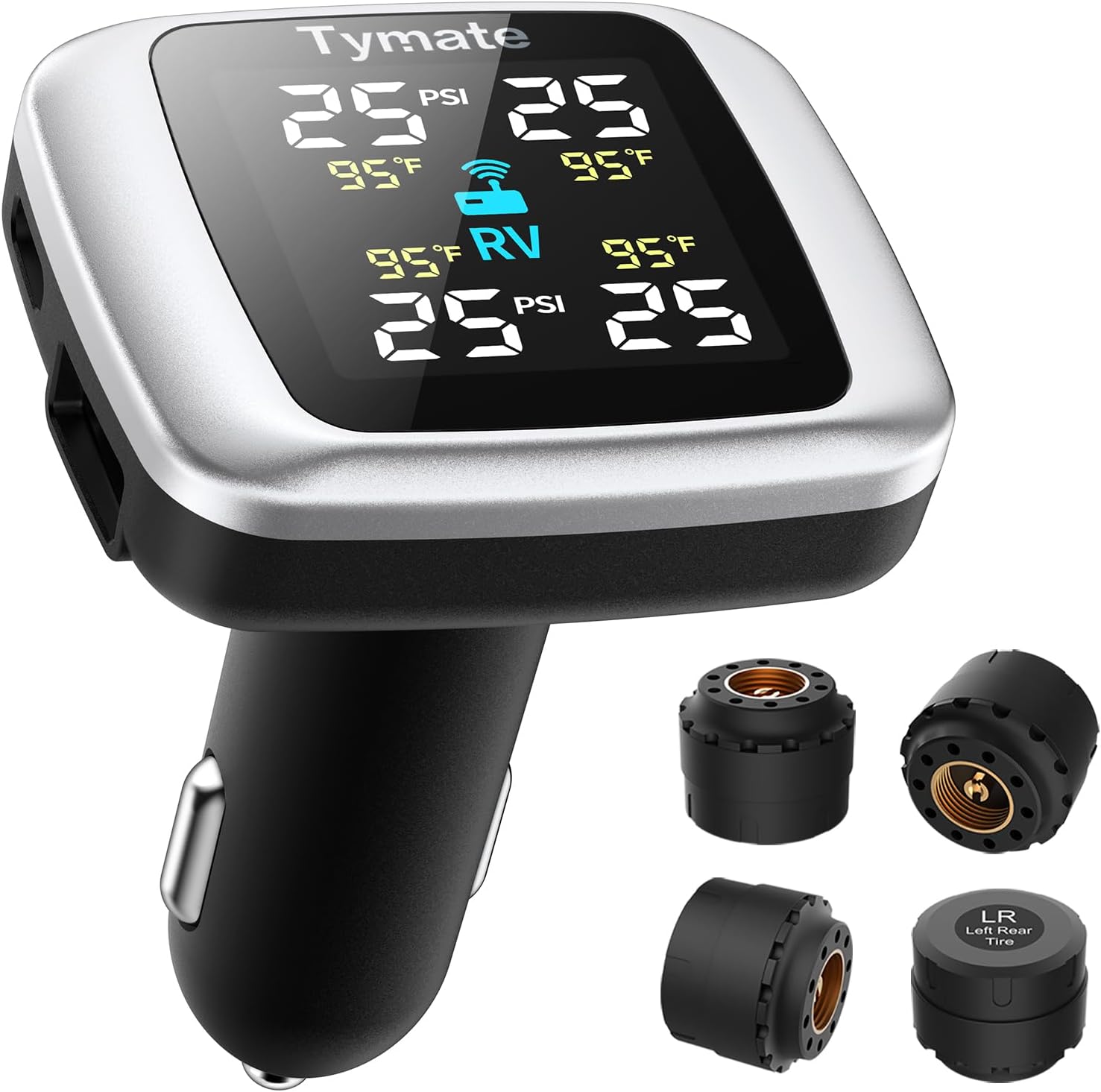
Tymate TM7 is a wireless tire pressure monitoring system that delivers real-time pressure and temperature readings for safer driving. It includes four external sensors, a bright color LCD display with adjustable backlight, and six alarm modes for high/low pressure, fast leakage, high temperature, and sensor signal or battery issues. The system covers a wide 0–144 PSI range and plugs into your vehicle’s cigarette lighter socket for quick DIY setup.

Marsflex brand TPMS replacement sensors help restore tire pressure monitoring for compatible Toyota, Lexus, Scion, and Pontiac models. Each sensor is pre-programmed for the vehicle application and includes a long-life battery for up to 8 years of normal use. Designed to replace common OE numbers and requires relearning using a TPMS scan tool after installation.

These universal tire valve stem caps help protect valve cores from dust, debris, and moisture while helping maintain stable tire pressure. The corrosion-resistant metal construction and sealed design provide reliable protection in road grime, mud, and winter conditions. Twist-on installation makes them quick to fit on cars, SUVs, trucks, and motorcycles.
Tire Size Recommendations
- Confirm the generation and trim. A fitment that works on one Tacoma may not work on another.
- Match or exceed the required load capacity. Check the vehicle’s axle ratings and the replacement tire’s load index.
- Use a compatible wheel width. Follow the tire manufacturer’s approved rim-width range.
- Check full clearance. Turn lock to lock and inspect compression clearance at the liner, body mount, control arms, and mud flaps.
- Account for calibration. A larger overall diameter changes indicated speed, odometer readings, effective gearing, and shift behavior.
Wheel Width, Offset, and Load
Wheel offset changes where the tire sits in relation to the suspension and fender. More negative offset pushes the wheel outward and may increase fender or body-mount contact, steering leverage, bearing load, and spray outside the body. A zero or positive offset is not automatically correct either. Use a fitment specification verified for your exact Tacoma.
Wheel widths around 7–9 inches are common in Tacoma applications, but the correct width must fall within the tire manufacturer’s approved range. Also verify wheel load rating, lug-seat type, hub fit, brake clearance, and the correct wheel-nut torque.
Performance Benefits and Tradeoffs
A carefully chosen upgrade can improve ground clearance, sidewall protection, loose-surface traction, and appearance. It can also add unsprung weight, reduce acceleration and fuel economy, increase braking distance, create rubbing, and change ride quality. Wider or more aggressive tires do not guarantee better performance in every condition. Select tread, construction, and size for the terrain you actually drive. Review how tire choice can affect fuel economy and off-road traction.
Tacoma Tire Pressure and Maintenance Checklist
| Check | What to Do |
|---|---|
| Cold PSI | Match front and rear readings to the doorjamb label. |
| Seasonal changes | Recheck after a major change in ambient temperature. |
| TPMS | Measure every tire when the light appears; diagnose flashing warnings. |
| Tread and damage | Inspect for uneven wear, punctures, cuts, cracks, and bulges. |
| Aftermarket setup | Verify load, wheel fitment, clearance, calibration, and pressure. |
Temperature affects tire pressure, so a reading can be different between a cool morning and a hot afternoon. Do not bleed pressure from a warm tire merely because it reads above the cold placard value. Read more about temperature effects on tire pressure.
Frequently Asked Questions
Should I use 32 or 35 PSI in my Tacoma?
Use the cold pressure printed on your Tacoma’s doorjamb label. Some factory packages specify 32 PSI, while others specify 30 or 35 PSI. The correct choice depends on your model year, trim, and original tire package.
Is 40 PSI too high for a Toyota Tacoma?
It is too high when your placard calls for a lower cold pressure. Do not use 40 PSI simply because it appears on another truck or is below the tire’s sidewall maximum. Follow the placard unless a qualified professional has specified a different pressure for a verified aftermarket setup.
Should all four Tacoma tires have the same pressure?
Only when the doorjamb label lists the same front and rear values. Read both numbers because some vehicles use different axle pressures. The spare may require a much higher pressure than the road tires.
Why is the TPMS light still on after adding air?
One tire may still be low, the spare may be monitored on some systems, the tires may not have been adjusted cold, or the system may need driving time, initialization, or sensor service. A flashing light that becomes steady often indicates a TPMS malfunction.
What pressure should I use for towing or a heavy load?
Start with Toyota’s placard and owner’s-manual guidance. Do not exceed tire, wheel, axle, or vehicle ratings. Some configurations or replacement tires may require a load-based pressure calculation, which should be completed by a qualified tire professional.
Should I lower Tacoma tire pressure off-road?
Temporary airing down can improve traction and comfort on some low-speed surfaces, but the safe amount depends on tire construction, load, wheel, terrain, and speed. Reinflate before normal-speed road driving and never exceed the tire or wheel limits.
Conclusion
Your Tacoma’s correct tire pressure is the value Toyota printed for your exact vehicle and factory tire package. Check it cold, use an accurate gauge, inspect all tires when the TPMS light appears, and recheck during seasonal changes. If you change tire size, load range, or wheels, verify fitment and pressure instead of copying a generic chart. A few minutes of regular maintenance can improve safety, handling, tread life, and fuel efficiency.
Sources
- Toyota 2024 Tacoma Maintenance Data — factory tire sizes, recommended cold pressures, spare pressure, and wheel specifications.
- Toyota Manuals and Warranties — model-year owner’s manuals and maintenance guides.
- NHTSA TireWise — cold-pressure checks, doorjamb labels, TPMS limitations, tire inspection, and safety guidance.
- NHTSA Summer Driving and Road Trip Tips — placard pressure, cold readings, sidewall maximum-pressure warning, and monthly inspections.
- Toyota 2024 Tacoma Initialization Guide — TPMS initialization after pressure, tire-size, rotation, or sensor changes.
- U.S. Department of Energy Alternative Fuels Data Center — fuel-economy effects of correct tire inflation.