
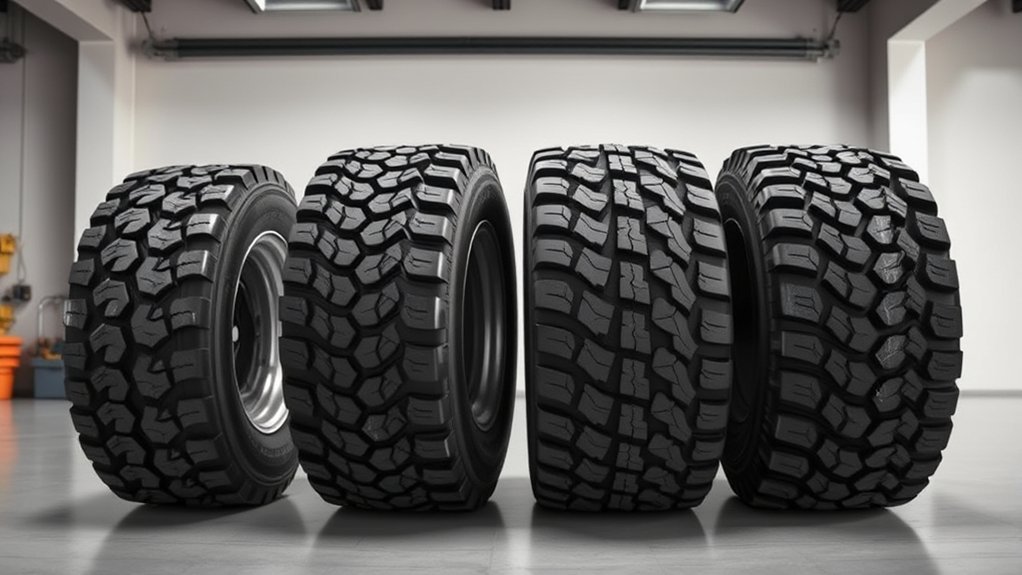
Tire load range tells you how much weight a tire can carry at a specified inflation pressure. C suits lighter-duty use, D gives more reserve capacity for towing and cargo, E supports heavier loads and better heat control, and F is for near-max axle demands. You should match the tire’s load table, wheel rating, and vehicle placard to your actual payload, axle load, and towing needs, and the details ahead will sharpen that choice.
Key Takeaways
- Tire load range shows how much weight a tire can safely carry at a specified inflation pressure.
- C-rated tires suit lighter-duty use, while D, E, and F ratings support progressively heavier loads.
- Higher load ranges usually allow greater inflation pressure, improving load capacity and heat resistance.
- Match tire load range to vehicle, trailer, axle, and wheel ratings, not appearance or assumptions.
- Always check the manufacturer’s load table and inflation guidance to avoid overloading, wear, and failure.
[Products Worth Considering]

Secure your vehicle during transport with this 4-pack of heavy-duty tire tie down straps designed for trailers and hauling. The ratchet system with flat hooks and D-rings helps you tension the straps quickly, while the wheel-friendly design protects tires. With high break strength and corrosion-resistant hardware, these straps provide reliable, confidence-inspiring tie-down security for cars, trucks, and UTVs.

Keep your tires properly inflated with this analog VONDIOR tire pressure gauge, designed for fast, easy readings without batteries. The swiveling, two-axis hose and large glow dial help you measure at any tire angle with instant visibility. Built with a protective rubber shield, it supports durable, low-maintenance use for cars and trucks.

A concentrated tire and tube mounting compound designed to help simplify mounting rubber tires and tubes on passenger, semi truck, construction, and OTR applications. Its ultra-thick formula packs beads effectively and includes rust inhibitors to help protect against corrosion during use.
What Tire Load Range Means
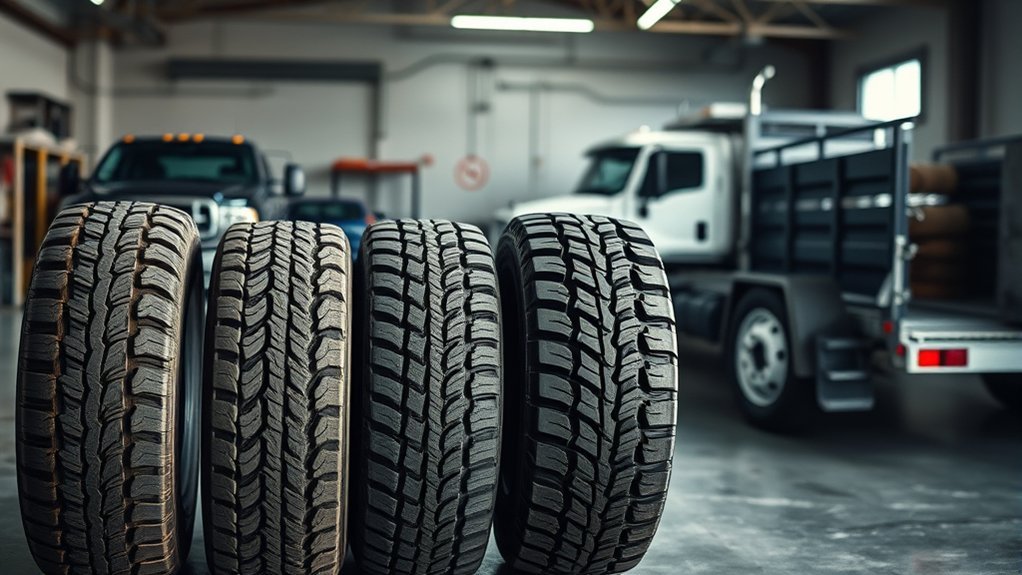
A tire load range tells you how much weight a tire is designed to carry at a specified inflation pressure. When you read tire ratings explained, you’re seeing a standardized way to compare carcass strength, ply rating, and load-carrying capacity.
The load range significance lies in matching the tire’s structural capability to your vehicle’s actual demand, not just its size. If you exceed that capacity, you increase heat buildup, flex, and failure risk; if you underspecify it, you may sacrifice handling precision and durability.
You should check the load index, inflation requirement, and vehicle axle loads together, because each factor affects real-world performance. Load range doesn’t describe tread pattern or speed capability, but it does define how much stress the tire can sustain under load.
You can use it to select a tire that fits your operating conditions, payload, and safety margin without guessing.
Tire Load Range C vs D
When you compare Tire Load Range C vs D, you’ll see that Range D supports a higher load capacity than Range C under the same tire size.
You’ll also notice that D tires typically carry a higher inflation pressure rating, which directly affects stiffness and load-bearing performance.
You should match the range to your use case, because C often suits lighter-duty service while D fits heavier loads and more demanding conditions.
Load Capacity Differences
Load Range C and Load Range D tires differ primarily in the maximum load each can carry at a specified inflation pressure, with D-rated tires typically supporting more weight than C-rated tires of the same size.
You’ll see this difference reflected in their load ratings, which directly affect payload margins and towing capacity. Tire construction also plays a role: D-range tires usually use stronger carcass materials or additional plies to handle the higher rated load.
When you compare two matching sizes, the D tire gives you more reserve capacity for heavy cargo, trailers, or demanding use. C-range tires can still perform well, but you need to match them carefully to your vehicle’s load requirements.
Always verify the tire’s stamped load index and vehicle placard before choosing.
Pressure Ratings Compared
Pressure range is the next factor to compare after load capacity, because a tire’s rated carrying ability only applies at a specified inflation pressure.
When you compare tire load range C vs D, you’ll see different pressure ratings in the tire specifications, and that changes how you match load capacities to actual service conditions. Range C typically reaches its rated performance metrics at lower pressure than Range D, while D needs more inflation to support greater loads.
You should treat these safety factors as nonnegotiable, because underinflation reduces stiffness, shifts wear patterns, and compromises heat control.
Follow the manufacturer’s inflation guidelines, verify pressure when the tire is cold, and use routine maintenance tips to keep readings consistent.
Accurate pressure management preserves handling, tread life, and reliability.
Best Use Cases
Choosing between tire load range C and D comes down to how hard you’ll work the tire and how much reserve capacity you need.
Choose C when you prioritize lighter trailers, daily driving, and moderate payloads, especially if you value ride comfort and lower rolling resistance.
Choose D when your load considerations include heavier towing, frequent cargo hauling, or sustained highway heat, because the extra ply rating improves margin under stress.
You should match inflation, axle limits, and speed to the tire’s certified capacity.
Best practices say you shouldn’t exceed the vehicle placard or trailer rating, even with a stronger casing.
If you operate near maximum gross weight, D gives you more thermal and structural headroom without moving into unnecessary stiffness for lighter-duty use.
What Load Range E Means in Practice
Load Range E tells you the tire is built to carry more weight, so you need to match its load capacity to the vehicle’s actual demands.
You’ll typically run it at higher inflation pressure, which improves durability but also makes pressure management more critical.
You’d choose it for heavy-duty use cases like towing, hauling, and frequent high-load operation.
Load Capacity Basics
A Load Range E tire is built to carry a higher maximum load than a lower-rated tire when you inflate it to the manufacturer’s recommended pressure.
So the rating directly affects how much weight each tire can support in real use. You should read this rating as a capacity ceiling, not a guarantee that every axle will carry the same tire weight.
Your vehicle’s gross weight and load distribution determine how much stress each tire actually sees. If one corner carries more mass, that tire works harder than the others.
Load Range E gives you more reserve capacity for trucks, trailers, and heavy cargo, but you still need to match the tire’s specified load index to your actual operating load.
That’s the practical baseline.
Pressure And Durability
What matters next is how Load Range E handles pressure in everyday use, because its higher carrying capacity comes from a stronger carcass and a higher recommended inflation range.
You’ll notice that this construction lets you run higher tire inflation without deforming the sidewall as quickly under load. That extra rigidity improves load stability, especially when the vehicle carries sustained weight or sees repeated flex cycles.
You should still match pressure to the tire’s rated chart, because underinflation reduces support and heat control, while overinflation can narrow the contact patch and alter ride quality.
In practice, Load Range E gives you a broader operating window, but it doesn’t remove the need for precise pressure management. Its durability comes from structure, not just maximum psi, so proper setup matters.
Heavy-Duty Use Cases
On the job, Load Range E matters most when you’re asking a tire to carry sustained weight without excessive flex, heat buildup, or sidewall fatigue.
You’ll see its value on heavy duty vehicles like three-quarter-ton pickups, work vans, trailers, and light commercial rigs that haul tools, equipment, or payloads day after day.
In these conditions, tire selection isn’t just about size; it’s about load capacity, pressure tolerance, and stability under repeated stress.
Load Range E gives you a stronger carcass and higher inflation capability, so you can reduce squirm, improve steering response, and limit premature wear.
If you tow, transport, or work off-road, this rating helps you maintain control and durability when operating near maximum rated load.
When Load Range F Is Worth It
Load Range F makes sense when your truck or trailer regularly runs near maximum gross axle weight and you need extra casing strength, higher inflation capacity, and better heat resistance than Load Range E can provide.
You should choose it when your load range requirement exceeds standard margins and your tire performance starts to drop under sustained stress. It’s especially relevant for heavy towing capacity, uneven weight distribution, and off road applications that punish sidewalls.
You also need to verify vehicle compatibility, because an F-rated tire only helps if the wheel, pressure system, and chassis can support it. For proper safety considerations, match inflation to the actual load, not the maximum sidewall rating alone.
When used correctly, Load Range F can improve stability, reduce flex, and extend tire longevity under continuous duty. If you drive lightly loaded, though, the added stiffness can hurt ride quality and won’t meaningfully improve efficiency or handling.
[Products Worth Considering]

The 22800 wheel stud installer makes replacing wheel studs quick and secure, saving time and effort during tire service. It uses a ratchet or impact wrench to pull new studs firmly into place, helping when existing studs are too long. Compatible with most automotive wheels and light-duty truck wheel studs, it’s designed for easy, tool-assisted installation.

LiQuiTube Premium Heavy Duty Tire Sealant provides permanent flat tire protection to help maintain proper air pressure while sealing punctures and leaks. It seals bead, rim, and porosity weathering leaks and helps prevent flats in heavy ply industrial tires. Designed for versatile use on trailers and off-road equipment, it can be installed in tubeless tires and also inside tubes.

Check tire pressure with the Milton S-925 pencil gauge built for trucks, RVs, and bicycles. It features a single-head chuck with a built-in deflator valve, and it displays readings in both PSI and kPa for convenient use. The gauge is designed for accurate, repeatable pressure checks within its working range.
How to Read Tire Load Range Markings
You can read a tire’s load range in several places on the sidewall, and the format tells you how much load the casing is designed to carry at a specified inflation pressure. Look for the load range letter, such as C, D, E, or F, alongside tire markings like size code, service description, and maximum pressure.
Compare those load ratings with the manufacturer’s tire specifications, because the letter alone doesn’t give the full picture. You should verify the corresponding load charts to confirm capacity at your actual pressure setting. If the sidewall lists “Load Range” or “LR,” that’s your primary reference for tire safety.
Compare load ratings with manufacturer specs, and verify charts to confirm capacity at your actual pressure.
Use inflation guidelines on the placard or in the manual, then check whether the pressure you run changes the effective capacity. Also inspect for consistent weight distribution across axles, since uneven loading can distort the meaning of the ratings.
During tire maintenance, document each tire’s designation, pressure, and wear pattern for accurate compliance.
Match Load Range to Payload and Towing Needs
To match a tire’s load range to your payload and towing needs, start with the heaviest operating condition, not the empty vehicle weight. You need to compare each tire’s maximum load rating against your payload capacities and towing specifications, then add margin for dynamic forces.
- Verify axle ratings first.
- Estimate cargo, passengers, fuel, and tongue weight.
- Check trailer gross weight and hitch load.
- Select the lowest load range that exceeds the peak load.
A higher load range usually adds stronger carcass construction and higher inflation pressure capability, which improves load support. However, you shouldn’t oversize without cause, because the correct rating balances capacity, ride quality, and heat control.
If your vehicle only hauls light loads, a C rating may work; if you tow frequently, D, E, or F may fit better. Always match the tire’s stated capacity to the actual axle demand, not assumptions, so you maintain safe reserve capacity under real use.
Common Mistakes When Choosing Tires
One common mistake is assuming a higher load range automatically makes a tire safer or better for every setup. You can create tire selection mistakes by ignoring wheel rating, axle load, and inflation requirements. A C, D, E, or F tire only works correctly when you match it to the vehicle’s actual payload, towing duty, and rim capacity.
Another common misconception is that a stiffer sidewall always improves handling; in reality, overbuilt tires can reduce ride quality and prevent the carcass from working in its intended pressure window.
A stiffer sidewall is not always better; overbuilt tires can hurt ride quality and work outside their intended pressure window.
You should also avoid sizing by appearance alone, because tread width and overall diameter affect gearing, clearance, and load distribution. Check the manufacturer’s load table, verify inflation at the expected load, and confirm that both front and rear axles stay within limits.
Precision here prevents heat buildup, uneven wear, and premature failure.
Frequently Asked Questions
Can I Mix Different Tire Load Ranges on the Same Vehicle?
You generally shouldn’t mix different tire load ranges on the same vehicle unless the manufacturer allows it; mismatched ratings can create tire compatibility issues and safety concerns, especially in handling, braking, and load distribution.
Does Load Range Affect Ride Comfort and Noise?
Yes—because apparently your tires enjoy being dramatic. Higher load ranges raise tire stiffness, which can reduce ride quality, increase noise levels, and alter comfort factors. You’ll usually notice firmer handling and less cushioning on rough roads.
Are Higher Load Range Tires Always More Puncture-Resistant?
No, you shouldn’t assume higher load range tires always resist punctures better; puncture resistance depends on casing design, tread, and materials. You’ll often gain tire durability, but sharper impacts and sidewall cuts can still damage them.
How Does Load Range Impact Fuel Economy?
Load range can reduce fuel efficiency if you choose heavier, stiffer tires; you’ll increase rolling resistance. You should maintain correct tire pressure, optimize weight distribution, and verify vehicle alignment to minimize drag and preserve economy.
Do Load Ranges Differ Between All-Season and All-Terrain Tires?
Yes; you’ll often see load ranges differ, and about 60% of all-terrain tires use higher ratings than all-season models. Load range variations affect tire performance impacts, especially through stiffer sidewalls and increased carrying capacity.
Conclusion
In choosing the right tire load range, you should match the rating to your actual payload, towing, and operating conditions. C, D, E, and F tires each offer different load capacity and sidewall strength, so overbuying or underbuying can hurt performance and safety. Read the markings carefully, and don’t assume bigger is always better. As the saying goes, “right tool for the right job.” When you size tires correctly, you improve durability, stability, and control.
[Products Worth Considering]

ETENWOLF T300 is a calibrated digital tire pressure gauge designed for reliable readings across low and high pressure ranges. It includes thermal compensation for stable performance in extreme cold or heat, an LED light for visibility, and an auto shut-off to help preserve battery life. Ideal for pickups, RVs, and heavy-duty vehicles, it delivers accurate PSI measurements with sturdy durability.

This ALL-TOP auto-stop tire deflator valve kit lets you air down off-road tires quickly without watching pressure, automatically stopping when your preset PSI is reached. Each valve is individually calibrated for reliable performance with an acceptable +/- 2 PSI tolerance. The adjustable deflator range covers 10 to 30 PSI and includes four valves plus valve caps and a zipper pouch for easy setup on trucks, SUVs, RVs, UTVs, and powersports.
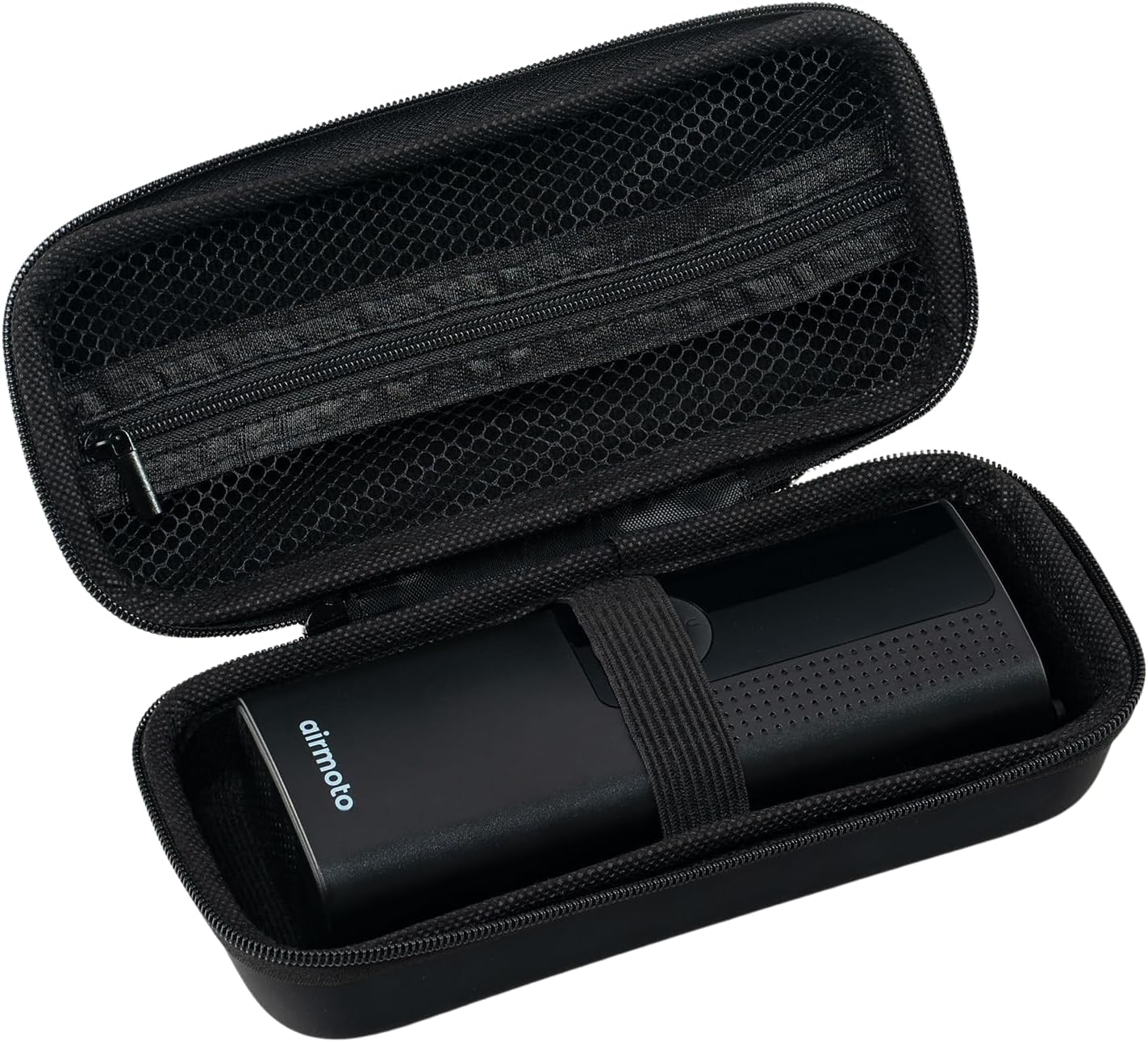
Protect and organize your Airmoto tire inflator with a purpose-designed carrying case made for a precise fit. The durable polyurethane shell and soft interior help guard against cuts, tears, and road wear, while a mesh pocket stores connectors and accessories. This travel box measures 7.5*3.5*2.8 inches and can work with most handheld portable air compressor models; this listing includes the case only.
