
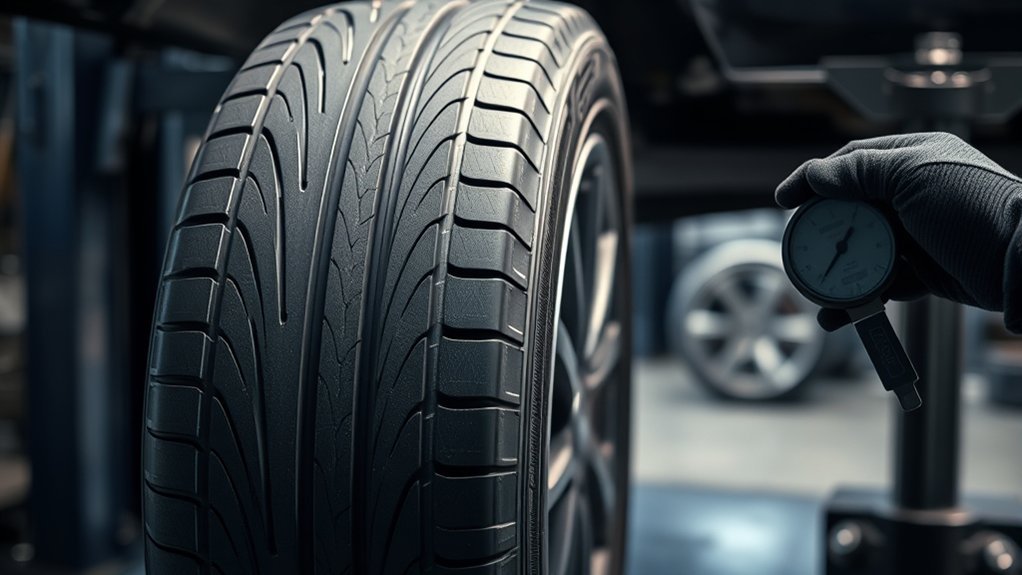
Uneven tire wear usually means you’ve got a pressure, alignment, suspension, or balance issue. Check tire pressure first when the tires are cold, then compare tread depth across the inner, center, and outer ribs. If you see shoulder wear, center wear, cupping, or feathering, inspect alignment, ball joints, tie rods, bushings, and wheel balance. Regular rotations help slow damage and reveal problems early. With a few more details, you can narrow the cause fast.
Key Takeaways
- Uneven tire wear is usually caused by incorrect inflation, misalignment, worn suspension parts, or poor wheel balance.
- Underinflation wears the shoulders, while overinflation wears the center tread faster.
- Check tread depth across inner, center, and outer ribs to spot cupping, feathering, shoulder wear, or scalloping early.
- Fix the problem by checking tire pressure first, then inspecting alignment, suspension components, and wheel balance.
- Rotate tires regularly, usually every 5,000 to 8,000 miles, to reduce uneven wear and catch issues sooner.
[Products Worth Considering]

Monitor tire tread wear with a smart, color-coded depth gauge that shows clear condition ranges at a glance. The bar is range marked for fast, easy readings, helping you maintain safer traction and performance. Each gauge is portable with a pocket clip, and the set includes 20 units for daily use and sharing.

Measure tire tread depth quickly and accurately with this LUMITECO dial gauge that reads in 1/32" increments up to 14/32". The color-coded green/yellow/red zones make it easy to judge tire wear and know when replacement is needed. A rugged, compact design with a protective pouch helps keep the gauge ready for use on cars, trucks, motorcycles, and more.

The SAFELIFE dial tire tread depth gauge measures tread depth in 1/32 inch increments with clear, easy-to-read 2-inch dial face. Color zones using a traffic light system help you quickly judge whether tread is low, marginal, or ample for safer driving. Built with a durable zinc cast body and a metal detect probe for precise, comfortable use across cars, motorcycles, trucks, and buses.
What Causes Uneven Tire Wear?
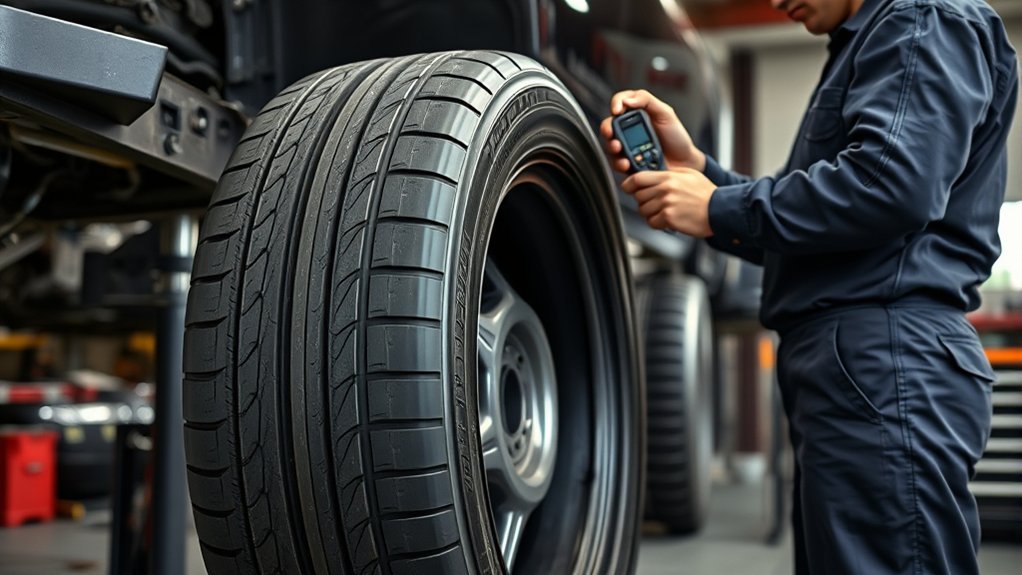
Uneven tire wear usually points to a mechanical or inflation problem, and the pattern of wear can help you diagnose the cause. You can trace it to underinflation, overinflation, misalignment, worn suspension parts, or an unbalanced wheel assembly.
Underinflation overheats the shoulders; overinflation concentrates load at the center tread. Incorrect camber or toe scrubs rubber from one edge, while worn shocks or struts let the tire hop and scallop.
Underinflation wears the shoulders; overinflation wears the center, while bad alignment and worn suspension cause edge wear and scalloping.
If you carry heavy loads, tow, or corner aggressively, your driving habits can accelerate these faults and amplify the wear pattern. Poor tire maintenance, such as neglecting rotations, pressure checks, and balancing, also shortens tread life and masks the underlying issue.
Inspect the contact patch, compare wear across all four tires, and verify inflation against the placard. Then check alignment angles, bearing play, and suspension compliance so you can correct the root cause before replacement.
How to Spot Uneven Tire Wear Early
Catch uneven tire wear early by inspecting tread depth, wear shape, and side-to-side consistency at regular intervals. Use a tread gauge or a coin check across the inner, center, and outer ribs of each tire, then compare readings.
Look for cupping, feathering, shoulder wear, scalloping, or a smooth patch that differs from the surrounding blocks. Compare the left and right tires on the same axle; mismatched tire tread patterns often reveal a developing fault before handling changes become obvious.
You should also note whether one edge wears faster than the other, since that usually signals an abnormal condition. Track wear over time in the same spots, and photograph the tread for reference.
If your driving habits include frequent cornering, hard braking, short trips, or heavy loads, expect accelerated wear and inspect more often. Early detection lets you document the pattern, narrow the cause, and prevent further damage before the tire becomes unsafe.
Check Tire Pressure and Wheel Alignment
Once you’ve confirmed the wear pattern, check tire pressure first, because underinflation and overinflation can both distort tread wear and hide the real fault.
Use a calibrated gauge when the tires are cold, then compare each reading with the placard specification. If one tire is consistently low, inspect for leakage, valve issues, or improper inflation habits; pressure monitoring should be part of routine tire maintenance.
Use a calibrated gauge when tires are cold, and compare each reading with placard specs.
Next, evaluate wheel alignment by measuring toe, camber, and caster against factory specs. Excessive toe usually scrubs the inner or outer edges, while camber errors can create one-sided shoulder wear.
If the steering wheel sits off-center or the vehicle drifts on a level road, you likely need an alignment service.
Correct pressure, then recheck wear after a short interval; if the pattern persists, the fault is mechanical, not inflation-related.
[Products Worth Considering]

Keep your tires properly inflated with this analog VONDIOR tire pressure gauge, designed for fast, easy readings without batteries. The swiveling, two-axis hose and large glow dial help you measure at any tire angle with instant visibility. Built with a protective rubber shield, it supports durable, low-maintenance use for cars and trucks.

Accurately measure tire tread depth with a calibrated gauge marked from 0 to 1 inch in 1/32 inch increments. The color-coded bar helps you quickly identify tread condition ranges, supporting safe driving for trucks, motorcycles, automobiles, and passenger vehicles.

The Ziopetru adjustable magnetic wheel alignment tool helps you check and restore camber and caster positioning after removing and reinstalling undercarriage components. With a clear leveling/bubble measurement system and an easy zeroing adjustment knob, it supports precise horizontal angle checking. The strong magnetic base mounts to metal surfaces for convenient use at home on cars, motorcycles, trucks, vans, and SUVs.
Inspect Suspension Parts and Wheel Balance
If tire pressure and alignment check out, inspect the suspension and steering components for looseness or wear that can let the wheel change angle under load.
You should raise the vehicle, then check ball joints, tie rod ends, control arm bushings, struts, shocks, and wheel bearings for play, torn boots, leaking fluid, or uneven resistance.
Any excess movement can shift camber or toe while you drive, creating feathering, cupping, or edge wear. Use a pry bar and dial indicator if needed, and compare both sides for symmetry.
If you find worn parts, replace them before rechecking wheel alignment.
You also need to verify wheel balance, because an out-of-balance assembly can cause vibration that accelerates tread scalloping and masks suspension faults.
Look for missing balance weights, bent rims, or road-force variation.
Solid suspension maintenance keeps geometry stable, protects tires, and restores predictable handling and even contact patch wear.
Prevent Uneven Tire Wear With Rotations
Tire rotations help spread wear patterns across all four tires, so you can slow edge wear, heel-toe scuffing, and cupping before they become severe. You should follow your tire rotation frequency on the service schedule, usually every 5,000 to 8,000 miles, then verify tread depth with a gauge. Match rotation patterns to your drivetrain and tire type, because front-wheel-drive, rear-wheel-drive, and AWD vehicles load tires differently. Use this table to visualize the service cycle:
| Mileage | Action | Diagnostic focus |
|---|---|---|
| 0-5k | Inspect | tread, inflation |
| 5k-8k | Rotate | pattern, torque |
| 8k-16k | Recheck | shoulder wear |
If you see one shoulder wearing faster, adjust pressure, inspect alignment, and confirm the correct direction of rotation. Keep records after each service. Consistent rotations don’t fix mechanical faults, but they do delay uneven wear and help you identify abnormal patterns early.
Frequently Asked Questions
Can Uneven Tire Wear Affect Fuel Economy?
Yes, it can. Uneven tire wear increases rolling resistance, so you use more fuel. Check tire pressure, alignment issues, suspension problems, and driving habits, because each can accelerate wear and reduce your vehicle’s efficiency.
How Long Can I Drive on Slightly Uneven Tires?
You can drive briefly on slightly uneven tires, but inspect them soon. Schedule tire rotation and alignment checks within days; continued use can worsen wear, reduce traction, and raise blowout risk, especially under load or highway speeds.
Are All-Season Tires More Prone to Uneven Wear?
Not inherently, but you may notice uneven wear if you skip tire maintenance or have alignment issues. You’ll extend tread life by rotating regularly, checking pressure, and correcting suspension or steering faults promptly.
Does Tire Age Matter if Tread Looks Fine?
Yes—age still matters, even if tread looks fine. Like a candle left burning, rubber ages invisibly. You should inspect tire longevity, check tread depth, and replace tires showing cracks, hardening, or date codes over six years.
Can Road Conditions Cause Uneven Tire Wear?
Yes—rough roads, potholes, and debris can accelerate uneven wear. You’ll also see it worsen if road surface irregularities combine with alignment issues, because the tire loads change constantly and scrub one edge faster.
Conclusion
Ironically, the cheapest way to protect your tires is often the step drivers skip: routine checks. If you notice uneven wear early, you can correct pressure, alignment, balance, and suspension issues before they become expensive failures. Rotate your tires on schedule, and you’ll slow down the very damage that neglect accelerates. In short, a quick diagnosis now can save you from a premature replacement later. Your tires won’t fix themselves, but they will tell you what’s wrong.
[Products Worth Considering]

Steelman white tire marking crayons provide high-contrast, semi-permanent marks for repairing and inspecting tires and equipment. They write on wet or dry, smooth or coarse surfaces including rubber, metal, glass, and wood, making them ideal for puncture location and damage outlining. The lead- and zinc-free crayons resist weather and fading yet wipe away when you no longer need the marks.

This universal wheel alignment tool helps you accurately restore tire tilt angles after tire or suspension repairs using an adjustable camber gauge. It features a powerful magnetic base that firmly attaches to brake rotors for stationary, slip-free readings, improving consistency during measurement. Built from durable PC plastic, it resists wear and corrosion and is compact enough for car, truck, RV, and motorcycle alignment tasks.

ETENWOLF’s calibrated tire pressure gauge delivers accurate readings for cars, trucks, motorcycles, bikes, SUVs, RVs, and ATVs across a 0–75 PSI range. The large glow dial improves visibility in low light, while the 360° swivel chuck makes it easy to check valve pressure from any angle. It’s designed to stay accurate even in extreme hot or cold weather.
