
Tie rod repair cost can vary sharply because “tie rod replacement” may mean an outer tie rod end, an inner tie rod, or more than one steering component. Vehicle design, local labor rates, corrosion, parts choice, and the required alignment can all change the bill. The most useful estimate starts by confirming exactly which tie rod is worn and which services are included.
Quick Answer
RepairPal’s September 3, 2026 national estimate puts tie rod replacement at $258 to $300 for parts and labor. A wheel alignment is normally needed afterward and may be billed separately; RepairPal’s separate alignment estimate is $186 to $273. Vehicle design, inner versus outer tie rod, corrosion, parts choice, and local labor rates can move the final bill.
Last checked: October 5, 2026. Dates and figures were verified against official or authoritative sources.
Key Takeaways
Key Takeaways
- Confirm whether the quote covers an inner tie rod, outer tie rod, one side, or multiple components before comparing prices.
- Wheel alignment is an important part of the repair because changing a tie rod can alter toe, the angle at which the tires point inward or outward.
- Vehicle-specific estimates vary substantially, so a national average is a planning figure rather than a guaranteed shop price.
- Loose steering, uneven tire wear, vibration, wandering, and clunking can indicate tie rod wear, but other steering or suspension faults can cause similar symptoms.
Tie Rod Replacement Cost Overview
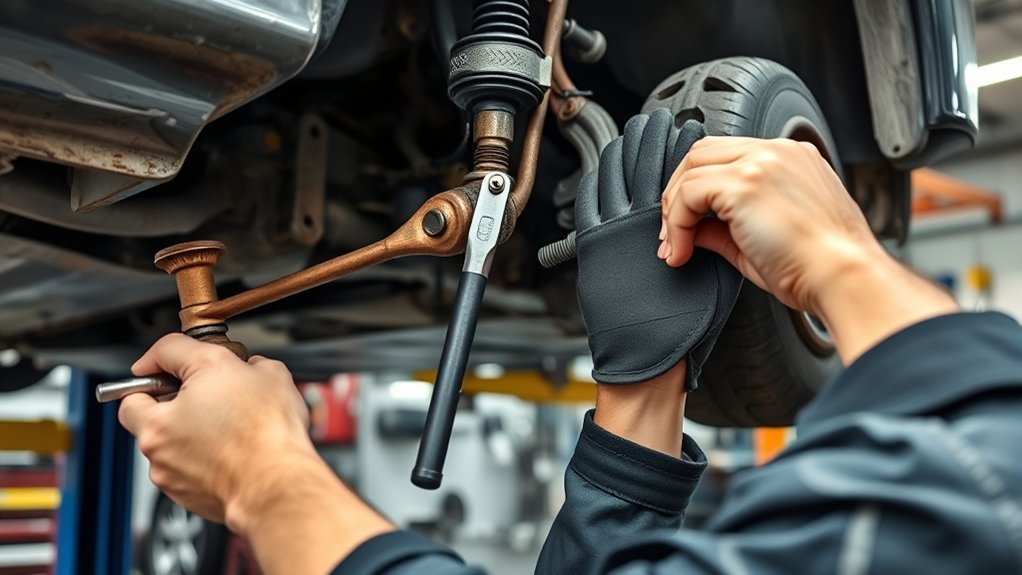
A current national benchmark is more useful than one broad parts-only estimate. RepairPal’s tie rod replacement estimate, updated September 3, 2026, places the average at $258 to $300. It estimates labor at $88 to $130 and parts at about $170.
Those figures do not include taxes or fees and do not account for your location. Related repairs can also raise the total.
Alignment is another important line item. RepairPal’s separate national estimate for a wheel alignment is $186 to $273. If both services were billed separately at those national ranges, a rough combined planning figure would be about $444 to $573 before taxes, fees, location adjustments, or additional repairs.
| Cost item | National estimate | What it covers |
|---|---|---|
| Tie rod replacement | $258–$300 | Parts and labor |
| Labor portion | $88–$130 | Estimated labor within the replacement figure |
| Parts portion | About $170 | Typical parts estimate |
| Wheel alignment | $186–$273 | Separate national alignment estimate |
Common tie rod problems include steering play, wandering, uneven tire wear, vibration, and clunking. Catching wear before the joint becomes severely loose can also help prevent extra tire damage.
Tie Rod Replacement Cost by Vehicle Type
Your exact tie rod bill depends more on the vehicle’s steering design and parts than on whether it is simply labeled a sedan, SUV, or truck. Access, component size, drivetrain packaging, OEM parts pricing, and corrosion can all affect the estimate.
RepairPal’s September 2026 national examples show how much prices can differ between common models:
| Vehicle | Tie rod replacement estimate |
|---|---|
| Honda CR-V | $148–$188 |
| Honda Accord | $170–$210 |
| Toyota Camry | $203–$241 |
| Ford F-150 | $223–$264 |
| Chevrolet Silverado 1500 | $315–$354 |
These figures show why vehicle class alone cannot predict the repair bill. A crossover can cost less than a sedan, while another truck can cost considerably more.
For an accurate comparison, give each shop your VIN and ask whether its estimate covers the same component, side, part quality, alignment, and related hardware.
[Products Worth Considering]

The Trivd Frol 1/2" air impact wrench delivers high performance torque up to 1500 ft-lbs with a twin hammer impact mechanism for strong, balanced blows. It features an ergonomic grip, compact lightweight design, and quick-stop control with 3 forward speeds up to 8000 RPM plus a reverse speed. Built for demanding automotive repair and tire shop work, the rear exhaust helps keep debris away from the surface.

Steelman white tire marking crayons provide high-contrast, semi-permanent marks for repairing and inspecting tires and equipment. They write on wet or dry, smooth or coarse surfaces including rubber, metal, glass, and wood, making them ideal for puncture location and damage outlining. The lead- and zinc-free crayons resist weather and fading yet wipe away when you no longer need the marks.

The TYAMATE TM8 solar-powered wireless TPMS delivers real-time tire pressure and temperature monitoring with six alarm modes for safer driving. A vibrant color LCD display shows readings clearly while windshield mounting keeps it hands-free and easy to read. With a wide 0–87 PSI range, strong 433.92 MHz signal transmission, and quick sensor pairing, it’s ideal for RV, sedan, SUV, MPV, and truck use.
Inner vs. Outer Tie Rod Prices
Inner and outer tie rods do different jobs and require different access during repair. According to MOOG’s tie rod guide, the inner tie rod connects to the steering rack, while the outer tie rod connects to the steering knuckle near the wheel.
That location is one reason inner tie rod work can require more disassembly. RepairPal also notes that accessing an inner tie rod on rack-and-pinion vehicles can require removal of the outer tie rod and rack boot, plus a special inner tie rod tool.
[Products Worth Considering]

The Ziopetru adjustable magnetic wheel alignment tool helps you check and restore camber and caster positioning after removing and reinstalling undercarriage components. With a clear leveling/bubble measurement system and an easy zeroing adjustment knob, it supports precise horizontal angle checking. The strong magnetic base mounts to metal surfaces for convenient use at home on cars, motorcycles, trucks, vans, and SUVs.

Slip the Powerbuilt tire step over your vehicle’s tire to reach roof racks, engine bays, truck boxes, and more without overreaching. Its adjustable, universal design fits tires with a cross tread width up to 13 inches, including car, truck, RV, and semi tires. The non-slip cheesegrater surface and anti-slip tape provide secure grip while the open design lets mud and debris pass through. Fold-flat storage with rubber bumpers helps keep your tire and the step protected between uses.

These M14x1.5 closed-end chrome lug nuts are a one-piece replacement designed for secure fitment on compatible GM, Ford, and select Chrysler/Dodge models. Featuring a 60-degree conical seat and anti-rust chrome plating, they help resist corrosion and maintain a bright look for everyday driving. Built for long-term durability, they include OEM-style part references and are backed by 12 months of support.
Inner Tie Rod Costs
Inner tie rod replacement can cost more because the component sits farther inside the steering system. Access may require removing the outer end, moving the steering-rack boot, and using a special tool.
Parts-only prices commonly used as a planning range are about $40 to $120 each, although OEM, premium, unusual, or vehicle-specific parts can cost more. The installed price can be much higher because labor and alignment must also be considered.
If the rack boot is torn, ask the technician whether contamination has reached the joint. RepairPal also advises that power-steering fluid found inside a rack dust boot can indicate a rack seal problem, which may turn the visit into a larger steering repair.
Before approving the work, make sure the estimate says whether it covers only the inner tie rod or includes the outer end, boot, hardware, and alignment.
Outer Tie Rod Costs
Outer tie rods are positioned at the wheel end and are generally easier to access. That can make an outer tie rod job simpler than an inner tie rod replacement on the same vehicle.
A common parts-only planning range is about $20 to $75 per side for aftermarket components, while premium or OEM parts may cost more. The final installed cost still depends on labor, corrosion, hardware, and alignment.
Do not choose a tie rod only by the cheapest part price. Compare the manufacturer, warranty, fitment, and whether required hardware is included.
Labor Cost for Tie Rod Replacement
Labor is determined by the vehicle-specific repair procedure rather than one universal time. RepairPal’s current national tie rod estimate assigns about $88 to $130 of its $258 to $300 average to labor, but your shop’s hourly rate and the vehicle’s design can change that amount.
Inner tie rods generally require more access work than outer ends. Rusted threads, seized adjusters, damaged boots, and extra steering or suspension repairs can also extend the job.
Labor Time Estimate
A practical planning estimate is about 1 to 2 hours per side, although actual labor time varies by vehicle and by whether the mechanic is replacing an inner tie rod, outer tie rod, or both.
The basic process may include:
- Safely raising the vehicle and removing the wheel.
- Checking the steering linkage to confirm where the play is coming from.
- Disconnecting and removing the worn tie rod component.
- Installing the replacement and setting its approximate position.
- Rechecking the steering and completing the required alignment work.
An inner tie rod usually adds steps because the outer end and steering-rack boot may need to come off first. Corrosion can also turn a straightforward repair into a longer job.
Shop Rate Differences
The same repair can cost differently at two shops because labor rates, parts choices, warranty policies, and included services differ. A low quote is not necessarily better if it leaves out alignment or uses a different repair scope.
Ask each shop to identify the exact component, side, part brand, labor charge, alignment charge, taxes, and any recommended related work. That gives you an apples-to-apples comparison instead of comparing only the bottom-line price.
Pro Tip: Ask the technician to show you where the tie rod has play and whether the looseness is at the inner joint, outer joint, or another steering component. That can prevent paying for a part that was not actually causing the symptom.
Factors That Change Tie Rod Replacement Cost
The biggest cost factors are the exact tie rod being replaced, vehicle design, parts choice, labor rate, corrosion, and alignment requirements. Two estimates that sound like the same repair may cover very different work.
- Inner versus outer: Inner tie rods often require more disassembly and specialized access.
- Number of components: One outer end costs less than replacing inner and outer components on both sides.
- Vehicle design: Steering-rack access and surrounding components can change labor time.
- OEM versus aftermarket parts: Brand, warranty, construction, and availability affect parts cost.
- Rust and seized hardware: Corroded threads, jam nuts, and fasteners can add labor.
- Alignment: Tie rod replacement changes or disturbs the adjustment used to set toe.
MOOG’s alignment guidance explains that changing an outer tie rod can alter toe. It also notes that Advanced Driver Assistance Systems can depend on accurate steering-angle information.
On some ADAS-equipped vehicles, the steering angle sensor may need recalibration after the alignment. Ask whether that procedure applies to your specific vehicle rather than assuming every car needs the same service.
[Products Worth Considering]

This universal wheel alignment tool helps you accurately restore tire tilt angles after tire or suspension repairs using an adjustable camber gauge. It features a powerful magnetic base that firmly attaches to brake rotors for stationary, slip-free readings, improving consistency during measurement. Built from durable PC plastic, it resists wear and corrosion and is compact enough for car, truck, RV, and motorcycle alignment tasks.

Monitor tire tread wear with a smart, color-coded depth gauge that shows clear condition ranges at a glance. The bar is range marked for fast, easy readings, helping you maintain safer traction and performance. Each gauge is portable with a pocket clip, and the set includes 20 units for daily use and sharing.

This ecocstm ratchet wrench is designed to make emergency and routine tire changes faster with a 360° rotating head and quick forward/reverse switching. The extended handle provides extra leverage to reduce effort and hand fatigue, while the adapter helps fit many scissor jacks on cars, SUVs, trucks, and vans. Built for reliable performance with durable construction, it’s a practical travel essential for on-the-road preparedness.
Symptoms of a Bad Tie Rod
A worn tie rod often shows up as a change in steering feel, alignment, tire wear, or front-end noise. However, these symptoms are not unique to tie rods, so diagnosis matters before parts are replaced.
Common warning signs include:
- Loose or vague steering: The wheel may have excessive play or feel slow to respond.
- Wandering or pulling: You may need frequent steering corrections to keep the vehicle tracking straight.
- Uneven tire wear: Incorrect toe can scrub the inner or outer edges of the front tires.
- Steering-wheel vibration: A loose joint can allow unwanted wheel movement.
- Knocking or clunking: Worn steering joints can make noise during turns or over rough surfaces.
- Torn boots or grease loss: Damage to the protective boot can let contamination reach the joint.
NAPA’s tie rod inspection guidance also notes that steering looseness, uneven tire wear, damaged boots, and excess joint play can indicate a problem. Other faults such as ball joints, wheel bearings, tire pressure, or the steering rack can create similar symptoms.
Warning: A severely worn or broken tie rod can cause loss of steering control. If the joint has separated, steering suddenly becomes extremely loose, or the wheel no longer responds normally, do not keep driving. Arrange safe transport or towing and have the steering inspected.
How to Save on Tie Rod Replacement
You can control the cost best by paying for the repair your vehicle actually needs rather than choosing parts only by price. Start with a proper steering inspection, then compare quotes with the same scope.
- Confirm the failed component. Ask whether the problem is the inner tie rod, outer tie rod, or another steering part.
- Inspect both sides. One worn tie rod does not automatically prove the opposite side is bad, but both should be checked.
- Compare complete estimates. Make sure each quote identifies parts, labor, alignment, hardware, and any extra repairs.
- Ask about part quality. Compare brand, warranty, and fitment rather than choosing only the lowest price.
- Do the alignment with the repair. Avoid paying for a replacement and then postponing the step needed to restore correct steering geometry.
DIY replacement is best reserved for people who already understand steering and suspension work, have safe lifting equipment, know the vehicle’s torque specifications, and can still arrange a professional alignment. Steering is a safety-critical system, so guessing at installation or torque is not a good place to save money.
Frequently Asked Questions
Can I Drive With a Broken Tie Rod?
No. A broken or separated tie rod can prevent a front wheel from responding correctly to steering input and can cause loss of vehicle control. If the tie rod is broken or steering has suddenly become dangerously loose, stop driving and arrange towing or other safe transport for repair.
Does Tie Rod Replacement Require Wheel Alignment?
Yes, an alignment should normally be performed after tie rod replacement. The tie rod is part of the adjustment that controls toe, so removing and installing it can change wheel alignment. Correct alignment helps center the steering, protect the tires from rapid wear, and restore proper tracking.
How Long Does a Tie Rod Replacement Take?
A common planning estimate is about 1 to 2 hours per side, but the actual repair time depends on the vehicle and whether the inner or outer tie rod is being replaced. Rust, seized hardware, difficult access, additional steering repairs, and the alignment can extend the total appointment time.
Can a Bad Tie Rod Damage Tires?
Yes. A worn tie rod can allow the wheel’s toe setting to move out of specification, which can produce uneven or accelerated tire wear. Because other alignment and suspension faults can cause similar wear, have the steering inspected instead of assuming the tie rod is automatically the cause.
Is One Tie Rod Replaced or Both at Once?
You can replace one tie rod when only one has failed. The opposite side should still be inspected for looseness, boot damage, or similar wear. Replacing both can make sense when both test worn, but a good component does not automatically need replacement simply because the other side failed.
How Much Does Tie Rod Replacement Cost?
RepairPal’s September 3, 2026 national estimate is $258 to $300 for tie rod replacement, with about $88 to $130 attributed to labor and roughly $170 to parts. Taxes, fees, location, alignment, and related steering or suspension repairs can increase the final amount you pay.
What Is the Difference Between an Inner and Outer Tie Rod?
The inner tie rod connects to the steering rack, while the outer tie rod connects to the steering knuckle near the wheel. The outer end is easier to reach on many vehicles. Inner replacement can require removing the outer end and rack boot, so the labor can be more involved.
Conclusion
Tie rod repair cost is easiest to understand once you know exactly which component is worn and whether alignment is included. Use the national estimates as a planning guide, then compare vehicle-specific quotes with the same repair scope. If you notice loose steering, wandering, uneven tire wear, vibration, or clunking, have the steering inspected promptly rather than waiting for the joint to become a safety problem.
Sources
- RepairPal Tie Rod Replacement Cost Estimate: Current national tie rod replacement, parts, labor, vehicle examples, repair process, and alignment requirement.
- RepairPal Wheel Alignment Cost Estimate: Current national wheel-alignment cost and alignment procedure.
- MOOG — What Do Tie Rods Do?: Inner and outer tie rod design, symptoms, wear, and steering-safety information.
- MOOG — Why an Alignment Is Needed After an Outer Tie Rod Replacement: Toe changes, alignment, ADAS, and steering-angle sensor guidance.
- NAPA Know How — Bad Tie Rod Ends: Steering looseness, uneven tire wear, damaged boots, joint play, and safety guidance.

