
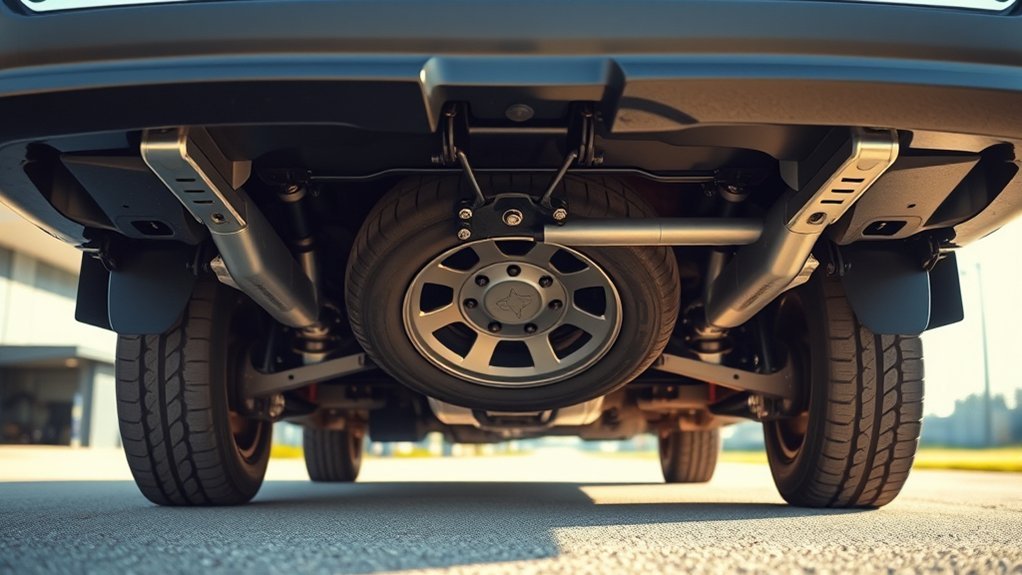
The Dodge Caravan spare tire location depends on the model year. On most 2005–2020 Grand Caravans with Stow ‘n Go seating, the spare hangs under the van below the front-seat area, and you lower it with a winch reached through the floor between the front seats. On older Caravans and vans without Stow ‘n Go, the spare usually hangs under the rear cargo area, with the winch reached from the back of the van.
Some later vans were sold without a spare and have a tire inflator kit instead. Your owner’s manual is the final word for your exact year and trim.
Dodge Caravan Spare Tire Location at a Glance
| Van setup | Where the spare is | Where the winch is reached |
|---|---|---|
| 2005–2020 (Grand) Caravan with Stow ‘n Go seats | Under the van, roughly below the front seats / center of the floor pan | Through an access hole in the floor between the front seats, usually under the center console or a floor-mounted cover |
| Older Caravans and vans without Stow ‘n Go | Under the rear of the van, below the cargo area | From the rear cargo area, under the floor covering or an access plug near the liftgate |
| Some 2014–2020 vans (often base or fleet trims) | May have no spare at all | Look for a tire service/inflator kit in a rear trim panel instead |
Stow ‘n Go seats fold into floor bins where the spare used to sit, which is why the spare moved forward on those vans. Year ranges above are general; trims and markets differ.
Products Worth Considering

Yieokei Tesla jack pads are molded rubber lifting pucks designed for 2016-2026 Model 3/Y/S/X, including Juniper, to fit securely in the jack hole. They cushion the underframe and help position the jack precisely at the factory jack points to reduce risk of battery, paint, or chassis damage. The set also includes a tire repair tool kit for emergency roadside fixes and comes with a portable storage case to keep everything organized.

This spare tire tool kit is designed for the 2004 to 2018 Ford F-150 to help you loosen and tighten wheel lug nuts and manage the spare tire and provided jack functions from underneath the vehicle. It includes the lug nut wrench and extension pieces plus a convenient storage carrying case for organized transport. The jack itself is not included.

The Dr.Roc spare tire tool kit helps you release, lower, or raise your spare tire with reliable extension tools and a lug nut wrench. It is made from rustproof automotive-grade steel and includes an organized carry case for convenient storage. Designed for compatibility with select GM models from the late 1990s through 2019, it uses upgraded extension components to install and remove spare tires with less hassle.
Where the Jack and Tools Are Stored
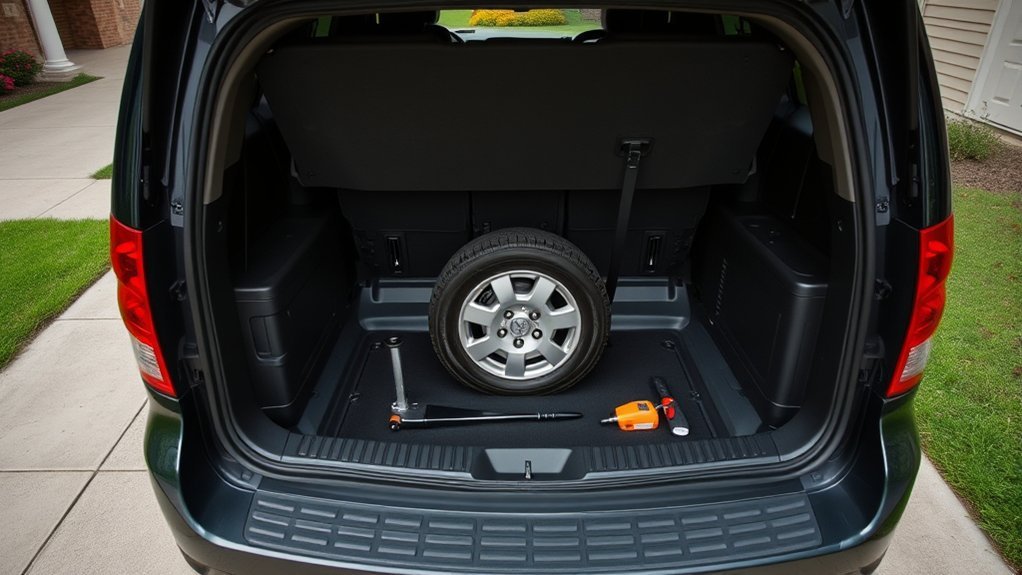
On many Grand Caravans, the jack, lug wrench and winch-lowering tool are stored in the rear cargo area, behind an access panel on the left-side interior trim. Some vans keep them in a different rear compartment.
- Look for a small door or removable panel on the inside wall of the cargo area.
- The lowering tool is usually a jack handle plus one or two extension pieces that fit together.
- If the tools are missing (common on used vans), get the correct Mopar spare tire tool before you need it.
How to Lower the Spare on a Stow ‘n Go Grand Caravan
- Park on flat, solid ground, set the parking brake, put the van in Park and turn on the hazards.
- Get the jack and tool kit from the rear cargo area and assemble the lowering tool.
- Between the front seats, remove the center console bin liner or floor cover to expose the winch access hole. On some vans you may need to slide or remove the console.
- Fit the tool onto the winch nut and turn it counterclockwise. It can take a couple dozen turns before the spare reaches the ground.
- Keep turning until the cable has slack, then pull the spare out from under the side of the van.
- Tilt the wheel and slide the retainer through the center hole to release it from the cable.
How to Lower the Spare on Older or Non-Stow ‘n Go Caravans
- Open the liftgate and lift the cargo floor covering or remove the access plug near the rear.
- Insert the assembled jack handle or lowering tool into the winch access point.
- Turn counterclockwise until the spare is on the ground and the cable is slack.
- Reach under the rear bumper, pull the spare out and release the retainer from the wheel.
Products Worth Considering

This TPMS relearn tool helps you quickly activate, match, and reset GM tire pressure sensors to keep the vehicle monitoring system working properly. It clears tire pressure alarms and dashboard warning lights after sensor replacement or tire rotation, and supports learning for common 315/433 MHz TPMS sensors. Designed for simple one-button operation, it can help you avoid unnecessary trips to repair shops.

This ecocstm ratchet wrench is designed to make emergency and routine tire changes faster with a 360° rotating head and quick forward/reverse switching. The extended handle provides extra leverage to reduce effort and hand fatigue, while the adapter helps fit many scissor jacks on cars, SUVs, trucks, and vans. Built for reliable performance with durable construction, it’s a practical travel essential for on-the-road preparedness.

Replace your worn or missing TPMS sensors with pre-programmed, direct-fit sensors for compatible Ford, Lincoln, and select Mazda models. Each sensor comes ready to activate with a scan tool, helping restore accurate tire pressure monitoring and trouble-free installation. Built with a long-life CR2032 battery and tested before factory release, this set provides dependable performance with a one-year warranty.
Safety Notes Before You Change the Tire
- Loosen the lug nuts slightly before raising the van, then remove them once the wheel is off the ground.
- Use only the jacking points shown in your owner’s manual. Never get under a van supported only by the factory jack.
- Most Caravan spares are compact temporary spares. Follow the speed and distance limits printed on the spare or in your manual; many compact spares are limited to about 50 mph.
- Check the spare’s pressure a few times a year. Compact spares often need much higher pressure than regular tires (frequently 60 psi), so read the sidewall or door placard.
For how far you can safely go on a temporary spare, see can you drive 100 miles on a donut spare. If you need help setting regular tire pressures afterward, read how to find the right tire pressure for your car.
If the Spare Will Not Lower
- Tool not seated: Make sure the tool is fully engaged on the winch nut, not just the access tube.
- Rusted or seized winch: Common on older vans in salt-belt states. Penetrating oil on the cable and winch from underneath can help; do not force the tool hard enough to break it.
- Cable snapped or jammed: The spare may drop suddenly or not at all. Call roadside assistance or a shop rather than crawling under the van.
Once you are home, inspect the winch and test it, and plan a proper repair for the flat. Our DIY tire repair guide explains which punctures can be fixed and which cannot.
How to Put the Spare (or Repaired Tire) Back
- Lay the wheel under the van with the valve stem facing down, as shown in your manual.
- Thread the retainer through the wheel center.
- Turn the winch clockwise until the tire is snug against the underbody. Many winches click or slip when fully tight.
- Check that the tire does not move when you push on it, then reinstall the console liner or access plug.
Products Worth Considering
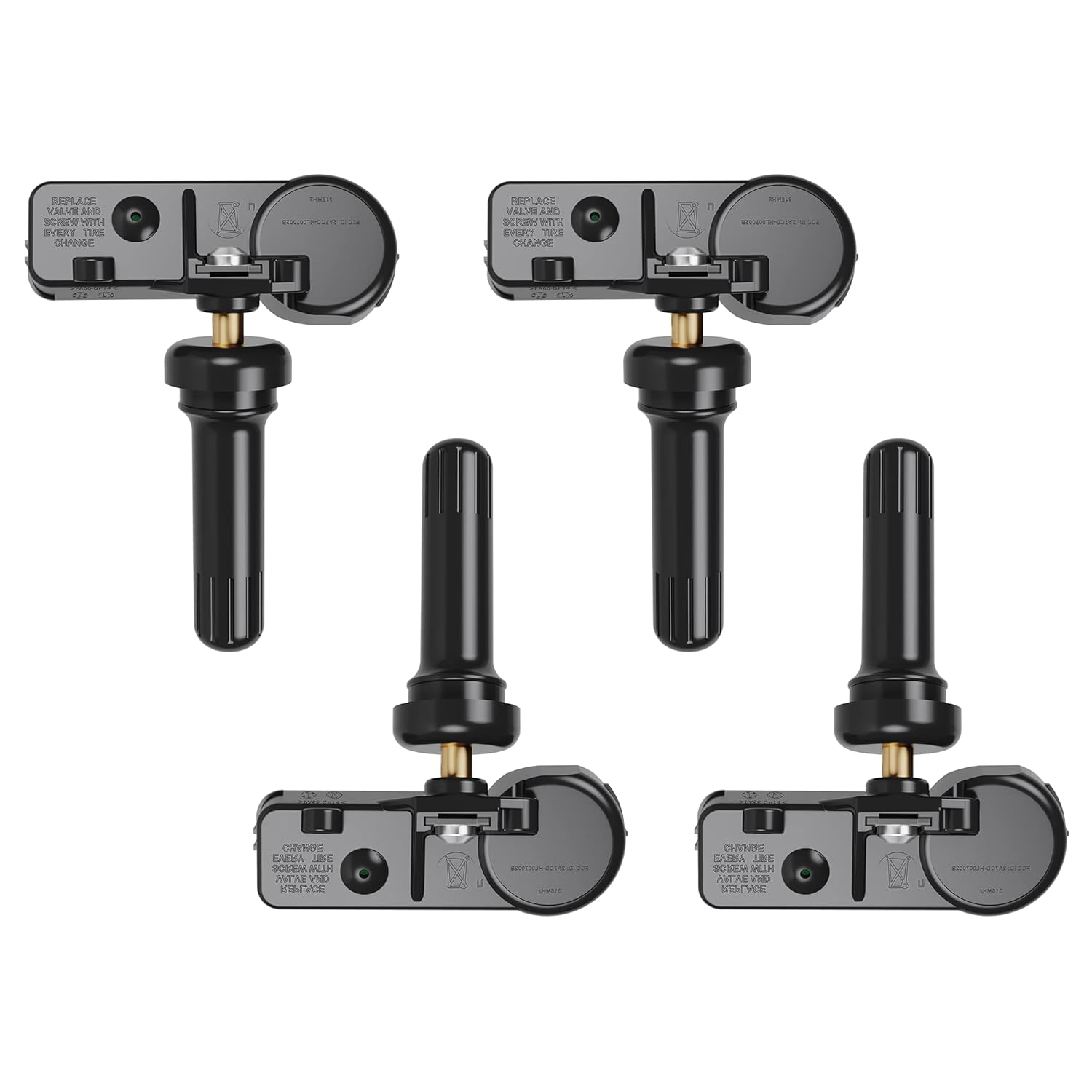
Replace worn or faulty TPMS sensors with this brand new 315MHz GM-compatible replacement set for select Chevy, GMC, Buick, Cadillac, and similar vehicles. These sensors are pre-programmed for your make/model/year and typically only require activation with a scan tool. Built for long service life with a high-temperature battery, they help maintain reliable tire pressure monitoring for safer driving.

Masoll Gen 2 external TPMS sensors are a DIY replacement set of 4 for select GM vehicles made after 2006, helping you shut off the TPMS warning light quickly. Simply screw the sensors onto the tire valves and sync to your car ECU using the included EL-50448 relearn tool. Dual-frequency 315/433 MHz design provides OEM-level performance with accurate readings and replaceable batteries for about two years.

The Kurgo Seasonal Tire Tote helps protect your car interior, clothes, and garage from tire grime, brake dust, and residue during seasonal tire changes. Its universal design fits most passenger tires between 22" and 31" in diameter, making storage and transport simpler with less mess. Built for rugged, repeated use, it’s machine washable for easy care and comes with a lifetime warranty.
Frequently Asked Questions
Does every Dodge Grand Caravan come with a spare tire?
No. Most do, but some 2014–2020 vans, especially base and fleet models, were built with a tire inflator kit instead of a spare. Check under the van and in the rear trim panels to see what yours has.
Why is the Grand Caravan spare under the front seats?
Stow ‘n Go seats fold into bins in the floor where the spare used to sit. To make room, the spare was moved forward under the middle of the van on Stow ‘n Go models.
What tool do I need to lower the Caravan spare tire?
You need the factory jack handle and its extension, which together form the lowering tool. They are normally stored with the jack in the rear cargo area.
How fast can I drive on the Dodge Caravan compact spare?
Follow the limit printed on the spare or in your owner’s manual. Many compact spares are rated for about 50 mph and short distances only.
Does the Caravan spare tire have a TPMS sensor?
Usually not. A compact spare typically has no pressure sensor, so a TPMS warning may stay on while it is installed. Check the spare’s pressure manually.