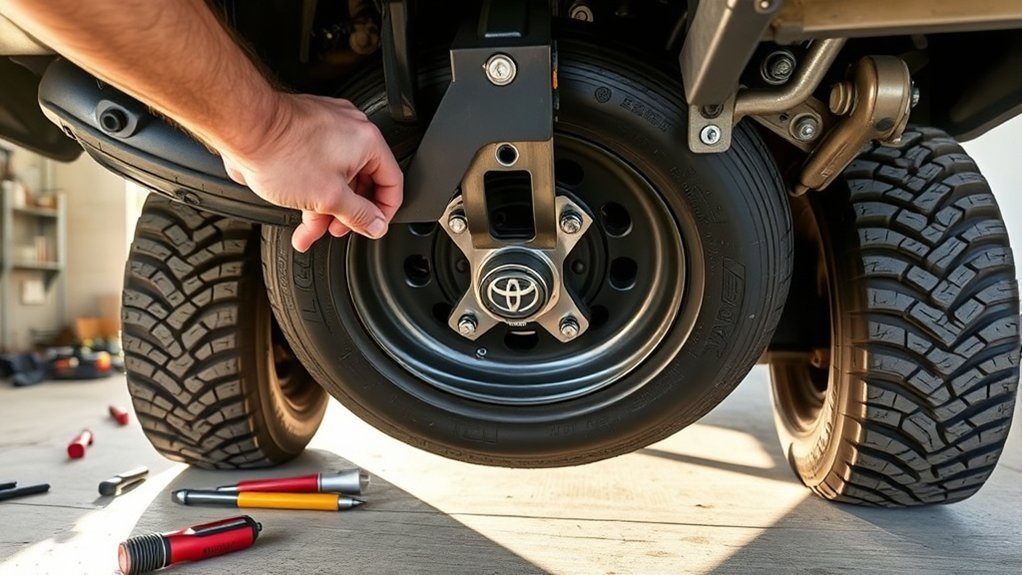
A rattling spare tire on a Toyota Tacoma usually comes from movement somewhere in the spare tire system, not from the tire itself. Start with the simple checks first: loose tools, an unevenly seated spare, a loose under-bed winch, worn contact points, or hardware that has backed out. If your Tacoma has an aftermarket rear bumper, swing-out, hitch, bed-rack, or tailgate-mounted carrier, inspect the hinge, latch, mounting plates, and tire contact pads before adding any spacer or reinforcement.
Quick Answer
To stop a Tacoma spare tire carrier rattle, identify the spare setup, confirm the tire is seated tight, inspect the winch or carrier hardware, check for cracked brackets or worn rubber contact points, and tighten fasteners only to the correct Toyota or carrier-maker spec. Use rubber pads only after the carrier is secure.
Key Takeaways
- Most Tacoma spare tire rattles come from a loose spare, worn contact points, a tired winch cable, loose jack tools, hitch hardware, or aftermarket carrier hardware.
- Factory under-bed spares and relocated rear carriers need different checks, so identify your setup before adjusting parts.
- Do not guess torque values. Use the correct Toyota service information for your Tacoma model year or the exact carrier manufacturer instructions.
- Rubber spacers can reduce vibration, but they should never hide a cracked bracket, loose mount, frayed cable, weak latch, or poor thread engagement.
- Tailgate reinforcement only applies if the spare has been relocated to a tailgate or rear carrier setup.
At a Glance
| Time Required | 20 to 45 minutes for a basic inspection; longer if parts are rusty, seized, damaged, or aftermarket hardware needs adjustment |
| Difficulty | Easy to moderate |
| Tools Needed | Flashlight, gloves, Tacoma spare tire lowering tool, socket set, torque wrench, pry bar, tire pressure gauge, rubber pads or washers if needed |
| Cost | Often free if the spare only needs reseating; low cost for rubber pads or replacement hardware; higher if a winch, cable, bracket, latch, or aftermarket carrier needs replacement |
Warning: Do not keep driving if the spare tire is hanging low, the winch cable is frayed, a carrier bracket is cracked, or an aftermarket latch will not fully lock. Do not crawl under a vehicle supported only by a jack. A loose spare can become a road hazard, so secure the tire or have the truck inspected before normal driving.
Before You Start: Identify Your Spare Tire Setup
First, confirm where the spare tire sits. Most stock Tacomas carry the spare under the bed with a winch, cable, lift plate, and holding bracket. Toyota owner manuals show model-specific spare tire tool and storage procedures, so use the correct manual for your truck year before forcing any part. You can find Toyota manuals through Toyota Owners Manuals and Warranties.
If the spare has been moved behind the truck, treat it as an aftermarket carrier problem until proven otherwise. Rear bumper carriers, hitch carriers, swing-outs, bed-rack mounts, and tailgate-mounted carriers all add weight and leverage. Small movement at the hinge, latch, receiver, or tire contact pad can sound much louder than it looks.
Also rule out nearby noises before you adjust the spare. Remove loose bed cargo, secure the jack tools, check the tailgate latch, shake the hitch receiver, and inspect the license plate bracket. These parts often mimic a spare tire carrier rattle.
Common Causes of Rattling in Tacoma Spare Tire Carriers
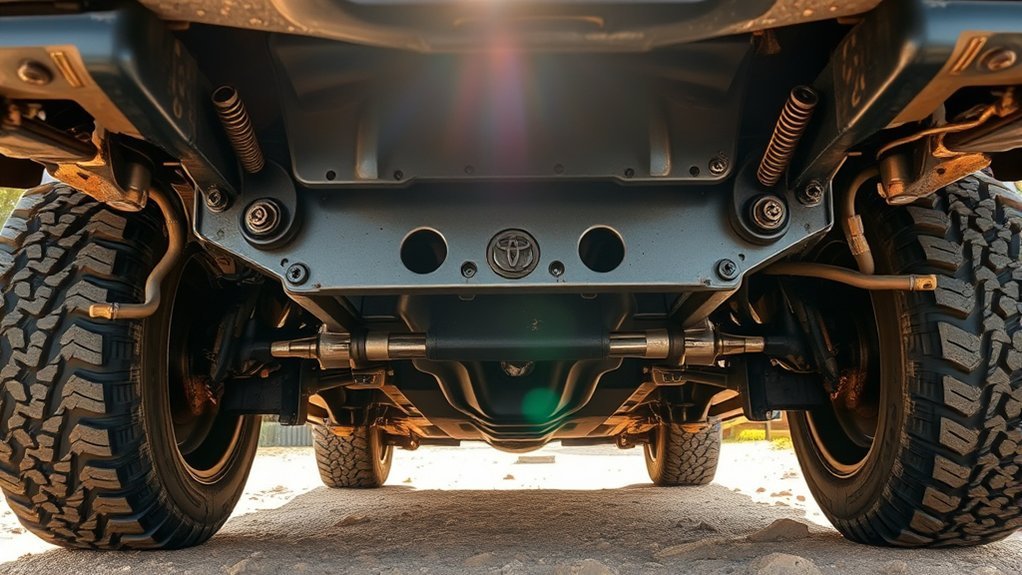
A Tacoma spare tire rattle usually starts when one part has enough movement to tap, bounce, or vibrate against another part. On a factory setup, the spare sits under the bed and is held by a winch, cable, and lift plate. If the tire is not pulled up straight and tight, it can move against the under-bed carrier area and sound like a suspension, bed, or bumper rattle.
Common factory under-bed causes include a loose spare, a bent or rusty lift plate, a dry or worn winch mechanism, a frayed cable, corrosion near the mounting area, low spare tire pressure, or debris trapped between the tire and carrier. Also check the jack tools, tailgate latch, trailer hitch, license plate bracket, exhaust heat shield, and loose bed cargo because these can mimic a spare tire rattle.
If your Tacoma uses an aftermarket spare tire carrier, the rattle often comes from the hinge, latch, receiver mount, tire contact pads, loose lug studs, or a carrier that does not preload the tire firmly enough. Oversized wheels and tires add leverage, so small movement at the hinge or latch can sound much louder on rough roads.
Troubleshooting Tacoma Spare Tire Rattle by Sound
Use the sound and timing of the noise to narrow the search. Do not rely on sound alone, but this table can help you decide where to inspect first.
| Symptom | Likely Area | What to Check First |
|---|---|---|
| Dull clunk over bumps | Loose under-bed spare or lift plate | Lower, center, and reseat the spare; push the tire by hand after raising it |
| Metallic tapping on rough roads | Loose bracket, heat shield, hitch, or license plate hardware | Look for shiny rub marks, rust dust, loose bolts, or parts touching the spare |
| Chatter from a swing-out carrier | Hinge, latch, bump stop, or tire preload | Check latch preload, hinge play, contact pads, and carrier-maker adjustment steps |
| Rattle only with a hitch-mounted carrier | Receiver fit, hitch pin, or anti-rattle clamp | Inspect the hitch pin, shank fit, anti-rattle device, and rated capacity |
| Noise changes with speed, not bumps | Tire, wheel bearing, driveline, or suspension issue | Do not assume it is the spare; have the rear suspension and wheel bearings checked |
Inspect the Factory Under-Bed Spare First
Start with the factory spare area before you adjust the tailgate or buy new parts. Park on level ground, set the parking brake, and let the exhaust cool before you crawl near the spare. Remove loose cargo from the bed and cab so you do not chase the wrong noise.
- Lower the spare a few inches. Use the Tacoma spare tire tool and check whether the tire drops smoothly. A sticky or rough winch can leave the tire partly loose.
- Inspect the cable and lift plate. Look for fraying, heavy rust, bends, cracks, or a plate that does not sit flat against the wheel.
- Check the spare tire pressure. A very low spare can sit differently against the carrier. NHTSA recommends checking all tires, including the spare, at least once a month when cold and using the pressure listed on the Tire and Loading Information Label or in the owner’s manual. Read NHTSA’s tire guidance at TireWise.
- Raise the spare until it seats firmly. The tire should sit tight against the under-bed carrier area without hanging at an angle.
- Push the tire by hand. If it moves or knocks, lower it again, center the lift plate, and raise it until it is fully seated.
- Check nearby parts. Shake the hitch receiver, license plate bracket, exhaust shield, tailgate, jack tools, and loose bed accessories.
Do not use an impact tool on the spare winch. If the winch binds, skips, drops, or will not hold the spare tight, replace the damaged part instead of forcing it.
Pro Tip: After each adjustment, drive the same short road section that caused the rattle. One change at a time helps you confirm the real source instead of tightening random parts.
When to Replace the Winch, Cable, or Lift Plate
Rubber padding cannot fix a weak spare tire winch. Replace or professionally inspect the factory carrier parts if the cable is frayed, kinked, rusty, or unevenly wound. Also replace damaged parts if the lift plate is bent, the tire raises crooked every time, the winch slips, or the spare slowly drops after you tighten it.
Use parts that match your Tacoma year, trim, bed, and spare setup. If you are unsure, check fitment through Genuine Toyota Parts and Accessories or ask a Toyota parts department to look up the part by VIN.
[Products Worth Considering]

Mount your spare tire directly to the inside wall of an enclosed trailer or garage to save space and keep your tire secure. This wall-mount spare tire carrier is designed for universal trailer tire fit and includes a fixed plate and chute for convenient screw replacement. Nylon insert hex lock nuts help prevent the tire from falling off, and wing hardware enables faster load and unload during maintenance.

The Dr.Roc spare tire tool kit helps you release, lower, or raise your spare tire with reliable extension tools and a lug nut wrench. It is made from rustproof automotive-grade steel and includes an organized carry case for convenient storage. Designed for compatibility with select GM models from the late 1990s through 2019, it uses upgraded extension components to install and remove spare tires with less hassle.

Secure a full-size spare on your trailer with this powder-coated steel spare tire mount bracket. It fits most 4-, 5-, and 6-lug wheel bolt patterns and mounts to trailer tongues up to 4 in wide and 5 in tall. Built for reliable carry with a max 150 lb load rating and includes zinc-plated hardware for straightforward installation.
Inspect Aftermarket Spare Tire Carriers
If the spare has been moved to a bumper, hitch, swing-out, bed rack, or tailgate carrier, inspect the carrier as a separate system. Confirm that the tire is tight against the mounting surface, the lug nuts or carrier studs are secure, and the latch fully closes with no bounce.
Check the hinge for side play, the latch for wear, and the contact pads for compression. Many swing-out carriers need a slight preload at the latch so the arm cannot chatter over washboard roads. If the carrier uses a hitch receiver, check the anti-rattle device, hitch pin, receiver fit, and rated tongue weight.
Rubber pads, washers, or bump stops can help isolate vibration, but only after the carrier is structurally sound. Never stack soft rubber in a way that reduces thread engagement, changes the latch position, lowers rated capacity, or prevents the tire from sitting flat.
[Products Worth Considering]

This spare tire tool kit is designed for the 2004 to 2018 Ford F-150 to help you loosen and tighten wheel lug nuts and manage the spare tire and provided jack functions from underneath the vehicle. It includes the lug nut wrench and extension pieces plus a convenient storage carrying case for organized transport. The jack itself is not included.

This universal spare tire mount fits 4, 5, and 6 lug trailer wheels with bolt patterns from 4" to 5.5" and helps keep your tire securely locked in place. Its reinforced triangular structure with a sturdy behind plate is designed to handle up to 150 lbs, making it suitable for boat, camper, and RV spare tire mounting. The angled raised design reduces wind resistance and installation is straightforward with different length bolts and no drilling required.

This side-mounted U-bolt spare tire bracket helps keep a trailer spare wheel secure and protected while you travel. It supports trailer frames up to 2–3 inches wide and fits up to 15-inch tires for 4- or 5-lug wheels. The galvanized steel threaded carrier is built for long-lasting corrosion resistance and installs easily with included lug nuts and U-bolt.
When Rubber Pads Help and When They Hide a Problem
Rubber pads help when two secure parts touch lightly and make noise. They can work well on tire contact points, swing-out bump stops, license plate brackets, or a small metal-on-metal contact area that already has solid hardware behind it.
Rubber pads are not a repair for a loose winch, cracked bracket, worn hinge, weak latch, bent lift plate, or damaged cable. They should not make the latch harder to close, reduce the number of threads engaged on a bolt or stud, or push the spare into the bumper, tailgate, camera, wiring, or exhaust.
Inspecting Your Tacoma for Rattles: A Simple Guide
Use a simple sequence so you do not miss the obvious causes. First, remove loose items from the bed, storage pockets, and jack compartment. Then bounce the rear of the truck by hand and listen near the spare, hitch, tailgate, and rear bumper.
Next, check the hardware you can safely access. Use a flashlight to look for shiny rub marks, chipped paint, rust dust, or oval-shaped holes around brackets. Those marks usually show where parts have been moving. If you find loose hardware, tighten it with a torque wrench to the correct specification from Toyota service information or the carrier manufacturer for your exact fastener.
Avoid guessing torque values. Do not apply anti-seize, oil, threadlocker, or thread lubricant to bolts unless the service procedure or carrier maker calls for it. NASA fastening guidance notes that the torque-preload relationship is sensitive to where lubrication is applied, so changing thread condition can change clamp load. See NASA’s public fastener standard at NASA-STD-5020A. If a bolt is rusty, stretched, stripped, or missing, replace it with the correct grade and size instead of overtightening it.
Note: For model-specific information, use your Tacoma owner’s manual, Toyota service information, the carrier manufacturer’s instructions, or a qualified Toyota technician. A torque value that fits one Tacoma year, bracket, or carrier may not fit another.
How to Reinforce Your Tailgate to Prevent Rattling
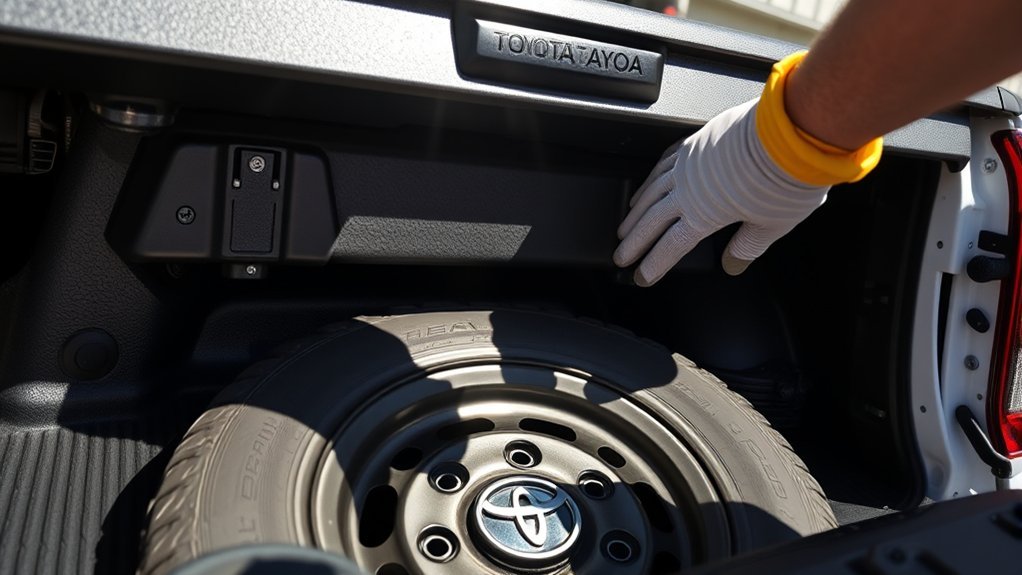
Only reinforce the tailgate if your spare tire is actually mounted on or loading the tailgate. A stock under-bed spare does not need tailgate reinforcement for a carrier rattle. For relocated spare setups, heavy wheels and oversized tires can flex thin mounting points and make the latch or carrier chatter.
Before adding reinforcement plates, confirm that the tailgate, hinges, latch, and carrier are rated for the load. Check the carrier maker’s installation instructions and your Tacoma’s payload limits. Reinforcement should spread the load across a wider area, keep the tire tight, and avoid blocking the backup camera, tailgate handle, lights, or license plate.
After installation, open and close the tailgate several times and check for rubbing. Then drive slowly over uneven pavement and listen for latch chatter. Recheck the hardware after the first short drive and again after several days of normal use.
Upgrade Your Spare Tire Carrier for Better Performance
An upgraded carrier makes sense when the stock setup is damaged, the spare is oversized, or your off-road use keeps loosening the tire. A quality swing-out or bumper-mounted system can move the spare to a more accessible position and give the tire stronger support, but it also adds weight and complexity.
Before buying one, compare the carrier’s rated capacity, hinge design, latch design, anti-rattle system, finish, replacement parts, and compatibility with your Tacoma’s sensors, hitch, camera, tailgate, and departure angle. A carrier that is too heavy or poorly fitted can create more noise than the factory setup.
For daily driving, a repaired factory under-bed carrier is often the quietest and simplest choice. For larger off-road tires, a properly installed swing-out carrier with a tight latch and firm bump stops usually works better than a loose tailgate-mounted setup.
[Products Worth Considering]

The GADFISH spare tire carrier is built for reliable hauling with a reinforced welded triangular structure and a behind plate that securely holds the tire up to 150 lbs. It fits a wide range of trailer wheel lug setups, making it suitable for boat trailers as well, while the sloping design helps reduce wind resistance and provides low-ground clearance. Installation is designed to be straightforward with different length bolts and no drilling required.
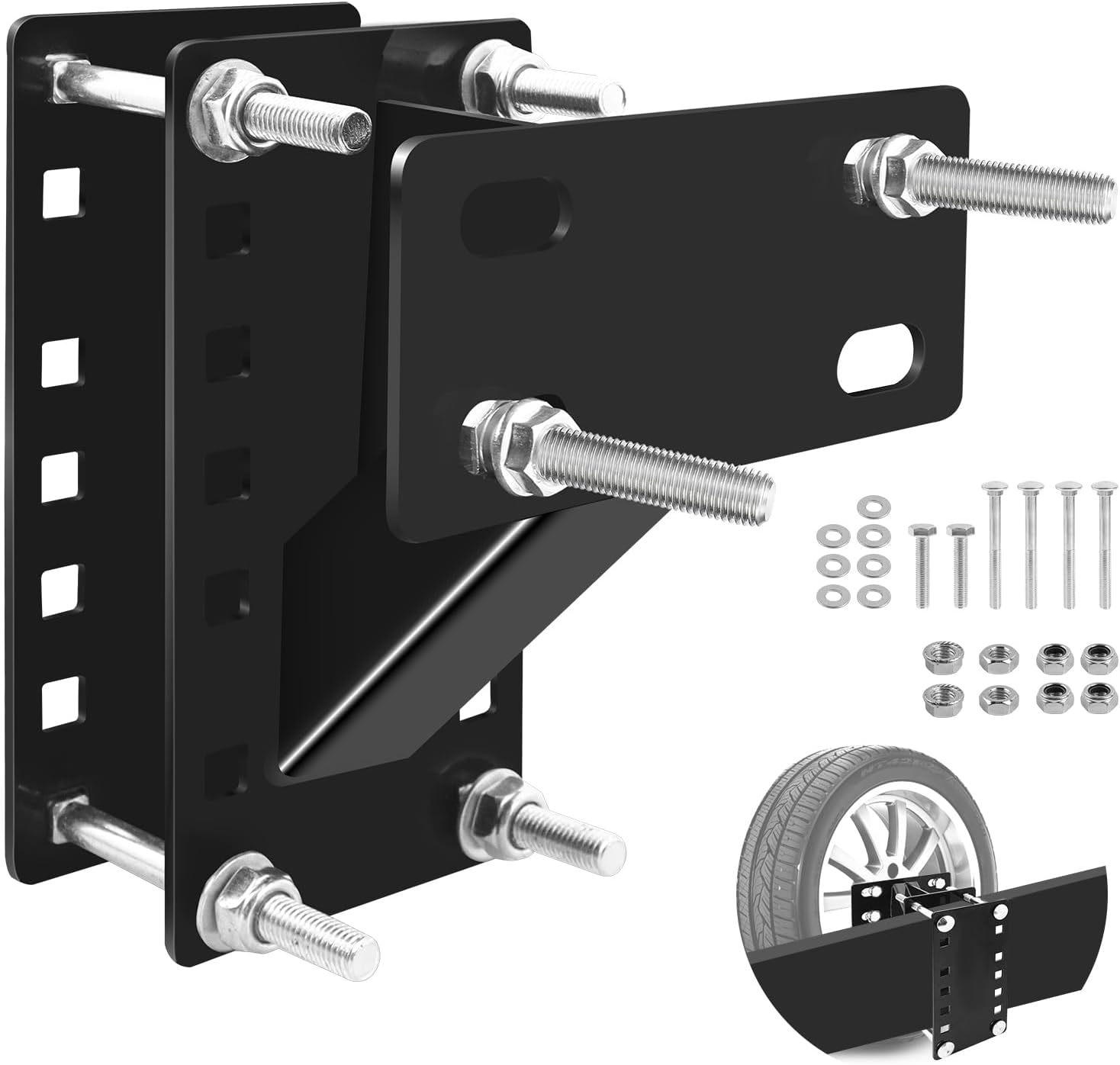
This universal spare tire mount carrier holder is built for utility trailers and boat trailers, offering a secure fit for 4, 5, and 6 lug wheels. It supports multiple bolt pattern sizes and a heavy-duty load capacity while resisting rust with a durable finish. The design allows easy installation and lets you choose the steel beam height for a better fit.

This tire inflator with pressure gauge delivers long-lasting performance with a durable rubber-protected gauge and sturdy build. The longer hose and 360 swivel air chuck help you seal the valve securely and keep your hands free while measuring, inflating, or deflating. It’s battery-free for reliable use and provides ±2 PSI accuracy in the mid-range for most typical tires, with universal compatibility for 1/4 NPT compressor outputs.
Maintenance Tips to Prevent Future Rattling Issues
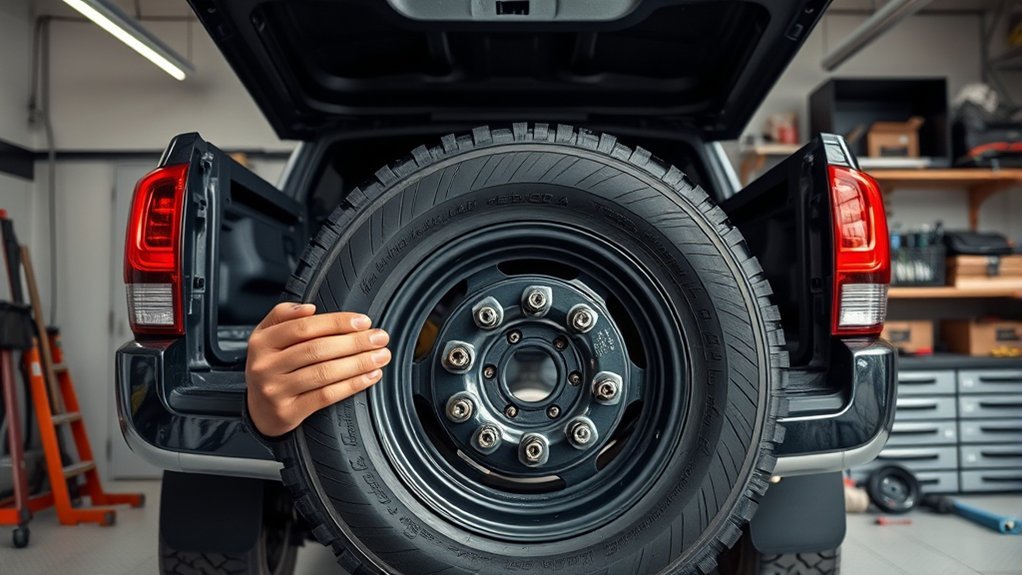
Spare tire rattles often return when hardware loosens, rubber contact points compress, or the spare loses air and no longer fits as tightly. Add the spare tire area to your normal maintenance routine, especially if you drive gravel roads, tow, or use oversized tires.
NHTSA recommends checking the pressure of all tires, including the spare, at least once a month when the tires are cold.
| Maintenance Task | Frequency | Key Action |
|---|---|---|
| Check spare tire seating | Monthly and before long trips | Make sure the spare is pulled up tight and does not knock by hand |
| Check spare tire pressure | At least monthly when cold | Use the pressure listed in your owner’s manual or Tire and Loading Information Label |
| Inspect winch, cable, and lift plate | Every oil change, after muddy trips, and after rough off-road use | Look for fraying, rust, bending, rough movement, or a tire that will not stay seated |
| Check carrier and bracket hardware | At tire rotations, before long trips, and after rough-road use | Tighten only to the correct model-year service manual or carrier-maker specification |
| Inspect rubber pads or bump stops | Every inspection | Replace cracked, missing, hardened, or compressed pads that no longer preload the carrier |
| Check recalls and service history | Twice a year or before buying a used Tacoma | Use the VIN and review dealer records for repaired or older campaigns |
After the Fix: Test Drive and Recheck
After you reseat the spare or adjust a carrier, drive slowly over the same road section that made the noise. Avoid high speed until you know the tire and carrier are secure. Listen for the same rattle, a new metal tap, or a latch chatter that appears only on uneven pavement.
When you return, check the spare by hand again. If it moved, dropped, or loosened, do not keep tightening the same parts blindly. Lower the spare, inspect the winch and contact points again, and replace worn hardware before regular driving.
When to Stop Driving and Get Help
Stop and secure the spare if you hear a heavy clunk, see the spare hanging lower than normal, or notice that the tire moves when you push it by hand. Also stop if an aftermarket swing-out latch pops open, the hinge has visible play, or the mounting plate shows cracks.
Have a mechanic inspect the truck if the rattle continues after the spare is tight. A rear rattle can also come from leaf spring hardware, shocks, sway bar links, exhaust hangers, the hitch, or a worn wheel bearing. Do not assume every rear noise is the spare tire carrier.
Frequently Asked Questions
What is the worst year for Tacomas?
Do not judge a Tacoma by one “worst year” claim alone. Frame condition, service history, rust exposure, recalls, and modifications matter more than a simple model-year label. Before buying any used Tacoma, inspect the frame, spare tire carrier area, suspension mounts, and check the VIN through NHTSA’s recall lookup.
Why is my Toyota making a rattling sound?
A rear rattle can come from a loose spare tire, a worn spare winch, loose jack tools, a tailgate latch, a trailer hitch, exhaust shielding, suspension parts, or aftermarket carrier hardware. Start by securing loose cargo and checking the spare, then inspect nearby brackets and mounts.
Why does my Tacoma spare still rattle after I tighten it?
The tire may not be centered on the lift plate, the winch may not be holding tension, the spare may be underinflated, or a nearby part may be making the noise instead. Lower the spare, inspect the cable and lift plate, raise it straight, then shake the hitch, tailgate, license plate bracket, and exhaust shield.
When should I replace the Tacoma spare tire winch?
Replace or professionally inspect the winch if the cable is frayed, the tire will not raise straight, the winch slips, the lift plate is bent, or the spare drops after being tightened. Do not rely on rubber spacers to compensate for a weak winch or damaged cable.
How do I tell if a wheel bearing is bad in a Tacoma?
A bad wheel bearing often makes a humming, growling, or grinding sound that changes with road speed or steering load. A spare carrier rattle usually sounds like knocking or tapping over bumps. If the noise changes with speed, or you feel looseness at the wheel, have the bearing inspected.
Can I use rubber spacers to stop the spare tire rattle?
Yes, but only after the spare, winch, cable, bracket, latch, and hardware are secure. Rubber spacers or bump stops can reduce metal-on-metal contact, but they should not replace damaged hardware, reduce thread engagement, or lower the strength of the mount.
Should I use anti-seize on Tacoma spare tire carrier bolts?
Only use anti-seize if the Toyota service procedure or carrier manufacturer calls for it. Lubricated threads can change how much clamping force a torque value creates. When in doubt, clean the hardware, replace damaged bolts, and follow the correct service manual instructions.
Is a hitch-mounted spare tire carrier safe for daily driving?
It can be safe if the carrier, hitch, pin, anti-rattle device, and vehicle ratings match the tire weight and driving use. It should not block lights or the license plate, reduce departure angle too much, or move in the receiver. Follow the carrier maker’s instructions and inspect it often.
Conclusion
A Tacoma spare tire carrier rattle is usually fixable once you separate the real source from the surrounding noise. Check the simple items first: loose cargo, jack tools, spare seating, spare pressure, winch condition, cable condition, and nearby brackets. If your truck has an aftermarket carrier, inspect the hinge, latch, contact pads, receiver fit, and tire preload.
Use rubber spacers only as a finishing step, not as a cover-up for loose or damaged hardware. If the spare will not stay tight, the cable is frayed, or the carrier is cracked, repair the problem before regular driving. A quiet Tacoma is good, but a secure spare tire is the real goal.
Sources
- Toyota Owners Manuals and Warranties — model-specific owner manual and service-information guidance
- NHTSA TireWise — tire pressure, spare tire checks, tread, tire aging, and tire maintenance guidance
- NHTSA Recalls — VIN-based recall lookup and recall safety guidance
- Genuine Toyota Parts and Accessories — Toyota parts lookup by vehicle fitment
- NASA-STD-5020A Fastener Standard — torque, preload, and lubrication guidance for threaded fasteners