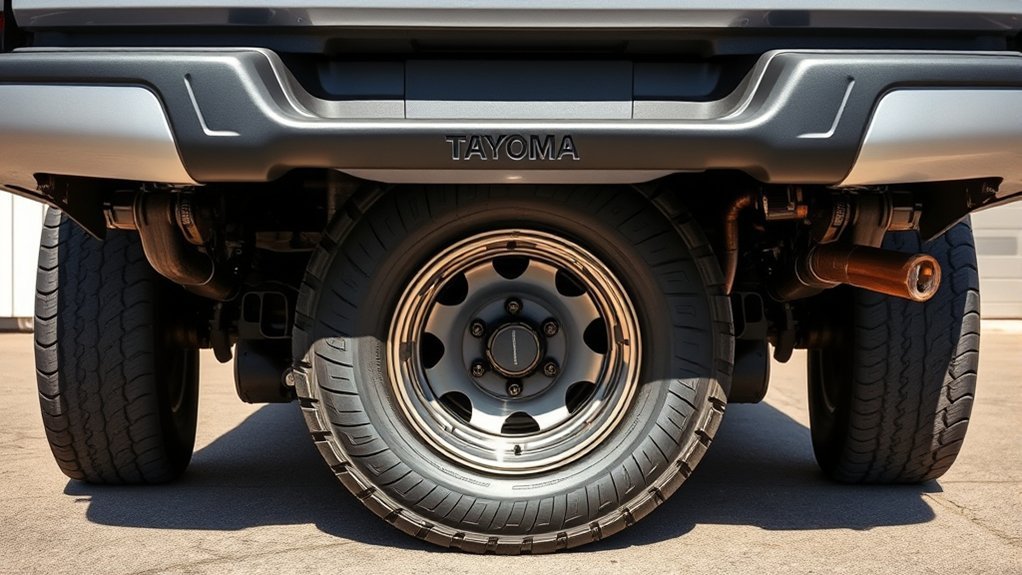
A 33-inch spare tire can often fit in the factory under-bed spare location on a Toyota Tacoma, but it is not a universal bolt-in fit. The real answer depends on the tire’s actual measured diameter, width, load range, tread shape, wheel, Tacoma generation, hitch clearance, exhaust routing, and how tightly the tire sits against the spare tire support brackets.
Quick Answer
A 285/70R17 “33-inch” tire can fit in the OEM Tacoma spare location on many trucks, but expect a tight fit. Smaller-measuring 33s, such as some BFGoodrich KO2 285/70R17 variants, usually fit easier than taller or wider tires. Always test-fit, check clearance, and reinflate the spare before driving.
Key Takeaways
- A 33-inch Tacoma spare is possible, but it is a tight fit and not every 285/70R17 measures the same.
- Check the hitch receiver, exhaust/heat shield, rear axle, leaf spring hanger, and spare support brackets before calling the fit safe.
- Airing down can help during test fitting, but a spare stored at very low PSI is not road-ready until reinflated.
- A full-size spare is best for off-road use because it avoids driving long distances on a mismatched tire.
- If your 33-inch spare hangs too low or touches hot or structural parts, use a bed carrier, bed rack, or rear swingout instead.
At a Glance
| Time Required | 20–45 minutes for a careful test-fit and clearance check |
| Difficulty | Moderate; easy if the tire fits, more involved if trimming or relocation is needed |
| Tools Needed | Tire pressure gauge, portable air compressor, flashlight, tape measure or calipers, gloves, and factory spare tire tools |
| Cost | Free for test-fitting; $50–$400+ for compressors, mounts, or basic carriers; more for bumper swingouts |
Can a 33-Inch Tire Fit in the OEM Location?
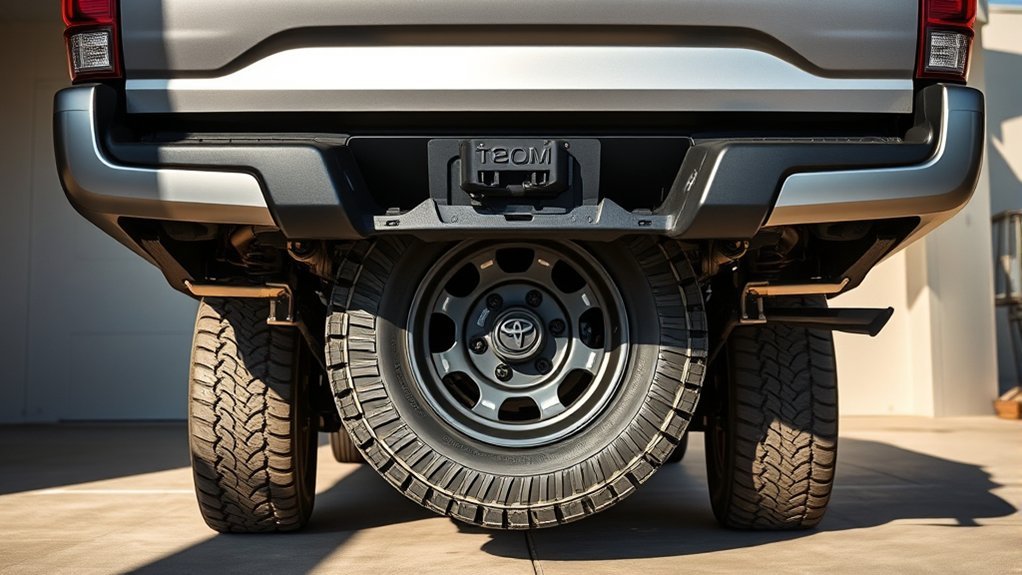
Yes, a 33-inch tire can fit in the OEM spare location of many Toyota Tacomas, but the fit is usually tight. The common 285/70R17 size is often called a 33, yet real tire diameter varies by brand, model, tread design, and load range. That small difference matters under the bed, where the tire may sit close to the hitch receiver, heat shield, exhaust, rear axle, leaf spring hanger, and spare support brackets.
For example, some BFGoodrich All-Terrain T/A KO2 285/70R17 variants measure about 32.7–32.8 inches, while some Yokohama Geolandar models in similar sizing can measure closer to 32.9–33.1 inches depending on the exact model and construction. A tire that is only a few tenths of an inch larger can be the difference between a clean fit and a tire that hangs lower, touches a bracket, or sits too close to heat.
Note: Do not judge by the “33-inch” label alone. Look up the actual mounted diameter, section width, recommended rim width, load rating, and maximum inflation specs for the exact tire you plan to carry.
Which Tires Fit Best in Tacoma’s Spare Spot?
The best spare tire for the Tacoma’s factory location is usually a full-size tire that matches your running tires but measures on the smaller side for its size class. A narrower or slightly shorter 285/70R17 generally fits better than a wide, aggressive, deep-lug all-terrain or mud-terrain with a larger true diameter.
[Products Worth Considering]

The GADFISH spare tire carrier is built for reliable hauling with a reinforced welded triangular structure and a behind plate that securely holds the tire up to 150 lbs. It fits a wide range of trailer wheel lug setups, making it suitable for boat trailers as well, while the sloping design helps reduce wind resistance and provides low-ground clearance. Installation is designed to be straightforward with different length bolts and no drilling required.

Secure a full-size spare on your trailer with this powder-coated steel spare tire mount bracket. It fits most 4-, 5-, and 6-lug wheel bolt patterns and mounts to trailer tongues up to 4 in wide and 5 in tall. Built for reliable carry with a max 150 lb load rating and includes zinc-plated hardware for straightforward installation.

These aluminum alloy tire valve stem caps with an O-ring seal help protect valve stems from corrosion while adding a clean, stylish look to your vehicle. The universal fit works across cars, trucks, motorcycles, bicycles, and more, making them an easy upgrade for everyday driving and off-road use. Installation is quick, and the included four-pack keeps all your tires dressed and protected.
Tire Size Compatibility
Most Tacoma owners looking for a 33-inch spare are considering one of these sizes:
| Size | Typical Diameter | Spare Location Notes |
|---|---|---|
| 265/70R17 | About 31.5–31.7 inches | Usually easier to fit than a true 33, but smaller than most 285/70R17 running tires. |
| 285/70R17 | About 32.7–33.1 inches | Most common “33-inch” Tacoma spare size; tight but often possible with careful test-fitting. |
| 255/80R17 | About 33 inches | Tall and narrower, which may help width clearance, but it must still match your drivetrain and emergency-use needs. |
| 285/75R17 | About 33.8–34 inches | Usually much harder to fit under the bed and often better suited to a bed carrier or swingout. |
Before buying a spare, check the tire maker’s spec sheet and compare it with your current tire. The spare should not have a lower load-carrying capacity than your truck requires, and the size, load index, and speed rating should be appropriate for the vehicle and your setup. For tire replacement guidance, see the U.S. Tire Manufacturers Association replacement tire guidance.
Airing Down Techniques
Airing down a spare can help it squeeze into the factory location because the tire compresses slightly against the support brackets. Some owners test-fit large 285/70R17 spares by lowering pressure in stages, then lifting the tire into place with the factory spare hoist.
Warning: Do not drive on a spare that has been aired down just to fit under the bed. Very low pressure can overheat and damage a tire. If you store the spare at reduced pressure, carry a compressor and reinflate it to the proper cold pressure before driving.
For safe maintenance, check the spare tire pressure at least monthly and before long trips. Use the tire placard, owner’s manual, and tire manufacturer specifications to set the correct pressure. Toyota owners can access official manual information through Toyota Owners manuals and warranties, and USTMA also recommends regular cold-pressure checks, including the spare.
Modification Options Available
Minor adjustment may help in some cases, but avoid careless cutting, grinding, or bending. The spare tire support brackets, hitch receiver, exhaust, heat shield, and leaf spring hanger all serve a purpose. If the tire only barely contacts a light support bracket, a small bracket adjustment may be enough. If it contacts the hitch, exhaust, heat shield, axle, or suspension parts, treat that as a bigger problem.
For larger-than-33-inch tires, the factory spare location usually becomes less practical. At that point, a bed-mounted tire carrier, bed rack, hitch-mounted carrier, or rear bumper swingout is usually cleaner and safer than forcing the tire into a tight under-bed space.
How to Measure Before You Test-Fit a 33-Inch Spare
Measure before you buy, especially if you are ordering a fifth matching wheel and tire. A few minutes with a tape measure can prevent a spare that rubs, hangs too low, or cannot be raised fully.
- Check actual tire specs: Look up the exact tire model, size, load range, section width, tread width, and overall diameter.
- Measure your current spare space: With the factory spare removed, measure the width between the tightest points near the hitch, exhaust, and leaf spring hanger.
- Inspect exhaust clearance: Make sure the tire will not touch the exhaust pipe, tip, muffler, or heat shield.
- Check height: Confirm the larger tire will not hang so low that it hurts departure angle or becomes the first thing to hit on trail obstacles.
- Confirm wheel compatibility: If you use a different spare wheel, confirm center bore, bolt pattern, lug seat type, offset, and brake clearance.
- Plan inflation: Decide whether the spare will be stored at full pressure or slightly reduced pressure, and make sure you have a way to reinflate it.
Pro Tip: If you are between two tire models, choose the one with the smaller published overall diameter and section width. A 32.7-inch 285/70R17 is usually easier to fit than a 33.1-inch tire with aggressive side lugs.
Where Might It Rub on Your Tacoma?
When fitting a 33-inch tire on your Tacoma, inspect every contact point before driving. A tire that fits while the truck is parked can still shift, contact a hot part, or reduce clearance on rough roads.
| Area of Concern | What to Check | Fix if Clearance Is Poor |
|---|---|---|
| Spare Support Brackets | Large tires may touch all four brackets and sit lower than the stock spare. | Test-fit carefully; make only conservative adjustments if needed. |
| Hitch Receiver | The rear of the tire may sit close to the hitch assembly. | Do not grind structural hitch parts casually; relocate the spare if needed. |
| Exhaust and Heat Shield | The tire should not touch hot exhaust parts or the heat shield. | Use a proper exhaust modification or alternate tire carrier if clearance is too tight. |
| Rear Axle / Differential | Check clearance at ride height and consider suspension compression off-road. | Relocate the spare if it can contact the axle or differential. |
| Leaf Spring Hanger | This can be one of the tightest side-clearance points. | Do not flatten or weaken suspension mounts; choose a smaller spare or carrier. |
| Departure Angle | A larger spare may hang lower and become more exposed off-road. | Use a higher-clearance carrier if you regularly wheel on ledges or steep exits. |
How to Air Down for a Better Fit
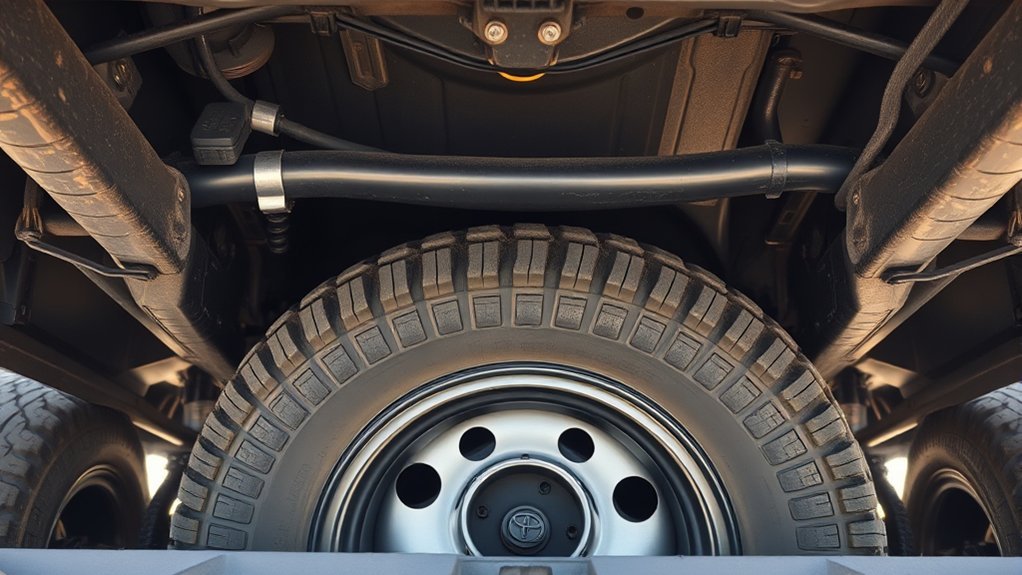
Airing down can help during installation, but it should be done carefully. The goal is not to create a permanently underinflated spare; the goal is to see whether a slightly compressed tire will lift into the spare location without unsafe contact.
- Start with the tire cold: Measure the spare pressure with an accurate gauge before making changes.
- Lower pressure gradually: Drop pressure in small steps, such as 5 PSI at a time, and test the fit after each step.
- Raise the tire slowly: Use the factory spare hoist and stop if the tire binds, twists, or contacts the exhaust, hitch, axle, or hanger.
- Check every side: Use a flashlight to inspect the top, rear, front, and sides of the tire.
- Reinflate before use: A tire aired down for storage or fitment must be brought back to the correct cold pressure before driving.
If the tire only fits when it is extremely low on air, ask yourself whether that spare is truly useful. A spare that requires a compressor before it can be driven may still work for an off-road setup, but only if you always carry reliable onboard air.
What Modifications Are Needed to Install a 33-Inch Spare?
Some 33-inch Tacoma spares fit with no permanent modifications. Others need small adjustments, reduced storage pressure, or a different storage solution. The safest approach is to test-fit first and modify only if you understand exactly what is touching.
Possible changes include:
- Choosing a smaller-measuring tire: This is the cleanest fix. A slightly smaller 285/70R17 may fit where a taller one does not.
- Using a narrower spare: A tall, narrower spare can help side clearance, but it should still be suitable for emergency use with your drivetrain.
- Minor spare bracket adjustment: Only consider this if the tire lightly contacts non-critical support tabs. Do not weaken structural or suspension parts.
- Exhaust modification: If the spare is too close to heat, a professional exhaust reroute or dump may be safer than letting rubber sit against a hot shield.
- Aftermarket carrier: A bed carrier, bed rack, hitch carrier, or swingout avoids the tight under-bed space entirely.
Warning: Do not hammer, cut, or grind the hitch receiver, leaf spring hanger, frame, or suspension mounts to force a tire into place. If a structural part is the problem, relocate the spare or consult a qualified fabricator.
[Products Worth Considering]

The Dr.Roc spare tire tool kit helps you release, lower, or raise your spare tire with reliable extension tools and a lug nut wrench. It is made from rustproof automotive-grade steel and includes an organized carry case for convenient storage. Designed for compatibility with select GM models from the late 1990s through 2019, it uses upgraded extension components to install and remove spare tires with less hassle.

This spare tire tool kit is designed for the 2004 to 2018 Ford F-150 to help you loosen and tighten wheel lug nuts and manage the spare tire and provided jack functions from underneath the vehicle. It includes the lug nut wrench and extension pieces plus a convenient storage carrying case for organized transport. The jack itself is not included.
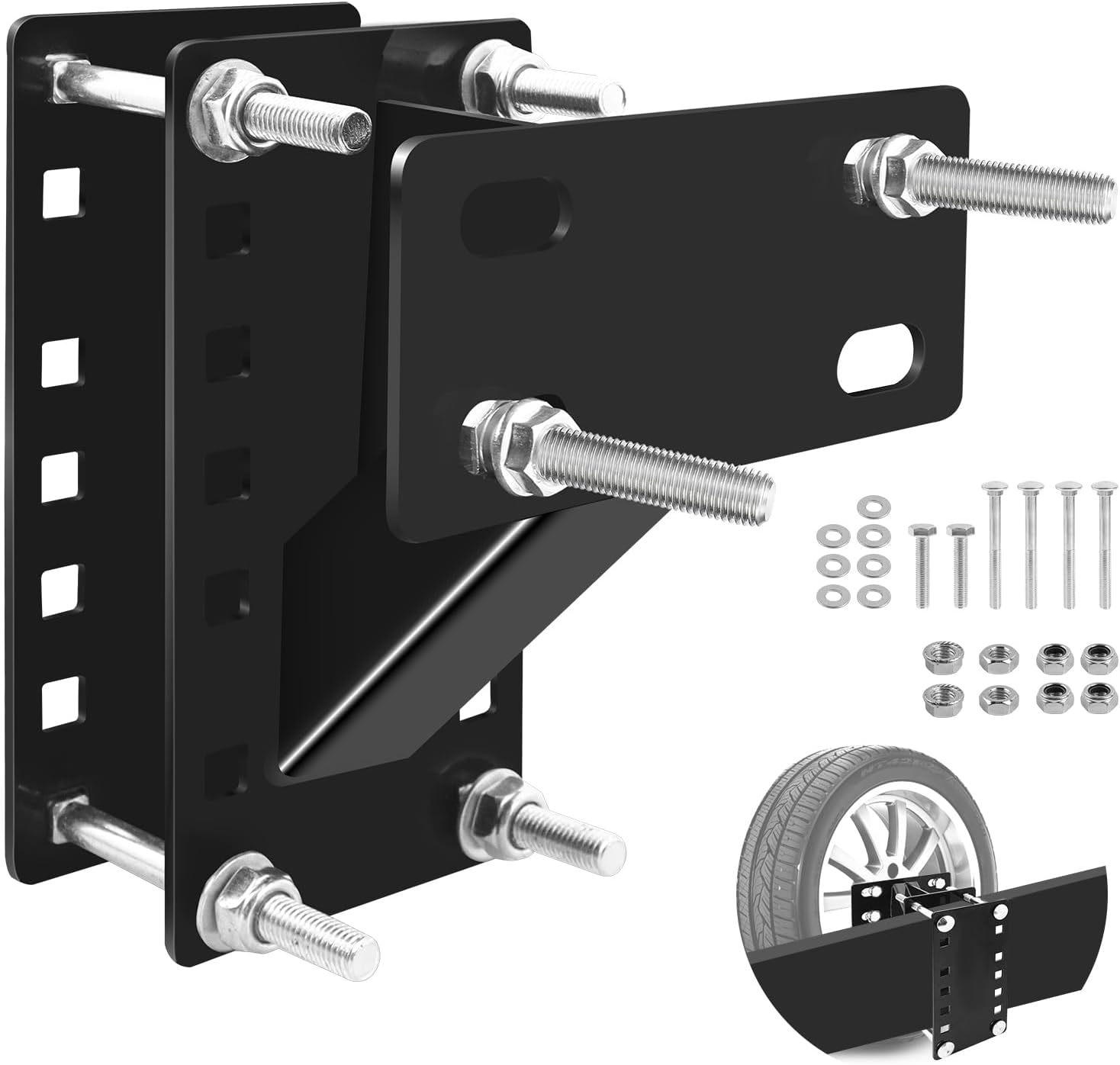
This universal spare tire mount carrier holder is built for utility trailers and boat trailers, offering a secure fit for 4, 5, and 6 lug wheels. It supports multiple bolt pattern sizes and a heavy-duty load capacity while resisting rust with a durable finish. The design allows easy installation and lets you choose the steel beam height for a better fit.
How to Test-Fit a 33-Inch Tacoma Spare
Use this process before a long trip or trail run:
- Remove the factory spare and clean dirt or debris from the spare tire area.
- Compare the stock spare and new spare side by side for height, width, and tread shoulder shape.
- Lift the 33-inch spare into place slowly using the factory spare hoist.
- Stop before full tension and inspect the hitch, exhaust, heat shield, axle, leaf spring hanger, and brackets.
- Tighten the hoist fully only if the tire seats securely and does not pinch against hot or moving parts.
- Drive a short loop over mild bumps, then recheck the spare for shifting, rubbing marks, heat marks, or looseness.
- Check it again after your first trail day because rough roads can reveal movement that a driveway test will not.
What Are Alternative Storage Solutions for Spares?
If the factory spare location is too tight, you still have several good ways to carry a full-size spare. The right option depends on how often you use the truck bed, how much trail clearance you need, and whether theft protection matters.
[Products Worth Considering]

This side-mounted U-bolt spare tire bracket helps keep a trailer spare wheel secure and protected while you travel. It supports trailer frames up to 2–3 inches wide and fits up to 15-inch tires for 4- or 5-lug wheels. The galvanized steel threaded carrier is built for long-lasting corrosion resistance and installs easily with included lug nuts and U-bolt.
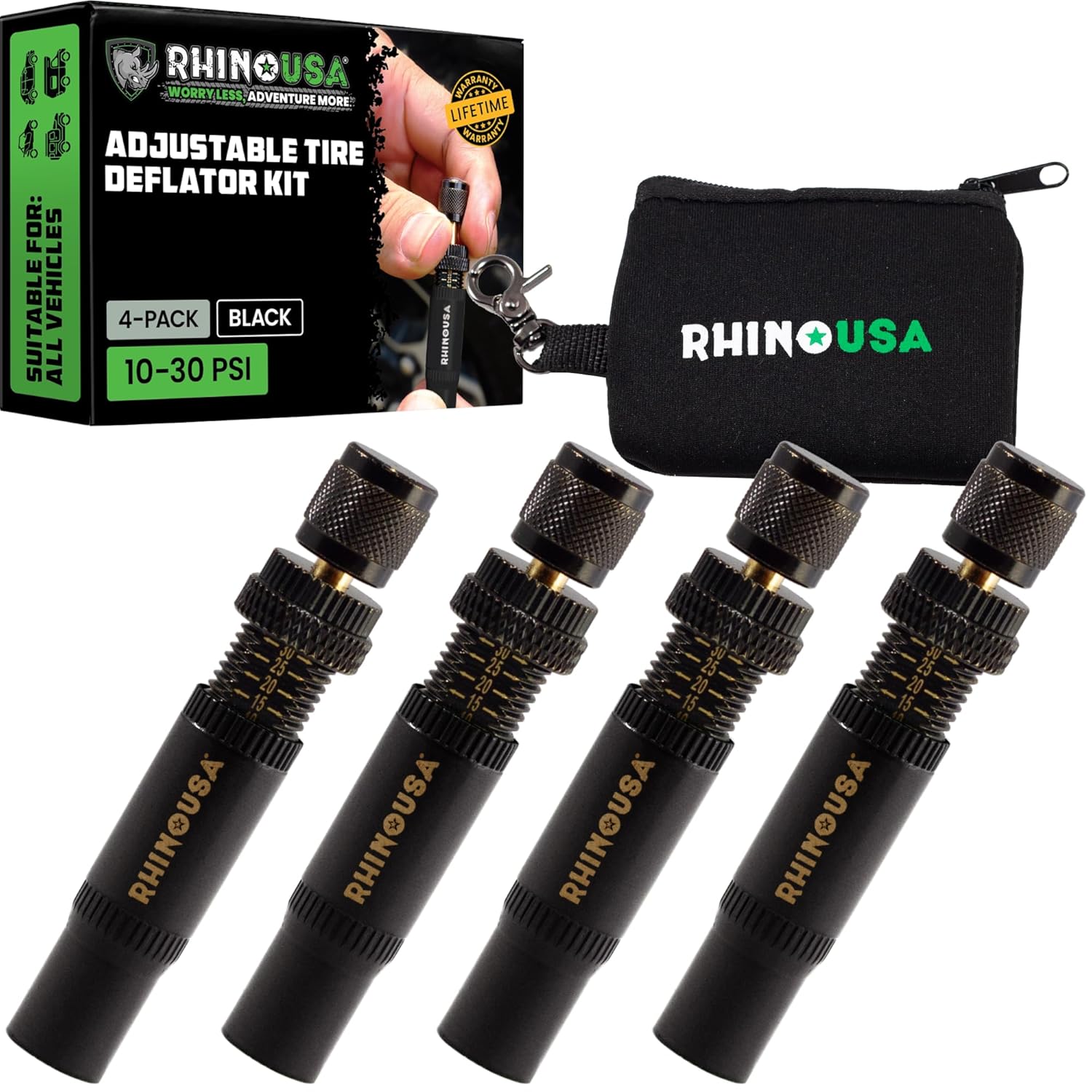
Use the Rhino USA adjustable tire deflators to air down all four tires at once by screwing one deflator onto each valve stem, letting you step away while the tires reach your preset pressure. Each deflator independently adjusts across a 10–30 PSI range with laser-etched indicators for quick setup and verification, making it ideal for beach, sand, and rocky off-road trails.

Replace worn pool cleaner tires with this all-purpose C10 tire set made to fit compatible Polaris automatic pool cleaners. The tires are designed for maximum traction while helping protect your pool finish, and they match Polaris OEM size and material. Each pack includes three new tires in sealed bags.
Bed Storage Options
The simplest option is carrying the spare in the truck bed. It is easy to inspect, easy to access, and keeps the tire away from exhaust heat. The downsides are lost cargo space and higher theft risk unless the tire is locked down.
- Flat in the bed: Simple and cheap, but it takes up the most space.
- Upright bed mount: Saves floor room and can look clean, but it needs a strong mount and tie-down points.
- Bed rack mount: Keeps the tire out of the main cargo floor, but adds height and weight above the bed.
Tire Carrier Solutions
A dedicated tire carrier is the cleanest option for larger spares, especially if you run tires bigger than 285/70R17.
- Bed rail tire carrier: Good balance of access, security, and cost.
- Hitch-mounted carrier: Removable and useful for trips, but it may affect departure angle and tailgate access.
- Rear bumper swingout: Best for frequent off-road use and oversized spares, but it is the most expensive and adds rear weight.
Can You Fit Tires Bigger Than 33 Inches?
You may be able to fit a tire bigger than 33 inches under a Tacoma, but it becomes much less practical. A 285/75R17, 295/70R17, 35-inch tire, or wide mud-terrain may interfere with the hitch, exhaust, axle, leaf spring hanger, or support brackets. Even if it physically fits, it may hang low enough to reduce departure angle and expose the tire to rocks or trail damage.
For tires larger than a typical 285/70R17, the better answer is usually relocation. A rear swingout, bed carrier, or bed rack gives you more clearance and easier access without forcing a large tire into the factory spare pocket.
Why You Need a Full-Size Spare for Off-Roading
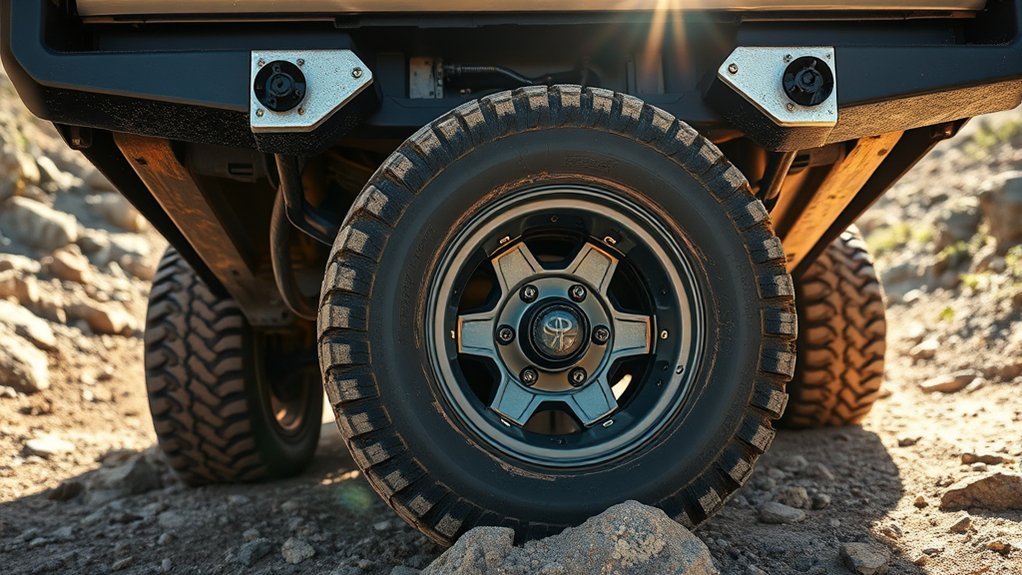
A full-size spare is strongly recommended if you off-road, overland, tow, or travel far from tire shops. A small temporary spare may get you a short distance on pavement, but it is not ideal for a loaded truck on dirt, rocks, snow, or remote trails.
| Benefit of a Full-Size Spare | Why It Matters Off-Road |
|---|---|
| Matching diameter | Reduces stress from driving a long distance on a mismatched tire. |
| Matching load capacity | Better supports a loaded truck, camping gear, passengers, and recovery equipment. |
| Matching tread type | Helps maintain traction and control on dirt, rocks, mud, or snow. |
| Trail confidence | Lets you leave the trail safely after a sidewall cut, puncture, or bead issue. |
The best spare is not just one that fits under the bed. It is one that fits the truck, clears the hardware, carries the load, and is ready to drive when you need it.
Maintenance Checks After Installing a 33-Inch Spare
Once your 33-inch spare is mounted, add it to your regular maintenance routine:
- Check pressure monthly and before long trips.
- Inspect for heat marks near the exhaust side.
- Look for rubbing marks on the tire shoulders and sidewall.
- Confirm the hoist is tight and the tire has not shifted.
- Check age and condition because under-bed spares see water, road salt, dirt, and heat cycles.
- Test your tools so you know the jack, lug wrench, lock key, and spare hoist work before an emergency.
Final Thoughts on Upgrading Your Spare Tire
Upgrading to a full-size spare tire is a smart move for Tacoma owners running 33-inch tires, especially if the truck sees trails, towing, camping trips, or remote roads. The factory under-bed location can work for many 285/70R17 tires, but it is not guaranteed. Actual tire size, width, tread shape, truck generation, hitch clearance, and exhaust routing all matter.
If the spare fits securely, clears heat and moving parts, and does not hang too low, the OEM location is convenient and keeps your bed open. If it only fits when forced, touches the exhaust, rubs the hitch, or sits too low for your trails, use a dedicated carrier instead. A spare tire should solve a problem, not create a new one under the truck.
Frequently Asked Questions
What is the largest tire you can put in a Toyota Tacoma spare location?
For many Tacomas, a 285/70R17 is the practical upper limit for the factory under-bed spare location. Some fit easily, some fit tightly, and some require airing down or a different carrier. Tires larger than a typical 33-inch size usually need more clearance or relocation.
Will a 285/70R17 spare fit under a Tacoma?
Often, yes, but it depends on the tire and truck. A 285/70R17 can measure around 32.7 to 33.1 inches depending on the model. Check actual tire specs and test clearance around the hitch, exhaust, axle, leaf spring hanger, and support brackets.
Is it safe to store a spare tire aired down?
It can be used as a storage tactic, but the tire must be reinflated before driving. A very low-pressure spare is not road-ready and can overheat or fail. Carry a reliable compressor if you store the spare below its normal operating pressure.
Does a 33-inch spare affect Tacoma departure angle?
It can. A larger spare may hang lower than the factory spare, especially if it cannot seat fully against the underside of the truck. If you regularly drive ledges, steep exits, or rocky trails, check how low the spare sits before relying on the OEM location.
Should my Tacoma spare match all four tires?
A matching full-size spare is best, especially for off-road use and long-distance travel. At minimum, the spare should be safe for the truck’s load and close enough in diameter to avoid extended driving on a mismatched tire.
Conclusion
A 33-inch tire can fit in the spare location of many Toyota Tacomas, but it is a tight, case-by-case fit rather than a guarantee. A smaller-measuring 285/70R17 is your best bet for the OEM under-bed location. Before you rely on it, test-fit the tire, inspect every clearance point, check pressure, and make sure it is secure after driving.
If the tire rubs, sits near the exhaust, or hangs too low for your trails, do not force it. Move the spare to the bed, a dedicated tire carrier, or a rear swingout. The goal is simple: carry a full-size spare that is safe, accessible, and ready when a flat could otherwise end the trip.
Sources
- Toyota Owners Manuals and Warranties — official owner manual reference for vehicle-specific tire and spare information.
- U.S. Tire Manufacturers Association: Replacing Tires — replacement tire size, load index, and speed rating guidance.
- U.S. Tire Manufacturers Association: Tire Care Essentials — tire pressure, cold-pressure checks, and spare tire maintenance.
- BFGoodrich All-Terrain T/A KO2 — official KO2 tire information and warranty details.
- Yokohama Geolandar A/T G015 — official tire information, features, and warranty details.
- Trail Tacoma: Will a 33-Inch Tire Fit the Spare Tire Mount? — real-world Tacoma 285/70R17 spare fitment observations.