
A 285 tire is best understood by reading the full size, not the first number alone. In a size like 285/70R17, 285 means the tire is about 285 mm wide, while the aspect ratio and wheel diameter determine the final height. For most shoppers, 285/70R17 is a near-33-inch tire, not an exact 33×12.50 replacement.
Quick Answer
A 285/70R17 tire is about 32.7 inches tall and 11.2 inches wide, so it sits close to a 33-inch tire but is narrower than a 33×12.50R17. Common alternatives include 285/75R17, 295/70R17, 305/65R17, and 255/80R17, depending on your clearance, wheel width, and gearing.
Key Takeaways
- A 285 tire usually means the tire has a nominal section width of 285 mm, or about 11.2 inches.
- A 285/70R17 measures about 32.7 inches tall by calculation, so it is close to a 33-inch tire but not a true 33×12.50.
- 285/75R17 is taller at about 33.8 inches, while 295/70R17 is about 33.3 inches and slightly wider.
- Changing tire diameter affects speedometer readings, odometer readings, gearing, braking feel, and electronic stability systems.
- Always confirm rim width, load rating, speed rating, offset, and wheel-well clearance before installing a larger tire.
What Does a 285 Tire Size Mean?
A 285 tire size tells you the tire’s nominal section width is 285 millimeters. Since 1 inch equals 25.4 millimeters, 285 mm converts to about 11.22 inches. That does not tell you the full tire height by itself, because the aspect ratio and wheel diameter finish the calculation.
In 285/70R17, the 70 means the sidewall height is 70% of the 285 mm section width. The R means radial construction, and the 17 means the tire fits a 17-inch wheel. This tire-code format follows the standard pattern used for metric tire sizing, where the first number is section width, the second number is aspect ratio, and the final number is rim diameter. You can review the technical structure in this tire code reference.
For a 285/70R17, the sidewall is about 7.85 inches tall. Add two sidewalls to the 17-inch wheel diameter, and the tire comes out to about 32.71 inches tall by calculation.
Note: Tire-size math gives a useful theoretical size, but the actual mounted diameter and width can vary by brand, tread design, load range, air pressure, and measuring rim width. Always check the manufacturer’s specification sheet before buying.
How to Calculate a 285 Tire Size
You can calculate a metric tire’s approximate diameter with this formula:
Overall diameter = wheel diameter + 2 × (section width × aspect ratio ÷ 25.4)
For 285/70R17, the math looks like this:
- Section width: 285 mm ÷ 25.4 = 11.22 inches
- Sidewall height: 285 × 0.70 ÷ 25.4 = 7.85 inches
- Overall diameter: 17 + 7.85 + 7.85 = 32.71 inches
- Circumference: 32.71 × 3.1416 = 102.76 inches
- Revolutions per mile: 63,360 ÷ 102.76 = about 617 revs per mile
This is why a 285/70R17 is often described as a “near 33.” It is close enough to compare with 33-inch tires, but it is still slightly shorter than a true 33-inch size.
Is a 285 Tire the Same as 33 Inches?
No, a 285 tire is not automatically the same as a 33-inch tire. A 285/70R17 is about 32.7 inches tall, while a 33×12.50R17 is labeled as roughly 33 inches tall and 12.5 inches wide. The height is close, but the width is not.
The most important difference is that 285 only tells you the section width. A 285/75R17, 285/70R17, and 285/65R18 all start with 285, but each one has a different final diameter.
285 Vs 33 Inches
A 285/70R17 sits in the same practical range as a 33-inch tire, but you should not treat it as an exact 33×12.50 match.
| Metric | 285/70R17 | 33×12.50R17 |
|---|---|---|
| Approx. diameter | 32.71 in | About 33.00 in |
| Approx. width | 11.22 in | About 12.50 in |
| Main difference | Narrower, slightly shorter | Wider, slightly taller |
| Best description | Near-33-inch metric tire | True 33-inch flotation-style tire |
If your main goal is height, 285/70R17 is close to 33 inches. If your main goal is the wide stance of a 33×12.50, the 285/70R17 will look and fit narrower.
Real Size Differences
The size difference affects more than appearance. A taller tire changes ground clearance and gearing. A wider tire changes steering weight, fender clearance, suspension clearance, and the chance of rubbing at full steering lock.
A 33×12.50R17 can require more wheel offset, trimming, lift, or suspension clearance than a 285/70R17. That is why two tires that look close on paper can fit very differently on the same vehicle.
285 Tire Equivalent Sizes by Wheel Diameter
The closest 285-width equivalents depend on your wheel diameter. A 285 tire on a 16-inch wheel needs a taller sidewall to reach the same overall height as a 285 tire on a 17-, 18-, or 20-inch wheel.
| Wheel Size | Common 285 Size | Approx. Diameter | Approx. Width | Use Case |
|---|---|---|---|---|
| 16 in | 285/75R16 | 32.83 in | 11.22 in | Near-33-inch setup on 16-inch wheels |
| 17 in | 285/70R17 | 32.71 in | 11.22 in | Most common 285 near-33 option |
| 18 in | 285/65R18 | 32.59 in | 11.22 in | Near-33-inch size for 18-inch wheels |
| 20 in | 285/60R20 | 33.46 in | 11.22 in | Taller 20-inch-wheel equivalent |
Use this chart as a starting point, not a fitment guarantee. The same listed size can measure slightly different across all-terrain, mud-terrain, highway, and winter tire models.
[Products Worth Considering]

This car D-wheel lock nut key provides an anti-theft solution for D-shaped wheel lock bolts, helping keep your wheels secure. It features a flower-shaped internal pattern that resists micro-adjustment theft while allowing removal and mounting of compatible locking nuts. Made for reliable performance under high torque, it’s easy to use with standard socket wrench turning for quick tire maintenance and emergency repairs.

The Kurgo Seasonal Tire Tote helps protect your car interior, clothes, and garage from tire grime, brake dust, and residue during seasonal tire changes. Its universal design fits most passenger tires between 22" and 31" in diameter, making storage and transport simpler with less mess. Built for rugged, repeated use, it’s machine washable for easy care and comes with a lifetime warranty.

Upgrade your 2024-2026 Tesla Model 3 Highland with REEVAA all-weather mud flaps designed for seamless fit along the original body lines. The set of four delivers strong splash protection against mud, gravel, and road debris while using OEM-grade durable materials. Installation is non-destructive with original hole positions and snap-in clips, and the aerodynamic design helps minimize impact on efficiency.
How 285/70R17 Compares to 33×12.50R17
The 285/70R17 and 33×12.50R17 are close in height but different in width. The 285/70R17 is easier to fit on many trucks and SUVs because it is about 1.3 inches narrower. The 33×12.50R17 gives a wider stance, but it also increases the chance of rubbing on fenders, control arms, mud flaps, or inner liners.
| Measurement | 285/70R17 | 33×12.50R17 |
|---|---|---|
| Diameter | 32.71 in | About 33.00 in |
| Section width | 11.22 in | About 12.50 in |
| Circumference | 102.76 in | About 103.67 in |
| Revs per mile | About 617 | About 611 |
| Fitment impact | Usually easier to clear | More likely to need trimming or offset changes |
Choose 285/70R17 if you want a practical near-33-inch tire with a narrower footprint. Choose 33×12.50R17 only if your wheels, suspension, fenders, and steering clearance can handle the extra width.
[Products Worth Considering]

Upgrade your vehicle’s look with glossy hubcap wheel covers designed for 16-inch steel wheels. These snap-on replacements help protect against scratches, rust, and brake dust while offering durable, impact-resistant ABS construction. Installation is quick with no special tools, and the covers are easy to clean with water. Note: they are not compatible with alloy rims or damaged/deformed steel wheels.

Malco tire mounting and demounting lubricant is a ready-to-use tire lube formulated to reduce friction during tire installation for passenger cars, light trucks, farm tires, and heavy-duty equipment. It provides rust-inhibiting protection to help reduce corrosion on rims and wheels, and helps support proper tire bead seating during inflation to reduce air leakage. The silicone-free, soap-free formula is whitewall safe to help prevent discoloration on whitewall tires and sensitive sidewall markings.

Mount your spare tire directly to the inside wall of an enclosed trailer or garage to save space and keep your tire secure. This wall-mount spare tire carrier is designed for universal trailer tire fit and includes a fixed plate and chute for convenient screw replacement. Nylon insert hex lock nuts help prevent the tire from falling off, and wing hardware enables faster load and unload during maintenance.
How 285/70R17 Compares to 285/75R17 and 295/70R17
The 285/75R17 and 295/70R17 are common alternatives when you want more height or a wider footprint than 285/70R17. The 285/75R17 keeps the same nominal width but adds sidewall. The 295/70R17 adds both width and height.
| Size | Approx. Diameter | Approx. Width | Difference From 285/70R17 | Best For |
|---|---|---|---|---|
| 285/70R17 | 32.71 in | 11.22 in | Baseline | Balanced near-33 fit |
| 285/75R17 | 33.83 in | 11.22 in | About 3.4% taller | More clearance with the same nominal width |
| 295/70R17 | 33.26 in | 11.61 in | About 1.7% taller | Slightly wider stance and more height |
If you want the smallest change from 285/70R17, 295/70R17 stays closer in diameter than 285/75R17. If you want maximum height in this group, 285/75R17 is the taller choice, but it may require more clearance and speedometer correction.
How a 285 Tire Changes Speedometer Readings
A 285 tire changes your speedometer only when its overall diameter differs from the tire size your vehicle was calibrated for. The larger the new tire, the farther your vehicle travels with each wheel revolution. That means your actual road speed can be higher than the number shown on the dash.
Use this simple formula:
Actual speed = indicated speed × new tire diameter ÷ original tire diameter
For example, if your original tire was 31.6 inches tall and you switch to a 32.7-inch 285/70R17, your speedometer changes by about 3.5%. At an indicated 60 mph, your actual speed would be about 62 mph. If your original tire was 30.6 inches tall, the same 285/70R17 would create a larger change, close to 7%.
Warning: Do not assume a 285 tire creates the same speedometer error on every vehicle. Compare the new tire against your original tire size, then recalibrate the speedometer or vehicle settings when the diameter change is large enough to affect safe driving.
Best 285 Tire Equivalent Options Within About 3%
The common “3% rule” means the new tire’s diameter should usually stay within about 3% of your original tire diameter or your chosen target size. It is a screening rule, not a guarantee. Some vehicles need a tighter range because of ABS, stability control, adaptive cruise, gearing, fender clearance, or drivetrain requirements.
| Size | Approx. Diameter | Width | Vs. 285/70R17 | Notes |
|---|---|---|---|---|
| 305/65R17 | 32.61 in | 12.01 in | 0.3% shorter | Very close height, wider footprint |
| 255/80R17 | 33.06 in | 10.04 in | 1.1% taller | Tall and narrow option |
| 295/70R17 | 33.26 in | 11.61 in | 1.7% taller | Slightly taller and wider |
| 275/70R17 | 32.16 in | 10.83 in | 1.7% shorter | Slightly smaller, narrower alternative |
| 285/75R17 | 33.83 in | 11.22 in | 3.4% taller | Just outside 3% from 285/70R17, but within about 3% of a 33-inch target |
If you are replacing a 285/70R17, the closest diameter alternatives in this group are 305/65R17, 255/80R17, 295/70R17, and 275/70R17. If your goal is simply to stay near a 33-inch target, 285/75R17 also belongs in the conversation, but it is noticeably taller than 285/70R17.
[Products Worth Considering]

Switch to tubeless with this Muc-Off rim tape designed to create an airtight seal for smooth-running setups. The pressure-sensitive adhesive offers the right stretch for strength and durability, while the semi-transparent material helps you locate the valve hole quickly. It includes four seal patches for a secure finishing seal after wrapping.

Upgrade your Toyota’s wheels with durable aluminum alloy valve stem caps that help protect valve cores from corrosion and direct exposure to road grime, clay, water, and snow. Rubber rings improve sealing to help prevent air leakage and maintain stable tire pressure for safer driving. These caps are easy to install or remove without tools and add a unique, stylish look to your car.

Secure a full-size spare on your trailer with this powder-coated steel spare tire mount bracket. It fits most 4-, 5-, and 6-lug wheel bolt patterns and mounts to trailer tongues up to 4 in wide and 5 in tall. Built for reliable carry with a max 150 lb load rating and includes zinc-plated hardware for straightforward installation.
How to Compare Diameter, Width, and Clearance
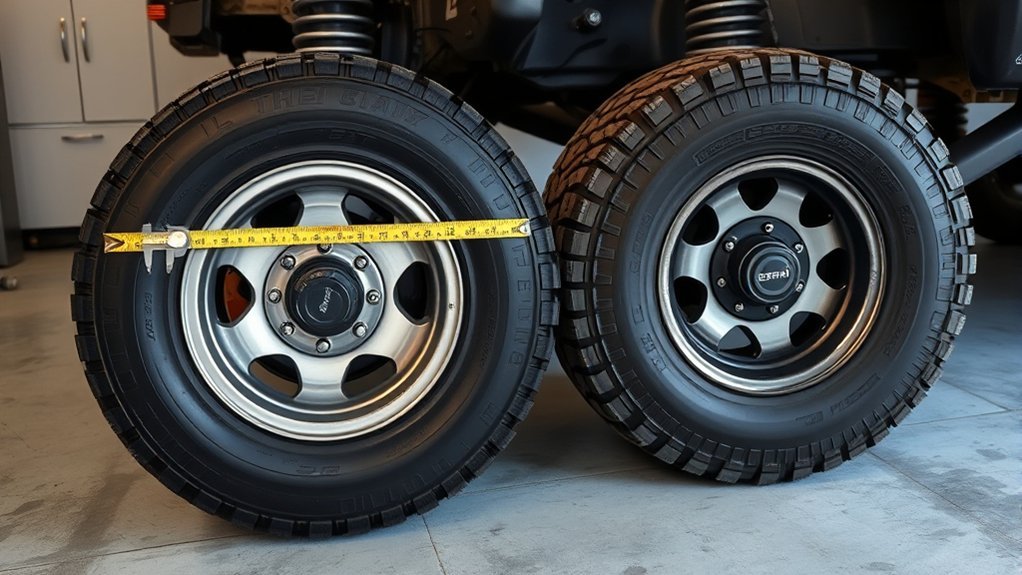
Start with overall diameter, then check width, rim fit, and clearance. A tire can be close in height but still rub because it is wider, mounted on a different offset wheel, or paired with suspension parts that reduce inner clearance.
Diameter Comparison
Diameter affects ground clearance, gearing, speedometer readings, odometer readings, and shift behavior. If the new tire is taller than stock, your engine turns fewer revs at the same road speed. That can feel smoother on the highway, but it can also reduce low-speed torque and make the vehicle feel heavier from a stop.
- Write down your original tire size from the door placard or owner’s manual.
- Calculate or look up the original diameter.
- Compare the new diameter against the original diameter.
- Keep the change close unless your vehicle setup supports the increase.
Width And Fitment
A 285 tire is about 11.22 inches wide by nominal section width. Many 285/70R17 tires list an approved rim width around 7.5 to 9.0 inches, but you should verify the exact tire’s manufacturer specs. A rim that is too narrow or too wide can affect bead seating, sidewall shape, handling, and tread wear.
Width also affects the inside and outside clearance. A wider tire can contact upper control arms, sway bars, mud flaps, fender liners, or body mounts. Wheel offset and backspacing often matter as much as tire size.
Clearance Considerations
Check clearance in the positions where rubbing usually happens: full steering lock, reverse steering, suspension compression, and loaded driving. A tire that clears while parked can still rub when the suspension cycles or the body rolls.
- Measure current clearance around the fender liner, control arms, and mud flaps.
- Check clearance at full left and full right steering lock.
- Account for suspension compression, added cargo, and towing tongue weight.
- Confirm spare tire storage if you plan to carry a matching full-size spare.
- Match or exceed the original load index and speed rating.
Pro Tip: Compare tires by actual manufacturer specs when possible, not only by size label. Two 285/70R17 all-terrain tires can have different tread widths, mounted diameters, weights, and recommended rim-width ranges.
Tire Size Converter Chart by Wheel Size
A tire size converter chart helps you compare diameter, width, sidewall height, circumference, and revolutions per mile before you buy. A calculator is especially useful when you are moving between metric sizes like 285/70R17 and inch-style sizes like 33×12.50R17.
When using any converter, compare these values:
- Overall diameter: affects clearance, gearing, speedometer readings, and ground clearance.
- Section width: affects rim fit, stance, steering feel, and rubbing risk.
- Sidewall height: affects ride comfort, sidewall flex, and wheel protection.
- Revolutions per mile: affects speedometer and odometer accuracy.
- Load and speed rating: affects whether the tire is safe for your vehicle’s weight and use.
For side-by-side checks, use a tire-size calculator that shows section width, sidewall height, overall diameter, circumference, revolutions per mile, and estimated speedometer change. Discount Tire’s tire size calculator is one example of a tool built for this type of comparison.
Frequently Asked Questions
Is a 285 tire a 33 or 35?
A 285/70R17 is closer to a 33-inch tire, not a 35-inch tire. It measures about 32.7 inches tall by calculation. A true 35-inch tire is much taller and usually requires more clearance, gearing consideration, and speedometer correction.
Is a 285 a 31-inch tire?
No. A 285/70R17 is about 32.7 inches tall, so it is much closer to 33 inches than 31 inches. A 31-inch tire would need a smaller wheel, lower aspect ratio, or different size combination.
Is a 285 a 32-inch tire?
A 285/70R17 is slightly taller than a true 32-inch tire. It measures about 32.7 inches by calculation, so many people group it with near-33-inch tires. Always check the full size because not every 285 tire has the same diameter.
What tire size is closest to 285/70R17?
305/65R17 is very close in height at about 32.6 inches, but it is wider. 255/80R17 is also close in height at about 33.1 inches, but it is narrower. 295/70R17 is slightly taller and wider than 285/70R17.
Will 285 tires rub?
They can, depending on your vehicle, wheel offset, suspension height, fender clearance, and tire model. A 285/70R17 is easier to fit than many 12.50-inch-wide tires, but you still need to check full-lock steering clearance, suspension compression, and load conditions.
Conclusion
A 285 tire is a width starting point, not a complete size by itself. For the common 285/70R17, you get a tire that is about 32.7 inches tall and 11.2 inches wide, which makes it a practical near-33-inch option. It is not the same as a 33×12.50R17 because the 33×12.50 is wider and usually slightly taller.
Before choosing an equivalent, compare the full tire size, not just the first number. Check diameter, width, rim range, load rating, speed rating, wheel offset, clearance, and speedometer impact. That gives you a tire that fits your vehicle safely instead of a size that only looks right on paper.
Sources
- ISO 83.160.10 Road Vehicle Tyres – current road vehicle tyre standards and tyre/rim standard references.
- Tire Code Reference – tire-code structure, section width, aspect ratio, construction, rim diameter, and theoretical diameter formula.
- Discount Tire Tire Size Calculator – comparison fields for section width, sidewall height, overall diameter, circumference, revolutions per mile, and speedometer change.
- Plus Sizing Reference – why keeping tire diameter and circumference close helps reduce speedometer, torque, and traction-control changes.

