
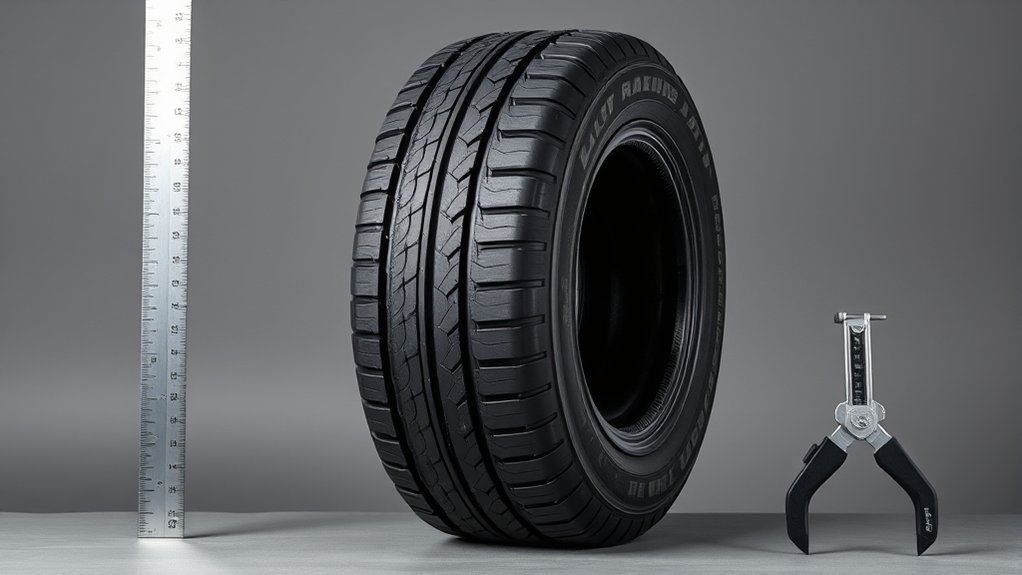
A 255/75R17 tire is about 32.1 inches tall, 10.0 inches wide, and has a 7.5-inch sidewall. In metric terms, that is roughly 814 mm in overall diameter, 255 mm in section width, and 191 mm in sidewall height. This size gives trucks and SUVs a tall sidewall profile, which can help ride comfort and clearance, but it can also affect steering feel, speedometer accuracy, gearing, and fuel use.
Quick Answer
A 255/75R17 tire is about 32.1 inches tall, 10.0 inches wide, and built for a 17-inch wheel. Its sidewall is about 7.5 inches tall. Before buying, compare it with your factory tire size, wheel width, load rating, suspension clearance, and tire-pressure placard.
Key Takeaways
- A 255/75R17 tire is about 32.1 inches tall overall.
- Its section width is 255 mm, or about 10.0 inches.
- The sidewall height is about 191 mm, or 7.5 inches.
- It can raise ride height slightly compared with smaller stock tires, but fitment depends on wheel wells, suspension, steering lock, wheel width, and load rating.
- Close diameter alternatives include 275/70R17, 235/80R17, 265/70R17, 285/65R17, and 245/75R17, but each changes width and clearance differently.
What Does 255/75R17 Mean?
The size code 255/75R17 tells you the tire’s width, sidewall ratio, construction, and wheel diameter. The 255 means the tire has a nominal section width of 255 mm. The 75 means the sidewall height is 75% of that width. The R means radial construction, and the 17 means the tire fits a 17-inch wheel.
Using the standard tire-size formula, the sidewall is 255 × 0.75 = 191.25 mm, or about 7.53 inches. Add two sidewalls to the 17-inch wheel diameter, and you get an overall diameter of about 32.06 inches. Real-world dimensions can vary a little by tire brand, tread design, load range, and measuring rim width, so always confirm the exact model specs before buying.
255/75R17 Dimensions in Inches and Millimeters
For quick comparison, a 255/75R17 tire has the following common calculated dimensions. These match the widely listed size data for this tire size, though individual tire models may measure slightly differently once mounted and loaded.
| Overall diameter | About 32.1 inches / 814 mm |
| Section width | About 10.0 inches / 255 mm |
| Sidewall height | About 7.5 inches / 191 mm |
| Wheel diameter | 17 inches / 431.8 mm |
| Circumference | About 100.7 inches / 2,558 mm |
| Revolutions per mile | About 629 revs/mile |
How Tall Is a 255/75R17 Tire?
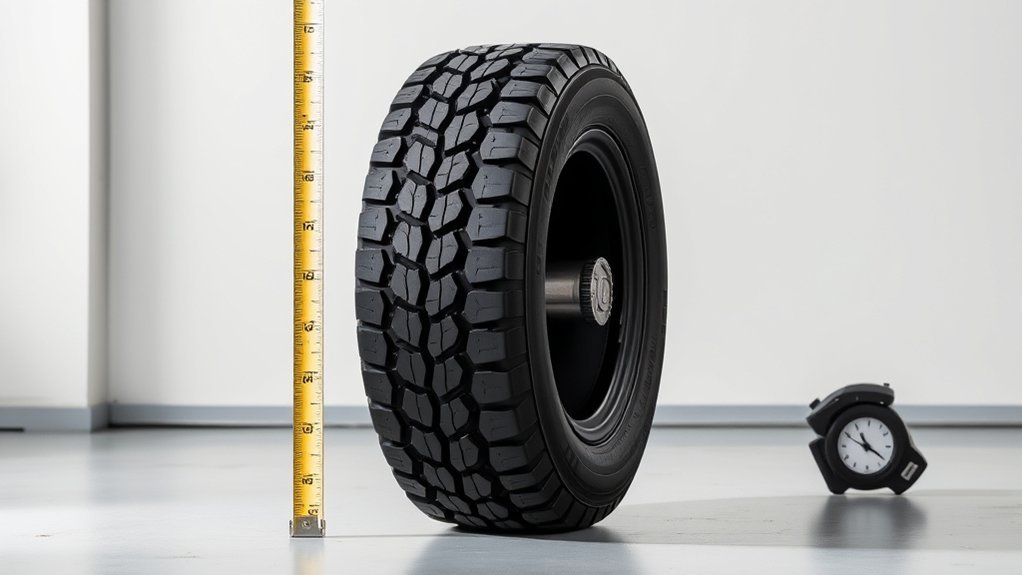
A 255/75R17 tire stands about 32.1 inches tall overall, or roughly 814 mm, from the bottom of the tire to the top of the tread. That number is the overall diameter, and it is the key measurement for judging clearance, ride height, speedometer change, and gearing.
On many trucks and SUVs, this height creates a useful balance between daily driving and mild off-road clearance. The 17-inch wheel leaves a tall sidewall, which can improve ride compliance on rough pavement and uneven trails. For off-road use, choosing a tire with strong traction matters as much as the size itself.
Note: Tire size charts give calculated dimensions. The exact mounted height can vary slightly by tire model, tread depth, load range, inflation pressure, and wheel width.
255/75R17 Tire Width and Sidewall Height
You can break down a 255/75R17 tire into two important profile numbers: a 255 mm section width and a 75% aspect ratio. Together, they produce a tire that is about 10.0 inches wide with a sidewall about 7.5 inches tall.
Tire Width Breakdown
The 255 mm width converts to about 10.04 inches. That width helps determine the tire’s footprint, steering feel, wheel-well clearance, and inner suspension clearance. It is wide enough for a stable contact patch but not as bulky as wider 285 mm or 12.50-inch flotation-style sizes.
- 255 mm = about 10.04 inches section width.
- R = radial tire construction.
- 17 = designed for a 17-inch wheel.
- Common use = trucks, SUVs, Jeeps, and some lifted crossover builds.
Width also affects tire choice by season and tread type. For example, a highway all-season, all-terrain, and mud-terrain tire in the same size can feel different in wet braking, snow grip, steering response, and road noise. If your priority is daily driving, look for reliable wet and dry traction, not just the tallest size that fits.
Sidewall Height Calculation
The sidewall height comes from the aspect ratio. For a 255/75R17 tire, the calculation is simple:
255 mm × 0.75 = 191.25 mm, or about 7.53 inches of sidewall.
Because the tire has one sidewall above the wheel and one below it, the total diameter is the 17-inch wheel plus two sidewalls. That gives you about 32.06 inches overall. This sidewall height affects ride comfort, steering response, sidewall flex, and how much cushion the tire provides over rocks, potholes, and broken pavement.
How to Calculate 255/75R17 Tire Diameter
You can calculate the tire diameter yourself with this formula:
- Convert the section width to sidewall height: 255 mm × 75% = 191.25 mm.
- Convert sidewall height to inches: 191.25 ÷ 25.4 = 7.53 inches.
- Double the sidewall height: 7.53 × 2 = 15.06 inches.
- Add the wheel diameter: 15.06 + 17 = 32.06 inches.
This is why the size is usually rounded to 32.1 inches tall. Circumference is diameter × π, so 32.06 × 3.1416 gives about 100.7 inches. Divide 63,360 inches in a mile by that circumference, and you get about 629 revolutions per mile.
Will a 255/75R17 Fit My Vehicle?
Fitment depends on more than the listed dimensions. A 255/75R17 tire may fit one truck easily but rub on another vehicle with the same wheel diameter. Before you buy, compare this tire size with your factory size, wheel width, offset, suspension setup, fender space, and the vehicle manufacturer’s approved tire-size range.
Warning: Do not choose a 255/75R17 tire based only on diameter. Confirm the tire size, load rating, speed rating, wheel width, and cold tire pressure against your owner’s manual, tire placard, and the tire manufacturer’s specs. If clearance is close, ask a qualified tire shop to test-fit the tire.
Check these areas before driving hard:
- Front fender and liner clearance at full steering lock.
- Suspension clearance near control arms, struts, shocks, and sway-bar links.
- Rear clearance under compression with cargo or passengers loaded.
- Wheel width approval for the specific tire model.
- Load index and load range, especially if you tow, carry tools, or drive a heavier SUV or pickup.
- Spare tire space, because a 32-inch tire may not fit every factory spare location.
If your factory tire is much smaller, the 255/75R17 can add ground clearance but may also create rubbing, slower acceleration, more braking load, and speedometer error. Also check the tire’s load rating, because two tires in the same size can have different service descriptions.
[Products Worth Considering]

Keep your tires properly inflated with this analog VONDIOR tire pressure gauge, designed for fast, easy readings without batteries. The swiveling, two-axis hose and large glow dial help you measure at any tire angle with instant visibility. Built with a protective rubber shield, it supports durable, low-maintenance use for cars and trucks.

Replace worn or missing TPMS sensors with a pre-programmed 4-pack designed for compatible GM vehicles. These 315MHz sensors provide real-time tire pressure monitoring and alert you if pressure is too high, too low, or if a rapid air leak occurs. Most installations are ready with minimal relearn effort after mounting, helping improve safety and driving confidence.

Monitor tire tread wear with a smart, color-coded depth gauge that shows clear condition ranges at a glance. The bar is range marked for fast, easy readings, helping you maintain safer traction and performance. Each gauge is portable with a pocket clip, and the set includes 20 units for daily use and sharing.
255/75R17 Tire Pressure and Clearance Tips
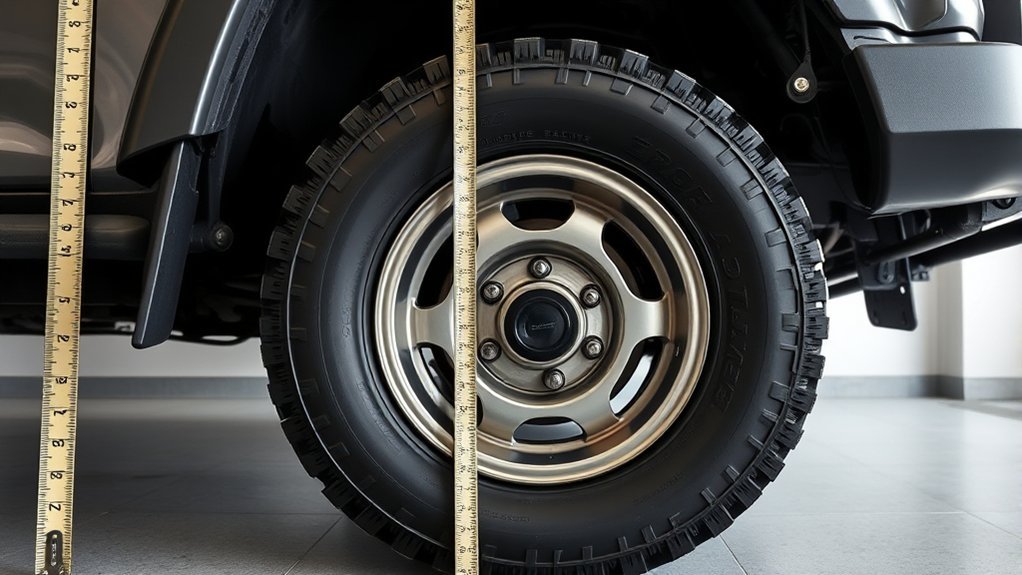
For a 255/75R17 tire, pressure and clearance deserve equal attention. Use your vehicle’s recommended cold tire pressure, not a random tire-size chart and not the maximum pressure molded on the sidewall. The correct pressure is usually listed on the driver-side door placard or in the owner’s manual.
- Check pressure when the tires are cold, before long driving heats them up.
- Use an accurate tire-pressure gauge at least once a month.
- Check all four tires and the spare if your vehicle carries one.
- Inspect clearance at full steering lock and with the suspension compressed.
- Look for fresh rub marks on liners, fenders, mud flaps, and suspension parts after a short test drive.
Pro Tip: If you install a larger tire, recheck pressure, torque, rubbing, and alignment after the first short drive. New contact marks often appear only after turning, braking, loading cargo, or driving over uneven ground.
Do not rely only on TPMS. Tire pressure monitoring systems usually warn after pressure has already dropped significantly, so regular gauge checks still matter. If you want one tire for mixed weather, reviewing the right all-season tires can also help you balance comfort, wet traction, tread life, and seasonal performance.
[Products Worth Considering]

The Big Rig Defense Tire Thumper is a truck tire pressure checker that lets you quickly check multiple tires by giving them a firm whack. Listen for a reassuring thump and feel the stick bounce when a tire is fully inflated, helping you get back on the road safely. It features a comfortable, glove-friendly handle and a secure wrist strap for confident use on busy routes.
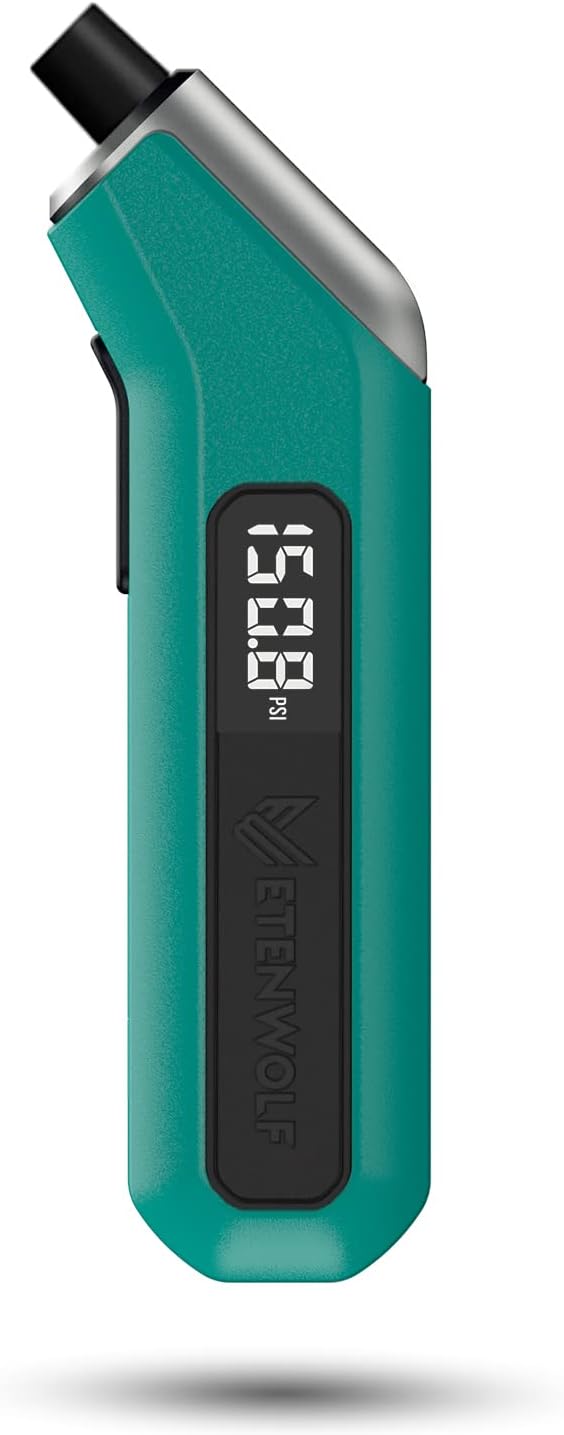
ETENWOLF T300 is a calibrated digital tire pressure gauge designed for reliable readings across low and high pressure ranges. It includes thermal compensation for stable performance in extreme cold or heat, an LED light for visibility, and an auto shut-off to help preserve battery life. Ideal for pickups, RVs, and heavy-duty vehicles, it delivers accurate PSI measurements with sturdy durability.

This manual duck head tire changer kit makes tire installation and removal simpler by letting you embed the duck head into the tire with applied pressure. The integrated design and durable steel construction help reduce friction and improve efficiency and safety during use. Suitable for 16–21 inch wheels, it’s convenient for cars, trucks, SUVs, and ATV tires, with 24-hour after-sales support.
Best Replacement Sizes for 255/75R17
The best replacement size depends on what you want to preserve: diameter, width, load rating, clearance, or handling. If your goal is to stay close to the 255/75R17 diameter, start with sizes that remain within about 2% of the original diameter. Even then, always confirm fitment before buying.
| Size | Approx. Diameter | Change vs. 255/75R17 | Best Use |
| 275/70R17 | 32.16 in | +0.3% | Very close height, wider footprint |
| 235/80R17 | 31.80 in | -0.8% | Narrower option with similar height |
| 265/70R17 | 31.61 in | -1.4% | Common, slightly shorter replacement |
| 285/65R17 | 31.59 in | -1.5% | Wider tread, slightly less sidewall |
| 245/75R17 | 31.47 in | -1.8% | Narrower, more clearance-friendly option |
| 285/70R17 | 32.71 in | +2.0% | Taller and wider, may need more clearance |
[Products Worth Considering]

Upgrade your 2024-2026 Tesla Model 3 Highland with REEVAA all-weather mud flaps designed for seamless fit along the original body lines. The set of four delivers strong splash protection against mud, gravel, and road debris while using OEM-grade durable materials. Installation is non-destructive with original hole positions and snap-in clips, and the aerodynamic design helps minimize impact on efficiency.

The ETENWOLF T600 digital tire pressure gauge delivers precise, manually calibrated readings to ANSI B40.7 Grade 2A standards with ±0.5% PSI accuracy. Its 360° rotating nozzle and display hold make it easy to check pressures from any angle, while a bleed button helps dial tires to the perfect level. With a 0–250 PSI range and support for PSI, BAR, and KPA, it’s a convenient tool for maintaining tire performance across many vehicles and seasons.

Clean grills, fenders, fender flares, bumpers, and wheel wells with a long-handled brush built for detailed car washing. The soft, triple-flagged bristles and dense scrub coverage help lift dirt gently while making coverage fast and easy. Use it with your favorite car wash soap for tires and exterior surfaces, and it also works for bike, motorcycle, boat, or RV cleaning.
Closest Metric Matches
The closest metric replacements keep the overall diameter near 32.1 inches. 275/70R17 is the closest height match, but it is wider. 235/80R17 is slightly shorter and narrower. 265/70R17 and 285/65R17 are also close, but each changes the width and sidewall shape.
If your current setup has tight fender or suspension clearance, a narrower option may work better than a wider one. If you want a broader footprint, a wider size may help, but it can increase rubbing risk and steering effort.
Inch Size Alternatives
A 255/75R17 is often described as a 32-inch tire because its diameter rounds to about 32.1 inches. However, inch-size tires are not always true equivalents. A 32×12.50R17 may be close in height, but it is much wider than a 255/75R17. That extra width can require wider wheels, different offset, more fender clearance, and possible trimming.
Use inch-size alternatives only after checking the full tire dimensions, not just the first number. Diameter, section width, approved rim width, and load rating all matter.
Fitment and Clearance
Fitment starts with clearance. A 255/75R17 tire is tall enough to change the vehicle’s stance, and wider or taller alternatives can push suspension and fender limits. Test fitment at static ride height, full steering lock, and suspension compression.
- 245/75R17: slightly shorter and narrower, usually more clearance-friendly.
- 275/70R17: closest height match, but wider than 255/75R17.
- 265/70R17: common size with a slightly smaller diameter.
- 285/70R17: taller and wider, with higher rubbing risk on many vehicles.
For mixed-weather driving, also compare tread design and all-season capability, because a size match alone does not guarantee the tire will suit your climate or driving style.
How 255/75R17 Affects Speedometer Readings
Changing tire diameter changes how far your vehicle travels per wheel rotation. If the new tire is taller than the factory tire, your actual speed may be higher than the speedometer shows. If the new tire is shorter, your actual speed may be lower.
Use this simple formula:
Actual speed = indicated speed × new tire diameter ÷ original tire diameter
For example, if your original tire was 31.0 inches tall and you move to a 32.1-inch tire, the new tire is about 3.5% taller. At an indicated 60 mph, your actual speed would be about 62 mph. Some vehicles can be recalibrated after a tire-size change, but the method depends on the vehicle.
Why 255/75R17 Changes Handling and MPG
A 255/75R17 can change handling because its tall sidewall and 32.1-inch diameter affect ride height, steering response, and tire flex. The taller sidewall can soften impacts and help on rough roads, but it may feel less sharp than a shorter sidewall tire during quick steering inputs.
Fuel economy can also change. Larger or heavier tires may increase rolling resistance and rotating mass. Aggressive all-terrain or mud-terrain tread can also create more drag and road noise than a highway all-season tire. The exact MPG change depends on tire weight, tread compound, tread pattern, inflation pressure, vehicle gearing, alignment, and driving style.
You can reduce unwanted tradeoffs by using the correct pressure, checking alignment after installation, choosing the right load rating, and avoiding more tire than your vehicle needs. If you want a daily-friendly setup, compare all-season tires against all-terrain and mud-terrain options before choosing.
Frequently Asked Questions
Which is bigger, 255/75R17 or 265/70R17?
A 255/75R17 is taller overall. It is about 32.1 inches tall, while a 265/70R17 is about 31.6 inches tall. The 265/70R17 is wider, but the 255/75R17 has a taller sidewall and slightly more overall diameter.
Are 75-series tires taller than 70-series tires?
They are taller only when the tire width and wheel diameter are the same. For example, a 255/75R17 is taller than a 255/70R17 because both are 255 mm wide and both fit a 17-inch wheel. But a wider 70-series tire can sometimes be taller than a narrower 75-series tire.
Which tire is taller, 275/70R17 or 255/75R17?
A 275/70R17 is slightly taller by calculation, at about 32.16 inches compared with about 32.06 inches for a 255/75R17. The difference is very small. The bigger practical change is width, because the 275/70R17 is about 20 mm wider.
What is a 255/75R17 equivalent to?
A 255/75R17 is roughly equivalent to a 32.1-inch tire in height. Close metric sizes include 275/70R17, 235/80R17, 265/70R17, 285/65R17, and 245/75R17. A 32×12.50R17 may be close in diameter, but it is much wider, so it is not a direct fitment equivalent.
Can I use the same tire pressure after switching to 255/75R17?
Start with your vehicle’s recommended cold tire pressure from the door placard or owner’s manual, then confirm with the tire installer if the new tire has a different load range or construction. Do not use the maximum sidewall pressure as your normal street pressure unless the vehicle or tire manufacturer specifically calls for it.
Will 255/75R17 tires rub?
They may rub if your factory tire is smaller or if your wheel offset pushes the tire toward the fender or suspension. Check full steering lock, suspension compression, inner liners, mud flaps, control arms, and the spare tire location before assuming the size will fit.
Conclusion
A 255/75R17 tire is a tall 17-inch size with an overall diameter of about 32.1 inches, a width of about 10.0 inches, and a sidewall height of about 7.5 inches. Those dimensions can help ground clearance and ride comfort, but they can also change speedometer readings, steering feel, braking load, clearance, and fuel use.
Before you buy, compare the size with your factory tire, check your vehicle’s tire placard and owner’s manual, confirm wheel-width approval, match the correct load rating, and inspect clearance carefully. The measurements give you the starting point, but safe fitment comes from checking the full vehicle-and-tire combination.
Sources
- TireSize.com 255/75R17 tire specs — backs up common calculated dimensions, circumference, revolutions per mile, and approved wheel-width range.
- NHTSA TireWise — backs up tire-size selection, cold tire-pressure guidance, tire placard guidance, TPMS limitations, and tire-safety checks.
- Tire code reference — backs up how metric tire codes define section width, aspect ratio, radial construction, rim diameter, and calculated tire diameter.

