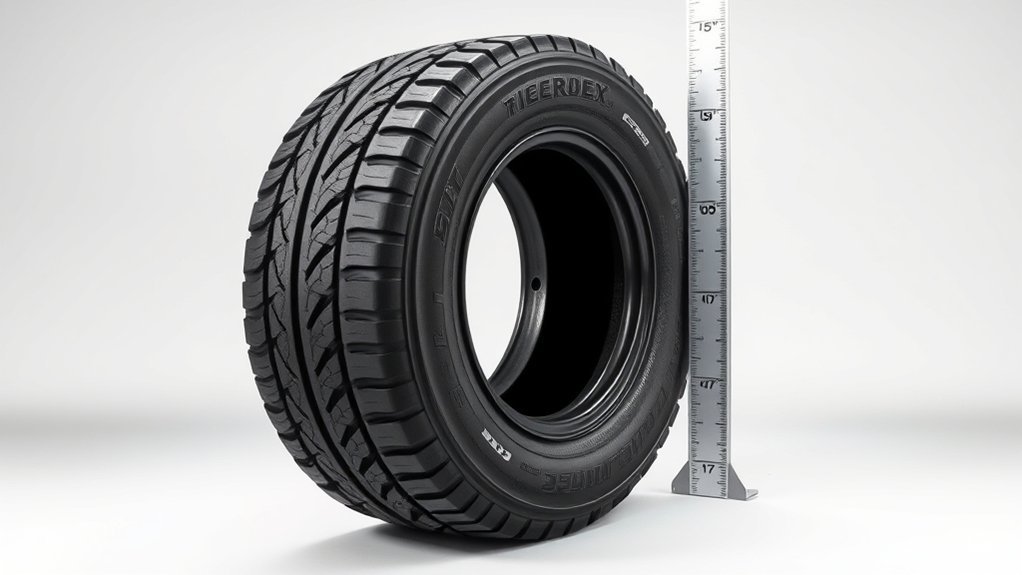
A 255/75R17 tire is about 32.1 inches tall, about 10.0 inches wide, and has a calculated sidewall height of about 7.5 inches. In metric terms, its calculated overall diameter is about 814.3 mm. It is commonly treated as a 32-inch tire, but safe fitment depends on more than diameter alone. Check wheel width and offset, suspension travel, load index, speed rating, and the tire size listed on your vehicle’s Tire and Loading Information Label or owner’s manual.
Last updated: August 18, 2026
Quick Answer
A 255/75R17 tire calculates to 32.06 inches (814.3 mm) in overall diameter, 10.04 inches (255 mm) in section width, and 7.53 inches (191.25 mm) in sidewall height. That is why it is commonly rounded to a 32.1-inch or “32-inch” tire. Exact mounted dimensions vary by tire model, measuring rim, tread depth, load, and inflation pressure.
Method: The dimensions on this page are nominal calculations from the tire-size code. Vehicle fitment guidance is based on clearance and rating checks, not a universal fit guarantee for every vehicle or tire model.
Key Takeaways
- A 255/75R17 tire is roughly 32.1 inches tall by formula.
- Its section width is 255 mm, or about 10.0 inches.
- The sidewall height is about 7.5 inches because the aspect ratio is 75% of 255 mm.
- R means radial construction, and 17 means the tire is designed for a 17-inch wheel.
- Changing from a smaller stock tire can affect clearance, gearing, ABS/traction-control behavior, and speedometer accuracy.
- Always confirm tire size, load index, speed rating, rim width, and inflation pressure against your vehicle’s placard, owner’s manual, and tire manufacturer data.
How Tall Is a 255/75R17 Tire?
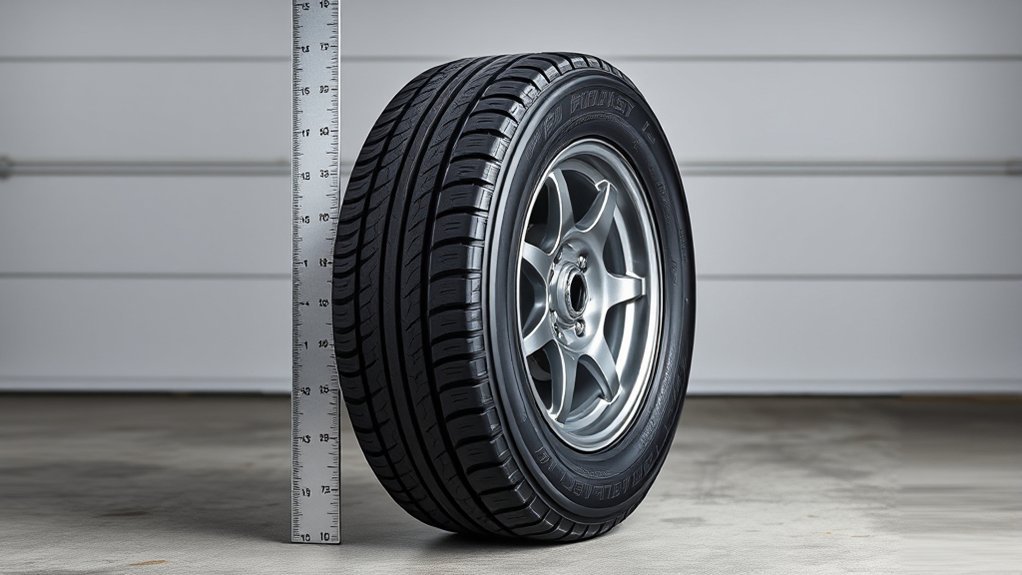
A 255/75R17 tire is about 32.1 inches tall overall when calculated from its size code. You get that number by converting the 255 mm section width into inches, multiplying it by the 75% aspect ratio, doubling the sidewall, and adding the 17-inch wheel diameter.
The simple formula is:
Overall diameter = wheel diameter + 2 × sidewall height
For 255/75R17, the math works like this:
- Section width: 255 mm ÷ 25.4 = 10.04 inches
- Sidewall height: 10.04 × 0.75 = 7.53 inches
- Overall diameter: 17 + 7.53 + 7.53 = 32.06 inches
That rounds to 32.1 inches. Tire Rack explains that the three-digit number in a tire size is the section width in millimeters, the next number is the sidewall aspect ratio, “R” means radial construction, and the final number is the matching wheel diameter. Tire Rack’s tire size guide is a useful reference for reading those markings.
Note: The 32.1-inch figure is a calculated size. Real mounted tire height can vary slightly by tire brand, tread depth, rim width, load, and inflation pressure. Use the tire manufacturer’s published specs when exact clearance matters.
255/75R17 Size at a Glance
| Tire Size | 255/75R17 |
| Calculated Overall Diameter | 32.06 in, rounded to 32.1 in |
| Calculated Overall Diameter (Metric) | 814.3 mm |
| Section Width | 255 mm, about 10.04 in |
| Sidewall Height | 7.53 in (191.25 mm) |
| Calculated Circumference | About 100.7 in |
| Estimated Revolutions Per Mile | About 629 revs/mile |
| Common Shorthand | About a 32-inch tire |
| Construction | Radial |
| Wheel Diameter | 17 in |
How Wide Is a 255/75R17 Tire?
A 255/75R17 tire has a section width of 255 mm, which equals about 10.04 inches. This is the tire’s nominal sidewall-to-sidewall width, not always the exact tread width. The tread face is often narrower than the section width, and the final mounted width can change slightly depending on the wheel width used.
Width matters because it affects inner clearance, steering clearance, wheel compatibility, and how much space the tire uses inside the wheel well. Tire Rack notes that section width is measured on an assigned measuring rim and that changing rim width can change the tire’s measured section width. For exact clearance, use the specifications for the specific tire model and wheel width you plan to install. Tire Rack’s section-width guide explains the measurement method.
What Does 255/75R17 Mean?
The tire code breaks down into four parts:
- 255 means the tire’s section width is 255 millimeters.
- 75 means the sidewall height is 75% of the section width.
- R means the tire uses radial construction.
- 17 means it fits a 17-inch wheel diameter.
This tells you the basic tire dimensions, but it does not tell the whole fitment story. You also need the tire’s load index, speed rating, load range if it is a light-truck tire, approved rim-width range, and inflation guidance.
Warning: Do not choose a replacement tire by height alone. NHTSA TireWise says to use the owner’s manual or Tire and Loading Information Label to identify the correct tire size and vehicle-specified cold inflation pressure. Also confirm the replacement tire’s load and speed ratings for your vehicle.
How Does 255/75R17 Compare With Stock Tires?
You can compare a 255/75R17 against a stock tire by checking diameter, section width, circumference, and revolutions per mile. A larger tire travels farther with each rotation, which can affect gearing, acceleration, braking feel, speedometer accuracy, odometer reading, and clearance.
Compared with a 225/65R17 tire, a 255/75R17 is about 3.54 inches taller and about 1.18 inches wider by nominal size math. That is a major change, not a small cosmetic swap.
| Metric | 225/65R17 | 255/75R17 | Change |
|---|---|---|---|
| Diameter | 28.5 in | 32.1 in | +3.5 in |
| Width | 8.9 in | 10.0 in | +1.2 in |
| Circumference | 89.6 in | 100.7 in | +12.4% |
| Estimated revs/mile | 707 | 629 | Fewer rotations |
If your vehicle was calibrated for 225/65R17 tires and you install 255/75R17 tires without recalibration, an indicated 60 mph works out to about 67.5 mph actual speed from nominal diameter math. Real rolling diameter varies by tire model, wear, load, and pressure, so confirm the result with a tire-size calculator and GPS or a vehicle-specific calibration procedure.
[Products Worth Considering]

These aluminum alloy tire valve stem caps with an O-ring seal help protect valve stems from corrosion while adding a clean, stylish look to your vehicle. The universal fit works across cars, trucks, motorcycles, bicycles, and more, making them an easy upgrade for everyday driving and off-road use. Installation is quick, and the included four-pack keeps all your tires dressed and protected.

Protect your spare wheel with a waterproof, dustproof tire cover made to resist sun and harsh weather. The elastic band design makes it easy to install and remove without tools, while reinforced stitching helps it keep its shape. Available in multiple sizes, it fits common RV, trailer, Jeep, SUV, and truck spare tires.

This professional wheel and rim cleaning brush set lifts brake dust, grime, and dirt with soft, scratch-free microfiber and synthetic wool fibers. The rim brush bends up to 360 degrees for easy access to hard-to-reach areas around spokes, lips, and faces. Ideal for thorough cleaning of car, truck, motorcycle, bicycle, RV, and more wheel and tire surfaces.
Stock Size Difference
The stock-size difference depends on what tire your vehicle came with. Against a smaller size like 225/65R17, a 255/75R17 is a large jump. Against sizes such as 265/70R17 or 245/75R17, it is much closer.
You should compare these points before buying:
- Diameter change: affects ground clearance, gearing, speedometer reading, and braking feel.
- Width change: affects fender, liner, suspension, and steering clearance.
- Load and speed ratings: must meet or exceed your vehicle’s requirements.
- Rim width: must fall within the tire manufacturer’s approved range.
- Offset and backspacing: decide how close the tire sits to suspension and body parts.
Diameter and Width Changes
The 255/75R17 measures about 32.1 inches in overall diameter and 10.0 inches in nominal section width. A larger overall diameter means fewer wheel revolutions per mile, so changing from a smaller stock tire alters effective gearing and speedometer/odometer readings.
Width affects a different part of fitment. More section width places the sidewall closer to suspension parts on the inside and bodywork on the outside, depending on wheel offset. That is why a tire can look clear while parked yet rub over bumps, while reversing, or at full steering lock.
Fitment and Clearance Risks
Fitment gets more complicated with a 255/75R17 because its roughly 32.1-inch diameter is taller than many stock 17-inch tire sizes. That extra height can reduce clearance at the front and rear of the wheel well. The extra width can also move the sidewall closer to control arms, sway-bar links, inner liners, mud flaps, and fender edges.
| Check | Why It Matters |
|---|---|
| Full steering lock | Reveals rubbing at liners, frame, arms, and mud flaps. |
| Suspension compression | Shows clearance under bumps, cargo, towing, and off-road articulation. |
| Wheel offset | Moves the tire inward or outward, changing body and suspension clearance. |
| Spare location | A taller tire may not fit in the factory spare well or underbody carrier. |
| Load rating | The new tire must safely support your vehicle and cargo needs. |
In tighter setups, you may need trimming, a lift, a different wheel offset, or a smaller tire size. If you are not sure, test-fit one wheel and tire before buying a full set.
Will a 255/75R17 Tire Rub on Your Vehicle?
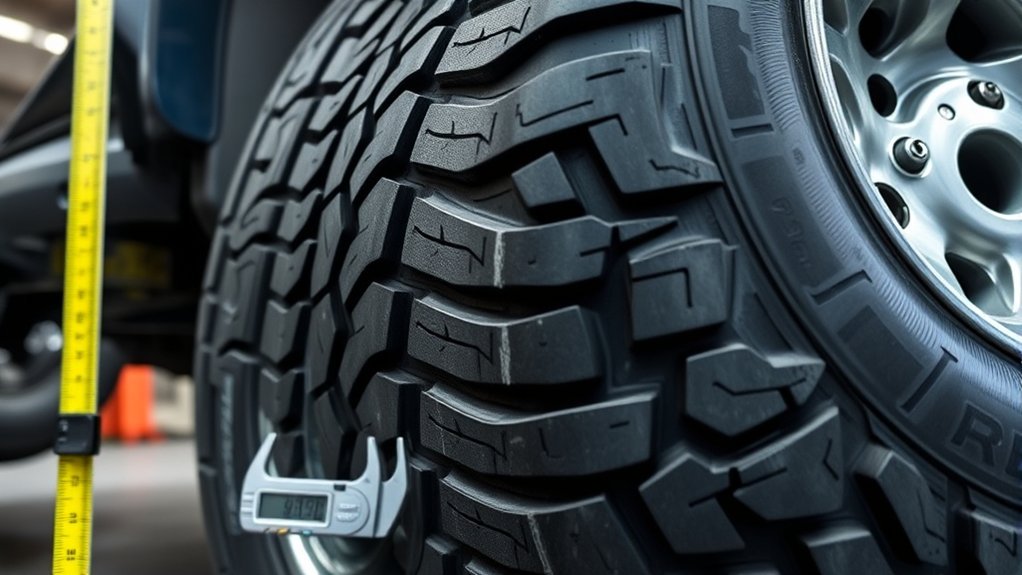
A 255/75R17 tire can rub if your vehicle does not have enough wheel-well clearance. At about 32.1 inches tall and 10.0 inches wide, it can contact fender liners, mud flaps, pinch welds, suspension parts, bumper edges, or frame areas during steering and suspension movement.
Do not judge clearance only while the vehicle is parked. Turn the steering wheel fully left and right. Check clearance while reversing. Check with cargo loaded. If the vehicle is used off-road, also consider suspension articulation. A size that clears on flat pavement may rub when the tire moves upward into the wheel well.
Pro Tip: Compare percentage diameter change, not sidewall height alone. A tire that is 10% larger in overall diameter travels about 10% farther per revolution, which produces a similar speedometer error if the vehicle is not recalibrated.
A tire-size calculator can compare nominal dimensions, but it cannot confirm real-world clearance on your exact vehicle. Wheel offset, rim width, suspension geometry, alignment, tire construction, and actual measured dimensions can all change the result.
[Products Worth Considering]

Measure tire tread depth quickly and accurately with this LUMITECO dial gauge that reads in 1/32" increments up to 14/32". The color-coded green/yellow/red zones make it easy to judge tire wear and know when replacement is needed. A rugged, compact design with a protective pouch helps keep the gauge ready for use on cars, trucks, motorcycles, and more.

The SAFELIFE dial tire tread depth gauge measures tread depth in 1/32 inch increments with clear, easy-to-read 2-inch dial face. Color zones using a traffic light system help you quickly judge whether tread is low, marginal, or ample for safer driving. Built with a durable zinc cast body and a metal detect probe for precise, comfortable use across cars, motorcycles, trucks, and buses.

This universal magnetic jack pad is designed to protect pinch welds when lifting vehicles, helping prevent seam damage or warping. Crafted from solid aluminum with a nylon pad insert, it provides reinforced structural support and a secure fit for most single-vehicle pinch welds. Slotted for strong magnet holding, it supports safe jacking for cars, SUVs, trucks, and more.
What Vehicles Can Run 255/75R17 Tires?
A 255/75R17 tire is most realistic on trucks, Jeeps, and SUVs with enough wheel-well space for a 32-inch tire. Some off-road-focused vehicles may accept this size more easily than compact crossovers or vehicles with tight factory clearances. Still, there is no universal “fits all” answer.
Use this table as a general fitment guide, not a guarantee:
| Vehicle Type | Fit Notes |
|---|---|
| Jeep Wrangler and similar off-road SUVs | Often the most likely candidates, but trim, wheel offset, lift, and tire model still matter. |
| Toyota 4Runner, Tacoma, and similar midsize 4x4s | Possible on some setups, but rubbing checks are important, especially near liners and body mounts. |
| Full-size trucks and large SUVs | May have more room, but load rating, wheel specs, and trim-specific clearance still decide fitment. |
| Crossovers and tight-clearance SUVs | Often difficult without modifications. Verify carefully before buying. |
The key point is simple: a tire can fit a 17-inch wheel and still fail to fit the vehicle safely. Confirm the approved rim-width range from the tire manufacturer and the correct replacement size from your vehicle’s owner’s manual or tire placard. For a vehicle-specific example, see TubeTyre’s 5th Gen 4Runner tire-size guide, which compares 255/75R17 with common 4Runner sizes and fitment considerations.
What Tire Sizes Are Closest to 255/75R17?
If you want a size close to 255/75R17, compare both diameter and width. Diameter drives speedometer and gearing differences; width changes inner and outer clearance. Two tires can be almost identical in height yet fit very differently because one is wider.
[Products Worth Considering]

This metal-free wheel and tire cleaning brush uses dense, fluffy synthetic wool to safely clean rims, spokes, fenders, and engine areas without worrying about damaging surfaces. Its flexible, comfortable design helps you reach detailed areas while maintaining durability, and the extra absorbent fibers work well with wheel spray cleaners for faster cleanup. Reusable and washable performance helps prevent grime and build-up for cleaner vehicles and easier maintenance at home.

Monitor tire tread wear with a smart, color-coded depth gauge that shows clear condition ranges at a glance. The bar is range marked for fast, easy readings, helping you maintain safer traction and performance. Each gauge is portable with a pocket clip, and the set includes 20 units for daily use and sharing.

Universal magnetic jack pad with aluminum grooved design to protect vehicle pinch welds during lifting. Durable nylon pad inserts are upgraded and secured with screws to resist damage and keep in place. Designed to fit most single vehicle pinpoint welds for safer, stable jacking when changing tires, repairs, or performing oil changes.
Closest Metric Equivalents
These metric sizes are common comparison points near the 32.1-inch target:
| Size | Calculated Diameter | Section Width | Diameter Difference vs 255/75R17 |
|---|---|---|---|
| 245/75R17 | 31.47 in | 9.65 in | -1.84% |
| 285/65R17 | 31.59 in | 11.22 in | -1.47% |
| 265/70R17 | 31.61 in | 10.43 in | -1.41% |
| 235/80R17 | 31.80 in | 9.25 in | -0.80% |
| 275/70R17 | 32.16 in | 10.83 in | +0.31% |
The closest diameter match in this group is 275/70R17: it is only about 0.10 inch taller, but it is about 0.79 inch wider. With the same wheel offset, that nominal width difference is roughly 0.39 inch per side. If side clearance is tight, a narrower size with a slightly smaller diameter may fit better even when its height is less exact.
Common 17-Inch Sizes to Compare
These nearby metric sizes answer different fitment needs. None is an automatic substitute, because the vehicle still has to accept the new diameter, width, load rating, speed rating, and approved rim width.
- 255/70R17: Same nominal width, about 1.0 inch shorter overall. Useful when width is acceptable but you need more vertical clearance.
- 265/70R17: About 0.39 inch wider and about 0.45 inch shorter than 255/75R17.
- 275/70R17: Almost the same height, but about 0.79 inch wider. This is the closest diameter match in the table above.
- 285/70R17: About 32.7 inches tall and 11.2 inches wide, so it needs substantially more width clearance than 255/75R17.
Choose by the constraint that matters on your vehicle. If speedometer change is the main concern, prioritize diameter. If rubbing near suspension or bodywork is the problem, compare width, wheel offset, and the tire maker’s actual measured dimensions.
How to Check If 255/75R17 Will Fit
Before buying a full set, work through this checklist:
- Check the door placard and owner’s manual. Confirm the original tire size, load rating, pressure, and any approved optional sizes.
- Compare tire diameter and width. Look at the current tire versus the 255/75R17 dimensions.
- Check wheel specs. Confirm rim width, offset, and backspacing.
- Confirm load index and speed rating. Do not install a tire with ratings below your vehicle’s requirements.
- Measure inner clearance. Inspect space near control arms, struts, sway-bar links, and brake lines.
- Measure outer clearance. Inspect fenders, liners, mud flaps, bumper corners, and pinch weld areas.
- Test full steering lock. Turn fully left and right, forward and reverse.
- Account for compression. Consider passengers, cargo, towing tongue weight, and off-road articulation.
- Check spare storage. Make sure a 32-inch tire fits where your spare is carried.
- Recalibrate if needed. Larger tires may require speedometer, odometer, or driver-assistance recalibration.
The Discount Tire tire size calculator can help compare diameter, circumference, revs per mile, and speedometer change, but a calculator cannot confirm body clearance on your exact vehicle.
Frequently Asked Questions
Which tire is taller, 275/70R17 or 255/75R17?
A 275/70R17 is slightly taller by calculation. A 255/75R17 is about 32.06 inches tall, while a 275/70R17 is about 32.16 inches tall. The difference is only about 0.1 inch, so width and clearance usually matter more than height in this comparison.
What is the overall height of a 255/70R17 tire?
A 255/70R17 tire is about 31.1 inches tall by formula. It has the same 255 mm section width as a 255/75R17, but the 70% aspect ratio gives it a shorter sidewall. That makes it about 1 inch shorter overall than a 255/75R17.
How tall is a 225/75R17 tire?
A 225/75R17 tire is about 30.3 inches tall by formula. Its section width is about 8.9 inches, and its sidewall height is about 6.6 inches. That makes it shorter and narrower than a 255/75R17.
What size tire is 255/75R17?
A 255/75R17 is a radial tire for a 17-inch wheel. It is 255 mm wide, has a sidewall height equal to 75% of that width, and has a calculated overall diameter of about 32.1 inches. It is commonly considered a tall truck, Jeep, or SUV tire size.
Will 255/75R17 tires affect my speedometer?
Yes, they can if they are larger or smaller than your original tire size. A taller tire travels farther per wheel rotation, so the vehicle may move faster than the speedometer shows. The bigger the diameter change, the more important speedometer recalibration becomes.
Is 255/75R17 the same as a 32-inch tire?
It is very close. A 255/75R17 calculates to about 32.06 inches tall, so most people round it to a 32-inch tire. Exact tire-model specs can be slightly different once mounted and inflated.
What rim width fits a 255/75R17 tire?
There is no single approved rim-width range that applies to every 255/75R17 tire model. The approved range can vary by manufacturer, construction, and specific tire. Check the exact tire maker’s specification before mounting, because rim width also affects the tire’s measured section width.
Conclusion
A 255/75R17 tire is about 32.1 inches tall, about 10.0 inches wide, and has a sidewall height of about 7.5 inches. It can be a useful size when you want more ground clearance and a taller tire on a 17-inch wheel, but it is not a guaranteed direct swap for every vehicle.
Before you commit, compare it with your stock size, check speedometer change, confirm load and speed ratings, verify rim-width compatibility, and inspect real clearance at full steering lock and suspension compression. The right answer is not only “Does it fit the wheel?” It is “Does it fit the vehicle safely?”
Sources
- Tire Rack: How Do I Read My Tire Size On My Sidewall? — supports section width, aspect ratio, radial construction, and wheel-diameter explanations.
- Discount Tire: Tire Size Calculator — supports tire-size comparison metrics including sidewall height, section width, diameter, circumference, revolutions per mile, and speedometer change.
- NHTSA TireWise — supports replacement-size, tire placard, tire pressure, tread, balance, alignment, and tire safety guidance.
- Tire Rack: How Do I Calculate Tire Dimensions? — supports the nominal width, aspect-ratio, and overall-diameter calculation method.
- Tire Rack: How To Determine The Section Width Of A Tire? — supports how measuring-rim width affects measured section width.