Tire ply rating is a legacy way to describe a tire’s relative casing strength and load-carrying class, not a literal count of the layers inside a modern tire. Today, the tire’s load index, load range, and vehicle specification give you more useful information. Always match replacement tires to the vehicle maker’s required size and load capacity rather than assuming that a higher ply number is automatically better.
Quick Answer
Tire ply rating is an equivalent-strength designation left over from older tire construction. A 10-ply-rated tire does not necessarily contain 10 actual plies. For modern tire selection, check the vehicle placard and use the correct tire size, load index, load designation, and inflation pressure for your vehicle and load.
Key Takeaways
- Tire ply rating describes an equivalent strength class; it is not the actual number of tire layers.
- Load range describes a tire’s load-and-pressure class, while load index identifies the specific load capacity associated with that tire’s service description.
- Sidewall markings also identify tire size, radial construction, load index, speed rating, DOT information, and other specifications.
- Passenger tires commonly use designations such as SL, XL, or HL, while many LT tires use load ranges such as C, D, E, or F.
- A higher tire load rating does not increase your vehicle’s GVWR, GAWR, payload rating, or towing rating.
- Start with the vehicle placard or owner’s manual when choosing replacement tires or setting normal cold inflation pressure.
What Does Tire Ply Rating Mean?

Tire ply rating tells you the equivalent strength class of a tire rather than the exact number of fabric plies in its casing. Modern tire materials can provide the required strength with far fewer physical layers than older tires needed.
For example, Falken explains that a tire described as 12-ply rated does not necessarily contain 12 separate plies. The rating is a classification used to indicate that the tire meets the applicable requirements for that load range. You can read more in Falken’s explanation of load ranges and ply ratings.
That makes ply rating useful as a comparative duty-class reference, especially on light-truck, trailer, and commercial tires. However, it should not replace the tire’s load index, load-and-inflation information, or the requirements supplied by the vehicle manufacturer.
A higher load range can provide greater load-carrying capability within an appropriate tire size and at the required pressure. It does not, by itself, tell you the tire’s exact puncture resistance, ride quality, rolling resistance, tread life, or off-road durability. Those characteristics depend on the complete tire design.
A “10-ply-rated” tire is an equivalent-strength classification. It does not mean the tire physically contains 10 plies.
How Have Tire Ply Ratings Changed Over Time?
Older tire construction relied more directly on multiple layers of cord fabric to provide casing strength. As tire materials and manufacturing methods improved, the relationship between actual ply count and a tire’s load capability became less direct.
Modern tires can achieve high load capacity with fewer actual layers, so you should no longer read “6-ply,” “8-ply,” or “10-ply” as a physical layer count.
Today, load index, load range, SL/XL/HL designations, tire size, and inflation specifications provide a more useful picture of a tire’s load capability.
Early Ply Construction
Historically, tire makers and buyers used actual casing plies and ply ratings as a practical way to describe relative tire strength. More reinforcement generally supported heavier-duty service, so terms such as 6-ply, 8-ply, and 10-ply became familiar strength references.
As cord materials, belt designs, rubber compounds, and radial construction improved, manufacturers could meet the same or higher performance requirements without simply adding more physical layers.
That is why the historical term survives even though the number stamped or advertised today may describe an equivalent strength rating rather than the tire’s actual construction count.
Modern Load Ratings
Modern tire selection relies much more heavily on standardized load information. Michelin describes the load index as the numerical code corresponding to the maximum load a tire can carry when properly inflated. See Michelin’s load-rating guide.
- Load index identifies the tire’s rated load capacity through a standardized numerical code.
- Load range identifies a broader load-and-pressure class, particularly on LT and similar tires.
- SL, XL, and HL identify different passenger-tire load categories where applicable.
- Inflation pressure must be appropriate for the vehicle, tire, and load rather than chosen from the ply-rating number alone.
These markings let you compare modern tires without trying to infer capability from the physical number of casing layers.
Why Do Tire Ply Ratings Still Matter?
Tire ply ratings still matter because the terminology remains common when people discuss light-truck, trailer, and heavy-duty tires. A phrase such as “10-ply rated” can quickly tell you that the tire belongs to a heavier load class than a traditional 6-ply-rated tire of a comparable type.
However, you should use the ply rating as a starting reference, not as the final tire-selection specification.
Load Capacity Basics
A tire must be able to support the load assigned to its wheel position while operating at the appropriate inflation pressure. The most useful numbers for that decision are the tire’s load index or published load capacity and the vehicle manufacturer’s tire requirements.
- Check the vehicle placard for the original tire size and recommended cold inflation pressure.
- Check the required load rating or the service description of the original tire.
- Make sure the replacement tire provides at least the required load capacity.
- If you change tire size or type, use the tire manufacturer’s approved load-and-inflation data.
Toyo specifically advises owners to use the vehicle tire information placard or owner’s manual for OE inflation pressure and provides separate load-and-inflation tables for alternate tire applications.
Warning: Do not inflate a tire to the maximum pressure printed on its sidewall simply because it has a higher load range. The sidewall maximum is not automatically the vehicle’s recommended operating pressure. For the original tire size, follow the vehicle placard or owner’s manual unless the vehicle or tire manufacturer specifies otherwise.
Modern Meaning Today
Today, ply rating is best understood as a legacy equivalent-strength description. For light-truck tires, common traditional relationships include the following:
| LT Load Range | Traditional Ply Rating | What It Means |
|---|---|---|
| C | 6-ply rated | Equivalent duty/strength classification, not six actual layers |
| D | 8-ply rated | Higher load-range class than C for applicable LT sizes |
| E | 10-ply rated | Common heavier-duty LT classification |
| F | 12-ply rated | Higher-capacity class offered in some LT sizes |
These equivalencies do not tell you the tire’s exact maximum load by themselves. Tire size, load index, single or dual application where applicable, and inflation conditions still matter.
Note: Do not compare two different tire sizes by load-range letter alone. A Load Range E tire in one size can have a different maximum load from a Load Range E tire in another size. Check the actual load index or manufacturer specification.
What’s the Difference Between Ply Rating and Load Range?
Ply rating is the older equivalent-strength terminology. Load range is a load-and-pressure classification used on many light-truck and specialty tires. Load index is the numerical code that corresponds to a specific tire load capacity.
| Term | What It Tells You | Example |
|---|---|---|
| Ply rating | Legacy equivalent-strength designation | 10-ply rated |
| Load range | Load-and-pressure class for the tire type | Load Range E |
| Load index | Numerical code corresponding to maximum load capacity under specified conditions | 102 in 225/65R17 102H |
For actual replacement decisions, the load index and vehicle requirements are usually more useful than asking only whether a tire is “6-ply” or “10-ply.”
Material differences in cords, belts, sidewalls, compounds, and tread designs can also change ride, handling, durability, rolling resistance, and off-road performance even when two tires share the same load range.
How Do You Read Tire Sidewall Markings?
The tire sidewall contains the specifications you need to identify the tire’s size, construction, service description, and manufacturing information.
Using 225/55R17 97V as an example:
- 225 is the nominal section width in millimeters.
- 55 is the aspect ratio.
- R identifies radial construction.
- 17 is the wheel diameter in inches.
- 97 is the load index.
- V is the speed rating.
Michelin explains these markings in its tire sidewall guide.
Depending on the tire type, you may also see markings such as SL, XL, HL, or a light-truck load-range letter. The sidewall can also show MAX LOAD and MAX PRESS values, which describe tire limits rather than the normal pressure recommendation for your vehicle.
The DOT Tire Identification Number provides manufacturing information. According to NHTSA TireWise, the final four digits identify the week and year of manufacture. For example, a code ending in 2225 indicates the 22nd week of 2025.
UTQG treadwear, traction, and temperature grades may also appear on applicable passenger tires sold in the United States. These ratings are separate from ply rating and load range.
Which Ply Rating Does Your Vehicle Need?
Instead of choosing a tire by ply rating alone, match its complete load specification to your vehicle. The safest starting point is the vehicle’s Tire and Loading Information placard and owner’s manual.
Match the replacement tire to the vehicle maker’s required size and load capacity first; treat ply rating as supporting information rather than the primary fitment rule.
- Read the vehicle placard. Note the OE tire size and recommended cold inflation pressure.
- Check the original tire’s service description. Identify its load index and speed rating.
- Meet the required load capacity. Do not install a replacement with insufficient load capacity simply because it physically fits the wheel.
- Keep special load designations in mind. If the vehicle requires XL or HL tires, use a replacement that satisfies that requirement.
- Account for your real loading. Passengers, cargo, accessories, and trailer tongue load can increase the load carried by the vehicle and its axles.
- Use approved load-and-inflation data for alternate tires. Changing from one tire type or size to another can change the pressure required to support the same load.
- Stay within vehicle limits. Tire capacity does not override the vehicle’s GVWR, GAWR, payload, towing, suspension, brake, or wheel limitations.
NHTSA requires important tire and loading information on vehicle placards for applicable vehicles, including tire size and recommended inflation pressure. That information exists to help owners select suitable replacement tires and stay within the vehicle’s carrying limits.
Pro Tip: If you tow or haul close to your vehicle’s limits, weighing the fully loaded vehicle by axle gives you a much better picture of the real load than estimating from empty vehicle weight alone. Compare those loads with the vehicle’s GAWR and the tire manufacturer’s load information.
[Products Worth Considering]

The TYAMATE TM8 solar-powered wireless TPMS delivers real-time tire pressure and temperature monitoring with six alarm modes for safer driving. A vibrant color LCD display shows readings clearly while windshield mounting keeps it hands-free and easy to read. With a wide 0–87 PSI range, strong 433.92 MHz signal transmission, and quick sensor pairing, it’s ideal for RV, sedan, SUV, MPV, and truck use.

The ETENWOLF T600 digital tire pressure gauge delivers precise, manually calibrated readings to ANSI B40.7 Grade 2A standards with ±0.5% PSI accuracy. Its 360° rotating nozzle and display hold make it easy to check pressures from any angle, while a bleed button helps dial tires to the perfect level. With a 0–250 PSI range and support for PSI, BAR, and KPA, it’s a convenient tool for maintaining tire performance across many vehicles and seasons.

The 22800 wheel stud installer makes replacing wheel studs quick and secure, saving time and effort during tire service. It uses a ratchet or impact wrench to pull new studs firmly into place, helping when existing studs are too long. Compatible with most automotive wheels and light-duty truck wheel studs, it’s designed for easy, tool-assisted installation.
What Ply Ratings Are Common by Vehicle Type?
There is no single correct ply rating for every sedan, SUV, truck, van, EV, or trailer. Modern tire markings differ by application, and the vehicle’s required load specification always takes priority.
| Vehicle / Application | Common Modern Markings | What to Check |
|---|---|---|
| Passenger car or crossover | SL or XL, plus load index | OE size, load index, speed rating, placard pressure |
| Heavier SUV or some EVs | XL or, on some vehicles, HL | Do not replace required XL/HL capacity with a lower-capacity tire |
| Light truck using LT tires | Commonly C, D, E, or other specified load range | Exact tire size, load index, axle requirements, load table |
| Heavy-duty pickup | E or F may be offered in many LT sizes | OE specification and actual payload/towing requirements |
| Trailer | ST tire size plus specified load range/load index | Trailer placard, GAWR, loaded weight, tire specifications |
Passenger-car and crossover tires therefore should not automatically be described simply as “4-ply tires,” even though that phrase still appears in legacy comparisons. Modern passenger fitments are better identified by the actual size, load index, speed rating, and SL/XL/HL designation where applicable.
Likewise, SUV and truck tire requirements cannot be predicted from vehicle type alone. Some SUVs use passenger-type tires, while others use LT tires. Heavy-duty pickups may use higher load ranges because of their axle and payload requirements.
[Products Worth Considering]

TIRESHIELD PRO RV tire covers in a set of four deliver year-round protection against UV rays, cracking, fading, water, and snow. The StormLock-System helps keep the covers securely fastened through high wind, while heavy-duty, double-stitched construction supports long-lasting performance. Designed for universal fit, they’re intended for RV, camper, truck, car, and trailer tires within the 26–28.75 inch diameter range, with easy wipe-clean care and storage in the included bag.
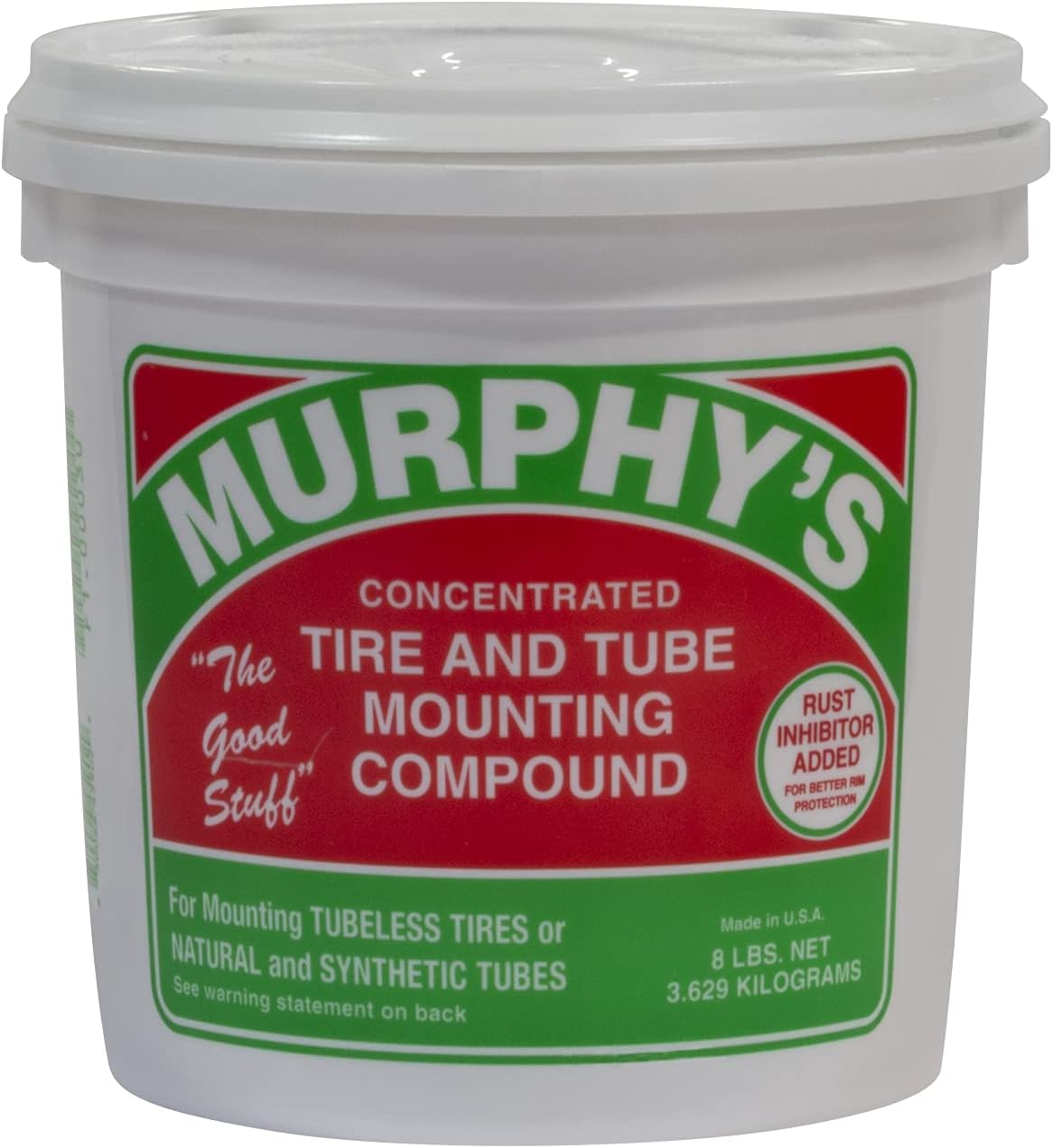
A concentrated tire and tube mounting compound designed to help simplify mounting rubber tires and tubes on passenger, semi truck, construction, and OTR applications. Its ultra-thick formula packs beads effectively and includes rust inhibitors to help protect against corrosion during use.
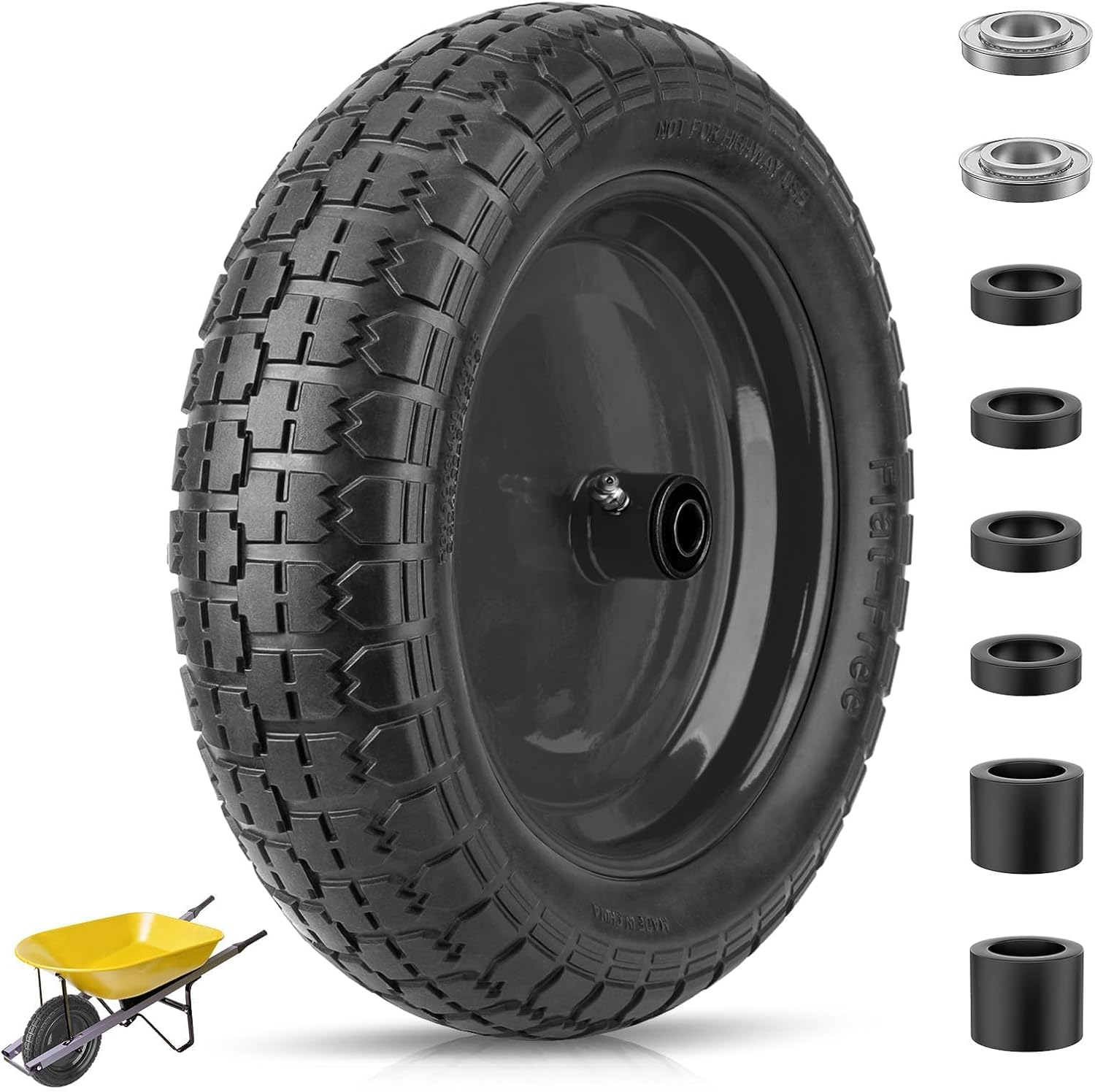
This flat-free TICONN wheelbarrow tire features durable polyurethane foam construction that never needs inflation, helping prevent punctures and reducing maintenance on rough outdoor terrain. With a 300 lb max load capacity and stable steel rim design, it supports safer transport for yard work and hauling tasks. An adapter kit with ball bearings and nylon spacers is included for easier fit and customization across common wheelbarrow and cart axle setups.
When Is a Higher Ply Rating Worth It?
A higher load range or ply-equivalent rating can make sense when the vehicle specification or real service load requires the additional capacity. It should not be selected simply because a larger number sounds stronger.
- Heavy towing: A higher load range may be appropriate when required to support the tow vehicle’s actual axle loads and tire specification.
- Frequent hauling: Heavier-duty tires may be appropriate when the OE fitment or load calculation requires their capacity.
- Different LT tire size: A higher load range may be necessary when an alternate size needs additional pressure capability to meet the required load.
- Commercial or severe service: The correct higher-duty tire can provide the load capacity and construction intended for that service.
However, higher load range alone is not a universal puncture-resistance or off-road-performance rating. Two tires with the same load range can have very different sidewall designs, tread compounds, casing features, weights, ride characteristics, and resistance to cuts or impacts.
A higher-rated replacement can also change ride feel or other performance characteristics, depending on its construction and the pressure at which it is operated. Michelin notes that reinforced high-load tires can produce a firmer ride in some applications, but tire design is engineered to balance load support, comfort, handling, and other requirements.
Most importantly, installing a tire with a higher load rating does not increase the vehicle manufacturer’s maximum payload or towing rating. The vehicle remains limited by its chassis, axles, suspension, brakes, wheels, and other engineered limits.
[Products Worth Considering]
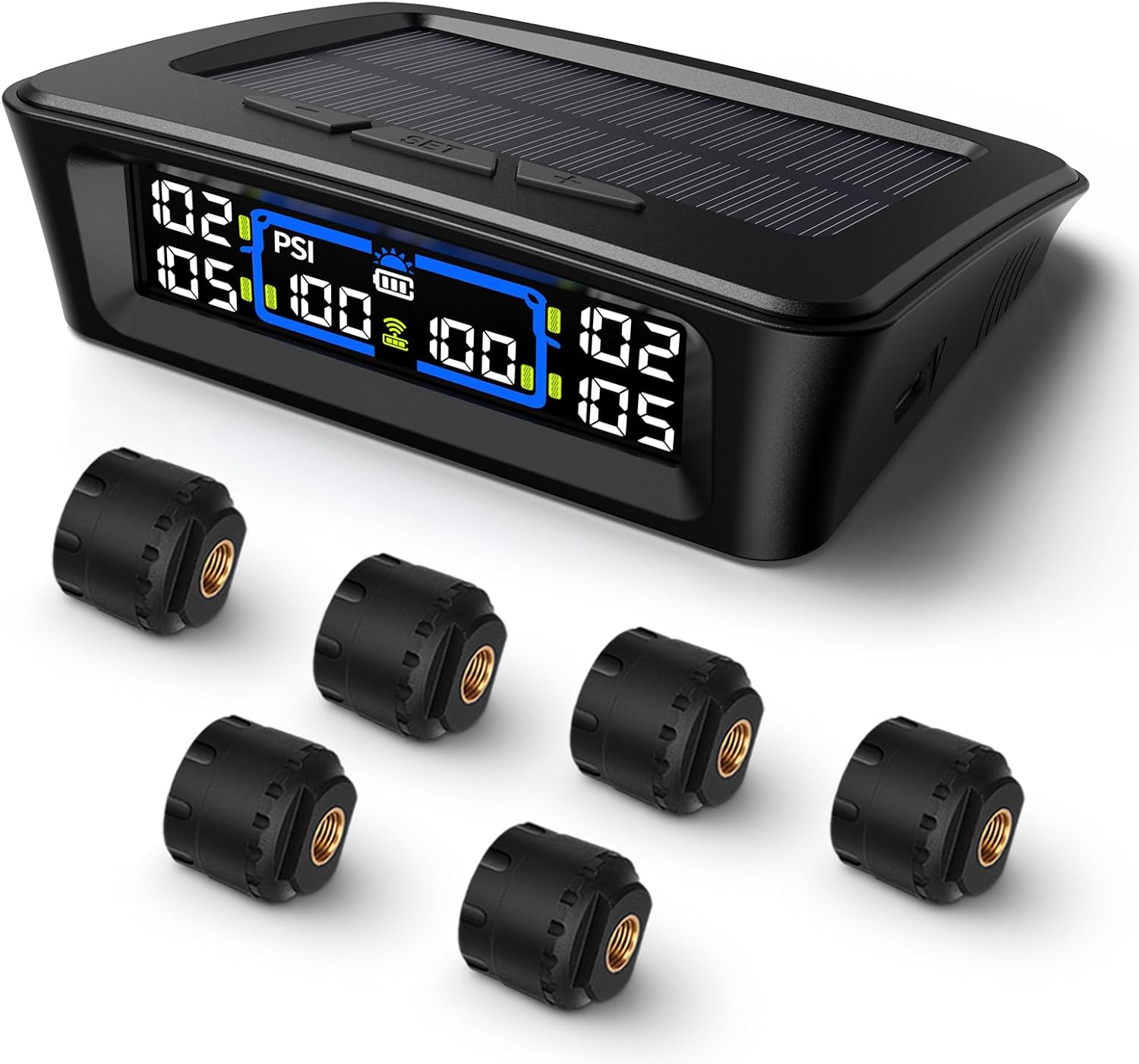
The Tymate TM12 RV TPMS delivers real-time tire pressure and temperature monitoring with a stable 433Hz display for safer long-distance driving. It supports simultaneous monitoring across vehicle and trailer zones, includes six alarm modes for pressure, temperature, leakage, battery, and signal loss, and features easy DIY installation with auto calibration. Power is supplied via USB-C charging or solar recharging, with a wide 0–144 PSI range and up to 50 ft signal coverage for RVs and towable trailers.

Keep your tires properly inflated with this analog VONDIOR tire pressure gauge, designed for fast, easy readings without batteries. The swiveling, two-axis hose and large glow dial help you measure at any tire angle with instant visibility. Built with a protective rubber shield, it supports durable, low-maintenance use for cars and trucks.
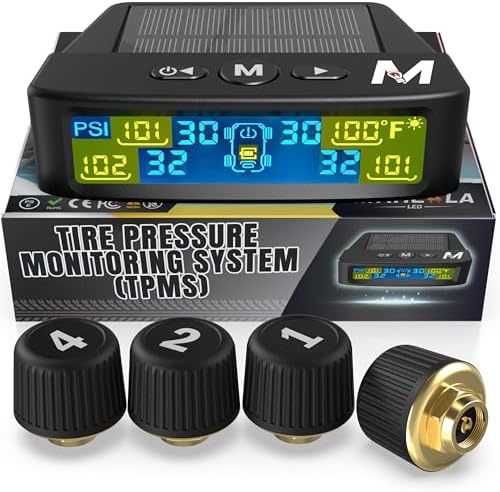
Marcala’s TPMS set of four sensors helps you monitor tire pressure and temperature in real time while driving, with updates every second. The bright color LCD uses auto-dimming for easy viewing, powered by dual solar and USB charging, and offers six alarm modes. Built for trailers, RVs, campers, trucks, and towing setups, the sensors support monitoring 1-4 wheels up to 98 PSI with IP67 waterproof protection.
Frequently Asked Questions
How Does Tire Ply Rating Affect Ride Comfort?
A higher load-rated tire can feel firmer in some applications because its construction may be reinforced for greater load capacity. However, ply rating alone does not determine comfort. Sidewall profile, tire construction, tread design, inflation pressure, wheel size, and suspension tuning all affect ride quality.
Can Ply Rating Impact Fuel Economy?
It can have an indirect effect, but ply rating by itself cannot predict fuel economy. Tire weight, rolling-resistance design, tread pattern, rubber compound, size, and inflation pressure all matter. An unnecessarily heavy or poorly matched tire may reduce efficiency, while two tires with the same load range can have different rolling resistance.
Do All-Season Tires Have Specific Ply Ratings?
No. “All-season” describes a tire’s intended seasonal performance category, not its load class. An all-season tire can be SL, XL, HL, or another appropriate load specification depending on its size and intended vehicle. Check the load index and other sidewall markings rather than assuming a load rating from the all-season label.
Is Ply Rating Important for Off-Road Driving?
Load range matters if your vehicle needs the additional carrying capacity, but it is not a standalone off-road durability rating. For off-road use, also consider the tire’s actual sidewall construction, tread design, cut-and-chip resistance, approved inflation range, vehicle weight, and terrain.
Can Tire Pressure Override Ply Rating Limits?
No. Inflation pressure cannot turn an under-rated tire into a higher-capacity tire. Never exceed the tire’s approved limits, and do not use the sidewall maximum as your normal pressure target. For the original tire size, use the vehicle manufacturer’s recommended cold pressure unless approved replacement guidance specifies otherwise.
Where Do I Find the Ply Rating or Load Range on a Tire?
Look on the tire sidewall and manufacturer specifications. LT tires may show a load-range letter such as C, D, E, or F, while passenger tires may use SL, XL, or HL. The service description also includes the load index and speed rating.
Can I Replace a 6-Ply-Rated Tire With a 10-Ply-Rated Tire?
Sometimes, but the higher rating alone does not prove the tire is the right replacement. Confirm the approved tire size, required load capacity, speed rating, wheel compatibility, and inflation requirements. Do not simply install a higher load range and inflate it to the maximum pressure printed on the sidewall.
Does a Higher Ply Rating Increase Payload or Towing Capacity?
No. A tire with greater load capacity can provide the tire capacity required for a heavy-duty application, but it does not increase the vehicle’s rated payload, GAWR, GVWR, or towing capacity. Those limits are established by the vehicle manufacturer and depend on the entire vehicle system.
Conclusion
Tire ply rating is best treated as a legacy equivalent-strength designation, not as the actual number of layers inside a modern tire and not as a universal measure of durability. A higher number is not automatically better for your vehicle.
For a safe replacement, start with the vehicle placard or owner’s manual, then verify the tire size, load index, load designation, speed rating, and correct inflation requirements. Use load range or ply rating to understand the tire’s duty class, but do not let it override the vehicle manufacturer’s specifications.
That approach gives you the load support you need without assuming that unnecessary tire stiffness, extra pressure, or a higher ply-equivalent number will improve the vehicle. Most importantly, remember that a higher-capacity tire never increases the vehicle’s own payload, axle, or towing limits.
Sources
- National Highway Traffic Safety Administration — TireWise — tire labels, tire age, UTQG, vehicle tire sizing, loading, and inflation safety.
- Michelin — Tire Markings Explained — tire size codes, load and speed ratings, MAX LOAD/MAX PRESS markings, and DOT date codes.
- Michelin — Tire Load Rating & Speed Rating Explained — load index, replacement load requirements, SL/XL terminology, and higher-load replacement guidance.
- Falken Tires — Load Range F Tires Explained — load range, traditional C/D/E/F ply-rating equivalencies, and the distinction between ply rating and actual ply count.
- Toyo Tires — Load & Inflation Tables — OE placard guidance and load-and-inflation information for alternate tire applications.
- Goodyear — Tire Load Index & Chart — load-index interpretation and load-capacity reference information.