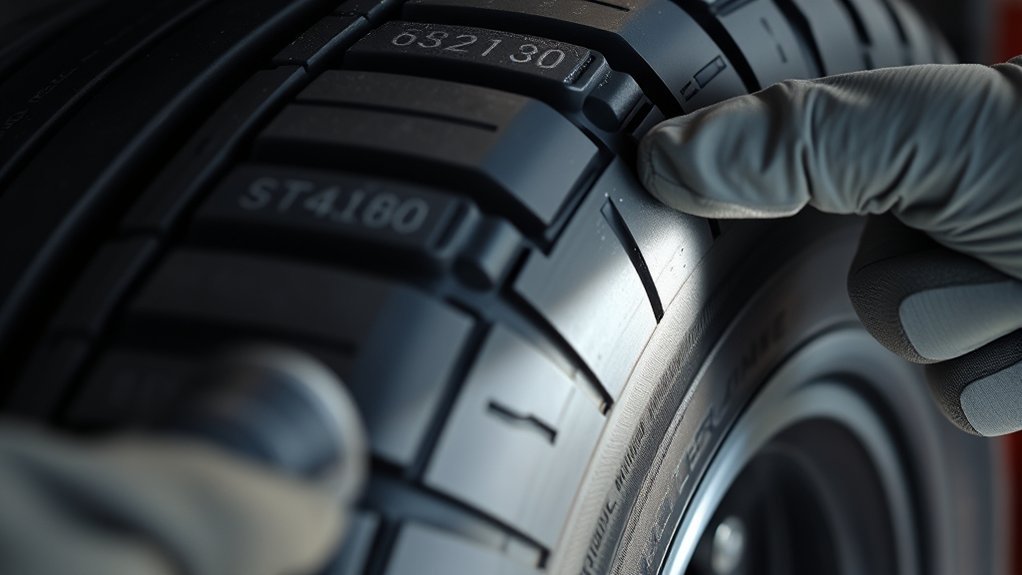
You can find a tire’s ply rating by checking the sidewall for the tire type, load range, load index, and maximum load markings. Modern tires usually do not use ply rating as a literal layer count. Instead, the load range letter and load index tell you how much weight the tire can support when used at the correct cold inflation pressure.
Quick Answer
To find a tire’s ply rating, look on the sidewall for a load range letter such as C, D, E, F, or G. If you do not see one, read the load index number beside the size code. Then compare the tire size, load index, load range, and pressure needs with your vehicle placard or owner’s manual.
Key Takeaways
- Ply rating is a strength class, not the actual number of physical tire layers.
- Load range letters such as C, D, E, F, or G are the fastest way to identify ply-rated strength on many LT tires.
- Passenger tires may show SL, XL, or only a load index instead of an old-style ply rating.
- The load index gives a more exact weight capacity than the old ply-rating label.
- Use your vehicle’s door placard or owner’s manual for the required tire size and cold pressure, not the sidewall maximum pressure.
- For towing or hauling, match the tire size, load index, load range, wheel rating, axle rating, and inflation pressure together.
At a Glance
| Time Required | 2 to 5 minutes per tire |
| Difficulty | Easy |
| Tools Needed | Flashlight, tire sidewall, owner’s manual, and driver-side door placard |
| Cost | Free |
What Tire Ply Rating Means
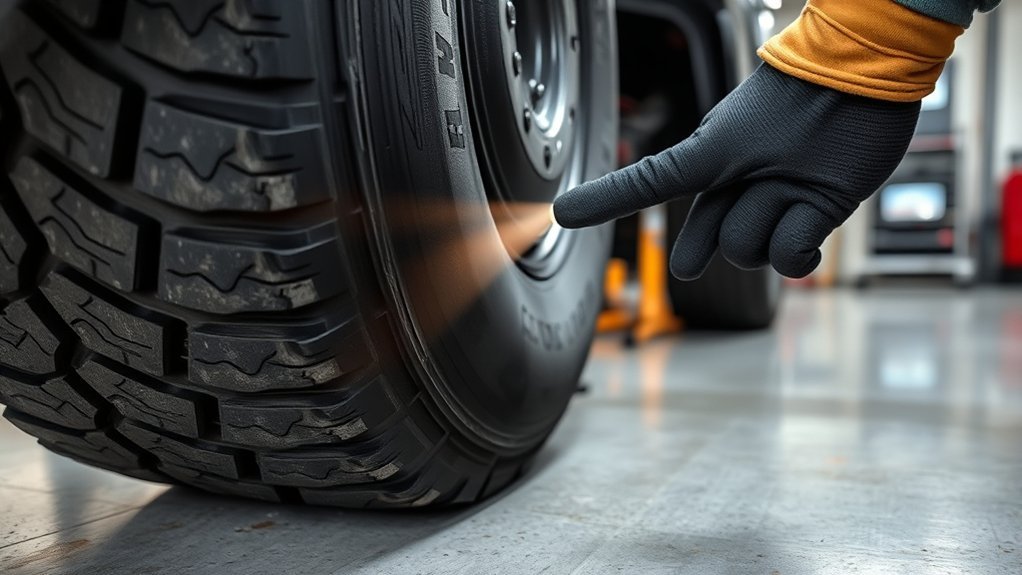
A tire’s ply rating tells you the tire’s strength class and load-carrying ability. It does not usually tell you how many physical layers sit inside the tire. Older bias-ply tires used more cotton or fabric plies to increase strength. Modern radial tires use stronger materials, steel belts, and rubber-coated cords, so the actual layer count can be lower than the ply rating suggests.
That is why modern tires often use load range and load index instead. Under federal tire rules, light-vehicle tires must show key sidewall markings such as maximum load rating, maximum permissible inflation pressure, cord material, actual ply information, and, for LT tires, the load range letter. You can review those marking rules in 49 CFR 571.139.
Note: A tire may show both actual ply information and a load range. The actual ply count describes construction. The load range describes rated strength and capacity.
How to Find Tire Ply Rating on the Sidewall
Start with the tire sidewall. Use a flashlight if the tire is dirty or the lettering is hard to see. You are looking for markings such as Load Range E, LR E, 10 Ply Rated, Max Load, and the tire size code.
- Find the tire size code. A common example looks like 205/55R17 91V or LT265/70R17 Load Range E.
- Identify the tire type. Look for markings such as P, LT, ST, SL, XL, HL, or C.
- Look for the load range letter. On many light truck tires, this appears as C, D, E, F, or G.
- Find the load index number. In 205/55R17 91V, the load index is 91.
- Check the maximum load marking. The tire may list maximum load in pounds and kilograms.
- Compare it with your vehicle placard. The correct tire size and cold pressure are listed on the driver-side Tire and Loading Information Label or in your owner’s manual.
Pro Tip: If the sidewall only shows a load index and no ply rating, use the load index first. It gives the tire’s actual rated carrying capacity more precisely than an old ply-rating label.
First, Identify the Type of Tire You Have
Not every tire uses the same load marking style. Before you look for a ply rating, identify the tire type printed near the size code.
| Marking | What It Means | How to Read Load Rating |
| P | Passenger tire | Use the load index and service description, such as 91V or 102H. |
| LT | Light truck tire | Look for load range, load index, and maximum load markings. |
| ST | Special trailer tire | Use the trailer manufacturer’s tire label, load range, and maximum load at pressure. |
| SL | Standard Load passenger tire | Use the load index. You may not see a ply-rating label. |
| XL or Extra Load | Passenger tire built for higher load than standard load in the same size family | Use the load index and the vehicle manufacturer’s required rating. |
| HL | High Load tire used in some newer vehicle applications | Use the exact size and load rating required by the vehicle placard or tire maker. |
| C after rim size | Commercial or cargo-style metric marking in some sizes | Use the service description and manufacturer load table. |
Michelin explains that load rating and speed rating together form the tire’s service description, and the load rating should meet or exceed the value specified by the vehicle manufacturer. That is why you should never rely on the word “ply” alone when choosing a replacement tire.
How to Read Tire Sidewall Markings
Tire sidewall markings work like a compact code for size, construction, load, and speed. On a marking such as 205/55R17 91V, 205 is the tire width in millimeters, 55 is the aspect ratio, R means radial construction, and 17 is the wheel diameter in inches.
The 91 is the load index, and the V is the speed rating. A load index of 91 equals 1,356 pounds per tire on standard load index charts. Goodyear explains that load index charts translate the sidewall number into weight capacity, and most passenger-car tire load indexes fall around 75 to 100.
Light truck tires may show a different style of marking. You may see LT before or after the size, plus a load range letter such as Load Range E. Passenger tires often show SL for Standard Load or XL for Extra Load instead of C, D, or E.
Common Sidewall Examples
Use these examples to know which part of the code matters most.
| Sidewall Example | What to Read | What It Tells You |
| 205/55R17 91V | 91V | 91 is the load index. V is the speed rating. |
| P225/65R17 102H | P and 102H | Passenger tire with load index 102 and speed rating H. |
| LT265/70R17 Load Range E | LT and Load Range E | Light truck tire commonly described as 10-ply rated. |
| LT245/75R16 120/116Q | 120/116Q | Single and dual load indexes, plus speed rating Q. |
Ply Rating vs. Load Range
Ply rating and load range are related, but they are not exactly the same thing. Ply rating is the older strength language. Load range is the modern sidewall letter that tells you the tire’s rated strength class.
For many light truck tires, the common relationship looks like this:
| Load Range | Common Ply Rating Equivalent | What It Usually Means |
| C | 6-ply rated | Light-duty LT strength class |
| D | 8-ply rated | Higher load support than C in the same tire type and size family |
| E | 10-ply rated | Common on many heavy-duty pickups and towing tires |
| F | 12-ply rated | Heavy-duty load range in select LT sizes |
| G | 14-ply rated | Higher-capacity LT, commercial, or trailer applications, depending on tire type |
This chart is a quick guide, not a replacement for the sidewall and manufacturer data. Always confirm the tire’s exact maximum load, size, inflation pressure, and service description before using it for towing or hauling.
[Products Worth Considering]
A concentrated tire and tube mounting compound designed to help simplify mounting rubber tires and tubes on passenger, semi truck, construction, and OTR applications. Its ultra-thick formula packs beads effectively and includes rust inhibitors to help protect against corrosion during use.

The 22800 wheel stud installer makes replacing wheel studs quick and secure, saving time and effort during tire service. It uses a ratchet or impact wrench to pull new studs firmly into place, helping when existing studs are too long. Compatible with most automotive wheels and light-duty truck wheel studs, it’s designed for easy, tool-assisted installation.
This flat-free TICONN wheelbarrow tire features durable polyurethane foam construction that never needs inflation, helping prevent punctures and reducing maintenance on rough outdoor terrain. With a 300 lb max load capacity and stable steel rim design, it supports safer transport for yard work and hauling tasks. An adapter kit with ball bearings and nylon spacers is included for easier fit and customization across common wheelbarrow and cart axle setups.
What Tire Load Index Means
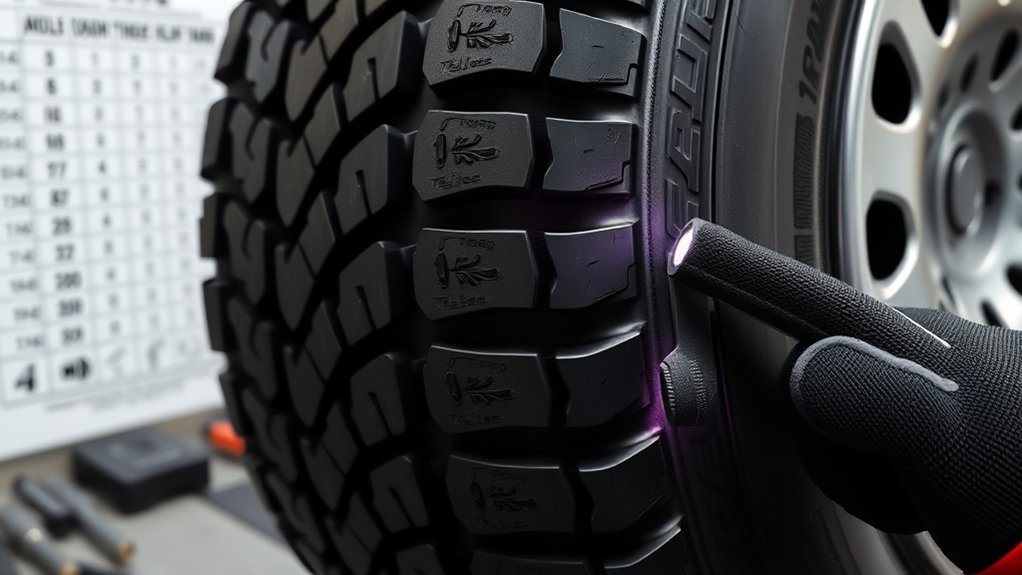
The tire load index is the number on the sidewall that points to the tire’s maximum weight capacity on a standard load index chart. It is more exact than saying “6-ply” or “10-ply” because each load index number maps to a specific capacity.
For example, a tire marked 205/55R17 91V has a load index of 91. That means one tire can carry 1,356 pounds when used under the correct conditions. Multiply by four only as a rough tire-capacity check, then compare the result with your vehicle’s axle ratings, placard, and tire pressure instructions.
Load Index Basics
A tire load index is not random. It connects the sidewall code to a load chart. Many passenger tires fall around the 75 to 100 range, while many cars and light trucks fall in a wider range around 70 to 124. Heavy-duty LT, commercial, trailer, and specialty tires can use higher values.
Your goal is simple: choose a tire with a load index that meets or exceeds the vehicle manufacturer’s requirement for the correct tire size and use. Do not choose a lower load index to save money or soften the ride.
Reading Sidewall Numbers
After the size code, look for the service description. In 205/55R17 91V, the service description is 91V. The number is the load index. The letter is the speed rating.
On LT tires, you may also see two load ratings if the tire can be used on dual rear wheels. The single rating applies when one tire is used on each side of the axle. The dual rating applies when two tires sit side by side on each side of the axle. Use the correct value for your setup.
Note: Federal standards for certain tires describe sidewall wording such as “Max load single” and “Max load dual.” If your tire shows both, do not use the single-tire rating for a dual-wheel setup.
How Tire Construction Changes Ply Ratings
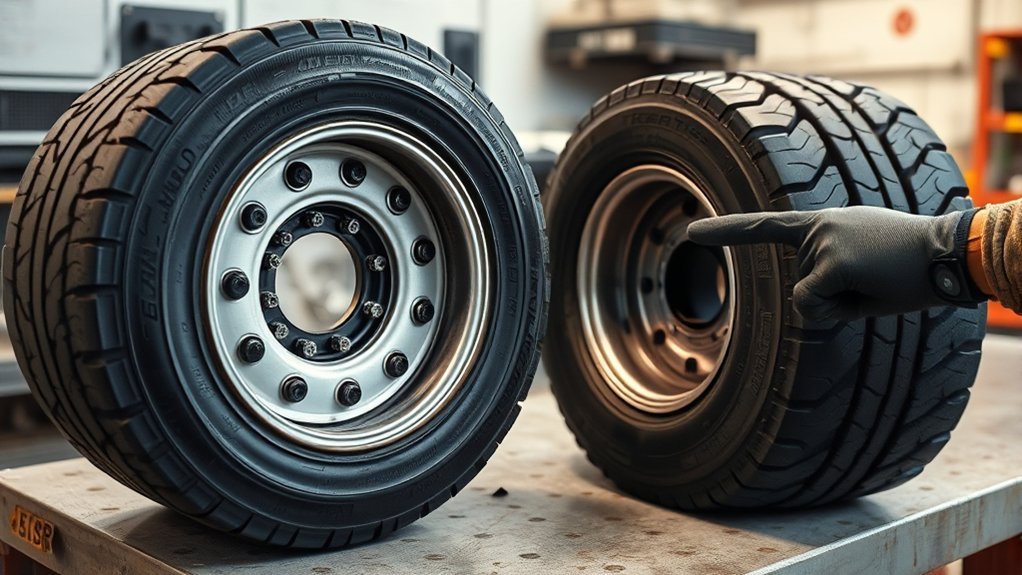
Modern tire construction changed how tire strength is labeled. Older tires relied on multiple fabric plies for strength. Newer radial tires use steel belts, stronger cords, rubber compounds, and casing designs that can carry high loads without needing the same number of physical layers.
Old vs. Modern Plies
In older tires, a higher ply count usually meant more physical reinforcement. That made the term “ply rating” easy to understand. A 6-ply tire had more reinforcement than a 4-ply tire.
Modern tires are different. A tire can be “10-ply rated” without having ten visible or physical plies. The phrase describes a strength equivalent, not a layer count.
Stronger Materials, Fewer Layers
Today’s tire carcass may use fewer but stronger layers. These layers are designed to manage heat, support the vehicle, resist deformation, and maintain shape under load. That is why the load index and load range matter more than counting plies.
Load Range Replaces Ply Count
Load range gives you a clearer way to compare tire strength. A higher load range usually allows higher inflation pressure and greater load capacity within the same tire type and size family. Still, the load range alone does not tell the whole story. You also need the tire’s load index, maximum load, wheel rating, and correct pressure.
How to Compare the Rating With Your Vehicle
To choose the right tire load rating, start with your vehicle’s owner’s manual or Tire and Loading Information Label. NHTSA says the correct tire size and inflation pressure come from the vehicle label or owner’s manual, not from guessing or copying another vehicle.
Match or exceed the required load index and load range, but do not exceed the tire, wheel, axle, or vehicle limits.
- Check the placard for the correct tire size and recommended cold pressure.
- Match or exceed the required load index.
- Use the correct load range for the vehicle, tire type, and load.
- Check the tire’s maximum load and maximum pressure markings.
- Confirm the wheel can handle the pressure required by the tire.
- For towing, check axle ratings, trailer tongue weight, and loaded vehicle weight.
[Products Worth Considering]

This metal-free wheel and tire cleaning brush uses dense, fluffy synthetic wool to safely clean rims, spokes, fenders, and engine areas without worrying about damaging surfaces. Its flexible, comfortable design helps you reach detailed areas while maintaining durability, and the extra absorbent fibers work well with wheel spray cleaners for faster cleanup. Reusable and washable performance helps prevent grime and build-up for cleaner vehicles and easier maintenance at home.

The Milton S-693-12 straight foot dual head air chuck provides extended 12-inch reach for efficiently inflating inner dual tires on trucks and semi trucks. It has 1/4" female NPT threading and locks securely onto valve core threads for reliable sealing up to 150 PSI. Designed for use on an air line with a cushioned grip handle for comfortable operation.

Suds Lab WB Premium Detailing Wheel Brush delivers a scratch-free clean using ultra-soft microfiber bristles that lift brake dust, dirt, and grime without swirling. The ergonomic non-slip handle helps you deep-clean rims, wheels, and tires with reduced hand fatigue while reaching tight contours. It’s reusable and machine washable for long-term detailing, and works across cars, trucks, SUVs, and motorcycles plus multi-purpose cleaning tasks.
Simple Axle Rating Check
For a basic load check, compare tire capacity by axle, not just by all four tires together. If a front axle uses two tires, the two front tires need enough capacity for the front gross axle weight rating. The same idea applies to the rear axle.
This does not replace a tire professional’s load-and-inflation check, especially on LT, trailer, RV, commercial, or modified vehicles. It does help you avoid the common mistake of treating total four-tire capacity as the same thing as safe payload.
Warning: Never use a tire with a lower load index or load range than your vehicle requires. Also, do not inflate a tire above the tire or wheel limit. Overloading or improper pressure can increase heat, reduce control, and raise the risk of tire failure.
Common Mistakes to Avoid
Reading the sidewall is simple, but a few mistakes can lead to the wrong tire choice.
- Using sidewall max PSI as normal pressure: The sidewall shows a maximum limit, not your vehicle’s recommended everyday cold pressure.
- Choosing by ply rating alone: A 10-ply-rated tire still needs the correct size, load index, pressure, and wheel rating.
- Replacing LT tires with P-metric tires without checking capacity: A same-size passenger tire may not meet the load requirement for a truck that came with LT tires.
- Ignoring dual load markings: Dually trucks need the dual rating, not the single rating.
- Lowering the load index for ride comfort: A softer ride is not worth an under-rated tire.
- Mixing tire types on the same vehicle: Different load ranges, constructions, or sizes can affect handling and stability.
What If You Cannot Read the Sidewall?
If the sidewall is worn, cracked, covered in grime, or too faded to read, clean it gently with water and a soft brush. Check both sidewalls because some markings may appear only on one side.
If you still cannot read the load range, load index, or maximum load, do not guess. Use the tire brand, model, and size to look up the manufacturer’s data, or ask a tire shop to inspect it. If the tire is old, damaged, or missing critical markings, replacement may be safer than trying to identify it by appearance.
[Products Worth Considering]

This 62-inch extra-long car wash brush kit makes it easy to clean hard-to-reach areas on cars, trucks, SUVs, and RV roofs with lightweight, sturdy poles. It includes soft, non-scratch microfiber and bristles with protective bumpers to help prevent scratches while cleaning effectively. A rubber squeegee helps remove water stains quickly, plus a wheel/tire brush and absorbent towels for complete exterior detailing.

Secure your vehicle during transport with this 4-pack of heavy-duty tire tie down straps designed for trailers and hauling. The ratchet system with flat hooks and D-rings helps you tension the straps quickly, while the wheel-friendly design protects tires. With high break strength and corrosion-resistant hardware, these straps provide reliable, confidence-inspiring tie-down security for cars, trucks, and UTVs.

This manual duck head tire changer kit makes tire installation and removal simpler by letting you embed the duck head into the tire with applied pressure. The integrated design and durable steel construction help reduce friction and improve efficiency and safety during use. Suitable for 16–21 inch wheels, it’s convenient for cars, trucks, SUVs, and ATV tires, with 24-hour after-sales support.
What If There Is No Ply Rating Printed?
Many passenger tires do not say “6-ply” or “10-ply” anywhere on the sidewall. That does not mean the tire has no load rating. It usually means you should use the service description, such as 91V, plus any load marking such as SL or XL.
For LT and trailer tires, the load range is usually easier to find. Look near the size, maximum load statement, or DOT markings. If you still cannot identify it, search the exact tire size and model on the tire manufacturer’s website or ask a qualified tire shop.
Frequently Asked Questions
How do you tell if a tire is 6-ply or 10-ply?
Check the sidewall for the load range. Load Range C commonly means 6-ply rated, while Load Range E commonly means 10-ply rated. The tire may not actually contain six or ten physical plies, but the rating tells you the tire’s strength class.
What load range is a 14-ply tire?
A 14-ply-rated tire is commonly Load Range G. Load Range F is commonly 12-ply rated. Always verify the sidewall and the tire manufacturer’s load table because exact capacity depends on tire size, tire type, and inflation pressure.
How do you tell tire ply rating?
Look for a load range letter such as C, D, E, F, or G, or for wording such as “10 Ply Rated.” Then read the load index and maximum load marking. Compare those numbers with your vehicle placard or owner’s manual.
Are 10-ply tires actually 10-ply?
Usually, no. A 10-ply rating is normally a strength equivalent, not a literal count of ten physical layers. Modern tires use stronger materials and construction methods, so the actual ply count can be lower while the tire still meets the rated load class.
Is a higher ply rating always better?
Not always. A higher ply-rated tire may carry more load, but it can also ride firmer and may require higher pressure. Use the load rating your vehicle requires, and make sure the tire size, wheel rating, and inflation pressure are correct.
Where is load range printed on a tire?
Load range is molded into the sidewall. You may see it written as “Load Range E,” “LR E,” or as part of the tire’s service description. Check both sidewalls if you do not see it right away.
Why does my passenger tire not show a ply rating?
Many passenger tires use a load index and a service description instead of old ply-rating language. Look for markings such as 91V, 102H, SL, or XL, then compare the load index with your vehicle placard or owner’s manual.
Can I use Load Range E tires instead of Load Range C?
Sometimes, but you should not choose by load range alone. Confirm the tire size, load index, wheel pressure rating, vehicle placard, and ride requirements. A higher load range can ride firmer and may need pressure guidance from a tire professional.
Conclusion
Finding a tire’s ply rating starts with the sidewall, but the best answer comes from reading more than one marking. Check the tire type, load range, load index, maximum load, maximum pressure, and tire size. Then compare those markings with your owner’s manual or driver-side door placard.
Modern tires do not need the same number of physical layers to match old ply-rating strength. That is why the load index and load range give you a safer, clearer way to choose tires for daily driving, towing, and hauling.
Sources
- NHTSA TireWise — supports using the owner’s manual or Tire and Loading Information Label for correct tire size and pressure.
- 49 CFR 571.139 — supports light-vehicle tire sidewall marking requirements for maximum load, pressure, actual plies, and LT load range.
- 49 CFR 571.119 — supports maximum load single/dual wording, actual ply markings, and load range markings for covered tire types.
- Goodyear Tire Load Index — supports load index basics and passenger-car load index ranges.
- Michelin Tire Load Rating and Speed Rating — supports service description, load rating, and speed rating guidance.
- Les Schwab Tire Ply Ratings and Load Range — supports common ply-rating equivalents and load index chart examples.