Tire ply rating tells you how much load strength a tire is built to handle, but it does not mean the tire literally has that many fabric layers. On modern tires, ply rating is a strength comparison that works together with load range, load index, tire size, and cold inflation pressure. Use it as a safety clue, then confirm the exact load capacity from the sidewall, your vehicle placard, and the tire maker’s load-inflation data.
Quick Answer
A tire ply rating is a modern strength rating that shows a tire’s load-carrying capability, not its actual number of plies. Higher ply-equivalent ratings usually support heavier loads at higher approved pressures, but the exact weight limit comes from the tire’s load index, size, and cold inflation pressure.
Key Takeaways
- Ply rating is not a ply count. A 10-ply-rated tire usually does not contain 10 physical layers.
- Load range is the letter version of the tire’s strength class, such as Load Range C, D, E, or F on many LT tires.
- Load index gives the exact capacity code. Use it with a load index chart to find the tire’s maximum load at the rated pressure.
- Inflation matters. A tire only reaches its rated capacity when inflated according to the correct cold-pressure requirement for that load.
- Never choose by ply rating alone. Match the vehicle placard, owner’s manual, axle ratings, tire size, load index, and intended use.
At a Glance
| Time Required | 5–10 minutes to check your current tires and vehicle placard |
| Difficulty | Easy |
| Tools Needed | Tire sidewall, driver-door placard, owner’s manual, tire pressure gauge |
| Cost | Free, unless you need a tire shop to inspect or replace tires |
What a Ply Rating Actually Means and Why It Matters to You

Think of a ply rating as a quick way to describe a tire’s relative strength. In the early days of bias-ply tires, the rating was tied more closely to the number of cotton fabric layers in the tire. Today, tire makers use stronger materials, steel belts, polyester, nylon, aramid, and advanced rubber compounds, so the rating is usually a ply-equivalent strength class.
That means a tire marked 10PR or described as 10-ply rated is not necessarily built with 10 separate body plies. It means the tire is engineered to provide strength comparable to the old 10-ply standard for its category. The real safety number is the tire’s load capacity at a specified cold inflation pressure.
For replacement tires, your first check should be the vehicle’s tire placard and owner’s manual. The National Highway Traffic Safety Administration explains that the recommended cold tire pressure is listed on the vehicle placard or certification label, and that inflation pressure is directly tied to the tire’s load-carrying capacity. NHTSA tire safety guidance also warns drivers to check pressure when tires are cold for the most accurate reading.
Ply Rating vs. Load Range vs. Load Index: The Simple Differences
Ply rating, load range, and load index all describe tire strength, but they are not the same thing. Read them together before buying tires for towing, hauling, daily driving, or trailer use.
Ply Rating Explained
Ply rating is the older style of describing tire strength. You may see it written as 6PR, 8PR, 10PR, or 12PR. On modern tires, it usually means “ply rating equivalent,” not the true number of internal layers.
Use ply rating as a broad strength signal. A higher ply-equivalent tire is usually built for higher loads, tougher service, or higher approved pressures, but it does not automatically make the tire better for every vehicle. A tire that is too stiff for the vehicle can reduce ride comfort, affect handling, and wear poorly if it is not inflated and loaded correctly.
Load Range Meaning
Load range is the letter code that replaced many older ply-rating descriptions. Tire Rack explains that the load range or ply rating branded on a tire sidewall indicates how much load the tire is designed to carry at a specific pressure. Tire Rack’s load range guide is a useful reference for comparing the terms.
On many light-truck tires, common load range equivalents include:
| Load Range | Common Ply Rating Equivalent | Typical Use |
|---|---|---|
| C | 6-ply rated | Light trucks, vans, lighter towing, some trailers |
| D | 8-ply rated | Heavier pickup, van, and trailer applications |
| E | 10-ply rated | Common heavy-duty pickup and towing tire class |
| F | 12-ply rated | Heavier LT and trailer service where approved |
| G | 14-ply rated | Commercial, trailer, and heavy-service applications |
Note: Load range charts are useful for comparison, but they do not replace the tire maker’s data. Two tires with the same load range can carry different loads if their sizes, construction, and load indexes differ.
Load Index Basics
Load index is the most precise number on the tire for load capacity. It is a two- or three-digit code that maps to a maximum load per tire when the tire is properly inflated. Goodyear’s tire load index chart shows how each index number converts to pounds and kilograms.
For example, a tire with a load index of 121 has a different maximum capacity than a tire with a load index of 115, even if both are Load Range E. That is why you should compare the full service description, not just the ply rating.
- Read the load index number on the sidewall.
- Convert the number using a tire load index chart.
- Make sure the replacement tire equals or exceeds the original equipment load rating unless the vehicle or tire manufacturer approves otherwise.
- Use the correct cold inflation pressure for the load you are carrying.
How to Read Ply, Load Range and Load Index on the Sidewall
The sidewall is your fastest reference for a tire’s strength and safe load limits. Look for these markings:
- Tire type and size: Examples include P-metric, LT-metric, flotation LT, and ST trailer sizes.
- Service description: A number and letter after the size, such as 121/118R or 116T. The number is the load index, and the letter is the speed rating.
- Load Range: Often written as Load Range C, D, E, F, or G on LT and trailer tires.
- Ply rating: May appear as 6PR, 8PR, 10PR, or similar.
- Maximum load and pressure: The sidewall may list max load single, max load dual, and max cold pressure.
- DOT date code: The last four digits show the week and year the tire was made.
Light-truck and commercial-style tires may show two load ratings, such as 121/118. The higher number is for single-wheel use, and the lower number is for dual-wheel use. Do not use the single rating when calculating dual-wheel axle capacity.
Warning: The maximum pressure on the tire sidewall is not always the pressure your vehicle should use for normal driving. Start with the vehicle placard and owner’s manual. For heavy towing, RVs, and commercial use, use verified load-inflation tables and never exceed the wheel’s pressure limit.
How Ply Rating and Inflation Determine Tire Load Capacity
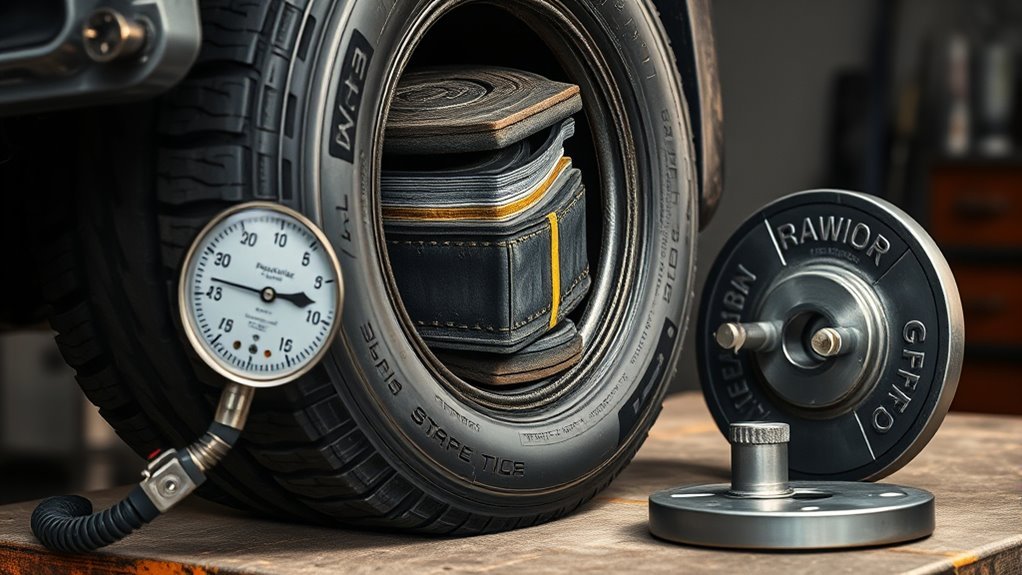
A tire carries weight because its structure and air pressure work together. The tire carcass provides strength, while the air inside the tire supports the load. When pressure is too low for the load, the tire flexes too much, builds heat, and can suffer internal damage.
For passenger vehicles, the safest everyday pressure is usually the recommended cold pressure on the vehicle placard, not the maximum number molded on the tire. For trucks, RVs, and trailers carrying changing loads, tire makers publish load-inflation tables that show the minimum cold pressure needed for a specific load.
Michelin’s RV tire guidance, for example, recommends weighing each axle end and using the heavier side of the axle to determine cold inflation pressure, while keeping pressures the same across the axle and never exceeding the wheel’s maximum pressure limit. See Michelin’s load and inflation table guidance for the method.
A higher ply rating only helps when the tire size, load index, wheel rating, and inflation pressure all support the load you plan to carry.
Why Identical-Size Tires Can Have Different Ply or Load Ratings
Two tires can share the same size but carry different loads. Size describes dimensions; it does not fully describe internal strength. Construction, casing design, belt package, sidewall reinforcement, rubber compound, and approved inflation pressure all affect capacity.
Construction Material Differences
Modern tires may use polyester body plies, steel belts, nylon overlays, aramid reinforcement, and different bead designs. These materials can change strength without changing the outside size of the tire. One LT275/70R18 tire may be Load Range C, while another LT275/70R18 may be Load Range E, even though they fit the same rim diameter.
- Steel belts improve tread-area strength and stability.
- Body ply material affects sidewall stiffness, heat resistance, and impact strength.
- Bead and casing design influence how the tire handles high pressure and heavy loads.
- Rubber compound affects heat management, wear, and durability.
Inflation and Load Capacity
Inflation pressure changes how much load a tire can safely carry, but only within approved limits. You cannot turn a lower-rated tire into a higher-rated tire by overinflating it. The tire, wheel, valve stem, axle rating, and vehicle rating must all be suitable for the pressure and load.
| Factor | Why It Matters |
|---|---|
| Tire size | Sets the tire’s physical dimensions and air volume |
| Load range | Shows the tire’s broad strength class |
| Load index | Gives the specific capacity code |
| Cold inflation pressure | Determines whether the tire can carry the intended load |
| Wheel rating | Limits the maximum pressure and load the wheel can safely handle |
Choosing the Right Ply Rating for Towing, Hauling, or Daily Driving
The right ply rating depends on how the vehicle is used. Do not automatically buy the highest rating available. Choose a tire that matches the vehicle’s original specifications, load needs, ride expectations, and approved inflation range.
[Products Worth Considering]

This professional wheel and rim cleaning brush set lifts brake dust, grime, and dirt with soft, scratch-free microfiber and synthetic wool fibers. The rim brush bends up to 360 degrees for easy access to hard-to-reach areas around spokes, lips, and faces. Ideal for thorough cleaning of car, truck, motorcycle, bicycle, RV, and more wheel and tire surfaces.
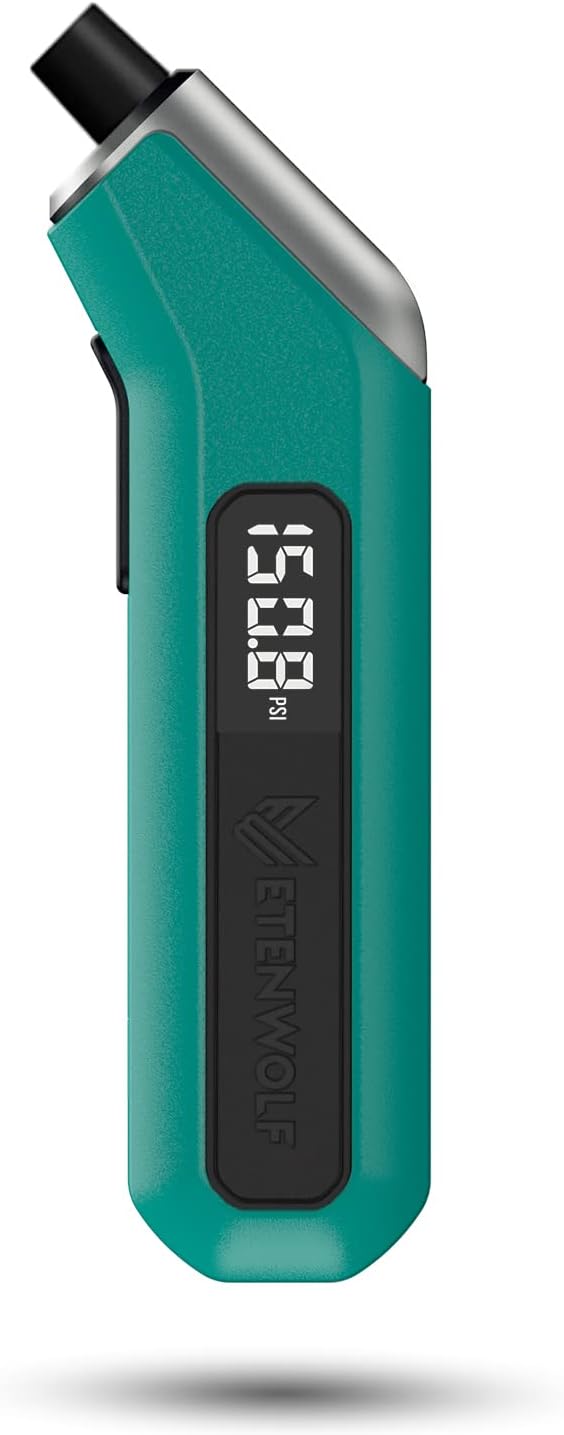
ETENWOLF T300 is a calibrated digital tire pressure gauge designed for reliable readings across low and high pressure ranges. It includes thermal compensation for stable performance in extreme cold or heat, an LED light for visibility, and an auto shut-off to help preserve battery life. Ideal for pickups, RVs, and heavy-duty vehicles, it delivers accurate PSI measurements with sturdy durability.

Check tire pressure with the Milton S-925 pencil gauge built for trucks, RVs, and bicycles. It features a single-head chuck with a built-in deflator valve, and it displays readings in both PSI and kPa for convenient use. The gauge is designed for accurate, repeatable pressure checks within its working range.
Daily Driving
For normal passenger cars, crossovers, and light SUVs, the correct load rating is usually the one specified on the vehicle placard. Many passenger tires use Standard Load or Extra Load markings instead of LT-style Load Range C, D, or E. Installing a much stiffer LT tire where a passenger tire is required can change ride quality and handling.
Towing and Hauling
For towing and hauling, start with the vehicle’s GVWR, GAWR, payload rating, trailer tongue weight, and tire placard. The tire must be able to support the actual loaded weight on each axle. If the truck or trailer is close to its limits, a public scale reading is better than guessing.
Use these checks before upgrading:
- Confirm the original tire size and load rating on the placard.
- Check the maximum load and pressure listed on the replacement tire.
- Confirm the wheel is rated for the new pressure.
- Use the tire maker’s load-inflation table for heavy-duty use.
- Do not exceed the vehicle’s GVWR, GAWR, or trailer ratings.
Trailers and ST Tires
Trailer tires are often marked ST for Special Trailer. They are built for trailer loads and trailer handling, not steering or driving axles. If you are replacing trailer tires, match the ST tire size, load range, speed rating, and inflation requirements listed by the trailer manufacturer.
Pro Tip: If you tow regularly, weigh the fully loaded vehicle and trailer. Real axle weights make tire pressure and load rating decisions much safer than estimates.
Trade-Offs: Load Strength Versus Ride Comfort and Tire Life
Higher load strength can be helpful, but it comes with trade-offs. A higher load range often has a stiffer casing and may require higher pressure to perform as designed. That can make the ride firmer, increase road noise, and reduce sidewall flex on rough roads.
Higher-rated tires also do not guarantee longer tread life. Tire life still depends on alignment, rotation, inflation, driving speed, load, road surface, heat, and tread compound. A heavy-duty tire that is underloaded, overinflated for the application, or poorly aligned can wear unevenly.
Choose the lowest load range that safely meets or exceeds the vehicle’s requirements and your real-world load. That usually gives the best balance of safety, comfort, handling, and tire life.
Common Mistakes When Switching Ply-Rated Tires and How to Avoid Them
Mistakes in switching ply-rated tires usually come from focusing on one marking and ignoring the rest. Avoid these common problems:
- Choosing by ply rating only: A “10-ply” label does not tell the whole story. Compare load index, tire size, and pressure.
- Downgrading the load rating: Never install a lower load index or load range unless the vehicle or tire manufacturer confirms it is acceptable.
- Using sidewall max pressure as everyday pressure: Follow the vehicle placard for normal use, and use load-inflation tables for special heavy-load cases.
- Ignoring wheel limits: A Load Range E or F tire may require pressures that some wheels cannot safely handle.
- Mixing ratings on the same axle: Tires on the same axle should match in size, type, construction, and load rating unless the manufacturer specifies otherwise.
- Using passenger tires for trailer work: Trailers often need ST-rated tires with the correct load range and inflation pressure.
- Assuming higher is always safer: A tire that is too stiff for the vehicle can hurt comfort and handling without adding usable payload.
[Products Worth Considering]
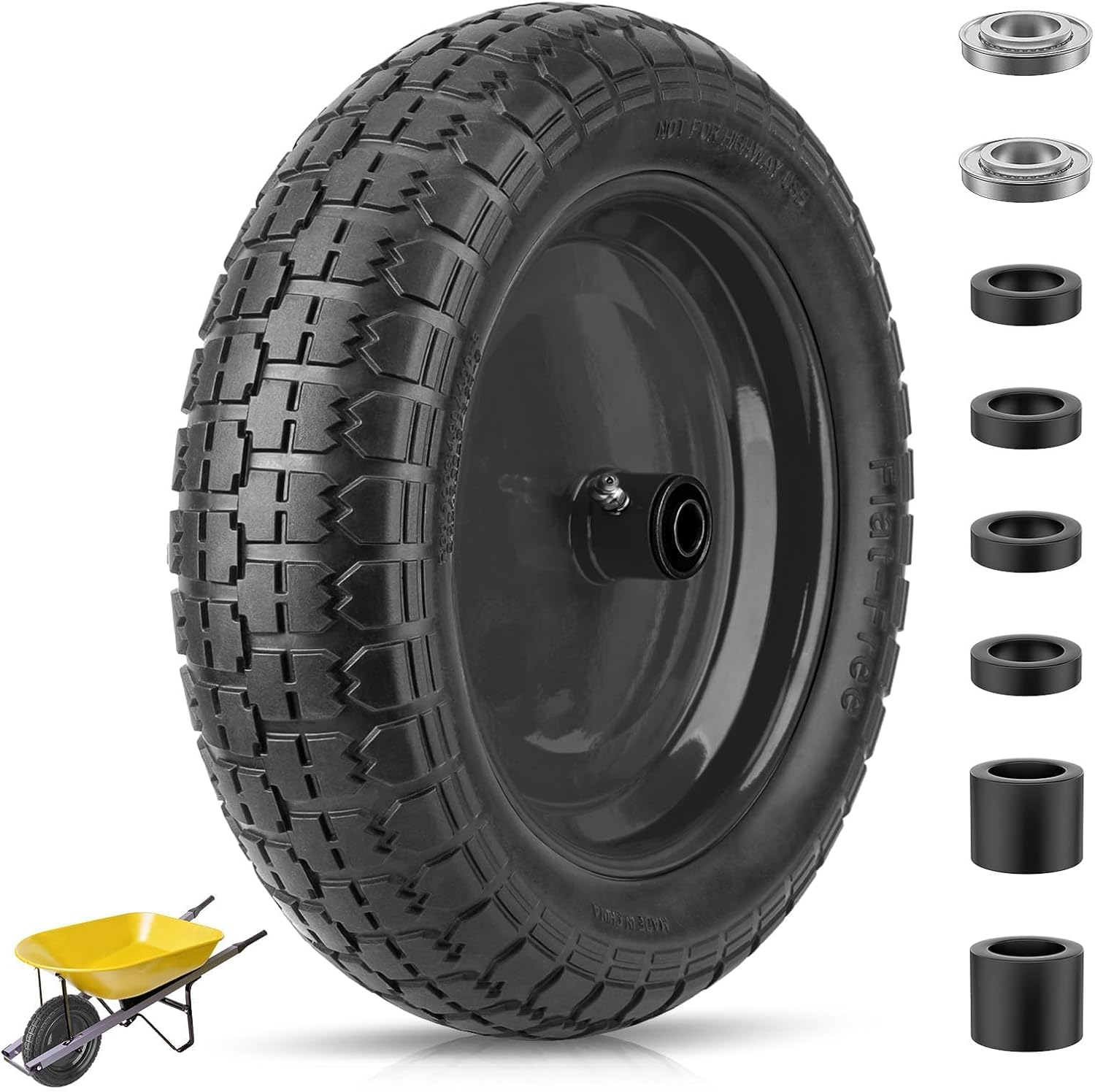
This flat-free TICONN wheelbarrow tire features durable polyurethane foam construction that never needs inflation, helping prevent punctures and reducing maintenance on rough outdoor terrain. With a 300 lb max load capacity and stable steel rim design, it supports safer transport for yard work and hauling tasks. An adapter kit with ball bearings and nylon spacers is included for easier fit and customization across common wheelbarrow and cart axle setups.

This 12-inch LUMITECO dual head tire pressure gauge features an integrated straight-on chuck and a 30° reverse chuck to reach hard-to-access dual wheel valves. Its 10–150 PSI / 1–10 BAR range with a clear, two-sided scale helps you quickly check tire pressure for safer, smoother driving. Heavy-duty construction and a simple no-battery design make it a reliable tool for trucks, cars, RVs, and motorcycles.

This heavy-duty tire pressure gauge combines measurement, inflation, and deflation in one compact tool for quick roadside and garage use. Its dual-head chuck helps reach inner and outer dual-wheel positions, while the clear indicator bar makes readings easy to see. Built for durability, it supports a wide pressure range and works across cars, trucks, RVs, SUVs, and motorcycles.
Quick Ply Rating Checklist Before You Buy
Before ordering tires, run through this checklist:
- Read the vehicle placard on the driver’s door jamb.
- Write down the original tire size, load index, speed rating, and recommended cold pressure.
- Check the current tire sidewall for Load Range, ply rating, max load, and max pressure.
- Compare replacement tires by full service description, not just ply rating.
- For towing or hauling, confirm loaded axle weights and use load-inflation tables.
- Confirm the wheel and valve stem are rated for the required pressure.
- Ask a qualified tire professional if the replacement tire changes tire type, size, load range, or pressure.
[Products Worth Considering]
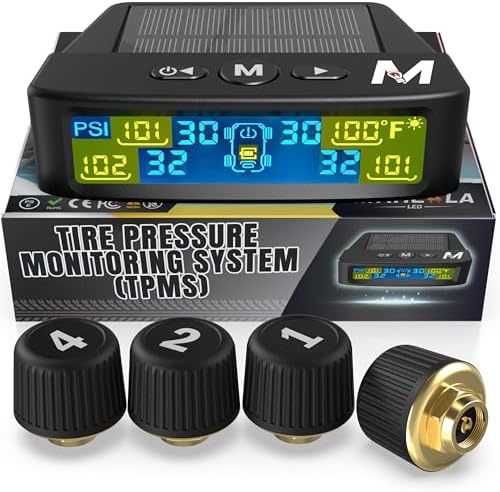
Marcala’s TPMS set of four sensors helps you monitor tire pressure and temperature in real time while driving, with updates every second. The bright color LCD uses auto-dimming for easy viewing, powered by dual solar and USB charging, and offers six alarm modes. Built for trailers, RVs, campers, trucks, and towing setups, the sensors support monitoring 1-4 wheels up to 98 PSI with IP67 waterproof protection.

Secure your vehicle during transport with this 4-pack of heavy-duty tire tie down straps designed for trailers and hauling. The ratchet system with flat hooks and D-rings helps you tension the straps quickly, while the wheel-friendly design protects tires. With high break strength and corrosion-resistant hardware, these straps provide reliable, confidence-inspiring tie-down security for cars, trucks, and UTVs.

The Topeak SmartGauge D2 delivers precise digital tire pressure readings for bikes, motorcycles, and sports equipment up to 250 psi (17 bar). Its rotating SmartHead works with both Presta and Schrader valves, so you can check pressure quickly without adapters. The LCD display makes it easy to read results in psi, bar, or kg/cm² with an included CR2032 battery for immediate use.
Frequently Asked Questions
Is a 10-ply or 12-ply tire better?
A 12-ply-rated tire is not automatically better. It may carry more load in the right size and application, but it may also ride stiffer and require higher pressure. Choose the tire that meets your vehicle placard, load index, axle weight, wheel rating, and intended use.
Which is better, 4-ply or 8-ply tires?
For everyday passenger use, a lower ply-equivalent tire may provide a smoother ride when it matches the vehicle’s required load rating. For heavier hauling, towing, vans, trucks, or trailers, an 8-ply-rated tire may be more appropriate if the vehicle and wheel are designed for it.
What load range is a 10-ply tire?
On many light-truck tires, a 10-ply rating corresponds to Load Range E. The exact load capacity still depends on the tire size, load index, and approved cold inflation pressure, so do not assume every Load Range E tire carries the same weight.
How do I tell if a tire is 6-ply or 10-ply?
Check the tire sidewall for markings such as 6PR, 10PR, or Load Range C or Load Range E. Also read the load index and maximum load marking, because those provide more useful capacity information than the ply rating alone.
Can I put higher-ply tires on my truck?
Often yes, but only if the tire size, wheel rating, valve stem, clearance, and inflation requirements are suitable. A higher-ply tire does not increase the truck’s legal payload or axle rating. It only gives the tire more load capacity when used correctly.
Does a higher ply rating make tires last longer?
Not necessarily. Higher ply-equivalent tires may resist heavy-load stress better, but tread life depends on compound, alignment, rotation, inflation, load, heat, and driving habits. A tire that is too stiff or incorrectly inflated can wear unevenly.
Conclusion
Ply rating is a helpful shortcut, but it is not the final answer. It tells you a tire’s strength class, while load range gives the letter rating and load index gives the specific capacity code. The tire only delivers that capacity when it is the right size, mounted on a suitable wheel, and inflated to the correct cold pressure for the load.
For daily driving, towing, hauling, or trailer use, match the tire to the vehicle placard, owner’s manual, axle weights, and tire maker’s specifications. A stronger tire can be the right choice, but the safest tire is the one that fits the whole vehicle system—not just the one with the biggest ply number.
Sources
- NHTSA TireWise tire safety guidance — cold inflation pressure, tire placards, and tire safety basics
- Tire Rack: Load Ranges and Ply Ratings — relationship between load range, ply rating, and load capacity
- Goodyear Tire Load Index Chart — load index meanings and weight-capacity conversion
- Michelin RV Load and Inflation Tables — axle weighing and cold inflation guidance for RV applications
- The Tire and Rim Association — U.S. tire, rim, valve, and load-inflation standards body
- 49 CFR § 571.110 — U.S. tire selection, rim, and vehicle placard requirements for applicable vehicles