
Tire ply rating is a legacy way to describe a tire’s strength, but modern truck tires usually show that strength as a load range, load index, and maximum load at a stated cold inflation pressure. For heavy trucks, towing, and hauling, the safest choice is the tire that matches your vehicle placard, axle ratings, tire size, and real loaded weight—not simply the highest ply number you can buy.
Quick Answer
Tire ply rating tells you the tire’s load-strength category, but it is not the same as actual layer count. For trucks, check the sidewall for Load Range, load index, and maximum load, then match those numbers to the vehicle placard, owner’s manual, GAWR, and tire manufacturer load/inflation data.
Key Takeaways
- Ply rating is a strength equivalent, not a guarantee that the tire has that many physical fabric layers.
- Load Range E is commonly called a 10-ply-rated light-truck tire, but its exact weight capacity depends on size, load index, inflation pressure, and single or dual use.
- Never choose tires by ply rating alone. Use the vehicle placard, owner’s manual, axle rating, sidewall markings, and manufacturer load/inflation tables.
- Higher is not always better. A higher load range can improve load capacity, but it may also create a stiffer ride and still must match the vehicle and wheel requirements.
At a Glance
| Time Required | 5–10 minutes to read the sidewall and vehicle placard; longer if you need loaded axle weights |
| Difficulty | Easy for reading markings; moderate for confirming towing or hauling capacity |
| Tools Needed | Tire pressure gauge, owner’s manual, door placard or certification label, tire sidewall, and scale ticket for heavy loads |
| Cost | $0 if you already have a gauge; usually $10–$20 for a basic tire pressure gauge |
Understanding Tire Ply Rating and Load Range
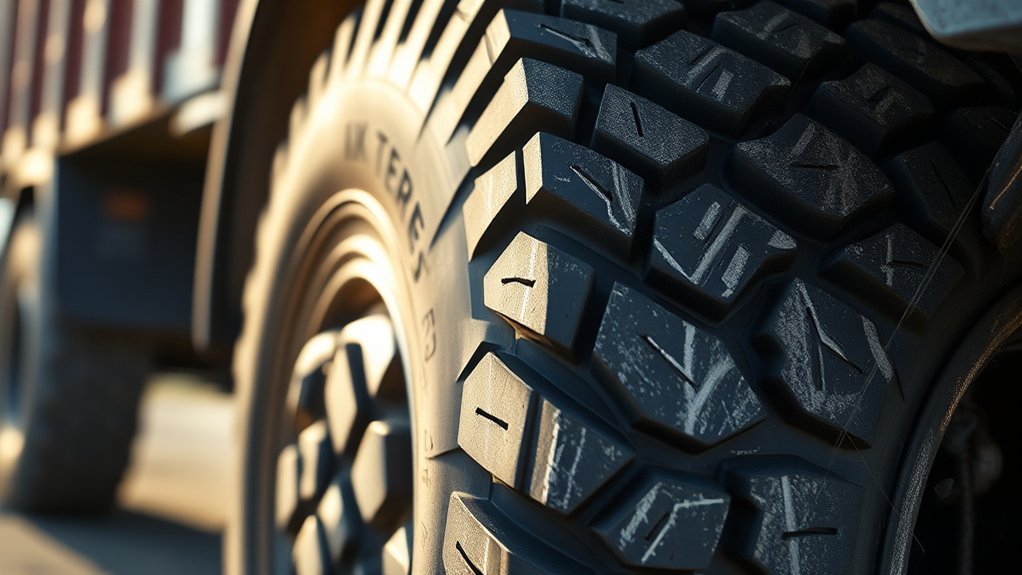
Older tire terminology used “ply” to describe the number of fabric layers in a tire. Modern radial tires use stronger materials and construction methods, so a “10-ply-rated” tire usually means it has the strength equivalent of an older 10-ply tire, not that it literally has ten body plies.
For today’s truck tires, you are more likely to see terms such as Load Range C, D, E, F, or G, plus a load index and a maximum load at a stated cold inflation pressure. The U.S. Tire Manufacturers Association explains that a light-truck tire marking such as LT245/75R16 120/116Q Load Range E includes the size, load index, speed symbol, and load range. The load range identifies the tire’s load and inflation limits.
Note: If your tire shows “10PR,” that means 10-ply rating. If it shows “Load Range E,” that is the common modern equivalent for many light-truck tires. Always confirm the actual load capacity printed on that exact tire.
[Products Worth Considering]

The Tymate TM2 RV tire pressure monitoring system keeps you informed with a color LCD display, automatic backlight, and solar charging for dependable operation. It supports up to 10 tire positions with four pre-paired sensors, while offering multiple alarm modes for fast leak detection, pressure extremes, temperature alerts, and low-signal warnings. Built-in monitoring uses accurate readings and reliable 433.92MHz communication to help protect your RV, trailer, truck, or SUV.

Check tire pressure with the Milton S-925 pencil gauge built for trucks, RVs, and bicycles. It features a single-head chuck with a built-in deflator valve, and it displays readings in both PSI and kPa for convenient use. The gauge is designed for accurate, repeatable pressure checks within its working range.

Keep your tires properly inflated with this analog VONDIOR tire pressure gauge, designed for fast, easy readings without batteries. The swiveling, two-axis hose and large glow dial help you measure at any tire angle with instant visibility. Built with a protective rubber shield, it supports durable, low-maintenance use for cars and trucks.
Determine Your Tire’s Ply Rating
Start with the tire sidewall. According to the Tire Industry Association, the service description includes the load index and speed symbol, while other sidewall markings identify tire size, construction, DOT information, and more.
Look for these markings:
- Load Range: A letter such as C, D, E, F, or G. This is the modern load-strength category.
- Ply Rating or PR: A number such as 10PR. Some tires show this, but many modern LT tires show load range instead.
- Load Index: A two- or three-digit number such as 120, 121, or 126. This corresponds to the maximum load the tire can carry when used correctly.
- Maximum Load and Pressure: A sidewall statement such as “Max Load Single 3042 lbs at 80 psi cold.” This is tire-size-specific.
- Single/Dual Rating: LT and commercial tires may show different load ratings for single-wheel and dual-wheel use.
Pro Tip: Take a photo of the sidewall before shopping. Capture the full size line, load index, speed symbol, load range, DOT date code, and max load/pressure markings so you can compare replacements accurately.
Know Your Load Capacity Before Choosing Tires
Choosing the right ply rating starts with the truck, not the tire rack. The safest tire is one that meets or exceeds the vehicle manufacturer’s required size, load index, load range, and inflation guidance. The National Highway Traffic Safety Administration points drivers to tire labeling, maintenance, and safety information because tires are a key part of safe vehicle operation.
[Products Worth Considering]

These aluminum alloy tire valve stem caps with an O-ring seal help protect valve stems from corrosion while adding a clean, stylish look to your vehicle. The universal fit works across cars, trucks, motorcycles, bicycles, and more, making them an easy upgrade for everyday driving and off-road use. Installation is quick, and the included four-pack keeps all your tires dressed and protected.

This 12-inch LUMITECO dual head tire pressure gauge features an integrated straight-on chuck and a 30° reverse chuck to reach hard-to-access dual wheel valves. Its 10–150 PSI / 1–10 BAR range with a clear, two-sided scale helps you quickly check tire pressure for safer, smoother driving. Heavy-duty construction and a simple no-battery design make it a reliable tool for trucks, cars, RVs, and motorcycles.

This 100-piece set of snap-in tubeless tire valve stems is designed for standard 0.453 in (11.5 mm) rim holes and helps maintain reliable, steady tire pressure. Made with ozone-resistant rubber and brass cores, the valves are built for durability and long-term use. Easy to install by hand, they support safe driving and are suitable for cars, light trucks, trailers, and more.
Check the Vehicle Placard and Owner Manual
Your vehicle placard or certification label usually lists the original tire size and recommended cold tire pressure. It may be on the driver-side door jamb, door edge, glove box area, fuel door, or another location depending on the vehicle. The owner’s manual may also include tire replacement rules, towing information, and inflation guidance.
For original-equipment tire sizes, follow the placard and owner’s manual. For optional tire sizes, plus sizing, or heavy towing setups, use the tire manufacturer’s load/inflation tables and ask a qualified tire professional to verify the setup. Toyo Tires notes that load and inflation tables are intended to help when replacing tires with optional sizes not listed on the placard or manual.
Compare Tire Capacity to Axle Load
For heavy trucks, the most useful number is often the axle load, not just the total vehicle weight. The combined tire load capacity on an axle must be high enough for that axle’s load. Federal tire selection rules for vehicles over 10,000 pounds GVWR require the sum of the tire load ratings on an axle to be at least the axle’s gross axle weight rating, or GAWR, for covered vehicles.
Use this simple process:
- Find the tire size and inflation recommendation on the vehicle placard or certification label.
- Find the truck’s GAWR for the front and rear axle on the certification label.
- Read the tire’s maximum load marking for single or dual use, depending on your wheel setup.
- Multiply by the number of tires on that axle. For a single rear wheel axle, multiply by two. For a dual rear wheel axle, use the dual rating and multiply by four.
- Confirm the tire capacity meets or exceeds the axle requirement at the correct cold inflation pressure.
Warning: Do not use the maximum pressure printed on the tire as your everyday pressure unless the vehicle manufacturer or tire load/inflation data calls for it. Overinflation and underinflation can both reduce safety, ride quality, and tire life.
Include Payload, Trailer Tongue Weight, and Dual Ratings
Payload is not just cargo in the bed. It can include passengers, tools, fuel, aftermarket bumpers, service bodies, fifth-wheel pin weight, gooseneck weight, or trailer tongue weight. If the truck is often loaded near its limit, weigh it on a certified scale by axle. That gives you a real number to compare against tire and axle ratings.
If your truck uses dual rear wheels, use the tire’s dual load rating, not the single rating. Dual ratings are lower because paired tires share heat, spacing, and load conditions differently than a single tire.
Choosing the Right Ply Rating for Your Heavy Truck

A 10-ply-rated tire, commonly shown as Load Range E on many light-truck tires, is a common choice for three-quarter-ton trucks, one-ton trucks, towing, and hauling. But it is not automatically right for every truck, and it is not automatically enough for every load.
Use Load Range E or higher only when it matches the tire size, wheel rating, vehicle placard, owner’s manual, and actual use. Some lighter trucks may not need Load Range E, while some commercial trucks, trailers, or severe-duty vehicles may need Load Range F, G, H, or a commercial tire with a different size and pressure system.
| Marking | Example | What to Do With It |
|---|---|---|
| Load Range | Load Range E | Use it as the tire’s strength/load category, then verify exact max load and pressure. |
| Ply Rating | 10PR | Treat it as a strength equivalent, not the actual number of body plies. |
| Load Index | 120/116 | Use the correct single or dual value and confirm it matches the axle load requirement. |
| Max Load / Max Pressure | Max Load Single 3042 lbs at 80 psi cold | Use this exact tire-specific capacity when calculating axle tire capacity. |
[Products Worth Considering]
This flat-free TICONN wheelbarrow tire features durable polyurethane foam construction that never needs inflation, helping prevent punctures and reducing maintenance on rough outdoor terrain. With a 300 lb max load capacity and stable steel rim design, it supports safer transport for yard work and hauling tasks. An adapter kit with ball bearings and nylon spacers is included for easier fit and customization across common wheelbarrow and cart axle setups.

Get precise tire readings with the ETENWOLF T300 Plus digital gauge, calibrated to ANSI B40.7 Grade 2A for reliable accuracy. It measures across a wide 3–200 PSI range and includes thermal compensation for dependable performance from extreme cold to heat. The bright LED display, LED illumination, and replaceable AAA batteries make it easy to check pressures quickly, even in low light.

Steelman white tire marking crayons provide high-contrast, semi-permanent marks for repairing and inspecting tires and equipment. They write on wet or dry, smooth or coarse surfaces including rubber, metal, glass, and wood, making them ideal for puncture location and damage outlining. The lead- and zinc-free crayons resist weather and fading yet wipe away when you no longer need the marks.
How Ply Ratings Affect Load Capacity
Ply rating affects load capacity because it reflects the tire’s load-strength category. A tire with a higher load range is built to handle higher load and inflation limits than a lower-rated tire in the same general size category. However, the exact carrying capacity still comes from the tire’s size, load index, single or dual configuration, and load/inflation data.
Factors Affecting Load Capacity
Your tire’s real-world load capacity depends on several factors working together:
- Tire size: Larger or differently constructed tires may carry more load, but only if the wheel and vehicle are compatible.
- Load index: This numerical code is tied to maximum carrying capacity, but it should not be used alone without the full tire and vehicle requirements.
- Inflation pressure: Air pressure supports the load, but pressure must stay within the tire, wheel, and vehicle manufacturer limits.
- Single or dual use: Dual-wheel load ratings are different from single-wheel ratings.
- Operating conditions: Heat, speed, road hazards, towing, off-road use, and sustained heavy loads all affect tire stress.
A Load Range E marking tells you the tire’s strength category. The sidewall’s max load statement tells you what that exact tire can carry at a stated cold pressure.
Importance of Proper Inflation
Proper inflation is essential because the air inside the tire carries the load. Underinflated tires flex more, build heat faster, and can wear unevenly. Overinflated tires can reduce ride comfort, traction, and impact protection. Michelin notes that exceeding tire load and speed limits can cause heat buildup and increase the risk of tire damage or failure, so pressure, load, and speed limits should be treated together.
Check pressure when tires are cold, before the truck has been driven far. Use the placard or manufacturer data for the correct pressure, especially if the truck is loaded differently for work, towing, or daily driving.
Matching Vehicle Requirements
When choosing replacement tires, match or exceed the vehicle manufacturer’s required tire size, load index, speed rating, and load range unless a qualified tire professional confirms a safe alternative. Never install a tire with a lower load capacity than the truck requires.
For towing and hauling, also confirm:
- Wheel rating: The wheel must be rated for the pressure and load, not just the tire.
- Valve stem rating: High-pressure LT and commercial tires may need compatible valve stems.
- Trailer weight transfer: Tongue weight or pin weight adds load to the tow vehicle.
- Axle balance: A truck can be under GVWR but still overloaded on one axle.
Key Factors Influencing Tire Ply Ratings for Heavy Trucks
The right tire ply rating or load range depends on how the truck is built and how it is used. A work truck that carries tools every day, a pickup that tows a fifth-wheel trailer, and a lightly loaded SUV do not need the same tire setup.
Consider these factors before buying:
- Manufacturer requirements: Start with the placard and owner’s manual.
- Actual loaded axle weight: Scale the truck when loaded for work or towing.
- Road conditions: Gravel, job sites, curbs, heat, and long highway runs increase tire stress.
- Ride quality: Higher load range tires can feel stiffer, especially when the truck is unloaded.
- Fuel economy and handling: Heavier, stiffer tires can change steering feel and rolling resistance.
- Wheel compatibility: A tire rated for 80 psi should not be used on a wheel that cannot handle that pressure.
Common Misconceptions About Ply Ratings and Load Capacity
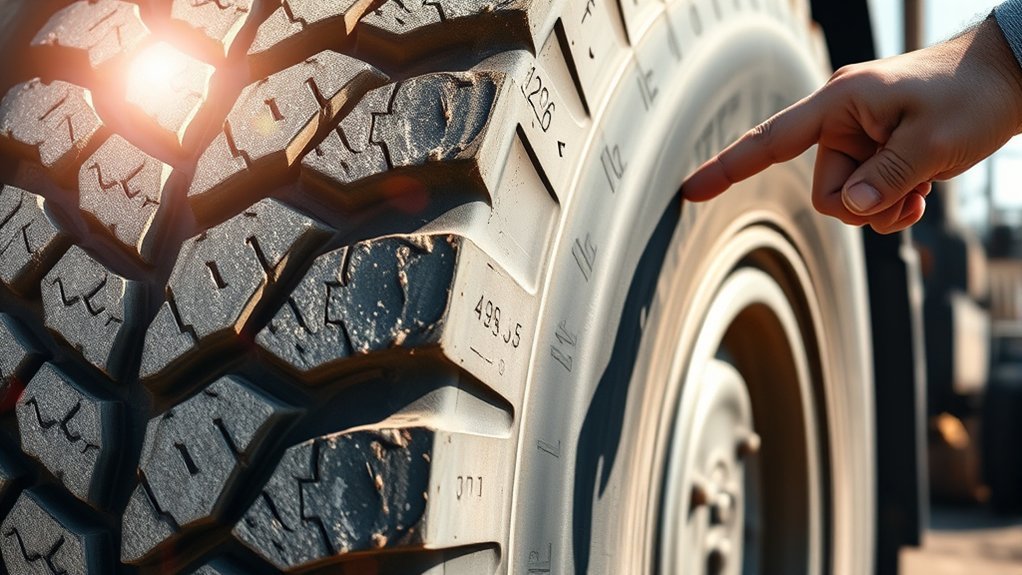
Misunderstanding ply ratings can lead to unsafe or uncomfortable tire choices. Here are the biggest mistakes to avoid:
- Myth: A 10-ply tire always has ten layers. Modern ply rating is usually a strength equivalent, not an actual ply count.
- Myth: Load Range E always carries the same weight. The exact capacity depends on tire size, load index, pressure, and single or dual use.
- Myth: Higher load range is always better. A higher load range can help with heavy loads, but it can also ride harder and may be unnecessary for lighter vehicles.
- Myth: Max sidewall PSI is the correct daily pressure. Use the placard, owner’s manual, and tire load/inflation data.
- Myth: GVWR is the only number that matters. Axle ratings matter too. One axle can be overloaded even when the total truck weight looks acceptable.
Maintaining Safety: The Importance of Proper Load Ratings
Proper load ratings help protect the tire, wheel, axle, and vehicle. A tire that is overloaded or underinflated can run hotter, wear faster, and become more vulnerable to failure. This is especially important on trucks that tow, haul tools, carry slide-in campers, or operate at highway speeds for long distances.
Follow this safety checklist:
- Check tire pressure at least monthly and before long trips or towing.
- Inspect sidewalls and tread for cuts, bulges, cracking, punctures, and uneven wear.
- Do not exceed the tire’s maximum load or maximum cold inflation pressure.
- Do not exceed the vehicle’s GVWR, GAWR, payload rating, or towing rating.
- Replace tires that are damaged, mismatched, severely worn, or not rated for the job.
- When changing size, load range, or wheel setup, verify the fitment with a tire professional.
Warning: If your truck feels unstable while towing, shows sidewall bulging, has repeated pressure loss, or shows uneven shoulder wear, stop using the tire for heavy loads until it is inspected.
Frequently Asked Questions
What load range is a 10-ply truck tire?
A 10-ply-rated light-truck tire is commonly marked as Load Range E. It does not always have ten physical plies. The exact weight it can carry depends on the tire size, load index, inflation pressure, and whether it is used in a single or dual-wheel setup.
Is Load Range E always enough for towing?
No. Load Range E is common for many towing pickups, but it is not automatically enough. Compare the tire’s load capacity with the truck’s axle ratings, loaded axle weight, wheel rating, and manufacturer recommendations.
Can I use a higher ply rating than my truck came with?
Sometimes, but only if the tire size, wheel, valve stem, pressure range, and vehicle requirements are compatible. A higher load range may ride harder and may not improve safety if the tire is not inflated and loaded correctly.
What is the difference between load range and load index?
Load range is a strength and inflation category, such as Load Range E. Load index is a numerical code tied to maximum load capacity. Use both markings along with the tire’s maximum load statement and vehicle requirements.
Should I inflate Load Range E tires to 80 psi?
Not automatically. Many Load Range E LT tires list 80 psi as a maximum cold pressure, but the correct operating pressure depends on the vehicle placard, owner’s manual, actual load, and tire manufacturer load/inflation data.
Conclusion
Understanding tire ply rating helps you choose safer tires for heavy trucks, but the ply number is only one part of the decision. Modern tires should be selected by load range, load index, tire size, maximum load, inflation requirements, wheel rating, and the truck’s real axle loads. Use your vehicle placard and owner’s manual first, verify heavy-load setups with tire manufacturer data, and avoid assuming that a higher ply rating automatically means a better or safer tire.
Sources
- National Highway Traffic Safety Administration TireWise — tire safety, labeling, maintenance, and consumer tire information
- U.S. Tire Manufacturers Association Tire Care and Safety Guide — sidewall markings, load range, load index, and maximum load examples
- 49 CFR § 571.120 — tire selection and axle load rating requirements for covered heavier vehicles
- Toyo Tires Load and Inflation Tables — tire inflation guidance for optional sizes and load/inflation table use
- Tire Industry Association Sidewall Guide — how to read load index, speed symbol, DOT code, and sidewall markings
- Michelin Tire Load and Speed Rating Guide — load and speed rating safety limits and replacement guidance