Tire speed ratings tell you whether a tire is built to handle the speed, heat, and load demands Toyota designed into your Tundra. The rating is not a suggestion to drive faster; it is one part of the tire’s service description, and it should be checked alongside tire size, load index, load range, inflation pressure, and the tire information label on the driver’s door jamb.
Quick Answer
For a Toyota Tundra, use tires with a speed rating and load rating that meet or exceed the tire pressure label and owner’s manual. The speed rating is the final letter in the tire’s service description, such as the “T” in 116T, and it represents tested speed capability under specified conditions.
Key Takeaways
- Check the Toyota door-jamb tire label and owner’s manual before choosing replacement tires.
- The speed rating is a letter, while the load index is a number; both must be correct.
- Do not use a lower speed symbol or load rating than Toyota specifies unless a tire professional confirms the application is safe and legal for your use.
- For towing or hauling, focus on load index, load range, axle limits, wheel limits, and inflation pressure—not just the speed-rating letter.
At a Glance
| Time Required | 2–5 minutes |
| Difficulty | Easy |
| Tools Needed | Owner’s manual, driver-door tire label, flashlight or phone camera |
| Cost | $0 to check; tire cost varies by size, rating, and type |
What Is a Tire Speed Rating and Why Does It Matter?
A tire speed rating is a letter that indicates the maximum speed a tire is designed to sustain under specified conditions when it is properly inflated, correctly loaded, and in good condition. Tire makers place this rating next to the load index in the tire’s service description. For example, in 275/65R18 116T, the number 116 is the load index and the letter T is the speed rating.
This matters on a truck like the Toyota Tundra because tires must manage heat, weight, steering forces, braking, towing loads, rough pavement, and highway speeds. The rating does not mean you should drive at that speed. It simply tells you the tire’s tested capability under controlled conditions. Bridgestone explains that speed ratings are based on laboratory testing and that real-world capability can be reduced by underinflation, overload, wear, damage, alignment issues, weather, road conditions, and the amount of time speed is maintained.
For replacements, the safest rule is simple: match or exceed the tire size, load rating, and speed rating listed by the vehicle manufacturer. For your Tundra, that means checking the tire placard on the driver’s door jamb and the Toyota owner’s manual before buying tires.
Common Speed Ratings Explained
Speed ratings use letters, and the common ratings you may see on passenger, SUV, and light-truck tires include Q, R, S, T, H, V, W, and Y. The exact rating on your Tundra depends on the tire size, trim, wheel package, and tire type, so do not choose based on a generic chart alone.
| Speed Rating | Maximum Speed | Where You May See It |
|---|---|---|
| Q | 100 mph | Some winter or specialty tires |
| R | 106 mph | Some heavy-duty, winter, or LT applications |
| S | 112 mph | Some SUV, light-truck, and touring tires |
| T | 118 mph | Common touring and truck/SUV tires |
| H | 130 mph | Some performance touring tires |
| V | 149 mph | Performance tires |
| W | 168 mph | High-performance tires |
| Y | 186 mph | Ultra-high-performance tires |
Continental’s tire sidewall guide lists common speed-rating values such as S at 112 mph, T at 118 mph, H at 130 mph, V at 149 mph, W at 168 mph, and Y at 186 mph. Even so, Continental also cautions drivers not to exceed legal speed limits just because a tire has a high rating.
How to Find the Speed Rating for Your Tundra’s Tires
You can find your Tundra’s tire speed rating in three places. If they do not match, use the Toyota tire placard and owner’s manual as the starting point, then confirm with a qualified tire professional.
- Check the tire sidewall. Look for the tire size followed by a number and letter, such as 275/65R18 116T. The final letter is the speed rating.
- Check the driver’s door jamb. The Tire and Loading Information Label lists the original tire size and inflation information Toyota specified for the vehicle.
- Check the owner’s manual. Toyota’s manual guidance is especially important if the truck has a different wheel package, a spare tire, or factory tire options.
- Check all four tires. A mismatched set can limit safe performance to the lowest-rated tire and may affect handling, braking, and stability-control behavior.
Pro Tip: Take a clear phone photo of your tire sidewall and the driver-door tire label before shopping. That makes it much easier to compare tire size, load index, load range, speed rating, and inflation pressure at the store or online.
[Products Worth Considering]

These universal tire valve stem caps help protect valve cores from dust, debris, and moisture while helping maintain stable tire pressure. The corrosion-resistant metal construction and sealed design provide reliable protection in road grime, mud, and winter conditions. Twist-on installation makes them quick to fit on cars, SUVs, trucks, and motorcycles.

Check tire pressure with the Milton S-925 pencil gauge built for trucks, RVs, and bicycles. It features a single-head chuck with a built-in deflator valve, and it displays readings in both PSI and kPa for convenient use. The gauge is designed for accurate, repeatable pressure checks within its working range.

These aluminum alloy tire valve stem caps with an O-ring seal help protect valve stems from corrosion while adding a clean, stylish look to your vehicle. The universal fit works across cars, trucks, motorcycles, bicycles, and more, making them an easy upgrade for everyday driving and off-road use. Installation is quick, and the included four-pack keeps all your tires dressed and protected.
How Speed Ratings Affect Truck Performance
A correct speed rating helps the tire manage heat and maintain predictable handling at highway speeds. On a Tundra, that matters because the truck may carry passengers, cargo, tools, camping gear, or trailer tongue weight. If the tire is not rated for the job, heat buildup and sidewall stress can increase.
NHTSA reported 511 deaths in tire-related crashes in 2024, and it warns that poor tire maintenance can lead to flats, blowouts, or tread separation.
Speed rating is only one piece of the performance picture. Tire category, tread design, compound, load index, load range, inflation pressure, wheel size, and alignment also affect how your Tundra rides, brakes, turns, and wears tires. A higher speed rating can sometimes come with sharper response, but it can also bring trade-offs such as higher cost, firmer ride, or faster wear depending on the tire model.
What If You Exceed Your Tire’s Speed Rating?
Exceeding a tire’s speed rating can create excess heat, reduce durability, and increase the risk of tire damage or failure. The danger is higher if the tire is underinflated, overloaded, worn, damaged, improperly repaired, or driven for long periods at high speed.
Warning: A speed rating is not permission to exceed posted speed limits. It also does not apply normally to tires that are damaged, altered, underinflated, overloaded, excessively worn, or improperly repaired.
Potential Tire Damage Risks
When a tire runs beyond its designed speed, load, pressure, or heat limits, the casing and tread can be stressed beyond what they were built to handle. Possible results include:
- Excessive heat buildup
- Rapid or uneven tread wear
- Sidewall damage
- Tread separation
- Blowout risk
- Reduced steering and braking response
Impact on Vehicle Performance
A tire operating outside its rating may feel vague, hot, noisy, or unstable. On a truck, the risk can rise when towing, hauling, driving in hot weather, or running at highway speed for long distances. The tire may also wear faster, especially if pressure is low or the truck is loaded near its axle limits.
Safety and Liability Concerns
Using tires below Toyota’s specified load rating or speed symbol may affect safety, warranty discussions, insurance outcomes, or liability after a crash. Laws vary by location, but the practical rule is consistent: use tires that meet or exceed the vehicle manufacturer’s specifications and keep them properly inflated.
Can You Use Tires With Different Speed Ratings on the Same Truck?
It is best to use four matching tires with the same size, load rating, speed rating, construction type, and similar tread depth. Mixing speed ratings can make the truck’s handling less predictable, especially during emergency braking, evasive steering, wet-road driving, or towing.
If a mixed set is unavoidable for a short emergency situation, drive conservatively and treat the vehicle as limited by the lowest-rated tire. Replace the mismatched tire as soon as practical. Also remember that a temporary spare has its own speed and distance limits, so follow the spare-tire instructions in the owner’s manual.
How Load Affects Tire Speed Ratings
Load and speed are connected, but they are not the same rating. The load index is the number that tells you how much weight a tire can carry at the proper pressure. The speed rating is the letter that tells you the tire’s tested speed capability. Together, they form the tire’s service description.
For truck tires, you may also see load range, such as C, D, E, or F. Load range is often described with older “ply rating” language, such as 10-ply or 12-ply, but modern tires do not necessarily have that exact number of physical plies. What matters is the tire’s actual load capacity, pressure requirement, size, wheel rating, axle rating, and Toyota’s specifications.
Note: A higher load range does not increase your Tundra’s legal payload or towing capacity. The truck is still limited by Toyota’s GVWR, GAWR, towing rating, hitch rating, wheel rating, and tire placard guidance.
Recommended Tire Speed Ratings for Toyota Tundra Models
The recommended tire speed rating for a Toyota Tundra is the one listed for your exact truck, wheel size, and tire package. Do not rely only on a general rule like “all Tundras use T-rated tires” or “off-road Tundras need lower ratings.” Toyota may specify different tire sizes and service descriptions depending on model year, trim, wheels, tire type, and market.
Use this order when choosing tires:
- Start with the driver-door tire label. Match the size and inflation guidance.
- Check the Toyota owner’s manual. Confirm warnings about tire type, load rating, and speed symbol.
- Match or exceed the load index and speed rating. Do not go lower unless the manual or a qualified tire professional confirms an approved exception.
- Choose the right tire category. Highway, all-terrain, mud-terrain, winter, and LT tires can behave very differently even with the same size and speed rating.
- Confirm wheel and pressure compatibility. This is especially important when moving from P-metric to LT tires or choosing a higher load range.
[Products Worth Considering]

The SAFELIFE dial tire tread depth gauge measures tread depth in 1/32 inch increments with clear, easy-to-read 2-inch dial face. Color zones using a traffic light system help you quickly judge whether tread is low, marginal, or ample for safer driving. Built with a durable zinc cast body and a metal detect probe for precise, comfortable use across cars, motorcycles, trucks, and buses.

Measure tire tread depth quickly and accurately with this LUMITECO dial gauge that reads in 1/32" increments up to 14/32". The color-coded green/yellow/red zones make it easy to judge tire wear and know when replacement is needed. A rugged, compact design with a protective pouch helps keep the gauge ready for use on cars, trucks, motorcycles, and more.
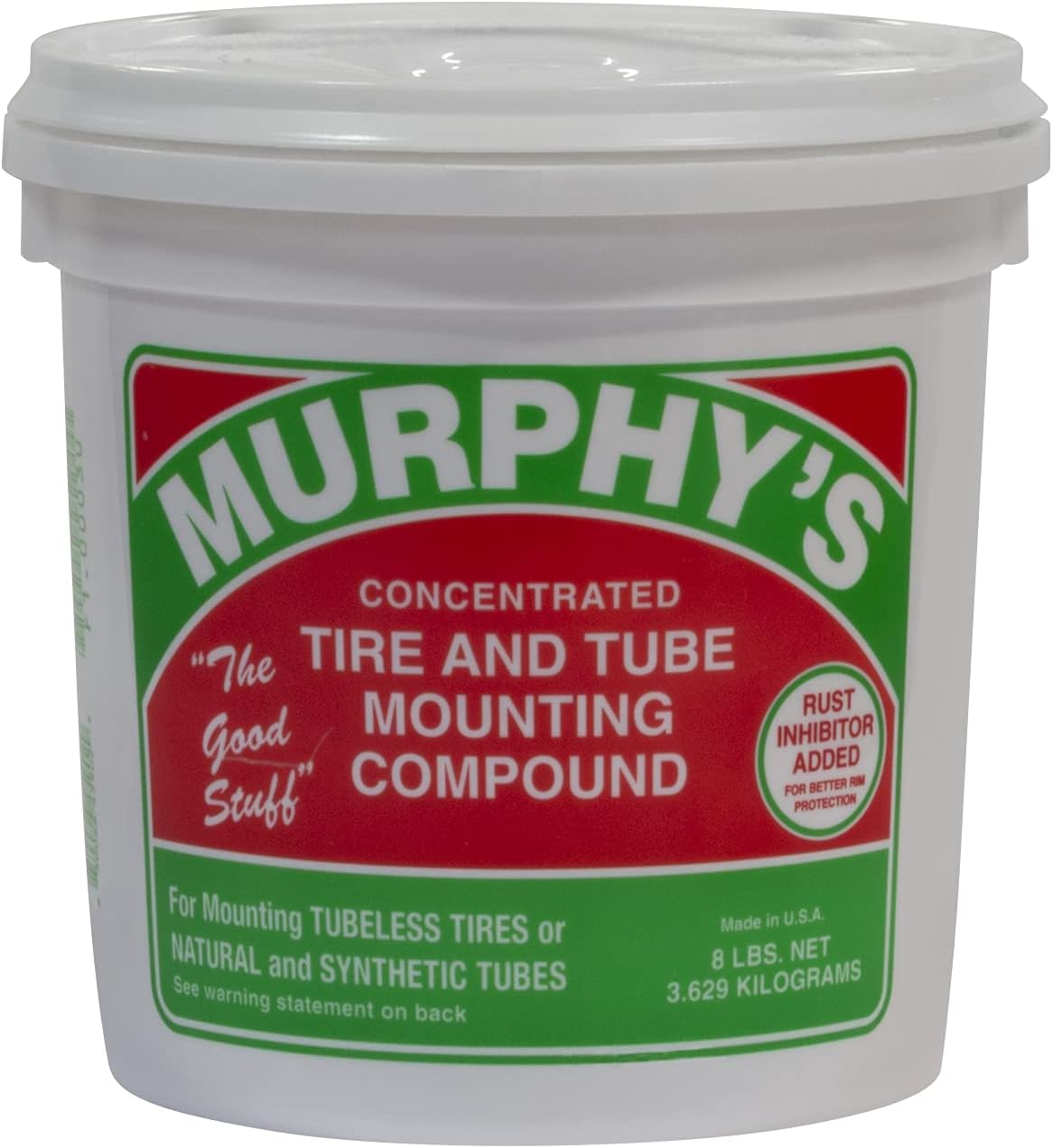
A concentrated tire and tube mounting compound designed to help simplify mounting rubber tires and tubes on passenger, semi truck, construction, and OTR applications. Its ultra-thick formula packs beads effectively and includes rust inhibitors to help protect against corrosion during use.
Common Speed Ratings Overview
Many Tundra owners shopping for replacement tires will encounter S, T, or H-rated tires, but the correct answer is always vehicle-specific. A T-rated tire is rated up to 118 mph under specified conditions, while an H-rated tire is rated up to 130 mph. That does not automatically make the H-rated tire better for towing, off-roading, winter use, or long tread life. The tire must fit the truck’s full service requirements.
Choosing Appropriate Tire Ratings
For daily driving, choose a tire that matches Toyota’s specified size, load index, speed rating, and inflation requirements. For towing, hauling, or overlanding, do not simply chase a higher ply rating. Instead, compare the tire’s load index, load range, maximum load, maximum pressure, wheel rating, and the truck’s axle and payload limits.
If you install winter tires, ask the tire manufacturer or installer whether a lower speed rating is allowed for that winter application. If a lower-rated winter tire is used, the vehicle must not be driven above that tire’s rated speed, and the tire still needs adequate load capacity for the Tundra.
How Speed Ratings Affect Tire Longevity and Safety
A tire with the right rating can still fail early if it is neglected. Inflation pressure, rotation, alignment, balancing, load, driving style, road hazards, and heat all influence tire life. NHTSA advises drivers to use the correct size from the owner’s manual or Tire and Loading Information Label and to maintain tires because poor maintenance can lead to flats, blowouts, or tread separation.
To protect your tires and your Tundra:
- Check cold tire pressure regularly. Use the pressure listed on the door label, not the maximum pressure molded into the tire sidewall.
- Inspect tread and sidewalls. Look for cracking, bulges, cuts, exposed cords, uneven wear, or punctures.
- Rotate on schedule. Follow Toyota’s maintenance guidance or the tire maker’s recommended interval.
- Recheck pressure before towing or long trips. Extra load and heat make proper inflation more important.
- Do not overload the truck. Tire capacity does not override Toyota’s payload, axle, or towing limits.
Tips for Choosing the Right Tires Based on Speed Ratings
When shopping for Toyota Tundra tires, use the speed rating as a filter, not the only deciding factor. The best tire is the one that fits your truck, driving style, climate, and load needs while meeting Toyota’s required specifications.
- Match the full service description. Size, load index, and speed symbol all matter.
- Do not downgrade casually. A lower speed rating may reduce heat tolerance and performance margin.
- Do not assume higher is always better. Higher-speed tires may cost more, ride firmer, or wear differently depending on the model.
- Check LT tire requirements carefully. LT tires can require different pressures than P-metric tires and may change ride quality.
- Ask about towing setup. A tire professional should consider trailer tongue weight, payload, axle ratings, wheel limits, and intended road use.
- Keep all four tires consistent. Matching ratings and similar tread depth help the truck behave predictably.
[Products Worth Considering]

Slip the Powerbuilt tire step over your vehicle’s tire to reach roof racks, engine bays, truck boxes, and more without overreaching. Its adjustable, universal design fits tires with a cross tread width up to 13 inches, including car, truck, RV, and semi tires. The non-slip cheesegrater surface and anti-slip tape provide secure grip while the open design lets mud and debris pass through. Fold-flat storage with rubber bumpers helps keep your tire and the step protected between uses.

The ETENWOLF T600 digital tire pressure gauge delivers precise, manually calibrated readings to ANSI B40.7 Grade 2A standards with ±0.5% PSI accuracy. Its 360° rotating nozzle and display hold make it easy to check pressures from any angle, while a bleed button helps dial tires to the perfect level. With a 0–250 PSI range and support for PSI, BAR, and KPA, it’s a convenient tool for maintaining tire performance across many vehicles and seasons.

These M14x1.5 closed-end chrome lug nuts are a one-piece replacement designed for secure fitment on compatible GM, Ford, and select Chrysler/Dodge models. Featuring a 60-degree conical seat and anti-rust chrome plating, they help resist corrosion and maintain a bright look for everyday driving. Built for long-term durability, they include OEM-style part references and are backed by 12 months of support.
Frequently Asked Questions
What’s better for towing: 10-ply or 12-ply tires?
Neither is automatically better for every Toyota Tundra. A so-called 10-ply tire usually refers to Load Range E, while 12-ply often refers to Load Range F. The better towing tire is the one with the correct size, load index, load range, pressure requirement, speed rating, and wheel compatibility for your truck and trailer setup. Do not exceed Toyota’s payload, axle, or towing limits.
Where is the tire speed rating on a Toyota Tundra tire?
Look at the tire sidewall for the service description after the tire size. In a code such as 275/65R18 116T, the final letter “T” is the speed rating. The number before it, “116,” is the load index.
Can I install a higher speed rating than Toyota recommends?
In many cases, a higher speed rating is acceptable if the tire also matches the required size, load index, load range, and inflation needs. However, it may cost more or change ride comfort, tread life, and handling feel. Always confirm fitment with the owner’s manual, door label, and tire manufacturer.
Can I install a lower speed rating if I never drive fast?
Do not install a lower speed rating than Toyota specifies unless the owner’s manual, tire manufacturer, or a qualified tire professional confirms it is appropriate for that specific tire and use case. Speed rating also reflects heat resistance and construction, not just top speed.
Do all four Tundra tires need the same speed rating?
Yes, for normal driving you should use four matching tires with the same size, load rating, speed rating, construction, and similar tread depth. A mismatched set can reduce predictable handling, especially during braking, cornering, wet-road driving, or towing.
Conclusion
Your Toyota Tundra’s tire speed rating is a safety and performance specification, not just a letter on the sidewall. The right tire should match or exceed Toyota’s required size, load index, speed symbol, and inflation guidance. For towing, hauling, winter driving, or off-road use, check the full tire specification instead of relying on a single rating. When in doubt, start with the door-jamb label, confirm in the owner’s manual, and have a qualified tire professional verify the fitment before you buy.
Sources
- Toyota Owners — Tundra Manuals and Warranties — supports checking Toyota owner information for model-specific tire guidance.
- NHTSA TireWise — Tire Safety Ratings and Awareness — supports tire maintenance, door-label guidance, and tire-related crash safety context.
- Michelin — Tire Load Rating and Speed Rating — supports load index, speed rating, service description, and replacement guidance.
- Continental Tire — How to Read Your Tire Sidewall — supports common speed-rating values and sidewall decoding.
- Bridgestone — Tire Speed Rating — supports laboratory-test limits, real-world condition warnings, and matching all four tires.