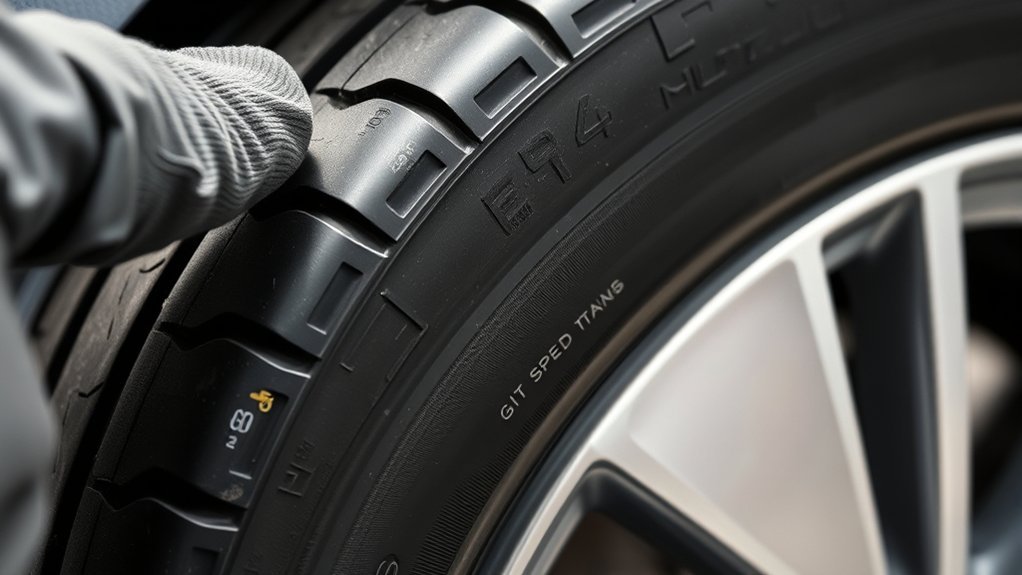
114T is a tire service description: 114 is the load index, equal to 1,180 kg (about 2,600–2,601 lb) per tire under the tire maker’s specified service conditions, and T is the speed rating, equal to 190 km/h (118 mph). It does not tell the full tire size or confirm vehicle fitment by itself, so compare the complete sidewall code with your vehicle’s tire placard or owner’s manual.
Last updated: August 18, 2026. Core load-index, speed-rating, replacement, pressure, and tire-age guidance rechecked against Toyo Tires, Michelin USA, and NHTSA sources.
Quick Answer
114T means the tire has a 114 load index and a T speed rating. Load index 114 corresponds to 1,180 kg, or about 2,600–2,601 pounds per tire, under the tire maker’s specified load, inflation, and service conditions. The T speed rating is 190 km/h, or 118 mph. Use the vehicle placard for the correct cold inflation pressure and fitment requirements.
Key Takeaways
- 114 is the load index: 1,180 kg, or about 2,600–2,601 pounds per tire.
- T is the speed rating: up to 190 km/h or 118 mph under rated conditions.
- The 114 load value is a standardized maximum tied to the tire maker’s load, inflation, and service conditions; use the vehicle placard for the correct cold pressure on your vehicle.
- Do not choose a tire with a lower load index or speed rating than your vehicle requires unless your owner’s manual or a tire professional confirms it is allowed.
- 114T does not tell you the tire’s full size, whether it is SL/XL/LT, or whether it fits your vehicle. Check the complete sidewall code, placard, owner’s manual, DOT date code, and tire condition.
What Does 114T Mean on a Tire?
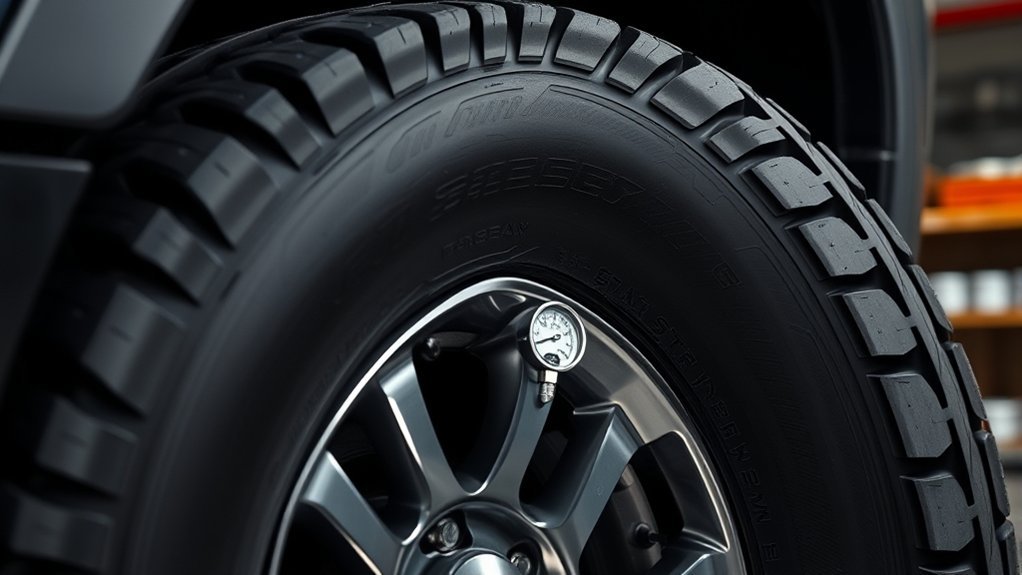
A tire marked 114T tells you two important limits:
- 114 is the load index, which is the tire’s assigned load-carrying code.
- T is the speed symbol, which tells you the maximum speed category the tire is designed to handle under specified service conditions.
For load index 114, the standardized maximum is 1,180 kg. In pounds, that is about 2,601 pounds, while the current Toyo Tires load-index table rounds it to 2,600 pounds. The same table lists the T speed symbol at 190 km/h, or 118 mph. Actual vehicle use still depends on the correct tire size, load/inflation relationship, placard pressure, and manufacturer requirements.
| 114 | Load index: 1,180 kg, about 2,600–2,601 lb per tire when properly inflated. |
| T | Speed rating: 190 km/h, or 118 mph, under specified service conditions. |
| Where it appears | At the end of the tire size on the sidewall, such as 265/70R17 114T. |
| What to verify | Match the complete tire size, load index, speed rating, load range, and inflation pressure to your vehicle placard or owner’s manual. |
Warning: Never use 114T as the only buying check. A tire can have the right load and speed rating but still be wrong for your vehicle if the size, load range, wheel fitment, inflation requirement, or vehicle manufacturer specification does not match.
What If the Sidewall Says 117/114T?
Do not read 117/114T the same way as a standalone 114T service description. Pirelli’s load-index guide explains that many light-truck tires use two load indexes separated by a slash: the first number is for single-tire use and the second number is for dual-tire use. The letter still gives the speed rating.
Using the same standardized load table, 117 corresponds to 1,285 kg (about 2,835 lb), while 114 corresponds to 1,180 kg (about 2,600–2,601 lb). If your sidewall has a slash, read the complete service description and the tire maker’s load/inflation data instead of treating the second number as the tire’s only load index.
What Does the 114 Load Index Mean?
The load index is a numerical code tied to a standardized maximum load under the tire manufacturer’s specified service conditions. In a standalone 114T service description, the 114 is the load index.
Load index 114 equals 1,180 kg. Converted to pounds, that is about 2,601 lb. Because some manufacturer charts round the conversion, you may also see it shown as 2,600 lb. That difference is rounding, not a different rating.
Load Index Basics
A higher load index means a tire can carry more weight. For nearby ratings, the difference can matter when you carry passengers, cargo, towing tongue weight, or heavy accessories.
| Load Index | Kilograms | Approx. Pounds |
|---|---|---|
| 112 | 1,120 kg | About 2,469–2,470 lb |
| 113 | 1,150 kg | About 2,535 lb |
| 114 | 1,180 kg | About 2,600–2,601 lb |
| 115 | 1,215 kg | About 2,679–2,680 lb |
| 116 | 1,250 kg | About 2,755–2,756 lb |
How Much Weight Can a 114 Tire Carry?
The 114 load index tells you what one tire can carry, not how much cargo your vehicle can legally or safely haul. Your vehicle’s safe load is still limited by the vehicle capacity weight, Gross Vehicle Weight Rating, Gross Axle Weight Ratings, wheels, suspension, brakes, and manufacturer instructions.
For a rough tire-only comparison, four 114-rated tires have a combined tire load capacity of about 10,400 lb. That does not mean your vehicle can carry 10,400 lb. It only means the tires, when properly inflated and used correctly, have that combined tire-capacity ceiling. The vehicle placard and owner’s manual control the actual safe loading limit.
Note: Inflation pressure affects load-carrying capability. Use the recommended cold pressure on the vehicle placard for an approved fitment, not the maximum pressure molded on the tire sidewall. If you are changing tire type, size, or load range, use the tire maker’s load/inflation data and professional fitment guidance.
Should You Match the Original Equipment Rating?
Your vehicle’s original equipment rating is the safest starting point. Check these places before buying tires:
- The tire and loading information label on the driver’s door edge or door jamb
- The vehicle owner’s manual
- The current tire sidewall, if the existing tires are known to be the correct specification
- A qualified tire professional, especially when changing tire type, load range, or size
Replacement tires should usually meet or exceed the vehicle manufacturer’s required load index and speed rating. Do not drop below the original load rating just because the tire fits the wheel.
Pro Tip: Before shopping, take a photo of your driver-door tire placard and your current tire sidewall. Compare the full size, load index, speed rating, load range, and inflation pressure, not just the 114T code.
What Does the T Speed Rating Mean?
The T speed rating means the tire is rated for 190 km/h, or 118 mph, under specified service conditions. This rating is about the tire’s tested speed capability; it is not a recommendation to drive at that speed or to ignore posted speed limits.
What Is the T Tire Speed Limit?
T-rated tires are used on many passenger vehicles, crossovers, minivans, SUVs, and some light-truck applications. Vehicle category alone does not tell you whether T is correct. If your vehicle originally specifies a T rating, a correctly sized tire with the required load rating may be appropriate. If the vehicle requires H, V, W, or another higher rating, a T-rated replacement does not meet that speed-rating requirement unless the vehicle manufacturer allows an exception.
- T = 118 mph maximum speed symbol under rated conditions.
- Heat buildup increases when tires are overloaded, underinflated, damaged, or driven too fast.
- The lowest speed-rated tire on the vehicle can limit the safe speed capability of the whole set.
Where Does T Fit Among Common Speed Ratings?
T sits in the middle of common passenger and light-truck speed ratings. It is faster than S, but lower than H, V, and W.
| Speed Rating | Max km/h | Max mph | Typical use |
|---|---|---|---|
| S | 180 | 112 | Some standard touring tires |
| T | 190 | 118 | Sedans, crossovers, minivans, light-duty SUVs |
| H | 210 | 130 | Touring and some sport-oriented vehicles |
| V | 240 | 149 | Performance touring vehicles |
| W | 270 | 168 | High-performance applications |
Why Does the T Rating Matter?
Speed rating is not only a number to compare with the speedometer. Tire construction and heat capability differ across models and ratings, so changing from the vehicle’s specified rating can also change handling or ride characteristics. Do not assume that a higher letter automatically means better grip, comfort, or tread life; those traits depend on the specific tire design.
The safest replacement tire is not the highest-rated tire you can buy. It is the tire that matches the vehicle’s required size, load capacity, speed rating, inflation pressure, and intended use.
How Do Tire Speed Ratings Compare?
Tire speed ratings compare the maximum speed category a tire is designed to handle while carrying the load tied to its load index. The rating is shown as a letter after the load index, such as 114T, 114H, or 114V.
For the same load index, the number stays the same and the speed capability changes. For example, 114T and 114H can carry the same rated load, but the H-rated tire has a higher speed symbol. That does not automatically make it the best choice for every vehicle. The correct choice depends on the vehicle manufacturer’s requirements and the tire’s intended use.
When comparing speed ratings, keep these rules in mind:
- Use a tire that meets or exceeds the original equipment speed rating unless your manual allows an exception.
- Do not mix speed ratings casually. The lowest rating can limit the set.
- Use the same size, type, construction, and rating on all four wheel positions whenever possible.
- Some manufacturers permit a lower speed rating for approved winter-capable replacement tires. Follow the owner’s manual and never exceed the lowest tire speed rating fitted to the vehicle.
[Products Worth Considering]
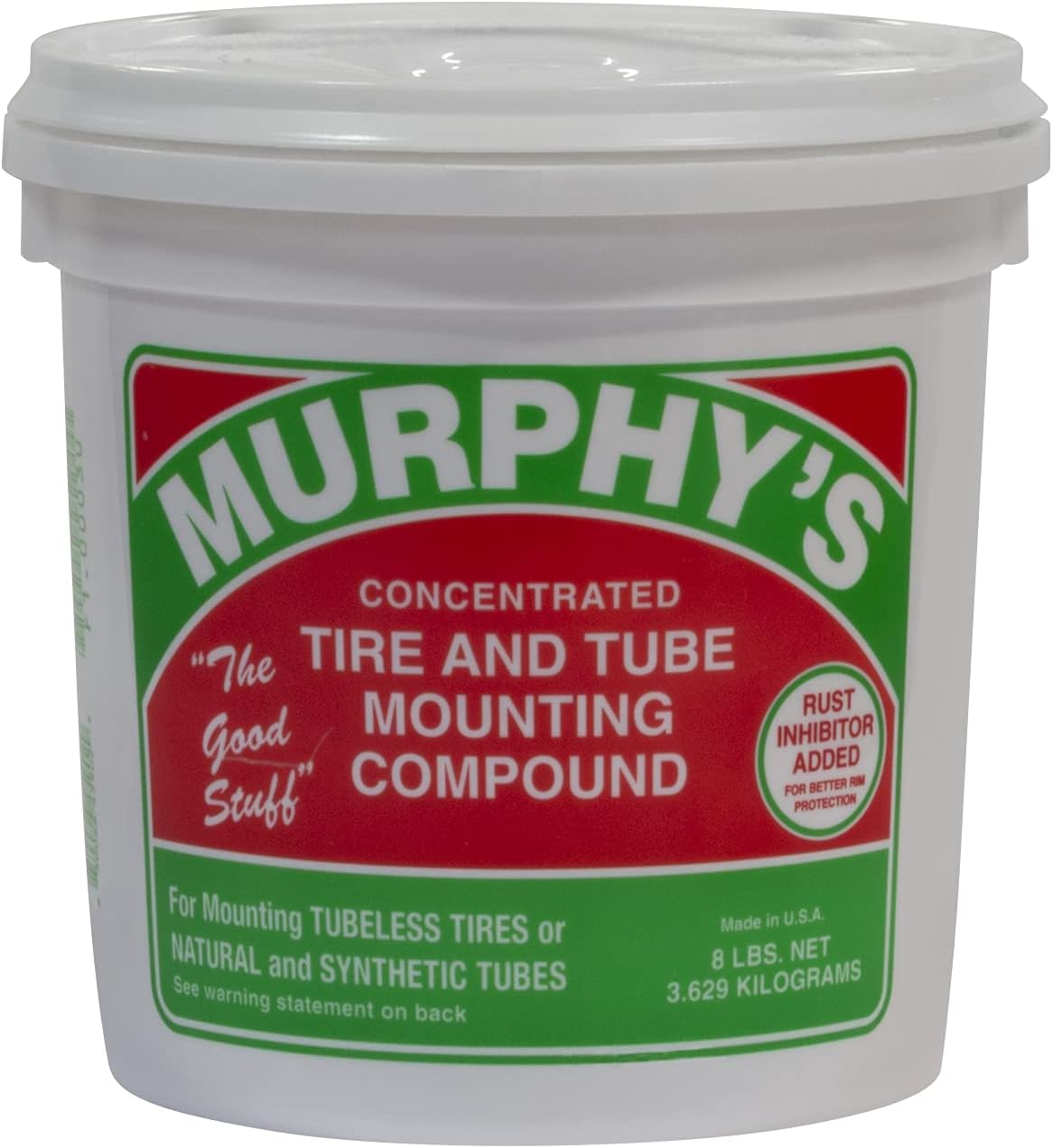
A concentrated tire and tube mounting compound designed to help simplify mounting rubber tires and tubes on passenger, semi truck, construction, and OTR applications. Its ultra-thick formula packs beads effectively and includes rust inhibitors to help protect against corrosion during use.

Steelman white tire marking crayons provide high-contrast, semi-permanent marks for repairing and inspecting tires and equipment. They write on wet or dry, smooth or coarse surfaces including rubber, metal, glass, and wood, making them ideal for puncture location and damage outlining. The lead- and zinc-free crayons resist weather and fading yet wipe away when you no longer need the marks.

Monitor tire tread wear with a smart, color-coded depth gauge that shows clear condition ranges at a glance. The bar is range marked for fast, easy readings, helping you maintain safer traction and performance. Each gauge is portable with a pocket clip, and the set includes 20 units for daily use and sharing.
Is 114T Right for Your Vehicle?
114T is right for your vehicle only if the complete tire specification matches what the vehicle manufacturer requires. The 114 load index may be enough for many crossovers, SUVs, and vans, and the T speed rating may be enough for normal road use. But the code must still match the full tire size and load requirement.
Use this checklist before choosing 114T tires:
- Full size: Match the complete size, such as 265/70R17, 265/60R18, or another size shown on your placard.
- Load index: 114 must meet or exceed the required load index.
- Speed rating: T must meet or exceed the required speed rating unless your manual allows otherwise.
- Load range or XL marking: If the vehicle requires XL, Extra Load, or a specific light-truck load range, match that requirement too.
- Inflation pressure: Use the cold tire pressure listed on the vehicle placard, not the maximum pressure molded on the tire sidewall.
- Axle and vehicle load limits: Do not exceed payload, GVWR, or GAWR even if the tires have a high load index.
114T does not mean XL: The service description tells you load index and speed rating. Markings such as SL, XL/Extra Load, or an LT load range are separate specifications and must also match the approved fitment.
Warning: A lower load index can increase heat, sidewall stress, and failure risk. A lower speed rating can reduce the vehicle’s safe speed capability and may affect handling. When in doubt, match the original equipment rating or ask a tire professional.
[Products Worth Considering]

The SAFELIFE dial tire tread depth gauge measures tread depth in 1/32 inch increments with clear, easy-to-read 2-inch dial face. Color zones using a traffic light system help you quickly judge whether tread is low, marginal, or ample for safer driving. Built with a durable zinc cast body and a metal detect probe for precise, comfortable use across cars, motorcycles, trucks, and buses.

Measure tire tread depth quickly and accurately with this LUMITECO dial gauge that reads in 1/32" increments up to 14/32". The color-coded green/yellow/red zones make it easy to judge tire wear and know when replacement is needed. A rugged, compact design with a protective pouch helps keep the gauge ready for use on cars, trucks, motorcycles, and more.

Accurately measure tire tread depth with a calibrated gauge marked from 0 to 1 inch in 1/32 inch increments. The color-coded bar helps you quickly identify tread condition ranges, supporting safe driving for trucks, motorcycles, automobiles, and passenger vehicles.
Where to Find Tire Numbers
You can find tire numbers molded into the tire sidewall. A full sidewall code might look like this:
265/70R17 114T
Here is what each part means:
- 265 — tire section width in millimeters
- 70 — aspect ratio, or sidewall height as a percentage of width
- R — radial construction
- 17 — wheel diameter in inches
- 114 — load index
- T — speed rating
You should also check the DOT Tire Identification Number. The last four digits show the tire’s manufacture week and year. For example, a code ending in 3823 means the tire was made in the 38th week of 2023. The full TIN may appear on only one side of the tire, so check both sidewalls.
Can You Choose a Higher Speed Rating?

Yes, you can often choose a tire with a higher speed rating than the original equipment tire, as long as the tire also matches the correct size, load index, load range, and vehicle requirements. For example, if your vehicle calls for a 114T tire, a properly matched 114H tire may be allowed. But the higher rating does not increase the vehicle’s legal load limit or make unsafe driving safe.
A higher speed rating does not guarantee better grip, a quieter ride, or longer tread life. Those outcomes depend on the complete tire design. The safest choice is a tire that meets the vehicle manufacturer’s required size, load capacity, speed rating, and other fitment specifications, not simply the highest letter available.
If you mix different speed ratings, use caution. For best performance, the tires should match on all four wheel positions. If a temporary mismatch is unavoidable, the lowest speed rating limits the vehicle’s safe speed capability until the set is corrected.
[Products Worth Considering]

Measure tyre tread depth precisely with a digital gauge that reads in both MM and inches, helping you monitor safe driving conditions. The large LCD screen is easy to operate, and the compact tool fits for cars, trucks, and motorcycles. It provides high accuracy with a 0-25.4mm range and includes a 1-year warranty for added peace of mind.

The Milton S-693-12 straight foot dual head air chuck provides extended 12-inch reach for efficiently inflating inner dual tires on trucks and semi trucks. It has 1/4" female NPT threading and locks securely onto valve core threads for reliable sealing up to 150 PSI. Designed for use on an air line with a cushioned grip handle for comfortable operation.

This Dr.Roc tire valve stem puller tools set helps install or remove snap-in tubeless valve stems safely and efficiently. It includes ozone-resistant EPDM snap-in valve stems, a valve stem installer, and a valve core remover for quick core removal or installation during tire service. Designed for reliable tubeless tire repair on motorcycles, ATVs, lawn equipment, cars, and trucks.
How Tire Age Affects Safety
Tire age matters because rubber compounds change over time. A tire can have good tread depth and still be too old, cracked, dry, or weakened for safe service. Heat, sunlight, storage conditions, underinflation, and heavy loads can speed up aging.
To check tire age, find the DOT Tire Identification Number and read the last four digits. The first two digits are the week of manufacture, and the last two digits are the year. A tire marked 2619 was made in the 26th week of 2019.
NHTSA recommends checking the tire date when buying tires and knowing the tire or vehicle manufacturer’s recommended replacement timeframe. NHTSA also notes that some vehicle and tire manufacturers recommend replacement when tires are about 6 to 10 years old, regardless of remaining tread. Follow the specific age limit and inspection guidance from your vehicle and tire manufacturers.
- Replace tires with cracking, bulges, exposed cords, tread separation, or repeated air-loss problems.
- Check spare tires too; they age even when they are not used.
- Inspect tires monthly for pressure, tread depth, uneven wear, cuts, and sidewall damage.
- Do not buy “new” tires without checking the DOT date code.
Frequently Asked Questions
Which tire rating is better, H or T?
H has a higher speed rating than T. H is rated for 130 mph, while T is rated for 118 mph. That does not automatically make H better for every vehicle. Choose the rating that meets or exceeds your vehicle’s original equipment requirement and matches your driving needs.
What does load index 114 mean on tires?
Load index 114 means the tire is rated to carry 1,180 kg, or about 2,600–2,601 pounds, when properly inflated and used under the tire maker’s service conditions. It is a tire load rating, not a vehicle payload rating.
What is the difference between 112T and 114T tires?
Both have the same T speed rating of 118 mph, but the load index is different. A 112T tire carries about 2,469–2,470 pounds per tire, while a 114T tire carries about 2,600–2,601 pounds per tire. Use the load index your vehicle requires.
What is the difference between 114T and 114H tires?
114T and 114H have the same load index, so they carry the same rated load. The difference is speed rating. T is rated for 118 mph, while H is rated for 130 mph. Choose the rating that matches your vehicle’s required specification.
Can I use 114T instead of 114H?
Only use 114T instead of 114H if your vehicle manufacturer allows a T speed rating for your vehicle and tire size. If the vehicle requires H, dropping to T can reduce the vehicle’s safe speed capability and may affect handling.
Does 114T mean the tire is safe at 118 mph all the time?
No. The T rating is a maximum speed category under specified service conditions. Real-world safety also depends on tire inflation, load, temperature, road conditions, tire age, damage, and legal speed limits.
Can I install a higher load index than 114?
Usually, a higher load index is acceptable if the tire also matches the correct size, load range, speed rating, wheel fitment, and inflation requirements. A higher tire load index does not increase your vehicle’s GVWR, payload, or axle ratings.
Where should I check if 114T fits my vehicle?
Check the driver-door tire placard, the owner’s manual, and the complete tire sidewall size. If you are changing tire size, load range, or speed rating, confirm the change with a qualified tire professional.
Does 114T mean the tire is XL or Extra Load?
No. 114T only gives the load index and speed rating. SL, XL/Extra Load, and LT load-range markings are separate parts of the tire specification. Match those markings too if your vehicle requires them.
What does 117/114T mean compared with 114T?
A standalone 114T uses 114 as its load index. On a light-truck tire marked 117/114T, the first load index commonly applies to single-tire use and the second to dual-tire use; T remains the speed rating. Read the complete tire marking and manufacturer load/inflation table before using a dual-index tire.
Conclusion
114T is a simple code with important safety meaning. The 114 load index means the tire can carry 1,180 kg, or about 2,600–2,601 pounds, when properly inflated. The T speed rating means the tire is rated up to 118 mph under specified service conditions.
Before buying a 114T tire, compare the complete sidewall code with the driver-door placard: tire size, load index, speed rating, SL/XL/LT load specification, and recommended cold pressure. If the tire shows a dual index such as 117/114T, use the manufacturer’s load/inflation data for that exact tire. When any part differs from the original specification, confirm the change with the vehicle or tire manufacturer or a qualified tire professional.
Sources
- Michelin USA — Tire Load Rating and Speed Rating Explained — supports load rating, speed rating, service description, and vehicle placard/manual guidance.
- Toyo Tires — Speed Symbol and Load Index Table — supports 114 load index, T speed rating, and nearby load/speed chart values.
- NHTSA TireWise — supports tire safety, tire maintenance, aging, labeling, and recall awareness.
- NHTSA Tire Safety Brochure — supports tire pressure, vehicle load limits, placard information, and tire inspection guidance.
- NHTSA Tire Buyers’ FAQ — supports DOT Tire Identification Number date-code guidance and tire age checks.
- Michelin USA — Choosing the Right Tire and Changing Tire Sizes — supports higher/lower speed-rating and mixed-rating guidance.
- Pirelli — Tire Load Index & Chart — supports standalone versus dual light-truck load-index interpretation and the 114 load value.