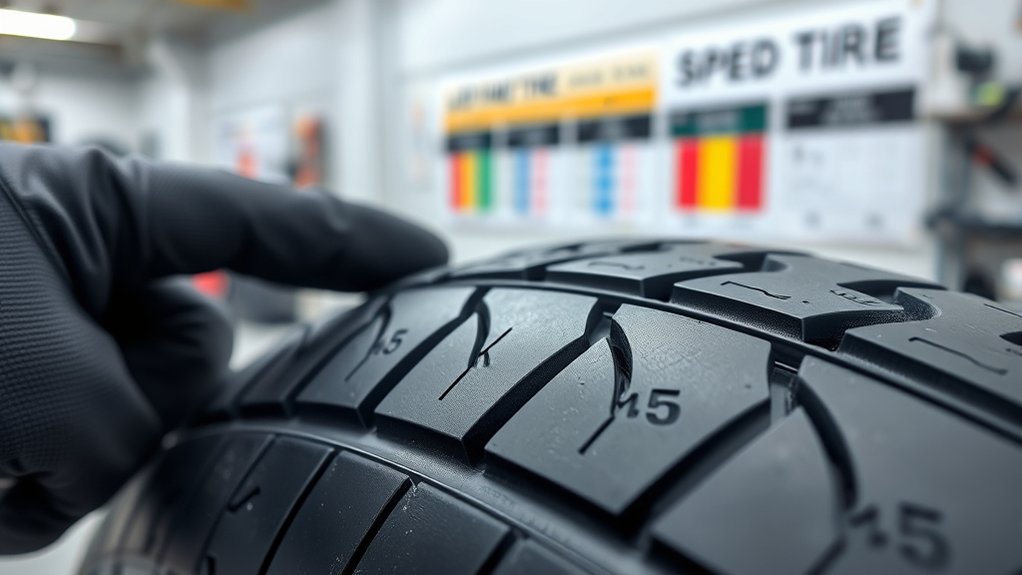
A 94V tire marking tells you two important safety specs in one short code: how much weight the tire can carry and how fast it is rated to run under specified conditions. The “94” is the load index, and the “V” is the speed rating. Before replacing tires, compare both numbers with your vehicle’s door-jamb tire placard and owner’s manual.
Quick Answer
A 94V tire has a load index of 94, meaning it can carry up to 1,477 pounds (670 kg) per tire when properly inflated. The V speed rating means the tire is rated up to 149 mph (240 km/h) under specified load and inflation conditions.
Key Takeaways
- 94 is the tire load index, equal to 1,477 lbs (670 kg) per tire when properly inflated.
- V is the speed rating, equal to 149 mph (240 km/h) under specified test conditions.
- A 94V tire is not automatically right for every vehicle; it must match the tire size, load rating, speed rating, and any XL/OE requirements listed by the vehicle manufacturer.
- A higher load index does not increase your vehicle’s legal or engineered payload capacity.
- Never install a lower load or speed rating unless your vehicle manual, tire manufacturer, or qualified tire professional confirms it is acceptable.
At a Glance
| Time Required | 2–5 minutes to check the tire sidewall, door placard, and owner’s manual |
| Difficulty | Easy |
| Tools Needed | Tire sidewall, driver-side door placard, owner’s manual, and a tire pressure gauge |
| Cost | Free to check; replacement cost depends on tire size, brand, season, and performance category |
What Does 94V Mean on a Tire?
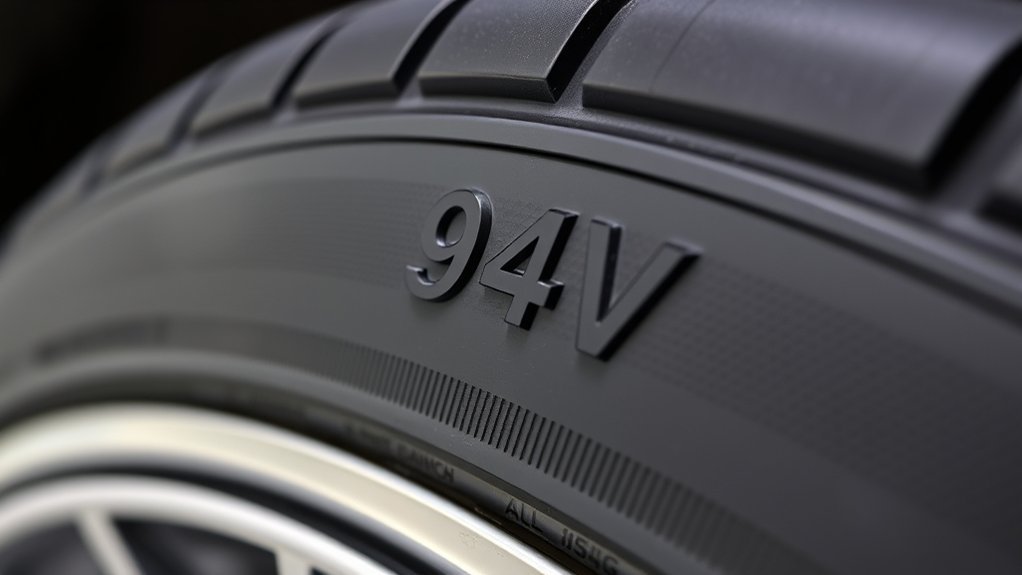
A tire marked 94V uses a standard tire service description. The number 94 is the load rating, also called the load index. It tells you the maximum weight one tire can support when it is correctly inflated. The letter V is the speed rating. It tells you the maximum sustained speed the tire is designed to handle under specified load and inflation conditions.
For a 94V tire, the load index is 1,477 lbs (670 kg) per tire, and the V speed rating is 149 mph (240 km/h). These numbers are not marketing labels. They are operating limits that help the tire match the vehicle’s weight, suspension, braking, and handling requirements.
You will usually see 94V after the tire size. For example, a sidewall might read 225/45R17 94V. In that example, 225 is the section width in millimeters, 45 is the aspect ratio, R means radial construction, 17 is the wheel diameter in inches, 94 is the load index, and V is the speed rating.
Note: Speed ratings are not permission to exceed posted speed limits. They describe the tire’s tested capability under controlled conditions, not the safe speed for every road, weather condition, load, or driver.
What Can a 94 Load Index Carry?
A 94 load index means each tire can carry up to 1,477 pounds (670 kg) when properly inflated. Across four tires, that equals 5,908 pounds (2,680 kg) of tire load capacity. That number is useful, but it does not mean your vehicle can safely carry that much cargo.
Your real limit is the lowest relevant rating among the tires, wheels, axles, suspension, and vehicle manufacturer’s Gross Vehicle Weight Rating (GVWR). That is why the importance of tire specifications goes beyond the tire sidewall alone.
A 94 load index tells you what one tire can carry when properly inflated. It does not increase the vehicle’s rated payload, axle rating, or towing limit.
If you exceed the correct load rating or drive with underinflated tires, the tire can build excess heat, wear faster, and become more likely to fail. Proper inflation matters because load capacity is tied to the tire pressure specified by the vehicle and tire manufacturer.
What Does the V Speed Rating Mean?
A V speed rating means the tire is rated for speeds up to 149 mph (240 km/h) when it is properly inflated, correctly loaded, and used under specified conditions. You will find this letter after the load index on the tire sidewall. Continental describes the load index and speed rating together as the tire’s service description.
That speed symbol matters even if you never drive near 149 mph. Speed ratings are connected to heat resistance, construction, and stability. A lower speed rating than your vehicle requires can change steering response, braking feel, and high-speed durability.
Choosing tires with higher UTQG ratings may help you compare treadwear, traction, and temperature grades, but UTQG does not replace the required load index or speed rating.
V Speed Rating Basics
The “V” rating is common on many sedans, coupes, crossovers, and performance-oriented tires. It sits above H and below W in common passenger-car speed ratings:
- H: up to 130 mph (210 km/h)
- V: up to 149 mph (240 km/h)
- W: up to 168 mph (270 km/h)
- Y: up to 186 mph (300 km/h)
A higher speed rating can indicate a tire built for more heat and speed capability, but it is not automatically the best choice for every driver. Ride comfort, tread life, winter traction, wet grip, and your vehicle’s original equipment requirements still matter.
Maximum Safe Speed
The V rating is a maximum tested speed capability, not a recommendation. Road surface, air temperature, tire age, tread depth, vehicle load, inflation pressure, alignment, and weather can all reduce the safe speed for real driving. Respect the rating as a limit, and treat the tire placard as the final fitment guide.
Warning: Do not install tires with a lower load index or lower speed rating than your vehicle requires unless the vehicle manufacturer, tire manufacturer, or a qualified tire professional confirms that the substitute is allowed. Lower-rated tires can overheat, wear unevenly, or reduce stability.
Where Can You Find 94V on the Sidewall?
You can usually find 94V near the end of the tire size code on the sidewall. Look for a sequence like this:
- 225 — tire width in millimeters
- 45 — aspect ratio
- R — radial construction
- 17 — wheel diameter in inches
- 94V — load index and speed rating
So, in 225/45R17 94V, the 94V comes after the tire size. The same idea applies to other sizes, even when there are extra markings such as XL, M+S, 3PMSF, DOT date code, or original equipment markings.
You should also check the driver-side door placard and owner’s manual. NHTSA advises drivers to use the owner’s manual or Tire and Loading Information Label on the driver’s side door edge or post to find the correct tire size for the vehicle. Tire sidewall markings tell you what is installed; the placard tells you what the vehicle was designed to use.
Always trust the sidewall for the tire’s exact installed specs, and use the vehicle placard to confirm those specs are correct. This is especially important if tire performance in rain, highway stability, or loaded driving matters for your routine.
Does 94V Fit Your Vehicle?
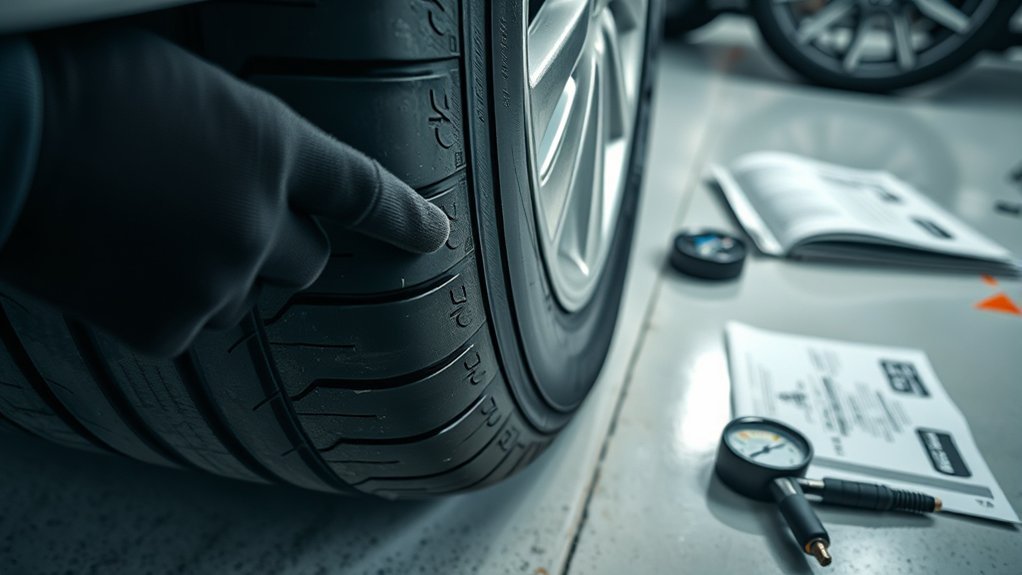
A 94V tire fits your vehicle only if it matches the required size, load index, speed rating, construction type, and any special markings listed by the manufacturer. Start with the driver-side tire placard, then confirm the same information in the owner’s manual.
Do not choose by 94V alone. Two tires can share the same 94V service description but have different widths, wheel diameters, tread designs, load ranges, XL markings, sidewall constructions, and seasonal capabilities. Also consider the UTQG ratings when comparing treadwear, traction, and temperature grades among compatible tires.
Check Owner’s Manual
Your owner’s manual or tire placard should list the recommended tire size, cold inflation pressure, load rating, and speed rating. If the vehicle originally came with a 94V tire, a replacement should usually be the same size and rating or an approved equivalent.
- Confirm the tire size, such as 225/45R17.
- Confirm the required load index, such as 94 or higher if approved.
- Confirm the required speed rating, such as V or higher if approved.
- Check whether the tire must be XL, run-flat, 3PMSF, or original-equipment marked.
Match Load Requirements
The “94” in 94V gives the tire’s maximum rated load. Choose a lower load index only if your manufacturer specifically allows it, because a lower rating can reduce the tire’s ability to support the vehicle under passengers, cargo, braking, cornering, and heat.
A higher load index may be acceptable in the same approved size, but it does not raise your vehicle’s GVWR, axle rating, towing rating, or payload. It also may change ride feel if the tire has a stiffer construction, especially with XL tires.
Verify Speed Rating
The “V” in 94V should meet or exceed the speed rating specified for your vehicle. Installing a higher speed rating is often acceptable when the tire size and load rating are correct, but installing a lower speed rating is usually not recommended.
One common exception involves winter-capable tires, such as tires marked with the Three-Peak Mountain Snowflake (3PMSF) symbol. In some cases, winter tires may carry a lower speed rating than the original summer or all-season tire. If you use that kind of approved substitute, you must stay below the tire’s rated maximum speed and follow the vehicle/tire manufacturer’s guidance.
Pro Tip: When replacing only two tires, keep the same load index and speed rating on the same axle. For all-wheel-drive vehicles, matching tire size, model, tread depth, and circumference can be especially important.
Why 94V Matters for Safety
The 94V code matters because it helps keep the tire inside its designed operating range. A tire that cannot carry the required load or manage the required speed capability can run hotter, flex more, wear faster, and respond less predictably.
NHTSA reports that poor tire maintenance, including low inflation pressure, can contribute to flat tires, blowouts, and tread separation. NHTSA also reported 511 deaths in tire-related crashes in 2024. That does not mean every tire issue is caused by load or speed rating, but it shows why tire selection, inflation, and inspection deserve serious attention.
Keeping the correct 94V specification, when your vehicle calls for it, helps protect braking stability, cornering response, heat control, and load support. It also works together with tread depth, alignment, rotation, and hydroplaning resistance to keep the tire predictable in daily driving.
Can You Replace 94V Tires With Another Rating?
Yes, you can replace 94V tires with another rating, but only when the new tire meets your vehicle’s requirements. The safest rule is simple: match the original tire size, load index, and speed rating listed on the placard or owner’s manual unless an approved alternate is documented.
- 94H instead of 94V: Usually not recommended unless the vehicle manufacturer allows the lower H speed rating.
- 94W instead of 94V: Often acceptable if the tire size, load rating, and construction are correct.
- 98V instead of 94V: May be acceptable in the correct size, but it does not increase the vehicle’s payload rating.
- 91V instead of 94V: Usually unsafe if the vehicle requires 94, because the load index is lower.
- 94V XL instead of 94V standard load: Only use if the size, pressure, and vehicle requirements are appropriate.
Do not mix different ratings casually. Mismatched load indexes, speed ratings, tread patterns, or tire sizes can affect stability, braking, and traction control behavior. When in doubt, choose the exact original equipment specification or ask a qualified tire professional.
[Products Worth Considering]

Monitor tire tread wear with a smart, color-coded depth gauge that shows clear condition ranges at a glance. The bar is range marked for fast, easy readings, helping you maintain safer traction and performance. Each gauge is portable with a pocket clip, and the set includes 20 units for daily use and sharing.

The SAFELIFE dial tire tread depth gauge measures tread depth in 1/32 inch increments with clear, easy-to-read 2-inch dial face. Color zones using a traffic light system help you quickly judge whether tread is low, marginal, or ample for safer driving. Built with a durable zinc cast body and a metal detect probe for precise, comfortable use across cars, motorcycles, trucks, and buses.

Measure tire tread depth quickly and accurately with this LUMITECO dial gauge that reads in 1/32" increments up to 14/32". The color-coded green/yellow/red zones make it easy to judge tire wear and know when replacement is needed. A rugged, compact design with a protective pouch helps keep the gauge ready for use on cars, trucks, motorcycles, and more.
What Do Other Tire Speed Ratings Mean?
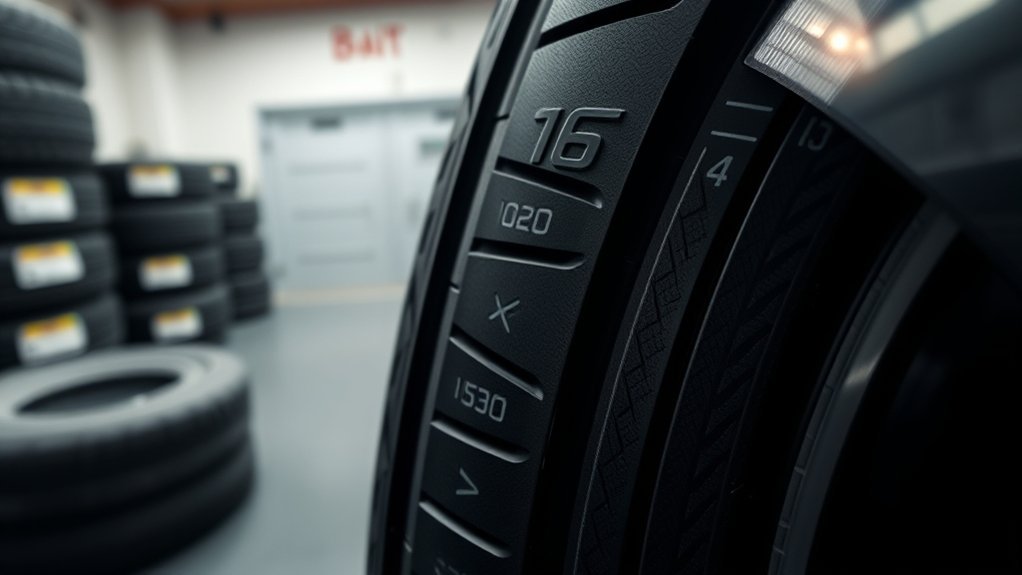
Tire speed ratings use letter symbols, but they are not a perfectly simple A-to-Z ladder in everyday use. Some symbols are legacy ratings, and ZR is often used on high-performance tires that exceed 149 mph. The table below covers the ratings most drivers compare with V.
| Rating | Max Speed | Common Use |
|---|---|---|
| T | 118 mph / 190 km/h | Family cars, minivans, touring tires |
| H | 130 mph / 210 km/h | Sedans, coupes, some touring tires |
| V | 149 mph / 240 km/h | Performance-oriented sedans, coupes, and crossovers |
| W | 168 mph / 270 km/h | High-performance cars |
| Y | 186 mph / 300 km/h | Ultra-high-performance vehicles |
| ZR | Over 149 mph / over 240 km/h, with exact rating shown by W, Y, or (Y) | High-performance and specialty tires |
Choose the tire speed rating based on the vehicle requirement, not just the highest number. A V-rated tire may be correct for one vehicle, while another vehicle may need H, W, Y, XL, run-flat, or a specific original-equipment tire. Understanding load index and speed rating together is the safest way to compare options.
[Products Worth Considering]

Steelman white tire marking crayons provide high-contrast, semi-permanent marks for repairing and inspecting tires and equipment. They write on wet or dry, smooth or coarse surfaces including rubber, metal, glass, and wood, making them ideal for puncture location and damage outlining. The lead- and zinc-free crayons resist weather and fading yet wipe away when you no longer need the marks.

Accurately measure tire tread depth with a calibrated gauge marked from 0 to 1 inch in 1/32 inch increments. The color-coded bar helps you quickly identify tread condition ranges, supporting safe driving for trucks, motorcycles, automobiles, and passenger vehicles.

Measure tyre tread depth precisely with a digital gauge that reads in both MM and inches, helping you monitor safe driving conditions. The large LCD screen is easy to operate, and the compact tool fits for cars, trucks, and motorcycles. It provides high accuracy with a 0-25.4mm range and includes a 1-year warranty for added peace of mind.
How to Choose a 94V Replacement Tire
To choose a 94V replacement tire, start with your vehicle’s required tire size and service description. Do not shop by 94V alone. The correct tire must fit the wheel, clear the suspension and bodywork, support the vehicle’s rated load, and match the manufacturer’s performance requirements.
- Read the tire placard. Find the original tire size, cold inflation pressure, and load information on the driver-side door placard.
- Check the owner’s manual. Confirm approved tire sizes, speed ratings, load ratings, and any special notes for winter tires, towing, or performance models.
- Match the size. Use the same size unless the manufacturer lists an approved alternate.
- Match or exceed the load index. If your vehicle requires 94, do not install a lower load index unless officially approved.
- Match or exceed the speed rating. If your vehicle requires V, choose V or higher unless an approved winter-tire exception applies.
- Check construction and markings. Look for XL, run-flat, 3PMSF, M+S, directional arrows, and original-equipment markings where relevant.
- Compare real performance needs. Consider wet braking, ride comfort, tread life, noise, snow traction, and tread design.
If you match the tire size, load index, speed rating, construction, and pressure requirements, you keep the tire closer to the way the vehicle was designed to handle, brake, and carry weight.
[Products Worth Considering]

This manual duck head tire changer kit makes tire installation and removal simpler by letting you embed the duck head into the tire with applied pressure. The integrated design and durable steel construction help reduce friction and improve efficiency and safety during use. Suitable for 16–21 inch wheels, it’s convenient for cars, trucks, SUVs, and ATV tires, with 24-hour after-sales support.

ETENWOLF T300 is a calibrated digital tire pressure gauge for accurate readings from 3 to 200 PSI across light and heavy-duty vehicles. It includes thermal compensation for reliable performance in extreme cold or heat, with an auto shut-off to extend battery life and an LED for easier reading. The sturdy design supports rugged everyday use, making it ideal for pickups, RVs, and industrial applications.

TIRESHIELD PRO RV tire covers in a set of four deliver year-round protection against UV rays, cracking, fading, water, and snow. The StormLock-System helps keep the covers securely fastened through high wind, while heavy-duty, double-stitched construction supports long-lasting performance. Designed for universal fit, they’re intended for RV, camper, truck, car, and trailer tires within the 26–28.75 inch diameter range, with easy wipe-clean care and storage in the included bag.
Frequently Asked Questions
Which tire rating is better, Y or W?
Y has a higher speed rating than W: Y is rated up to 186 mph, while W is rated up to 168 mph. That does not automatically make Y better for every vehicle. The better tire is the one that matches your vehicle’s required size, load index, speed rating, and driving conditions.
Which is better, V or H rated tires?
V-rated tires have a higher maximum speed rating than H-rated tires: V is rated up to 149 mph, while H is rated up to 130 mph. If your vehicle requires V, do not downgrade to H unless the manufacturer allows it. If your vehicle only requires H, a V tire may be acceptable in the correct size, but it may not be necessary.
What’s the difference between 94V and 98V?
Both have the same V speed rating of 149 mph, but the load index is different. A 94 load index supports 1,477 lbs per tire, while a 98 load index supports about 1,653 lbs per tire. A 98V tire can carry more weight, but only use it if the tire size and vehicle fitment are correct.
Does the V matter on a tire?
Yes. The V tells you the tire’s speed rating. It affects heat resistance, construction, and the tire’s ability to carry its rated load at speed. If your vehicle specifies a V-rated tire, replacing it with a lower speed rating can reduce performance and safety unless the substitute is officially approved.
Can I use 94W instead of 94V?
Usually yes, if the tire is the correct size and meets all other vehicle requirements. W is a higher speed rating than V. However, the tire must still match the approved size, load index, construction type, and any XL or original-equipment requirements.
Can I use a lower speed rating if I never drive fast?
Do not assume a lower speed rating is safe just because you drive slowly. Speed ratings also reflect heat resistance and construction. Use the rating specified by the vehicle manufacturer unless an approved winter-tire or manufacturer-approved exception applies.
Conclusion
When you read 94V on a tire, you are looking at two key operating limits. The 94 load index means the tire can carry up to 1,477 pounds (670 kg) when properly inflated. The V speed rating means the tire is rated up to 149 mph (240 km/h) under specified conditions.
Before buying a replacement, compare the full tire size and service description with your door-jamb placard and owner’s manual. Match the size, load index, speed rating, pressure requirements, and any special markings. That is the safest way to keep your vehicle stable, predictable, and road-ready.
Sources
- Michelin USA — Understanding Tire Load Rating and Speed Rating — supports definitions of load rating, speed rating, placard/manual checks, higher/lower rating guidance, and V-rated speed.
- Michelin — Choose the Right Tires: Load & Speed Ratings — supports load index 94 as 670 kg and higher load/speed compatibility guidance.
- NHTSA TireWise: Tire Safety Ratings and Awareness — supports tire placard guidance, tire maintenance safety, and 2024 tire-related crash fatality data.
- Continental Tire — How To Read Your Tire Sidewall — supports sidewall service description, load index meaning, and common speed rating values.