When you see a tire size like 205/60R16 91V, the final letter tells you more than many drivers realize. The V is the tire’s speed rating, while the number before it is the load index. Together, those two markings help you choose a tire that matches your vehicle’s weight, handling, and safety requirements.
Quick Answer
The letter V on a tire means the tire is speed-rated for up to 149 mph (240 km/h) under specified test conditions. It appears after the load index, as in 91V. Replacement tires should meet or exceed your vehicle manufacturer’s required load index and speed rating.
Key Takeaways
- A V tire rating means the tire is rated up to 149 mph (240 km/h) under proper load, inflation, and condition.
- In a service description like 91V, the number is the load index and the letter is the speed rating.
- A speed rating is not a recommended driving speed or permission to exceed posted limits.
- Use the tire placard, owner’s manual, and current tire size to confirm the correct replacement rating.
- Do not choose a lower load index or speed rating unless your vehicle manual, tire maker, or qualified installer confirms it is safe for that specific use.
What Does V Mean on a Tire?
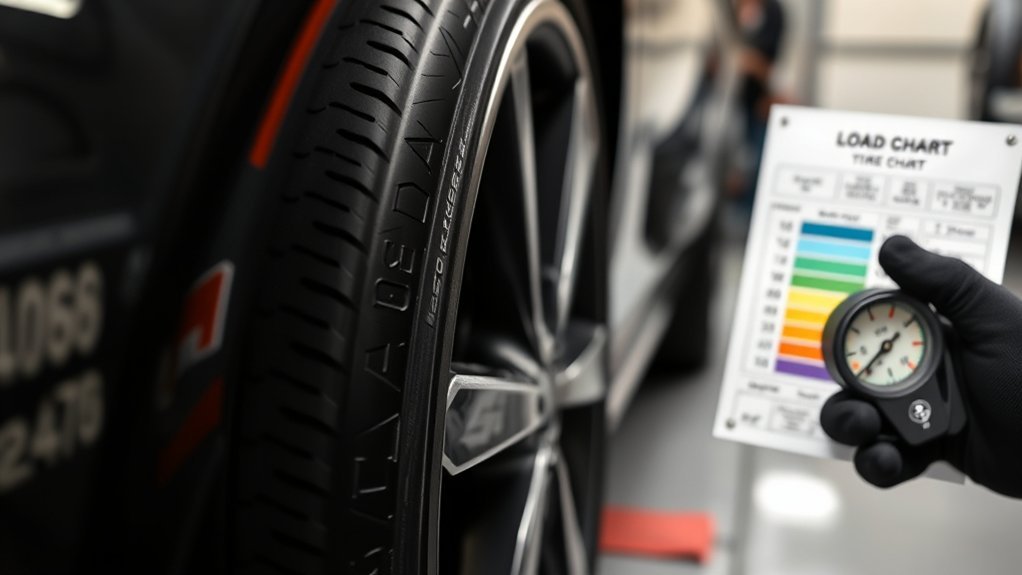
The V in a tire’s service description is a speed rating. It means the tire has been rated for speeds up to 149 mph (240 km/h) under specified test conditions. You will usually see it after the load index, such as the V in 205/60R16 91V.
That rating does not mean you should drive at 149 mph. It means the tire’s design, construction, and heat resistance meet the requirements for that speed category when the tire is properly inflated, correctly loaded, undamaged, and used within its intended conditions.
V-rated tires often appear on sporty sedans, performance coupes, and some higher-trim family vehicles because they can support sharper steering response and better heat management than many lower-rated touring tires. Still, the right tire is the one that matches your vehicle manufacturer’s required size, load index, and speed rating.
A V rating is a tested maximum speed category, not a target speed. Your vehicle’s required rating and posted road laws still matter more than the letter on the sidewall.
How to Read 91V on a Tire
The service description combines two separate limits: the load index and the speed rating. In 91V, the 91 tells you how much weight each tire can carry, and the V tells you the tire’s maximum tested speed category.
| Example marking | What it means | Why it matters |
|---|---|---|
| 205 | Nominal tire width in millimeters | Affects fitment, contact patch, and clearance |
| 60 | Aspect ratio, or sidewall height as a percentage of width | Affects ride comfort, handling, and overall diameter |
| R16 | Radial construction for a 16-inch wheel | Must match the wheel size |
| 91 | Load index of 1,356 lb / 615 kg per tire | Must support your vehicle’s required load capacity |
| V | Speed rating up to 149 mph / 240 km/h | Must match or exceed the required speed rating for safe replacement |
How Tire Speed Ratings and Load Index Work
You should read the load index and speed rating together because they describe different parts of the tire’s safe operating range. The load index is a number that points to the maximum weight each tire can carry when properly inflated. The speed rating is a letter that shows the tire’s maximum tested speed category.
A tire marked 91V can carry up to 1,356 pounds (615 kg) per tire and has a V speed rating. A tire marked 107V has the same V speed rating, but a much higher load index of 2,149 pounds (975 kg) per tire. The speed letter alone never tells you the full capacity.
Speed Rating Meaning
A tire speed rating tells you the speed category a tire is designed to sustain under controlled conditions. Higher speed ratings often use construction features and rubber compounds that help manage heat and steering response at higher speeds. However, a higher rating does not automatically mean the tire is better for every driver.
For example, a V-rated performance tire may handle better than a lower-rated touring tire, but it may also ride firmer or wear faster depending on the model. Always compare the full tire type, tread design, load index, season rating, warranty, and fitment, not only the speed letter.
Load Index Basics
The load index is the number beside the speed rating. It tells you the tire’s maximum load capacity when inflated to the correct pressure for that tire and vehicle. If your vehicle requires a 91 load index, choosing a lower number can reduce load capacity and increase the risk of heat buildup, poor handling, or tire failure under heavy load.
You can usually choose a higher load index if the tire also fits correctly and meets the vehicle maker’s other requirements. You should not choose a lower load index unless a qualified tire professional confirms that it is approved for your exact vehicle and use case.
Warning: Never treat a V rating as permission to exceed posted speed limits. Tire ratings assume correct inflation, proper load, good tire condition, and controlled test conditions. Damage, underinflation, overloading, heat, and road hazards can reduce safety long before the rated speed.
Where to Find the Speed Rating on a Tire
You can find the speed rating on the tire sidewall markings, usually as the final letter in the service description. Look for a tire size followed by a number and letter, such as 205/60R16 91V. In that example, V is the speed rating.
You should also confirm your required rating in three places before buying replacements:
- Driver’s door jamb tire placard: shows the factory tire size and recommended cold tire pressure.
- Owner’s manual: may list approved tire sizes, load indexes, and speed ratings.
- Current tire sidewall: helps identify what is installed now, though it may not always match the original factory specification.
If those sources disagree, use the vehicle manufacturer’s specification or ask a qualified tire installer. Previous owners sometimes install tires with the wrong rating, so the tire currently on the vehicle should not be your only reference.
How the Tire Speed Rating Chart Works
You read a tire speed rating chart by matching the letter on the sidewall to its maximum tested speed category. The most common passenger-car ratings include T, H, V, W, and Y. A V rating sits above T and H, but below W and Y.
| Speed rating | Maximum speed | Common use |
|---|---|---|
| T | 118 mph / 190 km/h | Many everyday passenger cars and touring tires |
| H | 130 mph / 210 km/h | Sedans, coupes, and some sporty touring tires |
| V | 149 mph / 240 km/h | Performance-oriented cars and higher-speed touring tires |
| W | 168 mph / 270 km/h | High-performance and ultra-high-performance tires |
| Y | 186 mph / 300 km/h | Premium performance vehicles and sports cars |
| ZR | Above 149 mph / 240 km/h, with exact limit shown by the full service description | High-performance tires that may also carry W, Y, or enclosed speed symbols |
Reading the Speed Chart
The chart gives you a quick way to compare speed categories, but it does not replace the vehicle manufacturer’s requirements. If your vehicle originally came with V-rated tires, you should normally replace them with V-rated tires or higher, unless the tire maker, owner’s manual, or installer gives a specific approved alternative.
Also remember that the chart assumes the tire is in good condition. A tire with low pressure, sidewall damage, uneven wear, old age, or excess load may not perform safely even if the speed rating looks correct.
Common Speed Letters
For everyday vehicles, you will most often see T, H, V, W, or Y. Lower letters often appear on comfort-focused passenger tires, while higher letters often appear on sportier tires. That pattern is useful, but it is not absolute. Tire category, size, load index, season rating, and vehicle fitment still matter.
What V-Rated Tires Are Best For
V-rated tires work best when your vehicle requires that rating or when the tire model is designed for performance-oriented driving. You may see V ratings on sport sedans, coupes, crossovers with higher-speed touring tires, and vehicles that need extra heat tolerance compared with lower-rated tires.
| Best fit | Why V-rated tires can work well |
|---|---|
| Sport sedans and coupes | Supports the handling and speed category many of these vehicles require |
| Performance touring tires | Balances daily comfort with stronger steering response than many lower-rated tires |
| Vehicles originally equipped with V-rated tires | Maintains the manufacturer’s intended safety and performance envelope |
| Drivers who value sharper response | May improve steering feel, depending on the exact tire model and vehicle |
V-rated tires are not automatically the best choice for every car. If your vehicle calls for an H-rated touring tire, moving to a V-rated tire may change ride comfort, tread life, and cost without giving you a real benefit. Match the tire to the vehicle first, then compare performance features.
[Products Worth Considering]

Measure tire tread depth quickly and accurately with this LUMITECO dial gauge that reads in 1/32" increments up to 14/32". The color-coded green/yellow/red zones make it easy to judge tire wear and know when replacement is needed. A rugged, compact design with a protective pouch helps keep the gauge ready for use on cars, trucks, motorcycles, and more.

Vigorder rubber cement glue delivers superior adhesion and cures quickly within about 30 seconds for seamless rubber bonding. Once cured, it helps provide a strong, durable, waterproof seal that holds up to vehicle weight, pressure, and heat. Suitable for cars, motorcycles, trucks, bicycles, and off-road tires, it’s designed for emergency patch and maintenance repairs.

The SAFELIFE dial tire tread depth gauge measures tread depth in 1/32 inch increments with clear, easy-to-read 2-inch dial face. Color zones using a traffic light system help you quickly judge whether tread is low, marginal, or ample for safer driving. Built with a durable zinc cast body and a metal detect probe for precise, comfortable use across cars, motorcycles, trucks, and buses.
Can You Change Tire Ratings?
Yes, you can sometimes change tire ratings, but the replacement tire should generally meet or exceed the load index and speed rating recommended by the vehicle manufacturer. Going higher is often acceptable when the tire fits correctly and suits your driving needs. Going lower can reduce the tire’s safety margin.
Winter tires are the most common exception. Some winter tires have a lower speed rating than the vehicle’s original all-season or summer tires. Whether that is acceptable depends on the vehicle manual, local rules, tire labeling, and installer guidance. In that case, you should drive within the lower rating and any displayed warning required in your area.
Note: If you mix tires with different speed ratings, the vehicle’s safe speed category is limited by the lowest-rated tire. For predictable handling, use matching tires in the correct size, load index, speed rating, category, and tread pattern whenever possible.
Does Tire Speed Rating Affect Safety?
Yes, tire speed rating affects safety because it relates to heat resistance, construction, and stability at speed. A tire rated too low for your vehicle may not match the handling, braking, and heat-management requirements the manufacturer designed around.
Speed rating is only one part of tire safety. You also need the correct size, load index, inflation pressure, tread depth, season rating, and tire condition. Even a correctly rated tire can become unsafe if it is overloaded, underinflated, damaged, or worn out.
- Heat control: Higher speed categories generally require stronger heat management during sustained speed.
- Handling consistency: Correctly rated tires help preserve the steering response your vehicle was designed to have.
- Load safety: The speed rating only works with the correct load index and inflation pressure.
V vs H, T, W, and ZR Ratings
A V rating is higher than both T and H, but lower than W and Y. In practical terms, V-rated tires often sit in the middle between everyday touring tires and more aggressive ultra-high-performance tires.
Here is the simple comparison:
- T-rated tires: up to 118 mph / 190 km/h, common on many standard passenger vehicles.
- H-rated tires: up to 130 mph / 210 km/h, common on many sedans and touring tires.
- V-rated tires: up to 149 mph / 240 km/h, common on performance-oriented vehicles.
- W-rated tires: up to 168 mph / 270 km/h, common on high-performance vehicles.
- ZR tires: built for speeds above 149 mph / 240 km/h, but the exact rating usually depends on the full service description, such as W or Y.
If your car came with V-rated tires, do not downgrade to H or T just to save money without checking fitment guidance first. If your car came with H-rated tires, moving to V may be acceptable, but it may also change ride quality, noise, and treadwear depending on the tire model.
[Products Worth Considering]

Monitor tire tread wear with a smart, color-coded depth gauge that shows clear condition ranges at a glance. The bar is range marked for fast, easy readings, helping you maintain safer traction and performance. Each gauge is portable with a pocket clip, and the set includes 20 units for daily use and sharing.

This 62-inch extra-long car wash brush kit makes it easy to clean hard-to-reach areas on cars, trucks, SUVs, and RV roofs with lightweight, sturdy poles. It includes soft, non-scratch microfiber and bristles with protective bumpers to help prevent scratches while cleaning effectively. A rubber squeegee helps remove water stains quickly, plus a wheel/tire brush and absorbent towels for complete exterior detailing.

The 22800 wheel stud installer makes replacing wheel studs quick and secure, saving time and effort during tire service. It uses a ratchet or impact wrench to pull new studs firmly into place, helping when existing studs are too long. Compatible with most automotive wheels and light-duty truck wheel studs, it’s designed for easy, tool-assisted installation.
How to Choose the Right Tire Rating
Choosing the right tire rating starts with the vehicle manufacturer’s specifications. Check the tire placard, owner’s manual, and original tire size before you compare brands or prices. Your goal is not to buy the highest speed rating available. Your goal is to buy a tire that matches the vehicle and the way you drive.
- Confirm the required size: Make sure the width, aspect ratio, construction, and wheel diameter match an approved fitment.
- Match or exceed the load index: Never reduce load capacity without professional approval.
- Match or exceed the speed rating: Use the OEM rating as your baseline.
- Consider tire category: Touring, performance, all-season, summer, and winter tires can feel very different even with the same rating.
- Check condition and age: The correct rating does not make an old, cracked, bald, or damaged tire safe.
Pro Tip: If you are replacing only two tires, ask the installer where they should be mounted for your vehicle. Many tire makers recommend placing the better pair on the rear axle to reduce the risk of oversteer in wet conditions.
[Products Worth Considering]

This manual duck head tire changer kit makes tire installation and removal simpler by letting you embed the duck head into the tire with applied pressure. The integrated design and durable steel construction help reduce friction and improve efficiency and safety during use. Suitable for 16–21 inch wheels, it’s convenient for cars, trucks, SUVs, and ATV tires, with 24-hour after-sales support.
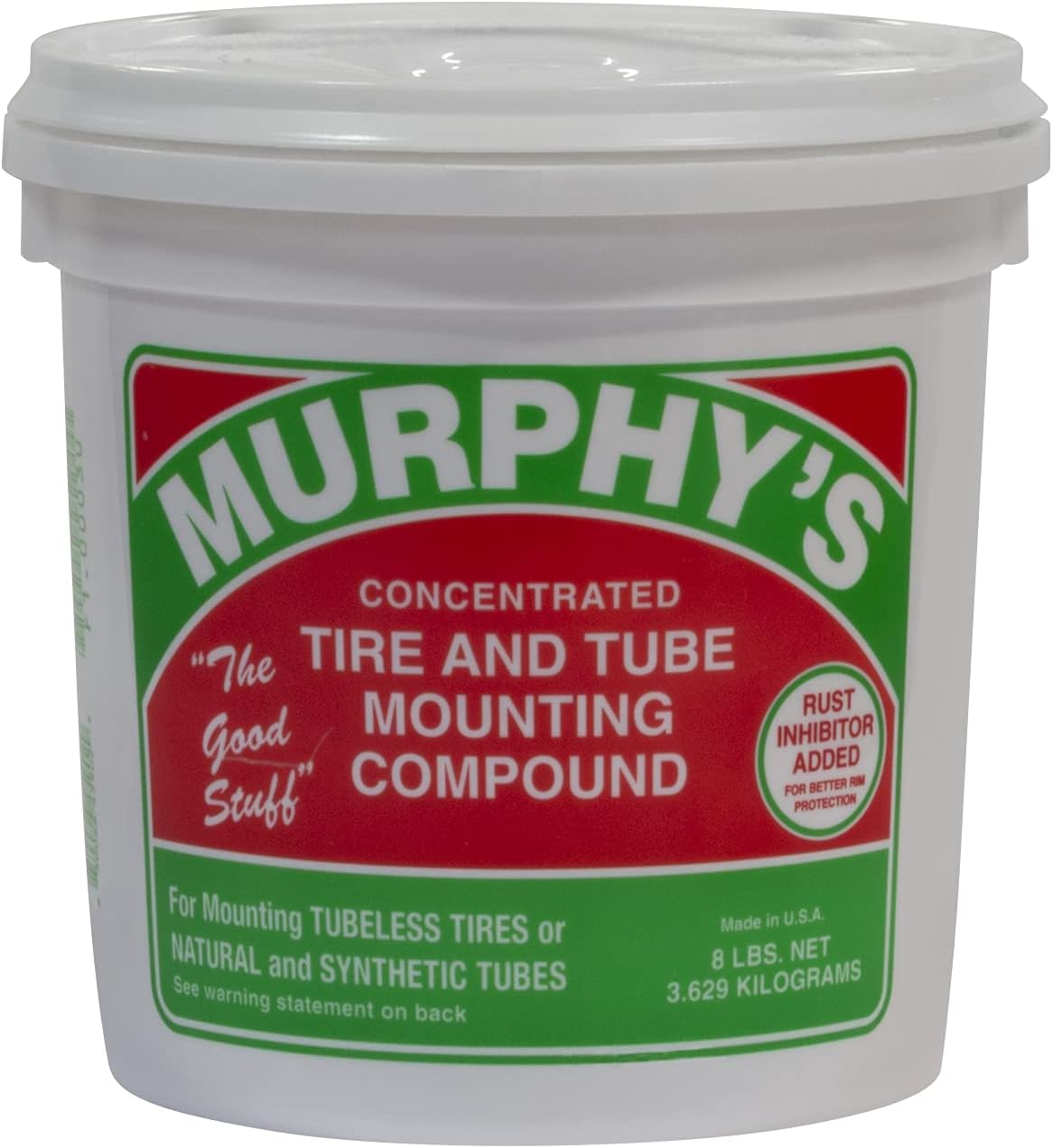
A concentrated tire and tube mounting compound designed to help simplify mounting rubber tires and tubes on passenger, semi truck, construction, and OTR applications. Its ultra-thick formula packs beads effectively and includes rust inhibitors to help protect against corrosion during use.

Cristal Products Untouchable Tire Shine Spray delivers a deep, wet-look gloss that enhances your vehicle’s tires. It’s quick-drying and spreads smoothly for consistent, streak-free coverage, while forming a protective coating against UV rays, road grime, and weather. Suitable for all tire types, it helps restore dull, faded tires to a showroom-quality finish.
Frequently Asked Questions
Which is better, V or H rated tires?
V-rated tires have a higher speed rating than H-rated tires. V is rated up to 149 mph, while H is rated up to 130 mph. That does not make V automatically better for every vehicle. If your car requires H-rated tires, a quality H-rated tire may deliver better comfort, tread life, and value than a sportier V-rated tire.
Are V or W tires better?
W-rated tires have a higher speed rating than V-rated tires. W is rated up to 168 mph, while V is rated up to 149 mph. Choose W only if your vehicle requires it or if the specific tire model fits your performance needs. For many daily drivers, the correct V-rated tire is more practical than a W-rated option.
What is a 107V tire rating?
A 107V tire rating means the tire has a load index of 107 and a speed rating of V. Load index 107 equals 2,149 pounds (975 kg) per tire when properly inflated. The V rating means the tire is rated up to 149 mph (240 km/h) under specified conditions.
Does the V matter on a tire?
Yes. The V matters because it is part of the tire’s service description. It tells you the tire’s speed category and helps confirm whether the tire matches your vehicle’s requirements. If your vehicle calls for V-rated tires, choosing a lower rating can affect handling, heat resistance, and safety.
Can I use a lower speed rating than V?
You should not use a lower speed rating than the vehicle manufacturer recommends unless the owner’s manual, tire maker, or qualified installer approves it for your exact use. Some winter tires may carry a lower speed rating, but you must follow the lower limit and any local warning requirements.
Where is the V rating shown on the tire?
The V rating is usually shown at the end of the tire size and service description on the sidewall. In 205/60R16 91V, the 91 is the load index and the V is the speed rating. If the marking is hard to read, check both sidewalls because some details may appear on only one side.
Sources
- NHTSA Tires — tire safety, inflation, recalls, and consumer tire guidance.
- Tire Rack: Tire Sidewall Markings — service description, load rating, speed rating, and sidewall-label explanation.
- Tire Rack: Load Index — load-index definition and load-index capacity chart.
- Bridgestone: Tire Speed Rating — tire speed-rating categories and shopping guidance.
- 49 CFR § 575.104 — Uniform Tire Quality Grading rules for treadwear, traction, and temperature labeling.
Conclusion
A V tire rating means the tire is rated for up to 149 mph (240 km/h) under specified conditions. You will usually see it in the service description after the load index, such as 91V. The safest choice is to match or exceed your vehicle manufacturer’s required load index and speed rating, then choose the tire type that fits your climate, driving style, and budget.
Before buying replacements, check the door-jamb placard, owner’s manual, and current sidewall markings. If you are unsure, ask a qualified tire installer. The right rating keeps the tire matched to the vehicle, which helps preserve handling, heat control, and safety.