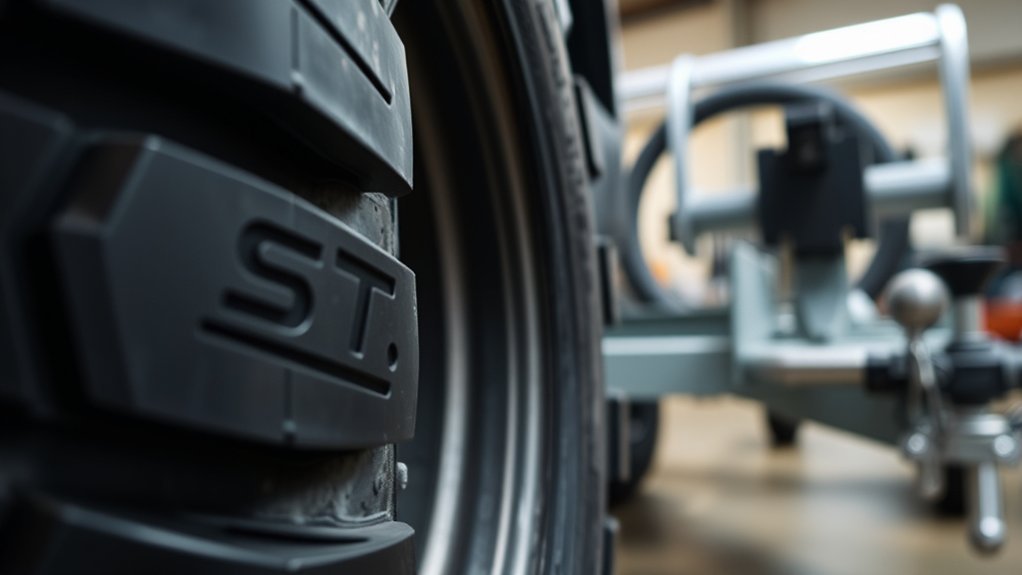
ST on a tire stands for Special Trailer. That means the tire is built for trailer use, not for passenger cars, SUVs, or everyday driving. ST tires focus on trailer load support, sidewall stability, heat control, and straight tracking while towing. To use them safely, you still need to match the exact tire size, load rating, speed rating, rim rating, and cold inflation pressure to your trailer.
Quick Answer
ST means Special Trailer. An ST tire is designed for trailer axles, where the tire must carry steady vertical load and resist sway. Do not use ST tires on cars or trucks for normal driving, and do not choose trailer tires by size alone. Always match the load rating, speed rating, rim rating, and cold inflation pressure.
Key Takeaways
- ST stands for Special Trailer, which means the tire is made for trailer axles, not passenger vehicles.
- ST tires use trailer-focused construction to support load, reduce sidewall flex, and improve towing stability.
- You must match the tire’s load rating to the trailer’s axle rating, not just the trailer’s tire size.
- Speed limits vary by tire, so check the sidewall speed symbol and the tire maker’s data instead of assuming one universal limit.
- Cold inflation pressure, tire age, cracks, bulges, tread wear, and overloading all affect trailer tire safety.
What Does ST Mean on a Tire?
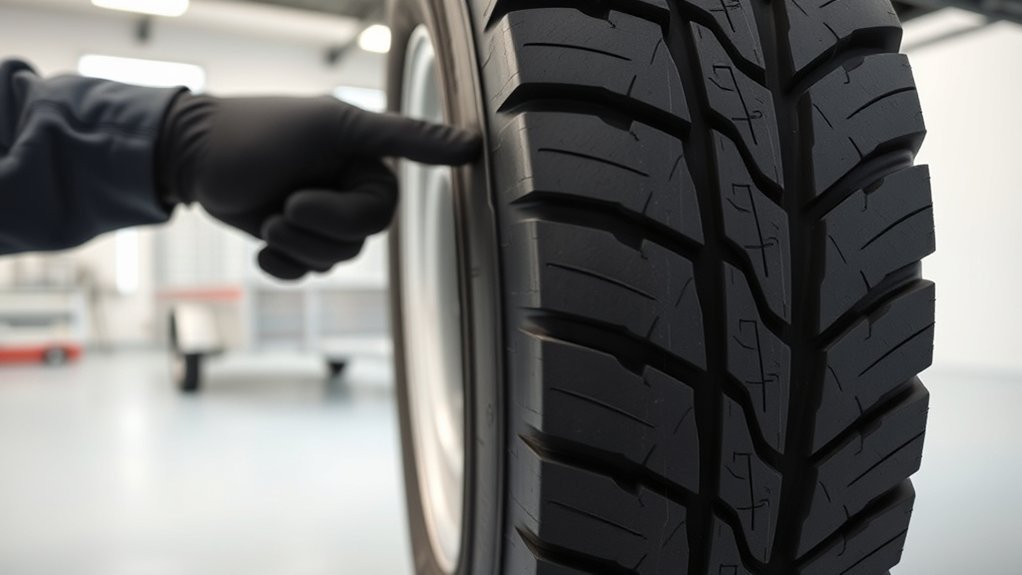
ST means Special Trailer. When you see ST at the start of a tire size, such as ST175/80R13 or ST205/75R15, the tire is intended for trailer service. Federal tire-selection rules also recognize ST tires as an option for trailers under specific conditions, including trailers with a gross vehicle weight rating of 10,000 pounds or less. You can review the trailer-tire language in 49 CFR 571.110.
That ST marking matters because trailers stress tires differently than powered vehicles do. A trailer tire carries vertical weight, tracks behind the tow vehicle, and deals with side loading when you turn, back up, or drive in crosswinds. It does not need the same steering feel, acceleration grip, or ride comfort as a passenger tire.
In plain terms, ST means the tire is purpose-built for trailer duty. It is the right category for many boat trailers, utility trailers, campers, enclosed cargo trailers, and small equipment trailers when the size and rating match the trailer.
What Are ST Tires Made For?
ST tires are made for trailer-only use. They are designed to carry trailer loads, resist excessive sidewall flex, and help the trailer stay stable behind the tow vehicle. They are not designed for drive axles, steer axles, or passenger comfort.
[Products Worth Considering]
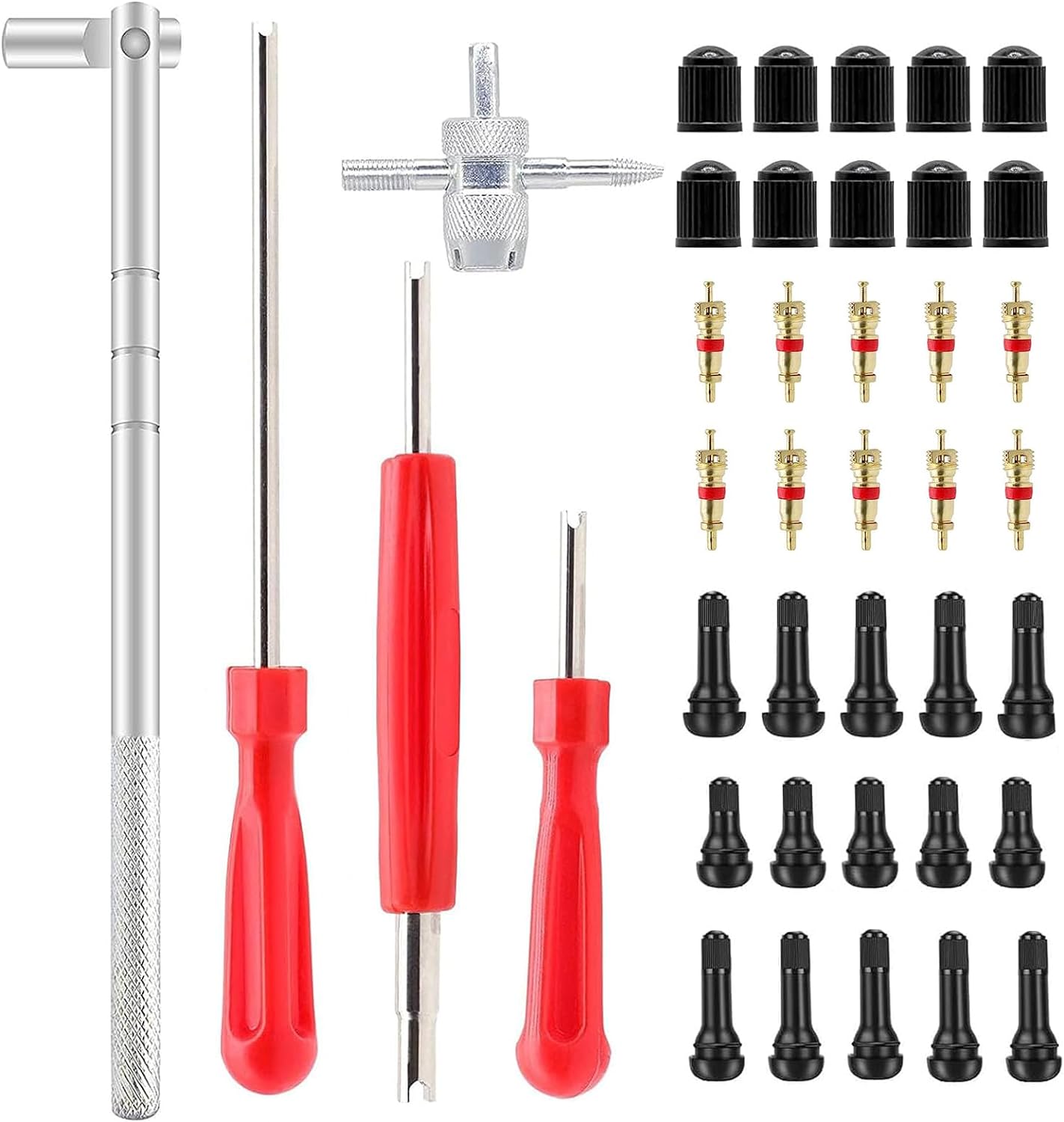
This ZHSMS valve stem puller and installer tool set makes it easy to remove and install tire valve stems without damaging wheels or valves. It uses a leverage design to save effort and includes valve stem tools plus removable valve core functionality for quick tire repairs. Compatible with tubeless tires for passenger cars, motorcycles, ATVs, off-road vehicles, and trucks.

The SAFELIFE dial tire tread depth gauge measures tread depth in 1/32 inch increments with clear, easy-to-read 2-inch dial face. Color zones using a traffic light system help you quickly judge whether tread is low, marginal, or ample for safer driving. Built with a durable zinc cast body and a metal detect probe for precise, comfortable use across cars, motorcycles, trucks, and buses.
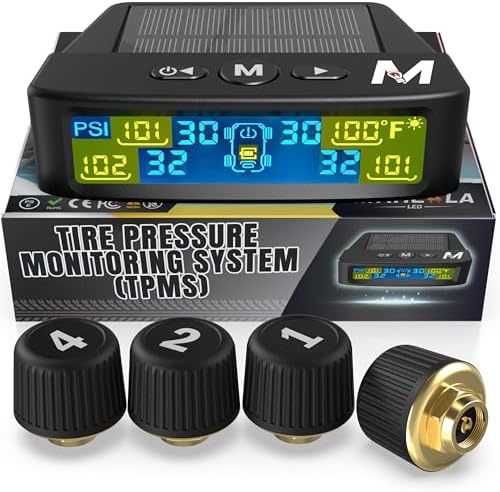
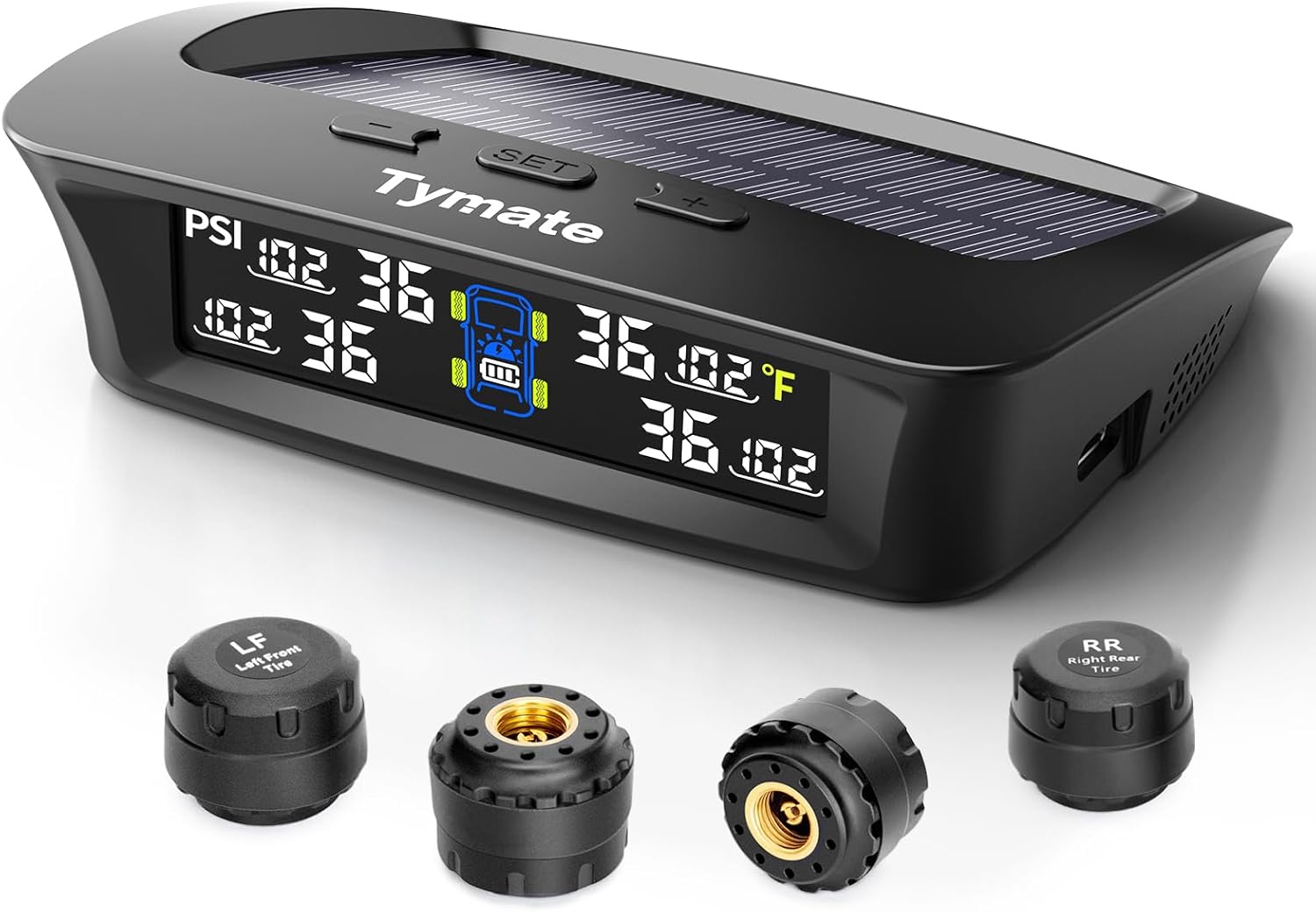
Marcala’s TPMS set of four sensors helps you monitor tire pressure and temperature in real time while driving, with updates every second. The bright color LCD uses auto-dimming for easy viewing, powered by dual solar and USB charging, and offers six alarm modes. Built for trailers, RVs, campers, trucks, and towing setups, the sensors support monitoring 1-4 wheels up to 98 PSI with IP67 waterproof protection.
Trailer-Only Design
A trailer tire has a different job from a car or truck tire. It does not steer the vehicle, transfer engine power to the road, or absorb bumps for passenger comfort. Instead, it supports the trailer’s load and helps the trailer track straight.
- Supports steady vertical trailer weight
- Helps reduce trailer sway and sidewall flex
- Handles heat created by towing loads
- Pairs with trailer-specific rims and inflation pressures
- Works best when all trailer tires match in size, type, and rating
Load and Stability
ST tires often use stiffer sidewalls than passenger tires. That stiffness helps the trailer resist side-to-side movement and keeps the tread more stable under load. However, you should not assume every ST tire automatically carries more than every LT tire. Compare the exact sidewall load rating, load range, service description, and recommended cold inflation pressure.
Warning: Never choose trailer tires by size alone. The tire’s maximum load rating must be high enough for the trailer axle load, and the rim and valve stem must also be rated for the required pressure.
How ST Tire Load Ratings Work
An ST tire’s load rating tells you how much weight the tire can carry at a specified cold inflation pressure. This information may appear as a load range, load index, maximum load statement, or service description on the sidewall. For safe towing, the combined tire capacity on each axle must meet or exceed the trailer axle’s required load. Federal standards for larger vehicles use the same basic safety idea: tire load ratings on an axle must be adequate for that axle’s gross axle weight rating. See 49 CFR 571.120 for the load-rating framework used in federal tire-selection requirements.
Load Index Basics
The load index is a number that corresponds to a maximum weight capacity. The tire may also show a load range, such as C, D, or E. A higher load range usually means the tire can carry more weight at a higher rated pressure, but you still need to check the exact tire data.
- Read the load index or maximum load statement on the sidewall.
- Check the trailer certification label for axle ratings and tire size.
- Use the tire maker’s load and inflation data when available.
- Do not exceed the tire’s rated load or pressure.
- Do not rely on extra air pressure to create extra capacity.
Trailer Capacity Limits
Your trailer’s GVWR tells you the maximum loaded trailer weight. The GAWR tells you the maximum weight each axle system is rated to carry. When you choose ST tires, match the tires to the axle load, not just the overall trailer weight.
| Item to Check | Why It Matters |
|---|---|
| Trailer tire size | Confirms the tire fits the rim, trailer clearance, and manufacturer recommendation. |
| Load range or load index | Shows how much each tire can carry at its rated pressure. |
| GAWR | Helps you confirm the tires on each axle can support the axle load. |
| Cold inflation pressure | Required to achieve the tire’s rated load capacity. |
| Rim and valve rating | The wheel and valve stem must handle the tire’s pressure requirement. |
Why ST Tires Have Stiffer Sidewalls
ST tires use stiffer sidewalls because trailer tires face steady vertical load and side-to-side stress while towing. A soft, flexible sidewall can allow more trailer movement, especially during lane changes, turns, crosswinds, and emergency maneuvers.
- Less sidewall flex under trailer load
- Better resistance to sway
- More stable tread contact under vertical pressure
- Improved heat control when properly inflated
- More predictable tracking behind the tow vehicle
This does not mean an ST tire is “better” than every LT tire in every situation. It means ST tires are designed around the trailer’s job. LT tires are designed around light-truck use, where ride quality, traction, steering, braking, and powered-axle performance matter more.
ST Tire Speed Ratings and Limits
ST tire speed limits are not all the same. Some older or basic trailer tires have lower speed limits, while many newer ST tires carry specific speed symbols. The safe approach is simple: read the sidewall, check the tire maker’s data, and never exceed the lower limit set by the tire, trailer, road, or towing conditions.
If the tire shows a service description after the size, the final letter is usually the speed symbol. For example, a tire might show a load index and speed symbol after the size. Federal placard rules also allow load range, load index, and speed rating information to appear near the tire size designation on applicable labels.
Note: A higher speed symbol does not make overloading safe. Speed rating assumes the tire is in good condition, properly inflated, correctly loaded, and used within the manufacturer’s limits.
ST Tires vs. LT Tires
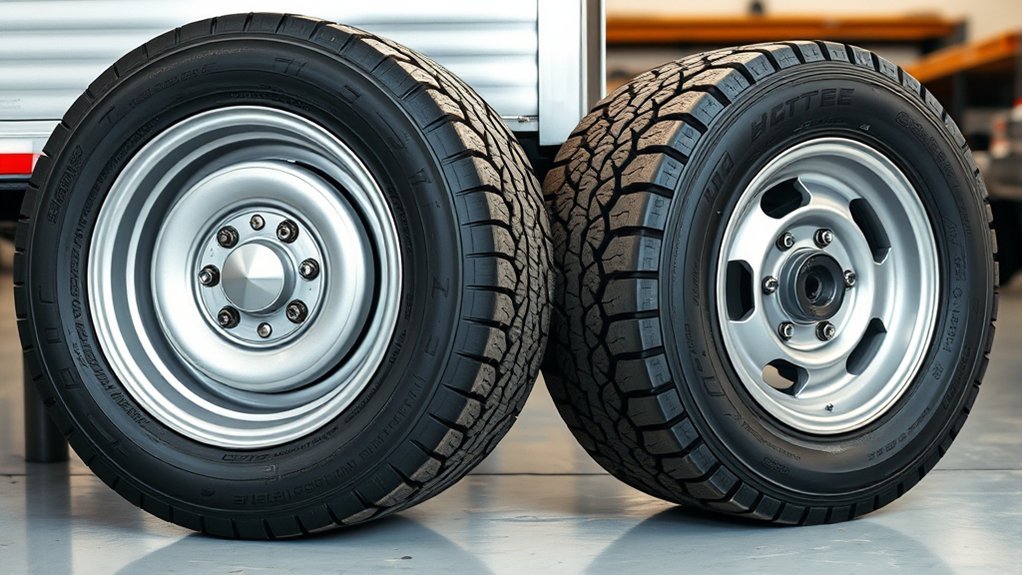
ST tires and LT tires are not interchangeable categories. ST means Special Trailer, while LT means Light Truck. Federal definitions describe LT tires as tires primarily intended for lightweight trucks or multipurpose passenger vehicles, not as trailer-specific tires.
| Tire Type | Best Use | Main Tradeoff |
|---|---|---|
| ST tire | Trailer axles | Stiffer ride, trailer-only use |
| LT tire | Light trucks, vans, and some tow vehicles | Not always ideal for trailer-only load behavior |
| P-metric tire | Passenger cars and some light-duty vehicles | Usually not the right choice for trailer service |
If your trailer originally came with ST tires, replacing them with the same size and an equal or higher load rating is usually the safest path. If you are considering an LT tire for a trailer, confirm the trailer manufacturer allows it and compare the exact load, pressure, rim, and clearance requirements before mounting it.
[Products Worth Considering]

Protect tire valves from water, dust, and sand to help prevent leaks and support safe driving. These universal stem caps install quickly by hand and feature durable aluminum alloy construction with an inner sealing ring for better air retention. Compatible with cars, SUVs, trucks, motorcycles, and bicycles for everyday convenience.

ETENWOLF’s tire pressure gauge helps you quickly and accurately check tire PSI across cars, trucks, motorcycles, bikes, and more. It’s manually calibrated to ANSI B40.1 Grade A for reliable readings, includes a large glow dial for easy nighttime viewing, and features a 360-degree swivel chuck for use at any valve angle. The gauge also works consistently in extreme hot or cold weather.
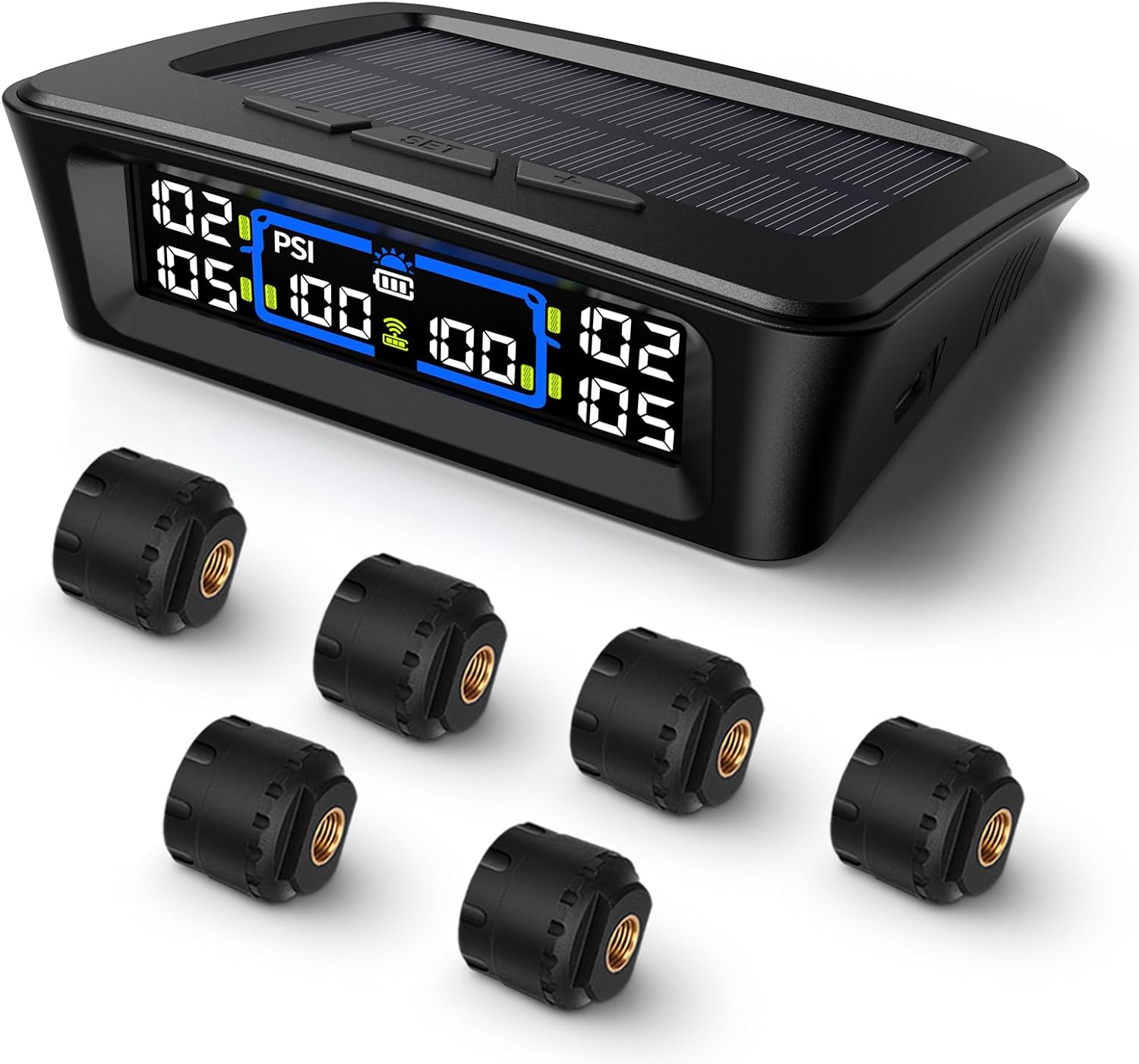
The Tymate TM12 RV TPMS delivers real-time tire pressure and temperature monitoring with a stable 433Hz display for safer long-distance driving. It supports simultaneous monitoring across vehicle and trailer zones, includes six alarm modes for pressure, temperature, leakage, battery, and signal loss, and features easy DIY installation with auto calibration. Power is supplied via USB-C charging or solar recharging, with a wide 0–144 PSI range and up to 50 ft signal coverage for RVs and towable trailers.
Can You Use LT Tires on a Trailer?
You may see LT tires used on some trailers, especially larger or specialty trailers, but that does not mean you should swap them in without checking the trailer manufacturer’s requirements. LT tires are primarily designed for light trucks and multipurpose passenger vehicles, so they may not deliver the same sidewall behavior as a trailer-specific ST tire.
If your trailer placard specifies ST tires, stay with ST tires unless the trailer maker, tire maker, or qualified tire professional confirms an approved alternative. The tire must match the axle load, rim size, rim pressure rating, and clearance. The speed rating must also fit the way you tow.
Pro Tip: When replacing trailer tires, photograph the sidewall and trailer certification label before shopping. Those two labels give you the size, load, pressure, and axle-rating clues you need.
Why Car Tires Don’t Belong on Trailers
Passenger-car tires are built for comfort, steering, braking, and ride quality on passenger vehicles. A trailer needs a tire that can handle steady load and towing stress. Even if a car tire fits the rim, it may not have the right load capacity, sidewall behavior, or pressure rating for trailer use.
Load and Heat Risks
Underinflation, overloading, and excessive heat are serious trailer tire risks. NHTSA warns that poor tire maintenance, including not having enough air, can lead to a flat tire, a blowout, or the tread coming off. Trailer tires can be especially vulnerable because trailers often sit unused, carry heavy loads, and run for long distances at highway speed.
NHTSA reported 511 deaths in tire-related crashes in 2024, which is why tire pressure, load rating, tread condition, and tire age deserve attention before every towing trip.
Sway and Blowout Hazards
A passenger tire’s more flexible construction can allow extra sidewall movement on a trailer. That can contribute to heat, uneven wear, sway, and instability when the trailer is loaded. ST tires counter this with trailer-focused construction and load support, but even an ST tire can fail if it is underinflated, overloaded, damaged, aged out, or driven beyond its rating.
How to Read ST Tire Markings
Reading ST tire markings helps you choose the correct replacement and avoid unsafe mismatches. Start with the size code, then check the load and pressure details.
- ST: Special Trailer tire category.
- 175, 205, 225, etc.: Section width in millimeters.
- 80, 75, etc.: Aspect ratio, or sidewall height as a percentage of tire width.
- R: Radial construction.
- 13, 14, 15, 16, etc.: Rim diameter in inches.
- Load range or load index: The tire’s weight-carrying capacity at rated pressure.
- Speed symbol: The tire’s maximum speed rating under proper load and inflation conditions.
- Max load and max pressure: The tire’s rated capacity and pressure limit.
- DOT Tire Identification Number: A code that includes the tire’s manufacturing week and year.
For example, ST175/80R13 means Special Trailer tire, 175 mm section width, 80% aspect ratio, radial construction, and 13-inch rim diameter. That size alone is not enough. You still need the load range, load index, pressure, and speed rating.
How to Choose the Right ST Tire
Use a simple checklist before you buy replacement trailer tires:
- Read the trailer placard. Look for tire size, cold inflation pressure, GVWR, and GAWR.
- Match the tire size. Use the original size unless the trailer maker approves another size.
- Match or exceed the load rating. The tires on each axle must support the axle load with a safe margin.
- Check the rim rating. The rim must fit the tire and handle the required pressure.
- Check the valve stem. Higher-pressure trailer tires may need a stronger valve stem.
- Confirm the speed rating. Follow the sidewall and manufacturer data.
- Replace in matching sets when needed. Keep the same size, type, and rating across the trailer unless the trailer maker specifies otherwise.
[Products Worth Considering]

Measure tire tread depth quickly and accurately with this LUMITECO dial gauge that reads in 1/32" increments up to 14/32". The color-coded green/yellow/red zones make it easy to judge tire wear and know when replacement is needed. A rugged, compact design with a protective pouch helps keep the gauge ready for use on cars, trucks, motorcycles, and more.

This 12-inch LUMITECO dual head tire pressure gauge features an integrated straight-on chuck and a 30° reverse chuck to reach hard-to-access dual wheel valves. Its 10–150 PSI / 1–10 BAR range with a clear, two-sided scale helps you quickly check tire pressure for safer, smoother driving. Heavy-duty construction and a simple no-battery design make it a reliable tool for trucks, cars, RVs, and motorcycles.

These aluminum alloy tire valve stem caps with an O-ring seal help protect valve stems from corrosion while adding a clean, stylish look to your vehicle. The universal fit works across cars, trucks, motorcycles, bicycles, and more, making them an easy upgrade for everyday driving and off-road use. Installation is quick, and the included four-pack keeps all your tires dressed and protected.
When to Replace ST Tires

Replace ST tires when you see unsafe tread wear, cracking, cuts, bulges, exposed cords, repeated pressure loss, impact damage, or uneven wear that a tire professional cannot correct. Do not wait for a blowout to prove the tire is done.
Tire age also matters. NHTSA explains that tires can age even when they are not used much, and some vehicle and tire manufacturers recommend replacing tires after six to 10 years regardless of tread depth. You can check age by reading the last four digits of the DOT Tire Identification Number, which show the manufacturing week and year.
| Check Item | What to Do |
|---|---|
| Cracks or weather checking | Replace the tire if cracks are deep, widespread, or near the sidewall. |
| Bulges or sidewall bubbles | Stop using the tire and replace it. |
| Low tread or exposed cords | Replace before towing again. |
| Old DOT date code | Follow the tire maker’s age limit and inspect more often as the tire ages. |
| One tire failed on a multi-axle trailer | Inspect the matching tire on that side for overload, heat, impact, and hidden damage. |
ST Tire Maintenance Tips
Trailer tires often sit for long periods, then carry heavy loads at highway speed. That makes maintenance important even when the tread looks good. NHTSA recommends checking tire pressure when tires are cold, meaning they have not been driven for at least three hours.
- Check cold inflation pressure before every towing trip and at least monthly during use.
- Inspect tread, sidewalls, valve stems, and rims before long drives.
- Keep tires covered or shaded during long storage when practical.
- Avoid overloading the trailer, including cargo, water, tools, fuel, and accessories.
- Replace missing valve caps to help keep dirt and moisture out of valve cores.
- Have tires balanced, inspected, or replaced if you notice vibration, uneven wear, or repeated pressure loss.
Frequently Asked Questions
Can you use ST tires on a car?
No. You should not use ST tires on a car for normal driving. ST tires are built for trailer axles, not steering, braking, ride comfort, or powered-axle traction on passenger vehicles. Use the tire type, size, load rating, and speed rating specified for your vehicle.
What is the difference between ST and LT tires?
ST tires are Special Trailer tires made for trailer axles. LT tires are Light Truck tires made primarily for light trucks, vans, and multipurpose passenger vehicles. ST tires focus on trailer load support and stability, while LT tires balance load capacity with steering, ride, braking, and traction needs.
What does ST175/80R13 mean?
ST175/80R13 means Special Trailer tire, 175 mm section width, 80% aspect ratio, radial construction, and 13-inch rim diameter. You also need to check the load range, load index, maximum load, cold inflation pressure, and speed rating before buying or towing.
Which speed rating is better, S or T?
T is the higher speed symbol compared with S, but you should not choose trailer tires by speed rating alone. For trailer use, the tire must also match the correct size, load rating, pressure, rim rating, and manufacturer guidance. Never tow faster than the lowest safe limit for the tire, trailer, road, or load.
Can you mix ST and LT tires on the same trailer?
Avoid mixing ST and LT tires on the same trailer unless the trailer manufacturer specifically allows it. Different tire types can have different sidewall behavior, load capacity, pressure requirements, and handling response. For predictable towing, use matching tires by size, type, load rating, and speed rating.
How often should you check ST tire pressure?
Check ST tire pressure before towing and at least monthly during the towing season. Measure pressure when the tires are cold. A trailer tire can look normal while still being underinflated, so use a reliable gauge instead of judging by appearance.
Conclusion
ST on a tire means Special Trailer. It tells you the tire is designed for trailer axles and towing loads, not for passenger-car driving. The ST marking is only the starting point, though. To tow safely, match the full tire size, load rating, speed rating, rim rating, and cold inflation pressure to your trailer.
Before your next trip, read the trailer placard, inspect the sidewalls, check the DOT date code, and set the pressure while the tires are cold. The right ST tire, used within its limits, gives your trailer better stability, stronger load support, and a safer ride behind your tow vehicle.
Sources
- NHTSA TireWise — tire pressure, tread, tire aging, blowout risk, recalls, and tire-related crash safety data.
- 49 CFR 571.110 — tire selection, trailer tire allowances, passenger-tire derating, placard, load index, load range, and speed rating information for vehicles with GVWR of 10,000 pounds or less.
- 49 CFR 571.120 — tire and rim selection requirements and GAWR-based load-rating framework for vehicles with GVWR over 10,000 pounds.
- NHTSA Recalls — tire and vehicle recall lookup for safety defects.