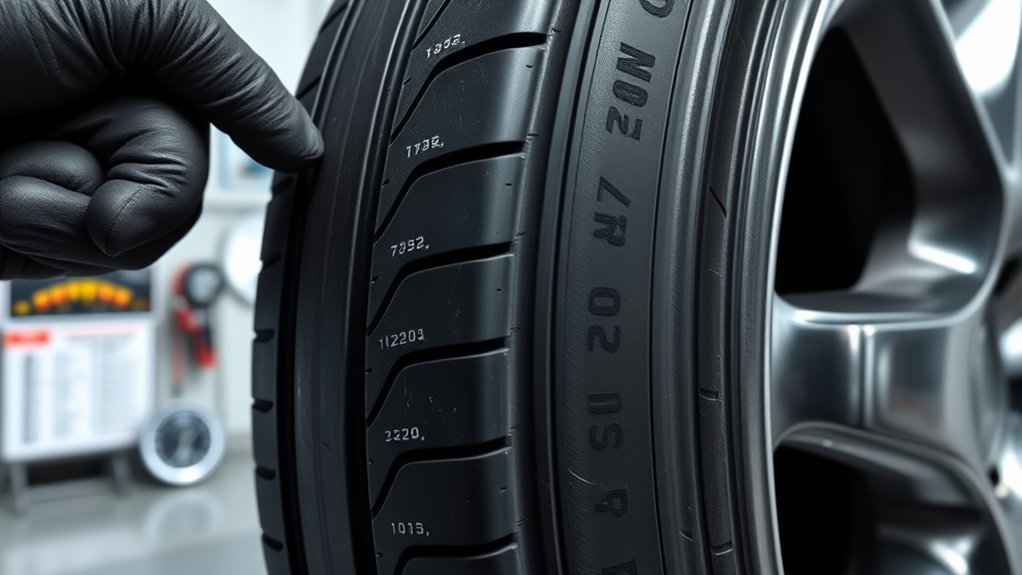
91V on a tire is a service description that tells you two important limits: how much weight the tire can carry and the speed level it is built to handle. The 91 is the load index, and the V is the speed rating. You will usually see it after the tire size, such as 205/60R15 91V.
Quick Answer
A 91V tire has a 91 load index, meaning it can carry up to 615 kg or 1,356 lbs per tire when properly inflated, and a V speed rating, meaning it is rated up to 240 km/h or 149 mph under controlled conditions.
Key Takeaways
- 91V combines two tire specs: load index 91 and speed rating V.
- A 91 load index equals 615 kg or 1,356 lbs per tire at the correct inflation pressure.
- A V speed rating equals 240 km/h or 149 mph, but it is not permission to exceed speed limits.
- Always match the tire size, load index, speed rating, and inflation guidance listed in your owner’s manual or tire placard.
- Avoid installing tires with a lower load index or speed rating than your vehicle requires unless the vehicle manufacturer specifically allows it.
What Does 91V Mean on a Tire?
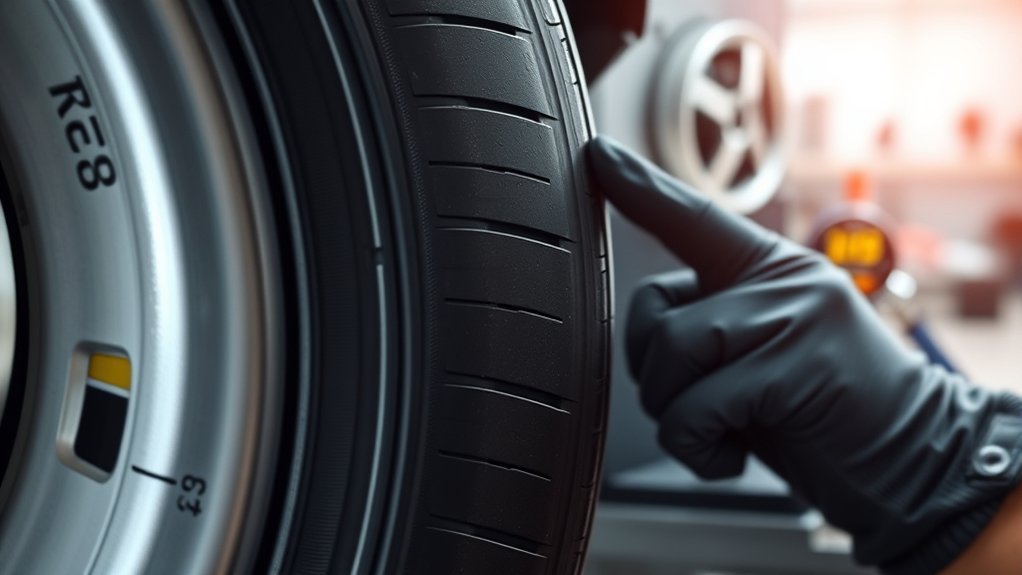
A tire marked 91V tells you its load index and speed rating. The number 91 means the tire can carry up to 615 kg (1,356 lbs) per tire when it is properly inflated and used within its design limits. The letter V means the tire is rated for speeds up to 240 km/h (149 mph) in controlled test conditions.
In plain English, 91V helps you confirm whether the tire is strong enough for your vehicle and whether its speed rating meets or exceeds the vehicle maker’s requirement. It does not describe the tread pattern, wet grip, snow performance, ride comfort, or expected tread life by itself.
| Code | 91V |
| 91 | Load index: 615 kg or 1,356 lbs per tire |
| V | Speed rating: 240 km/h or 149 mph |
| Best check | Owner’s manual, driver-side door placard, or tire information placard |
What Can a 91 Load Index Carry?
A 91 load index means each tire can carry up to 615 kg or 1,356 lbs. That number applies per tire, not per vehicle. It also assumes the tire is the correct size, correctly inflated, in good condition, and used within the vehicle manufacturer’s limits.
91 Load Capacity
For many passenger cars, a 91 load index is common. But you should not choose it just because it looks close to your old tire. Your vehicle’s required load index comes from its weight, axle ratings, tire size, suspension design, and recommended cold inflation pressure.
| Item | Value |
|---|---|
| Load index | 91 |
| Maximum load per tire | 615 kg |
| Maximum load per tire | 1,356 lbs |
| Typical use | Many passenger cars and some compact crossovers, only when specified for that vehicle |
| Where to verify | Owner’s manual, tire placard, or original equipment tire specification |
Vehicle Fit and Safety
If your vehicle requires a 91 load index, a 91 tire meets that load requirement. If your vehicle requires a higher load index, a 91 tire is not a safe substitute. A tire with too little load capacity can run hotter, flex more than intended, wear faster, and increase the risk of failure when the vehicle is loaded.
Warning: Do not install a tire with a lower load index than your vehicle requires. Also avoid overloading the vehicle, towing beyond limits, or driving on underinflated tires, because all of those conditions add heat and stress to the tire.
What Does the V Speed Rating Mean?
The V speed rating means the tire is rated up to 149 mph (240 km/h) under controlled test conditions. It is a speed capability rating, not a promise that the tire will perform well in every real-world situation.
Road surface, tire age, tread depth, temperature, vehicle load, inflation pressure, alignment, and weather all affect safety. A V-rated tire can still be unsafe if it is overloaded, damaged, underinflated, worn out, or used in conditions it was not designed for.
Note: A speed rating does not override posted speed limits. It only tells you the tire’s tested speed category when the tire is properly loaded, inflated, and maintained.
Where Can You Find 91V on a Tire?
You can find 91V on the tire’s sidewall, usually after the tire size. A full tire code may look like 205/60R15 91V. In that example, 205/60R15 describes the tire size, while 91V describes the load index and speed rating.
To verify the correct specification before buying replacement tires, check these places:
- the existing tire sidewall
- the driver-side door placard or tire information placard
- the owner’s manual
- the vehicle manufacturer’s tire-size guide
- a tire shop’s fitment database, confirmed against your vehicle trim
The sidewall tells you what is currently installed. The placard and owner’s manual tell you what the vehicle manufacturer requires.
Is 91V the Right Rating for Your Vehicle?
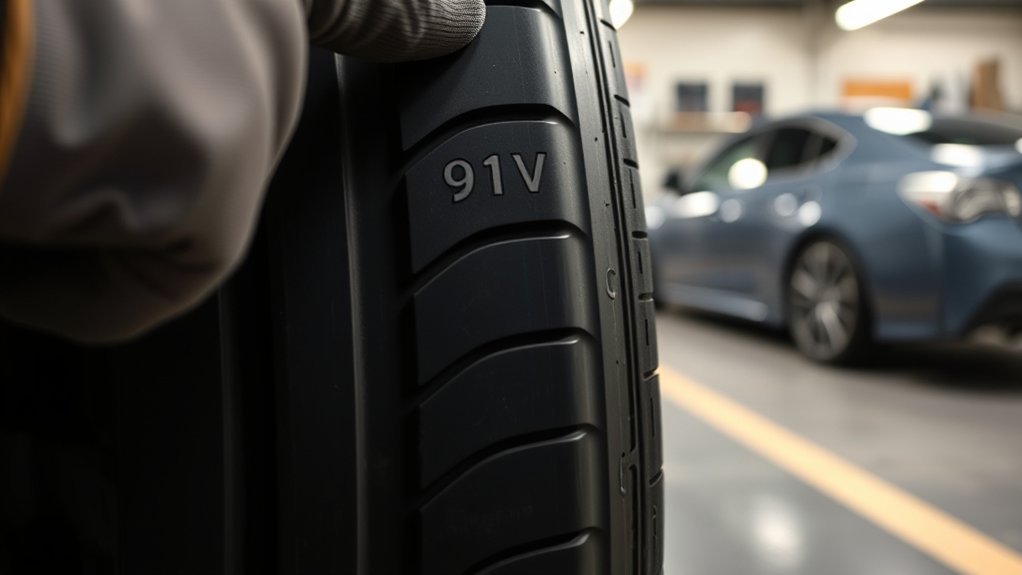
91V is the right rating only if your vehicle calls for that load index and speed rating, or if the tire otherwise meets or exceeds the vehicle maker’s approved specification. Never choose a tire based on 91V alone. You also need the correct width, aspect ratio, construction type, rim diameter, load category, and inflation pressure.
How to Check if 91V Matches Your Car
- Read the tire placard. Look on the driver-side door jamb first. Some vehicles may list tire information in the manual or another placard location.
- Match the tire size. Confirm the full size, such as 205/60R15 or 205/55R16.
- Match or exceed the load index. If the placard requires 91, do not go below 91.
- Match or exceed the speed rating. If the vehicle requires V, do not install H or T unless the manufacturer allows it for a specific use, such as certain winter tires.
- Check load category. If the vehicle requires XL or Reinforced tires, a standard-load tire with the same size may not be enough.
- Set cold inflation pressure. Use the vehicle placard pressure, not the maximum pressure printed on the tire sidewall.
Pro Tip: If you are replacing only two tires, match the new tires to the same axle and follow your vehicle maker’s guidance. For the most predictable handling, use the same size, type, load index, and speed rating across the set unless your vehicle uses a factory staggered setup.
What Happens If You Use the Wrong Rating?
Using a tire below the required load index or speed rating can reduce the safety margin built into the vehicle. The tire may run hotter, flex more, wear unevenly, and respond less predictably during braking, cornering, or emergency maneuvers.
- A lower load index may not support the vehicle’s weight safely when passengers, cargo, or towing load are added.
- A lower speed rating may not meet the vehicle manufacturer’s handling and heat-resistance requirements.
- Mismatched ratings can make steering and braking feel uneven, especially during quick lane changes or hard braking.
- Underinflation increases heat buildup and can make an otherwise correct tire unsafe.
- A higher speed rating does not fix the wrong size, wrong load category, or incorrect inflation pressure.
When in doubt, choose the tire specification listed by the vehicle manufacturer or ask a qualified tire professional to verify fitment.
How Does 91V Compare to Other Tire Ratings?
The 91 part of 91V is the load index. The V part is the speed rating. Changing the letter changes the speed category, while changing the number changes the load capacity.
| Rating | Load Capacity | Speed Category | Meaning |
|---|---|---|---|
| 91T | 615 kg / 1,356 lbs | 190 km/h / 118 mph | Same load as 91V, lower speed rating |
| 91H | 615 kg / 1,356 lbs | 210 km/h / 130 mph | Same load as 91V, lower speed rating |
| 91V | 615 kg / 1,356 lbs | 240 km/h / 149 mph | Common higher-speed passenger tire rating |
| 91W | 615 kg / 1,356 lbs | 270 km/h / 168 mph | Same load as 91V, higher speed rating |
A higher speed letter is not automatically “better” for every driver. It may come with different handling, ride, wear, or price tradeoffs depending on the exact tire model. The correct choice is the tire that meets your vehicle’s required size, load index, speed rating, and driving conditions.
[Products Worth Considering]

The SAFELIFE dial tire tread depth gauge measures tread depth in 1/32 inch increments with clear, easy-to-read 2-inch dial face. Color zones using a traffic light system help you quickly judge whether tread is low, marginal, or ample for safer driving. Built with a durable zinc cast body and a metal detect probe for precise, comfortable use across cars, motorcycles, trucks, and buses.

Measure tire tread depth quickly and accurately with this LUMITECO dial gauge that reads in 1/32" increments up to 14/32". The color-coded green/yellow/red zones make it easy to judge tire wear and know when replacement is needed. A rugged, compact design with a protective pouch helps keep the gauge ready for use on cars, trucks, motorcycles, and more.

Monitor tire tread wear with a smart, color-coded depth gauge that shows clear condition ranges at a glance. The bar is range marked for fast, easy readings, helping you maintain safer traction and performance. Each gauge is portable with a pocket clip, and the set includes 20 units for daily use and sharing.
How Do You Read a Tire Code Like 205/60R15 91V?
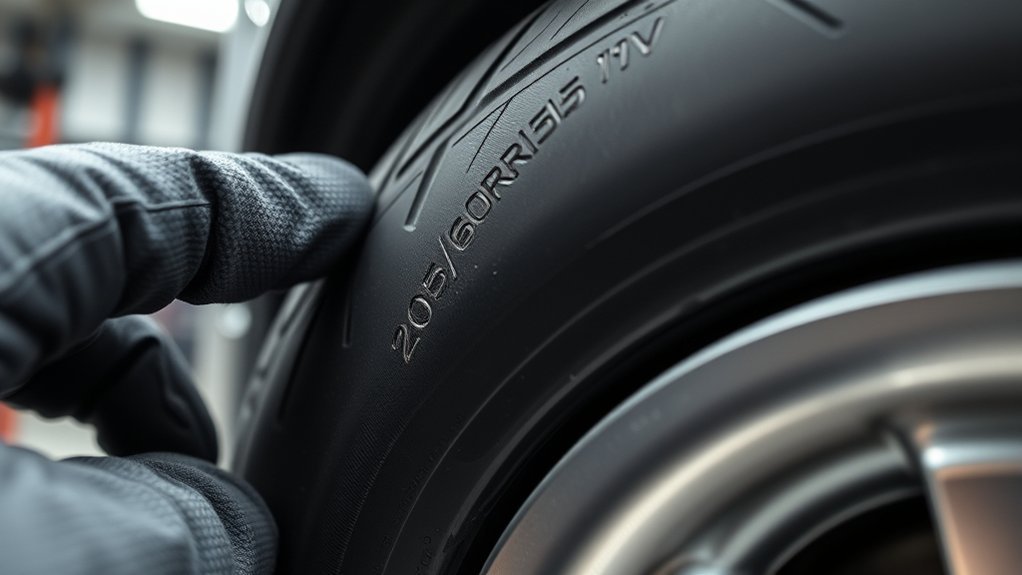
A tire code like 205/60R15 91V gives you the tire’s size, construction, load index, and speed rating.
- 205 = tire section width in millimeters
- 60 = aspect ratio, meaning the sidewall height is 60% of the tire width
- R = radial construction
- 15 = wheel/rim diameter in inches
- 91 = load index, or 615 kg / 1,356 lbs per tire
- V = speed rating, or 240 km/h / 149 mph
Read the whole code before buying tires. A tire can have the right 91V rating and still be wrong if the size, load category, or vehicle application does not match.
[Products Worth Considering]
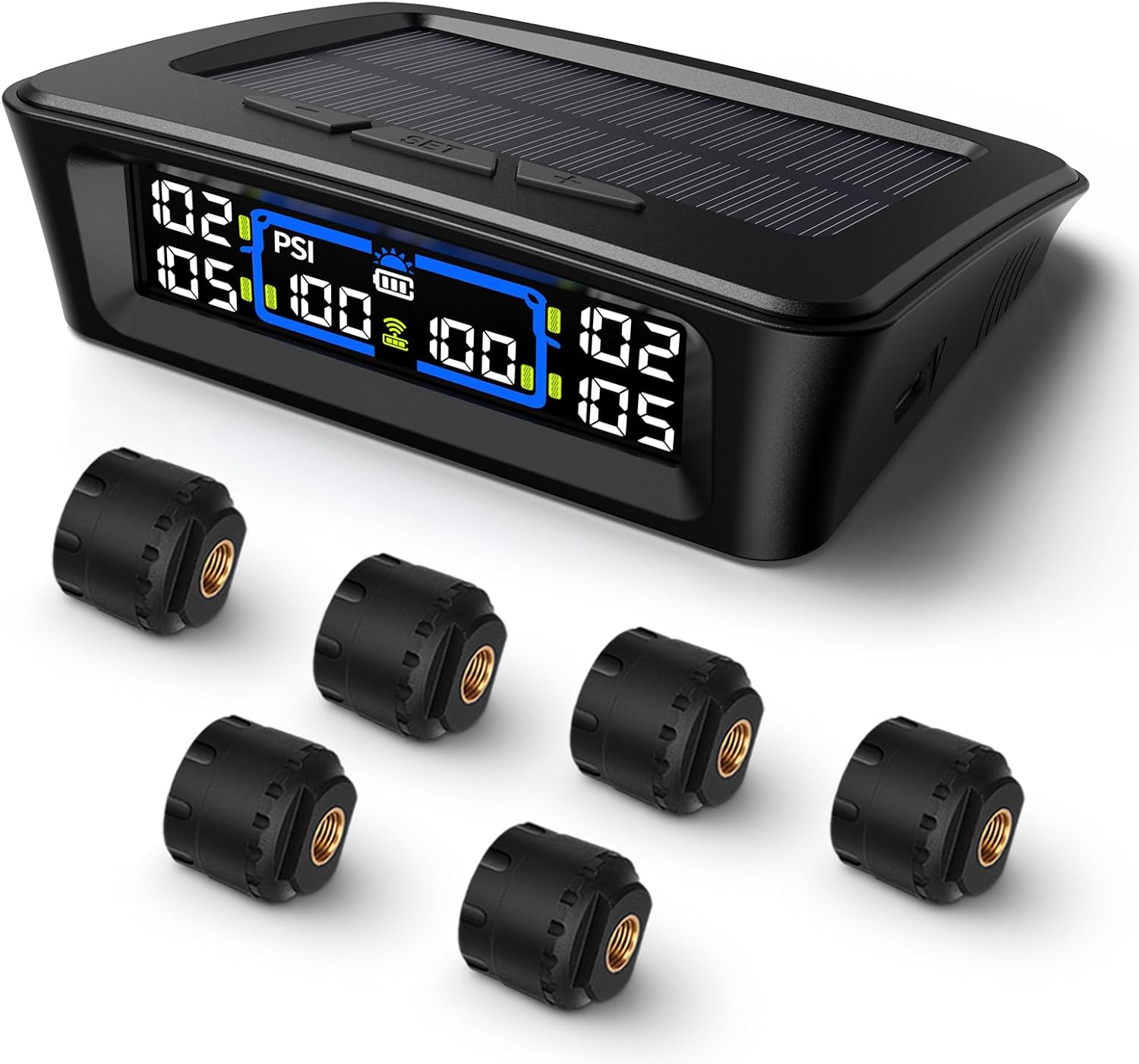
The Tymate TM12 RV TPMS delivers real-time tire pressure and temperature monitoring with a stable 433Hz display for safer long-distance driving. It supports simultaneous monitoring across vehicle and trailer zones, includes six alarm modes for pressure, temperature, leakage, battery, and signal loss, and features easy DIY installation with auto calibration. Power is supplied via USB-C charging or solar recharging, with a wide 0–144 PSI range and up to 50 ft signal coverage for RVs and towable trailers.

A concentrated tire and tube mounting compound designed to help simplify mounting rubber tires and tubes on passenger, semi truck, construction, and OTR applications. Its ultra-thick formula packs beads effectively and includes rust inhibitors to help protect against corrosion during use.

Cristal Products Untouchable Tire Shine Spray delivers a deep, wet-look gloss that enhances your vehicle’s tires. It’s quick-drying and spreads smoothly for consistent, streak-free coverage, while forming a protective coating against UV rays, road grime, and weather. Suitable for all tire types, it helps restore dull, faded tires to a showroom-quality finish.
Load Index vs. Load Range vs. XL
The load index is the number in the service description, such as 91. It tells you the tire’s maximum load capacity from a standard load chart. Load range is a different marking used more often on light-truck tires to describe strength category. XL or Reinforced means the tire is built to carry more load at a higher inflation pressure than a standard-load tire of the same size.
If your placard requires an XL tire, do not assume a standard-load 91V tire is acceptable. Match the complete specification, not just the 91V code.
[Products Worth Considering]

The Topeak SmartGauge D2 delivers precise digital tire pressure readings for bikes, motorcycles, and sports equipment up to 250 psi (17 bar). Its rotating SmartHead works with both Presta and Schrader valves, so you can check pressure quickly without adapters. The LCD display makes it easy to read results in psi, bar, or kg/cm² with an included CR2032 battery for immediate use.

Malco tire mounting and demounting lubricant is a ready-to-use tire lube formulated to reduce friction during tire installation for passenger cars, light trucks, farm tires, and heavy-duty equipment. It provides rust-inhibiting protection to help reduce corrosion on rims and wheels, and helps support proper tire bead seating during inflation to reduce air leakage. The silicone-free, soap-free formula is whitewall safe to help prevent discoloration on whitewall tires and sensitive sidewall markings.

Measure tyre tread depth precisely with a digital gauge that reads in both MM and inches, helping you monitor safe driving conditions. The large LCD screen is easy to operate, and the compact tool fits for cars, trucks, and motorcycles. It provides high accuracy with a 0-25.4mm range and includes a 1-year warranty for added peace of mind.
Frequently Asked Questions
What is the difference between 91V and 91H tires?
91V and 91H tires have the same load index, so both can carry up to 615 kg or 1,356 lbs per tire. The difference is the speed rating. H is rated up to 210 km/h or 130 mph, while V is rated up to 240 km/h or 149 mph.
What does 205/55R16 91V mean?
205/55R16 91V means the tire is 205 mm wide, has a sidewall height equal to 55% of its width, uses radial construction, fits a 16-inch wheel, has a 91 load index, and carries a V speed rating.
Are V-rated tires better than W-rated tires?
Not automatically. W has a higher speed rating than V, but that does not mean every W-rated tire is better for comfort, wet grip, tread life, price, or daily driving. Choose the rating that matches or exceeds your vehicle’s requirement.
What is the difference between 205/55R16 91H and 205/55R16 91V?
The tire size and load index are the same. Both are 205/55R16 tires with a 91 load index. The only difference in the code is the speed rating: H is rated to 210 km/h or 130 mph, while V is rated to 240 km/h or 149 mph.
Can I use 91V instead of 91H?
Usually, a V-rated tire can replace an H-rated tire when the size, load index, load category, and other specifications match, because V is a higher speed rating than H. Still, you should confirm the choice with your owner’s manual or tire placard.
Can I use a lower speed rating than V?
Do not use a lower speed rating than your vehicle requires unless the manufacturer specifically allows it. Some winter tire fitments may allow a lower rating with restrictions, but for normal replacements, match or exceed the original speed rating.
Does 91V tell me the tire pressure?
No. 91V tells you load index and speed rating. Tire pressure comes from your vehicle’s tire placard or owner’s manual. Use the recommended cold inflation pressure for your vehicle, not the maximum pressure molded on the tire sidewall.
Conclusion
When you see 91V on a tire, the 91 means the tire can carry up to 615 kg or 1,356 lbs per tire, and the V means it is speed-rated up to 240 km/h or 149 mph under controlled conditions. The code is useful, but it is only one part of fitment. Before buying replacement tires, match the full tire size, load index, speed rating, load category, and inflation guidance listed by your vehicle manufacturer.
Sources
- Bridgestone: Tire Load Index — supports load index meaning and replacement guidance.
- Bridgestone: Tire Speed Rating — supports speed rating definitions and comparison context.
- NHTSA: Tires — supports tire safety, inflation, and consumer tire guidance.
- eCFR: 49 CFR § 575.104 — supports the federal Uniform Tire Quality Grading framework.