
What Is a Tire? Complete Guide to Types, Parts & How They Work
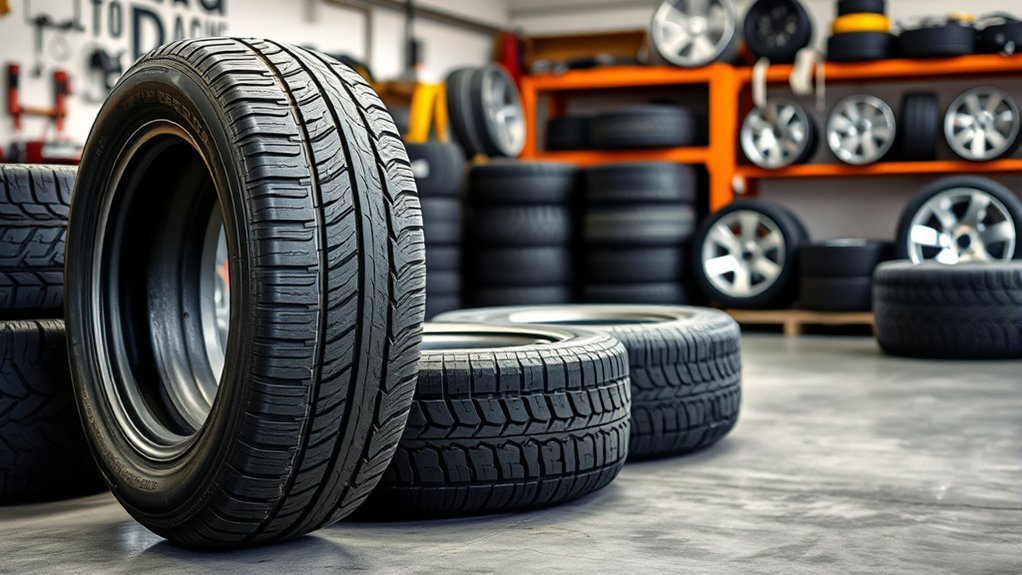
A tire is the rubber-and-fabric assembly mounted around a wheel to support the vehicle, grip the road, absorb small shocks, and help transfer steering, braking, and acceleration forces. It may look simple from the outside, but a tire is a safety part made from tread rubber, sidewalls, steel or textile reinforcement, beads, and an air-retaining innerliner.
Quick Answer
A tire is the rubber covering mounted on a wheel. It carries vehicle load, keeps the wheel cushioned from the road, creates traction through its tread and contact patch, and helps the vehicle steer, stop, accelerate, and ride smoothly.
Key Takeaways
- A tire is different from a wheel: the tire is the rubber part that touches the road, while the wheel is the metal structure it mounts to.
- Main tire parts include the tread, sidewall, bead, body ply, belts, and innerliner.
- Tire choice depends on climate, vehicle type, load needs, speed rating, road surface, and driving style.
- Correct pressure, adequate tread depth, regular rotation, and damage inspections are essential for safety and tire life.
- Replace tires when tread reaches 2/32 inch, when structural damage appears, when they repeatedly lose air, or when age and manufacturer guidance call for replacement.
What Is a Tire?
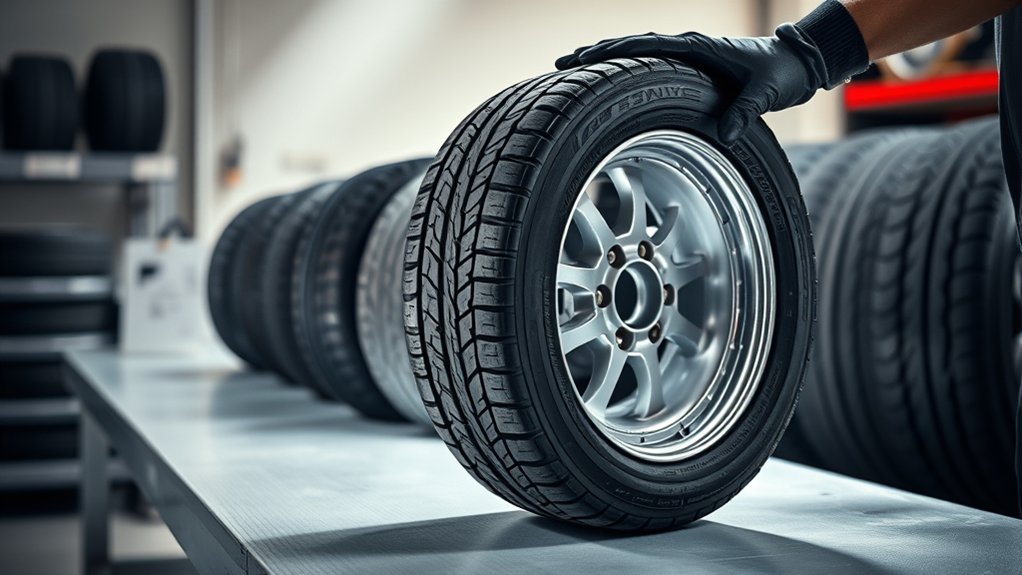
A tire is a ring-shaped rubber component that fits around a wheel rim. On most passenger vehicles, it is filled with compressed air, which lets the tire carry weight while still flexing over bumps and road texture.
The tire’s job is practical and safety-critical. It supports the vehicle, cushions the ride, grips the surface, helps the driver steer, and transfers braking and acceleration forces to the road. The small area where the tire touches the road is called the contact patch, and that patch is where traction happens.
A wheel is not the same thing as a tire. The wheel is usually the metal rim and center structure bolted to the vehicle. The tire is the rubber assembly mounted on that wheel. You need both for the complete rolling assembly.
Note: The correct tire size and inflation pressure for your vehicle come from the owner’s manual or the tire-and-loading placard, not from guessing and not from the maximum pressure molded on the tire sidewall.
[Products Worth Considering]

This portable cordless tire inflator delivers up to 160 PSI with fast 17 L/min airflow to help you quickly top up tires and get back on the road. It features dual power mode, running on a 21V rechargeable battery or a 12V DC adapter for convenient roadside use. An automatic shut-off with digital pressure gauge helps prevent overinflation, and a built-in LED light improves visibility in low-light conditions.

EVOULTES heavy duty tire inflator with an integrated gauge delivers accurate pressure readings from 10–120 PSI, helping you inflate, deflate, and check tires in one tool. The 16.5-inch extended dual-head air chuck with swivel base reaches hard-to-access dual wheel valves on trucks and RVs. A brass trigger core and side-mounted air release valve make operation smooth, with standard 1/4" NPT threading and quick-connect compatibility for easy setup.

The Fanttik X10 Pro is a cordless portable tire inflator that reaches up to 150 PSI and can inflate an R15 tire in about 35 seconds for quick roadside or home top-ups. With AccuInFlate auto-stop and smart start/stop controls, it helps maintain accurate pressure and frees your hands once the target is reached. A high-visibility digital display and preset modes make it easy to set and monitor inflation for cars, motorcycles, bikes, and balls.
Common Tire Types
Different tires are built for different weather, surfaces, vehicles, and performance needs. The right tire depends on where you drive, how cold or wet your climate gets, how much weight the vehicle carries, and whether you spend most of your time on pavement or off-road surfaces.
| Tire type | Best use |
| All-season | General year-round driving in moderate conditions, including dry roads, rain, and light snow capability. |
| Winter | Cold-weather driving, snow, and ice. Winter tires are more effective than all-season tires in deep snow. |
| Summer | Warm-weather dry and wet pavement performance. They are not designed for snow, ice, or freezing conditions. |
| All-terrain | A mix of on-road driving and light to moderate off-road use, often on trucks and SUVs. |
| Performance | Sharper steering response and higher speed ratings, usually with tradeoffs in tread life, comfort, or winter grip. |
| Electric vehicle | Designed to handle EV weight, instant torque, noise concerns, and range-sensitive rolling resistance. |
All-Season vs. Seasonal Tires
All-season tires are built to handle a broad range of everyday conditions. They are convenient because most drivers can leave them on year-round in moderate climates.
Seasonal tires are more specialized. Winter tires prioritize cold-weather traction, snow, and ice. Summer tires prioritize warm-weather dry and wet handling. If your climate has harsh winters or very hot performance driving, a dedicated seasonal tire can be safer and more effective than relying on one tire for every condition.
Specialty Tire Categories
Specialty tires solve more specific problems. Mud-terrain tires use large tread blocks and wide voids for loose surfaces. Touring tires aim for comfort and tread life. Light truck tires may carry heavier loads. Run-flat tires are designed to keep moving for a limited distance after pressure loss, depending on the manufacturer’s limits.
Warning: Never mix tire types, sizes, or load ratings unless your vehicle manufacturer specifically allows it. Mismatched tires can affect braking, stability control, all-wheel-drive systems, and handling.
Main Parts of a Tire
A tire is made from several parts that work together. Each part has a job, and damage to any major part can make the tire unsafe.
- Tread: The outer rubber surface that touches the road. Tread patterns use grooves, blocks, and sipes to manage grip, water evacuation, snow traction, noise, and wear.
- Sidewall: The side of the tire between the tread and bead. It protects the tire body and carries markings such as size, load index, speed rating, DOT/TIN code, and maximum pressure.
- Bead: The reinforced edge that seals the tire to the wheel rim.
- Body ply: Layers of fabric or cords that give the tire strength and shape.
- Belts: Reinforcing layers, often steel in radial tires, placed under the tread for stability, puncture resistance, and tread support.
- Innerliner: The air-retaining layer inside a tubeless tire.
How Tires Grip the Road
Tires grip the road through friction between the tread rubber and the surface. The contact patch is small, but it carries the forces needed for steering, braking, and acceleration.
Tread design matters because water, snow, mud, and debris can reduce contact between rubber and road. Grooves help move water away from the contact patch, which lowers the chance of hydroplaning. Sipes and tread blocks can improve biting edges for snow or wet traction, depending on tire type.
Rubber compound also matters. Softer compounds can conform to road texture more easily, but they may wear faster. Harder compounds may last longer, but they may not grip as well in certain conditions. Tire pressure affects grip, too: both under-inflation and over-inflation can reduce the tire’s effective contact with the road.
Tire Construction and Materials
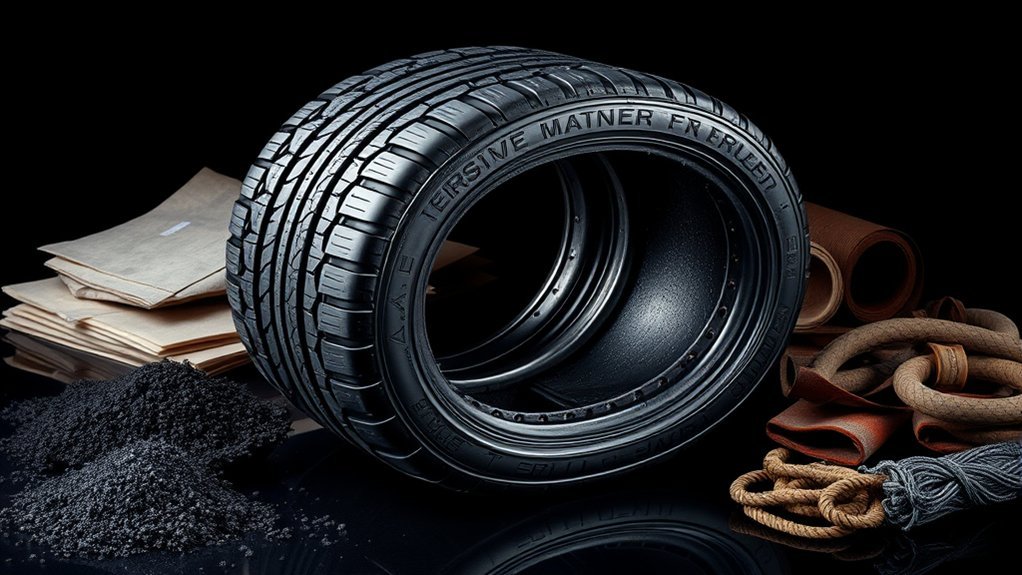
Modern tires combine natural rubber, synthetic rubber, fabric cords, steel reinforcement, carbon black or silica, and other compounds. Manufacturers tune these materials to balance traction, tread life, heat resistance, rolling resistance, comfort, and noise.
Tire Layer Structure
A tire is built in layers. The tread contacts the road. Belts help support the tread. Body plies give the tire shape and load-carrying strength. The bead locks the tire to the rim. The innerliner helps hold air.
This layered design lets the tire stay flexible enough to absorb road texture while staying strong enough to carry vehicle weight at highway speeds.
Key Tire Materials
Rubber provides grip and flexibility. Steel strengthens the bead and, in many radial tires, reinforces the belt package. Textile cords such as polyester or nylon support the tire body. Chemical additives help manage heat, aging, wear, and traction.
No single material does everything. A long-lasting tire, a winter tire, a performance tire, and a low-rolling-resistance tire all use different material priorities.
Radial vs. Bias Constructions
Most modern passenger vehicles use radial tires. In a radial tire, the body ply cords run across the tire from bead to bead, and belts support the tread area. This construction helps improve tread life, ride comfort, heat control, and fuel efficiency.
Bias-ply tires use diagonal cord layers that cross over each other. They are less common on everyday passenger vehicles, but they may still appear in certain trailer, agricultural, off-road, vintage, or specialty uses.
Radial vs. Bias Tires
Radial tires are the standard choice for most cars, crossovers, minivans, and light trucks because they generally provide better on-road comfort, more stable tread contact, and lower rolling resistance than older bias-ply designs.
Bias tires can be useful in some severe-service or specialty situations, but they usually create more heat and rolling resistance during highway use. If you are replacing tires on a modern vehicle, follow the owner’s manual and tire placard unless a qualified tire professional recommends otherwise.
Tire Sizes and Ratings
Tire sidewall markings tell you whether a tire fits your vehicle and whether it can safely carry the load and speed the vehicle requires. These markings should match the owner’s manual, the tire-and-loading placard, or an approved alternative size from a tire professional.
Understanding Tire Size Codes
A tire size such as P215/65R15 can be read in parts:
| Code part | Meaning |
| P | Passenger vehicle tire. |
| 215 | Section width in millimeters. |
| 65 | Aspect ratio; the sidewall height is 65% of the tire width. |
| R | Radial construction. |
| 15 | Wheel diameter in inches. |
After the size, you may see a number-letter combination such as 95H. The number is the load index, and the letter is the speed rating.
Speed and Load Ratings
The load index tells you the maximum load a tire can carry at the correct pressure. The speed rating tells you the maximum speed capability under specified conditions. These ratings do not give permission to exceed speed limits or ignore road conditions.
Never install a tire with a lower load index or speed rating than your vehicle requires unless the vehicle manufacturer or a qualified tire professional confirms that it is acceptable for your use.
DOT Date Code and Other Sidewall Markings
The DOT Tire Identification Number, often called the TIN, helps identify the tire and its age. The last four digits show the week and year the tire was made. For example, a code ending in 2319 means the tire was made in the 23rd week of 2019.
You may also see UTQG grades for treadwear, traction, and temperature on many passenger tires sold in the United States. These can help compare tires, but they do not replace choosing the correct tire size, type, load rating, and speed rating for your vehicle.
Pro Tip: When buying used tires, check the DOT date code, tread depth, sidewall condition, repair history, and recalls. A tire can have decent tread and still be unsafe because of age, impact damage, improper repair, or internal damage you cannot see.
How Tires Affect Safety and Fuel Economy
Tires affect braking, steering, stability, ride comfort, fuel use, and tire life. Poor tire maintenance, including under-inflation and failure to rotate tires, can lead to a flat tire, blowout, or tread separation. According to NHTSA TireWise, 511 people died in tire-related crashes in 2024.
Pressure is one of the most important tire maintenance points. FuelEconomy.gov says properly inflated tires can improve gas mileage by 0.6% on average and up to 3% in some cases. It also notes that under-inflated tires can lower gas mileage by about 0.2% for every 1 psi drop in the average pressure of all tires.
Proper pressure is not just about saving fuel. It helps the tire carry load correctly, reduces heat buildup, supports predictable handling, and helps the tire last longer.
[Products Worth Considering]
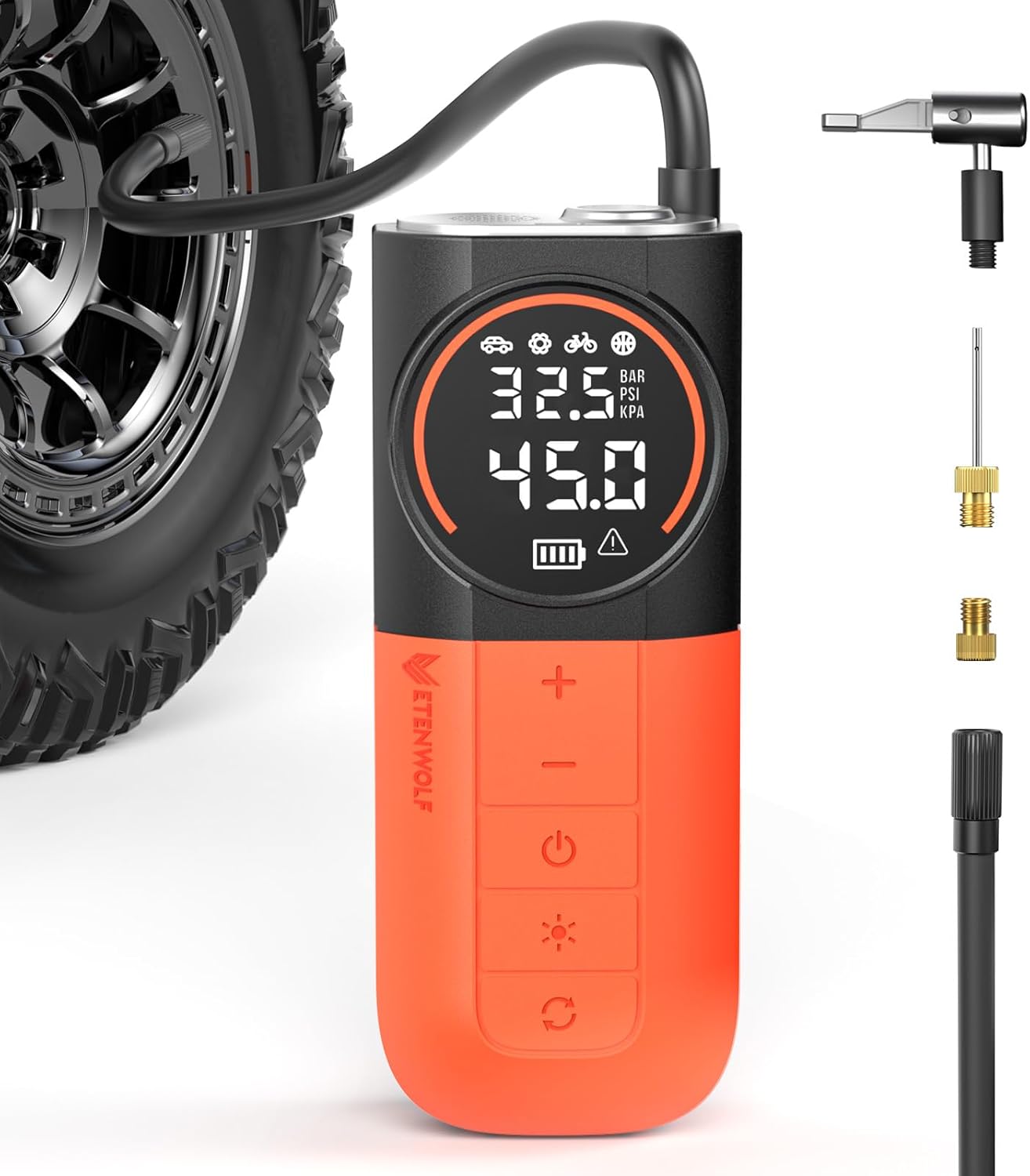
The ETENWOLF S1 cordless tire inflator delivers ultra-fast inflation with up to 160 PSI and a 20 L/min airflow for quicker tire top-offs. Its 5200mAh battery and cooling system support inflating many tires and sports balls on a single charge, while the digital pressure gauge and multi-unit display help you reach the right pressure accurately. With preset modes, pressure memory, an auto-stop feature, and an LED flashlight, it’s built for easy roadside and everyday use.

The JACO FlowPro Tire Inflator measures, inflates, and airs down tires up to 100 PSI with battery-free operation and ±2% accuracy after calibration. It features a glowing pressure dial for night visibility, a heavy-duty steel build with a hybrid hose, and a precision push-to-inflate thumb trigger. The patented Lightning Air Chuck locks on for a secure seal, and the kit includes quick-connect hardware for easy inline use with your air compressor.
Tire Pressure and TPMS
Check tire pressure at least once a month and before long trips. Check tires when they are cold, meaning the vehicle has been parked for at least three hours or has been driven only a short distance at low speed.
Use the recommended cold inflation pressure on the driver-side doorjamb placard or in the owner’s manual. Do not use the maximum pressure molded on the tire sidewall as your normal setting.
Many newer vehicles have a Tire Pressure Monitoring System, or TPMS. TPMS is helpful, but it is not a substitute for regular pressure checks with a gauge. The warning light may not come on until a tire is already significantly underinflated.
Tire Maintenance Tips
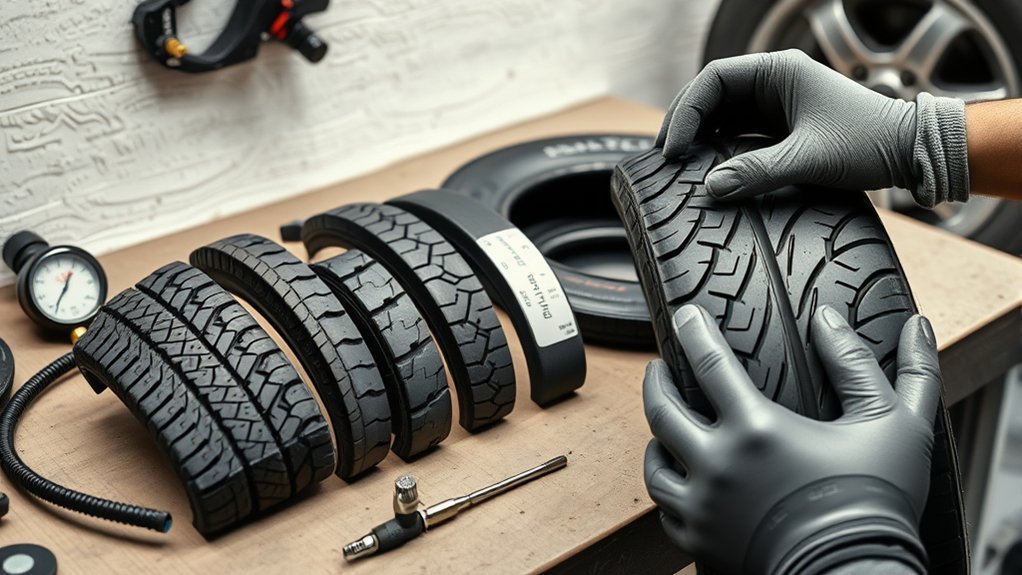
A simple maintenance routine can improve safety, fuel economy, and tire life.
- Check pressure monthly: Include the spare if your vehicle has one.
- Inspect tread monthly: Replace tires when tread reaches 2/32 inch. Use the penny test as a quick check: if you can see the top of Lincoln’s head, the tread is too shallow.
- Rotate when recommended: If your vehicle manufacturer recommends rotation, NHTSA suggests 5,000 to 8,000 miles or sooner if uneven wear appears.
- Watch for uneven wear: One-sided wear, cupping, or rapid wear can point to alignment, balance, suspension, or pressure problems.
- Look for damage: Cracks, bulges, cuts, exposed cords, punctures, vibration, and recurring pressure loss need prompt inspection.
- Balance and align as needed: Balancing helps reduce vibration, and alignment helps the vehicle track correctly while reducing uneven wear.
- Check recalls: Tires can be recalled just like vehicles. Use the DOT/TIN code to identify affected tires.
Repair vs. Replace
Some punctures can be repaired, but not every tire damage is repairable. A repair may be possible when the puncture is in the tread area and the tire has not been driven while flat or severely underinflated. A proper repair usually requires removing the tire from the wheel and repairing it from the inside.
Replace the tire instead of repairing it if the sidewall is damaged, the shoulder area is punctured, cords are visible, the tire has a bulge, the puncture is too large, the tire has multiple unsafe repairs, or the tire was driven long enough while flat to damage its internal structure.
Warning: A plug-only roadside repair should be treated as temporary unless a qualified tire professional confirms the tire was repaired correctly from the inside and remains safe for service.
When to Replace Tires
Replace a tire when it is worn out, damaged, too old for safe service, or no longer holds pressure reliably. The 2/32-inch tread depth limit is the legal minimum in many places, but wet-weather performance can decline before that point.
You should replace or professionally inspect tires when you notice:
- Tread worn to 2/32 inch or level with treadwear indicators.
- Visible cords, deep cuts, bulges, sidewall cracks, or impact damage.
- Uneven wear that returns after pressure correction or alignment.
- Repeated air loss with no simple cause.
- Vibration, thumping, or noise that starts suddenly.
- Age concerns based on the DOT date code and vehicle or tire manufacturer guidance.
NHTSA notes that some vehicle and tire manufacturers recommend replacing tires that are six to 10 years old, regardless of treadwear. Check your owner’s manual and tire manufacturer guidance, and have aging tires inspected by a qualified professional.
How to Choose the Right Tire
Start with the size, load rating, and speed rating listed on your tire placard or in the owner’s manual. Then match the tire type to your climate and driving use.
- For mild climates: All-season tires may be enough for everyday driving.
- For regular snow and ice: Consider winter tires and install them as a full set.
- For hot-weather performance: Summer tires may improve response, but they are not for snow or freezing conditions.
- For gravel, dirt, and mixed use: All-terrain tires may fit better than highway tires.
- For heavy loads or towing: Confirm the load rating, inflation requirements, and vehicle limits.
- For EVs: Look for tires designed for higher weight, torque, noise control, and rolling resistance.
Price matters, but fitment and safety matter more. A cheap tire with the wrong rating, poor wet grip, or mismatched size can cost more in wear, fuel, braking distance, and risk.
Frequently Asked Questions
What are the two meanings of tire?
“Tire” has two common meanings. As a noun, it means the rubber cushion fitted around a wheel, usually containing compressed air. As a verb, it means to become weary or to exhaust someone. Merriam-Webster records both uses.
What is a tire vs. a wheel?
A tire is the rubber part that touches the road. A wheel is the metal structure that the tire mounts to and that bolts to the vehicle. The tire provides traction and cushioning; the wheel provides structure and attachment.
Is a wheel a tire?
No. A wheel is not a tire. The tire mounts onto the wheel. Together, they form the rolling assembly, but they do different jobs.
Is tire a word for tired?
“Tire” is not normally used as an adjective meaning “tired.” It is a verb meaning to become weary or to exhaust. “Tired” is the adjective. For example, a long drive can tire you, and after that drive you may feel tired.
How often should I check tire pressure?
Check tire pressure at least once a month and before long trips. Check when tires are cold, and use the pressure listed on the vehicle placard or in the owner’s manual.
When is tire tread too low?
A tire is unsafe and should be replaced when tread depth reaches 2/32 inch. You can use built-in treadwear bars or the penny test as a quick check.
Conclusion
A tire is more than a rubber ring. It is a load-carrying, air-retaining, traction-producing safety component that affects how your vehicle accelerates, turns, brakes, rides, and uses fuel.
Choose tires that match your vehicle and driving conditions. Keep them properly inflated, inspect tread and sidewalls regularly, rotate them when recommended, and replace them when tread, damage, pressure loss, or age makes them unsafe. A few minutes of tire care can prevent expensive wear and reduce serious safety risks.
Sources
- NHTSA TireWise — tire pressure, tread depth, tire rotation, TPMS, tire aging, tire ratings, and tire-related crash safety information.
- FuelEconomy.gov: Keeping Your Vehicle in Shape — fuel-economy effects of proper tire inflation and under-inflation.
- Merriam-Webster: Tire Definition — noun and verb meanings of “tire.”
- NHTSA Recalls — tire and vehicle recall lookup guidance.

Related Articles
Are Premium Tires Worth the Extra Money?
Worth the extra money? Premium tires promise more grip, comfort, and longevity—but the real tradeoff may surprise you.
Read More
What Are OE Tires? Original Equipment Explained
Discover what OE tires really mean and why choosing the right replacement could change everything for your car’s ride, handling, and safety.
Read More
305 Tire Size Explained: How Big Is It?
I explain how big a 305 tire really is—and why the exact fit can surprise you.
Read More