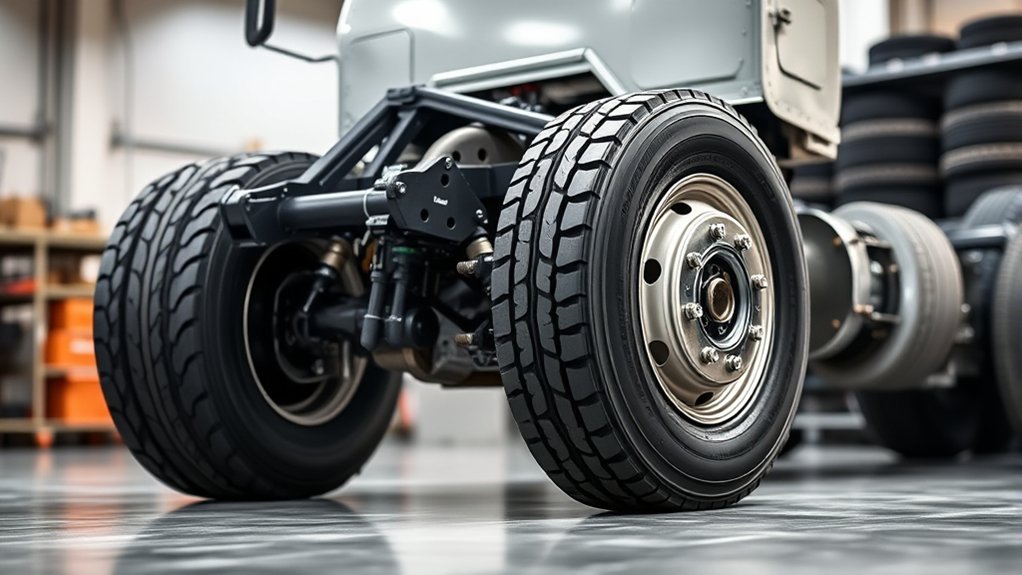
A steer tire is the tire mounted on the front steer axle of a truck, bus, tractor, or other vehicle where it has the biggest effect on steering response, lane control, braking stability, and wet-road handling. On commercial trucks, choosing and maintaining steer tires correctly is a safety issue, not just a cost issue, because the front axle controls where the vehicle goes.
Quick Answer
A steer tire is the front-axle tire that helps control direction, stability, braking feel, and wet-road grip. Steer tires usually use ribbed tread patterns, strong casings, and load ratings matched to the front axle. Replace them based on tread depth, damage, irregular wear, inflation history, and manufacturer or fleet policy.
Key Takeaways
- Steer tires mount on the front steer axle and have the most direct effect on handling and directional control.
- Most steer tires use ribbed tread to support straight-line stability, water evacuation, even wear, and lower rolling resistance.
- Drive tires focus more on torque transfer and traction, while trailer tires focus on carrying load and resisting scrub.
- Commercial front tires on U.S. buses, trucks, and truck tractors must meet the federal 4/32-inch tread-depth rule; other positions generally use a 2/32-inch minimum.
- Alignment, inflation pressure, shocks, load, and road conditions are the biggest causes of uneven steer tire wear.
- The best steer tire is the one that matches your axle load, route, speed rating, wheel size, tread needs, and maintenance program.
At a Glance
| Time Required | 10–20 minutes for a basic pressure, tread, and visual inspection |
| Difficulty | Beginner for inspection; professional service required for mounting, balancing, alignment, and repairs |
| Tools Needed | Calibrated tire pressure gauge, tread-depth gauge, flashlight, tire load/inflation chart, and inspection gloves |
| Cost | Low for inspection tools; replacement cost varies by size, load range, brand, casing value, and service application |
What Is a Steer Tire?
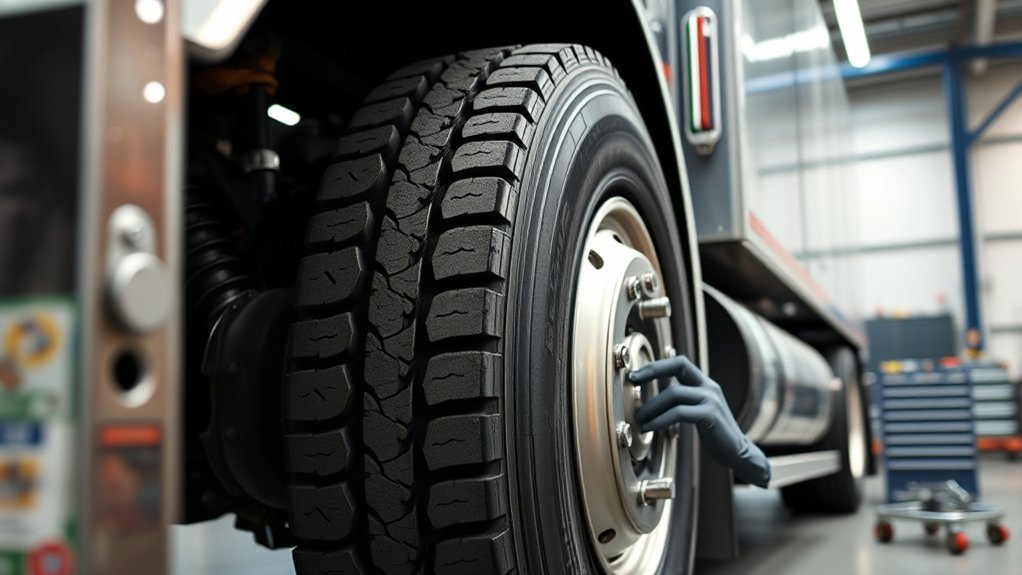
A steer tire is the tire installed on the front steering axle. On a semi-truck, box truck, bus, or tractor, it helps the driver keep the vehicle pointed straight, turn predictably, brake with control, and maintain stability when the road is wet or uneven.
Steer tires are built differently from many drive tires because they do not mainly transfer engine torque to the road. Their job is to carry front-axle load, resist irregular wear, provide clean steering feedback, and keep the contact patch stable during cornering and braking.
Most commercial steer tires use a ribbed tread pattern. The ribs help the tire track straight, reduce squirm, move water through circumferential grooves, and support even wear. A strong casing, correct load range, proper speed rating, and the right inflation pressure for the load are just as important as tread design.
Note: In trucking, “steer tire” usually refers to a commercial front-axle tire. On passenger vehicles, people more often say “front tires,” but the same basic idea applies: the front tires heavily influence steering and control.
Steer Tires vs. Drive Tires vs. Trailer Tires
Steer, drive, trailer, and all-position tires are designed around different jobs. Some tires can be used in more than one position, but you should never assume that a tire is safe for the steer axle unless its size, load rating, speed rating, casing, and manufacturer recommendations fit the vehicle.
| Tire Position | Main Job | Common Tread Style | What to Watch |
| Steer | Directional control, braking stability, front-axle load support | Ribbed or all-position rib design | Feathering, cupping, shoulder wear, pull, vibration, pressure loss |
| Drive | Engine torque, traction, acceleration, braking grip | Lug, block, open shoulder, or closed shoulder | Heel-toe wear, chunking, spin damage, mismatched duals |
| Trailer | Load carrying, scrub resistance, fuel efficiency | Ribbed or trailer-specific tread | Scrub wear, flat spotting, underinflation, casing damage |
| All-position | Flexible use where approved by the tire maker | Usually ribbed or mixed-use design | Confirm steer-axle approval, load rating, and route fit |
Steer Tire Functions
Steer tires guide the vehicle, support the front axle, help maintain braking stability, and keep the vehicle tracking straight during lane changes, turns, and crosswinds. Because the steer axle responds directly to the steering wheel, uneven wear or low pressure can quickly show up as vibration, pulling, wandering, or slow steering response.
Drive Tire Differences
Drive tires sit on the drive axle and transfer engine power to the road. They often use deeper lugs, blocks, or open shoulders to improve traction on wet pavement, gravel, job sites, or snow. That makes them different from steer tires, which usually prioritize precise tracking, low rolling resistance, wet evacuation, and even wear.
Commercial Steer Tire Legal and Safety Basics
For U.S. commercial motor vehicles, federal tire rules matter. Under 49 CFR 393.75, any tire on the front wheels of a bus, truck, or truck tractor must have at least 4/32 inch of tread depth in a major tread groove. Most other tire positions covered by the same rule require at least 2/32 inch.
The same rule also prohibits operation on tires with exposed ply or belt material, tread or sidewall separation, a flat tire, an audible leak, or a cut that exposes ply or belt material. It also says tires may not be loaded beyond the marked or specified tire capacity, and commercial vehicles may not operate on a tire with cold inflation pressure below what is required for the load being carried.
Warning: Do not treat 4/32 inch as a “safe until then” target. Wet traction and casing safety can become a problem before a tire reaches the legal minimum, especially if the tire has irregular wear, cuts, exposed cords, pressure loss, or impact damage.
How Long Do Steer Tires Last?
There is no single mileage number that applies to every steer tire. A well-maintained commercial steer tire in regional or line-haul service may reach high mileage, but service life depends on axle load, inflation pressure, road surface, alignment, shock condition, braking habits, speed, casing quality, and how early the fleet removes steer tires from service.
Instead of relying only on mileage, judge steer tires by:
- Tread depth: measure major grooves with a tread-depth gauge.
- Wear pattern: look for feathering, cupping, one-sided shoulder wear, diagonal wear, or river wear.
- Air history: repeated pressure loss is a warning sign, not a normal maintenance item.
- Casing condition: inspect for cuts, bulges, exposed cords, cracking, separations, and impact breaks.
- Vehicle behavior: vibration, pulling, wandering, or steering shake means the tire and front end need inspection.
If the tire is on a commercial front axle, replace it before it violates the 4/32-inch rule, before wet traction becomes unreliable, or any time damage makes it unsafe.
What Causes Steer Tire Wear?
Steer tire wear usually comes from a combination of alignment, inflation, suspension, loading, and road conditions. Small problems at the front axle can become expensive because steer tires are sensitive to geometry and pressure.
- Incorrect toe: often causes feathering across the tread because the tire scrubs sideways instead of rolling straight.
- Improper camber: can overload one shoulder and create one-sided wear.
- Worn shocks or loose suspension parts: can cause cupping, hopping, and uneven contact with the road.
- Underinflation: builds heat, increases rolling resistance, and can overload the tire shoulders.
- Overinflation: can reduce contact patch control and speed center wear.
- Overloading: flexes the casing, raises heat, and can put the tire outside its rated capacity.
- Road hazards: potholes, curbs, debris, and rough pavement can damage the casing or knock alignment out of spec.
Tire problems are safety problems. NHTSA reports that 511 people died in tire-related crashes in 2024, and it recommends regular checks for inflation pressure, treadwear, and tire damage.
How to Choose the Right Steer Tires
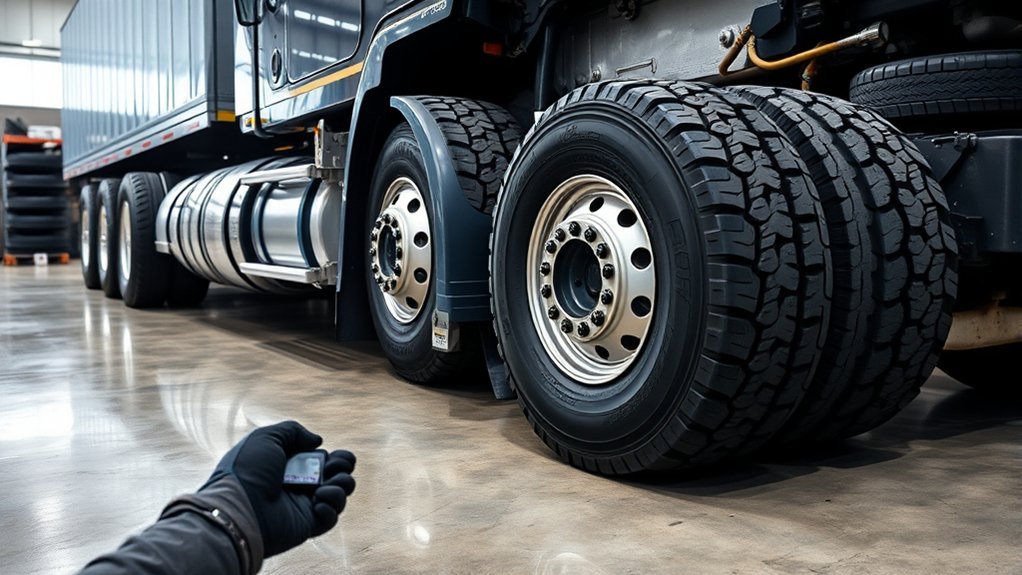
Choosing the right steer tire starts with the vehicle, not the brand. Match the tire to the axle load, rim size, route, speed, climate, and service type. A tire that works well for long-haul highway service may not be the best choice for regional delivery, construction access roads, or high-scrub urban routes.
[Products Worth Considering]

Keep your tires properly inflated with this analog VONDIOR tire pressure gauge, designed for fast, easy readings without batteries. The swiveling, two-axis hose and large glow dial help you measure at any tire angle with instant visibility. Built with a protective rubber shield, it supports durable, low-maintenance use for cars and trucks.

The Big Rig Defense Tire Thumper is a truck tire pressure checker that lets you quickly check multiple tires by giving them a firm whack. Listen for a reassuring thump and feel the stick bounce when a tire is fully inflated, helping you get back on the road safely. It features a comfortable, glove-friendly handle and a secure wrist strap for confident use on busy routes.

Monitor tire tread wear with a smart, color-coded depth gauge that shows clear condition ranges at a glance. The bar is range marked for fast, easy readings, helping you maintain safer traction and performance. Each gauge is portable with a pocket clip, and the set includes 20 units for daily use and sharing.
Tire Position Fit
Confirm that the tire is approved for the steer axle or all-position use on your vehicle. Check the size, load index, load range, ply rating, speed rating, rim width, and maximum inflation pressure. For commercial trucks, the tire must be able to carry the actual front-axle load at the correct cold inflation pressure.
Tread and Traction
For paved-road steer axles, a ribbed tread design is common because it supports straight tracking and water evacuation. Look for circumferential grooves, stable shoulder ribs, siping where appropriate, and a compound designed for your route. Wet-road performance matters because shallow tread and poor water evacuation increase stopping distance and hydroplaning risk.
Wear and Maintenance
Choose a tire that fits your maintenance reality. A premium steer tire will not perform well if the vehicle runs underinflated, overloaded, misaligned, or on worn shocks. Before buying, ask whether the tire supports retreading, what casing warranty applies, whether it is SmartWay verified for your application, and how it performs in your route type.
Pro Tip: When replacing steer tires, check alignment and front suspension at the same time. Installing new steer tires on a misaligned front end can create the same wear problem again within a short time.
What to Look for in Steer Tires
Good steer tires should give you stable handling, predictable braking, durable casing support, and even wear. When comparing options, focus on these factors:
- Correct load capacity: match the tire to the vehicle’s front-axle weight and inflation table.
- Ribbed tread pattern: useful for highway tracking, wet evacuation, and lower rolling resistance.
- Strong shoulder design: helps resist shoulder wear and improve stability.
- Wet-road grooves: wide circumferential grooves help move water away from the contact patch.
- Low rolling resistance: helpful for fuel economy when the tire is approved for your application.
- Retreadable casing: valuable for fleets that manage casing life and cost per mile.
- Brand support: look for spec sheets, warranty details, dealer support, and clear load/inflation data.
The EPA SmartWay low rolling resistance tire program notes that verified LRR tires and retread technologies can reduce costs and emissions for long-haul Class 8 tractor-trailers by 3% or more. For SmartWay claims, confirm the exact tire model and axle position on the EPA verified tire list.
[Products Worth Considering]

Measure tire tread depth quickly and accurately with this LUMITECO dial gauge that reads in 1/32" increments up to 14/32". The color-coded green/yellow/red zones make it easy to judge tire wear and know when replacement is needed. A rugged, compact design with a protective pouch helps keep the gauge ready for use on cars, trucks, motorcycles, and more.
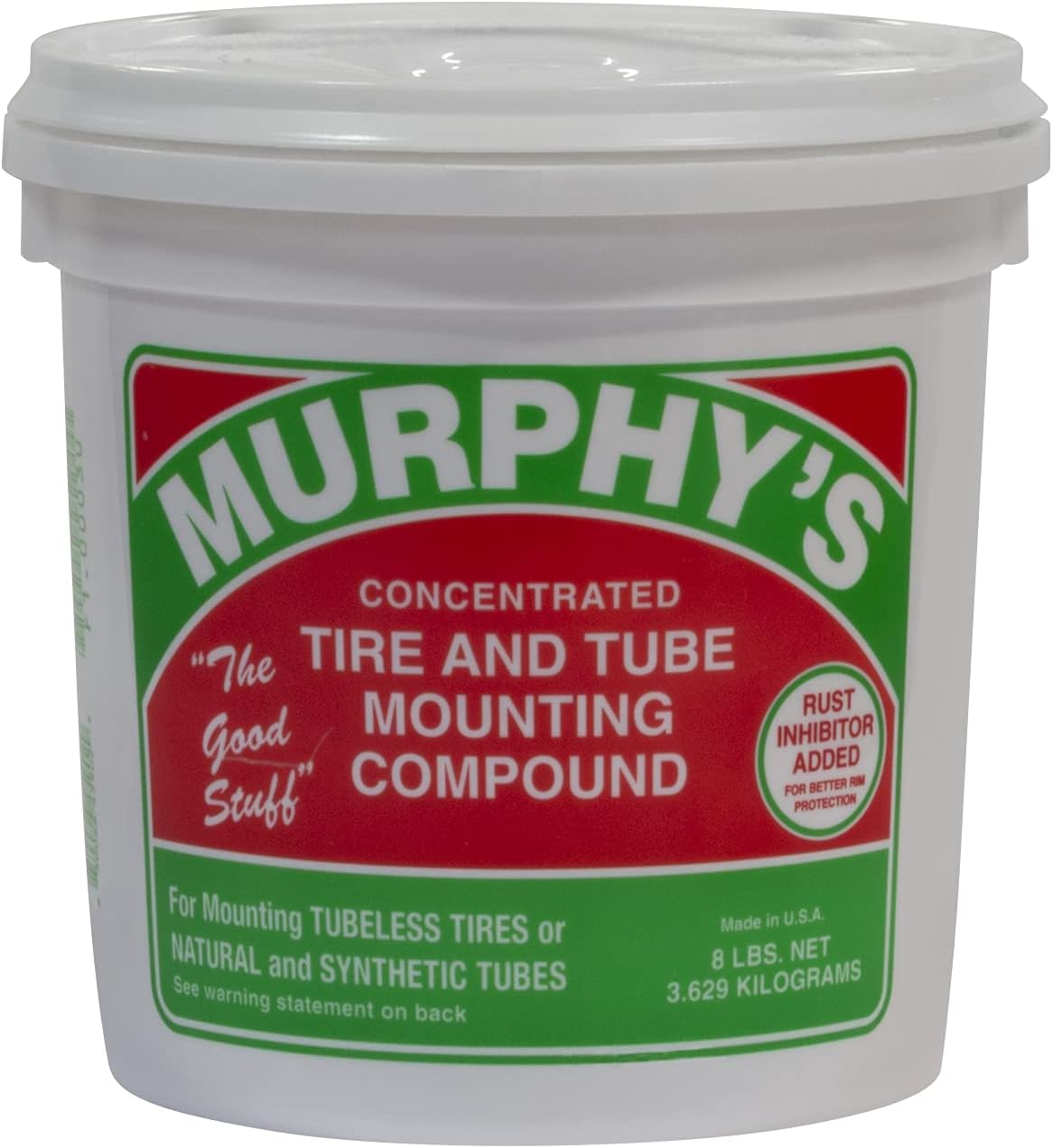
A concentrated tire and tube mounting compound designed to help simplify mounting rubber tires and tubes on passenger, semi truck, construction, and OTR applications. Its ultra-thick formula packs beads effectively and includes rust inhibitors to help protect against corrosion during use.

The SAFELIFE dial tire tread depth gauge measures tread depth in 1/32 inch increments with clear, easy-to-read 2-inch dial face. Color zones using a traffic light system help you quickly judge whether tread is low, marginal, or ample for safer driving. Built with a durable zinc cast body and a metal detect probe for precise, comfortable use across cars, motorcycles, trucks, and buses.
Is the GSFS01 a Good Steer Tire?
The Groundspeed GSFS01 is a regional commercial steer tire. Groundspeed lists it as a SmartWay Certified steer tire with 18/32nds tread depth, a KTM6 tread compound, semi-round shoulders, wide shoulder ribs, four straight grooves, groove-edge sipes, stone ejectors, and four-belt reinforcement.
The EPA’s verified list also shows GROUNDSPEED GSFS01 under the steer tire category, which supports the SmartWay claim for the listed application. That makes the GSFS01 worth considering for fleets that want a regional steer tire with low rolling resistance features.
That said, no steer tire is automatically the “best” choice for every truck. Before choosing the GSFS01 or any similar tire, compare your front-axle load, route type, casing program, dealer availability, warranty support, and wet-weather needs.
[Products Worth Considering]

The ETENWOLF T600 digital tire pressure gauge delivers precise, manually calibrated readings to ANSI B40.7 Grade 2A standards with ±0.5% PSI accuracy. Its 360° rotating nozzle and display hold make it easy to check pressures from any angle, while a bleed button helps dial tires to the perfect level. With a 0–250 PSI range and support for PSI, BAR, and KPA, it’s a convenient tool for maintaining tire performance across many vehicles and seasons.

Accurately measure tire tread depth with a calibrated gauge marked from 0 to 1 inch in 1/32 inch increments. The color-coded bar helps you quickly identify tread condition ranges, supporting safe driving for trucks, motorcycles, automobiles, and passenger vehicles.

ETENWOLF T300 is a calibrated digital tire pressure gauge for accurate readings from 3 to 200 PSI across light and heavy-duty vehicles. It includes thermal compensation for reliable performance in extreme cold or heat, with an auto shut-off to extend battery life and an LED for easier reading. The sturdy design supports rugged everyday use, making it ideal for pickups, RVs, and industrial applications.
How to Maintain Steer Tires for Longer Life
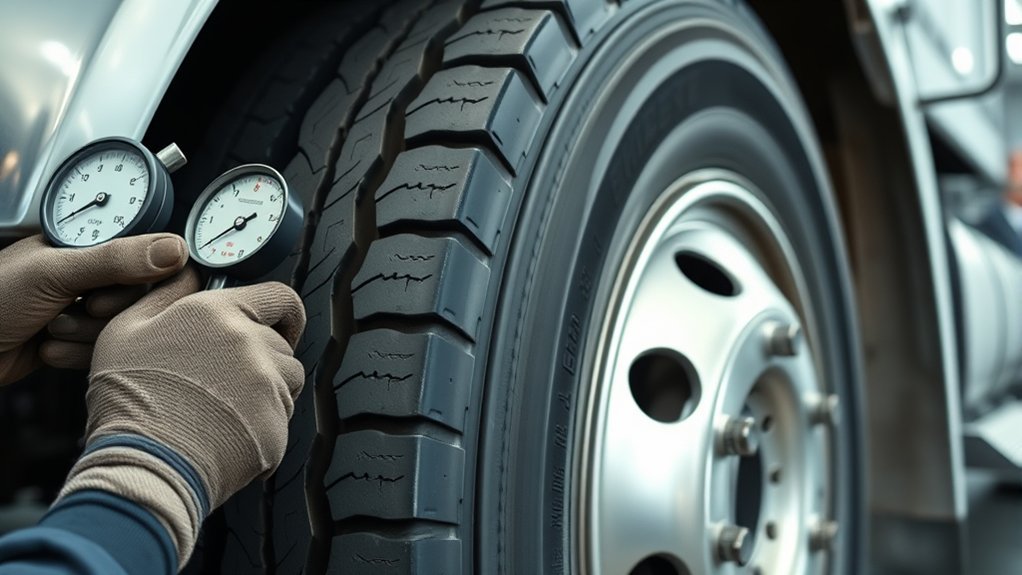
Steer tire maintenance starts with regular inspection. Check inflation pressure when tires are cold, use the pressure required for the actual load, and never “bleed down” a hot tire just because pressure rose during operation. Heat-related pressure increase is normal; chronic low pressure is not.
Use this basic checklist:
- Check cold inflation pressure with a calibrated gauge.
- Measure tread depth in major grooves and record the reading.
- Inspect both shoulders for feathering, cupping, cracking, or one-sided wear.
- Look for damage such as cuts, bulges, exposed cords, separations, stone drilling, and sidewall injuries.
- Watch vehicle behavior for pulling, vibration, shimmy, or steering wander.
- Check alignment, balance, shocks, and suspension when irregular wear appears.
- Follow manufacturer and fleet rotation/removal policy instead of assuming every steer tire should be rotated like a passenger-car tire.
For passenger and light-truck tires, NHTSA recommends checking pressure and tread at least monthly and following the owner’s manual for rotation, often every 5,000 to 8,000 miles if the vehicle manufacturer recommends it. Commercial steer tires may follow different fleet rules because they are often position-specific and load-specific.
What to Do If a Steer Tire Blows Out
A steer tire blowout is one of the most serious tire failures because the front end may pull hard toward the failed tire. Your first job is to keep control of the vehicle.
Warning: If a steer tire blows out, do not slam on the brakes or jerk the wheel. Hold the steering wheel firmly, keep the vehicle as straight as possible, ease off the accelerator gradually, let the vehicle slow under control, signal when safe, and move to a safe shoulder or exit area.
After stopping, do not continue driving on the failed tire. Set warning devices as required, inspect for damage only from a safe location, and have the tire and wheel assembly handled by a qualified professional.
Frequently Asked Questions
What is the difference between steer tires and drive tires?
Steer tires mount on the front steer axle and focus on directional control, handling, braking stability, and even wear. Drive tires mount on the drive axle and focus on engine torque, traction, acceleration, and grip. Steer tires usually use ribbed tread, while drive tires often use lug, block, open-shoulder, or closed-shoulder patterns.
What happens if a steer tire blows out?
The vehicle may pull sharply toward the failed tire, and steering can become difficult. Keep a firm grip on the wheel, avoid sudden braking or steering, slow gradually, and move to a safe place only after the vehicle is stable and under control.
Why are steer tires so expensive?
Steer tires are expensive because they need strong casings, precise handling, stable tread designs, high load capacity, wet-road control, and resistance to irregular wear. Commercial steer tires also affect safety and uptime, so fleets often pay more for durability, casing value, fuel efficiency, and dealer support.
How long does a steer tire last?
Steer tire life varies by route, axle load, inflation pressure, alignment, shocks, casing quality, driving style, and maintenance. Some well-maintained commercial steer tires can reach high mileage, but replacement should be based on tread depth, damage, wear pattern, pressure history, and fleet or manufacturer policy.
What is the minimum tread depth for commercial steer tires?
Under U.S. federal rules for commercial motor vehicles, tires on the front wheels of a bus, truck, or truck tractor must have at least 4/32 inch of tread depth in a major groove. Most other covered tire positions require at least 2/32 inch. Replace earlier if the tire is damaged or unsafe.
Can drive tires be used as steer tires?
Only use a tire on the steer axle if the tire manufacturer approves it for that position and it matches the vehicle’s size, rim, load, speed, and inflation requirements. Many drive tires are not ideal for steer-axle use because their tread is designed for torque and traction rather than steering precision.
Conclusion
The right steer tire gives your vehicle stable handling, predictable braking, wet-road control, and safer front-axle performance. The wrong tire, poor pressure, worn shocks, or bad alignment can quickly turn into uneven wear, vibration, poor fuel economy, and serious safety risk. Choose a steer tire that matches the axle load and route, inspect it often, follow legal tread and inflation rules, and replace it before damage or wear compromises control.
Sources
- eCFR 49 CFR 393.75 — Tires — commercial tire tread-depth, damage, load, retread/regroove, and inflation rules
- NHTSA TireWise — tire pressure, tread, alignment, rotation, and tire-safety guidance
- EPA Low Rolling Resistance Tires — SmartWay low rolling resistance tire benefits and context
- EPA SmartWay Verified Tire List — verification of listed tire models and axle positions
- Groundspeed GSFS01 Product Page — GSFS01 features, tread depth, compound, and steer tire positioning
- Tire Industry Association Tire Rotation — general tire-rotation principles and inspection benefits