
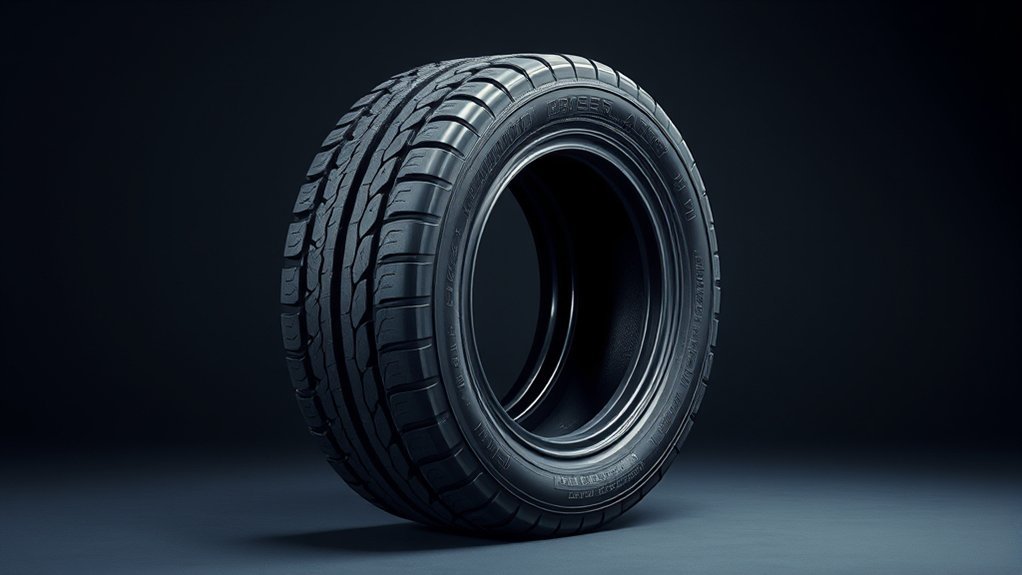
Inside a modern tire, you’ll find much more than rubber and air. An inner liner helps retain inflation pressure, body plies form the flexible structural casing, belts stabilize the tread area, and steel-wire beads secure the tire to the wheel. The tread compound, grooves, blocks, and sipes then manage grip, water movement, wear, noise, and road feel.
Quick Answer
A typical modern radial tire contains an airtight inner liner, one or more body plies, reinforcing belts, steel-wire beads, sidewalls, and a tread. Depending on the tire, you may also find bead filler, a cap or overlay ply, and other reinforcement. Each part balances air retention, strength, flexibility, grip, durability, and ride quality.
Key Takeaways
- The inner liner, body plies, belts, beads, sidewalls, and tread form the main structure of a typical tubeless radial tire.
- The bead secures the tire to the wheel, while the casing contains inflation pressure and carries load with controlled flexibility.
- Tires combine natural and synthetic rubber, steel, textile reinforcement, carbon black, silica, and chemical additives in formulas that vary by tire type.
- Grooves primarily move water away from the contact area, while blocks, ribs, and sipes influence wet, dry, snow, ice, noise, and handling performance.
- Radial construction places body cords roughly perpendicular to the tread centerline and uses belts under the tread to stabilize the contact area.
What’s Inside a Tire?
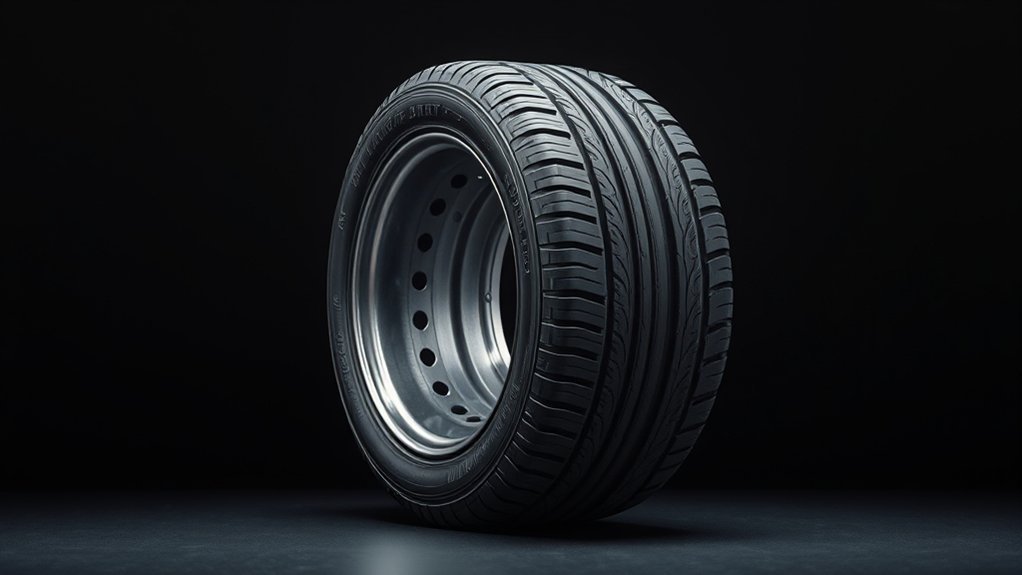
In a typical modern passenger or light-truck radial tire, each layer has a specific job. The inner liner forms the air-retaining surface. Above it, the body ply or carcass uses rubber-coated cords to contain pressure, carry load, and flex as the tire rolls.
Under the tread, reinforcing belts—commonly steel in passenger radial tires—help stabilize the tread area. At the bottom of each sidewall, bead bundles made from strong wire secure the tire to the wheel. The sidewall rubber covers and protects the casing, while the tread is engineered for road contact, traction, wear, and water management.
The U.S. Tire Manufacturers Association describes typical passenger and light-truck construction as including body plies, bead bundles, bead filler, belts, an inner liner, sidewalls, and tread. Exact materials and layer counts vary with tire size, load range, purpose, and manufacturer.
The body ply forms the tire’s flexible structural casing, while the belt package stabilizes the tread area where the tire meets the road.
When you look at a tire as a complete system, no single layer works alone. Inflation pressure, casing strength, belt stiffness, sidewall flexibility, bead fit, tread design, and rubber compounds all interact to produce predictable handling and durability.
Tire Layers Explained
You can think of a typical radial tire as a layered structure running from the road surface inward: tread → belt package → body ply or casing → inner liner. Around the lower sidewall, the casing wraps into the bead area, where steel-wire bead bundles secure the tire to the wheel.
Some tires add components such as a cap or overlay ply above the belts, bead filler near the bead, bead-area reinforcement, or specialized inserts. That is why a cutaway from one tire model may not look exactly like another.
Tread And Road Grip
The tread is the tire’s road-contacting surface. Its job is not simply to “make grip.” Engineers balance tread compound, groove ratio, block stiffness, siping, shoulder design, heat behavior, wear, rolling resistance, and noise for the tire’s intended use.
Major tread features include:
- Grooves: larger channels that give water a path away from the contact area and help reduce hydroplaning risk.
- Tread blocks: individual rubber sections that create road contact and influence braking, cornering, noise, and traction.
- Ribs: rows of tread elements that can improve directional stability and road contact.
- Sipes: narrow slits that add biting edges and can improve traction in wet, snowy, or icy conditions.
- Shoulders: the outer tread areas that transition toward the sidewalls and play an important role during cornering.
Water-evacuation capacity depends on the complete tread design rather than tread depth alone. As one design example, Michelin reports that a 195/65R15 tire can displace almost 3.96 gallons of water per second under the conditions used in its example. That figure should not be treated as a universal specification for every tire of that size.
Tread depth still matters because worn grooves have less capacity to handle standing water, and winter or off-road designs often use deeper, more open patterns. However, deeper tread does not automatically mean better performance in every condition. Compound, tread geometry, temperature, vehicle load, road surface, and tire category all matter.
Casing And Air Seal
Beneath the belts, the casing gives the tire its basic flexible structure. In many passenger tires, body plies use polyester, rayon, or nylon cords embedded in rubber. Other tire categories may use different materials or additional plies.
The body ply contains inflation pressure and transfers forces between the tread, sidewall, and wheel. As the tire rolls, the casing repeatedly flexes near the contact patch, which is why material strength, bonding, inflation pressure, and heat control are important to durability.
Inside a tubeless tire, an airtight inner liner made from low-permeability rubber helps slow air diffusion through the casing. It performs the air-retention job that a separate inner tube performs in a tube-type tire.
The inner liner does not carry the entire load by itself. Inflation pressure and the reinforced casing work together to support the vehicle and maintain the tire’s intended shape.
Beads And Sidewalls
Beads and sidewalls connect the flexible tire casing to the wheel. The bead bundle normally contains high-strength wire and seats against the wheel’s bead-seat area.
- Beads secure the tire to the wheel and help maintain the tire-to-wheel seal in a tubeless assembly.
- Sidewall rubber covers the casing and helps protect it from abrasion, scuffing, weathering, and everyday environmental exposure.
- Sidewall markings display important information such as tire size, construction type, load information, speed symbol, and other required markings.
The sidewall is designed to flex, but it is not invulnerable. Cuts, impact damage, bulges, or exposed cords can indicate structural damage that should be evaluated by a qualified tire professional.
Warning: Do not keep driving on a tire with a bulge, exposed cords, severe cuts, or suspected structural damage. Also use the vehicle manufacturer’s recommended cold inflation pressure from the door placard or owner’s manual rather than treating the maximum pressure molded on the tire as the normal operating pressure.
Tire Bead, Casing, and Inner Liner
The bead, casing, and inner liner perform different jobs but operate as one pressure-containing structure. The bead anchors the casing at the wheel, the body ply carries forces through the tire, and the inner liner slows air loss through the tire body.
This relationship is especially important in a tubeless radial tire. A secure bead fit alone cannot maintain inflation if the casing or inner liner is badly damaged, and a perfect inner liner cannot compensate for a tire that is not correctly seated or is structurally compromised.
[Products Worth Considering]

Measure tire tread depth quickly and accurately with this LUMITECO dial gauge that reads in 1/32" increments up to 14/32". The color-coded green/yellow/red zones make it easy to judge tire wear and know when replacement is needed. A rugged, compact design with a protective pouch helps keep the gauge ready for use on cars, trucks, motorcycles, and more.

Vigorder rubber cement glue delivers superior adhesion and cures quickly within about 30 seconds for seamless rubber bonding. Once cured, it helps provide a strong, durable, waterproof seal that holds up to vehicle weight, pressure, and heat. Suitable for cars, motorcycles, trucks, bicycles, and off-road tires, it’s designed for emergency patch and maintenance repairs.

Black Magic Tire Wet delivers a deep wet-look shine that makes tires appear dark, rich, and freshly detailed. Its long-lasting formula helps resist rain, dust, and road grime for weeks of glossy protection, not days. Apply by spraying onto clean, dry tires—no buffing or wiping required—with a low-sling design to reduce splatter on paint and wheels.
Tire Bead Function
The tire bead is the reinforced lower edge of the tire that seats against the wheel. Its wire bundle resists stretching so the tire stays positioned correctly as inflation pressure, vehicle load, braking, acceleration, and cornering forces act on it.
- It secures the tire to the wheel.
- It supports a stable tire-to-wheel interface.
- In a tubeless assembly, it works with the wheel and inner liner to help contain inflation pressure.
Above the bead bundle, many tires use bead filler, sometimes called an apex. This shaped rubber component helps tune stiffness in the lower sidewall and can influence steering response, ride, and handling.
Casing Structure
The casing is the tire’s reinforced framework. In a typical passenger radial tire, cords run from bead to bead approximately perpendicular to the tread centerline. Rubber surrounds and bonds these cords so the structure can carry load while flexing repeatedly.
The U.S. Tire Manufacturers Association notes that many passenger and light-truck tires use one or two body plies made with polyester, rayon, or nylon cords, although actual construction varies by application.
That variation matters. A passenger touring tire, performance tire, light-truck tire, winter tire, and off-road tire may use different ply materials, belt packages, inserts, rubber compounds, or reinforcement to meet different load and performance goals.
Innerliner Air Seal
At the inside surface of a tubeless tire, the inner liner acts as a low-permeability barrier that helps retain inflation pressure. It is the modern tubeless equivalent of the separate air-retaining inner tube used in tube-type systems.
- The inner liner slows air movement through the tire casing.
- The bead area creates a secure interface with the wheel.
- The casing supplies structural strength and controlled flexibility as the tire rolls.
Normal tires can still lose pressure gradually over time, so an intact inner liner does not eliminate the need for pressure checks.
Pro Tip: Check tire pressure when the tires are cold and use the pressure specified by the vehicle manufacturer. NHTSA recommends regular tire-pressure and condition checks because inflation affects safety, durability, handling, and fuel consumption.
Tread, Belts, and Sidewall Explained
Although the tread, belts, and sidewall occupy different parts of a tire, they constantly share forces while you drive.
The tread meets the road. Its rubber compound and pattern are selected to balance traction, braking, wear, heat, noise, and efficiency. Grooves provide channels for water, while blocks and sipes change how the tread deforms and grips the surface.
Beneath the tread, the belt package reinforces and stabilizes the tread area. Typical passenger radial designs often use steel-cord belts laid at opposing angles, although the exact number and construction vary. Belt stiffness helps the tread maintain a controlled shape as it encounters acceleration, braking, cornering, and road impacts.
The sidewall covers the casing between the tread shoulder and bead area. Because it flexes as the tire rolls, its construction has a major effect on ride feel and handling response. Its outer rubber also protects the underlying cords against abrasion, scuffing, weathering, and normal environmental exposure.
Together, these parts balance flexibility and rigidity. Too much flexibility in the wrong area can hurt response and generate heat, while excessive stiffness can reduce ride comfort or change how the tire follows uneven pavement.
[Products Worth Considering]

TP-M13W combination repair unit kit includes wrapped stems with matching patches for fast, reliable tire repairs. It’s suitable for both radial and bias ply tires and is designed for chemical or heat vulcanization. Gray vulcanizing gum with blue backing helps create a strong bond, with the stem portion wrapped for added effectiveness.
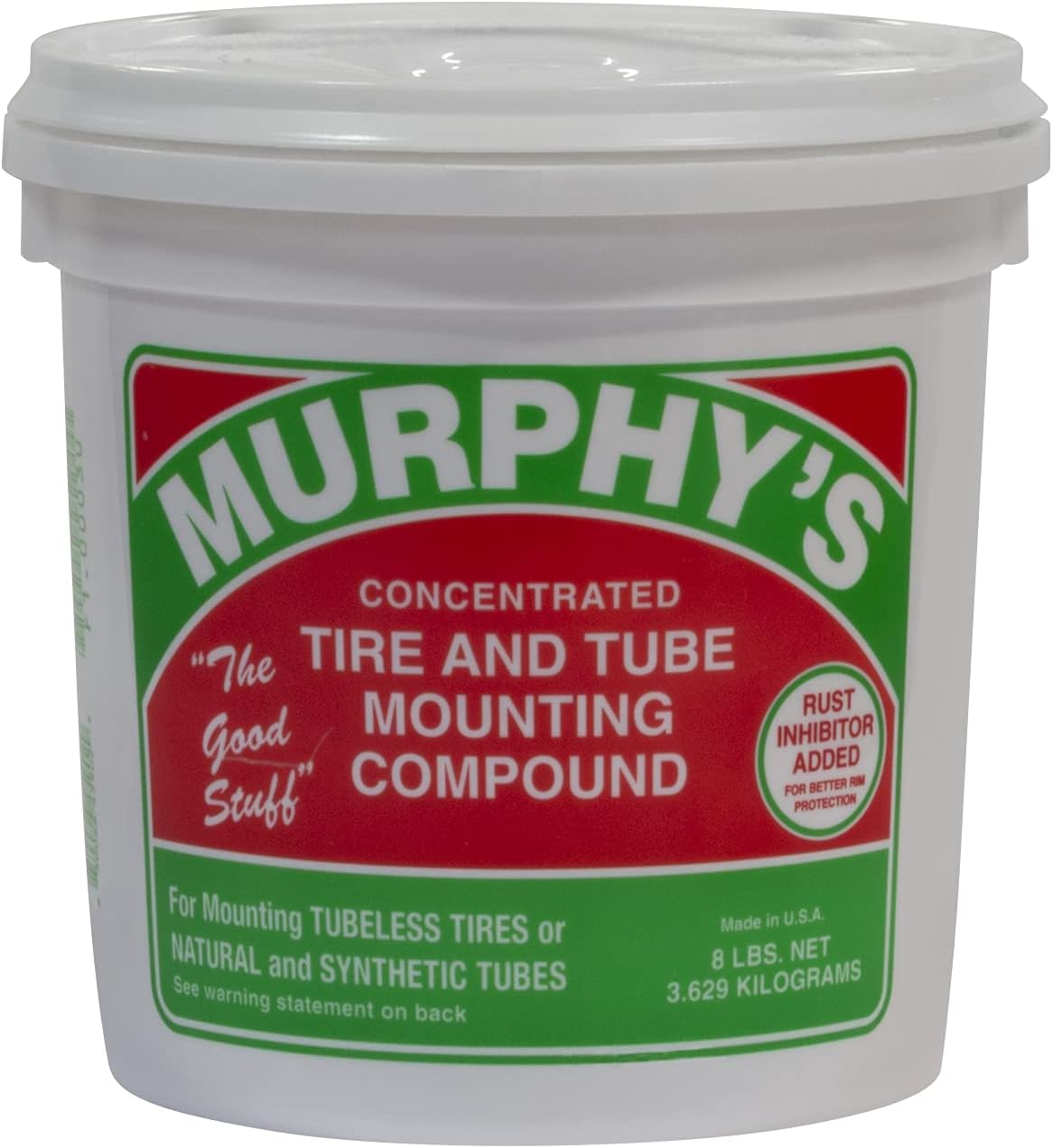
A concentrated tire and tube mounting compound designed to help simplify mounting rubber tires and tubes on passenger, semi truck, construction, and OTR applications. Its ultra-thick formula packs beads effectively and includes rust inhibitors to help protect against corrosion during use.

Monitor tire tread wear with a smart, color-coded depth gauge that shows clear condition ranges at a glance. The bar is range marked for fast, easy readings, helping you maintain safer traction and performance. Each gauge is portable with a pocket clip, and the set includes 20 units for daily use and sharing.
Other Parts You May Find Inside a Tire
A tire cutaway may show additional components that were not part of the simplest five-part description:
- Bead filler or apex: rubber above the bead bundle that helps tune lower-sidewall stiffness.
- Cap or overlay ply: reinforcement that may sit over the belt package to help control the tread and belts, particularly at higher speeds.
- Chafer or bead reinforcement: material used in some designs to protect or reinforce the bead area where it contacts the wheel.
- Shoulder: the transition between the tread and sidewall, which plays an important role in cornering and heat management.
Note: There is no single layer count that applies to every tire. Passenger, light-truck, winter, performance, commercial, run-flat, and off-road tires can use different materials and reinforcement packages.
Tire Materials That Add Strength and Grip
A modern tire uses a highly engineered mixture of rubber compounds and reinforcement materials. Michelin states that more than 200 raw materials or ingredients can be involved in its tire manufacturing, with the percentages changing according to the tire being produced.
Those ingredients can be grouped broadly into several families:
- Natural and synthetic rubber: elastomers that form major parts of the tread, sidewall, inner liner, and other rubber components. The blend changes according to the required properties.
- Carbon black and silica: reinforcing fillers used in rubber compounds to influence durability, grip, heat behavior, and other performance characteristics.
- Steel reinforcement: used in bead bundles and commonly in radial belt packages.
- Textile reinforcement: materials such as polyester, rayon, or nylon can be used in body plies or other reinforcement layers.
- Chemical agents: sulfur, curing systems, protective additives, processing aids, oils, resins, and other ingredients help manufacturers tune wear, aging resistance, grip, and rolling behavior.
The important point is that there is no universal recipe. Tire makers change compounds and reinforcement layouts to meet different targets for traction, longevity, load capacity, ride, temperature range, efficiency, and cost.
[Products Worth Considering]

The 22800 wheel stud installer makes replacing wheel studs quick and secure, saving time and effort during tire service. It uses a ratchet or impact wrench to pull new studs firmly into place, helping when existing studs are too long. Compatible with most automotive wheels and light-duty truck wheel studs, it’s designed for easy, tool-assisted installation.

Accurately measure tire tread depth with a calibrated gauge marked from 0 to 1 inch in 1/32 inch increments. The color-coded bar helps you quickly identify tread condition ranges, supporting safe driving for trucks, motorcycles, automobiles, and passenger vehicles.

These aluminum alloy tire valve stem caps with an O-ring seal help protect valve stems from corrosion while adding a clean, stylish look to your vehicle. The universal fit works across cars, trucks, motorcycles, bicycles, and more, making them an easy upgrade for everyday driving and off-road use. Installation is quick, and the included four-pack keeps all your tires dressed and protected.
How Tire Construction Affects Performance
Tire construction is one reason two tires with the same nominal dimensions can behave differently on the road. The casing architecture, belt package, sidewall stiffness, tread pattern, rubber compounds, and inflation pressure all influence how forces move through the tire.
Steel belts in a typical passenger radial tire stabilize the tread area and help control its shape during road contact. The body ply provides the flexible structural framework, while the inner liner retains inflation pressure.
A tire’s handling comes from the whole structure: the casing must flex, the belt package must stabilize the tread, and the tread compound and pattern must manage the road surface.
The tread pattern changes the balance between direct rubber contact and open channels. Larger or more numerous grooves can improve water evacuation, but increasing void space also changes tread-block stiffness, dry contact area, noise, and wear behavior. Softer compounds can improve grip in some conditions, while harder compounds may improve wear, but real tire performance depends on the complete compound formulation and design.
Radial vs. Bias-Ply Construction
Most modern passenger and light-truck tires are radial. In radial construction, the body cords run approximately from bead to bead at about 90 degrees to the tread centerline, while belts reinforce the area beneath the tread.
Bias-ply tires use body cords arranged diagonally in crossing layers. That creates a different relationship between the tread and sidewall. Bias construction still has specialized uses, but radial designs dominate modern road-going passenger vehicles because they allow the sidewall and belt-supported tread area to perform more independently.
Why Inflation Pressure Matters to the Structure
The tire’s internal layers are designed to work at the correct inflation pressure for the vehicle and load. When pressure is too low, the tire can flex more than intended, which increases heat and changes handling and wear. Excessive pressure can also change the tire’s contact behavior and increase vulnerability to certain road impacts.
For normal use, follow the vehicle manufacturer’s cold inflation-pressure specification on the tire-information placard or in the owner’s manual. Do not use the maximum pressure molded on the tire sidewall as the default operating pressure unless the vehicle manufacturer specifically calls for it.
Frequently Asked Questions
What’s the Thing Inside a Tire?
If you mean the rubber layer visible on the inside of a modern tubeless tire, it is usually the inner liner. This low-permeability rubber layer helps retain inflation pressure. Around it are structural body plies, belts, beads, sidewalls, and the tread.
What Is the Inside of a Tire Made Of?
A typical tire combines natural and synthetic rubber, textile cords, steel reinforcement, carbon black, silica, and chemical additives. The inner liner retains air, body plies provide structural strength, belts stabilize the tread area, beads secure the tire to the wheel, and the tread manages road contact.
Why Do They Put a Tire Inside a Tire?
Modern tubeless passenger tires normally do not contain a second tire. What may look like an inner tire is usually the inner liner or another reinforcement layer. Most self-supporting run-flat tires use strengthened sidewalls to support the vehicle temporarily after pressure loss. Some specialized run-flat systems use an internal support ring, but that ring is not a second tire.
What Are the 5 Basic Elements of a Tire?
A simple five-part explanation is tread, sidewall, bead, body ply or casing, and inner liner. A more complete radial-tire cutaway also shows the belt package and may include bead filler, a cap ply, chafers, or other reinforcement depending on the design.
Does a Tubeless Tire Have an Inner Tube?
No. A normal tubeless tire does not use a separate inner tube. Its inner liner helps retain air inside the tire-and-wheel assembly, while the bead area seals against the wheel. Tube-type tires use a separate inflatable tube instead.
Can Internal Tire Damage Be Invisible From the Outside?
Yes. Impact, severe underinflation, or driving after pressure loss can damage internal tire components even when the exterior does not show the full extent of the injury. If you suspect structural damage, have the tire removed and inspected by a qualified tire professional.
Conclusion
What’s inside your tire matters because every layer has a different job. The bead secures the tire to the wheel, the body ply forms the flexible structure, the inner liner retains inflation pressure, the belts stabilize the tread area, and the tread and sidewalls manage road contact and protection. Understanding tire construction makes it easier to see why correct pressure, proper tire selection, and prompt attention to damage are so important for grip, durability, ride quality, and predictable handling.
Sources
- U.S. Tire Manufacturers Association — Care and Service of Passenger and Light Truck Tires — tire construction terminology, body plies, beads, bead filler, belts, inner liner, sidewall, and tread.
- Michelin USA — How Tires Are Made — tire materials, radial-tire structure, tread features, wet-grip design, and water-evacuation example.
- Michelin — Tyre Manufacturing and Recycling — material families and why ingredient proportions vary between tires.
- Michelin USA — Run-Flat Tires — reinforced-sidewall run-flat operation and inspection after pressure loss.
- National Highway Traffic Safety Administration — TireWise — inflation pressure, inspection, tire markings, and tire-safety guidance.
