What Is a Tire Made Of? Inside Materials, Layers & Construction
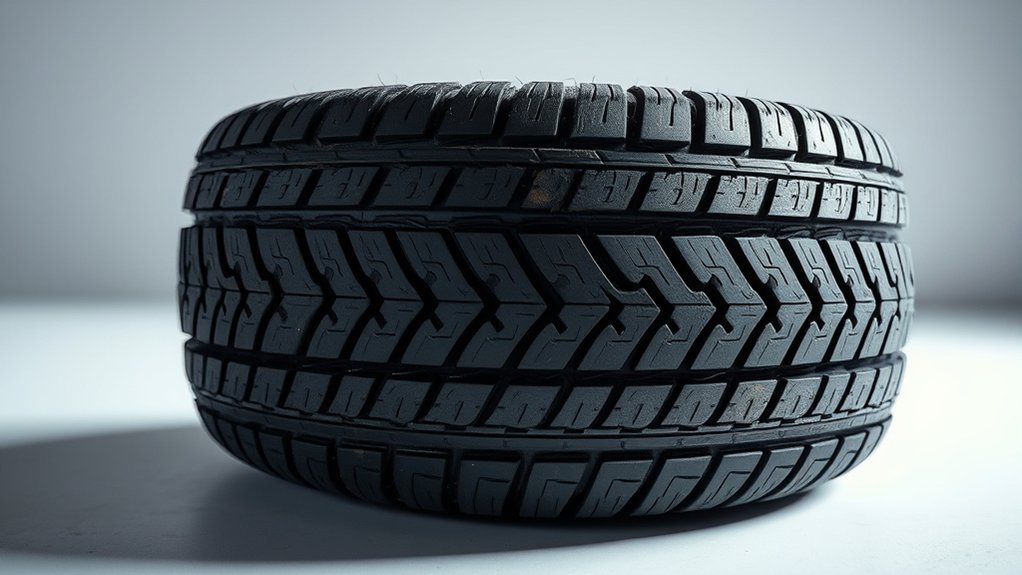
A tire looks simple from the outside, but it is a layered composite made from rubber compounds, steel, textile cords, reinforcing fillers, and sealing materials. Each part has a job: the tread grips the road, the sidewall flexes, the bead locks to the wheel, the body plies carry load, the steel belts stabilize the tread, and the inner liner helps hold air.
Quick Answer
A modern tire is made of natural and synthetic rubber, carbon black, silica, steel belts, textile body plies, bead wire, sulfur-based curing chemicals, oils, resins, and a butyl or halobutyl inner liner. These materials work together to provide traction, strength, air retention, heat resistance, ride comfort, and tread life.
Key Takeaways
- Car tires are not 100% rubber; they are engineered composites made from rubber, steel, fabric, fillers, and curing chemicals.
- The tread compound controls grip, wear, wet braking, rolling resistance, and road noise.
- Steel belts and textile plies reinforce the tire so it can hold shape, carry load, and stay stable at speed.
- The bead locks the tire to the rim, while the inner liner helps a tubeless tire retain air pressure.
- Tire materials affect safety, fuel economy, ride comfort, durability, and how well the tire performs in heat, rain, snow, and daily driving.
What Is a Tire Made Of?
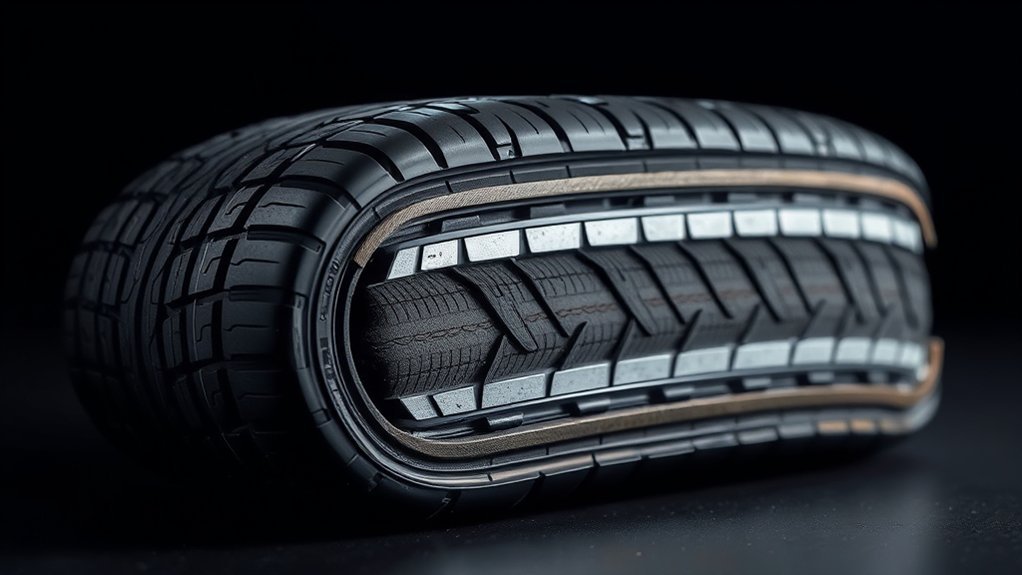
A passenger tire is made from several layers that are built separately, assembled, and then cured under heat and pressure. The exact formula changes by brand, tire size, season, speed rating, and intended use, but most tires use the same major material families: rubber, steel, textile reinforcement, carbon black, silica, sulfur, oils, resins, and protective additives.
That layered structure is what lets a tire do several difficult jobs at once. It must stay flexible enough to absorb bumps, strong enough to carry the vehicle, sticky enough to grip the road, tough enough to resist wear, and airtight enough to hold inflation pressure.
[Products Worth Considering]

Monitor tire tread wear with a smart, color-coded depth gauge that shows clear condition ranges at a glance. The bar is range marked for fast, easy readings, helping you maintain safer traction and performance. Each gauge is portable with a pocket clip, and the set includes 20 units for daily use and sharing.
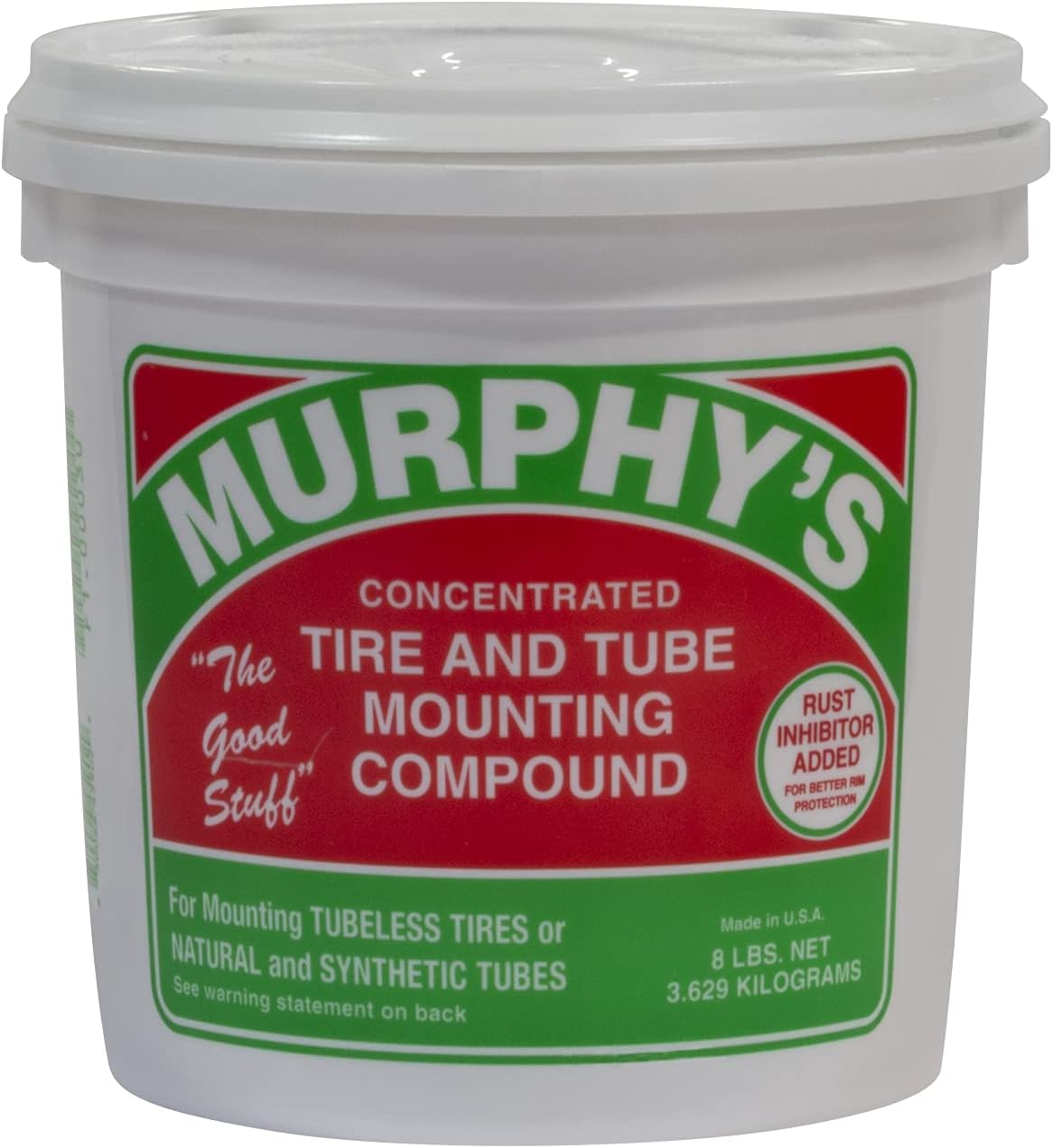
A concentrated tire and tube mounting compound designed to help simplify mounting rubber tires and tubes on passenger, semi truck, construction, and OTR applications. Its ultra-thick formula packs beads effectively and includes rust inhibitors to help protect against corrosion during use.

Keep your tires properly inflated with this analog VONDIOR tire pressure gauge, designed for fast, easy readings without batteries. The swiveling, two-axis hose and large glow dial help you measure at any tire angle with instant visibility. Built with a protective rubber shield, it supports durable, low-maintenance use for cars and trucks.
Main Tire Components and What They Do
The easiest way to understand tire construction is to look at the main parts one by one. Tire makers use different names for some internal pieces, but the core structure is usually similar in modern passenger tires.
| Tread | The rubber layer that touches the road. It provides grip, channels water, resists abrasion, and controls much of the tire’s noise and rolling resistance. |
| Sidewall | The side area between the tread and bead. It protects the casing, flexes over bumps, and carries tire size, load, speed, DOT, and pressure information. |
| Body ply / carcass | Textile or cord-reinforced layers that give the tire its basic shape and strength. |
| Steel belts | Steel-cord layers under the tread that stabilize the contact patch, reduce tread movement, and improve handling and durability. |
| Inner liner | A low-permeability rubber layer, usually butyl or halobutyl based, that helps a tubeless tire hold air. |
| Bead | High-strength steel wire wrapped in rubber. It locks the tire to the rim and helps maintain the air seal. |
| Apex, chafer, and shoulder areas | Support and transition zones that protect the bead area, manage flex, and connect the tread, sidewall, and casing. |
Continental’s tire construction reference lists the same basic building blocks in tire diagrams, including bead core, carcass, inner liner, sidewall, tread, and steel cord belt. Continental tire construction guide
Tire Materials: Rubber, Steel, and Fabric
The three most visible material groups in a tire are rubber, steel, and fabric, but each one includes several sub-materials.
Rubber Compounds
Tire rubber is a blend, not one single rubber. Natural rubber helps with strength, tear resistance, and fatigue resistance. Synthetic rubbers such as styrene-butadiene rubber, polybutadiene, butyl rubber, and halobutyl rubber help tune wear, heat buildup, air retention, wet grip, and rolling resistance.
The tread, sidewall, inner liner, bead area, and under-tread layers do not all use the same compound. A tread compound needs grip and wear resistance. A sidewall compound needs flex and weather resistance. An inner liner compound needs low air permeability.
Steel Reinforcement
Steel appears mainly in the belts and bead. Steel belts sit beneath the tread in most modern radial passenger tires. They help the tire hold its shape, stabilize the tread, and resist puncture and deformation. The bead uses high-strength steel wire so the tire can clamp securely to the wheel rim.
Fabric and Textile Cords
Textile materials such as polyester, nylon, rayon, or aramid may be used in the casing or other reinforcement layers. These cords give the tire tensile strength while keeping it flexible enough to roll, steer, brake, and absorb road impacts.
The Tire Layers That Hold It Together
A tire works because its layers share the load. The air pressure supports much of the vehicle weight, but the tire structure contains that pressure and controls how the contact patch meets the road.
- Tread: provides road contact, traction, wear resistance, and water evacuation.
- Steel belts: reinforce the tread area and help stabilize handling.
- Body ply: forms the tire casing and helps the tire keep its shape under pressure.
- Inner liner: reduces air loss in tubeless tires.
- Bead: locks the tire to the rim and supports the seal.
- Sidewall: protects the casing and allows controlled flex.
Note: A tire’s sidewall may list a maximum pressure, but that is not the same as the vehicle’s recommended cold inflation pressure. Use the vehicle placard or owner’s manual for normal inflation guidance.
What the Tread, Sidewall, and Bead Do
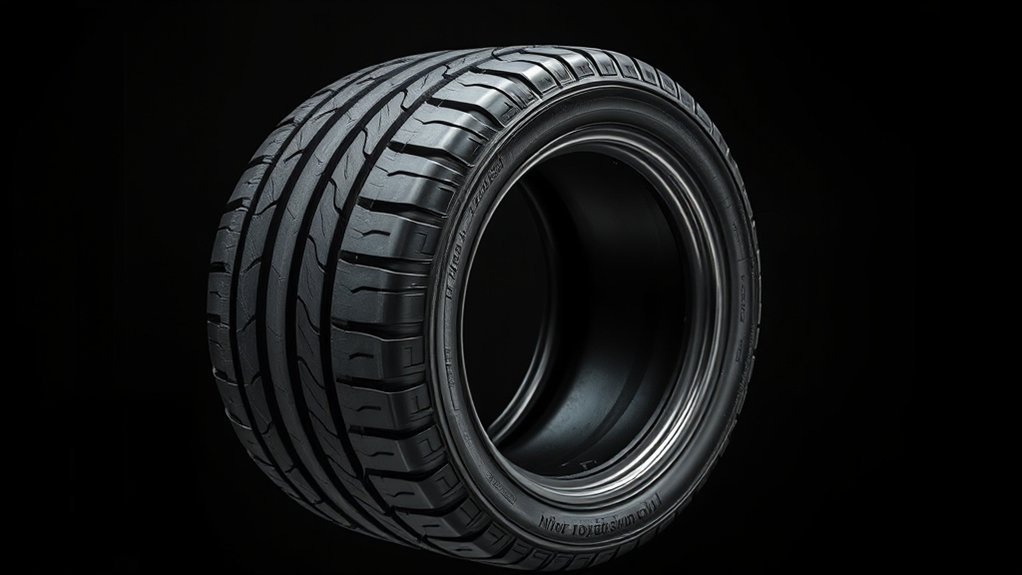
The tread, sidewall, and bead are the three parts most drivers notice first. They also explain why tire damage in different areas means different things.
Tread Traction and Wear
The tread is the tire’s contact surface. Its rubber compound and tread pattern work together to create grip, resist abrasion, move water away from the contact patch, and reduce the risk of hydroplaning.
Grooves channel water. Sipes create small biting edges. Larger tread blocks add stability. A softer compound can improve grip, but it may wear faster. A harder compound may last longer, but it may not stop as well in cold or wet conditions.
Warning: Replace tires before they become unsafe. If tread wear bars are flush with the tread, if cords are visible, or if the sidewall has bulges, deep cracks, or exposed reinforcement, the tire should be inspected and replaced.
Sidewall Cushion and Protection
The sidewall connects the tread area to the bead. It protects the internal casing from weather, abrasion, and impacts. It also flexes as the tire rolls, which helps absorb road shocks and contributes to ride comfort.
Sidewall stiffness changes how a tire feels. A tall, flexible sidewall often rides more comfortably. A shorter, stiffer sidewall can feel more responsive but may transmit more road harshness.
Bead and Rim Seal
The bead is the tire’s anchor point. It uses steel wire and rubber to hold the tire tightly against the rim. A damaged bead can cause air leaks, vibration, or poor seating on the wheel.
Because the bead is critical to sealing and retention, tire mounting and bead repair should be handled by a qualified tire professional with the right equipment.
How Tire Rubber Is Compounded
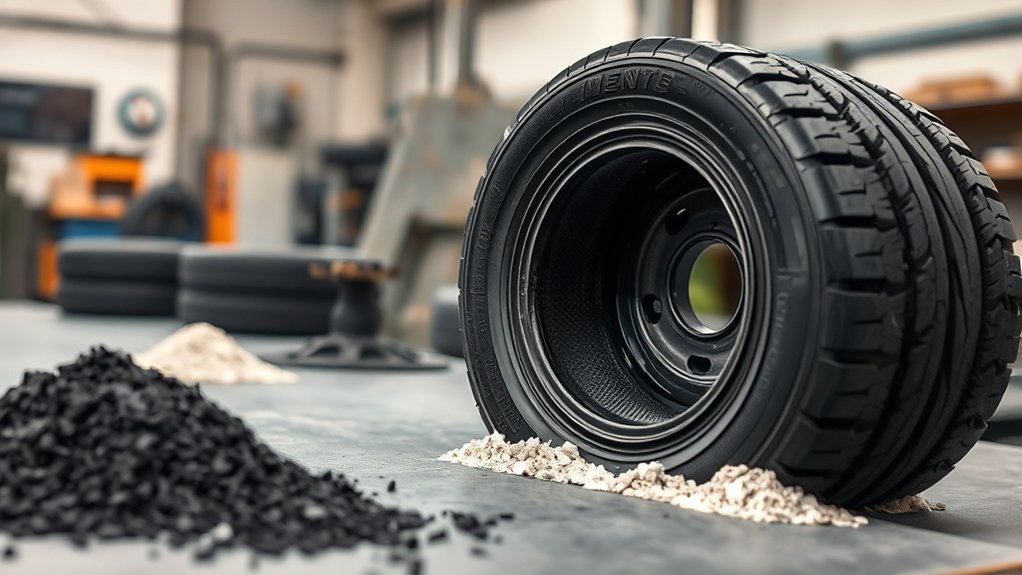
Tire compounding is the process of mixing rubber with reinforcing fillers, curing agents, oils, resins, and protective chemicals. The goal is not simply to make rubber black. The goal is to tune grip, wear, heat buildup, rolling resistance, flexibility, and aging resistance.
Rubber Ingredient Roles
- Natural rubber: adds strength, fatigue resistance, and tear resistance.
- Synthetic rubber: helps tune wet grip, cold-weather behavior, tread life, heat buildup, and air retention.
- Carbon black: reinforces rubber, improves abrasion resistance, and contributes to the tire’s black color.
- Silica: helps improve wet grip and rolling resistance in many modern tread compounds.
- Sulfur and accelerators: help vulcanize the rubber, turning it from a sticky compound into an elastic, durable material.
- Antioxidants and antiozonants: help slow cracking and aging from oxygen, ozone, heat, and sunlight.
- Oils and resins: help tune softness, processing behavior, and traction.
Mixing and Vulcanization
During mixing, ingredients are dispersed into the rubber so the compound performs consistently. During vulcanization, heat and pressure help sulfur create bridges between rubber molecules. Continental explains that tire vulcanization commonly involves pressure and temperatures around 120°C to 160°C, and that sulfur helps turn the compound into flexible, elastic rubber. Continental on silica and vulcanization
Performance-Driven Compounds
Small changes in tire compound can change how a tire behaves. More emphasis on wet grip may reduce rolling resistance or tread life tradeoffs differently depending on the formula. A touring tire, winter tire, ultra-high-performance tire, all-terrain tire, and low-rolling-resistance tire all use different compound priorities.
The tread compound is where many tire tradeoffs meet: grip, mileage, heat control, wet braking, rolling resistance, and ride comfort all depend on the chemistry and pattern working together.
Why Steel Belts Matter in Tires
Steel belts matter because they reinforce the tread area. In a radial tire, the belt package sits beneath the tread and helps keep the contact patch stable. That improves steering response, tread stability, puncture resistance, and wear consistency.
Without reinforcement, the tire would deform too much under load, speed, braking, and cornering. Steel belts help control that movement while still allowing the tire to flex enough for ride comfort.
Steel belts also help reduce tread squirm. Less tread movement can mean more predictable handling and less wasted energy, although the total rolling resistance still depends on the full tire design, compound, pressure, size, and load.
How Tire Construction Affects Grip and Wear
Tire construction affects grip and wear because every layer changes how the tread meets the road. A stable belt package helps the tread stay flatter. A well-designed tread pattern moves water away. A suitable compound grips the surface without wearing too quickly.
Wet traction depends on both tread pattern and compound. The U.S. tire-grading system measures traction as straight-ahead stopping ability on wet pavement under controlled conditions; it does not measure cornering traction. NHTSA Consumer Guide to Uniform Tire Quality Grading
Wear also depends on maintenance. Underinflation, overloading, misalignment, worn suspension parts, aggressive driving, and lack of rotation can make a good tire wear unevenly or fail early.
Pro Tip: Check tire pressure when tires are cold, inspect tread and sidewalls monthly, rotate tires on schedule, and use the vehicle placard pressure instead of guessing from the tire sidewall.
[Products Worth Considering]
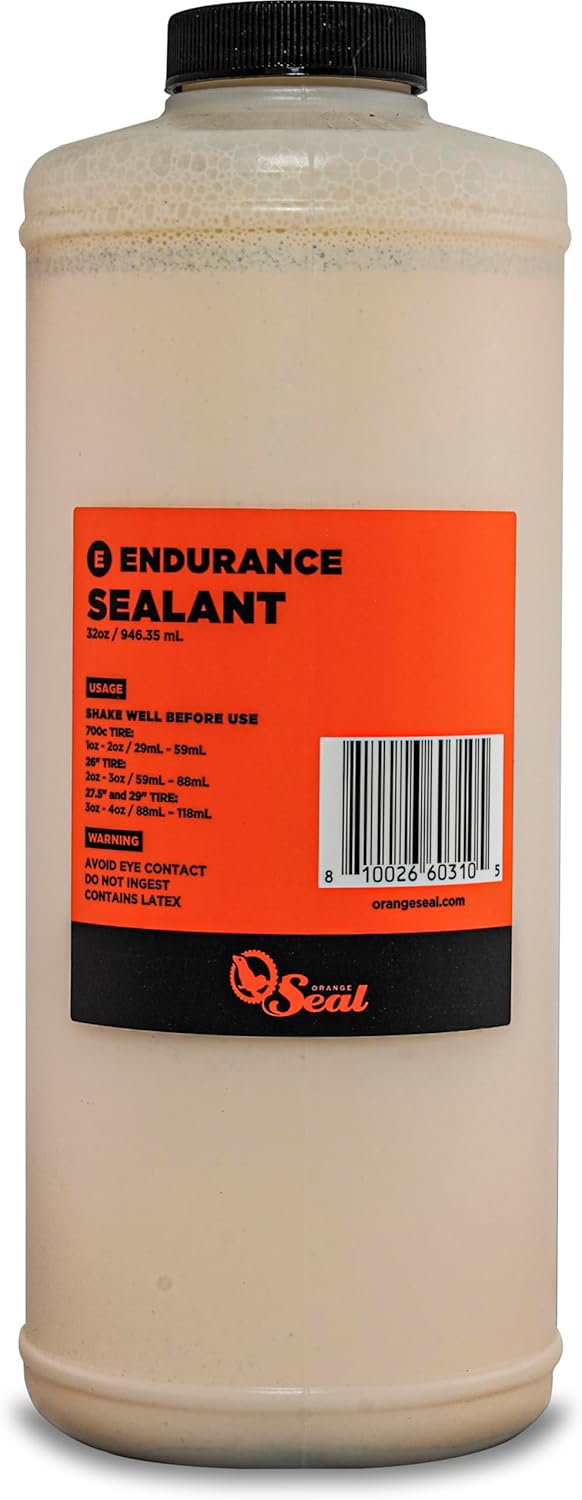
Orange Seal Endurance Formula delivers long-lasting latex protection with a durable sealant that can stay effective for 60–120 days between top-offs. It uses nanite particles to rapidly seal punctures up to 1/4" and slices up to 1/2", helping maintain reliable tubeless performance across MTB, road, CX, and gravel conditions. The biodegradable formula is engineered to work across major tubeless-ready and UST brands and a wide range of rubber compounds.

This metal-free wheel and tire cleaning brush uses dense, fluffy synthetic wool to safely clean rims, spokes, fenders, and engine areas without worrying about damaging surfaces. Its flexible, comfortable design helps you reach detailed areas while maintaining durability, and the extra absorbent fibers work well with wheel spray cleaners for faster cleanup. Reusable and washable performance helps prevent grime and build-up for cleaner vehicles and easier maintenance at home.

AstroAI’s tire pressure gauge with inflator helps you check and adjust car tire pressure accurately for safer, smoother driving. It offers 3-in-1 operation to inflate, deflate, or measure pressure, with an easy-to-read 2.5-inch glow dial and a heavy-duty air chuck for convenient use. Universal compatibility supports Schrader-valve tires and quick-connect 1/4" NPT air compressors for quick maintenance.
How Tire Materials Affect Safety and Fuel Economy
Tire materials affect safety because they influence braking, cornering, heat buildup, air retention, and structural strength. A tire that loses pressure, overheats, separates internally, or has too little tread cannot perform as designed.
Materials also affect fuel economy. Rolling resistance is the energy a tire loses as it flexes and recovers while rolling. Lower rolling resistance can reduce wasted energy, but tire makers must balance that with wet grip, braking, durability, ride comfort, and cost.
Silica has become important because it can help improve the balance between wet grip and rolling resistance. Continental says silica in tread compounds improves wet grip and rolling resistance, and that silica has largely replaced carbon black in many tread applications. Continental silica reference
Natural Rubber vs. Synthetic Rubber
Natural rubber comes from latex, most commonly from rubber trees. It is valued for strength, resilience, and tear resistance. Synthetic rubber is made through chemical processes and can be designed for specific performance goals such as wet traction, cold flexibility, heat resistance, low rolling resistance, or air retention.
Most passenger tires use both. Natural rubber is especially useful where strength and fatigue resistance matter. Synthetic rubbers help tire engineers tune performance for different climates, vehicle types, and driving styles.
Tire Markings That Tell You About Materials and Performance
The tire sidewall contains useful information, including size, load index, speed rating, DOT tire identification number, maximum pressure, and sometimes UTQG grades for treadwear, traction, and temperature.
Under U.S. consumer-information rules, UTQG grades are meant to help buyers compare passenger tires in treadwear, traction, and temperature resistance. The regulation applies to many new pneumatic passenger-car tires, with exceptions such as deep-tread winter snow tires, temporary spares, and some limited-production tires. 49 CFR § 575.104
- Treadwear grade: a comparative wear rating, not a mileage guarantee.
- Traction grade: wet straight-line braking performance under controlled test conditions.
- Temperature grade: resistance to heat generation and ability to dissipate heat under test conditions.
- DOT date code: the last four digits identify the week and year of manufacture.
- TWI or wear bars: raised bars in the tread grooves that show when tread is at a minimum wear point.
Are Tire Materials Changing?
Yes. Tire makers are working on renewable, recycled, and lower-impact materials while still trying to maintain safety and performance. Examples include responsibly sourced natural rubber, recovered carbon black, recycled steel, recycled PET polyester yarn, and silica made from rice husk ash.
Continental reports work toward increasing renewable and recycled materials in its tires, including examples that use recycled PET yarn in the carcass, recovered carbon black in some solid tires, and silicate from rice husks in selected tire concepts and products. Continental sustainable tire materials
These developments do not mean every tire is fully sustainable today. They do show where tire materials are heading: less dependence on virgin fossil-based inputs, more traceable natural rubber, and more recycled or bio-based reinforcement materials.
Frequently Asked Questions
Are tires still made from trees?
Partly, yes. Natural rubber comes from latex, usually from rubber trees, and it remains an important tire material. However, modern tires also use synthetic rubber, steel, fabric, carbon black, silica, sulfur, oils, resins, and protective additives. A tire is a blend of natural and engineered materials, not just tree rubber.
Can you melt down rubber and reuse it?
Not in the simple melt-and-pour way you might melt wax or plastic. Tire rubber is vulcanized, so it does not simply melt back into new tire rubber. Used tires can be ground into crumb rubber, retreaded when the casing is suitable, processed through devulcanization, or broken down through controlled thermal processes such as pyrolysis.
Are car tires 100% rubber?
No. Car tires contain rubber, but they also contain steel belts, steel bead wire, textile cords, carbon black, silica, sulfur, oils, resins, and aging-protection chemicals. The rubber is only one part of a larger composite structure.
Do tires have metal?
Yes. Most modern passenger tires contain steel belts beneath the tread and steel wire in the bead. The belts help stabilize the tread area, while the bead wire helps secure the tire to the wheel rim.
What is the black material in tires?
The black color mainly comes from carbon black, a reinforcing filler used in many rubber compounds. Carbon black helps improve abrasion resistance and durability. Some modern tread compounds also use silica to improve wet grip and rolling resistance.
What part of a tire holds the air?
In a tubeless tire, the inner liner helps hold air. It is usually made from butyl or halobutyl rubber because those materials have low air permeability. The bead and rim seal also matter because air can leak if the bead is damaged, dirty, corroded, or improperly seated.
Conclusion
A tire is a carefully engineered composite, not a simple ring of rubber. The tread grips the road, the sidewall flexes and protects the casing, the body plies carry tension, the steel belts stabilize the tread, the bead locks to the rim, and the inner liner helps hold air. Rubber compounds, carbon black, silica, steel, fabric, sulfur, oils, and protective additives all work together to balance safety, traction, comfort, fuel economy, and tread life.
When you understand what a tire is made of, you can read tire claims more clearly, inspect damage more confidently, and choose replacements based on the performance traits that matter most for your vehicle and driving conditions.
Sources
- Continental Tires — Tire Construction — supports tire component names, tire construction types, inner liner, bead, carcass, tread, and steel belt explanations.
- Continental Tires — Silica: A Filler with a Great Success Story — supports silica, wet grip, rolling resistance, silane, sulfur, and vulcanization explanations.
- Continental Tires — Sustainable Materials in Tire Production — supports updated sustainability examples including recycled PET, recovered carbon black, and rice-husk-derived silica/silicate.
- NHTSA — Consumer Guide to Uniform Tire Quality Grading — supports treadwear, traction, temperature, and tire safety grading caveats.
- Cornell Legal Information Institute — 49 CFR § 575.104 — supports the U.S. tire quality grading standard and consumer-information requirements.
[Products Worth Considering]

Measure tire tread depth quickly and accurately with this LUMITECO dial gauge that reads in 1/32" increments up to 14/32". The color-coded green/yellow/red zones make it easy to judge tire wear and know when replacement is needed. A rugged, compact design with a protective pouch helps keep the gauge ready for use on cars, trucks, motorcycles, and more.

Add style while helping protect your tire valve stems with handmade crystal rhinestone caps and a durable plastic insert. These caps resist corrosion and help keep out rain, snow, and muddy water, extending tire life. Textured non-slip design makes them easy to grip for quick install and removal when checking tire pressure.

This inline air pressure regulator helps you precisely control air flow from your compressor with an integrated 0-150 PSI gauge. It improves finish quality by reducing overspray and material waste for automotive spray painting and other pneumatic tools. The universal 1/4 NPT threads make it easy to connect to air hoses, compressors, and spray guns for quick, on-the-fly adjustments.

Related Articles
Are Premium Tires Worth the Extra Money?
Worth the extra money? Premium tires promise more grip, comfort, and longevity—but the real tradeoff may surprise you.
Read More
What Are OE Tires? Original Equipment Explained
Discover what OE tires really mean and why choosing the right replacement could change everything for your car’s ride, handling, and safety.
Read More
305 Tire Size Explained: How Big Is It?
I explain how big a 305 tire really is—and why the exact fit can surprise you.
Read More