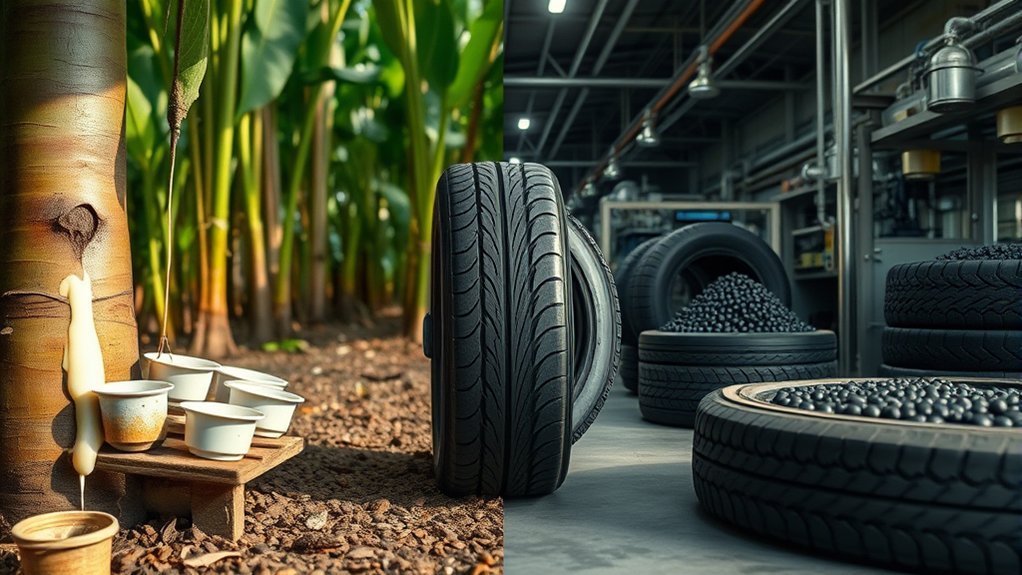
Tire rubber comes from two main places: natural latex harvested from rubber trees and synthetic rubber made through chemical manufacturing. A finished tire is not just “rubber,” though. It is a carefully engineered mix of natural rubber, synthetic polymers, fillers, steel, textiles, oils, curing ingredients, and protective additives.
Quick Answer
Tire rubber comes from natural rubber latex, mainly tapped from Hevea brasiliensis trees, and synthetic rubber made from petrochemical monomers such as styrene and butadiene. Tire makers blend both because natural rubber adds strength and flexibility, while synthetic rubber helps tune wear, grip, aging, and heat performance.
Key Takeaways
- Natural tire rubber starts as latex tapped from rubber trees, especially Hevea brasiliensis.
- Synthetic tire rubber is made by polymerizing chemicals such as styrene and butadiene into elastic polymers.
- Modern tires use several rubber compounds, not one single rubber recipe.
- Natural rubber is valued for tear resistance, fatigue resistance, and resilience under heavy loads.
- Synthetic rubbers help engineers adjust treadwear, grip, aging resistance, air retention, and rolling resistance.
- A finished tire also contains carbon black, silica, steel, textile cords, sulfur, zinc oxide, oils, antioxidants, and antiozonants.
Where Does Tire Rubber Come From?
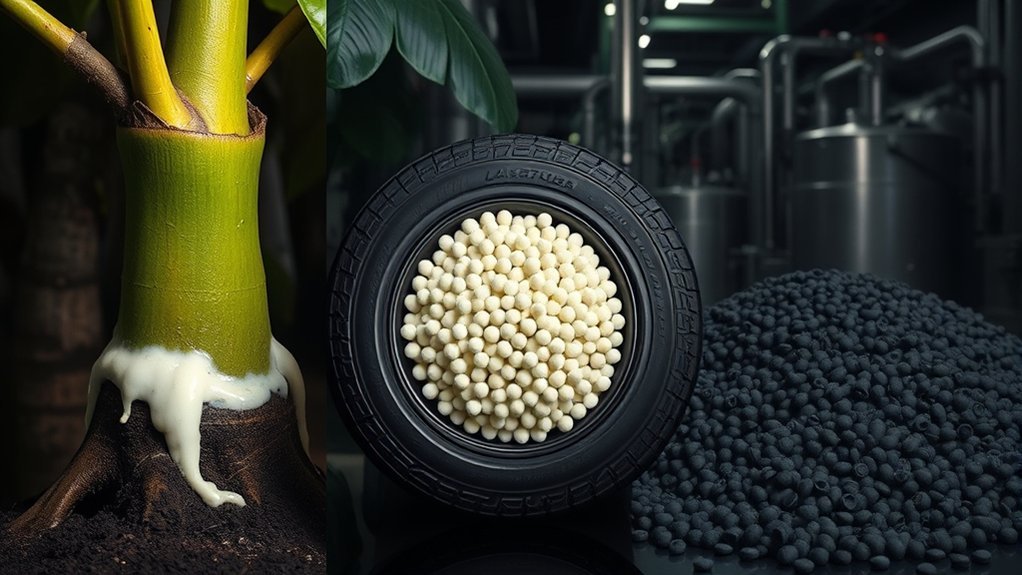
Tire rubber comes from two broad sources: natural rubber and synthetic rubber. Natural rubber comes from latex, a milky fluid found in rubber-producing plants. The main commercial source is the Pará rubber tree, Hevea brasiliensis, which is native to the Amazon region but is now widely grown in tropical areas of Asia and Africa.
Synthetic rubber is made in chemical plants. In tires, two of the most important synthetic polymers are butadiene rubber and styrene-butadiene rubber. These materials are usually blended with natural rubber because each material solves a different performance problem.
Note: The word “rubber” can make tires sound simple, but a tire is a multi-material product. Rubber compounds are only part of the structure; steel, textiles, fillers, curing systems, and protective additives also help the tire carry weight, grip the road, resist wear, and hold air.
| Material source | Where it comes from | Why tire makers use it |
| Natural rubber | Latex tapped from rubber trees, mainly Hevea brasiliensis | Tear resistance, fatigue resistance, elasticity, resilience, and heat control under load |
| Synthetic rubber | Petrochemical or chemically derived monomers made into polymers | Abrasion resistance, grip tuning, aging resistance, air retention, and predictable compound behavior |
| Other tire materials | Steel, textile cords, carbon black, silica, sulfur, zinc oxide, oils, and additives | Strength, shape stability, reinforcement, curing, weather resistance, and tread performance |
How Is Natural Tire Rubber Harvested?
Natural rubber harvesting starts with tapping. Workers make careful cuts in the bark of a mature rubber tree so latex can flow into a cup. The cut must be shallow enough to avoid damaging the tree’s growing layer.
After collection, the latex goes through processing. It may be filtered, blended, coagulated, rolled into sheets, dried, or processed into crumb-like block rubber known as technically specified rubber. The finished raw rubber is then packed into bales and shipped to manufacturers.
This process matters because natural rubber has properties that synthetic rubber still does not fully replace in every tire application. Heavy-duty truck tires, aircraft tires, and other demanding products often rely heavily on natural rubber because of its fatigue and tear resistance.
Pro Tip: When you read that a tire uses “natural rubber,” that does not mean the entire tire is natural. It usually means natural rubber is one ingredient in a larger compound designed for a specific tire part, such as the tread, sidewall, or body compound.
[Products Worth Considering]

Rubber Care delivers a beautiful dark black satin/matte finish on tires and other rubber or plastic surfaces, drying to the touch without oily shine. Its ceramic aircraft-grade formula helps repel dirt and brake dust residue, keeping surfaces cleaner longer. Triple nano ceramic polymer technology provides best-in-industry UV protection, restoring and protecting rubber while also working on weather stripping and de-ice boot care.
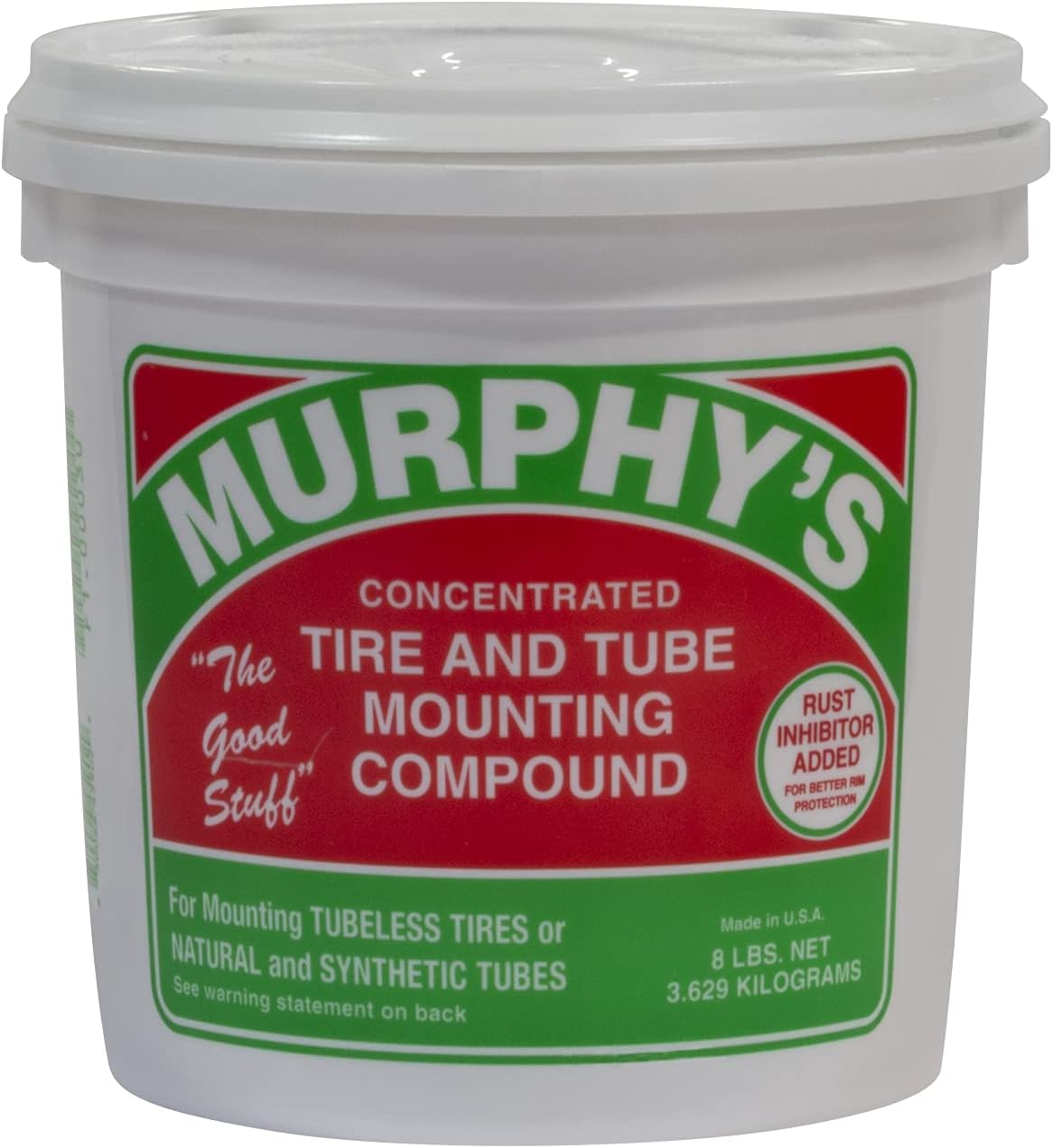
A concentrated tire and tube mounting compound designed to help simplify mounting rubber tires and tubes on passenger, semi truck, construction, and OTR applications. Its ultra-thick formula packs beads effectively and includes rust inhibitors to help protect against corrosion during use.

Adam’s Pro Tire Hex Grip applicators are molded foam sponges designed for precise, even tire dressing application. The ergonomic grip helps you spread product without overapplying, reducing sling that can splash onto paint and helping keep your hands clean during wheel and trim detailing. They’re durable, washable, and reusable for repeated detailing sessions.
What Is Synthetic Rubber Made From?
Synthetic rubber is made by joining small chemical building blocks, called monomers, into long elastic chains called polymers. The best-known synthetic tire rubber is styrene-butadiene rubber, or SBR, which is made from styrene and butadiene.
SBR is widely used in passenger and truck tires because it can provide strong abrasion resistance when reinforced with fillers such as carbon black or silica. Tire engineers can adjust the polymer, filler package, and curing system to change how a tread behaves in dry, wet, hot, or cold conditions.
Other synthetic rubbers also matter. Butadiene rubber helps with resilience and wear performance. Halobutyl rubber is commonly used in innerliners because it helps reduce air loss, which helps the tire stay inflated.
[Products Worth Considering]

Upgrade your Toyota tire setup with these corrosion-resistant, leak-proof valve stem caps designed to help protect the valve core from water, snow, and road grime. The caps feature a snug rubber seal and durable copper alloy construction to resist rust and oxidation while maintaining stable tire pressure. Ideal for replacing worn original caps and keeping your wheels looking clean and stylish.

Reusable kids ice pack set provides soothing hot or cold therapy for swelling, pain, and common injuries. The latex-free gel pad is designed for comfortable hand-held wound treatment and can be used directly on the skin. Easy cold or warm preparation helps support relief for bruises, sprains, strains, headaches, sinus discomfort, and tired eyes.

Spigen magnetic tire valve caps attach securely to metal surfaces so you never have to search for lost caps. Designed for Schrader valve stems, they install quickly, help protect against air leakage and corrosion, and feature a light magnet that won’t interfere with TPMS signals.
Why Do Tires Blend Both Rubber Types?
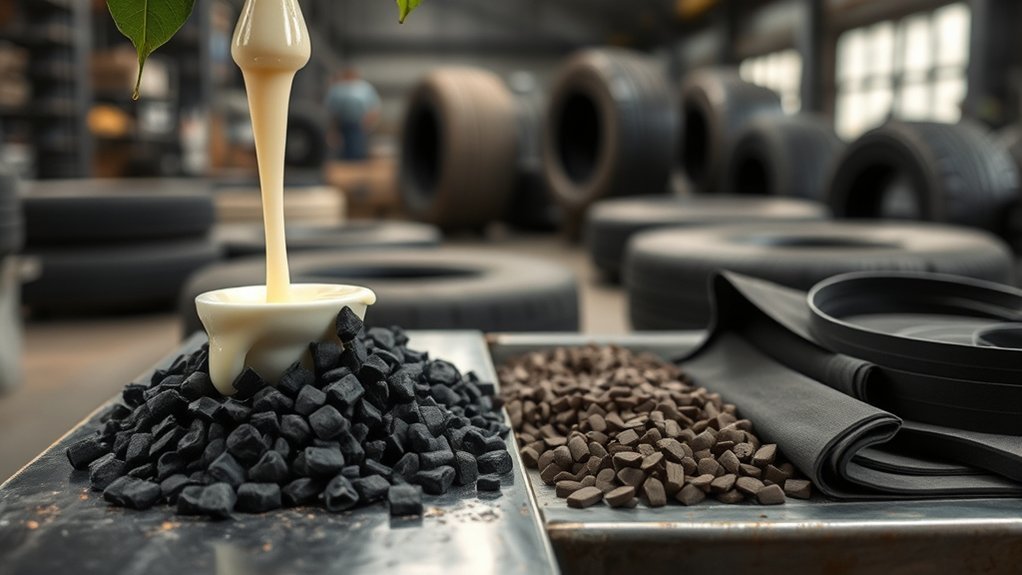
Tires blend natural and synthetic rubber because no single material does everything best. Natural rubber is strong, elastic, and resistant to tearing and fatigue. Synthetic rubber gives tire engineers more control over abrasion resistance, aging behavior, air retention, and tread performance.
The blend also changes by tire type and tire part. A passenger-car tire, a winter tire, a high-mileage touring tire, a heavy-duty truck tire, and an aircraft tire can all use different rubber recipes. Even inside one tire, the tread, sidewall, innerliner, bead area, and body compounds are not identical.
| Property | Natural rubber | Synthetic rubber |
| Main strength | Elasticity, tear resistance, fatigue resistance | Abrasion resistance, grip tuning, aging resistance |
| Common tire role | Heavy-load and high-flex applications | Tread compounds, sidewalls, and innerliners |
| Why it is blended | Adds strength and resilience | Adds design control and consistency |
A tire is not made from one kind of rubber. It is made from several compounds, each tuned for a job: gripping the road, holding air, carrying weight, resisting heat, and surviving thousands of flex cycles.
[Products Worth Considering]

This metal-free wheel and tire cleaning brush uses dense, fluffy synthetic wool to safely clean rims, spokes, fenders, and engine areas without worrying about damaging surfaces. Its flexible, comfortable design helps you reach detailed areas while maintaining durability, and the extra absorbent fibers work well with wheel spray cleaners for faster cleanup. Reusable and washable performance helps prevent grime and build-up for cleaner vehicles and easier maintenance at home.

Cristal Products Untouchable Tire Shine Spray delivers a deep, wet-look gloss that enhances your vehicle’s tires. It’s quick-drying and spreads smoothly for consistent, streak-free coverage, while forming a protective coating against UV rays, road grime, and weather. Suitable for all tire types, it helps restore dull, faded tires to a showroom-quality finish.
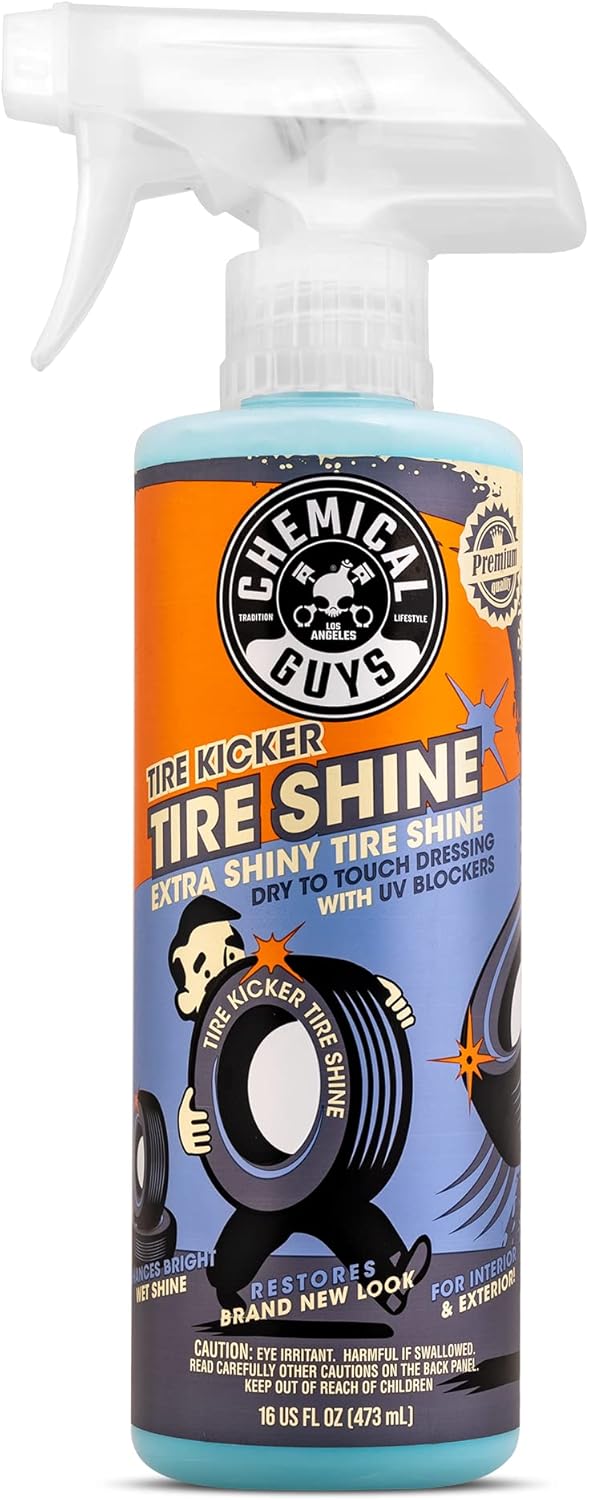
Chemical Guys Tire Kicker Sprayable Extra Glossy Tire Shine restores a deep, wet look on tires, rubber, vinyl, and plastic trim. It delivers a rich showroom shine that enhances color and luster while helping protect against fading, cracking, and discoloration. The spray application dries to the touch with a streak-free finish and no greasy sling, for fast results on cars, trucks, motorcycles, RVs, and boats.
What Else Is in a Tire Besides Rubber?
Rubber is the material people notice first, but modern tires contain many other ingredients. The U.S. Tire Manufacturers Association notes that as many as 200 raw materials can be used to make a tire.
- Carbon black and silica: Reinforce rubber and help improve tear strength, abrasion resistance, traction, and rolling resistance.
- Steel: Used in belts and bead wire to add strength, stabilize the tread area, and lock the tire onto the wheel.
- Textile cords: Polyester, rayon, nylon, and aramid cords help the tire hold its shape and support vehicle weight.
- Sulfur and zinc oxide: Part of the curing system that helps crosslink rubber during vulcanization.
- Antioxidants and antiozonants: Help protect rubber from oxygen, ozone, heat, weathering, and cracking.
- Oils and processing aids: Help manufacturers mix and shape compounds while tuning flexibility and performance.
How Is Tire Rubber Turned Into Tires?
Tire manufacturing begins with material selection. Manufacturers choose several types of rubber, fillers, oils, pigments, antioxidants, silica, carbon black, and curing ingredients based on the performance goal for each tire component.
Next, the ingredients are mixed. A Banbury mixer combines the raw materials into a uniform compound with a gum-like consistency. Separate compounds are then processed into parts such as tread, sidewalls, innerliner, and other layers.
During assembly, workers or automated systems build the tire layer by layer. The innerliner goes on first, followed by body plies, belts, bead wire, sidewalls, and tread. At this stage, the tire is called a green tire, which means it has been assembled but not cured.
The green tire is then placed in a mold and heated under pressure. This step, called curing or vulcanization, crosslinks the rubber, bonds the components, and forms the final tread pattern and sidewall markings. After curing, tires are inspected and tested for quality, uniformity, and performance.
Where Does the Rubber Supply Come From?
Natural rubber supply is highly concentrated in tropical growing regions. USTMA reports that most natural rubber supply comes from Southeast Asia, which makes the tire industry sensitive to weather, crop disease, shipping disruption, and regional supply issues.
The United States depends on imported natural rubber. USDA Climate Hubs reports that the U.S. relies on imports to meet its natural rubber needs and highlights Indonesia, Thailand, and Côte d’Ivoire as major supply sources in its trade context.
That is why researchers and tire manufacturers are also studying alternative natural rubber sources. Guayule, a desert shrub native to the American Southwest and northern Mexico, and TKS dandelion, also called Russian dandelion, are two important alternatives. They are not replacements for all Hevea rubber today, but they may help diversify future supply.
Frequently Asked Questions
Where does the U.S. get its rubber for tires?
The U.S. relies heavily on imported natural rubber. Major sources vary by year and trade category, but USDA Climate Hubs identifies Indonesia, Thailand, and Côte d’Ivoire as important sources in its natural-rubber import context. The U.S. also produces synthetic rubber domestically from chemical feedstocks.
Does modern rubber still come from trees?
Yes. Modern tires still use natural rubber from trees, mainly Hevea brasiliensis. However, tires also use synthetic rubbers such as styrene-butadiene rubber and butadiene rubber, so modern tire rubber comes from both agricultural and chemical sources.
What country produces the most natural rubber?
Thailand is generally the leading producer of natural rubber. ANRPC-cited data reported preliminary Thailand rubber production of about 4.79 million tons in 2024 and expected production of about 4.93 million tons in 2025.
Is tire rubber natural or synthetic?
It is usually both. Most modern tires use blends of natural rubber and synthetic rubber. The exact mix depends on the tire type, tread goal, load rating, temperature range, and the part of the tire being made.
Why can’t tires use only synthetic rubber?
Some tire parts can use high levels of synthetic rubber, but natural rubber still provides valuable tear resistance, fatigue resistance, and resilience, especially in demanding applications such as truck, bus, aircraft, and heavy-load tires.
Conclusion
Tire rubber comes from natural latex and synthetic polymer chemistry. Natural rubber begins as latex tapped from rubber trees, while synthetic rubber is made from monomers such as styrene and butadiene. Tire manufacturers blend these materials because each one brings different strengths: natural rubber adds resilience and fatigue resistance, while synthetic rubber helps tune wear, grip, air retention, and aging behavior.
The finished tire is much more than rubber. It also contains fillers, steel, textiles, curing ingredients, and protective additives. That mix is what turns raw rubber into a tire built for durability, traction, load support, and safety.
Sources
- U.S. Tire Manufacturers Association — Tires 101 — tire composition, natural rubber, synthetic polymers, steel, textiles, fillers, and curing systems.
- U.S. Tire Manufacturers Association — How a Tire Is Made — tire manufacturing, Banbury mixing, green tire assembly, curing, and inspection.
- International Rubber Study Group — Natural Rubber — Hevea brasiliensis, latex tapping, coagulation, sheet rubber, block rubber, and alternative rubber sources.
- Encyclopaedia Britannica — Styrene-Butadiene Rubber — SBR chemistry, styrene and butadiene copolymerization, and tire use.
- USDA Climate Hubs — Guayule for Commercial Rubber Production — U.S. import dependence, tire demand for natural rubber, and guayule as a domestic alternative.
- Association of Natural Rubber Producing Countries — Thailand Rubber Production — recent Thailand rubber production figures and 2025 estimate.