The difference between 2-ply and 4-ply tires depends on the type of tire you are comparing. In ATV, UTV, lawn, and other specialty applications, a 4-ply-rated tire is generally built for more casing strength and load support, while a 2-ply-rated option is often lighter and more flexible. For passenger cars and light trucks, though, you should choose replacement tires by the vehicle-approved size, load index, speed rating, and inflation specification—not by ply number alone.
Quick Answer
A 4-ply-rated specialty tire is typically stronger and less flexible than a comparable 2-ply-rated tire, while a 2-ply version may be lighter and more compliant. However, ply rating does not tell you everything about load capacity, puncture resistance, comfort, or fuel economy. Always compare the exact tire specifications for your vehicle or equipment.
Key Takeaways
Key Takeaways
- Modern ply rating usually describes relative casing strength; it does not necessarily equal the number of physical layers inside the tire.
- When two comparable specialty tires are offered in 2-ply and 4-ply versions, the 4-ply-rated option is generally stronger while the 2-ply-rated version is usually more compliant.
- Never assume a 4-ply tire carries more weight than every 2-ply tire. Tire size, design, load rating, and inflation specification also determine capacity.
- For passenger cars and light trucks, follow the vehicle manufacturer’s required tire size, load index, speed rating, and recommended pressure.
- Ply rating alone does not determine traction, tread life, puncture resistance, weather performance, or fuel economy.
What Do Ply Ratings Mean?

Historically, a tire’s ply count described the number of fabric layers used in its casing. As tire materials improved, manufacturers could achieve the same or greater strength with fewer physical layers. That is why a modern ply rating is better understood as a strength classification than as a literal layer count.
Polaris explains that modern ply rating reflects a tire’s overall strength and load capacity rather than simply counting the plies inside it. The term remains especially common in ATV, UTV, lawn, garden, trailer, and other specialty-tire markets.
Note: Do not confuse ply rating with load index. The load index is a standardized number tied to how much weight a particular tire can support under specified conditions.
2 Ply Vs 4 Ply Tires: Key Differences
When the 2-ply and 4-ply versions are otherwise comparable—for example, two options within the same specialty-tire family—the higher rating usually indicates a stronger casing. That can change flex, weight, load support, and resistance to deformation.
| Factor | 2-Ply-Rated Tire | 4-Ply-Rated Tire |
| Typical casing strength | Lower | Higher |
| Typical flex | More compliant | Usually firmer |
| Typical tire weight | Often lighter | Often heavier |
| Load support | Check exact maximum-load specification | Often greater in comparable versions, but check the exact specification |
| Puncture/damage resistance | Depends on casing and tread design | A tougher casing can help, but rating alone is not a guarantee |
| Common specialty use | Light-duty equipment and performance applications where low mass and compliance are desired | Utility work, trail use, and equipment needing additional casing strength |
These are tendencies, not guarantees. Tread pattern, rubber compound, radial or bias construction, sidewall design, tire dimensions, and inflation pressure can make two tires with the same ply rating perform very differently.
Which Tire Is Stronger and More Flexible?
If you compare similar specialty tires, a 4-ply-rated tire is generally the stronger option, while a 2-ply-rated tire is generally more flexible. The stronger casing can resist deformation better when carrying load, while the lighter casing may conform more easily to bumps and uneven terrain.
That does not mean every 4-ply tire will feel harsh or every 2-ply tire will ride softly. Tire pressure, tire dimensions, radial or bias construction, tread design, sidewall materials, and the vehicle’s suspension can have just as much—or more—effect on ride behavior.
You should therefore compare actual manufacturer specifications rather than treating the ply number as a complete performance rating.
Load-Carrying Differences
Ply rating can provide a useful clue about casing strength in comparable specialty tires, but it is not the safest way to determine how much weight a tire can carry.
For road tires, look at the load index and vehicle specifications. For specialty tires, read the manufacturer’s published maximum-load figure for the exact size and model.
A larger 2-ply-rated tire can even have a higher published maximum load than a smaller 4-ply-rated tire, which is why comparing only the ply numbers can be misleading.
Load Capacity Limits
Michelin describes the load index as the numerical code corresponding to the maximum weight one tire can support when properly inflated. For a passenger car or light truck, the replacement tire’s load rating should meet the vehicle manufacturer’s requirement.
- Check the required tire size and service specification. Start with the vehicle placard or owner’s manual.
- Check the load index or published maximum load. Do not infer the number from ply rating alone.
- Stay within the vehicle’s payload and axle limits. Installing a stronger tire does not increase the vehicle’s legal or engineered load capacity.
Warning: Do not raise tire pressure simply to compensate for an overloaded vehicle or an underspecified tire. For road vehicles, use the inflation pressure specified by the vehicle manufacturer on the Tire and Loading Information Label or in the owner’s manual, including any separate loaded-pressure instruction the manufacturer provides.
Weight Distribution Strength
The original idea of “weight distribution strength” is better understood as how well the tire casing supports its rated load without excessive deformation. A stronger casing may flex less under load, but the tire’s contact patch and stress distribution also depend heavily on inflation pressure, dimensions, construction, and the load placed on it.
Underinflation can increase tire flex and heat buildup, while overloading can exceed the tire’s designed capacity. Neither problem can be solved simply by choosing a tire with a larger ply number.
For predictable handling, stay within the published load limits and use the pressure specified for the vehicle or equipment.
How Ply Rating Affects Ride Comfort
In otherwise similar specialty tires, a lower ply rating often allows more casing flex, which can help the tire absorb small bumps. A stronger 4-ply-rated casing may feel firmer because it resists deformation more strongly.
However, ply rating alone does not determine ride comfort. Inflation pressure, sidewall height, tire width, tread design, radial or bias construction, rubber compound, wheel size, vehicle weight, and suspension tuning all affect what you feel.
- A flexible specialty casing can offer more compliance over irregular surfaces.
- A stronger casing can provide better support under demanding loads.
- Correct inflation is essential for both comfort and safe tire operation.
Instead of assuming “2-ply equals comfortable” and “4-ply equals harsh,” compare tires intended for the same machine, size, and type of service.
Best Uses for 2 Ply Tires
Two-ply-rated tires remain common in some ATV, powersports, lawn, garden, and other light-duty specialty applications. They can make sense when the equipment manufacturer allows the rating and lower casing mass or greater compliance is useful.
For example, Maxxis offers both 2-ply- and 4-ply-rated versions of its Razr MX ATV motocross tire. That is a good example of why ply choice should be made within the intended tire family and application rather than applied as a universal passenger-car rule.
A 2-ply-rated tire may be appropriate when:
- The vehicle or equipment manufacturer permits it.
- Your actual load remains comfortably within the tire’s published limit.
- You value lighter construction or additional casing compliance.
- The terrain and service do not require a tougher casing.
Do not select a 2-ply tire for a trailer, ATV, lawn tractor, golf cart, scooter, or other machine simply because you expect a softer ride. Verify the exact size, load, pressure, speed, and service requirements first.
[Products Worth Considering]
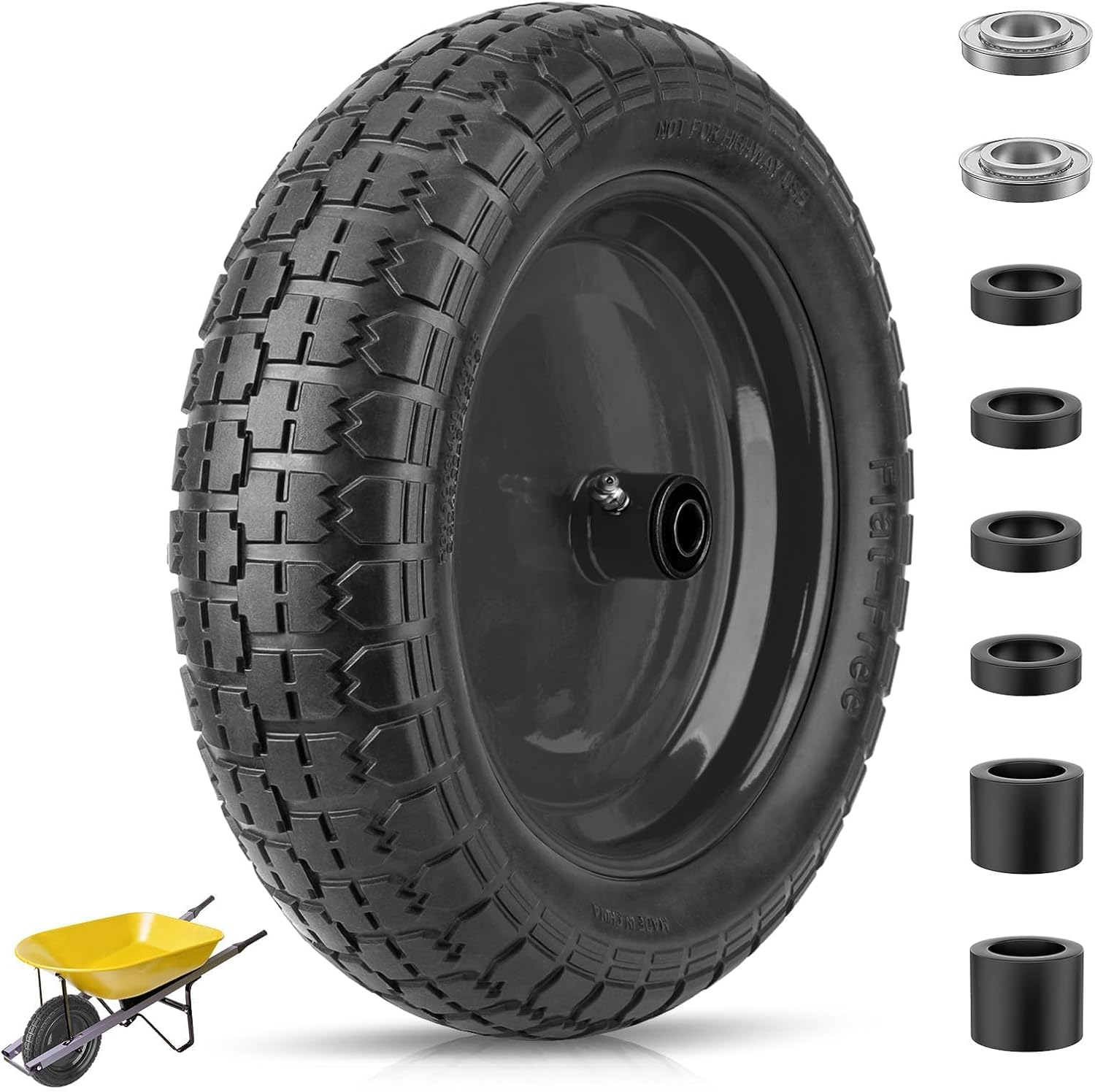
This flat-free TICONN wheelbarrow tire features durable polyurethane foam construction that never needs inflation, helping prevent punctures and reducing maintenance on rough outdoor terrain. With a 300 lb max load capacity and stable steel rim design, it supports safer transport for yard work and hauling tasks. An adapter kit with ball bearings and nylon spacers is included for easier fit and customization across common wheelbarrow and cart axle setups.

The 22800 wheel stud installer makes replacing wheel studs quick and secure, saving time and effort during tire service. It uses a ratchet or impact wrench to pull new studs firmly into place, helping when existing studs are too long. Compatible with most automotive wheels and light-duty truck wheel studs, it’s designed for easy, tool-assisted installation.

This Dr.Roc tire valve stem puller tools set helps install or remove snap-in tubeless valve stems safely and efficiently. It includes ozone-resistant EPDM snap-in valve stems, a valve stem installer, and a valve core remover for quick core removal or installation during tire service. Designed for reliable tubeless tire repair on motorcycles, ATVs, lawn equipment, cars, and trucks.
Best Uses for 4 Ply Tires
Four-ply-rated specialty tires are useful when you need more casing strength than a comparable 2-ply-rated option provides. They are common in utility and powersports applications where the tire may see heavier loads, rougher terrain, or more demanding service.
A 4-ply-rated tire may make sense when:
- The manufacturer specifies or permits it: Compatibility always comes first.
- Your load requires the stronger option: Compare the published maximum-load specification for the exact tire.
- The terrain is demanding: A tougher casing design can provide useful protection against impacts and deformation.
- You prioritize durability over minimum tire weight: Stronger constructions are often heavier, although the exact difference varies by model.
A 4-ply rating does not automatically mean better wet grip, snow traction, tread life, or highway fuel economy. Those characteristics depend on the complete tire design.
[Products Worth Considering]
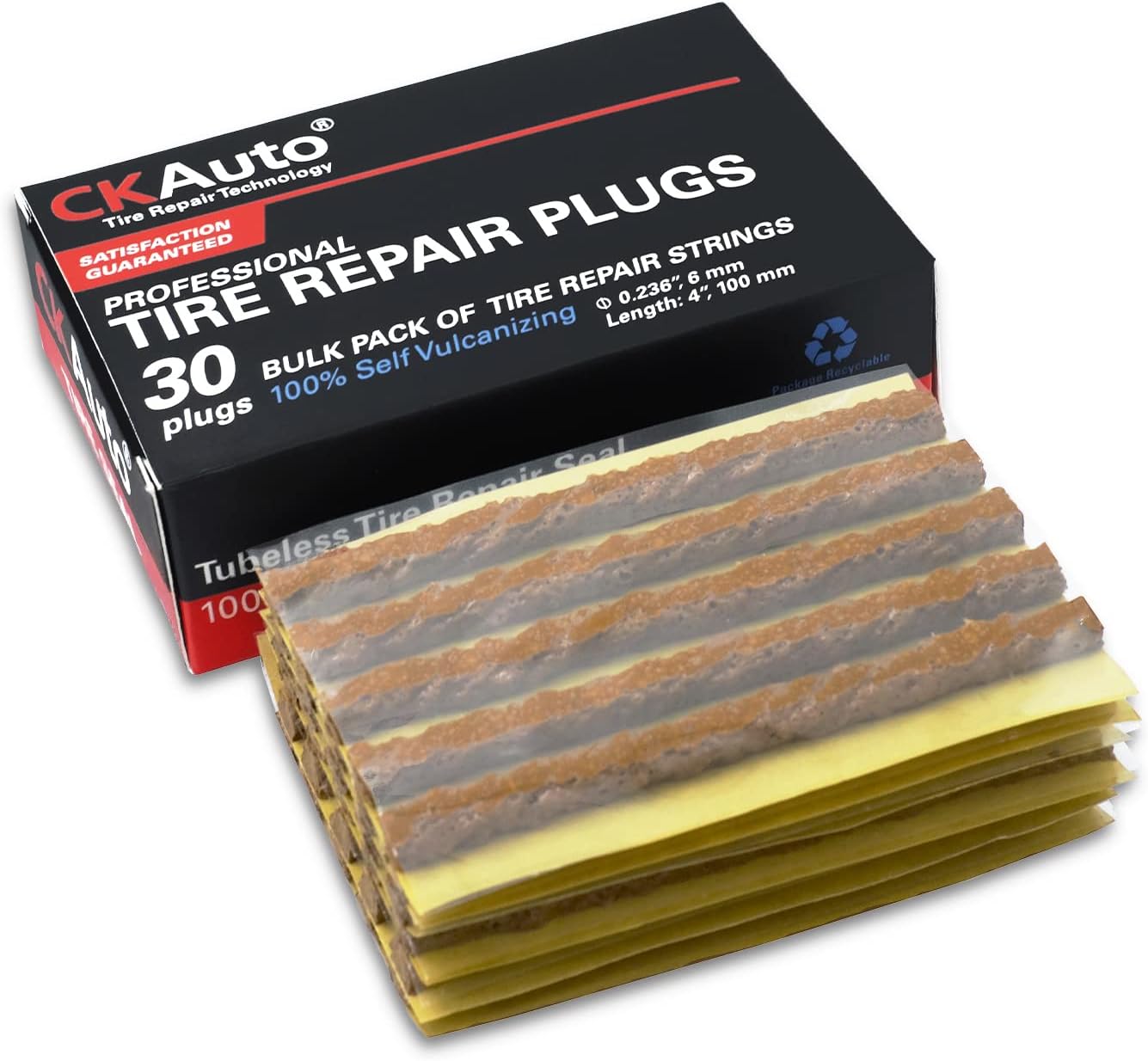
CKAuto tire repair strings provide a fast, reliable way to seal punctures in tubeless off-road tires without removing the tire from the rim. The rubber repair plugs are designed for quick roadside fixes and work across many vehicle types including cars, bikes, ATVs/UTVs, wheelbarrows, and mowers.

These pre-assembled 15x6.00-6 front tire and wheel assemblies are designed for quick replacement on riding lawn mowers and lawn tractors. Built with natural rubber pneumatic tires and turf-friendly tread for solid traction and improved shock absorption. A thickened welded rim and 3/4" sintered iron bushing help provide stable, heavy-duty support for everyday mowing use.

Wykodra tire plugs provide quick vulcanizing repairs for tubeless tires, helping you seal punctures and get back on the road. The industrial-strength rubber creates a long-lasting, leak-resistant bond and is designed for emergency fixes without removing the tire. Choose between two standard plug sizes with color-matched options for small to larger damage across many vehicles and off-road uses.
Passenger Cars and Light Trucks: Use Load Index, Not Ply Number
If you are buying tires for a normal passenger car, SUV, pickup, or van, the most important question is usually not “Should I buy 2-ply or 4-ply?” Modern road-tire selection uses more specific ratings.
NHTSA recommends buying the same tire size originally specified for the vehicle or another size recommended by the vehicle manufacturer. The correct size and recommended pressure are listed on the Tire and Loading Information Label or in the owner’s manual.
You should check:
- Tire size — such as 225/60R18.
- Load index — the numerical load-capacity code.
- Speed rating — the tire’s service speed classification.
- Load designation — such as Standard Load, Extra Load, or an LT load range when applicable.
- Vehicle-recommended cold inflation pressure — found on the vehicle placard or in the manual.
Pro Tip: When replacing road tires, take a photo of the Tire and Loading Information Label on the driver’s door jamb before shopping. It gives you a reliable reference for the vehicle manufacturer’s size and inflation requirements.
Does a Higher Ply Rating Mean Better Puncture Resistance?
Sometimes—but not automatically.
A higher-rated casing may use stronger or more substantial reinforcement, and manufacturers sometimes design heavier-duty specialty tires specifically to resist cuts, impacts, and punctures. But the ply number by itself is not a puncture-resistance test result.
Puncture and damage resistance also depend on:
- Sidewall reinforcement
- Tread thickness and design
- Casing material
- Rubber compound
- Operating pressure
- Vehicle load
- Speed
- Terrain
If puncture resistance is important for trail, farm, or work use, compare the manufacturer’s casing features and intended terrain rather than buying solely by ply number.
Does Ply Rating Affect Fuel Efficiency?
Ply rating alone cannot tell you which tire will use less fuel or energy. Tire rolling resistance comes from the way the complete tire deforms as it rolls and is influenced by construction, compound, inflation, dimensions, load, and other engineering choices.
Bridgestone’s explanation of tire rolling resistance describes tire deflection and material design as key factors. This is why you should not assume that every 2-ply tire has lower rolling resistance or that every 4-ply tire reduces fuel economy.
Ply rating is a casing-strength clue, not a complete score for load capacity, puncture protection, comfort, traction, tread life, or fuel economy.
Which Ply Rating Fits Your Needs?
Choosing between 2-ply and 4-ply tires starts with the specifications required for the vehicle or equipment—not with the ply number itself.
- Identify the application. Passenger car, light truck, ATV, UTV, trailer, mower, scooter, or other equipment.
- Find the required tire size. Use the vehicle/equipment placard, manual, or manufacturer specifications.
- Check the actual load requirement. For road tires, verify load index. For specialty tires, check the exact published maximum load.
- Compare construction choices within compatible tires. If both 2-ply and 4-ply versions are approved, decide whether you value lighter compliance or additional casing strength.
- Consider terrain and service. Trail hazards, work loads, speed, and operating conditions can justify a tougher construction.
- Use the correct pressure. Follow the vehicle, equipment, and tire manufacturer’s instructions rather than guessing from ply rating.
For a light-duty ATV or lawn application, a compatible 2-ply-rated tire may provide all the capacity you need. For tougher utility or trail service, a comparable 4-ply-rated tire may offer a stronger casing. For passenger cars and light trucks, focus first on the manufacturer’s required size, load index, speed rating, and load designation.
[Products Worth Considering]

CKAuto tire repair plugs provide a quick, effective way to seal punctures on the road without removing the tire from the rim. Designed for tubeless off-road tires, they help you get back moving on cars, bikes, ATVs, UTVs, wheelbarrows, and mowers. The rubber repair strings are strong, reliable, and completely odorless for clean use.

This 20-piece tire changer kit makes motorcycle and bike tire repairs easier with extended 14.5-inch spoons for leverage and access. Built from CrV steel with a corrosion-resistant chrome finish, it helps resist bending while protecting rims and tubes using smooth rounded spoons and included rim protectors. The all-in-one set includes valve removal and accessory tools for faster tire changes across motorcycles, bicycles, ATVs, and lawn equipment.

Rhino USA’s 86-piece tire repair kit provides everything you need for quick, emergency flat repairs, including a reamer and plug insertion tool plus 60 reusable tire plugs. The heavy-duty, metal-handled design helps you fix punctures from nails and screws on tubeless tires for cars, trucks, motorcycles, ATVs, UTVs, and more. A high-visibility compact case stores easily for on-the-go use, with illustrated instructions to help you complete repairs with confidence.
Frequently Asked Questions
Can Ply Ratings Affect Tire Puncture Resistance?
Yes, casing construction can affect damage resistance, and a tougher higher-rated specialty tire may resist impacts or punctures better than a lighter version. However, ply rating alone does not guarantee puncture resistance. Tread thickness, sidewall reinforcement, materials, pressure, load, and terrain also matter.
Do 2-Ply Tires Wear Out Faster Than 4-Ply Tires?
Not necessarily. Tread life depends more directly on tread compound, alignment, inflation, load, driving or riding style, terrain, and maintenance. A tire that is overloaded or used outside its intended service can wear rapidly regardless of its ply rating.
Are Ply Ratings the Same as Tire Pressure Ratings?
No. Ply rating describes relative casing strength, while pressure specifications tell you how the tire should be inflated for its intended service. For road vehicles, use the vehicle manufacturer’s recommended cold pressure from the Tire and Loading Information Label or owner’s manual.
Can I Mix Different Ply Ratings on One Vehicle?
Do not mix tires simply because their dimensions appear similar. For passenger and light-truck replacements, USTMA recommends using the size, load index, and speed rating specified by the vehicle or tire manufacturer. Follow the vehicle manufacturer’s requirements for matching tires and axle placement.
How Do Ply Ratings Impact Fuel Efficiency?
Ply rating by itself does not predict fuel efficiency. Rolling resistance depends on the tire’s total construction, tread compound, dimensions, inflation, load, and operating conditions. Compare actual tire efficiency or rolling-resistance information when that factor matters.
Does 4-Ply Mean a Tire Has Four Actual Layers?
Not necessarily. Historically, ply numbers were closely tied to physical fabric layers. Modern materials can provide equivalent strength with fewer physical layers, so a ply rating is often a strength classification rather than a literal layer count.
Is a 4-Ply Tire Always Better Than a 2-Ply Tire?
No. A 4-ply-rated tire may provide more casing strength in a comparable specialty design, but a 2-ply-rated tire can be the better choice when the manufacturer specifies it and lower weight or greater compliance is desirable. The correct tire is the one that matches the machine, load, terrain, and service requirements.
Can I Replace a 2-Ply Tire With a 4-Ply Tire?
Only when the 4-ply-rated replacement is approved for the vehicle or equipment and matches the required size, load capacity, speed/service specification, wheel fitment, and pressure requirements. A higher ply number by itself does not prove that a tire is a correct replacement.
Conclusion
When you compare 2-ply vs 4-ply tires, the safest rule is to treat ply rating as one piece of the specification, not the final answer. In comparable specialty tires, a 2-ply-rated option is generally lighter and more flexible, while a 4-ply-rated option generally offers a stronger casing. For passenger cars and light trucks, prioritize the vehicle-approved tire size, load index, speed rating, and recommended inflation pressure. Whatever you drive, choose the tire whose published specifications match the actual load, terrain, speed, and service—not simply the bigger ply number.
Sources
- National Highway Traffic Safety Administration — TireWise — tire sizing, vehicle placard, and inflation guidance.
- U.S. Tire Manufacturers Association — Replacing Tires — replacement size, load index, speed rating, and axle-placement guidance.
- Michelin USA — Tire Load Rating & Speed Rating Explained — load index and replacement load-rating guidance.
- Polaris Off-Road — Off-Road Tire Guide — modern ply-rating meaning and ATV/UTV tire selection.
- Maxxis — Razr MX — manufacturer example of 2-ply- and 4-ply-rated ATV tire options.
- Bridgestone — Tire Rolling Resistance — factors affecting rolling resistance and energy use.