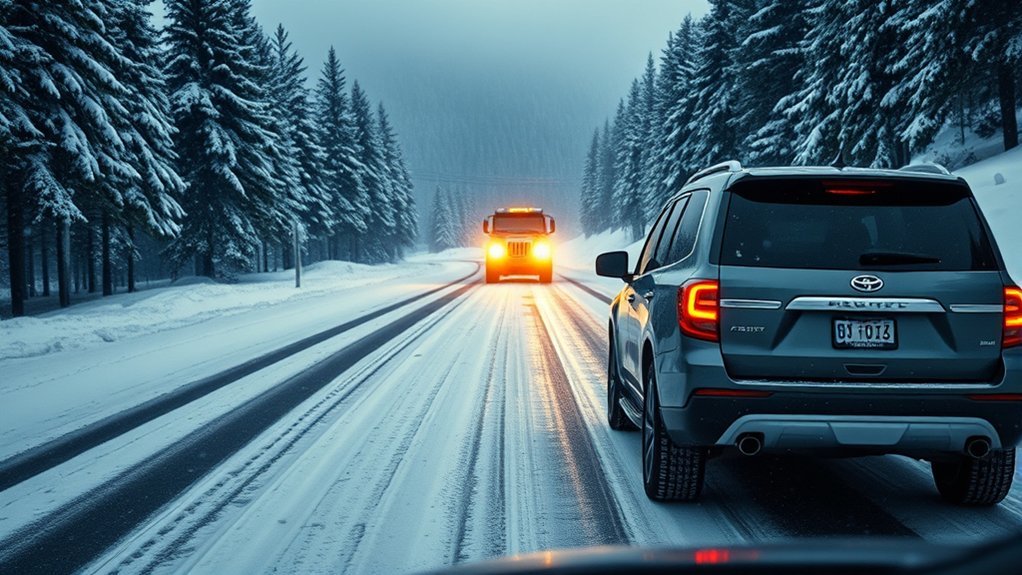
Winter driving means slowing down, leaving more space, and making every steering, braking, and acceleration input smoothly on ice and snow. Before a storm, check your tires, battery, lights, wipers, coolant, and washer fluid, clear snow from the vehicle, and carry an emergency kit. If conditions become too dangerous, delaying the trip is usually the safest choice.
Quick Answer
For safer winter driving, slow down, leave at least five to six seconds behind the vehicle ahead, avoid sudden inputs and cruise control on slick roads, and prepare your car before traveling. Check weather and road conditions first, use properly inflated tires with adequate tread, and stay with your vehicle if a winter storm leaves you stranded.
Key Takeaways
- Slow down, increase following distance to at least five or six seconds, and leave even more room when snow and ice reduce traction.
- Check weather and road conditions before leaving, and postpone non-essential travel when conditions are poor.
- Prepare your vehicle with properly inflated tires, adequate tread, working lights and defrosters, winter-grade washer fluid, a healthy battery, and sufficient fuel or battery charge.
- Carry blankets, food, water, a flashlight, first-aid supplies, a charger, warning devices, a shovel, and an abrasive material such as sand or cat litter.
- If the vehicle begins to skid, ease off the accelerator and make smooth steering corrections. If you must brake hard in a vehicle with ABS, use firm, continuous brake pressure rather than pumping the pedal.
- Stay with your vehicle if a winter storm leaves you stranded unless remaining there creates an immediate danger. Keep the exhaust clear of snow and run the engine only sporadically for warmth.
At a Glance
| Time Required | About 5–15 minutes for a basic pre-trip check, plus extra time to clear snow and ice |
| Difficulty | Easy preparation; driving difficulty rises quickly as traction and visibility worsen |
| Tools Needed | Tire-pressure gauge, ice scraper, snow brush, winter washer fluid, flashlight, shovel, phone charger, and emergency supplies |
| Cost | Often little or no cost if your vehicle and emergency supplies are already ready; tires, battery service, repairs, or new safety equipment can add cost |
Winter Driving Safety Basics
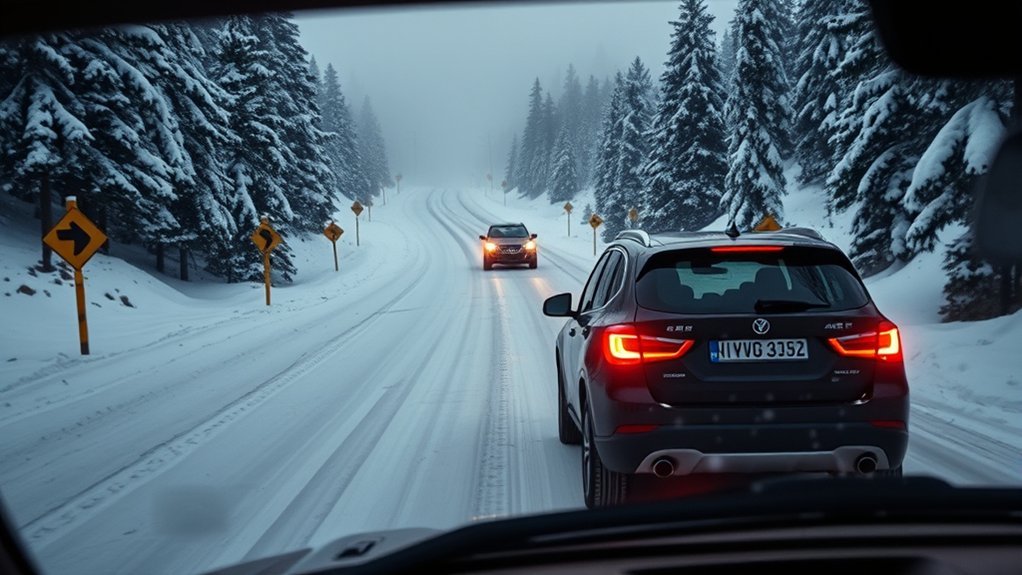
Winter weather can create dangerous road conditions even when pavement only looks wet. Snow, sleet, freezing drizzle, slush, and ice reduce available tire grip and can make normal speeds unsafe.
According to the National Highway Traffic Safety Administration, an estimated 101,390 police-reported traffic crashes occurred in 2023 when snow or sleet conditions were present.
NHTSA estimated 101,390 police-reported crashes occurred in 2023 when snow or sleet conditions were present.
When conditions deteriorate, slow down before you reach a curve, intersection, hill, bridge, or traffic queue. Leave at least five to six seconds between you and the vehicle ahead, consistent with AAA winter-driving guidance, and increase that gap further when visibility or traction becomes worse.
Avoid sudden steering, acceleration, or braking. Do not use cruise control when roads are snowy, icy, or potentially freezing. The National Weather Service warns that freezing drizzle and flash freezes can create difficult-to-see ice even when a road appears merely wet.
Never warm up or run your vehicle inside an attached garage. CDC carbon-monoxide guidance warns that vehicle exhaust can allow odorless, colorless carbon monoxide to build up and cause serious illness or death.
Note: Posted speed limits assume suitable conditions. Snow, ice, poor visibility, and freezing rain may require driving well below the posted limit—or postponing the trip completely.
Prepare Your Car for Winter
Before winter weather arrives, inspect the systems that affect traction, visibility, starting, and reliability. A few minutes of preparation can prevent a minor problem from becoming a roadside emergency.
Start with the tires. Check inflation when the tires are cold and use the vehicle manufacturer’s recommended pressure from the driver-side door placard or owner’s manual—not the maximum pressure molded into the tire sidewall. NHTSA notes that tire inflation pressure falls as outside temperature drops.
Inspect tread and sidewalls for cuts, punctures, bulges, cracks, or uneven wear. NHTSA says tires should be replaced when tread is worn down to 2/32 inch. Treat that measurement as a minimum replacement threshold, not an ideal winter-performance target.
Test headlights, brake lights, turn signals, emergency flashers, and interior lights. Make sure the windshield defroster works, replace worn wiper blades, and fill the washer reservoir with winter-grade fluid designed for freezing temperatures.
Check coolant against the specifications in your owner’s manual and inspect for leaks or damaged hoses. Have the battery and charging system checked if starting has become slow or the battery is aging. Cold weather reduces battery performance, and NHTSA notes that gasoline and diesel engines require more battery power to start when temperatures fall.
Keep your fuel tank close to full when practical so you have a larger reserve if traffic stops or your trip takes longer than planned. If you drive an electric or hybrid vehicle, begin winter trips with a healthy charge because cold weather can reduce usable driving range.
If you install rubber or heavy-duty winter floor mats, secure them with the vehicle’s retention system and make sure they cannot slide under the accelerator or brake pedal.
Pro Tip: Check tire pressure, washer fluid, weather, and road conditions before the first drive after a major temperature drop. These four checks catch many common winter problems before you leave home.
[Products Worth Considering]

Measure tire tread depth quickly and accurately with this LUMITECO dial gauge that reads in 1/32" increments up to 14/32". The color-coded green/yellow/red zones make it easy to judge tire wear and know when replacement is needed. A rugged, compact design with a protective pouch helps keep the gauge ready for use on cars, trucks, motorcycles, and more.

This roadside assistance kit helps drivers and passengers in urgent situations after an accident or breakdown, providing practical support while waiting for help. It includes a lightweight, compact tire inflator for fast inflation of standard vehicle tires, plus reinforced jumper cable protection for safer handling. Ideal for winter weather, road trips, camping, and travel, with everything stowed neatly in a trunk bag.

This car emergency kit keeps essential roadside tools organized in a durable, portable bag so you can respond quickly during common driving emergencies. It includes battery jumper cables, a bright LED headlight, first aid supplies, a tire pressure gauge, and safety essentials like gloves and an emergency poncho. Designed for trunk or storage use, it helps you be prepared for dead batteries, minor malfunctions, and unexpected roadside issues.
Build a Winter Emergency Kit
Keep a winter emergency kit in the vehicle throughout the cold season. NHTSA recommends carrying supplies for snow removal, traction, communication, first aid, warmth, food, and water.
A practical kit can include a flashlight with spare batteries, a charged phone power bank, drinking water, non-perishable food, necessary medicine, a first-aid kit, blankets, gloves, hats, jumper cables, warning devices, a snow brush, an ice scraper, and a compact shovel.
Add an abrasive material such as sand or cat litter. It may help a tire gain enough grip to move from a slippery parking area or shallow snow.
[Products Worth Considering]
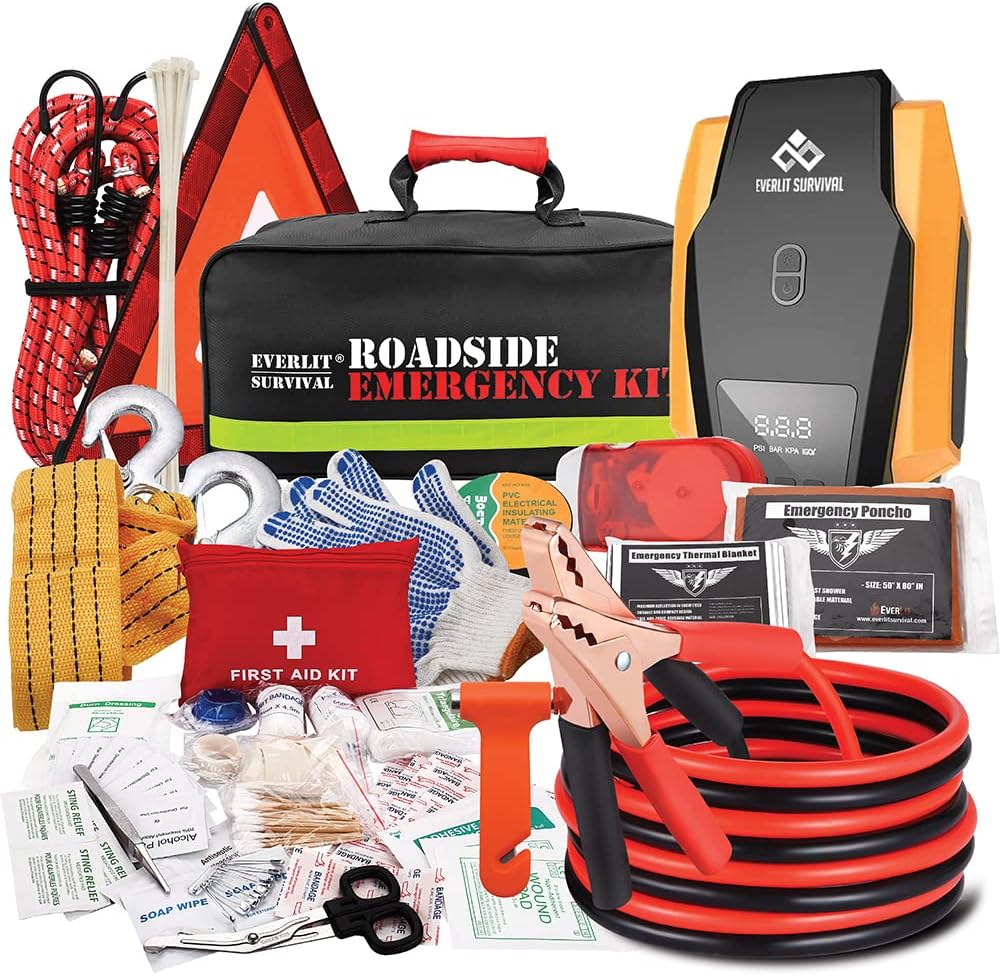
The Everlit Road Guardian emergency kit is designed for roadside breakdowns, combining essential safety gear and roadside tools in one compact bag. It includes a digital 12V auto tire inflator with preset and auto shutoff, plus 12-foot 8-gauge jumper cables to get you moving again. You also get a full 108-piece first aid kit, reflective warning tools, safety gloves, and emergency convenience items for safer travel.

Monitor tire tread wear with a smart, color-coded depth gauge that shows clear condition ranges at a glance. The bar is range marked for fast, easy readings, helping you maintain safer traction and performance. Each gauge is portable with a pocket clip, and the set includes 20 units for daily use and sharing.
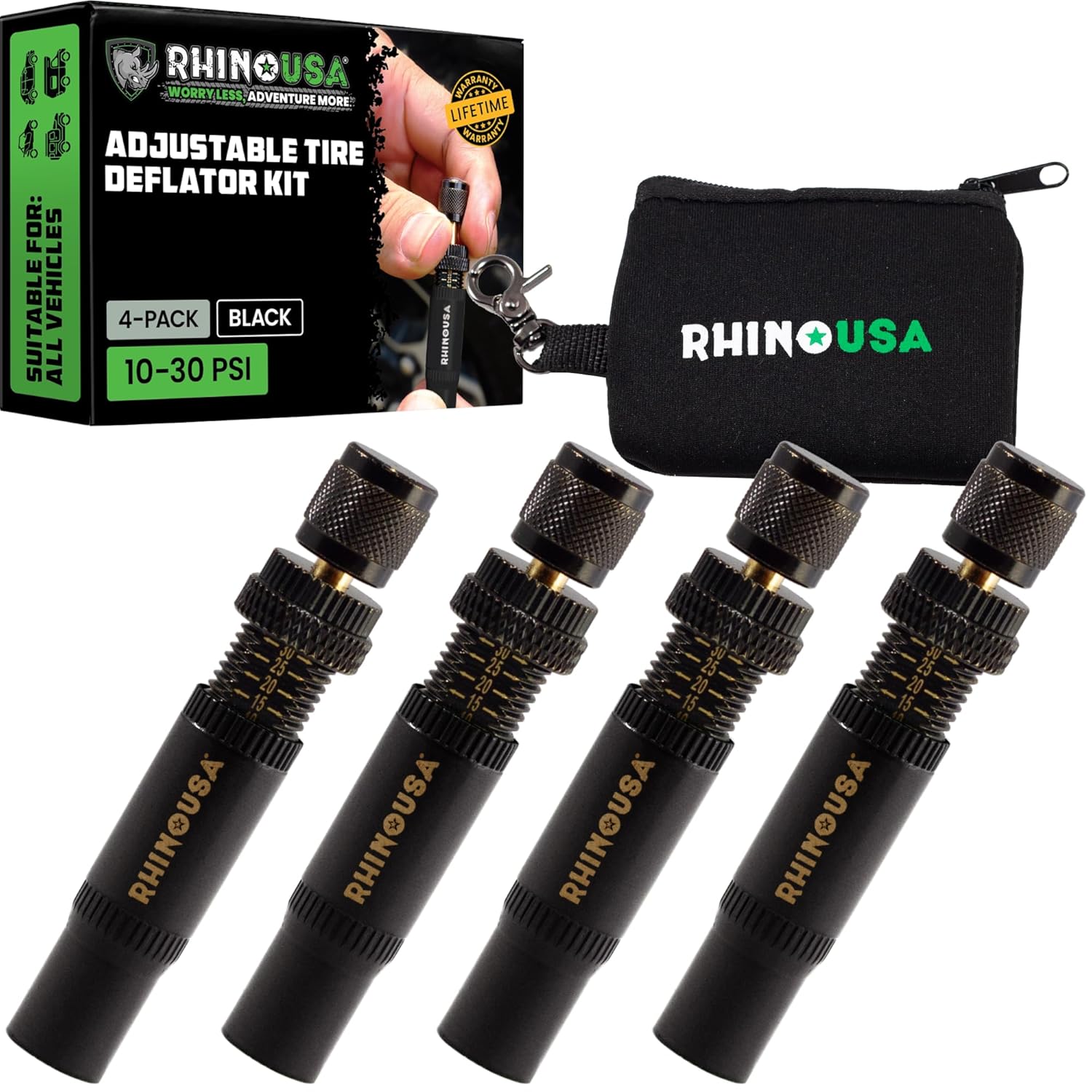
Use the Rhino USA adjustable tire deflators to air down all four tires at once by screwing one deflator onto each valve stem, letting you step away while the tires reach your preset pressure. Each deflator independently adjusts across a 10–30 PSI range with laser-etched indicators for quick setup and verification, making it ideal for beach, sand, and rocky off-road trails.
Essential Kit Items
Organize the kit so the most important items are easy to reach without unloading the vehicle in a storm.
- Communication: charged phone, charging cable, and power bank.
- Visibility: flashlight, spare batteries, reflective triangles, and other legal warning devices.
- Warmth: blankets, gloves, hats, and dry insulating layers.
- Food and hydration: sealed water and shelf-stable food.
- Vehicle recovery: shovel, traction material, jumper cables, snow brush, and ice scraper.
- Health: first-aid supplies and essential personal medicine.
Inspect the kit periodically. Replace expired food, medicine, leaking batteries, damaged cables, and anything used during a previous trip.
Warmth And Shelter
If you become stranded, the vehicle usually provides better shelter and makes you easier for rescuers to locate than walking away in blowing snow.
Dress in layers and use blankets to reduce heat loss. Keep spare clothing dry, because wet fabric loses much of its insulating ability. Avoid exhausting yourself by repeatedly digging or pushing the vehicle in deep snow.
Keep your phone warm and conserve its battery. Text messages may sometimes get through when a voice call is difficult, but emergency communication depends on local service conditions.
Roadside Emergency Tools
Roadside tools serve a different purpose from food and blankets: they help other drivers see you and may help you free a lightly stuck vehicle without taking unnecessary risks.
Use reflective warning triangles or other approved warning devices only when you can place them without stepping into dangerous traffic. A shovel can clear snow from around the tires and, critically, around the exhaust outlet.
Traction material may help if the drive wheels are spinning on a slick surface. Use light throttle and stop if repeated wheelspin is digging the vehicle deeper.
Check Tires and Tire Pressure
Cold weather affects tire pressure, so check all tires regularly, including the spare if your vehicle has one. The NHTSA TireWise guidance recommends checking pressure at least monthly and measuring it when the tires are cold.
Find the recommended PSI on the driver-side door placard or in the owner’s manual. Do not inflate the tire to the maximum pressure printed on its sidewall unless that happens to match the vehicle manufacturer’s specification.
Check the vehicle placard or owner’s manual for the correct PSI, and measure tire pressure when the tires are cold.
Measure tread depth and inspect each tire for cracks, bulges, punctures, or uneven wear. Tires worn to 2/32 inch should be replaced. Because snow and slush demand more from the tread pattern, consider replacement before reaching the absolute minimum when winter traction is already noticeably poor.
Consider winter or snow tires if you regularly drive in sustained cold, snow, or ice. They can improve winter traction, but they cannot overcome unsafe speed or eliminate the long stopping distances possible on ice.
If your vehicle requires a particular tire size, load rating, speed rating, or tire type, follow the owner’s manual and tire placard. Use matched tires as recommended by the vehicle and tire manufacturers.
[Products Worth Considering]

The SPTA wheel and tire brush kit makes it easy to remove dirt from wheels, rims, and hard-to-reach areas without needing a high pressure washer. Ergonomic handles and soft, chemical-resistant bristles help you clean faster while reducing the risk of scratching. The set is versatile for cars, trucks, motorcycles, bicycles, RVs, boats, and more.

Steelman white tire marking crayons provide high-contrast, semi-permanent marks for repairing and inspecting tires and equipment. They write on wet or dry, smooth or coarse surfaces including rubber, metal, glass, and wood, making them ideal for puncture location and damage outlining. The lead- and zinc-free crayons resist weather and fading yet wipe away when you no longer need the marks.

Milton S-921 pencil tire pressure gauge helps you maintain optimal tire pressure for passenger cars with accurate readings in PSI and kPa. It features a built-in deflator valve for convenient pressure adjustments, plus a single chuck head and nylon indicator bar for easy use on the go. Built from durable plated brass and designed for reliable performance, it’s a practical road trip and cold-weather maintenance tool.
Drive Safely on Snow and Ice
Once the vehicle is ready, change the way you drive. Increase your following distance to at least five or six seconds, then add more space when traction or visibility worsens.
Accelerate gradually, brake early, and steer smoothly. Avoid abrupt inputs that can demand more grip than the tires have available.
Do not depend on a fixed rule such as “double the stopping distance on wet roads” or “triple it on snow.” Actual stopping distance varies with speed, tires, temperature, road treatment, gradient, vehicle weight, and the type of snow or ice. Instead, slow down enough that you have a large safety margin before any hazard.
Avoid cruise control on snow, ice, freezing drizzle, or wet pavement when temperatures are near freezing. If the tires begin to lose grip while cruise control is maintaining speed, the system can make recovery more difficult.
Look farther ahead than usual. Brake and reduce speed before curves, intersections, hills, bridges, ramps, and shaded areas rather than waiting until you are already on the slippery section.
Watch for Black Ice and Flash Freezes
Black ice can be difficult to see because it may resemble ordinary wet pavement. Be especially cautious when temperatures are near or below freezing, after freezing drizzle, during rapid temperature drops, and on bridges, ramps, shaded roads, and areas where melting snow refreezes.
If the road suddenly feels slick, do not make a sharp correction. Ease off the accelerator, keep steering smooth, and create more space around the vehicle.
Clear Snow and Ice Before Moving
Clear the windshield, side windows, mirrors, lights, roof, hood, cameras, and driver-assistance sensors before entering traffic. Snow blowing from your vehicle can obstruct your own view or the view of drivers behind you.
Do not rely only on the defroster to remove heavy snow. Clear accumulated snow first, then use the climate system to prevent fogging and refreezing.
Warning: If freezing rain, a snow squall, or severe ice makes it difficult to maintain control or visibility, get off the road at a safe location or postpone the trip. AWD, traction control, and winter tires cannot make severe ice safe.
Handle Skids the Right Way
If the vehicle starts to skid, look where you want to go, ease off the accelerator, and avoid abrupt steering. The correct response depends on which tires have lost grip and whether you are also making an emergency stop.
| Situation | Safer response |
|---|---|
| Front tires slide straight ahead | Ease off the accelerator and reduce the steering angle until the front tires regain grip, then steer smoothly. |
| Rear of vehicle slides sideways | Look toward your intended path and gently steer in the direction needed to bring the vehicle back in line. Avoid overcorrecting. |
| Emergency braking with ABS | Press the brake firmly and continuously while steering toward a safe path. Do not pump the pedal. |
| Wheels lock on a vehicle without ABS | Ease brake pressure enough to let the wheels rotate and regain steering control, then reapply braking smoothly; follow your vehicle manual. |
Keep your hands controlled and avoid rapid back-and-forth steering. Overcorrection can turn a manageable slide into a spin.
If a collision threat requires maximum braking and your vehicle has ABS, use firm, continuous brake pressure even if the pedal pulses or vibrates. That vibration is a normal sign that ABS is operating.
Know ABS, Traction Control, and AWD
Modern safety systems can help, but they do not create extra tire grip. You still need safe speed, adequate following distance, and suitable tires.
ABS helps prevent wheel lock during hard braking so you can retain more steering ability. NHTSA advises drivers with ABS to apply firm, continuous pressure to the brake pedal.
Traction control can reduce wheelspin by cutting engine power or braking an individual wheel. It is especially useful when accelerating from a stop on a slippery surface.
AWD or 4WD can improve the ability to get moving because power is available at more wheels. It does not cancel the traction limits that determine how quickly you can brake or how much cornering force the tires can generate.
ABS Braking Basics
ABS is designed to help prevent wheel lock during hard braking. When ABS activates, you may feel rapid pulsing or vibration through the brake pedal.
- Press the brake firmly and continuously.
- Do not pump an ABS brake pedal.
- Keep looking and steering toward a safer path.
- Expect pedal vibration while the system is working.
If your vehicle does not have ABS, read the owner’s manual so you understand the recommended braking technique. NHTSA notes that a driver without ABS may need to pump the brakes if the wheels begin locking.
Traction Control And AWD
Traction control and AWD help with different parts of winter driving. Traction control manages wheelspin; AWD distributes drive power among more wheels.
Neither system guarantees short stopping distances on snow or ice. Braking and cornering still depend heavily on tire-road grip.
Keep traction control enabled during ordinary winter driving unless the vehicle manufacturer specifically recommends temporarily disabling it for a particular situation, such as freeing a stuck vehicle. Check the owner’s manual because system behavior differs by model.
Even with AWD, use appropriate tires and drive as if grip is limited—because it is.
What to Do If You’re Stranded?
If a breakdown or storm leaves you stranded, stay with your vehicle in most winter-storm situations. The vehicle provides shelter and is easier for rescuers to locate than a person walking through blowing snow.
Before longer winter trips, tell someone your planned route, destination, and expected arrival time. NHTSA and AAA both recommend route planning and letting others know where you expect to travel.
- Call emergency services or roadside assistance when appropriate and when communication is available.
- Move the vehicle out of an active traffic lane if you can do so safely.
- Clear snow away from the exhaust pipe before running the engine.
- Run the engine only sporadically and long enough to maintain necessary warmth.
- Use blankets and extra clothing to reduce heat loss.
- Make the vehicle visible with hazard lights, bright markers, or legal warning devices when safe.
- Avoid walking away in a severe storm unless remaining with the vehicle creates a more immediate danger.
Warning: A snow-blocked exhaust can allow carbon monoxide to enter the cabin. Clear the exhaust outlet before starting the engine and check it again as snow accumulates. Carbon monoxide is colorless and odorless.
Stay with the vehicle when appropriate, keep the exhaust clear of snow, conserve fuel or battery power, and make yourself visible to rescuers.
If remaining in the vehicle creates an immediate threat—for example, fire, rising water, or a location where another collision is imminent—move to a safer place if you can do so without entering another serious hazard.
What If the Vehicle Is Stuck but You Are Not Stranded?
If the vehicle is only lightly stuck, clear snow from around the drive tires and underneath the vehicle. Straighten the wheels if practical, place sand or another abrasive material where the drive tires need grip, and apply light throttle.
Avoid prolonged wheelspin. It can polish snow into ice, dig the tires deeper, overheat components, or move the vehicle unpredictably if traction suddenly returns.
Drive Safely Around Plows and Hills
When driving near snow plows, do not crowd the truck or travel beside it. NHTSA notes that plows may move slowly, make wide turns, stop often, overlap lanes, and exit the road unexpectedly.
Stay far enough behind to avoid snow spray and to give the operator room to work. There is no single universal federal “200-foot rule” for every road, so follow posted instructions and state or local DOT requirements.
Passing a working plow can put you onto a less-cleared section of road. Pass only when it is legal, clearly safe, and necessary.
On hills, avoid powering aggressively up the grade. AAA advises gaining gentle momentum before the climb when conditions allow, avoiding a stop partway up if possible, and reducing speed as you reach the crest so you can descend slowly.
Bridges, ramps, shaded stretches, and exposed areas may freeze before surrounding pavement. Reduce speed before entering them rather than braking sharply after you discover a loss of traction.
Check Wipers, Lights, and Car Seats
Visibility problems can become as dangerous as poor traction. Check wiper blades for cracking, streaking, splitting, or poor contact, and fill the washer reservoir with winter-grade fluid.
Test headlights, brake lights, turn signals, emergency flashers, and defrosters. Clear snow and ice from exterior lights so other road users can see your signals.
If you are carrying children, make sure each child is using the correct restraint for their age and size and that the seat is installed correctly.
Wiper Blade Check
A winter-readiness check should include both the wipers and the area around them. Packed snow and ice can prevent the blade from sitting flat against the glass.
- Look for cracks, split rubber, streaking, or missing sections.
- Confirm both blades make even contact with the windshield.
- Clear packed snow and ice from the cowl and blade area before use.
- Test the washer system with winter-grade fluid.
- Confirm front and rear defrosters operate correctly.
Replace a blade that skips or smears badly. During road-salt spray or freezing slush, a weak wiper can make an otherwise manageable road nearly impossible to see.
Lights And Car Seats
Test all exterior lights before winter trips, and clean road salt, slush, and snow from the lenses.
For child passengers, avoid placing a bulky winter coat underneath a car-seat harness. NHTSA explains that excessive bulk can create extra space in the harness and interfere with a snug fit.
Instead, use thin, warm layers underneath the harness. Once the harness is snug and secure, place a blanket or coat over the child for extra warmth without putting thick padding between the child and the restraints.
Check that the car seat or booster is appropriate for the child’s size and is installed according to both the restraint manufacturer and vehicle manufacturer instructions.
Frequently Asked Questions
How Do I Test My Battery Before Winter Starts?
Have the battery and charging system tested if the engine cranks slowly, the battery is several years old, or you have experienced starting problems. Inspect the terminals for corrosion and check cables for looseness or damage. NHTSA recommends having a mechanic check the battery, charging system, belts, and other needed repairs before winter.
Should I Use Winter Tires or All-Season Tires?
Winter tires are worth considering when you regularly drive in sustained cold, snow, or ice because they are designed for winter traction. All-season tires may be suitable in milder climates, but condition, tread depth, inflation, and driving technique still matter. Use tires that meet your vehicle manufacturer’s specifications.
What Gas Level Is Safest During Cold Weather?
NHTSA recommends keeping the gas tank close to full whenever possible during winter. The extra reserve helps if traffic stops, roads close, or the trip lasts longer than expected. EV and hybrid drivers should also begin winter trips with adequate battery charge because cold weather can reduce driving range.
How Often Should I Clean Sensors and Mirrors?
Check mirrors, windows, lights, cameras, and driver-assistance sensors before every winter trip and clean them again whenever snow, ice, salt, or road spray blocks their view. A sensor covered with snow may not perform normally, so do not assume driver-assistance systems can compensate for poor visibility.
Can I Drive if My Windshield Washer Fluid Is Low?
Top off the reservoir with winter-grade fluid before a winter trip whenever possible. A low reservoir does not automatically make every drive impossible, but you should not continue driving when salt, snow, or slush prevents you from keeping the windshield clear enough to see safely.
How Much Following Distance Should I Leave in Snow?
AAA recommends increasing winter following distance to about five or six seconds. Treat that as a starting point rather than a maximum. Leave more space when roads are icy, visibility is poor, traffic is moving downhill, or your tires have less grip.
Should I Pump the Brakes if My Car Has ABS?
No. If your vehicle has ABS and you need hard braking, NHTSA recommends firm, continuous pressure on the brake pedal. Do not pump the pedal. Pulsing or vibration is normal while ABS is operating.
Does AWD Make Winter Braking Safer?
AWD can make it easier to accelerate because more wheels can receive drive power, but it does not eliminate the tire-road traction limits that control braking and cornering. You still need safe speed, adequate following distance, and suitable tires.
What Should I Do if the Road Suddenly Feels Icy?
Ease off the accelerator, keep the steering wheel steady, avoid cruise control, and avoid sudden braking or steering. Increase your following distance and reduce speed gradually. If conditions become too slippery to maintain control, leave the road at the next safe opportunity.
Conclusion
Safe winter driving starts before the wheels move. Check the weather, road conditions, tires, battery, lights, wipers, coolant, washer fluid, fuel or charge level, and emergency supplies. Clear snow and ice from the vehicle, slow down, leave a generous following distance, and avoid abrupt inputs or cruise control on slippery roads.
If traction disappears, stay calm and make smooth corrections. Use firm, continuous braking when ABS is needed, give snow plows room to work, and remember that AWD cannot overcome the limits of tire grip. If you become stranded in severe winter weather, stay with the vehicle when it is safe to do so, keep the exhaust clear, conserve energy, and make yourself visible.
Winter conditions can change within minutes. The safest decision is sometimes not to drive until the road improves. Follow your vehicle owner’s manual, posted restrictions, and any local requirements for winter tires, chains, or approved traction devices.
Sources
- National Highway Traffic Safety Administration — Winter Weather Driving Tips — winter crash statistics, vehicle preparation, ABS, batteries, emergency supplies, snow plows, stranded-driver guidance, route planning, wipers, tires, and child restraints.
- NHTSA TireWise — tire pressure, cold-tire checks, tread-depth guidance, tire inspection, and replacement thresholds.
- Federal Highway Administration — Snow & Ice — national context on crashes and road impacts associated with snowy, slushy, and icy pavement.
- CDC — Carbon Monoxide Poisoning Basics — vehicle exhaust and carbon-monoxide safety.
- AAA — Winter Driving Tips — following distance, smooth acceleration and braking, hill driving, weather checks, and stranded-vehicle advice.
- National Weather Service — Winter Driving Safety — freezing drizzle, flash freezes, difficult-to-see ice, following distance, and cruise-control guidance.