
Choosing replacement tires starts with three checks: confirm when your current tires need replacement, match the new tires to your vehicle’s required size and load capacity, and choose a tire type that fits your weather and driving. Price matters, but safe fitment, wet and winter traction, tread life, warranty terms, and maintenance matter more over the life of the tire.
Quick Answer
Replace tires when tread reaches 2/32 inch, serious damage appears, they repeatedly lose air, or age and condition meet the vehicle or tire maker’s replacement guidance. Buy replacements that match the required size, load capacity, and appropriate speed rating, then choose all-season, winter, summer, all-weather, or run-flat construction for your climate and vehicle.
Key Takeaways
- Replace tires when tread reaches the wear limit, serious damage develops, or age and condition make continued use unsafe.
- Use the driver’s door-jamb Tire and Loading Information label and owner’s manual to confirm size, load rating, inflation pressure, and other vehicle requirements.
- Use 3PMSF-marked tires when severe-snow traction matters; M+S alone is not the same winter-performance qualification.
- Compare UTQG treadwear, wet-traction and temperature grades, manufacturer warranties, installed cost, ride, noise, and tested performance rather than sticker price alone.
- Check pressure monthly with a gauge and follow the vehicle manufacturer’s rotation schedule; a general interval is often about 5,000 to 8,000 miles when rotation is recommended.
- Be especially careful when replacing only two tires, mixing tires, changing tire size, or fitting tires to AWD/4WD vehicles.
At a Glance
| Time Required | About 15–30 minutes to inspect your current tires and compare the key specifications before shopping. |
| Difficulty | Easy for basic inspection and specification checks; professional help is recommended for damage, fitment changes, or unusual wear. |
| Tools Needed | Accurate tire-pressure gauge, tread-depth gauge or penny, owner’s manual, and the vehicle’s door-jamb tire placard. |
| Cost | Basic inspection costs little or nothing. Replacement cost varies widely by tire size, type, performance level, installation, disposal, and required TPMS or alignment service. |
How Do You Know It’s Time for New Tires?
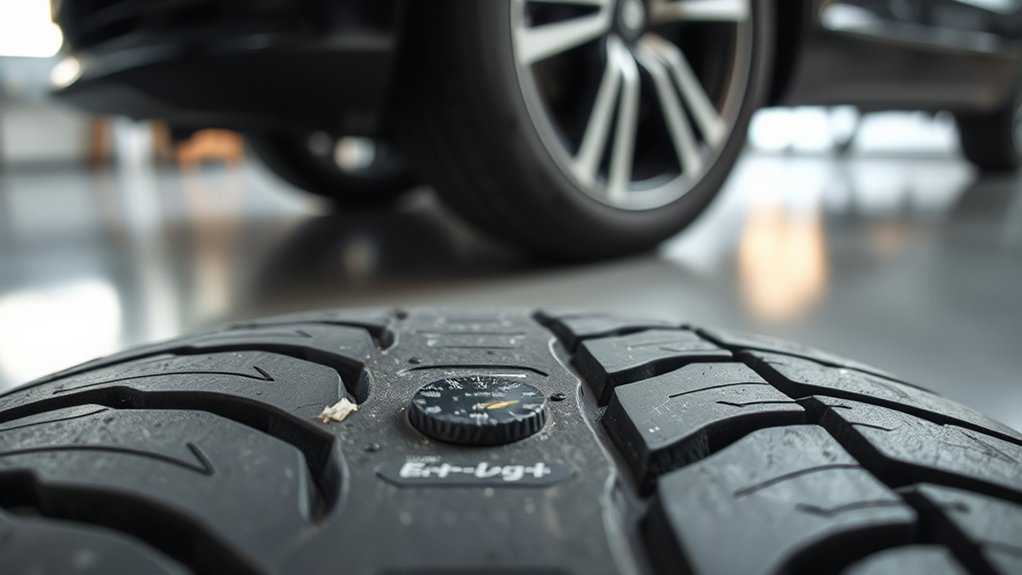
You know it is time for new tires when tread reaches the minimum wear level, serious physical damage appears, the tire repeatedly loses pressure, or a professional finds structural damage or age-related deterioration.
The penny test is a quick tread check. Place a penny into a main tread groove with Lincoln’s head upside down. If you can see the top of Lincoln’s head, the tread is about 2/32 inch or less and the tire should be replaced. NHTSA also notes that tires include built-in treadwear indicators that become level with the tread at the replacement point. See NHTSA TireWise tire-safety guidance.
Inspect the tread and sidewalls for uneven tread wear, cuts, punctures, scrapes, cracking, exposed material, bumps, or bulges. A bulge or other serious structural damage is a strong reason to stop using the tire. Smaller tread-area punctures may sometimes be repairable, but they should be evaluated correctly rather than assumed safe.
Warning: If a tire has a bulge, exposed cords, major sidewall damage, rapid pressure loss, or severe new vibration, reduce your risk by stopping use and having the tire inspected by a qualified tire professional. Do not rely on appearance alone to judge internal damage.
If you feel persistent vibration, hear unusual thumping or noise, or notice the vehicle pulling to one side, the problem deserves inspection. Tire damage is one possible cause, but wheel balance, alignment, suspension faults, irregular tread wear, and other problems can produce similar symptoms.
Repeated air loss also needs attention. A puncture, valve problem, wheel leak, or tire damage can cause pressure to fall. Do not keep adding air without finding the cause.
NHTSA reports that 511 people died in tire-related crashes in the United States in 2024, which is one reason regular tire inspection should be treated as a safety task rather than only a maintenance expense.
Check Tire Age and the DOT Date Code
Tires also change with age. However, there is no universal rule that every tire must automatically be discarded on its sixth birthday. According to NHTSA, some vehicle and tire manufacturers recommend replacement when tires reach roughly six to 10 years of age regardless of remaining tread. Always follow the age limit specified by your vehicle and tire manufacturer.
You can identify a tire’s manufacture date from its DOT Tire Identification Number, or TIN. The final four digits show the week and year of manufacture. For example, a code ending in 2324 means the tire was made in the 23rd week of 2024. Check both sidewalls because the complete TIN may appear on only one side.
Age matters for spare tires too. A spare can look unused while still aging for years in the vehicle.
Can a Damaged Tire Be Repaired?
Some small punctures in the tread area can be professionally repaired after the tire is removed and inspected. Sidewall damage, bulges, exposed cords, large punctures, and damage caused by driving while severely underinflated or flat generally require much more caution and often replacement.
Do not use an external plug or sealant as proof that the tire is permanently safe. A proper assessment requires checking the location and extent of the damage and inspecting the inside of the tire when appropriate.
How to Read Tire Size and Ratings?
You can read a tire size code such as P195/60R16 85H by separating the service type, section width, aspect ratio, construction, wheel diameter, load index, and speed rating.
Before buying, compare the code with the Tire and Loading Information label on the driver’s door jamb and the owner’s manual. The numbers on your old tire are useful, but the vehicle placard is the better reference if a previous owner installed a different size.
Reading Tire Size Codes
A sidewall code gives you the tire’s basic dimensions and operating limits. In P195/60R16 85H, P identifies a passenger-vehicle tire designation, 195 is the nominal section width in millimeters, 60 is the aspect ratio, R indicates radial construction, and 16 is the wheel diameter in inches. The service description follows: 85 is the load index and H is the speed rating.
| Code | Meaning | Example / Use |
|---|---|---|
| P195/60R16 | Tire size | Passenger radial, 195 mm width, 60 aspect ratio, 16-inch wheel |
| 85H | Load index and speed rating | 85 load index with H speed rating |
| UTQG | Quality grading | Treadwear, wet traction, and temperature resistance |
| M+S | Mud and Snow marking | Common on many all-season tires; not the same as 3PMSF certification |
| 3PMSF | Three-Peak Mountain Snowflake | Indicates the tire has met a standardized severe-snow traction requirement |
Use these markings together rather than choosing a tire from only one number.
Understanding Load Index
The load index tells you the maximum load a single tire can support under the specified conditions when properly inflated. You normally see it immediately before the speed rating, such as 245/40R18 95V.
A higher load-index number represents a higher load capacity, but installing a tire with a higher rating does not increase the vehicle’s legal or engineered payload. The vehicle itself still has axle and gross-weight limits.
Replacement tires should meet the load requirement stated by the vehicle manufacturer. Michelin’s current load and speed rating guidance likewise recommends checking the tire placard and owner’s manual.
Also pay attention to markings such as XL or other higher-load designations when your vehicle specifies them. A tire can have the correct dimensions but still be wrong for the vehicle if its load capacity is too low.
Decoding Speed Ratings
The speed rating is a letter indicating the tire’s tested speed capability under specified conditions. It is not a recommended road speed and never overrides posted speed limits or safe driving conditions.
Common ratings include H at 130 mph, V at 149 mph, W at 168 mph, and Y at 186 mph. High-performance tire sizing can also include a Z designation. Z is more nuanced than simply being another step in the H-V-W-Y sequence, so check the tire’s complete service description and manufacturer information when dealing with Z-rated fitments.
For ordinary replacement tires, match or exceed the vehicle manufacturer’s specified speed rating unless the vehicle or tire manufacturer specifically allows another setup, such as certain winter applications.
Pro Tip: Before shopping, take a clear photo of the driver’s door-jamb tire placard and the full sidewall code on your current tire. That gives you the size, load information, and other fitment details when comparing tires in a store or online.
Tire Buying Checklist: What to Confirm Before You Buy
A good tire-buying decision is easier when you check the specifications in a fixed order:
- Confirm the vehicle-approved size. Start with the door-jamb placard or owner’s manual rather than guessing from wheel diameter alone.
- Match the required load capacity. Do not install a lower load index or lower load class than the vehicle requires.
- Check the required speed rating. Match the manufacturer specification unless an approved seasonal exception applies.
- Choose the correct tire category. Consider all-season, all-weather, winter, summer, touring, performance, or other appropriate designs based on your climate and use.
- Check winter markings if snow matters. Look specifically for 3PMSF when you need tested severe-snow traction.
- Compare performance and warranty details. Wet braking, snow performance, noise, comfort, tread life, rolling resistance, and warranty conditions can matter more than a small difference in purchase price.
- Compare the installed total. Include mounting, balancing, disposal fees, valves or TPMS service, taxes, and any alignment work you actually need.
Which Tire Type Fits Your Driving Needs?
Choosing the right tire starts with matching the tire’s strengths to your climate and driving habits. In a practical tire buying guide, tire type should be chosen by temperature range, rain and snow exposure, steering response, ride comfort, and the vehicle’s intended use—not price alone.
All-season tires suit moderate climates and mixed everyday driving. They can handle rain and light snow, but they do not automatically provide the same snow and ice capability as a dedicated winter tire.
Summer tires are designed for warm conditions and strong dry and wet grip. Current Michelin seasonal-tire guidance uses about 45°F as a practical temperature point: summer compounds are intended for warmer conditions and lose flexibility as temperatures fall.
Winter tires are designed to remain flexible in cold weather and provide stronger traction in snow, slush, and ice. If severe winter driving is part of your routine, look for the Three-Peak Mountain Snowflake (3PMSF) marking.
All-weather tires are designed for year-round use while also meeting the 3PMSF severe-snow traction requirement when that marking is present. Their actual snow, ice, wet, comfort, and treadwear performance still varies by model, so do not assume every all-weather tire equals a dedicated winter tire in every condition.
- Match tread and compound design to the conditions you actually drive in.
- Check your normal winter temperatures and snowfall before choosing one year-round set.
- Prioritize tested traction over convenience when ice and heavy snow are common.
[Products Worth Considering]
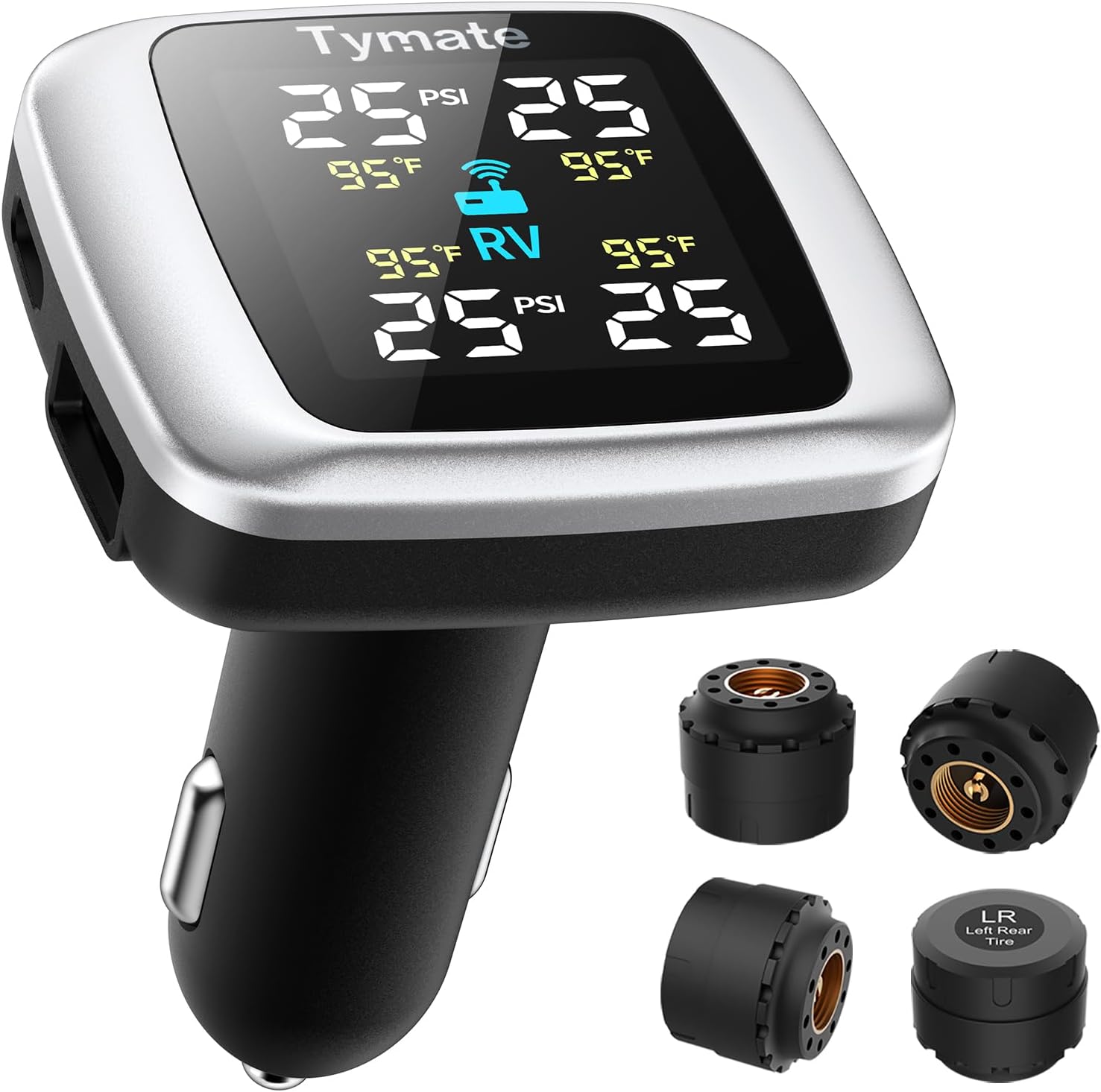
Tymate TM7 is a wireless tire pressure monitoring system that delivers real-time pressure and temperature readings for safer driving. It includes four external sensors, a bright color LCD display with adjustable backlight, and six alarm modes for high/low pressure, fast leakage, high temperature, and sensor signal or battery issues. The system covers a wide 0–144 PSI range and plugs into your vehicle’s cigarette lighter socket for quick DIY setup.

Monitor tire tread wear with a smart, color-coded depth gauge that shows clear condition ranges at a glance. The bar is range marked for fast, easy readings, helping you maintain safer traction and performance. Each gauge is portable with a pocket clip, and the set includes 20 units for daily use and sharing.

Steelman white tire marking crayons provide high-contrast, semi-permanent marks for repairing and inspecting tires and equipment. They write on wet or dry, smooth or coarse surfaces including rubber, metal, glass, and wood, making them ideal for puncture location and damage outlining. The lead- and zinc-free crayons resist weather and fading yet wipe away when you no longer need the marks.
All-Season vs. Winter vs. Summer Tires
Once you know how and where you drive, compare tire categories by their intended temperature and traction range.
| Tire type | Main strength | Best use |
|---|---|---|
| All-season tire | Balanced everyday performance | Moderate climates and mixed conditions |
| Winter tire | Cold-weather, snow, and ice traction | Regular freezing conditions, snow, slush, and ice |
| Summer tire | Warm-weather steering and grip | Warm dry and wet pavement |
| High-performance all-season | Sharper response with wider seasonal usability | Performance-oriented daily driving in moderate climates |
| All-weather tire | Year-round usability with 3PMSF severe-snow qualification when marked | Drivers who need one set and encounter meaningful winter weather |
An all-season tire is practical in many climates, but an M+S marking by itself is not the same as 3PMSF severe-snow qualification. Winter tires are engineered specifically for cold conditions. Summer tires offer strong warm-weather response but should not be treated as a cold-weather tire.
If you drive an AWD or 4WD vehicle, remember that the drivetrain helps the vehicle accelerate but does not create extra tire grip for braking and cornering. In severe winter conditions, the traction capability of all four tires still matters.
[Products Worth Considering]

This tire inflator with pressure gauge delivers long-lasting performance with a durable rubber-protected gauge and sturdy build. The longer hose and 360 swivel air chuck help you seal the valve securely and keep your hands free while measuring, inflating, or deflating. It’s battery-free for reliable use and provides ±2 PSI accuracy in the mid-range for most typical tires, with universal compatibility for 1/4 NPT compressor outputs.

The Tymate TM12 RV TPMS delivers real-time tire pressure and temperature monitoring with a stable 433Hz display for safer long-distance driving. It supports simultaneous monitoring across vehicle and trailer zones, includes six alarm modes for pressure, temperature, leakage, battery, and signal loss, and features easy DIY installation with auto calibration. Power is supplied via USB-C charging or solar recharging, with a wide 0–144 PSI range and up to 50 ft signal coverage for RVs and towable trailers.

Milton S-921 pencil tire pressure gauge helps you maintain optimal tire pressure for passenger cars with accurate readings in PSI and kPa. It features a built-in deflator valve for convenient pressure adjustments, plus a single chuck head and nylon indicator bar for easy use on the go. Built from durable plated brass and designed for reliable performance, it’s a practical road trip and cold-weather maintenance tool.
How to Compare Tread Life, Warranties, and Price
You should compare tread life using several pieces of information rather than a single number. Look at the UTQG treadwear grade when applicable, the manufacturer’s mileage warranty, independent performance testing when available, and your own driving conditions.
Then review warranty coverage for mileage limits, prorated credits, required rotations, proof-of-maintenance rules, exclusions, and claim procedures.
Finally, compare the complete installed cost against expected performance and service life. The cheapest tire at checkout is not automatically the lowest-cost tire over several years.
Tread Life Ratings
The federal Uniform Tire Quality Grading system provides grades for treadwear, wet-pavement traction, and temperature resistance on many passenger tires sold in the United States. NHTSA explains that a higher treadwear grade indicates a slower relative wear rate in the standardized grading system.
- A higher treadwear number generally indicates greater relative wear resistance in the grading test.
- The traction grade describes wet-pavement stopping performance under the UTQG test.
- The temperature grade describes resistance to heat generation and heat-related deterioration under the test.
- Actual tire life still depends on inflation, alignment, rotation, load, driving style, climate, road surface, and the tire itself.
Note: UTQG does not grade tread pattern, ride comfort, snow traction, hydroplaning resistance, noise, or total real-world mileage. Treat it as one comparison tool rather than a complete tire score.
Warranty Coverage Details
Warranty coverage can change the long-term value of a tire as much as its sticker price. Mileage warranties vary by tire model, and not every tire includes the same type of coverage.
Read the exclusions and maintenance requirements before relying on the mileage number. Uneven wear caused by alignment problems, neglected inflation, vehicle issues, road hazards, racing, or missed rotations may not qualify for treadwear coverage.
Many mileage warranties are prorated rather than a promise of a free replacement. If a covered tire wears out early, the remaining usable tread may determine the credit toward another tire.
Keep purchase records, installation documents, and rotation history if the warranty requires them.
Price Vs Value
Price matters, but value comes from how the tire performs in your conditions and how much usable service you receive from the complete purchase.
Compare the long-term cost, including mounting, balancing, disposal, valve or TPMS-related service, and alignment only when it is needed. Also consider wet grip, winter performance, road noise, ride comfort, fuel or range efficiency, and tread life.
- Match performance characteristics to your climate and commute.
- Prioritize wet and winter traction when those conditions are common.
- Do not sacrifice required load capacity or fitment to save money.
- Compare installed cost and expected service rather than tire price alone.
Should You Replace Tires or Upgrade Them?
Should you replace your tires with the same model or upgrade to a higher-performance option? A direct replacement with the same approved specifications usually preserves the ride, handling balance, noise level, range or fuel-economy characteristics, and overall behavior the vehicle manufacturer intended.
You may prefer a different tire when you want stronger wet grip, quieter highway driving, longer tread life, better winter traction, sharper steering, or another characteristic that better matches your actual use.
However, an “upgrade” is not simply a wider tire or a larger wheel. Changes in width, sidewall height, wheel diameter, load capacity, speed rating, or overall tire diameter can affect ride quality, steering, clearance, braking, speedometer accuracy, driver-assistance systems, and wear.
Check the vehicle manufacturer’s approved fitment before changing sizes. If your vehicle requires XL or another higher-load tire specification, retain the required load capability even if another tire has the same nominal dimensions.
Choose based on the way you drive and the conditions you face. A quieter touring tire can be a better upgrade for a commuter than an aggressive performance tire, while a 3PMSF tire can be a more meaningful upgrade for someone who regularly drives through snow.
Should You Replace Two Tires or All Four?
Replacing all four tires with matching specifications gives the vehicle the most consistent tread depth, traction, and handling characteristics. When only two tires need replacement, placement matters.
Michelin’s tire-mixing guidance recommends installing the pair with deeper tread on the rear axle. Better rear traction helps reduce the chance of rear-tire grip being lost first on wet roads.
The new tires should match the existing tires as closely as practical in size, type, load capacity, speed rating, and construction. Avoid combining winter tires on only one axle because the difference in front-to-rear traction can make handling less predictable.
AWD and 4WD Tire Replacement
AWD and 4WD vehicles may require closely matched tire circumferences or tread depths on all four positions. A meaningful diameter difference can affect vehicle systems and, on some drivetrains, place extra stress on components.
If one tire on an AWD or 4WD vehicle is damaged, check the owner’s manual or manufacturer guidance before replacing only that tire. Depending on the system and remaining tread depth, replacing additional tires may be necessary.
How to Make Your Tires Last Longer
Once you have chosen the right tire type, good maintenance helps those tires wear more evenly and perform as intended.
Start with tire pressure. Check all tires, including the spare when applicable, about once a month and before long trips. Measure pressure when the tires are cold and inflate them to the vehicle manufacturer’s recommended cold pressure on the door-jamb label or in the owner’s manual—not the maximum pressure molded on the tire sidewall.
Use proper tire maintenance by following your vehicle manufacturer’s rotation schedule. NHTSA gives a general range of about 5,000 to 8,000 miles when rotation is recommended, but some vehicles use different patterns or do not allow normal front-to-rear rotation.
- Check tread depth and wear patterns during each pressure inspection.
- Keep wheel alignment within specification to prevent edge wear and pulling.
- Have wheel balance checked if vibration develops.
- Drive smoothly when practical; repeated hard acceleration, braking, and cornering increase wear.
- Inspect the tread and sidewalls for embedded objects, cuts, bulges, or other damage.
If the steering starts pulling, the vehicle develops persistent vibration, or the tread wears unevenly, have the cause diagnosed rather than assuming rotation alone will fix it.
TPMS Does Not Replace Pressure Checks
A Tire Pressure Monitoring System is an important warning system, but it does not replace an accurate pressure gauge. NHTSA specifically advises monthly manual checks because a tire can be underinflated before the warning threshold is reached. If the TPMS warning appears, check the pressures and investigate the cause instead of simply resetting the light.
Register New Tires and Check Recalls
Keep the tire purchase record and registration information. Tire registration helps manufacturers contact owners if a safety recall affects a specific tire line. You can also use NHTSA resources to check tire recalls and report suspected safety defects.
Run-Flat Tires: What to Know Before Buying
Run-flat tires are designed to provide temporary mobility after substantial pressure loss so you may be able to reach a safer location or service facility instead of stopping immediately at the roadside.
When buying run-flat tires, confirm that the tire is approved for your vehicle and that the vehicle has a functioning tire pressure monitoring system. Self-supporting run-flats use reinforced sidewalls to support the vehicle for a limited distance after pressure loss.
Bridgestone’s run-flat technical guidance, for example, states that its run-flat tires can continue for up to about 50 miles at up to 50 mph under specified conditions. Do not assume every run-flat has exactly the same limit; follow the tire and vehicle manufacturer’s instructions.
Expect a firmer ride quality from some run-flat designs because reinforced construction can reduce sidewall flex compared with a conventional tire. Ride comfort varies by tire and vehicle suspension.
You may also find fewer choices in certain sizes and price ranges. Before switching from run-flats to conventional tires—or the other way around—check the vehicle manufacturer’s fitment guidance, spare-tire provision, TPMS requirements, suspension calibration, and mobility plan for future punctures.
A run-flat is not intended for indefinite driving after pressure loss. After a puncture or low-pressure event, have the tire inspected and follow the manufacturer’s repair or replacement rules.
[Products Worth Considering]

The SAFELIFE dial tire tread depth gauge measures tread depth in 1/32 inch increments with clear, easy-to-read 2-inch dial face. Color zones using a traffic light system help you quickly judge whether tread is low, marginal, or ample for safer driving. Built with a durable zinc cast body and a metal detect probe for precise, comfortable use across cars, motorcycles, trucks, and buses.

Measure tire tread depth quickly and accurately with this LUMITECO dial gauge that reads in 1/32" increments up to 14/32". The color-coded green/yellow/red zones make it easy to judge tire wear and know when replacement is needed. A rugged, compact design with a protective pouch helps keep the gauge ready for use on cars, trucks, motorcycles, and more.

This universal wheel alignment tool helps you accurately restore tire tilt angles after tire or suspension repairs using an adjustable camber gauge. It features a powerful magnetic base that firmly attaches to brake rotors for stationary, slip-free readings, improving consistency during measurement. Built from durable PC plastic, it resists wear and corrosion and is compact enough for car, truck, RV, and motorcycle alignment tasks.
Frequently Asked Questions
How Often Should Tire Pressure Be Checked?
Check tire pressure about once a month and before long trips using an accurate gauge. Check when the tires are cold and use the recommended pressure on the vehicle’s door-jamb label or in the owner’s manual. Seasonal temperature changes can change tire pressure, and TPMS does not replace manual checks.
When Should Tire Rotation Be Done?
Follow your vehicle manufacturer’s schedule and rotation pattern first. NHTSA gives a general range of about 5,000 to 8,000 miles when rotation is recommended. Rotate sooner if irregular wear develops and the underlying cause has been corrected.
How Do I Know if My Wheels Need Alignment?
Possible signs include uneven or rapid tire wear, a vehicle that pulls on a level road, an off-center steering wheel, or changed steering behavior. A hard pothole or curb impact can also justify an alignment check. Vibration by itself may come from tire or wheel balance rather than alignment, so diagnosis matters.
What Tire Pressure Is Best for My Car?
Use the vehicle manufacturer’s recommended cold tire pressure on the Tire and Loading Information label, usually on the driver’s door frame, or in the owner’s manual. Do not use the maximum pressure molded into the tire sidewall as the normal inflation target.
Are Tire Balancing and Alignment the Same?
No. Balancing corrects uneven weight distribution in a tire-and-wheel assembly, while alignment adjusts wheel angles relative to the vehicle and road. Imbalance often causes speed-related vibration; misalignment more commonly contributes to pulling, off-center steering, and irregular tread wear.
How Old Is Too Old for a Tire?
There is no single universal age limit for every tire. NHTSA says some vehicle and tire manufacturers recommend replacement when tires are six to 10 years old regardless of tread. Check the DOT TIN for the manufacture date and follow the specific age guidance from your vehicle and tire maker.
What Does the 3PMSF Symbol Mean?
The Three-Peak Mountain Snowflake symbol indicates that a tire has met a standardized severe-snow traction requirement. It is a more meaningful winter-performance marking than M+S alone. Dedicated winter tires and some all-weather or all-season products carry 3PMSF.
If I Replace Only Two Tires, Where Should the New Ones Go?
When only two tires are replaced, the pair with the deeper tread should generally be installed on the rear axle to support rear stability and wet traction. Match the new tires to the remaining pair as closely as possible and check the vehicle manufacturer’s instructions, especially for AWD or 4WD vehicles.
Can I Rely on TPMS Instead of Checking Tire Pressure?
No. TPMS is a warning system, not a replacement for regular pressure checks. A tire may be below the recommended pressure before the warning appears. Check all tires monthly with an accurate gauge and investigate repeated pressure loss.
Conclusion
You now know when to replace worn tires, how to read the main sidewall ratings, and how to choose a tire type for your driving conditions. Start with the vehicle placard, confirm size and load requirements, compare seasonal traction and long-term value, and check the DOT date code before relying on age assumptions.
Then protect the investment with proper cold tire pressure, timely rotations when recommended, alignment and balance when symptoms call for them, and regular tread and damage inspections. If you replace only two tires, drive an AWD or 4WD vehicle, change sizes, or consider run-flats, follow the vehicle and tire manufacturer’s fitment guidance rather than relying on a generic rule.
Sources
- National Highway Traffic Safety Administration — TireWise — tread depth, pressure, UTQG, tire aging, DOT date codes, TPMS, and tire maintenance.
- National Highway Traffic Safety Administration — Winter Weather Driving Tips — cold tire pressure, monthly inspections, age guidance, and visible tire damage.
- Michelin USA — Tire Load Rating & Speed Rating — load index, XL tires, speed ratings, and replacement specifications.
- Michelin USA — Summer vs. Winter vs. All-Season Tires — seasonal temperature guidance, M+S, and 3PMSF markings.
- Michelin USA — Mixing Tires — replacing two tires, rear-axle placement, matching tire specifications, and AWD/4WD considerations.
- Bridgestone — Run-Flat Tire Technology — reinforced-sidewall operation and temporary mobility after pressure loss.

