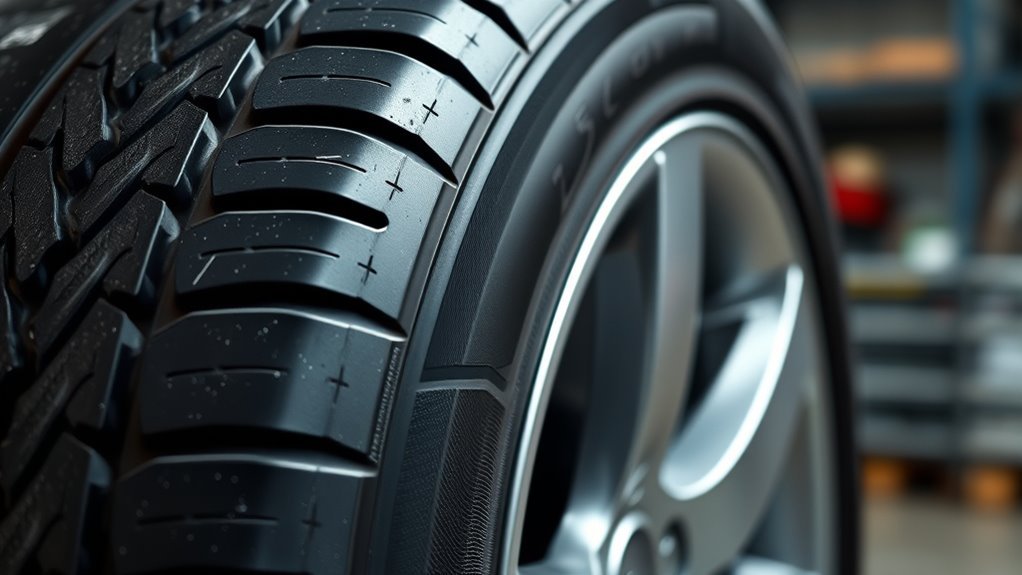
Your RAV4’s tires are engineered from layered rubber compounds, steel belts, textile cords, bead wire, fillers, oils, curing agents and protective chemicals. Together, these materials balance traction, load capacity, ride comfort, rolling resistance and durability. The best tire for your RAV4 is not just “the right size”; it is the right mix of tire type, compound, construction and maintenance for your climate, trim and driving habits.
Quick Answer
Most Toyota RAV4 tires are radial passenger tires made from natural rubber, synthetic rubber, carbon black, silica, steel belts, bead wire, polyester or nylon body plies, and curing chemicals. Choose all-season, winter, performance, or all-terrain tires based on your climate, wheel size, load rating, and the tire information placard on your driver-side door jamb.
Key Takeaways
- RAV4 tires use a layered structure: tread rubber, steel belts, body plies, sidewalls, inner liner and bead bundles.
- Natural rubber helps with tear and fatigue resistance, while synthetic rubber helps tune wear, traction and rolling resistance.
- Silica and carbon black are fillers that reinforce the tread; silica is especially useful for wet grip and lower rolling resistance.
- Always match replacement tires to your RAV4’s tire placard, owner’s manual, load index, speed rating and wheel size.
- Tire pressure, rotation, tread checks and puncture inspections matter as much as the tire material itself.
Quick Answers: Which Tires Work Best for a Toyota RAV4?

The best tire for your Toyota RAV4 depends on three things: your climate, your driving style and the tire size listed on your vehicle’s tire information placard. Many recent RAV4 trims use 17-, 18- or 19-inch wheels, but you should confirm your exact size on the driver-side door jamb or in the Toyota RAV4 owner’s manual tire information section.
| Driving need | Best tire type | Why it works |
|---|---|---|
| Daily commuting in mild weather | All-season touring tire | Balanced ride comfort, tread life, wet grip and fuel economy. |
| Frequent snow, ice or freezing temperatures | Winter tire | Softer cold-weather compound, deeper grooves and dense siping for better snow and ice traction. |
| Highway comfort and quietness | Touring or grand-touring tire | Optimized tread patterns reduce noise and improve ride smoothness. |
| Gravel roads, trails or rough job sites | All-terrain tire | Stronger tread blocks and sidewall protection improve durability on loose or rough surfaces. |
| Sharper handling on pavement | Performance all-season tire | Stiffer tread and sidewall tuning improve steering response, though comfort and tread life may decrease. |
Warning: Do not choose a tire only because it “fits” the wheel. The replacement tire must meet or exceed the required load index, speed rating and pressure guidance for your specific RAV4. A wrong-size or underrated tire can affect braking, handling, stability control and tire life.
[Products Worth Considering]

Monitor tire tread wear with a smart, color-coded depth gauge that shows clear condition ranges at a glance. The bar is range marked for fast, easy readings, helping you maintain safer traction and performance. Each gauge is portable with a pocket clip, and the set includes 20 units for daily use and sharing.

Measure tire tread depth quickly and accurately with this LUMITECO dial gauge that reads in 1/32" increments up to 14/32". The color-coded green/yellow/red zones make it easy to judge tire wear and know when replacement is needed. A rugged, compact design with a protective pouch helps keep the gauge ready for use on cars, trucks, motorcycles, and more.

The SAFELIFE dial tire tread depth gauge measures tread depth in 1/32 inch increments with clear, easy-to-read 2-inch dial face. Color zones using a traffic light system help you quickly judge whether tread is low, marginal, or ample for safer driving. Built with a durable zinc cast body and a metal detect probe for precise, comfortable use across cars, motorcycles, trucks, and buses.
What RAV4 Tires Are Made Of: Core Materials Breakdown
A RAV4 tire is not a single piece of rubber. It is a laminated, cured structure made from many materials, each doing a specific job. The U.S. Tire Manufacturers Association lists major tire components such as bead bundles, belts, body plies, inner liners, sidewalls, tread compounds, natural rubber, synthetic polymers, steel, textiles, carbon black and silica.
- Natural rubber: Helps with tear resistance, fatigue resistance and flexibility.
- Synthetic rubber: Often includes styrene-butadiene rubber and butadiene rubber, which help tune traction, treadwear and rolling resistance.
- Carbon black: Reinforces rubber, improves abrasion resistance and helps manage heat.
- Silica: Reinforces the tread and can improve wet traction and rolling resistance.
- Steel belts: Support the tread area, improve stability and help maintain the tire’s shape at speed.
- Bead wire: Locks the tire securely to the wheel rim.
- Textile plies: Polyester, nylon, rayon or aramid cords help the tire hold pressure and support vehicle weight.
- Inner liner: A low-permeability rubber layer that helps keep air inside tubeless tires.
- Curing agents: Sulfur, zinc oxide and related ingredients help transform soft rubber into a strong, elastic tire during vulcanization.
A tire’s material mix affects grip, braking, fuel economy, ride comfort, noise, puncture resistance and how evenly the tread wears.
Tread Compounds: Natural vs. Synthetic Rubber, Silica and Carbon Black
The tread compound is the part of the RAV4 tire that contacts the road, so it has to balance grip, wear and energy loss. Natural rubber provides elasticity and resistance to cracking or tearing. Synthetic polymers let tire engineers tune the compound for wet traction, dry grip, temperature behavior and tread life.
Silica and carbon black are both reinforcing fillers, but they are used for slightly different performance goals. Carbon black helps strengthen the rubber and resist abrasion. Silica is widely used in modern passenger tire tread compounds because it can improve wet performance and reduce rolling resistance, which can support better fuel economy. The National Highway Traffic Safety Administration notes that tire design, materials, construction and tread pattern influence durability, wet and dry traction, handling, ride comfort and rolling resistance.
Note: A tire with excellent dry grip may not be the best winter tire, and a long-wearing highway tire may not be the best trail tire. Compound design always involves trade-offs.
RAV4 Tire Structure: Belts, Beads, Sidewalls and Textile Reinforcements
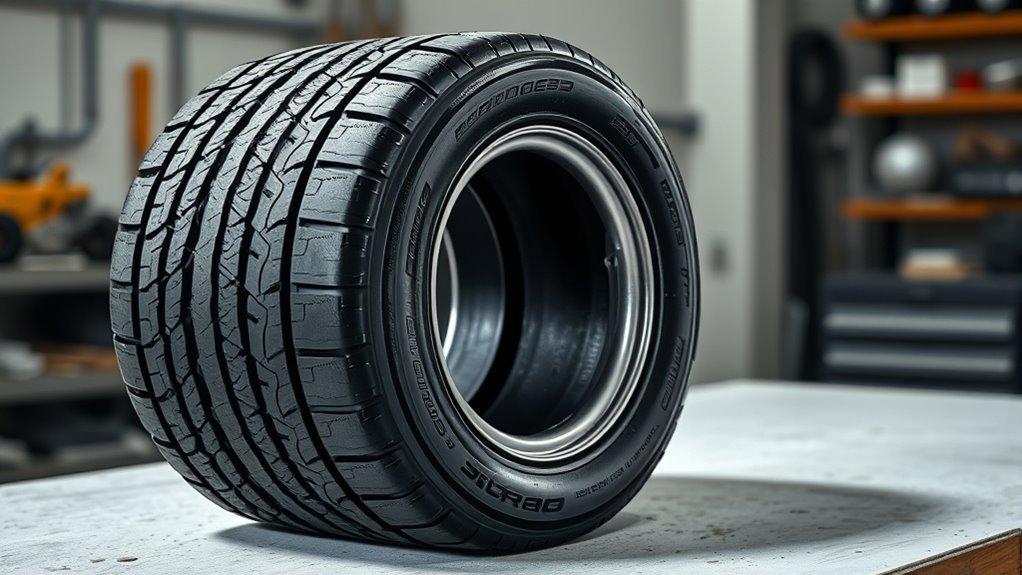
Inside a typical RAV4 radial tire, each layer supports the others. The tread handles road contact. Steel belts stabilize the tread area. Body plies support the tire’s shape and contain inflation pressure. The sidewall protects the carcass from scuffs, weathering and flex fatigue. The bead bundle clamps the tire to the wheel.
Belt and Ply Construction
Steel belts sit under the tread and help keep the contact patch stable. Most passenger tires use two steel belts laid at opposing angles. This supports treadwear, handling and traction. Below the belts, body plies made from polyester, nylon, rayon or similar cords help the tire carry load and hold air pressure.
For a RAV4 driver, this structure affects steering feel, braking stability and ride comfort. A tire with a stronger or stiffer construction may feel more controlled during cornering or towing, while a more comfort-focused touring tire may feel smoother over potholes and expansion joints.
Bead and Sidewall Reinforcement
The bead is the tire’s anchor point. It uses strong wire bundles embedded in rubber to secure the tire to the rim. Above the bead, bead filler and sidewall compounds help tune steering response, comfort and impact resistance.
Sidewalls are especially important on a compact SUV like the RAV4 because they absorb road impacts and help control body movement. Off-road and all-terrain tires often use tougher sidewall designs, but that added strength can also increase weight, noise and rolling resistance.
Pro Tip: If your RAV4 frequently sees gravel, construction roads or pothole-heavy streets, look for tires with stronger sidewall protection and a load rating that matches your placard. Do not simply increase tire pressure beyond Toyota’s recommendation to “make the tire stronger.”
Which Tire Types to Choose for Your RAV4 Trim and Use Case
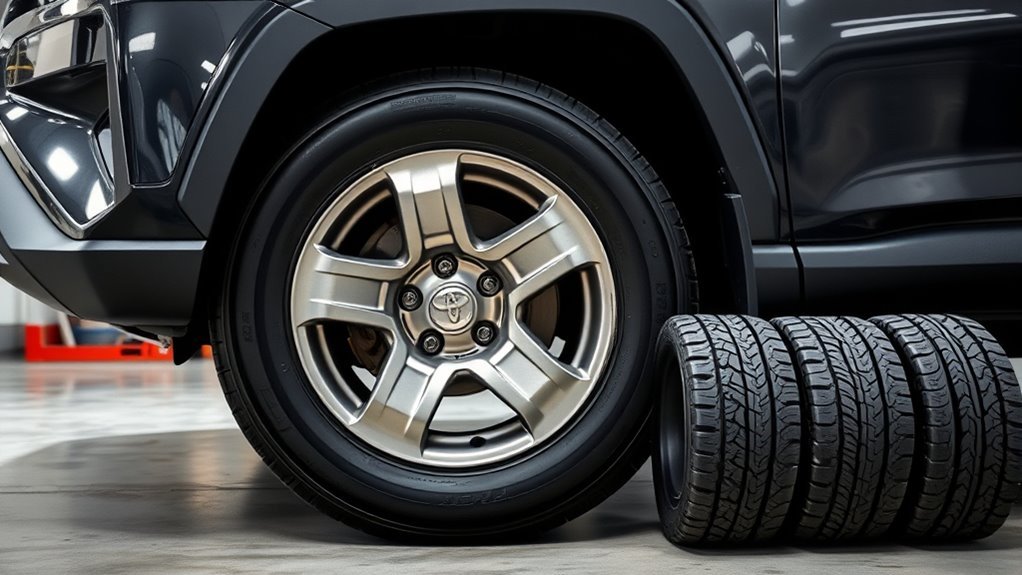
Choose your RAV4 tire by matching the tire’s construction and compound to your actual driving conditions. A highway commuter in a warm city needs a different tire than a RAV4 Hybrid owner in a snowy mountain town or a Woodland/Adventure-style driver who spends weekends on gravel roads.
[Products Worth Considering]

Keep your tires properly inflated with this analog VONDIOR tire pressure gauge, designed for fast, easy readings without batteries. The swiveling, two-axis hose and large glow dial help you measure at any tire angle with instant visibility. Built with a protective rubber shield, it supports durable, low-maintenance use for cars and trucks.

The Tymate TM12 RV TPMS delivers real-time tire pressure and temperature monitoring with a stable 433Hz display for safer long-distance driving. It supports simultaneous monitoring across vehicle and trailer zones, includes six alarm modes for pressure, temperature, leakage, battery, and signal loss, and features easy DIY installation with auto calibration. Power is supplied via USB-C charging or solar recharging, with a wide 0–144 PSI range and up to 50 ft signal coverage for RVs and towable trailers.

Upgrade your Toyota’s wheels with durable aluminum alloy valve stem caps that help protect valve cores from corrosion and direct exposure to road grime, clay, water, and snow. Rubber rings improve sealing to help prevent air leakage and maintain stable tire pressure for safer driving. These caps are easy to install or remove without tools and add a unique, stylish look to your car.
All-Season Tires for Most RAV4 Drivers
All-season tires are the most common choice for RAV4 owners because they balance wet traction, dry handling, comfort, noise and tread life. They are a practical option for daily driving in areas with light winter weather, but they are not a full substitute for true winter tires in sustained snow, ice or freezing temperatures.
Winter Tires for Snow, Ice and Freezing Temperatures
Winter tires use cold-weather rubber compounds, deeper tread grooves and extra siping to improve traction in snow and ice. If you regularly drive in temperatures near or below freezing, winter tires can improve braking and control compared with standard all-season tires.
Touring Tires for Quiet Ride and Long Tread Life
Touring tires are ideal if you want a calm highway ride, lower noise and predictable treadwear. They often pair well with RAV4 trims used mainly for commuting, family trips and long-distance driving.
All-Terrain Tires for Gravel and Light Off-Road Use
All-terrain tires use stronger tread blocks and more open patterns to grip gravel, dirt and rough surfaces. They can be a good fit for RAV4 owners who regularly drive forest roads, rural routes or job sites. The trade-offs may include more road noise, lower fuel economy and a firmer ride.
Performance Tires for Sharper Pavement Handling
Performance all-season tires can make a RAV4 feel more responsive on pavement. They usually emphasize steering precision and grip, but may wear faster or ride more firmly than touring tires. Use them only if they match your RAV4’s load index, speed rating and size requirements.
How Tires Are Made: Why Compounding, Layering and Vulcanization Matter for RAV4 Performance
Tire manufacturing starts with compounding. Rubber, fillers, oils, antioxidants, antiozonants and curing ingredients are mixed into formulas designed for specific parts of the tire. The tread compound is tuned for road contact. The sidewall compound is tuned for flexing and weather resistance. The inner liner is tuned to hold air.
Next, the tire’s layers are assembled: bead bundles, body plies, belts, sidewalls, inner liner and tread. The uncured tire then goes into a mold, where heat and pressure shape the tread pattern and cure the rubber. During vulcanization, rubber molecules form crosslinks that give the tire its final strength, elasticity and heat resistance.
Quality control checks help confirm uniformity, balance and structural integrity. That matters on a RAV4 because the tire must support vehicle weight, respond to steering inputs, resist heat buildup and maintain a predictable contact patch under braking, cornering and rough-road impacts.
How to Read RAV4 Tire Size, Load Index and Speed Rating
A tire size such as 225/65R17 102H gives you several pieces of information:
- 225: Tire width in millimeters.
- 65: Aspect ratio, meaning the sidewall height is 65% of the tire width.
- R: Radial construction.
- 17: Wheel diameter in inches.
- 102: Load index, which indicates load-carrying capacity.
- H: Speed rating, which indicates the tire’s certified speed capability under proper conditions.
Your RAV4 may use a different size depending on trim, model year and market. The safest source is always the tire information placard on your vehicle and the Toyota owner’s manual, not a generic online fitment chart.
[Products Worth Considering]

Accurately measure tire tread depth with a calibrated gauge marked from 0 to 1 inch in 1/32 inch increments. The color-coded bar helps you quickly identify tread condition ranges, supporting safe driving for trucks, motorcycles, automobiles, and passenger vehicles.

These universal tire valve stem caps help protect valve cores from dust, debris, and moisture while helping maintain stable tire pressure. The corrosion-resistant metal construction and sealed design provide reliable protection in road grime, mud, and winter conditions. Twist-on installation makes them quick to fit on cars, SUVs, trucks, and motorcycles.

Upgrade your ride with a 2-pack set of 26x1.95 folding mountain bike tires built for dependable traction on mud, rocks, and trail surfaces. A reinforced puncture-resistant layer helps protect against sharp debris, while included butyl inner tubes provide strong sealing and shock absorption. Ready for fast swaps with included tire levers and universal sizing for most bikes.
RAV4 Tire Durability, Puncture Resistance and Maintenance Tips
RAV4 tire durability depends on compound quality, tread depth, alignment, inflation pressure, driving style, load, climate and road surface. Materials such as carbon black, silica, steel belts and textile plies help the tire resist wear and deformation, but even a premium tire can fail early if it is underinflated, overloaded or damaged.
The Toyota RAV4 tire maintenance section says to check tires for treadwear indicators and uneven wear, and to replace tires when the treadwear indicators are showing. NHTSA also emphasizes checking tire pressure, rotating tires and checking tread as part of tire safety.
- Check tire pressure monthly: Use a reliable gauge when the tires are cold.
- Inspect tread depth: Replace tires when treadwear indicators show or when traction is no longer safe for your conditions.
- Rotate tires on schedule: Follow Toyota’s maintenance schedule or your tire manufacturer’s rotation guidance.
- Look for damage: Bulges, cracks, exposed cords, cuts and repeated slow leaks need immediate inspection.
- Keep alignment in check: Uneven shoulder wear can point to alignment, suspension or inflation problems.
- Do not overload the vehicle: Excess weight increases heat buildup and stress on the tire structure.
Warning: A tire with sidewall bulges, exposed cords or a deep cut should not be repaired as a normal puncture. Have it inspected by a qualified tire professional and replace it if the structure is compromised.
Environmental and Sustainability Factors When Choosing RAV4 Tires
RAV4 tires have an environmental footprint because they use natural rubber, synthetic rubber, petroleum-based ingredients, steel, textiles, fillers and energy-intensive manufacturing. The biggest sustainability factors are raw-material sourcing, rolling resistance, tire lifespan, repairability and end-of-life recycling.
If sustainability matters to you, look for tire makers that publish natural-rubber sourcing policies, participate in traceability programs and disclose progress on recycled or renewable materials. The Global Platform for Sustainable Natural Rubber policy framework focuses on economic, environmental and social commitments in natural rubber supply chains.
Low-rolling-resistance tires can also reduce energy loss while driving. NHTSA explains that low-rolling-resistance tires are designed to reduce energy loss and can support better fuel economy. For RAV4 Hybrid and plug-in hybrid owners, lower rolling resistance can also help preserve electric range, though traction, braking and climate needs should still come first.
Common RAV4 Tire Mistakes to Avoid
- Buying by price alone: The cheapest tire may have shorter tread life, weaker wet grip or more road noise.
- Ignoring the tire placard: Your door-jamb placard is the starting point for size, pressure and load guidance.
- Mixing tire types: Combining different tread depths, patterns or constructions can affect AWD behavior and stability.
- Using worn all-season tires in winter: Low tread depth reduces snow and wet traction.
- Assuming bigger wheels are always better: Larger wheels often mean shorter sidewalls, which can reduce ride comfort and pothole protection.
- Skipping rotations: Rotation helps even out wear between front and rear axles.
Frequently Asked Questions
What kind of tires does a Toyota RAV4 use?
Most Toyota RAV4 models use radial passenger tires in all-season, touring, winter, performance or all-terrain designs. The exact tire size, load index, speed rating and inflation pressure depend on your model year, trim and wheel size, so check the tire placard and owner’s manual before buying replacements.
What are the four major materials tires are made of?
The four broad material groups are rubber compounds, reinforcing fillers, metal reinforcement and textile reinforcement. In practical terms, that means natural and synthetic rubber, carbon black or silica, steel belts and bead wire, plus polyester, nylon, rayon or aramid cords.
Are RAV4 tires made differently from regular car tires?
RAV4 tires use the same basic radial passenger tire architecture as many modern vehicles, but they are selected to match SUV weight, ride height, load needs and handling targets. Some RAV4-focused replacement tires may emphasize touring comfort, all-weather traction or light all-terrain durability.
Do I need winter tires for a RAV4?
You should consider winter tires if you regularly drive in snow, ice or freezing temperatures. AWD can help the RAV4 accelerate, but winter tires improve the tire’s contact with cold, slippery roads and can help with braking and cornering control.
How often should RAV4 tires be rotated?
Follow the maintenance schedule for your specific RAV4 and the guidance from your tire manufacturer. Many passenger tires are rotated around every 5,000 to 7,500 miles, but the correct interval can vary based on tire type, driving conditions and warranty requirements.
Can I put all-terrain tires on a RAV4?
Yes, if the all-terrain tire matches the correct size, load index, speed rating, wheel fitment and clearance for your RAV4. Expect possible trade-offs such as more road noise, heavier weight, lower fuel economy and a firmer ride.
Conclusion
Your RAV4’s tires are a carefully engineered material system, not just round pieces of rubber. Natural and synthetic rubber provide flexibility and durability; silica and carbon black tune grip, wear and rolling resistance; steel belts and bead wire support strength; and textile plies help the tire hold shape and pressure. For the best result, choose the tire type that fits your climate and driving needs, verify the tire size and load rating on your RAV4’s placard, and maintain pressure, rotation and tread depth consistently.
Sources
- Toyota Owners — 2025 RAV4 Tire Information — tire markings, tire size information and tire construction terms.
- Toyota Owners — 2025 RAV4 Tires — treadwear indicators, inspection and replacement guidance.
- NHTSA TireWise — tire safety, tire pressure, tire aging, rolling resistance and maintenance guidance.
- U.S. Tire Manufacturers Association — Tires 101 — tire components, tire materials, fillers, textiles, steel and vulcanization basics.
- Bridgestone Americas — Tire Construction — tire materials, compounding and tire construction overview.
- Global Platform for Sustainable Natural Rubber — Policy Framework — sustainable natural rubber sourcing and supply-chain commitments.