
Wet Traction Explained: How Your Toyota RAV4 Tires Perform in Rain
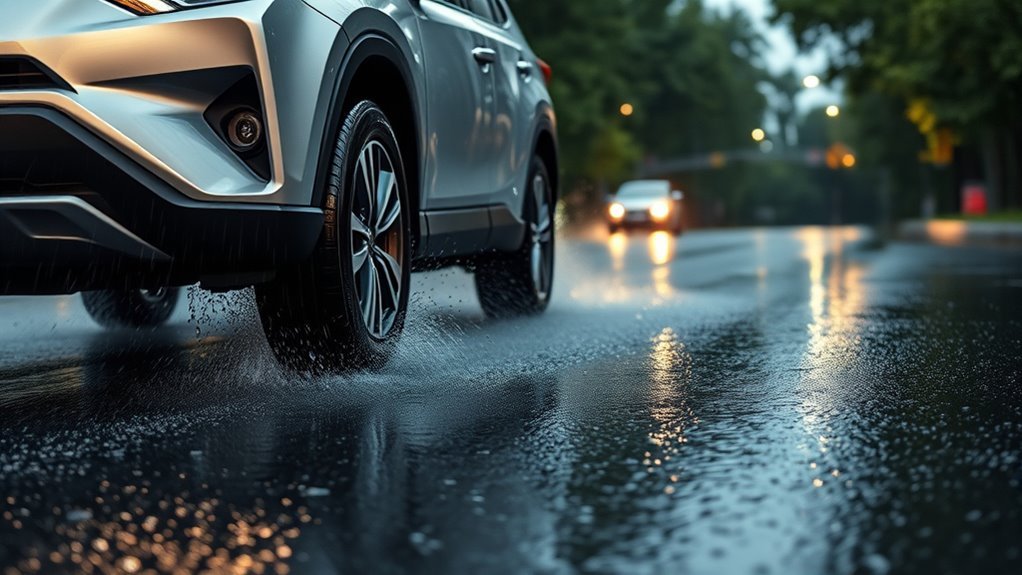
Your RAV4’s wet-weather grip depends mostly on what happens where four small contact patches meet the road: tread depth, tread pattern, rubber compound, tire pressure, speed and driver inputs. When those factors are working together, the tires can push water out from under the vehicle. When they are not, steering, braking and stability can fade quickly in rain.
Quick Answer
To reduce hydroplaning risk in a Toyota RAV4, keep tire pressure at the door-jamb specification, measure tread depth monthly, slow down in standing water, and consider replacing tires around 4/32″ for wet-weather safety rather than waiting for the 2/32″ wear bars.
Key Takeaways
- Hydroplaning happens when water pressure lifts the tire away from the road, reducing steering and braking control.
- Tread depth matters before tires reach the legal minimum; wet stopping and handling can decline noticeably around 4/32″.
- Directional grooves, wide circumferential channels, sipes and silica-rich compounds help wet traction when the tire still has enough tread.
- AWD helps distribute power, but it does not shorten stopping distance on water; tires and speed matter more.
- If your RAV4 hydroplanes, ease off the accelerator, avoid sudden steering, and let the tires regain contact smoothly.
At a Glance
| Time Required | 5–10 minutes for a basic tire check |
| Difficulty | Easy |
| Tools Needed | Tread-depth gauge, tire-pressure gauge, flashlight |
| Cost | Usually under $20 for gauges; tire replacement varies by size and model |
What Is Hydroplaning and Why It Matters for RAV4 Drivers?
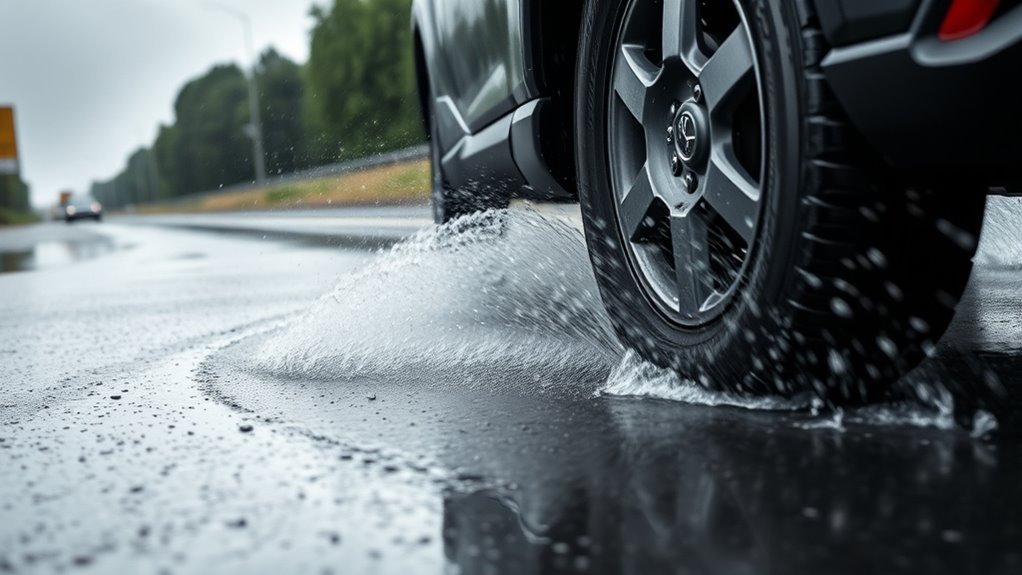
Hydroplaning happens when your tires encounter more water than the tread can move away. A thin layer of water builds between the tire and pavement, and the tire starts to skim across the water instead of gripping the road. When that happens, steering may feel light, braking response can drop, and the vehicle may drift or slide.
For RAV4 drivers, the main risk factors are straightforward: too much speed for the conditions, shallow tread, standing water, incorrect tire pressure, worn or damaged tires, and abrupt steering or braking. A Toyota RAV4’s traction control, stability control and available AWD can help manage wheel slip, but they cannot create grip if the tires are floating on water.
Warning: Do not treat AWD as hydroplaning protection. AWD can help a RAV4 accelerate more confidently, but braking and steering in rain still depend on tire contact with the road.
The best prevention is boring but effective: slow down before deep water, avoid sudden inputs, keep tires inflated to the pressure listed on your RAV4’s driver-side door placard, and replace tires before wet traction becomes poor.
[Products Worth Considering]

EVOULTES heavy duty tire inflator with an integrated gauge delivers accurate pressure readings from 10–120 PSI, helping you inflate, deflate, and check tires in one tool. The 16.5-inch extended dual-head air chuck with swivel base reaches hard-to-access dual wheel valves on trucks and RVs. A brass trigger core and side-mounted air release valve make operation smooth, with standard 1/4" NPT threading and quick-connect compatibility for easy setup.
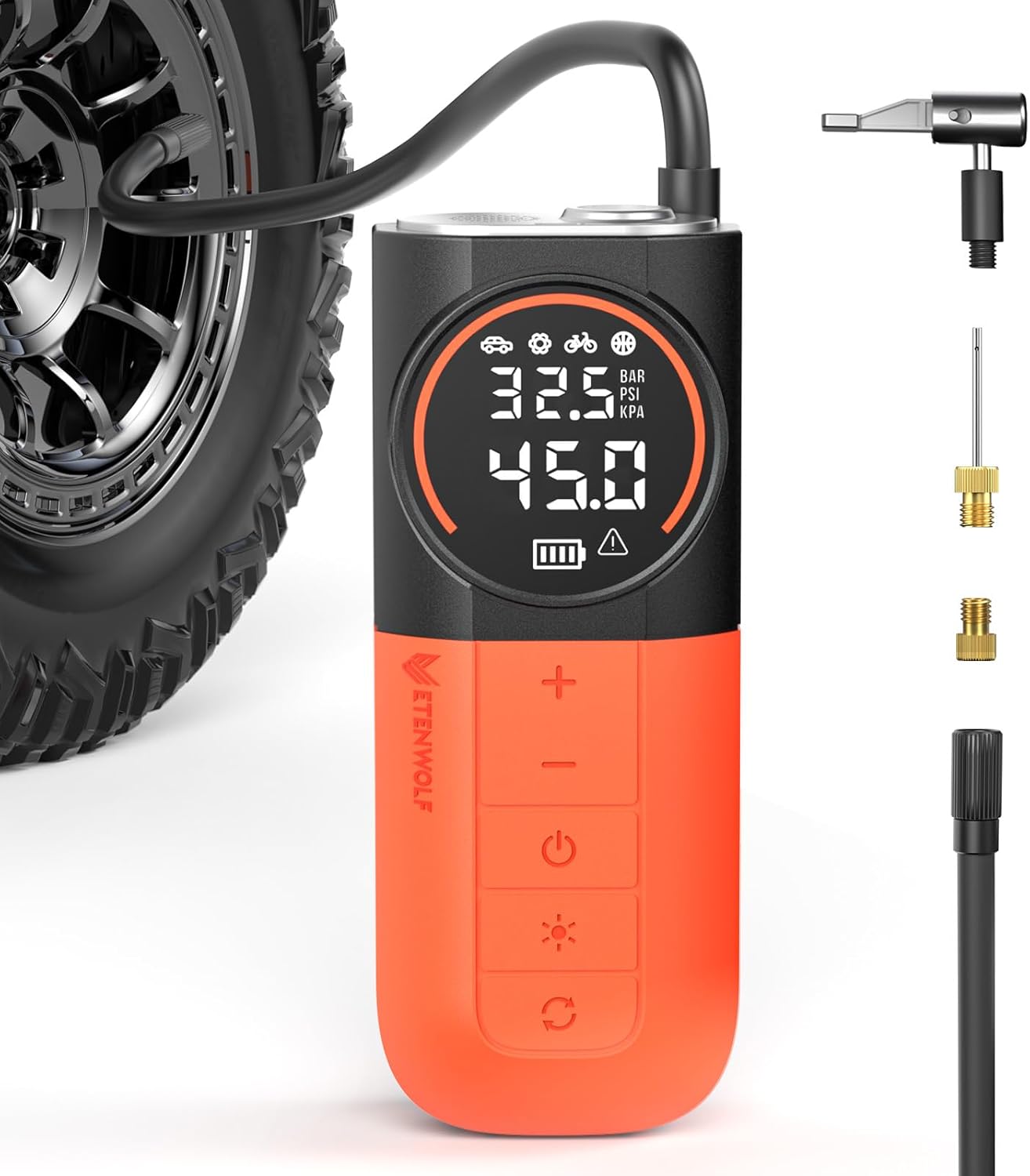
The ETENWOLF S1 cordless tire inflator delivers ultra-fast inflation with up to 160 PSI and a 20 L/min airflow for quicker tire top-offs. Its 5200mAh battery and cooling system support inflating many tires and sports balls on a single charge, while the digital pressure gauge and multi-unit display help you reach the right pressure accurately. With preset modes, pressure memory, an auto-stop feature, and an LED flashlight, it’s built for easy roadside and everyday use.

The JACO FlowPro Tire Inflator measures, inflates, and airs down tires up to 100 PSI with battery-free operation and ±2% accuracy after calibration. It features a glowing pressure dial for night visibility, a heavy-duty steel build with a hybrid hose, and a precision push-to-inflate thumb trigger. The patented Lightning Air Chuck locks on for a secure seal, and the kit includes quick-connect hardware for easy inline use with your air compressor.
What to Do Immediately If Your RAV4 Begins to Hydroplane
If your RAV4 begins to hydroplane, stay calm and focus on smooth control. The goal is to let the tires slow down and cut back through the water layer without upsetting the vehicle.
- Ease off the accelerator. Do not speed up, and do not make a sudden lift that could unsettle the vehicle.
- Hold the steering wheel steady. Point the front of the vehicle where you want it to go, using only small corrections.
- Avoid hard braking. Sudden braking can make the slide worse. Let the vehicle slow naturally first.
- If braking is unavoidable, brake progressively. In a modern RAV4 with ABS, press the brake pedal firmly and steadily if you must stop. Do not pump ABS brakes.
- Wait for the tires to reconnect. Once grip returns, continue at a lower speed and avoid standing water.
You may notice the engine revs briefly, the steering feels unusually light, or the vehicle begins to drift. Those are signs to reduce speed smoothly and avoid overcorrecting.
Pro Tip: Look where you want the RAV4 to go, not at the puddle or shoulder. Your hands tend to follow your eyes, so this helps prevent panic steering.
How Tire Tread Depth Affects Wet Traction on a RAV4
Tread depth controls how much water the tire can move away from the contact patch. Deep grooves give water somewhere to go. As tread wears down, the grooves lose volume, wet braking distances increase, and the tire is more likely to ride up on water.
The legal minimum tread depth in many U.S. passenger-vehicle situations is 2/32″, and tire wear bars are designed around that point. For wet-weather safety, however, waiting that long is not ideal. AAA testing found that tires worn to 4/32″ took longer to stop and handled worse on wet pavement than new tires. That is why 4/32″ is a practical replacement-planning point for drivers who regularly see rain.
| Tread Depth | Wet-Road Meaning | Suggested Action |
|---|---|---|
| 8/32″ or more | Strong water evacuation if the tire design is good | Inspect monthly and rotate on schedule |
| 6/32″ | Wet grip may begin to feel less sharp | Monitor more closely before rainy seasons |
| 4/32″ | Wet stopping and handling can decline noticeably | Start shopping or replace for rainy climates |
| 2/32″ | At or near wear-bar minimum; poor wet safety margin | Replace immediately |
A tire can be legal and still perform poorly in heavy rain. For wet-weather confidence, judge tires by measured tread depth and real stopping control, not only by whether the wear bars are showing.
How to Check RAV4 Tread Depth and Tire Pressure
A quick inspection tells you more than a dashboard warning light. The tire-pressure monitoring system can warn you when pressure is low, but it does not measure tread depth, cracking, uneven wear or age.
Check Tread Depth With a Gauge
- Park on a flat surface and turn the front wheels slightly so you can see the tread.
- Place a tread-depth gauge into the main grooves, not on top of a wear bar.
- Measure the inner, center and outer grooves on each tire.
- Write down the lowest reading for each tire.
- If one side is wearing faster, schedule an alignment or suspension inspection.
The quarter test can help in a pinch, but a gauge is more accurate and inexpensive. For rain performance, measurements matter.
Check Pressure When Tires Are Cold
Use the tire-pressure number on the RAV4’s driver-side door placard, not the maximum pressure printed on the tire sidewall. Check pressure before driving or after the vehicle has been parked for several hours. Underinflation can increase heat and distort the tread, while overinflation can reduce the contact patch and make the center tread wear faster.
Note: If you changed wheel size or tire size from the factory setup, ask a qualified tire shop or Toyota dealer to confirm the correct pressure and load rating.
Which Tread Patterns and Compounds Grip Best in Rain
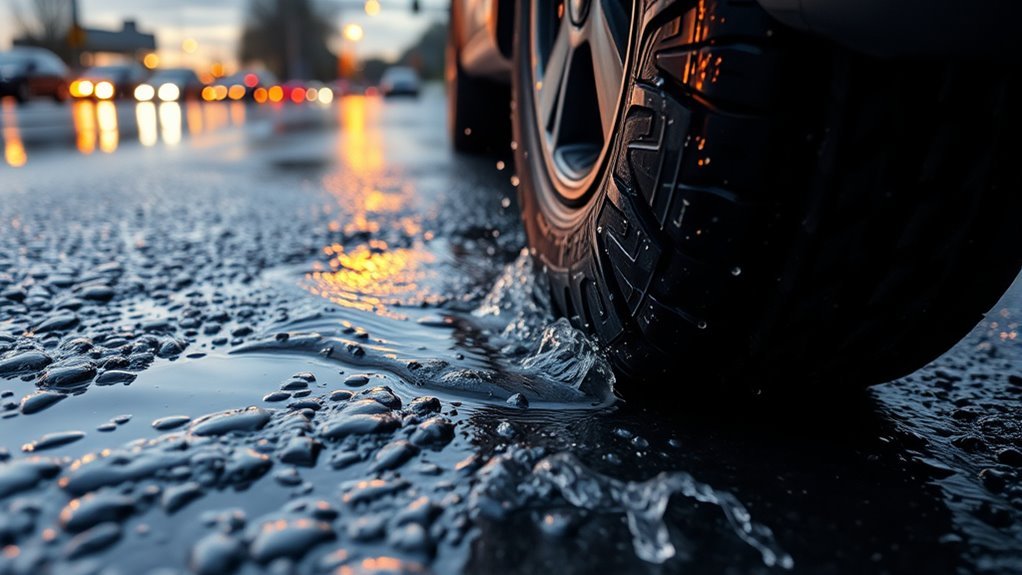
Good wet-weather tires combine water evacuation with rubber that stays grippy on wet pavement. Do not shop by tread pattern alone. The best rain tire for a RAV4 usually balances groove layout, siping, compound, braking performance, ride comfort, noise and tread life.
V-Shaped and Directional Groove Design
V-shaped or directional grooves can help move water away from the center of the contact patch and out through the sides of the tread. This is one reason directional tread designs are common on tires marketed for wet performance. Wide circumferential grooves also matter because they provide channels for water to escape as speed increases.
That said, a V-shaped pattern is not magic. A worn directional tire with 3/32″ of tread can still perform worse in rain than a less aggressive-looking tire with deeper tread and a better compound. Judge the whole tire, not just the pattern.
Sipes and Circumferential Channels
Sipes are the small slits cut into tread blocks. They create extra biting edges and can help break up the thin water film on the road. Circumferential channels are the larger grooves running around the tire. On wet highways, those larger channels are especially important because they help move water out before it lifts the tire.
Silica-Rich Rubber Compound
Silica-rich compounds are widely used in modern all-season, all-weather and performance tires because they can improve wet grip while balancing rolling resistance and wear. In practical terms, the compound helps the tire stay more adhesive on wet pavement, while the tread pattern gives water a path out.
How Driving Habits and RAV4 Setup Change Hydroplaning Risk
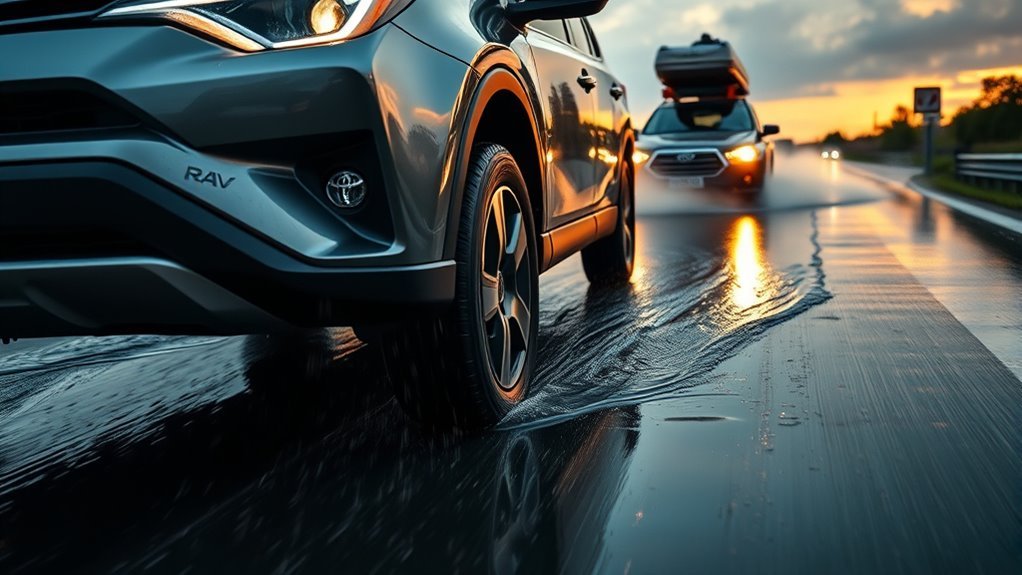
Road design and weather set the stage, but your speed, tire condition and inputs decide how much safety margin you have. The faster you drive through standing water, the less time the tread has to evacuate water from under the tire.
| Factor | How It Changes Wet Traction |
|---|---|
| Speed | Higher speed increases water pressure under the tire and raises hydroplaning risk |
| Tread depth | Shallow tread reduces groove volume and water evacuation |
| Tire pressure | Incorrect pressure changes the contact patch and wear pattern |
| Steering and braking | Abrupt inputs can overwhelm available grip |
| Tire type | All-season, all-weather and summer tires behave differently in rain and cold |
Use Eco or Normal mode in heavy rain if it helps you apply throttle more smoothly. Avoid Sport mode when roads are slick because sharper throttle response can make wheel spin easier. Leave traction control and stability control on for normal wet-road driving unless you are following the owner’s manual instructions for a special low-traction situation such as freeing the vehicle from mud or snow.
When to Replace RAV4 Tires: Measurable Signs Beyond the Wear Bar
Wear bars are not the only replacement signal. For wet traction, replace based on measured depth, condition, age and how the vehicle behaves in rain.
- Replace immediately at 2/32″. This is the common wear-bar minimum and leaves little wet-weather margin.
- Plan replacement around 4/32″ if you drive in rain often. Wet braking and handling can be meaningfully worse by this point.
- Replace tires with cracking, bulges, exposed cords or tread separation. Damage can matter more than tread depth.
- Check tire age. Read the DOT date code on the sidewall. Many vehicle and tire makers recommend inspection or replacement consideration as tires age, even if tread remains.
- Watch for handling changes. Longer stops, easy wheel spin, sliding on ramps or poor braking in rain are practical warning signs.
Also compare all four tires. A RAV4 with one or two badly worn tires can feel unstable in rain even if the other tires look fine. On AWD models, mismatched tire sizes, types or wear levels can also affect drivetrain and stability-system performance, so follow Toyota’s guidance when replacing tires.
[Products Worth Considering]

This portable cordless tire inflator delivers up to 160 PSI with fast 17 L/min airflow to help you quickly top up tires and get back on the road. It features dual power mode, running on a 21V rechargeable battery or a 12V DC adapter for convenient roadside use. An automatic shut-off with digital pressure gauge helps prevent overinflation, and a built-in LED light improves visibility in low-light conditions.

This portable cordless tire inflator delivers fast, efficient inflation for cars, motorcycles, bikes, and sports balls with a digital pressure gauge. Use the one-click PSI preset with auto shut-off for accurate, hands-free topping to your target pressure up to 150 PSI. It’s compact and rechargeable with a built-in emergency LED light plus valve adapters and accessories for quick, ready-to-go use.
Best Tire Choices for the RAV4: All-Season, All-Weather and Summer Options
The best RAV4 tire choice depends on your climate. Rain alone is different from rain plus cold mornings, slush, snow or ice.
- All-season tires: A good default for mild climates. They offer balanced ride comfort, tread life and wet performance, but snow grip varies widely by model.
- All-weather tires with the Three-Peak Mountain Snowflake symbol: A strong choice if you see rain, cold weather and occasional snow but do not want to swap seasonal tires.
- Summer tires: Strong dry and wet grip in warm weather, but they are not suitable for freezing temperatures, snow or ice.
- Dedicated winter tires: Best for regular snow, ice and freezing conditions. They are not just for deep snow; the cold-weather compound is the point.
For rainy areas, look for independent wet-braking test results, not just marketing claims. A tire with excellent wet braking, predictable handling and good tread depth will do more for safety than a tire chosen only because it has an aggressive-looking pattern.
Common RAV4 Wet-Traction Mistakes to Avoid
Many hydroplaning problems come from small habits that slowly remove safety margin. Avoid these common mistakes:
- Waiting for the wear bars. Tires can lose wet confidence before they reach 2/32″.
- Assuming AWD solves rain traction. AWD helps with acceleration, not the basic tire-to-road grip needed for braking.
- Ignoring rear tires. Poor rear grip can make the vehicle feel loose or unstable during lane changes and curves.
- Mixing tire types. Different tread patterns, sizes or wear levels can create uneven grip.
- Driving through pooled water at highway speed. Even good tires have limits when water is deep enough.
Inspecting Tires and Working With Shops to Improve Wet Performance
Before replacing tires, bring useful information to the shop. Ask for tread-depth readings at the inner, center and outer grooves of each tire. Ask whether the wear pattern points to alignment, suspension or inflation problems. If the tires are wearing unevenly, replacing them without fixing the cause can shorten the life of the next set.
When comparing new tires, ask the shop to explain:
- Wet braking performance compared with your current tires
- Treadwear warranty and expected service life
- Load index and speed rating for your RAV4 trim
- Whether the tire is all-season, all-weather, summer or winter
- Whether all four tires should be replaced together, especially on AWD models
Reputable shops can also check for recalls, date codes, puncture repairs, cupping, sidewall damage and out-of-round wear. Keep the inspection sheet or take photos of tread readings so you can track wear over time.
Frequently Asked Questions
Should I turn traction control on when it is raining?
Yes. Leave traction control and stability control on during normal rainy driving. These systems can help reduce wheel spin and improve stability, but they still depend on your tires having enough grip.
What drive mode is best for rain in a RAV4?
Normal or Eco mode is usually best because it encourages smoother throttle input. Avoid aggressive acceleration in Sport mode on slick roads. If your RAV4 has AWD, it can help distribute power, but it does not prevent hydroplaning or shorten braking distance on water.
At what speed do tires start to hydroplane?
There is no single speed because hydroplaning depends on water depth, tire tread, tire pressure, vehicle load and road surface. Risk rises as speed increases, and worn tires or deep standing water can cause trouble at lower speeds than drivers expect.
Is 4/32″ tread depth unsafe?
A tire at 4/32″ may still be legal, but wet-weather performance can be much worse than when the tire was new. If you drive in frequent rain, 4/32″ is a smart point to start replacing rather than waiting for 2/32″.
Do wider tires help a RAV4 in rain?
Not always. Wider tires can increase dry grip, but they may also have to move more water out from under the contact patch. For rain, tread design, compound, depth and speed are usually more important than width alone.
Conclusion
Wet traction is a safety system you can measure. Your RAV4 will handle rain better when the tires have enough tread depth, the pressure is correct, the tire design matches your climate, and your driving inputs stay smooth. Do not wait for worn-out wear bars if you regularly drive in heavy rain. Check tread depth, slow down around standing water, keep traction control on, and replace tires when wet braking and steering confidence begin to fade.
Sources
- NHTSA TireWise — tire maintenance, tread, pressure, aging and consumer tire-safety guidance
- AAA All-Season Tire Testing Report — wet stopping and handling comparison of new tires and tires worn to 4/32″
- U.S. Tire Manufacturers Association Tire Care Essentials — tread-depth basics, monthly inspection and tire-care guidance
- Toyota RAV4 Owner’s Manual: Driving Assist Systems — Toyota guidance on ABS, TRAC, VSC and correct tire inflation
- Tire Rack: What Causes Tire Hydroplaning? — explanation of speed, water depth, tread design and compound effects

Related Articles
Why These 10 Wheel Locks Are Perfect for Your RAV4
Protecting your RAV4 starts before you lock the doors. Wheel theft is an avoidable cost and a hassle that interrupts your routine, and choosing…
Read More
10 Best 80000 Mile Tires for Rav4
You want tires that last, keep you safe, and save you money over the long run. Choosing 80,000 mile tires for your RAV4 matters…
Read More
10 Long Warranty Tires That Will Transform Your RAV4 Experience
You spend a lot of time behind the wheel of your RAV4, and the right tires change everything from ride comfort to fuel economy…
Read More