Tire Braking Distances Explained: What It Means for Your RAV4
Your RAV4’s stopping distance is not a fixed number. It changes with speed, driver reaction time, tire tread depth, tire pressure, tire type, road surface, vehicle load, and brake condition. A well-maintained RAV4 on good tires can stop predictably on dry pavement, but worn tires, low pressure, rain, snow, towing, or extra cargo can add a lot of distance before the vehicle actually comes to rest.
Quick Answer
For a RAV4 traveling 60 mph, plan for far more than the brake-only number. A typical 1.5-second reaction time adds about 132 feet before braking begins, and good dry-road braking can add roughly 125–180 feet more. Wet roads, worn tread, underinflation, cargo, or towing can increase that total significantly.
Key Takeaways
- Stopping distance equals reaction distance plus braking distance; both matter at highway speed.
- Speed has the biggest effect because braking distance rises roughly with the square of speed.
- Tire tread, pressure, and compound can change wet-road stopping more than many drivers expect.
- AWD helps with traction when accelerating, but it does not cancel the need for good tires, safe speed, and extra following distance.
- Check tread and pressure monthly, inspect brakes regularly, and increase your following gap in rain, snow, gravel, or when towing.
At a Glance
| Time Required | 10–20 minutes for basic tire and fluid checks |
| Difficulty | Easy for tire checks; professional help recommended for brake diagnosis |
| Tools Needed | Tire pressure gauge, tread depth gauge or quarter, flashlight, owner’s manual |
| Cost | Usually $0–$15 for DIY checks; repair costs vary if tires or brakes need service |
RAV4 Stopping Distances: What the Numbers Really Mean
Published brake-test numbers are useful, but they are only controlled-condition benchmarks. A dry-road 60–0 mph braking result assumes good tires, a consistent surface, properly working brakes, and a trained test driver who is already braking. Real driving adds a reaction phase before the brake pedal is pressed.
At 60 mph, your RAV4 travels about 88 feet every second. With a 1.5-second reaction time, it moves about 132 feet before the braking distance even starts. That is why a 125-foot brake-only result can become a total stopping distance of roughly 250 feet or more in real traffic.
At 60 mph, reaction time alone can add about the length of eight average car lengths before your RAV4 begins to slow.
The biggest controllable factors are speed, tire condition, tire inflation, and following distance. Toyota directs owners to use the correct tire size and tire pressure listed in the owner’s manual or the Tire and Loading Information Label, not the maximum pressure printed on the tire sidewall. You can find the official manual through Toyota’s 2008 RAV4 Manuals and Warranties page.
[Products Worth Considering]

The JACO FlowPro Tire Inflator measures, inflates, and airs down tires up to 100 PSI with battery-free operation and ±2% accuracy after calibration. It features a glowing pressure dial for night visibility, a heavy-duty steel build with a hybrid hose, and a precision push-to-inflate thumb trigger. The patented Lightning Air Chuck locks on for a secure seal, and the kit includes quick-connect hardware for easy inline use with your air compressor.

This portable cordless tire inflator delivers up to 160 PSI with fast 17 L/min airflow to help you quickly top up tires and get back on the road. It features dual power mode, running on a 21V rechargeable battery or a 12V DC adapter for convenient roadside use. An automatic shut-off with digital pressure gauge helps prevent overinflation, and a built-in LED light improves visibility in low-light conditions.
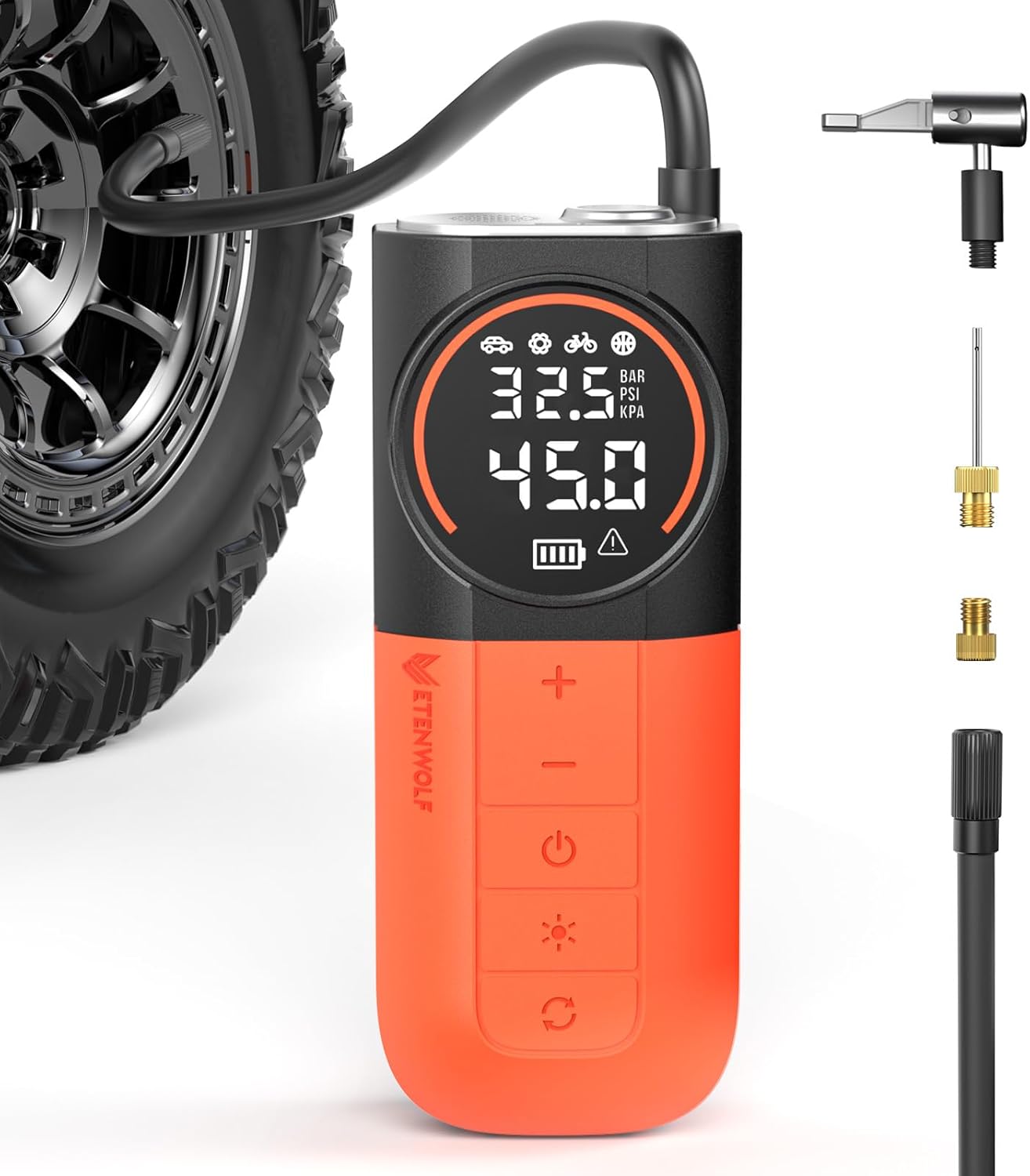
The ETENWOLF S1 cordless tire inflator delivers ultra-fast inflation with up to 160 PSI and a 20 L/min airflow for quicker tire top-offs. Its 5200mAh battery and cooling system support inflating many tires and sports balls on a single charge, while the digital pressure gauge and multi-unit display help you reach the right pressure accurately. With preset modes, pressure memory, an auto-stop feature, and an LED flashlight, it’s built for easy roadside and everyday use.
Stopping Distance vs. Braking Distance: What’s the Difference?
Drivers often use “stopping distance” and “braking distance” as if they mean the same thing, but they are different. Understanding the difference helps you choose a safer following gap.
Reaction Distance Explained
Reaction distance is how far your RAV4 travels while you notice a hazard, decide what to do, move your foot, and begin braking. It depends on speed and attention. Fatigue, phone use, poor visibility, and surprise hazards all increase it.
| Speed | Distance Traveled in 1.5 Seconds |
|---|---|
| 30 mph | About 66 feet |
| 40 mph | About 88 feet |
| 50 mph | About 110 feet |
| 60 mph | About 132 feet |
| 70 mph | About 154 feet |
Braking Distance Defined
Braking distance is the ground covered after you apply the brakes until the vehicle stops. It depends on tire grip, road surface, brake system condition, vehicle load, speed, and ABS operation. On dry pavement with good tires, a RAV4 may stop from 60 mph in roughly the 125–180 foot range depending on model year, tire, trim, surface, and test method. In rain, snow, gravel, or with worn tires, the distance can grow quickly.
Total Stopping Distance
Total stopping distance is reaction distance plus braking distance. At 60 mph, a simple real-world estimate might look like this:
- Reaction distance: about 132 feet with a 1.5-second reaction time
- Brake-only distance: about 125–180 feet on good dry pavement, depending on conditions
- Total distance: about 257–312 feet before adding rain, worn tires, poor visibility, cargo, or towing
Note: ABS helps you maintain steering control during hard braking, but it does not guarantee a shorter stop on every surface. The tires still decide how much grip is available.
How Speed Affects Your RAV4’s Stopping Distance
Speed is the strongest driver-controlled factor. When speed doubles, the energy your brakes and tires must manage rises by about four times. That is why a small increase in speed can create a much larger increase in braking distance.
| Speed Change | Approximate Braking-Energy Increase | What It Means |
|---|---|---|
| 30 to 40 mph | About 1.8× | A modest speed increase can add a meaningful stop distance. |
| 30 to 50 mph | About 2.8× | The RAV4 needs much more room than city-speed instincts suggest. |
| 30 to 60 mph | About 4× | Highway speed needs a large following gap. |
| 30 to 70 mph | About 5.4× | Extra speed leaves very little margin in rain or traffic. |
The practical rule is simple: slowing down gives you the most reliable braking improvement. Dropping from 70 mph to 60 mph may feel minor from behind the wheel, but it reduces the energy the tires and brakes must handle by about 27%.
How Tire Tread, Pressure, and Type Change Stopping Performance
Tires are the only parts of your RAV4 touching the road. Brakes can clamp hard, ABS can pulse quickly, and stability control can intervene, but none of those systems can create grip if the tires cannot hold the surface.
Tread Depth and Wet Braking
Tread depth matters most in rain because grooves move water out of the contact patch. The common legal minimum for many tires is 2/32 inch, and the federal commercial-vehicle tire rule in 49 CFR § 393.75 uses 2/32 inch as a minimum for most tire positions covered by that section. Safety margin can fade before that point, especially on wet roads.
AAA testing found that tires worn to 4/32 inch increased wet-road stopping distance by an average of 87 feet for a passenger car and 86 feet for a light truck compared with new tires. AAA recommends replacing tires at 4/32 inch when wet stopping performance has already begun to deteriorate significantly.
Warning: The penny test only screens for about 2/32 inch. If you drive often in rain, use a tread depth gauge or the quarter test and start planning replacement near 4/32 inch.
Tire Pressure and Contact Patch
Correct pressure helps the tire keep its intended shape and contact patch. Underinflation can cause extra heat, poor handling, tire damage, and longer stopping distances. Overinflation can reduce the contact patch and make the tire less compliant over rough surfaces.
The NHTSA Tire Pressure Maintenance report notes that even a few PSI away from the vehicle manufacturer’s recommended pressure can affect handling and stopping distance. Check pressure when the tires are cold, at least monthly, and before long trips.
Tire Type and Rubber Compound
Tire type changes braking behavior. Touring all-season tires, performance all-season tires, winter tires, and all-terrain tires are built with different tread patterns and compounds. A winter tire may stop better in cold snow, while a high-quality all-season or performance tire may stop better on warm dry pavement. The best choice depends on your climate and driving surface.
NHTSA explains that the Uniform Tire Quality Grading System includes traction grades related to a tire’s ability to stop on wet pavement. A higher traction grade should allow shorter wet-road stops than a lower grade, although tire maintenance, road surface, and driving style still matter.
Weather and Road-Surface Multipliers for Stopping Distance
Dry pavement is the best-case baseline. Rain, standing water, snow, ice, gravel, loose sand, and worn pavement reduce the grip available to your RAV4. That means you should slow down before the hazard, not after the vehicle is already sliding.
- Rain: Water reduces friction and raises hydroplaning risk, especially with worn tread.
- Standing water: A tire can ride on top of water instead of cutting through it, causing a sudden loss of steering and braking grip.
- Snow: All-season tires may have limited cold-weather grip; winter tires can make a major difference in suitable climates.
- Ice: Expect dramatically longer stops and use very gentle inputs.
- Gravel or dirt: Loose material can roll under the tires and increase stopping distance.
- Hills: Downhill braking needs more distance and can build heat in the brakes.
Pro Tip: In rain, avoid cruise control, reduce speed, and leave a larger gap. If your RAV4 hydroplanes, ease off the accelerator and steer smoothly in the direction you want to go rather than stabbing the brakes.
How Weight, Brakes, and AWD/2WD Change Stopping Distance
Vehicle configuration matters, but it is easy to misunderstand. AWD can help a RAV4 accelerate on slippery surfaces because it sends power to more wheels. During braking, however, all four wheels already have brakes. AWD does not magically shorten stopping distance if the tires have limited grip.
What AWD can change is weight. AWD components, passengers, cargo, roof loads, and towing all add mass. More mass means more energy to manage and more heat for the brakes to absorb. A properly maintained brake system should be designed for the vehicle, but extra load still reduces safety margin, especially on long downhill grades or repeated hard stops.
- AWD: Better launch traction in many conditions, but no substitute for good tires and safe speed.
- 2WD: Often lighter, but still limited by tire condition and road grip.
- Brake hardware: Pad condition, rotor condition, brake fluid, and ABS sensors all affect consistent performance.
- Weight distribution: Cargo placement can affect stability during hard braking.
- Towing: Trailer weight can greatly increase stopping distance if trailer brakes, tongue weight, or load balance are wrong.
[Products Worth Considering]

EVOULTES heavy duty tire inflator with an integrated gauge delivers accurate pressure readings from 10–120 PSI, helping you inflate, deflate, and check tires in one tool. The 16.5-inch extended dual-head air chuck with swivel base reaches hard-to-access dual wheel valves on trucks and RVs. A brass trigger core and side-mounted air release valve make operation smooth, with standard 1/4" NPT threading and quick-connect compatibility for easy setup.

This multi-function tire valve stem removal tool set makes it fast to remove, install, bleed, and clean valve cores for easier tire maintenance. It includes valve core removers, a 4-way spool tool, replacement valve caps, and spare cores to handle replacements and repairs with confidence. Universal compatibility suits cars, trucks, motorcycles, bicycles, and more for roadside convenience.
Practical Maintenance to Shorten Your RAV4’s Stopping Distance
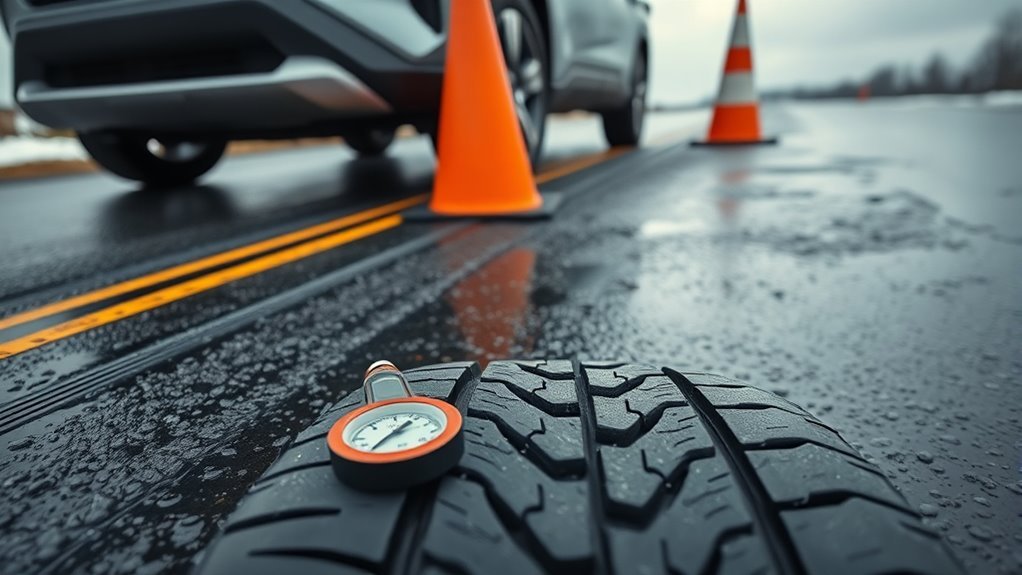
You cannot control every emergency, but you can control the condition of the tires and brakes before one happens. Use this checklist monthly and before long trips.
Check Tire Tread
Measure tread depth across the inner, center, and outer grooves of each tire. Uneven readings can point to alignment, rotation, suspension, or inflation problems.
- More than 4/32 inch: Better wet-weather margin; keep monitoring.
- About 4/32 inch: Start planning replacement if you drive in rain often.
- About 3/32 inch: Shop soon and use extra caution on wet roads.
- 2/32 inch or less: Replace the tire; wet braking and hydroplaning resistance are poor.
Maintain Correct Pressure
Check pressure when tires are cold. Use the PSI on the driver-door Tire and Loading Information Label or the Toyota owner’s manual. Do not use the sidewall maximum as your normal operating pressure.
- Check all four road tires monthly.
- Check the spare if your RAV4 has one.
- Recheck after major temperature changes.
- Inspect for nails, leaks, bulges, cuts, and sidewall damage.
Inspect Brake Components
Brake maintenance protects both stopping distance and consistency. Worn pads, grooved rotors, old fluid, stuck calipers, or damaged brake lines can increase stopping distance or create a pull during braking.
- Measure brake pad thickness and replace pads at Toyota’s service limit.
- Inspect rotors for scoring, cracking, rust ridges, heat spots, or pulsation.
- Check brake fluid level and condition; flush fluid according to service guidance or if contaminated.
- Inspect flexible brake hoses and metal lines for cracks, corrosion, and leaks.
- Scan ABS or traction-control warning lights promptly instead of ignoring them.
Note: If the brake pedal feels soft, sinks, pulses strongly, or the vehicle pulls during braking, do not rely on a DIY checklist. Have the RAV4 inspected by a qualified technician.
How to Estimate Your RAV4’s Stopping Distance Safely
You do not need to perform hard stops on public roads to understand your safety margin. The safest approach is to estimate distance using speed, reaction time, and condition multipliers, then confirm tire and brake health with routine inspections.
Warning: Do not test emergency braking on public streets, near traffic, or in parking lots with pedestrians, poles, curbs, or other vehicles. If you want hands-on practice, use a closed course, driver-training event, or a safe private area with permission.
Safe Estimation Method
- Start with speed. Convert your speed into reaction distance. At 60 mph, 1.5 seconds is about 132 feet.
- Add a dry-road brake estimate. For many compact SUVs, 60–0 mph on good dry pavement can fall around 125–180 feet depending on tires and test conditions.
- Add condition margin. Increase the gap for rain, snow, gravel, downhill grades, cargo, towing, or worn tread.
- Check your tires. Measure tread depth and pressure before judging braking performance.
- Inspect your brakes. Fix vibration, pulling, noises, warning lights, or fluid issues before they become emergency problems.
Following Distance Guide
The old “two-second rule” is often not enough for a loaded SUV, rain, worn tires, or highway traffic. Use a larger gap when conditions are less than ideal.
| Condition | Suggested Minimum Gap |
|---|---|
| Dry road, alert driver, good tires | At least 3 seconds |
| Rain or worn pavement | 4–5 seconds or more |
| Snow, ice, gravel, or poor visibility | 6 seconds or more; slow down substantially |
| Towing or heavy cargo | Add extra distance and avoid sudden braking |
Frequently Asked Questions
How do aftermarket wheels affect braking distance?
Aftermarket wheels can affect braking distance if they change tire size, tire type, wheel weight, offset, or brake clearance. Heavier wheels add rotating mass, poor offsets can affect handling, and a tire with less grip can stop worse even if the wheel looks better. Always choose wheels that fit Toyota’s specifications and leave proper brake clearance.
Do tire wear indicators relate to braking performance?
Yes. Wear bars appear when tread reaches about 2/32 inch, which is already very worn. Wet braking performance can decline before the wear bars are flush, so use a tread depth gauge and consider replacement near 4/32 inch if you drive in rain often.
Can towing reduce my RAV4’s braking efficiency?
Yes. Towing adds weight and heat load to the braking system. Stay within Toyota’s towing limits, load the trailer correctly, use properly rated trailer brakes when required, and leave more following distance. A trailer that is too heavy or poorly balanced can make emergency braking unstable.
How often should ABS sensors be inspected for optimal stopping?
ABS sensors usually do not need a separate routine inspection unless there is a warning light, wheel-speed code, damaged wiring, hub work, or brake service that exposes the area. Have them checked immediately if the ABS, traction-control, or stability-control light comes on.
Do different RAV4 model years stop differently under the same conditions?
Yes. Model year, curb weight, tire size, tire model, brake hardware, ABS calibration, hybrid components, cargo load, and tire wear can all change stopping distance. When comparing road tests, make sure the tests used similar speeds, tires, pavement, and weather.
Does AWD help a RAV4 stop faster?
Not in the way many drivers think. AWD helps send power to multiple wheels when accelerating, but braking already uses all four wheels. Tire grip, road surface, brake condition, speed, and weight have more influence on stopping distance.
What tire pressure should I use for my RAV4?
Use the pressure listed on the driver-door Tire and Loading Information Label or in the Toyota owner’s manual for your exact model year and tire size. Do not use the tire sidewall maximum as your normal pressure.
When should I replace tires for better wet braking?
Replace immediately at 2/32 inch or if there is damage, exposed cords, sidewall cracking, or uneven severe wear. For wet-weather safety, start shopping around 4/32 inch because braking and hydroplaning resistance can already be reduced.
Conclusion
Your RAV4’s stopping distance depends on more than the brake pedal. Speed, reaction time, tires, road surface, load, and brake condition all combine into the real distance needed to avoid a crash. Keep tires properly inflated, replace worn tread before wet traction disappears, inspect brakes regularly, and leave more space whenever the road or weather reduces grip. Those simple habits give you the best chance of stopping where you expect to stop.
Sources
- Toyota Owners: 2008 RAV4 Manuals and Warranties — supports using the official owner’s manual and Tire and Loading Information Label for tire specifications and pressure guidance.
- NHTSA TireWise — supports tire maintenance, inflation, tire ratings, and safety guidance.
- NHTSA Tire Pressure Maintenance: A Statistical Investigation — supports the claim that small pressure differences can affect handling and stopping distance.
- AAA: Worn Tires Put Drivers at Risk — supports wet-road stopping distance increases and the 4/32-inch replacement guidance.
- eCFR: 49 CFR § 393.75 Tires — supports the 2/32-inch minimum tread depth reference used in federal commercial-vehicle tire rules.

Related Articles
Why These 10 Wheel Locks Are Perfect for Your RAV4
Protecting your RAV4 starts before you lock the doors. Wheel theft is an avoidable cost and a hassle that interrupts your routine, and choosing…
Read More
10 Best 80000 Mile Tires for Rav4
You want tires that last, keep you safe, and save you money over the long run. Choosing 80,000 mile tires for your RAV4 matters…
Read More
10 Long Warranty Tires That Will Transform Your RAV4 Experience
You spend a lot of time behind the wheel of your RAV4, and the right tires change everything from ride comfort to fuel economy…
Read More