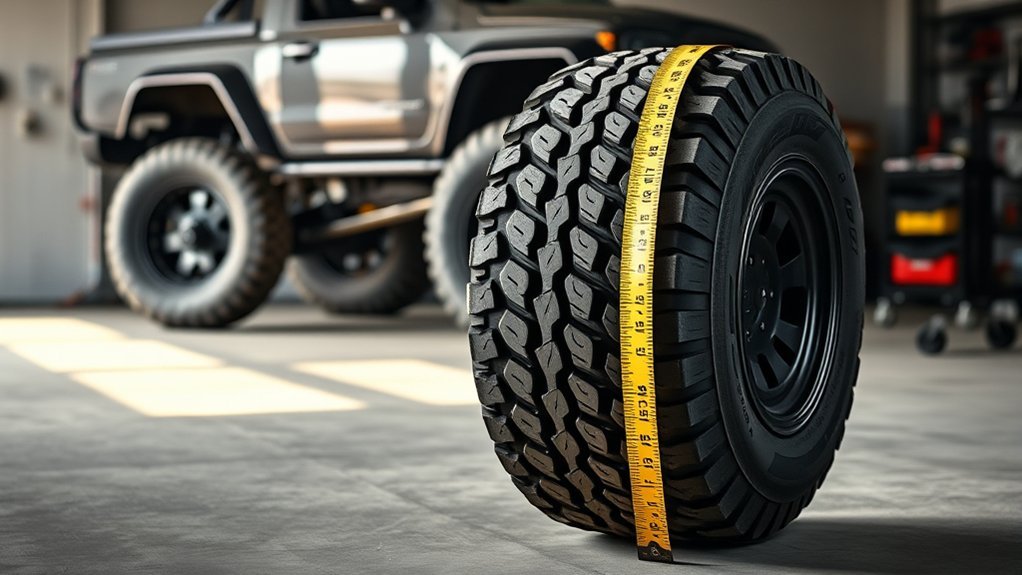
A 33-inch tire is a popular upgrade for trucks, Jeeps, SUVs, and off-road builds because it adds ground clearance, a larger footprint, and a stronger trail-ready stance without going as extreme as 35-inch or larger tires. The right 33-inch setup depends on more than height, though. You also need the correct width, wheel diameter, load rating, rim width, offset, gearing, and clearance.
Quick Answer
A 33-inch tire is a tire with an overall diameter of about 33 inches. It can improve ground clearance and off-road traction, but fitment depends on your vehicle, wheel size, tire width, offset, suspension clearance, and load rating. Many vehicles need a lift, trimming, or speedometer recalibration to run 33s correctly.
Key Takeaways
- A 33-inch tire means the tire is roughly 33 inches tall, but the exact measured diameter varies by brand, tread, rim width, and inflation.
- Common 33-inch sizes include 33×12.50R15, 33×12.50R17, 285/75R17, 275/70R18, 295/70R17, and 255/80R17.
- All-terrain tires are best for mixed road and trail use, while mud-terrain tires are better for deep mud, loose soil, and aggressive off-road driving.
- Before buying, check clearance at full steering lock, suspension compression, wheel offset, rim width, load index, speed rating, and spare-tire fit.
- A professional fitment check is smart if you are changing tire diameter, wheel offset, suspension height, or load range.
At a Glance
| Time Required | 15–30 minutes to compare sizes and specs; longer if you need a lift, trimming, alignment, or speedometer calibration. |
| Difficulty | Moderate. Choosing the tire is simple; confirming fitment, clearance, and load rating takes careful checking. |
| Tools Needed | Tire size calculator, vehicle tire placard, owner’s manual, manufacturer tire specs, tape measure, and a trusted tire shop for final fitment. |
| Cost | Varies by brand, load range, wheel size, installation, alignment, and whether your vehicle needs lift or trimming work. |
What Is a 33-Inch Tire?
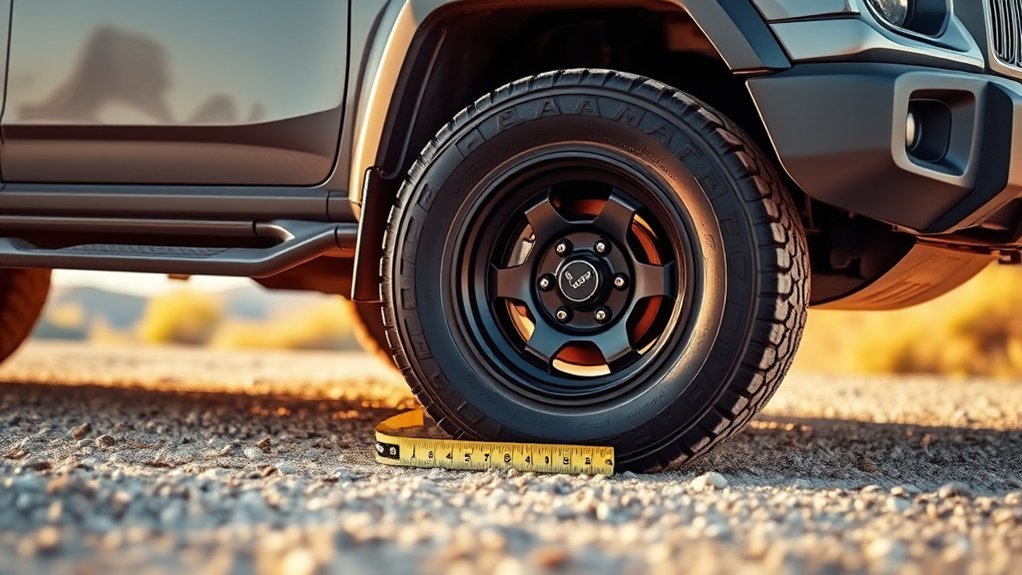
A 33-inch tire is a tire with an overall diameter of about 33 inches when mounted and inflated. That measurement is the total height of the tire from the ground to the top of the tread, not the wheel size. A 33-inch tire can be written in flotation sizing, such as 33×12.50R17, or in metric sizing, such as 285/75R17 or 275/70R18.
The exact height is usually approximate. A tire advertised as 33 inches may measure slightly shorter or taller depending on the tread design, load range, rim width, inflation pressure, and manufacturer specs. That is why you should use the brand’s published specifications before buying, not just a generic calculator.
The main benefit is extra ground clearance. A taller tire raises the axle and differential slightly, which helps when you drive over rocks, ruts, snow, sand, and uneven trails. You also get a larger tire footprint, which can improve traction when the tread pattern matches the terrain.
Note: A 33-inch tire does not automatically fit every truck or SUV. Width, wheel offset, suspension travel, fender clearance, and steering clearance matter just as much as diameter.
Common 33-Inch Tire Sizes
Some tire sizes are written directly in inches, while others use metric sizing. In a metric size like 285/75R17, the first number is section width in millimeters, the second number is the sidewall height as a percentage of that width, and the last number is the wheel diameter in inches.
The basic formula is:
((section width × aspect ratio × 2) ÷ 25.4) + wheel diameter = approximate tire diameter in inches
| Size | Approx. Diameter | Best For |
|---|---|---|
| 33×12.50R15 | About 33 inches | Classic off-road builds with 15-inch wheels |
| 33×12.50R17 | About 33 inches | Jeeps, trucks, and modern off-road wheels |
| 285/75R17 | About 33.8 inches | Tall 33-inch setups; close to a small 34 |
| 275/70R18 | About 33.2 inches | Trucks and SUVs with 18-inch wheels |
| 295/70R17 | About 33.3 inches | Wider stance and stronger off-road footprint |
| 255/80R17 | About 33.1 inches | Narrow “pizza cutter” fitments for clearance and snow |
These are estimates. Always compare the tire manufacturer’s real measured diameter, approved rim width range, tread width, section width, load index, and revolutions per mile before ordering.
How to Choose 33-Inch Tires
To choose the right 33-inch tires, start with how you drive. A daily-driven truck needs different tires than a weekend trail rig. A tire that works well in mud may feel loud and heavy on the highway, while a quieter all-terrain tire may not clean out as well in deep clay or loose soil.
Tire Size Basics
Look at four numbers before you buy: diameter, width, wheel diameter, and load rating. Diameter affects clearance and gearing. Width affects rubbing and steering feel. Wheel diameter controls which rims the tire fits. Load rating and load index tell you whether the tire can safely support your vehicle.
Check your driver-side door placard and owner’s manual first. Then compare your current tire size with the 33-inch size you want. A larger tire can make your speedometer read lower than your actual road speed, reduce acceleration, affect braking feel, and change shift points on some vehicles.
Terrain And Tread
The best tread depends on your normal driving surface. If you spend most of your time on pavement with occasional trails, choose an all-terrain tire. If you drive deep mud, slick clay, loose dirt, or more aggressive trails, consider a mud-terrain tire. If you want a stronger off-road look and more bite than many A/T tires without going full M/T, a hybrid-terrain tire can be a middle ground.
| Tire Type | Strengths | Trade-Offs |
|---|---|---|
| All-terrain | Best balance for pavement, gravel, light mud, snow, towing, commuting, and overlanding. | Less self-cleaning bite than mud-terrain tires in deep mud. |
| Mud-terrain | Aggressive tread voids, stronger loose-surface traction, better mud clearing, and tougher trail presence. | More road noise, more weight, shorter tread life in some use cases, and weaker wet-road manners on some models. |
| Hybrid-terrain | More aggressive than many A/T tires while keeping better road comfort than many M/T tires. | Not as quiet as mild A/T tires and not as mud-focused as true M/T tires. |
Fitment And Clearance
Fitment is where many 33-inch tire upgrades succeed or fail. You need to check clearance while the vehicle is parked, while turning at full lock, and while the suspension is compressed. Rubbing can happen at the fender liner, bumper, mud flap, body mount, upper control arm, sway bar, pinch weld, or inner wheel well.
- Wheel offset and backspacing: A different offset can push the tire outward or inward, changing fender and suspension clearance.
- Rim width: The tire must be approved for your wheel width. Too narrow or too wide can affect sidewall shape and handling.
- Load index and load range: The tire must support your vehicle, passengers, cargo, and towing needs.
- Speed rating: Choose a tire with a speed symbol that matches your use and vehicle requirements.
- Spare tire: Make sure the spare location can hold the new 33-inch size.
- Gearing: Larger tires can make the vehicle feel slower, especially on heavy trucks or vehicles with taller axle ratios.
- Calibration: A larger tire may require speedometer, odometer, transmission, or driver-assistance calibration.
Warning: Do not choose a 33-inch tire by diameter alone. A tire with the wrong load rating, rim-width range, offset, or clearance can rub, handle poorly, affect braking, or overload the tire.
Best 33-Inch Mud-Terrain Tires
Choose a 33-inch mud-terrain tire if your priority is deep mud, loose soil, rocky trails, and maximum off-road bite. Mud-terrain tires use larger tread voids, aggressive shoulders, and stronger sidewall designs to help the tire dig, clean out, and resist damage on harsh surfaces.
Popular 33-inch mud-terrain options to compare include the BFGoodrich Mud-Terrain T/A KM3, Toyo Open Country M/T, Yokohama Geolandar M/T G003, and Nitto Trail Grappler M/T. Instead of choosing by star rating alone, compare measured diameter, weight, tread depth, load range, sidewall construction, noise expectations, wet-road reviews, and warranty terms.
Mud-terrain tires are not the best choice for every driver. If your vehicle spends most of its life on highways, towing, commuting, or wet pavement, a good all-terrain tire may be safer, quieter, and longer-lasting.
[Products Worth Considering]

The GADFISH spare tire carrier is built for reliable hauling with a reinforced welded triangular structure and a behind plate that securely holds the tire up to 150 lbs. It fits a wide range of trailer wheel lug setups, making it suitable for boat trailers as well, while the sloping design helps reduce wind resistance and provides low-ground clearance. Installation is designed to be straightforward with different length bolts and no drilling required.

Secure a full-size spare on your trailer with this powder-coated steel spare tire mount bracket. It fits most 4-, 5-, and 6-lug wheel bolt patterns and mounts to trailer tongues up to 4 in wide and 5 in tall. Built for reliable carry with a max 150 lb load rating and includes zinc-plated hardware for straightforward installation.

Keep your tires properly inflated with this analog VONDIOR tire pressure gauge, designed for fast, easy readings without batteries. The swiveling, two-axis hose and large glow dial help you measure at any tire angle with instant visibility. Built with a protective rubber shield, it supports durable, low-maintenance use for cars and trucks.
Best 33-Inch All-Terrain Tires
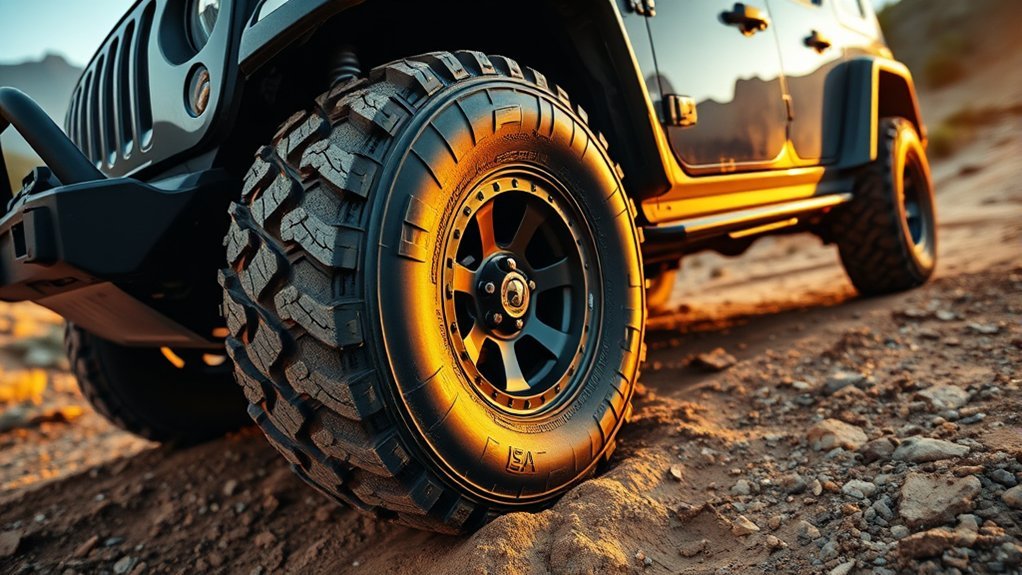
A 33-inch all-terrain tire is usually the best choice for daily drivers, overlanding rigs, tow vehicles, and mixed-use trucks. A/T tires are built to balance road comfort with traction on dirt, gravel, grass, light mud, and snow. Many modern A/T tires also carry the three-peak mountain snowflake symbol when they meet severe snow service requirements.
[Products Worth Considering]

These M14x1.5 closed-end chrome lug nuts are a one-piece replacement designed for secure fitment on compatible GM, Ford, and select Chrysler/Dodge models. Featuring a 60-degree conical seat and anti-rust chrome plating, they help resist corrosion and maintain a bright look for everyday driving. Built for long-term durability, they include OEM-style part references and are backed by 12 months of support.

Measure tire tread depth quickly and accurately with this LUMITECO dial gauge that reads in 1/32" increments up to 14/32". The color-coded green/yellow/red zones make it easy to judge tire wear and know when replacement is needed. A rugged, compact design with a protective pouch helps keep the gauge ready for use on cars, trucks, motorcycles, and more.

The SAFELIFE dial tire tread depth gauge measures tread depth in 1/32 inch increments with clear, easy-to-read 2-inch dial face. Color zones using a traffic light system help you quickly judge whether tread is low, marginal, or ample for safer driving. Built with a durable zinc cast body and a metal detect probe for precise, comfortable use across cars, motorcycles, trucks, and buses.
Top A/T Picks To Compare
Current all-terrain options worth comparing include the BFGoodrich All-Terrain T/A KO3, Falken Wildpeak A/T4W, Toyo Open Country A/T III, and Nitto Ridge Grappler. The KO3 is the newer BFGoodrich all-terrain generation in available sizes, while the KO2 may still appear in remaining sizes or older listings. The Ridge Grappler is best described as a hybrid-terrain tire, so compare it against both A/T and M/T options if you want a more aggressive look.
Key All-Terrain Features
Look for stable center tread blocks, siping for wet and snow traction, reinforced sidewalls, stone ejectors, and a compound designed for both road wear and trail durability. If you drive in winter conditions, check whether the exact size you want carries the 3PMSF symbol, not just M+S marking.
Best Uses For 33s
For most drivers, 33-inch all-terrain tires are ideal for daily commuting, camping trips, fire roads, snow days, beach driving, gravel roads, moderate trails, and overlanding. They give a noticeable improvement in clearance and stance while staying more manageable than heavier 35-inch or 37-inch upgrades.
Pro Tip: If two 33-inch tires look similar, compare their actual measured diameter and weight. A heavier tire can reduce acceleration and fuel economy more than the size number suggests.
How to Buy 33-Inch Tires Online
To buy 33-inch tires online, start with your vehicle’s factory tire size, wheel diameter, load rating, and trim level. Then compare the 33-inch size you want against the tire manufacturer’s spec sheet. Do not rely only on a retailer’s “fits your vehicle” message if you have aftermarket wheels, a lift kit, leveling kit, fender trimming, or suspension changes.
- Check your current tire size on the sidewall and door placard.
- Choose the target 33-inch size, such as 285/75R17 or 33×12.50R17.
- Confirm wheel compatibility, including wheel diameter and approved rim width range.
- Compare actual specs, including measured diameter, section width, tread depth, load index, speed rating, and tire weight.
- Read use-case reviews from drivers with similar vehicles and terrain.
- Plan installation costs, including mounting, balancing, alignment, calibration, and possible trimming.
- Verify local rules for tire coverage, lift height, and fender exposure.
If you are choosing between two sizes, pick the one that fits cleanly with the least cutting, rubbing, and drivetrain strain. A slightly narrower 33-inch tire can sometimes fit better than a wide 12.50-inch tire, especially on factory wheels.
[Products Worth Considering]
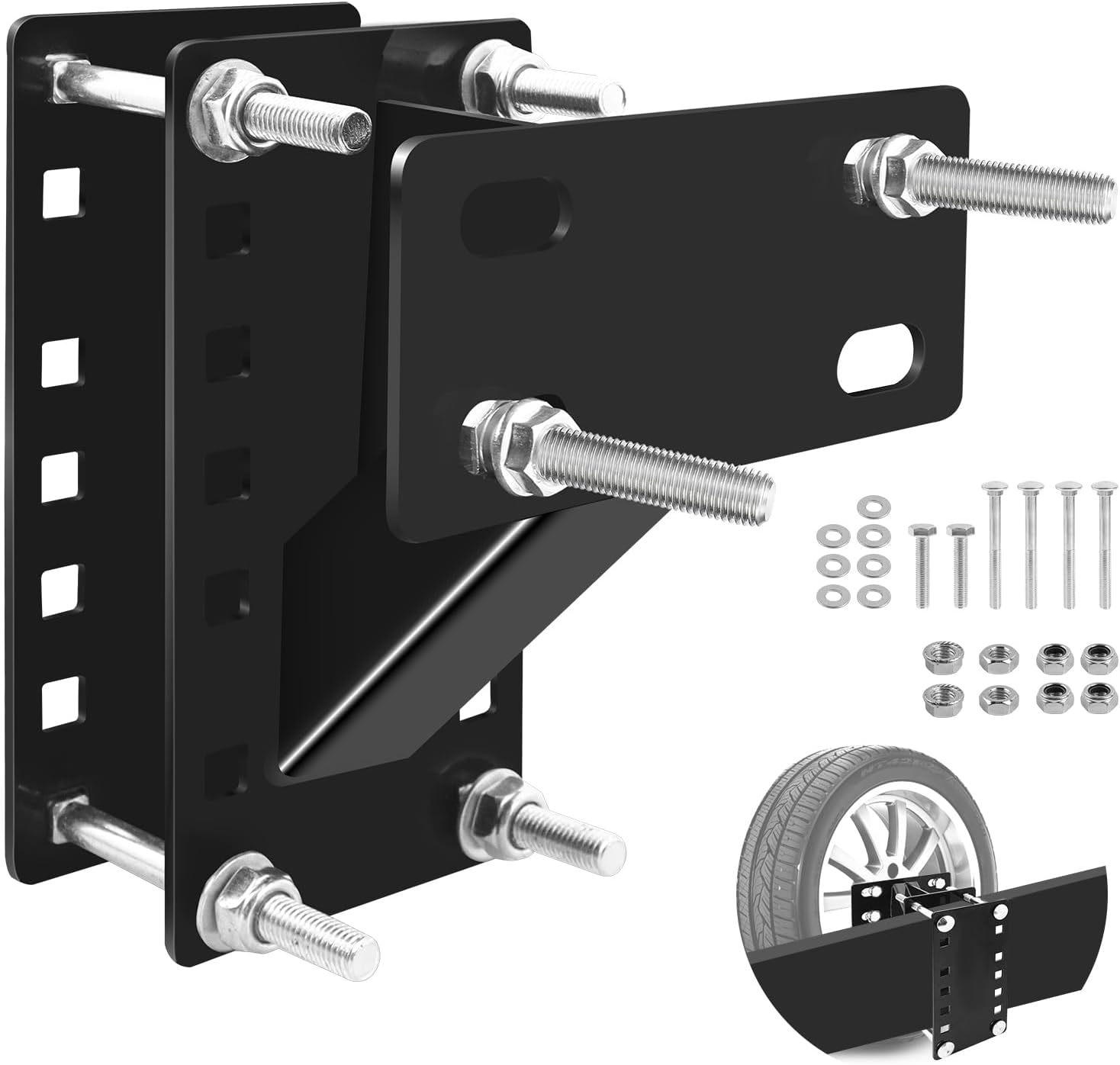
This universal spare tire mount carrier holder is built for utility trailers and boat trailers, offering a secure fit for 4, 5, and 6 lug wheels. It supports multiple bolt pattern sizes and a heavy-duty load capacity while resisting rust with a durable finish. The design allows easy installation and lets you choose the steel beam height for a better fit.
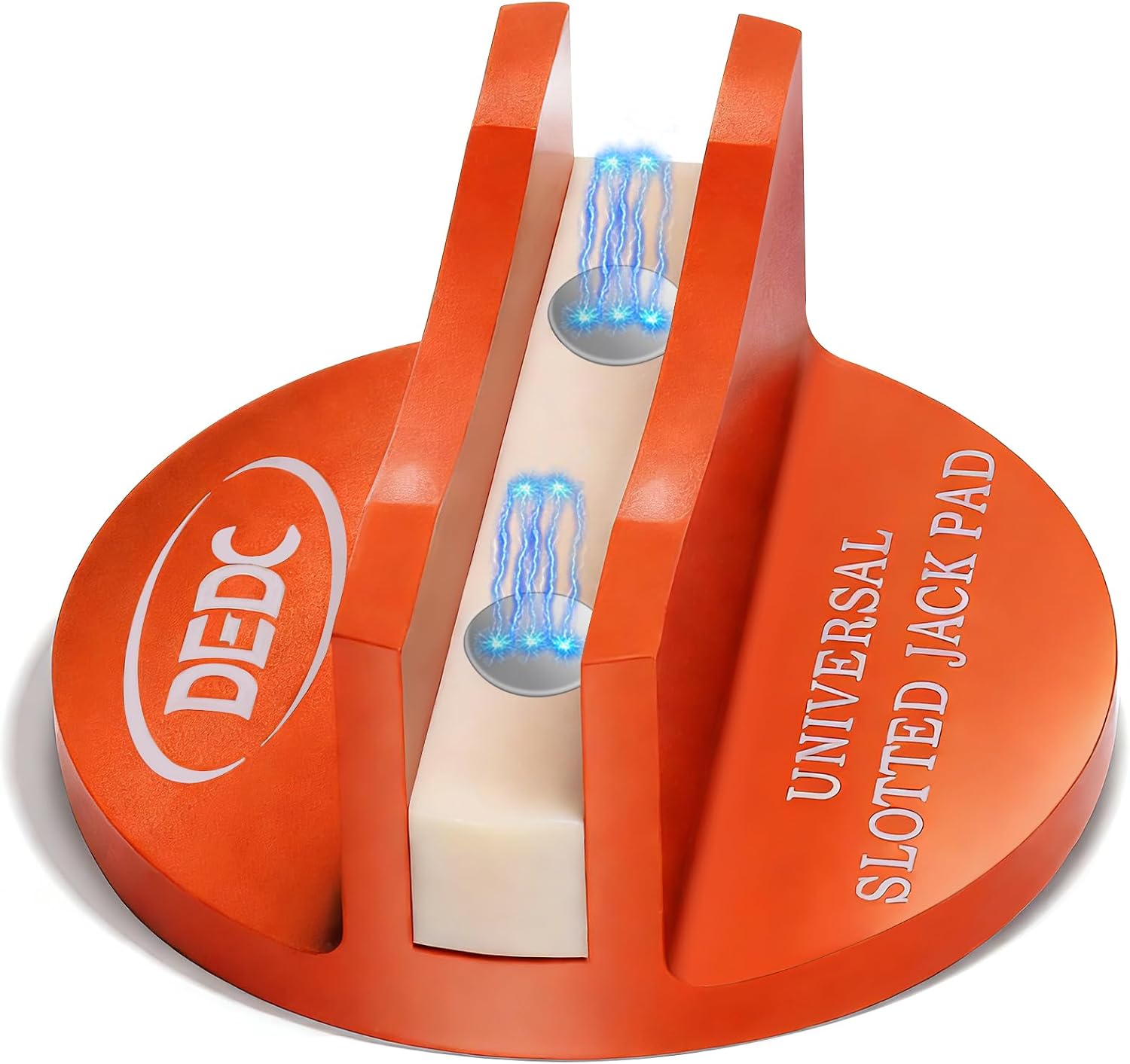
This universal magnetic jack pad is designed to protect pinch welds when lifting vehicles, helping prevent seam damage or warping. Crafted from solid aluminum with a nylon pad insert, it provides reinforced structural support and a secure fit for most single-vehicle pinch welds. Slotted for strong magnet holding, it supports safe jacking for cars, SUVs, trucks, and more.

Monitor tire tread wear with a smart, color-coded depth gauge that shows clear condition ranges at a glance. The bar is range marked for fast, easy readings, helping you maintain safer traction and performance. Each gauge is portable with a pocket clip, and the set includes 20 units for daily use and sharing.
How to Fit 33-Inch Tires on Your Vehicle
Fitting 33-inch tires starts with measuring space, not buying the most aggressive tread you can find. Check the front tires first because they move through steering angle and suspension travel. Rear tires can also rub under load, especially when towing, carrying cargo, or flexing off-road.
- Measure your current setup: Record current tire size, wheel width, offset, and suspension height.
- Compare the new size: Use the manufacturer’s measured diameter and section width.
- Check steering clearance: Turn lock-to-lock and inspect the liner, control arms, sway bar, bumper, mud flaps, and body mount area.
- Check compression clearance: Leave room for suspension travel, not just parked clearance.
- Test the spare location: Make sure the spare tire carrier, under-bed hoist, or rear gate can hold the larger tire.
- Plan alignment: Larger tires, lifts, and offset changes can affect alignment and steering feel.
- Calibrate if needed: Correct speedometer and odometer readings when the diameter changes enough to matter.
Some stock vehicles can clear narrow 33s with little or no modification. Others need a leveling kit, suspension lift, body mount chop, fender liner trimming, bumper trimming, or different wheel offset. The cleanest setup is the one that clears at full lock and full compression without cutting into tire safety margins.
The best 33-inch tire is not the biggest tire that almost fits. It is the tire that fits safely, carries the load, matches your terrain, and keeps the vehicle predictable on the road.
Frequently Asked Questions
What size would a 33-inch tire be?
A 33-inch tire can be written as 33×12.50R15, 33×12.50R17, 285/75R17, 275/70R18, 295/70R17, or 255/80R17, depending on width and wheel diameter. The exact measured diameter varies by manufacturer, so always check the tire’s spec sheet.
Are 33-inch tires the same as 275?
No. “33-inch” describes approximate overall diameter, while “275” describes section width in millimeters. A 275 tire can be close to 33 inches only when the aspect ratio and wheel diameter create that height, such as 275/70R18.
Is a 33-inch tire the same as a 265?
No. A 265 tire is 265 millimeters wide, but its height depends on aspect ratio and wheel diameter. For example, 265/70R17 is usually closer to 31.6 inches, while 265/75R16 is also usually around 31.6 inches. You need the full size code to compare it with a 33-inch tire.
Is a 285 a 33-inch tire?
Sometimes. A 285/75R17 is usually about 33.8 inches tall, so it is often treated as a tall 33-inch tire. A 285/70R17 is usually about 32.7 inches tall. The width alone does not tell you the full tire height.
Do 33-inch tires need a lift?
Some vehicles can fit certain 33-inch tires on stock suspension, especially narrower sizes. Others need a leveling kit, suspension lift, trimming, different wheel offset, or a combination of those changes. Always check full-lock steering and suspension compression before assuming they fit.
Will 33-inch tires affect my speedometer?
Yes, they can. If the new tire is taller than the factory tire, each wheel rotation travels farther. That can make the speedometer and odometer read lower than actual speed and distance. Many vehicles can be recalibrated with a dealer tool or aftermarket programmer.
Conclusion
A 33-inch tire gives you a strong mix of ground clearance, traction, and off-road stance without the bigger compromises of 35-inch or larger upgrades. For the best result, choose the size by full specifications, not by diameter alone. Check width, rim fit, load index, speed rating, actual measured diameter, wheel offset, suspension clearance, and speedometer accuracy.
If you drive mostly on pavement with weekend trail use, a 33-inch all-terrain tire is usually the smartest choice. If your vehicle sees deep mud, loose soil, and harder trail use, a mud-terrain tire may be worth the extra noise and weight. Either way, confirm fitment before you buy so your new tires improve capability without creating rubbing, handling, or safety problems.
Sources
- Tire Rack — How Do I Calculate Tire Dimensions? — supports metric tire size formula and nominal-dimension warning.
- NHTSA TireWise — supports tire safety ratings, tire buying checks, and tire-rating awareness.
- Tire Industry Association — Reading a Tire Sidewall — supports load index, speed symbol, and DOT/TIN sidewall guidance.
- U.S. Tire Manufacturers Association — Severe Snow Conditions Bulletin — supports 3PMSF severe snow marking explanation.
- BFGoodrich All-Terrain T/A KO3 — supports current KO3 all-terrain product details.
- Falken Wildpeak A/T4W — supports current A/T4W warranty and 3PMSF product details.