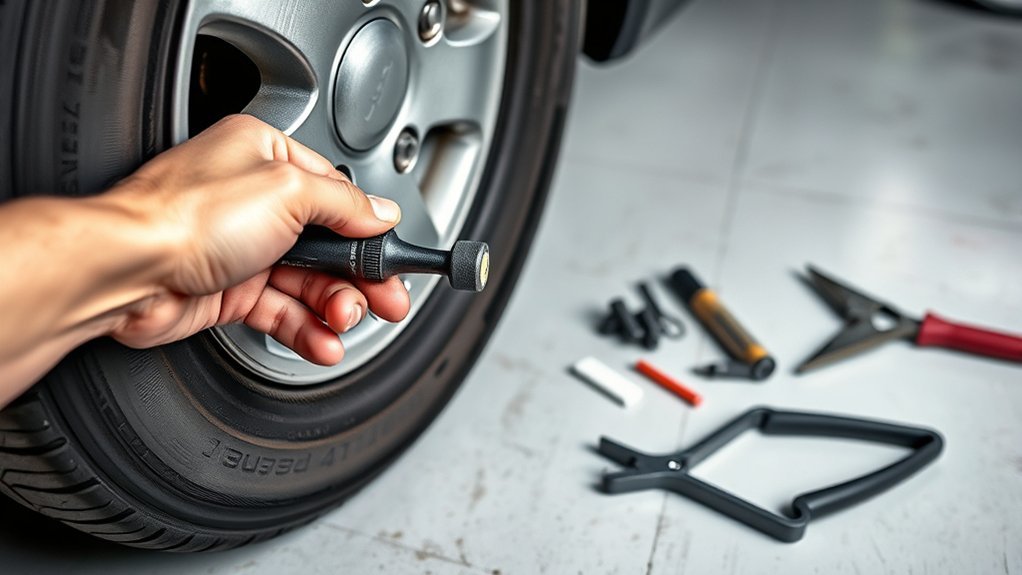
You can fix many small bicycle tubeless tire punctures without removing the tire or wheel. The fast method is to find the leak, clear the object, insert the right-size tubeless plug, rotate the tire so sealant reaches the repair, reinflate, and check for bubbles or hissing. This guide is for bicycle tubeless tires. Car, motorcycle, ATV, and UTV tires need vehicle-specific repair procedures and should be inspected by a qualified tire professional if the casing, bead, or sidewall is damaged.
Quick Answer
For a small bicycle tubeless tread puncture, leave the tire on the wheel, remove the debris, insert a tubeless plug, rotate the tire to coat the repair with sealant, inflate to a safe pressure, and test with soapy water. Use a boot, tube, or replacement tire for large cuts, sidewall damage, bead damage, or bulges.
Key Takeaways
Key Takeaways
- Use sealant alone for tiny punctures that stop leaking quickly; use a plug when sealant sprays, bubbles, or will not hold pressure.
- Clean the puncture area and remove glass, wire, thorns, or nails before inserting the plug.
- Match the plug size to the hole. A plug that is too small can leak; one that is too large can damage the casing.
- Inflate within the tire and rim limits, then test the repair with soapy water and a pressure check.
- Treat sidewall cuts, bead damage, exposed casing, bulges, and repeated pressure loss as safety problems, not routine plug repairs.
At a Glance
| Time Required | 5–15 minutes for a basic plug repair; longer if the bead unseats or you need to install a tube. |
| Difficulty | Easy for small tread punctures; moderate if the tire is fully flat, the bead is loose, or the cut needs a boot. |
| Tools Needed | Tubeless plug kit, pump or CO2 inflator, sealant, valve-core remover, clean cloth, gloves, tweezers or pliers, soapy water, tire boot, and spare tube. |
| Cost | Usually a few dollars per repair after you already own a plug kit and inflator. |
What You Need for a Tubeless Plug Repair
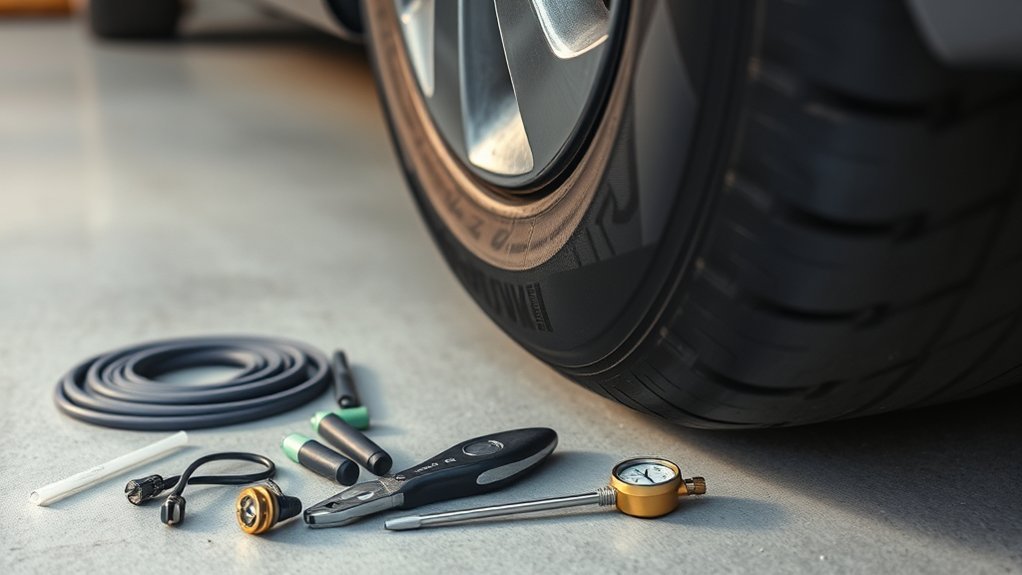
For a tubeless plug repair, carry a compact plug kit with rubberized strips or plug darts, an insertion fork or plug tool, a pump or CO2 inflator, and enough sealant for your tire size. A large supply of plugs helps if you ride sharp gravel, desert thorns, or remote trails where one repair may not be enough.
Gloves keep sealant off your hands, and tweezers or needle-nose pliers help you pull out glass, wire, staples, or thorns without tearing the casing. A valve-core remover makes it easier to add fresh sealant through the valve. Keep a tire boot and spare tube in your kit as a backup for cuts that are too large for sealant and plugs.
Warning: Do not treat every puncture as pluggable. Replace the tire or stop riding if you see a casing bulge, torn bead, long sidewall slash, exposed cords, repeated pressure loss, or damage close to the bead.
Decide Whether to Use Sealant, a Plug, a Boot, a Tube, or a New Tire
Before you push a tool into the tire, decide what kind of damage you have. This prevents wasted sealant and keeps you from riding on an unsafe casing.
- Sealant only: Use when the leak is tiny, slows quickly, and stops after you rotate the puncture to the bottom of the wheel.
- Plug: Use when sealant keeps spraying or bubbling from a small tread puncture.
- Second plug: Use only when the first plug is slightly undersized and the casing still looks intact.
- Boot plus tube: Use when a cut is too large for a plug or the tire will not hold air tubeless.
- Replace the tire: Use when the sidewall, bead, or casing structure is damaged.
Recent tubeless repair-tool testing shows that plug tools are most useful when a puncture is too large for sealant alone, while sealant tests show that hole size performance varies by formula, pressure, and tire setup. That means the safest rule is to inspect the tire, match the repair to the damage, and recheck pressure after every repair.
[Products Worth Considering]

Rhino USA’s 86-piece tire repair kit provides everything you need for quick, emergency flat repairs, including a reamer and plug insertion tool plus 60 reusable tire plugs. The heavy-duty, metal-handled design helps you fix punctures from nails and screws on tubeless tires for cars, trucks, motorcycles, ATVs, UTVs, and more. A high-visibility compact case stores easily for on-the-go use, with illustrated instructions to help you complete repairs with confidence.

Get back on the road fast with this compact tire plug repair kit for tubeless tires. It includes self-vulcanizing rubber plugs, T-handle rasp and insert tools, and a storage box that fits in your glove compartment for easy access. Also included are a 4-way valve steam tool set with valve cores and caps for added roadside convenience.

Orange Seal regular formula tubeless sealant quickly seals punctures and forms a durable bond inside your tire to help reduce flats. Made with natural latex, it adheres effectively to rubber and seals from the inside out, including the critical bead-to-rim interface for a reliable ride. It seals punctures up to 1/4 inch, slices up to 3/4 inch, and performs in temperatures as low as 11°F across MTB, road, cyclocross, gravel, and e-bike applications.
Clean the Tubeless Tire Puncture
Start by finding the leak. Look for wet sealant, listen for hissing, or rotate the tire slowly and watch for spray. If the leak is hard to see, brush soapy water over the tread and look for bubbles.
Clear any sealant residue from the puncture area so the plug can grip the rubber. Use a clean cloth to wipe away dirt, grit, and excess sealant. Good prep helps create temporary seals that hold long enough to finish the ride or get home.
Clear Sealant Residue
Wipe the area with a clean, dry cloth before inserting the plug. If the puncture is coated with dried latex, gently rub the outside of the tire until the plug tool can enter cleanly. Avoid aggressive sanding or cutting because that can weaken the casing.
Remove Embedded Debris
Inspect the puncture for glass, wire, thorns, staples, nails, or flint. Wear gloves, grip the object with tweezers or needle-nose pliers, and pull straight out. Do not dig sideways or enlarge the hole. After the object is removed, rotate the puncture to the bottom of the wheel for a moment so internal sealant can flow toward the leak.
- Find the wet spot, hiss, or bubble.
- Remove the object without widening the hole.
- Wipe away excess sealant and dirt.
- Choose sealant, plug, boot, tube, or replacement based on the damage.
Choose the Right Tubeless Plug Kit
A good tubeless plug kit should include several plug sizes and a sturdy insertion tool. Thin plugs suit narrow road or gravel punctures. Thicker strips or multiple-plug systems suit larger gravel and mountain-bike tread punctures. If you often ride rough terrain, a kit designed for quick emergency fixes can save time when sealant is spraying.
Choose the smallest plug that fills the hole firmly. A loose plug will leak, but forcing an oversized plug into a tight puncture can tear threads in the casing. Read your kit instructions before you need it on the roadside, because insertion depth and trimming guidance differ by plug design.
Pro Tip: Preload one plug before big rides. When sealant is spraying, a preloaded tool is faster than trying to thread a sticky strip through a tiny fork with cold or wet hands.
[Products Worth Considering]
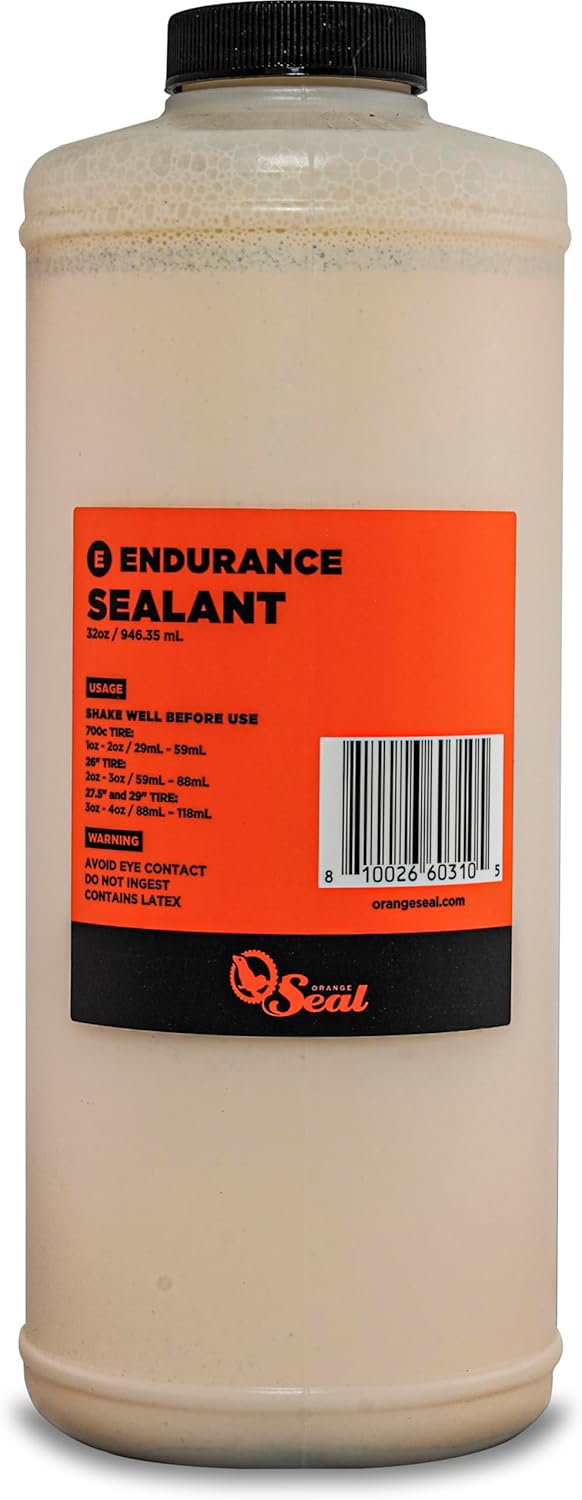
Orange Seal Endurance Formula delivers long-lasting latex protection with a durable sealant that can stay effective for 60–120 days between top-offs. It uses nanite particles to rapidly seal punctures up to 1/4" and slices up to 1/2", helping maintain reliable tubeless performance across MTB, road, CX, and gravel conditions. The biodegradable formula is engineered to work across major tubeless-ready and UST brands and a wide range of rubber compounds.

This flat tire repair kit lets you handle punctures quickly with two plug sizes for different damage, helping restore drivability on the spot. It includes T-handle insertion and spiral probe tools plus lubricant and a utility knife, all packed in a compact bag for easy carry. Universal compatibility makes it suitable for tubeless tires across cars, motorcycles, ATVs, trucks, jeeps, and more.
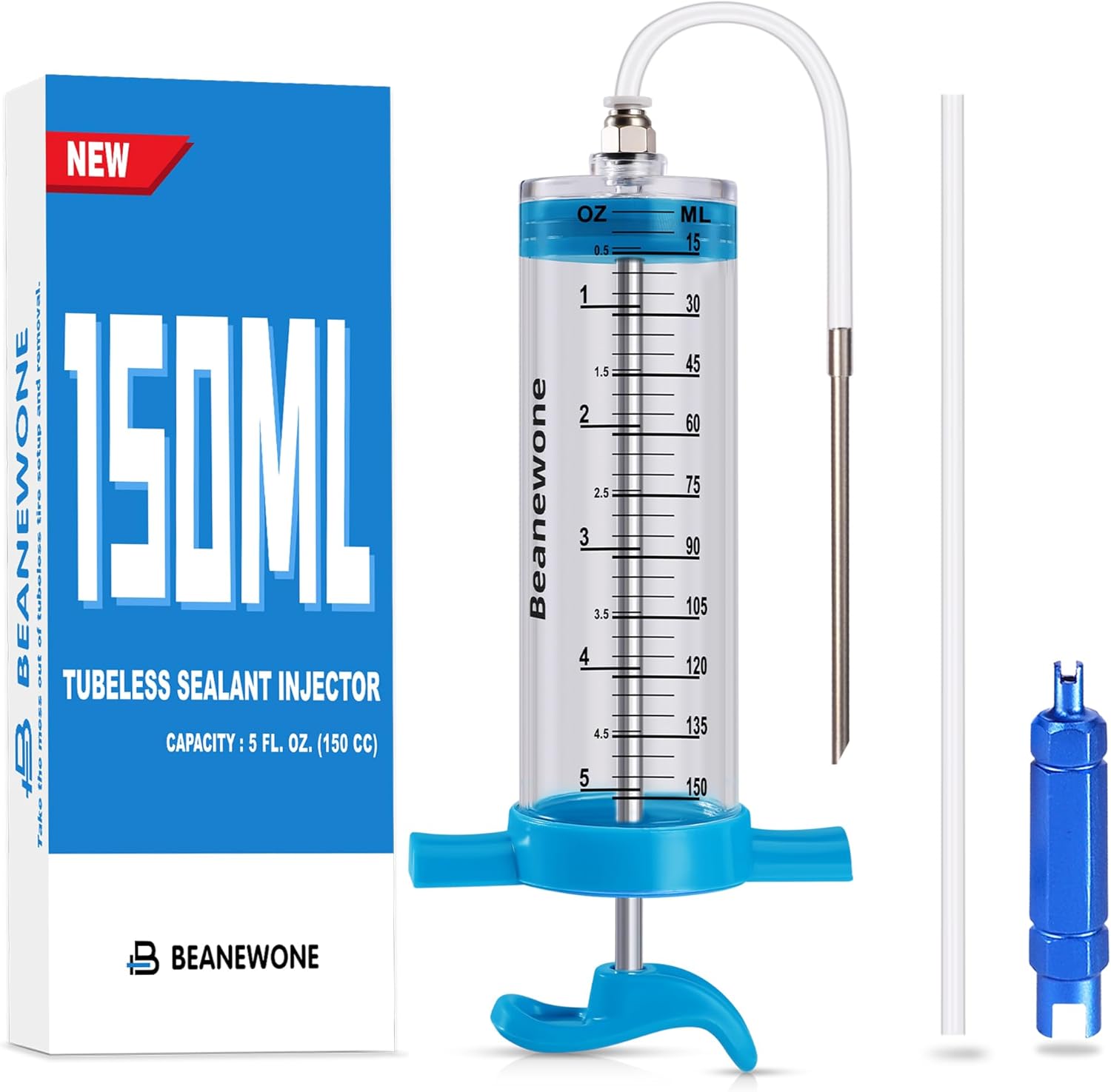
Make tubeless sealant installs faster and cleaner with this 150ml injector and clear measurement body. It connects and disconnects with a simple push-to-connector, then injects sealant directly into Schrader or Presta valve stems after removing the valve core. Includes a valve core remover tool to help you prepare and seal tires with less mess.
Plug the Hole Without Removing the Tire
Insert the plug directly into the tread puncture while the tire stays mounted. Push the loaded insertion tool into the hole until the plug sits deep enough to fill the leak, then pull the tool out so the plug remains in the tire. Leave a small amount of plug material outside the tread and trim it only after the tire holds pressure.
Do not rely on sealant smeared on the outside of the tire. The important sealant is inside the casing. After plugging, rotate and shake the wheel so sealant coats the plug from the inside. This is a common routine maintenance skill for riders using tubeless setups.
- Load the plug into the insertion tool.
- Push the plug into the puncture with steady pressure.
- Pull the tool out while leaving the plug in place.
- Rotate the tire so sealant reaches the plug.
- Inflate and check for leaks.
Check Whether the Plug Sealed Properly
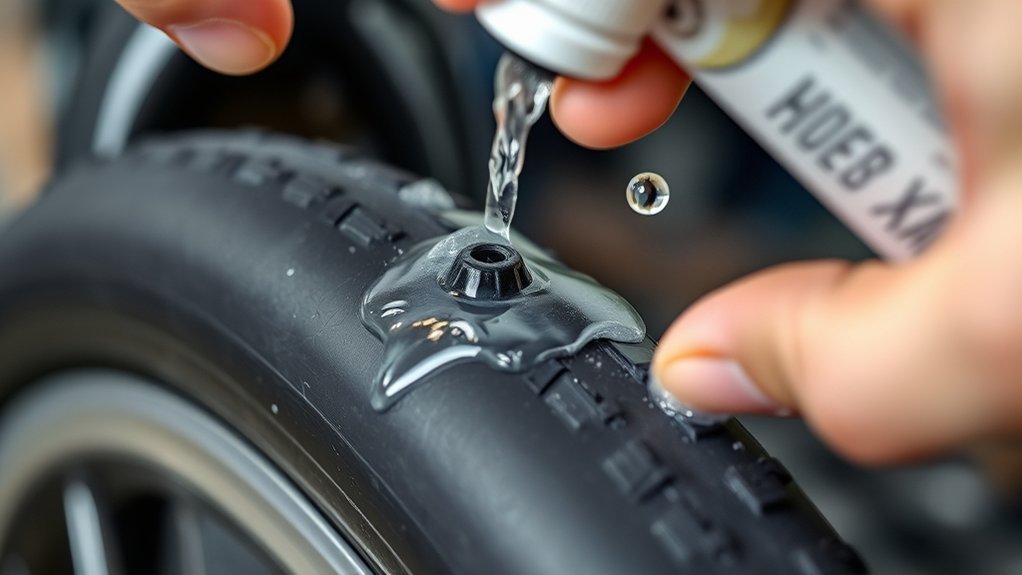
With the plug in place, inflate the tire partway and inspect the repair. Brush soapy water over the puncture. If bubbles keep growing, air is still escaping. If the leak slows but does not stop, rotate the puncture to the bottom of the wheel and wait a minute so sealant can pool around the plug.
If bubbling continues, insert a second small plug only if the damage is in the tread and the casing still looks sound. If the hole is a cut, the sidewall is damaged, or the casing has a bulge, do not keep stuffing plugs into it. Use a boot and tube to get home slowly, or replace the tire.
Note: A repair can pass the first bubble test and still lose pressure later. Check the tire again after a short ride, after one hour, and before the next ride.
Add Sealant for Extra Leak Protection
Fresh tubeless sealant helps close tiny gaps around the plug and protects against future small punctures. If the tire sprayed a lot of sealant before you stopped, top it off before riding far. Remove the valve core, inject the correct amount of compatible sealant, reinstall the core, and rotate the wheel so the sealant coats the inside of the tire.
Sealant dries out over time, especially in hot, dry climates. Check the level every few months, and more often if you ride frequently, store the bike in heat, or notice slow pressure loss. Heavier utility, ATV, or automotive tires with 6-ply tubeless construction require different products and procedures than bicycle tubeless tires, so follow the tire and vehicle guidance for those applications.
Fresh Sealant Boost
If the plug is installed but the tire still loses pressure slowly, add sealant before assuming the plug failed. Remove the valve core, inject sealant, reinstall the core tightly, inflate, then spin and shake the wheel. This helps sealant reach the sidewalls, tread, bead area, and plug.
- Put the valve near the upper half of the wheel before removing the core.
- Add the sealant amount recommended for your tire size.
- Reinstall the valve core and inflate.
- Shake and rotate the wheel to spread sealant evenly.
- Repeat the soapy-water test.
Seal Small Punctures
Small punctures from thorns, fine wire, or glass often seal without a plug. Rotate the puncture to the bottom, let sealant gather at the leak, then reinflate. If the sealant sprays continuously or the tire will not hold pressure, install a plug instead of waiting until the tire is fully flat.
Top Off Regularly
Keep sealant fresh so the tire is ready before the next puncture. Dried latex cannot flow to a leak. If you hear dried clumps inside the tire or see repeated slow pressure loss, open the tire or remove the valve core and refresh the sealant.
Pump the Tire Back Up
Once the puncture is sealed, inflate the tire with a mini pump, floor pump, CO2 inflator, or electric inflator. Use a pressure that fits your tire width, rim type, rider weight, and terrain, and never exceed the lower maximum listed by the tire or rim manufacturer. For vehicle tires, always follow the correct tire pressure ratings for that vehicle rather than bicycle guidance.
If the tire went completely flat, the bead may have unseated. You may need a stronger burst of air to reseat it. Stop if the bead will not seat evenly, sealant leaks from the rim bed, or the tire bulges. Those signs can point to rim tape, bead, tire, or compatibility problems.
Warning: Do not overinflate a damaged tire to “make the plug hold.” Too much pressure can reopen the puncture, unseat the bead, or worsen casing damage.
Repair Sidewall Cuts With a Patch or Boot
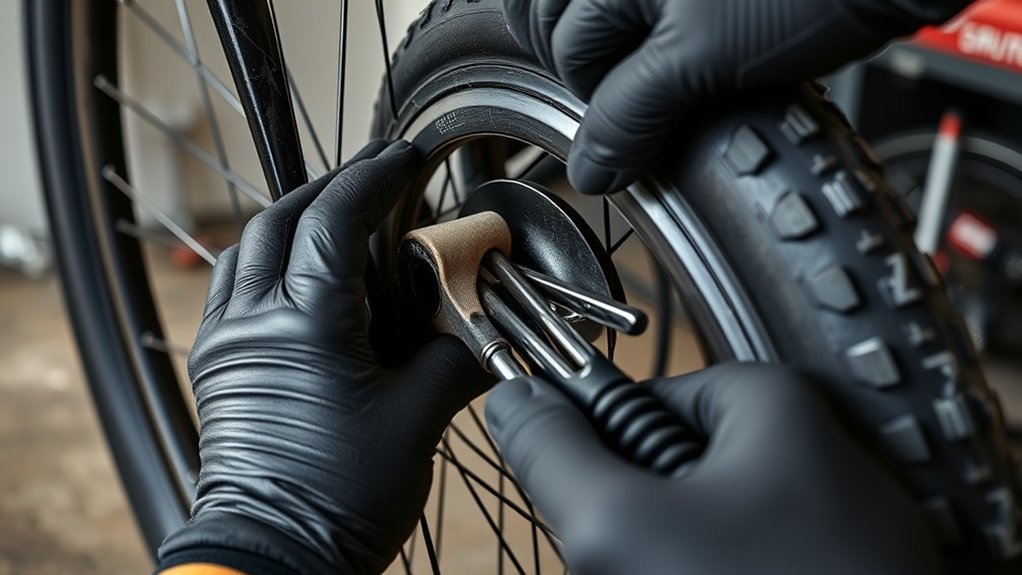
Sidewall cuts are more serious than tread punctures because the sidewall flexes constantly and carries casing load. A tire boot or internal patch can help you get home, but it should not be treated as a guaranteed permanent repair if the casing threads are torn.
Use a boot to support a cut casing, not to hide unsafe damage. If the tire bulges, the cords are torn, or the cut is near the bead, replace the tire.
For a large tread cut or sidewall slash, wipe away sealant, place the boot inside the tire so it extends beyond the damaged area, install a tube if the tubeless setup will not hold air, and ride gently home. Thick rubber patches may help in some off-road tire contexts, but bicycle sidewall damage still needs careful inspection after the ride.
- Clean sealant and grit from the inside of the tire.
- Place a boot or patch larger than the cut.
- Install a tube if the tire cannot hold air tubeless.
- Inflate cautiously and check for bulging.
- Ride slowly and replace the tire if the casing is damaged.
[Products Worth Considering]

TireJect Off-Road Tire Sealant Kit provides 5-in-1 sealing to help fix tread punctures up to 3/8", sidewall punctures up to 3/8", bead leaks, slow leaks, and minor dry rot on low-speed tires. It permanently seals with liquid rubber, recycled tire particles, and Aramid fibers, making it ideal for flats caused by thorns, nails, and screws. The included dispensing cap attaches to the valve stem for a no-mess installation, along with a metal valve core remover tool and valve stem cap. This kit is for off-road use only.

Wykodra tire plugs provide quick vulcanizing repairs for tubeless tires, helping you seal punctures and get back on the road. The industrial-strength rubber creates a long-lasting, leak-resistant bond and is designed for emergency fixes without removing the tire. Choose between two standard plug sizes with color-matched options for small to larger damage across many vehicles and off-road uses.
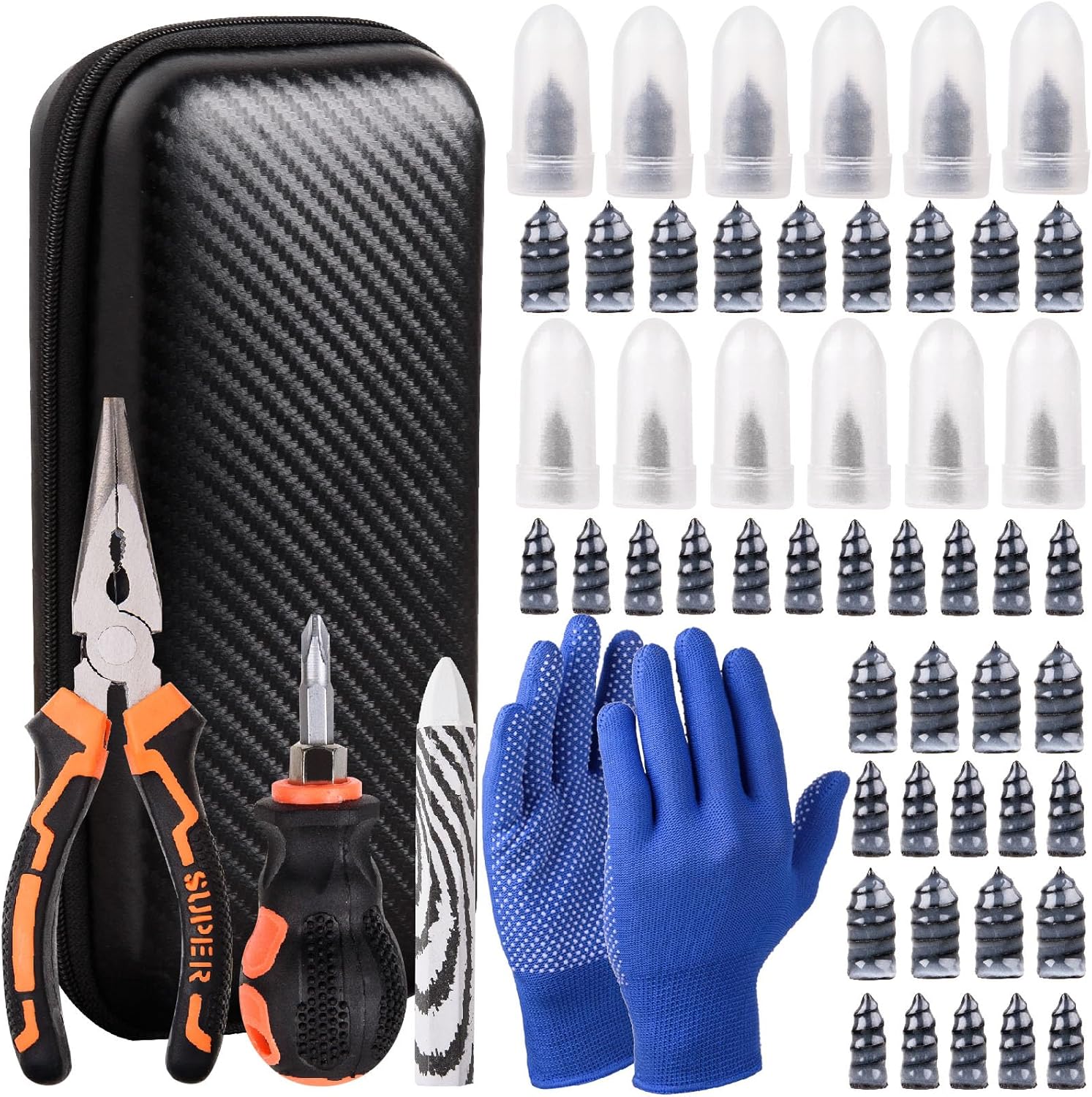
This tire sidewall puncture repair kit fixes flats fast without removing the tire, helping you get back on the road in minutes. It includes self-tapping repair nails, essential tools, gloves, and a portable storage bag for convenient roadside use. Designed for tubeless tires, it helps create a tight, leak-resistant seal for cars, motorcycles, trucks, SUVs, and ATVs.
Use a Tube When the Damage Is Too Big
If the cut is too large for sealant and plugs, install a spare tube so you can finish the ride safely. Remove the tubeless valve, inspect the inside of the tire, and pull out any sharp debris. If the tire has a cut, place a boot between the tire and tube so the tube does not bulge through the opening.
Seat the tire beads carefully and make sure the tube is not pinched. Inflate slowly, check both sides of the tire, then ride conservatively. Carrying a spare tube is one of the most reliable quick roadside fixes, even if you normally ride tubeless.
Troubleshooting a Tubeless Repair That Still Leaks
If the tire still leaks after plugging, do not assume the puncture is the only problem. Work through the common failure points.
- Bubbles at the plug: Add sealant, rotate the tire, or add a second plug if the tread casing is still intact.
- Bubbles at the valve: Tighten the valve nut by hand, check the valve core, and inspect the valve base inside the rim.
- Bubbles at spoke holes or rim bed: Rim tape may be damaged or poorly sealed.
- Air leaking at the bead: The bead may be dirty, unseated, damaged, or incompatible with the rim.
- Pressure drops overnight: Recheck the plug, sealant level, valve core, and rim tape before riding.
Prevent Future Tubeless Flats
To reduce future tubeless flats, keep the tire sealed, inspect it often, and ride within the intended pressure range. Tubeless systems are reliable when the tire, rim, tape, valve, and sealant all work together.
- Check sealant regularly and top it off before it dries.
- Inspect rim tape for wrinkles, cuts, gaps, or sealant leaking into spoke holes.
- Use a pressure gauge before rides instead of guessing by feel.
- Remove embedded debris before it works deeper into the casing.
- Choose puncture-resistant tires or liners if you ride sharp terrain.
- Replace tires with exposed casing, sidewall cuts, bead damage, or repeated unexplained leaks.
Consistent inspection improves tire durability and reduces the chance that a small puncture turns into a ride-ending failure.
Frequently Asked Questions
How do you fix a tubeless tyre puncture at home?
Find the leak, remove the debris, clean the area, insert a tubeless plug if sealant alone will not stop the leak, add fresh sealant if needed, inflate to a safe pressure, and check with soapy water. If the tire has a sidewall cut, casing bulge, bead damage, or exposed cords, replace it instead of relying on a plug.
Can you repair a puncture without taking the wheel off?
Yes, many small bicycle tubeless tread punctures can be repaired without taking the wheel off. Insert a plug from the outside, rotate the tire so sealant reaches the repair, reinflate, and test for bubbles. Remove the wheel only if you need to install a boot, tube, internal patch, or new tire.
How can you repair a hole in a tire without dismounting the tire?
For a bicycle tubeless tread hole, remove the sharp object, push a properly sized plug into the puncture, leave the plug in place, rotate the tire to spread sealant, then inflate and check for leaks. Do not use this method for torn sidewalls, bead damage, or motor-vehicle tire repairs.
How do you permanently repair a tubeless tire?
Some small bicycle tread punctures can last for the remaining life of the tire when plugged well and supported by sealant. A more permanent repair requires inspecting the inside of the tire and applying a proper internal patch if the casing is suitable. Replace the tire if the structure is damaged.
Should you trim a tubeless tire plug?
You can trim long plug ends after the tire holds pressure, but do not pull on the plug while cutting. Leave a small amount proud of the tread so the plug is not disturbed. Some plug systems are designed to wear down naturally, so follow the kit instructions.
When should you stop riding on a plugged tubeless tire?
Stop riding if the tire keeps losing pressure, the plug spits out, the sidewall is cut, the casing bulges, cords are visible, or the bead will not seat evenly. A plug is a repair for many tread punctures, not a fix for structural tire damage.
Conclusion
With the right plug kit, fresh sealant, and careful pressure checks, you can fix many small bicycle tubeless tire punctures without removing the tire. Clean the hole, insert the plug, rotate the tire so sealant reaches the repair, inflate safely, and verify the seal before riding hard. If the damage is large, near the sidewall, close to the bead, or still leaking after repair, use a boot and tube to get home or replace the tire.
Sources
- Cycling Weekly: Best tubeless tyre puncture repair tools 2026 — supports plug-tool use, plug sizing considerations, and real-world repair-tool limitations.
- Cycling Weekly: Best tubeless sealant 2026 — supports sealant performance differences by product, pressure, and puncture size.
- Cyclingnews: Best tubeless road tyres 2026 — supports the distinction between sealant, plugs, and larger cuts in road tubeless systems.
- Bicycling: How to achieve the perfect bike tire pressure — supports using tire type, rider setup, and terrain instead of one universal PSI number.
- Bicycling: Fall bike maintenance essentials — supports regular tire inspection and checking that tubeless setups contain enough sealant.