
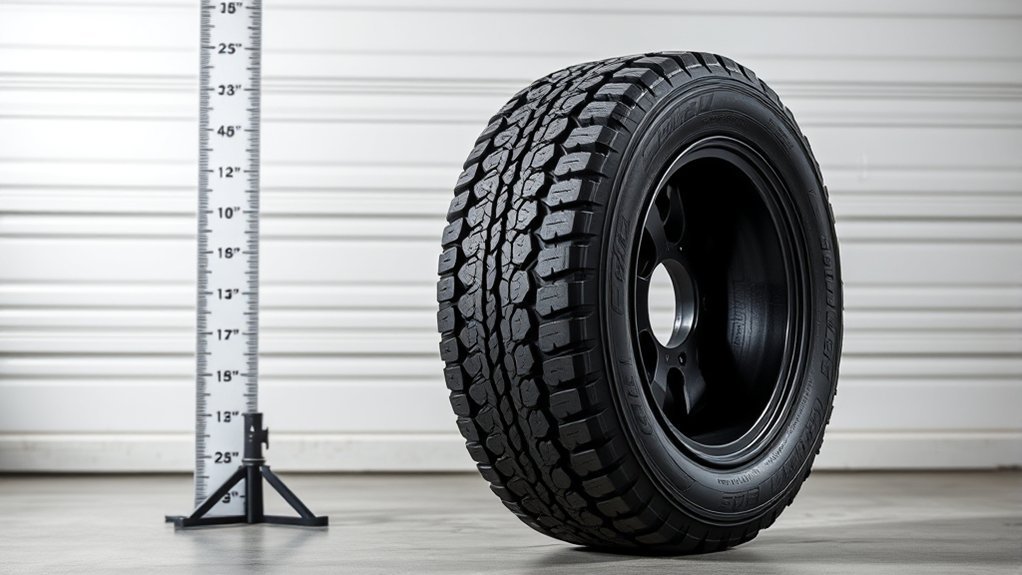
A 315/70R17 tire is about 34.4 inches tall and 12.4 inches wide by nominal tire-size math. More precisely, it calculates to about 34.36 inches in overall diameter, 12.40 inches in section width, and 8.68 inches of sidewall on a 17-inch wheel. Actual mounted size can vary by tire model, wheel width, air pressure, tread depth, and vehicle load.
Quick Answer
A 315/70R17 tire is roughly 34.4 inches tall, 12.4 inches wide, and has an 8.7-inch sidewall. In millimeters, that is about 873 mm overall diameter, 315 mm section width, and 220.5 mm sidewall height. It is close to, but not exactly the same as, a 35×12.50R17 tire.
Key Takeaways
- A 315/70R17 tire calculates to about 34.36 inches tall, usually rounded to 34.4 inches.
- The nominal section width is 315 mm, or about 12.4 inches.
- The sidewall height is 220.5 mm, or about 8.7 inches.
- Real-world diameter and width vary by tire brand, tread pattern, wheel width, pressure, and load.
- Before buying, verify wheel width, offset, load index, speed rating, fender clearance, and your vehicle’s Tire and Loading Information Label.
What Does 315/70R17 Mean?
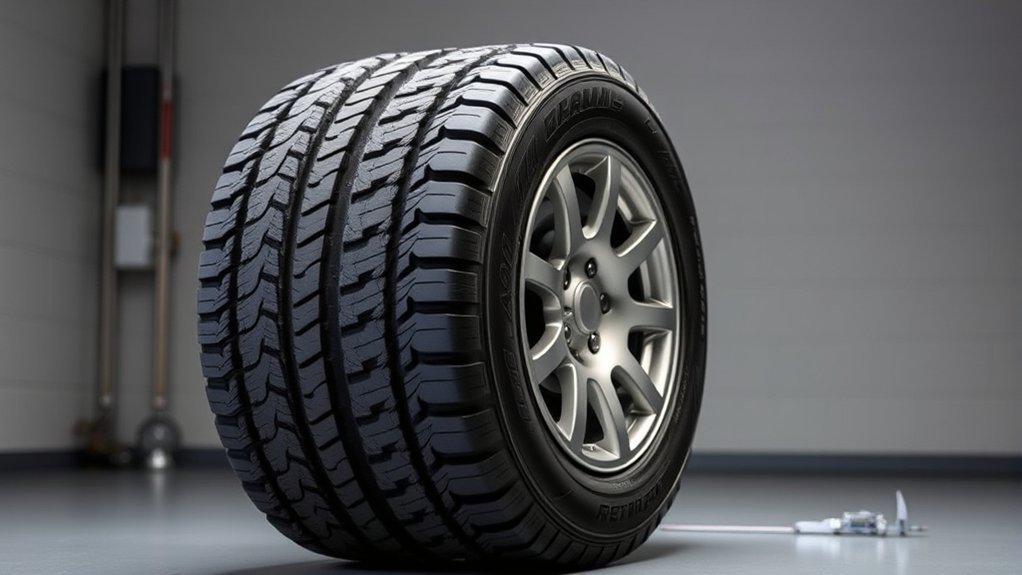
A 315/70R17 tire size gives you four useful pieces of information: width, sidewall ratio, construction type, and wheel diameter. Here is the simple breakdown:
- 315 means the tire has a nominal section width of 315 millimeters.
- 70 means the sidewall height is 70% of the tire’s section width.
- R means radial construction, the standard construction style for most modern light-truck and passenger tires.
- 17 means the tire fits a 17-inch wheel rim.
That code does not guarantee the exact physical measurement of every tire model. It gives you the nominal sizing system. For fitment, always compare the tire maker’s published spec sheet with your wheel width, offset, suspension setup, and vehicle load requirements.
315/70R17 Size Chart in Inches and Millimeters
The cleanest way to understand a 315/70R17 tire is to convert each part of the size. The sidewall is 70% of 315 mm, which equals 220.5 mm. Overall diameter is two sidewalls plus the 17-inch wheel diameter.
| Measurement | Millimeters | Inches | What It Means |
|---|---|---|---|
| Section width | 315 mm | 12.40 in | Nominal sidewall-to-sidewall width |
| Sidewall height | 220.5 mm | 8.68 in | 70% of the 315 mm section width |
| Wheel diameter | 431.8 mm | 17.00 in | Rim diameter the tire fits |
| Overall diameter | 872.8 mm | 34.36 in | Nominal tire height |
| Circumference | 2,742 mm | 107.9 in | Distance traveled per tire rotation |
| Revolutions per mile | — | About 587 | Approximate nominal rotations in one mile |
Nominal 315/70R17 formula: 315 mm × 0.70 = 220.5 mm sidewall. Then 220.5 mm × 2 + 431.8 mm wheel diameter = 872.8 mm, or about 34.36 inches overall.
How Tall Is a 315/70R17 Tire?
A 315/70R17 tire is about 34.4 inches tall when you use the standard nominal tire-size formula. That height is close enough that many shoppers compare this size with a 35-inch tire, but it is not a true 35-inch tire by calculation.
Real mounted height may be slightly smaller or larger than the formula. Tire makers measure their tires on a specific approved wheel width, at a specified pressure, under controlled conditions. A heavy truck, low pressure, worn tread, or different wheel width can change the measured height and rolling radius.
How Wide Is a 315/70R17 Tire?
A 315/70R17 tire has a nominal section width of 315 mm, which equals about 12.4 inches. That is the design width, not a promise that every tire will measure exactly 12.40 inches on every wheel.
Nominal Section Width
The first number, 315, is the tire’s nominal section width in millimeters. Section width is measured from sidewall to sidewall, not just across the tread blocks. Aggressive all-terrain and mud-terrain tires may have shoulder lugs that make the real-world outer width feel wider than the label suggests.
Actual Measured Width
The actual measured width depends on the tire model and the wheel it is mounted on. A wider wheel can spread the sidewalls and make the tire measure wider. A narrower wheel can pull the sidewalls inward. That is why two tires labeled 315/70R17 can differ slightly in published width, tread width, and overall diameter.
Inflation and Fitment
Inflation pressure affects ride height, footprint, handling, and heat buildup. Use the pressure listed on your vehicle’s Tire and Loading Information Label or owner’s manual, not the maximum pressure printed on the tire sidewall. The sidewall maximum is a tire limit, while the vehicle label gives the correct cold inflation pressure for that vehicle and load.
Warning: Do not choose a 315/70R17 tire by size alone. Load index, load range, speed rating, wheel width, offset, and clearance all matter. A tire that rubs, carries too little load, or runs underinflated can overheat, wear unevenly, or fail.
315/70R17 in Inches
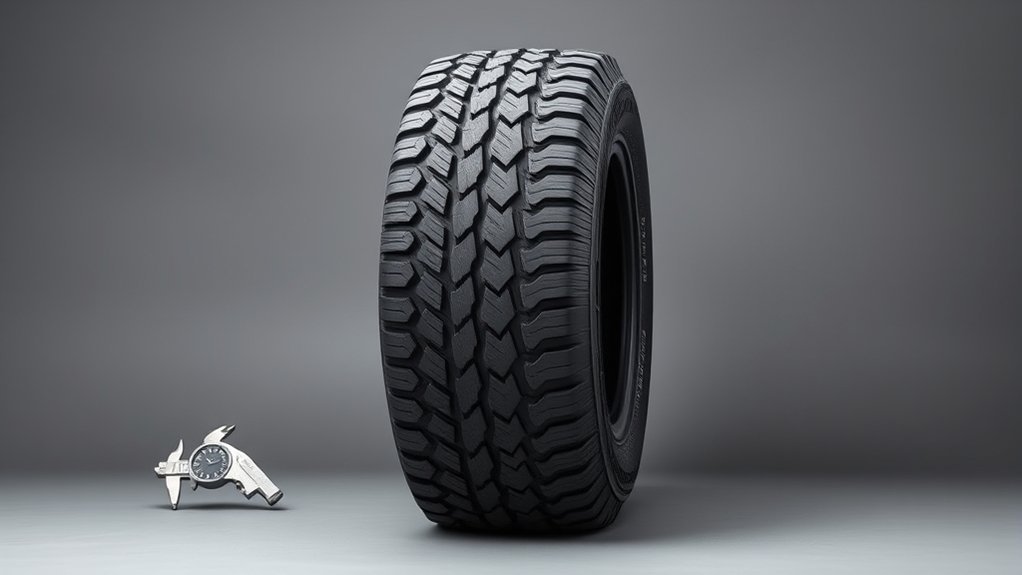
In inches, a 315/70R17 tire is approximately:
- Overall height: 34.36 inches, usually rounded to 34.4 inches
- Section width: 12.40 inches
- Sidewall height: 8.68 inches
- Wheel diameter: 17 inches
- Circumference: about 107.9 inches
This is why the size is common on lifted trucks, off-road builds, and heavy-duty setups that need more ground clearance than smaller factory tire sizes provide. It also explains why you need to check fender liners, control arms, mud flaps, bumper edges, and suspension travel before installing it.
315/70R17 in Millimeters
In millimeters, the same size works out to a 315 mm section width, 220.5 mm sidewall height, and 872.8 mm nominal overall diameter. Many tire calculators round that final number to about 873 mm.
- Width: 315 mm
- Sidewall height: 220.5 mm
- Wheel diameter: 431.8 mm
- Overall diameter: 872.8 mm
What Changes Real-World Tire Height?
The number on the sidewall is a nominal size. Your real measured height can change once the tire is mounted, inflated, loaded, and driven. The biggest factors are:
- Tire model: Different tread designs and carcass shapes can measure differently.
- Wheel width: The measuring rim affects section width and overall profile.
- Air pressure: Lower pressure lets the tire squat more under load.
- Vehicle weight: Heavy bumpers, winches, campers, towing tongue weight, and cargo reduce loaded radius.
- Tread depth and wear: New mud-terrain tires can stand taller than worn tires in the same labeled size.
- Temperature: Cold air can lower pressure, while heat can raise pressure during use.
Pro Tip: For the most useful garage measurement, measure from the ground to the top of the tire while it is mounted on your vehicle, set to your normal cold pressure, and loaded the way you usually drive.
Which Vehicles Fit 315/70R17 Tires?
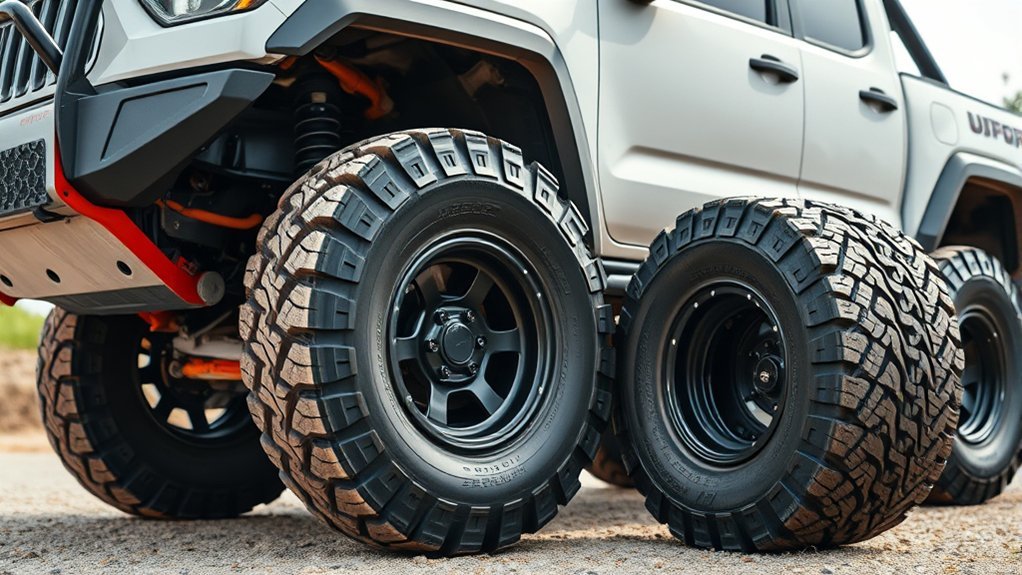
A 315/70R17 tire is usually considered a large light-truck tire size. It is most realistic on heavy-duty trucks, lifted half-ton trucks, modified SUVs, and off-road builds with enough wheel-well clearance. Some vehicles may need a lift, leveling kit, trimming, different wheels, or a different offset to prevent rubbing.
Before installing this size, check the tire size recommended by the vehicle manufacturer. NHTSA recommends using the owner’s manual or the Tire and Loading Information Label on the driver’s door edge or post to find the correct tire size for your car or truck.
- Check wheel width: Use the tire manufacturer’s approved rim-width range for the exact tire model.
- Check offset and backspacing: These decide how close the tire sits to control arms, sway bars, and fenders.
- Check full-lock clearance: Turn the steering fully left and right and inspect inside and outside clearance.
- Check compression clearance: Leave room for bumps, articulation, towing squat, and suspension travel.
- Check load rating: Match or exceed your vehicle’s load requirements, especially if you tow or haul.
[Products Worth Considering]

The Big Rig Defense Tire Thumper is a truck tire pressure checker that lets you quickly check multiple tires by giving them a firm whack. Listen for a reassuring thump and feel the stick bounce when a tire is fully inflated, helping you get back on the road safely. It features a comfortable, glove-friendly handle and a secure wrist strap for confident use on busy routes.

The SAFELIFE dial tire tread depth gauge measures tread depth in 1/32 inch increments with clear, easy-to-read 2-inch dial face. Color zones using a traffic light system help you quickly judge whether tread is low, marginal, or ample for safer driving. Built with a durable zinc cast body and a metal detect probe for precise, comfortable use across cars, motorcycles, trucks, and buses.

Keep your tires properly inflated with this analog VONDIOR tire pressure gauge, designed for fast, easy readings without batteries. The swiveling, two-axis hose and large glow dial help you measure at any tire angle with instant visibility. Built with a protective rubber shield, it supports durable, low-maintenance use for cars and trucks.
Load Range, Load Index, and Speed Rating
Size is only one part of choosing a 315/70R17 tire. You also need the right service description. On light-truck tires, that can include a load range, load index, and speed symbol.
- Load range describes the tire’s strength category and inflation/load capability. For example, many light-truck tires use Load Range E, but you should verify the exact tire.
- Load index is the number that corresponds to how much weight one tire can carry at the rated pressure.
- Dual load index appears on some LT tires, such as 121/118. The first number applies in single-wheel use, and the second applies in dual-wheel use.
- Speed rating is the letter that indicates the tire’s rated speed under specified conditions. Common truck-tire symbols include Q, R, and S, but the exact rating depends on the tire model.
The safest choice is the one that meets the vehicle manufacturer’s requirements and the tire manufacturer’s load/inflation data. NHTSA also notes that correct inflation pressure is on the vehicle label, not the tire sidewall. Underinflation and overloading can build heat, shorten tire life, and increase failure risk.
Speedometer and Gearing Impact
A taller tire travels farther with each rotation. If your original tire was much smaller than a 315/70R17, your speedometer may read lower than your actual road speed, and your effective gearing may feel taller. That can affect acceleration, transmission shifting, braking feel, towing performance, and fuel economy.
For example, moving from a 32-inch tire to a 34.4-inch tire is a meaningful change. The exact percentage depends on your original tire’s real mounted diameter, not just its label. After a major tire-size change, consider recalibrating the speedometer or vehicle computer when your vehicle supports it.
What Are Good Alternate Tire Sizes?
The best alternate size depends on what you want to preserve: diameter, width, load rating, wheel fitment, or clearance. The table below uses nominal calculations, so always confirm the specific tire model before buying.
| Size | Approx. Diameter | Approx. Width | Best For |
|---|---|---|---|
| 315/70R17 | 34.4 in | 12.4 in | Baseline size in this guide |
| 35×12.50R17 | 35.0 in nominal | 12.5 in nominal | A slightly taller flotation-style alternative |
| 325/70R17 | 34.9 in | 12.8 in | More width and slightly more height |
| 305/70R17 | 33.8 in | 12.0 in | Slightly smaller and narrower fitment |
| 285/75R17 | 33.8 in | 11.2 in | Tall but narrower clearance option |
| 275/70R17 | 32.2 in | 10.8 in | Smaller, lighter-duty clearance option when load rating fits |
[Products Worth Considering]

Measure tire tread depth quickly and accurately with this LUMITECO dial gauge that reads in 1/32" increments up to 14/32". The color-coded green/yellow/red zones make it easy to judge tire wear and know when replacement is needed. A rugged, compact design with a protective pouch helps keep the gauge ready for use on cars, trucks, motorcycles, and more.

These M14x1.5 closed-end chrome lug nuts are a one-piece replacement designed for secure fitment on compatible GM, Ford, and select Chrysler/Dodge models. Featuring a 60-degree conical seat and anti-rust chrome plating, they help resist corrosion and maintain a bright look for everyday driving. Built for long-term durability, they include OEM-style part references and are backed by 12 months of support.

Upgrade your 2024-2026 Tesla Model 3 Highland with REEVAA all-weather mud flaps designed for seamless fit along the original body lines. The set of four delivers strong splash protection against mud, gravel, and road debris while using OEM-grade durable materials. Installation is non-destructive with original hole positions and snap-in clips, and the aerodynamic design helps minimize impact on efficiency.
How to Check Fitment Before Buying
Use this quick checklist before committing to 315/70R17 tires:
- Confirm the vehicle requirement. Check the door placard and owner’s manual for original size, load rating, and cold tire pressure.
- Pull the tire maker’s spec sheet. Look for measured diameter, section width, tread width, approved rim width, load index, speed rating, and revolutions per mile.
- Compare wheel specs. Width, offset, and backspacing can make the difference between a clean fit and rubbing.
- Measure steering clearance. Check both sides at full lock and inspect the control arms, sway bar, bumper, fender liner, and mud flaps.
- Account for suspension movement. A tire that clears while parked can still rub under compression or off-road articulation.
- Recheck pressure and load. Set cold pressure based on the vehicle and load, then recheck after installation.
Note: A tire shop can test-fit, inspect clearance, and confirm whether your wheel width and offset are appropriate. That is especially useful on lifted trucks, vehicles with aftermarket bumpers, and rigs used for towing or off-road travel.
[Products Worth Considering]

Monitor tire tread wear with a smart, color-coded depth gauge that shows clear condition ranges at a glance. The bar is range marked for fast, easy readings, helping you maintain safer traction and performance. Each gauge is portable with a pocket clip, and the set includes 20 units for daily use and sharing.

This 12-inch LUMITECO dual head tire pressure gauge features an integrated straight-on chuck and a 30° reverse chuck to reach hard-to-access dual wheel valves. Its 10–150 PSI / 1–10 BAR range with a clear, two-sided scale helps you quickly check tire pressure for safer, smoother driving. Heavy-duty construction and a simple no-battery design make it a reliable tool for trucks, cars, RVs, and motorcycles.

This manual duck head tire changer kit makes tire installation and removal simpler by letting you embed the duck head into the tire with applied pressure. The integrated design and durable steel construction help reduce friction and improve efficiency and safety during use. Suitable for 16–21 inch wheels, it’s convenient for cars, trucks, SUVs, and ATV tires, with 24-hour after-sales support.
Frequently Asked Questions
Are 315/70R17 and 35×12.50R17 the same?
No. They are close, but they are not identical. A 315/70R17 calculates to about 34.4 inches tall and 12.4 inches wide. A 35×12.50R17 is a flotation size with a nominal 35-inch height and 12.5-inch width. Actual measurements still vary by tire model.
Is a 315 tire equal to a 35?
Not by itself. The number 315 only tells you the tire’s nominal width in millimeters. A 315/70R17 is often compared with a 35-inch tire because it is about 34.4 inches tall, but a different 315-size tire with another aspect ratio or rim diameter could be shorter or taller.
Which tire is taller, a 65-series or a 70-series?
A 70-series tire is taller than a 65-series tire only when the width and wheel diameter are the same. For example, a 315/70R17 is taller than a 315/65R17 because 70% of 315 mm creates a taller sidewall than 65% of 315 mm.
Is 315/70R17 a 37-inch tire?
No. A 315/70R17 is about 34.4 inches tall by nominal calculation. A true 37-inch tire is much taller and usually requires more clearance, different gearing considerations, and more careful fitment planning.
What rim width do I need for a 315/70R17 tire?
The correct rim-width range depends on the exact tire model. Many 315/70R17 light-truck tires are commonly used on wide truck wheels, but you should follow the tire manufacturer’s approved rim-width range instead of guessing.
Will 315/70R17 tires fit a stock truck?
Sometimes, but do not assume they will. Fitment depends on the truck, trim, factory wheel size, wheel offset, suspension height, fender shape, and tire model. Many vehicles need a lift, leveling kit, trimming, or different wheels to clear 315/70R17 tires without rubbing.
Conclusion
A 315/70R17 tire is about 34.4 inches tall, 12.4 inches wide, and has an 8.7-inch sidewall. Those numbers make it a strong option for trucks and SUVs that need more clearance and a wider footprint, but size alone is not enough. Before you buy, verify the tire maker’s real specs, your wheel width and offset, your vehicle’s load requirements, and your clearance at full steering lock and suspension compression. That is the difference between a tire that looks right and one that fits, carries the load, and drives safely.
Sources
- NHTSA TireWise — tire size, tire pressure, maintenance, underinflation, and vehicle label guidance.
- NHTSA Tire Buyers’ FAQ — checking the owner’s manual or Tire and Loading Information Label for the correct tire size.
- NHTSA Consumer Guide to Uniform Tire Quality Grading — tire ratings, sidewall labeling terms, speed symbol, load index, rim diameter code, and tire safety notes.
- NHTSA Congratulations on Your New Tire Purchase — tire pressure checks, manufacture date, tire maintenance, and recall alert guidance.

