
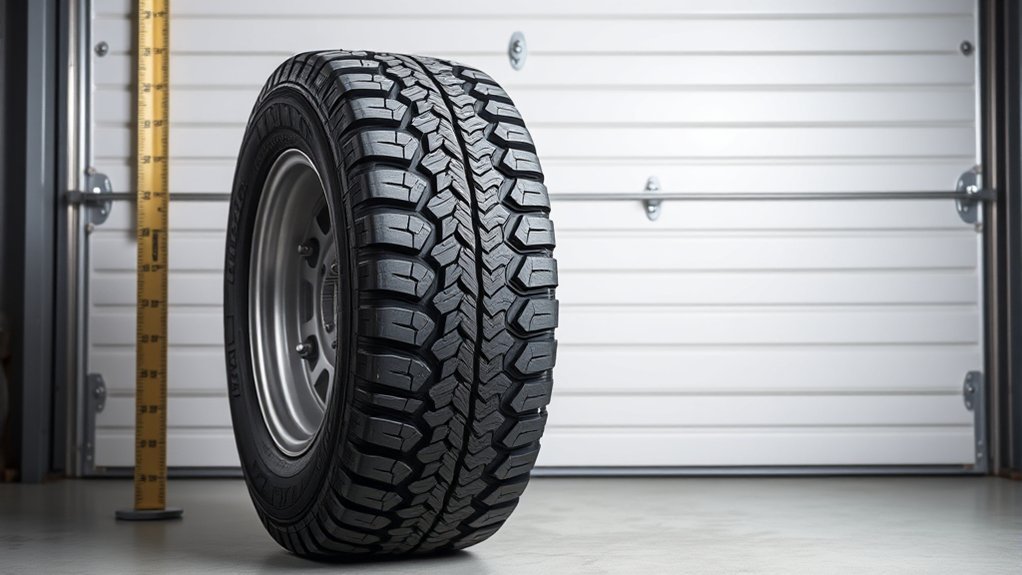
A 285/70R17 tire is a popular near-33-inch truck and SUV tire size. By standard tire-size math, it is about 32.7 inches tall, about 11.2 inches wide, and designed for a 17-inch wheel. It can be a useful upgrade for clearance and sidewall height, but fitment depends on the specific vehicle, wheel width, offset, load rating, and tire model.
Quick Answer
A 285/70R17 tire calculates to about 32.71 inches tall, 11.22 inches wide, and 7.85 inches of sidewall on a 17-inch wheel. It is commonly treated as a near-33-inch tire, but it is not identical to every tire labeled 33 inches.
Key Takeaways
- A 285/70R17 is about 11.22 inches wide and 32.71 inches tall by calculated tire-size math.
- The 70 aspect ratio means the sidewall height is 70% of the 285 mm section width, or about 7.85 inches.
- It is close to a 33-inch tire, but usually narrower than a 33×12.50R17.
- Real mounted dimensions vary by tire brand, tread design, load range, tread depth, and measuring rim width.
- Many 285/70R17 tires list approved rim widths around 7.5 to 9 or 9.5 inches, but the exact tire manufacturer’s spec sheet is the final authority.
- Use your vehicle placard, owner’s manual, and load requirements for tire pressure. Do not use the tire sidewall maximum as your normal daily-driving PSI.
How Big Is a 285/70R17 Tire?
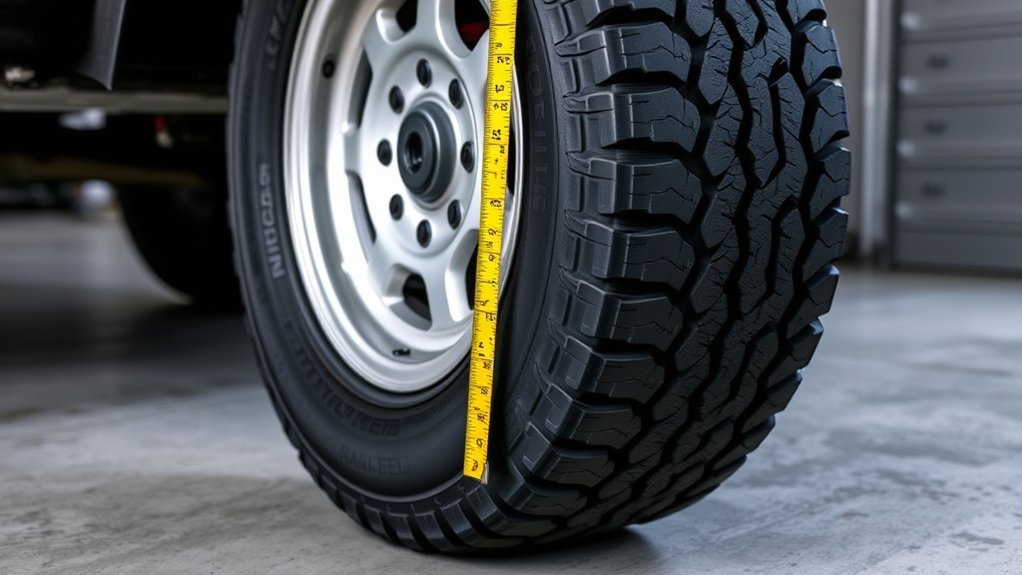
A 285/70R17 tire has a 285 mm nominal section width, a sidewall height equal to 70% of that width, radial construction, and a 17-inch wheel diameter. The Tire Industry Association explains that aspect ratio is the nominal sidewall height shown as a percentage of section width. The basic calculation is:
- Width: 285 mm ÷ 25.4 = 11.22 inches
- Sidewall height: 285 mm × 0.70 = 199.5 mm, or 7.85 inches
- Overall diameter: 17 inches + 7.85 inches + 7.85 inches = 32.71 inches
- Calculated circumference: about 102.76 inches
- Calculated revolutions per mile: about 617, though real tire specs vary by brand and model
The “R” in 285/70R17 means radial construction. It does not automatically tell you whether the tire is quiet, long-lasting, fuel-efficient, or good off-road. Those results depend on the tire model, tread pattern, compound, load range, inflation pressure, alignment, and vehicle setup.
Note: Published tire dimensions are nominal. A new mud-terrain, all-terrain, rugged-terrain, or highway-terrain tire in 285/70R17 can measure slightly differently depending on tread depth, casing design, load range, and the measuring rim used by the manufacturer.
This size is popular on many truck and SUV builds because it adds sidewall height and road presence without jumping all the way to a wider 33×12.50R17 or a much larger 35-inch tire. Still, size alone does not guarantee fitment. The wheel, suspension, fender clearance, brake clearance, load requirement, and spare-tire space all matter.
285/70R17 Dimensions in Inches
Here are the standard calculated dimensions for a 285/70R17 tire:
| Tire width | 285 mm / about 11.22 inches |
| Sidewall height | 199.5 mm / about 7.85 inches |
| Wheel diameter | 17 inches |
| Overall diameter | About 32.71 inches |
| Circumference | About 102.76 inches |
| Revolutions per mile | About 617 by calculation; actual tire specs may differ |
These numbers describe the calculated size, not guaranteed real-world fitment. Two tires can both say 285/70R17 on the sidewall and still differ in tread width, shoulder shape, weight, load rating, actual diameter, and clearance at full steering lock.
How to Read 285/70R17 Tire Specs Before Buying
The size code is only the first part of the decision. Before buying a 285/70R17 tire, also check the service description and the manufacturer’s spec sheet. The Tire Industry Association notes that replacement tires should follow the vehicle placard and owner’s manual, including load index and speed rating.
| Spec to check | Why it matters |
|---|---|
| LT or P-metric marking | LT tires are built for light-truck use and may need different inflation guidance than P-metric tires. |
| Load index | The replacement tire should meet or exceed the load capacity required by the vehicle manufacturer. |
| Load range | C, D, E, and SL versions can feel different, carry different loads, and require different inflation pressure. |
| Speed rating | Match the rating required for your vehicle and driving use. |
| Approved rim width | The tire must be mounted on a wheel width approved by the tire manufacturer. |
| Measured rim width | Published section width and diameter are measured on a specific rim width, so another wheel can slightly change the mounted shape. |
Warning: Do not choose a 285/70R17 tire by size alone. Confirm load index, speed rating, load range, approved rim width, and vehicle clearance before installation.
[Products Worth Considering]

This professional wheel and rim cleaning brush set lifts brake dust, grime, and dirt with soft, scratch-free microfiber and synthetic wool fibers. The rim brush bends up to 360 degrees for easy access to hard-to-reach areas around spokes, lips, and faces. Ideal for thorough cleaning of car, truck, motorcycle, bicycle, RV, and more wheel and tire surfaces.

Protect your spare wheel with a waterproof, dustproof tire cover made to resist sun and harsh weather. The elastic band design makes it easy to install and remove without tools, while reinforced stitching helps it keep its shape. Available in multiple sizes, it fits common RV, trailer, Jeep, SUV, and truck spare tires.
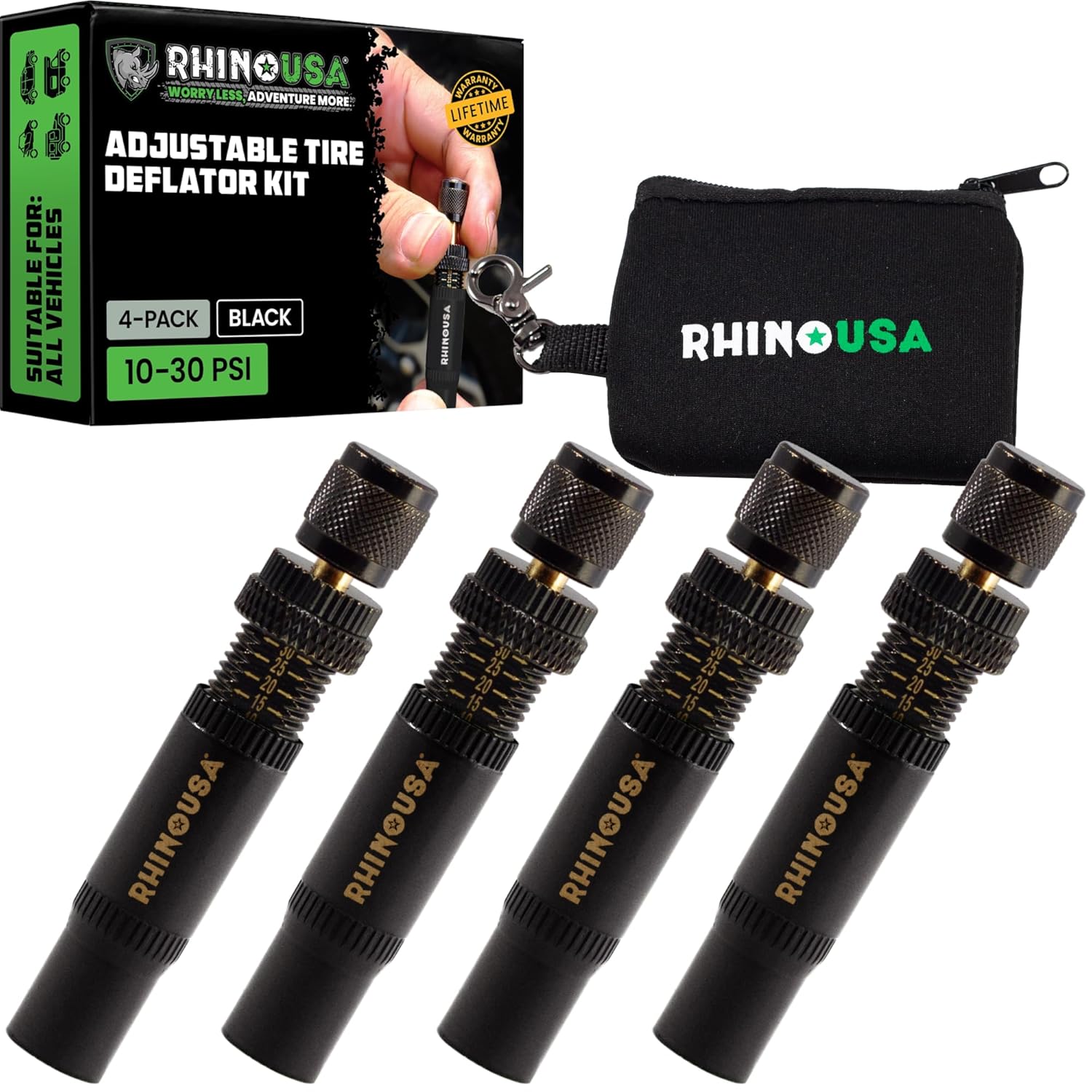
Use the Rhino USA adjustable tire deflators to air down all four tires at once by screwing one deflator onto each valve stem, letting you step away while the tires reach your preset pressure. Each deflator independently adjusts across a 10–30 PSI range with laser-etched indicators for quick setup and verification, making it ideal for beach, sand, and rocky off-road trails.
What Vehicles Use 285/70R17 Tires?
285/70R17 tires are commonly used on larger trucks and SUVs, especially off-road, overland, and light-truck builds. You may see this size on some Ford F-150, Toyota Land Cruiser, Jeep Wrangler, Chevrolet Silverado 1500, GMC Sierra, Toyota Tacoma, Toyota 4Runner, and Ram 1500 setups, but that does not mean it is a universal factory fit for every year, trim, suspension, or wheel package.
This size can work well when the vehicle has enough wheel-well clearance and the correct wheel width and offset. It is often chosen for more ground clearance, more sidewall cushion, and a tougher stance than smaller factory sizes. Fitment, however, depends on more than diameter.
Warning: Do not buy 285/70R17 tires based only on vehicle name. Check your exact year, trim, suspension height, wheel width, wheel offset, brake clearance, fender clearance, spare-tire space, load index, speed rating, and TPMS requirements before installing them.
Use this quick fitment checklist before you order:
- Factory size: Compare 285/70R17 against the tire size on your door placard or owner’s manual.
- Wheel width: Many tires in this size list an approved wheel-width range around 7.5 to 9 or 9.5 inches, but the exact range depends on the tire model.
- Offset and backspacing: A wider tire can rub control arms, sway bars, fender liners, mud flaps, or body mounts if the wheel offset is wrong.
- Suspension and lift: Some vehicles need trimming, leveling, or a lift to clear this size without rubbing.
- Load rating: Match or exceed the vehicle’s required load capacity.
- Spare tire: Make sure the spare location can hold the larger diameter.
- Speedometer: Recalibration may be needed if this size is much larger than the original tire.
If you are choosing a tire for mixed road and trail use, compare tread pattern, load range, weight, winter rating, wet traction, treadwear, road noise, and ride comfort instead of choosing only by size.
[Products Worth Considering]

This spare tire tool kit is designed for the 2004 to 2018 Ford F-150 to help you loosen and tighten wheel lug nuts and manage the spare tire and provided jack functions from underneath the vehicle. It includes the lug nut wrench and extension pieces plus a convenient storage carrying case for organized transport. The jack itself is not included.

This digital tire pressure gauge with built-in inflator helps you accurately check and adjust tire pressure for safer driving and better fuel efficiency. It supports multiple units (PSI, KPA, BAR, KG/CM²) and reads within 1% for reliable results. The 3-in-1 design inflates, deflates, and measures, with a quick-connect air chuck and compatible hose setup for cars, trucks, SUVs, RVs, and motorcycles.

Keep your tires properly inflated with this analog VONDIOR tire pressure gauge, designed for fast, easy readings without batteries. The swiveling, two-axis hose and large glow dial help you measure at any tire angle with instant visibility. Built with a protective rubber shield, it supports durable, low-maintenance use for cars and trucks.
285/70R17 Vs 33-Inch Tires?
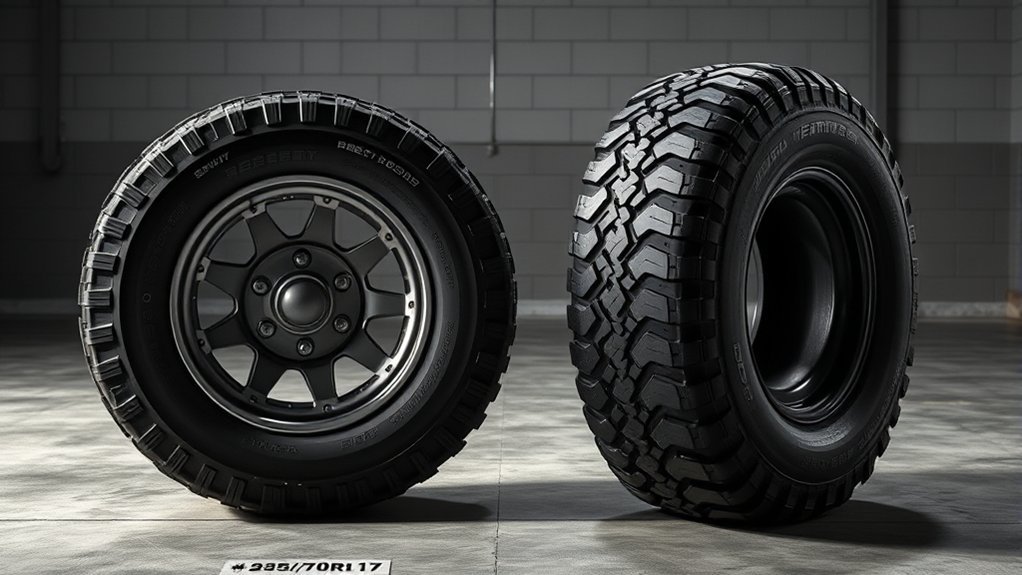
A 285/70R17 is very close to a 33-inch tire, but it is not the same as every tire sold as a 33. It is also much narrower than a 33×12.50R17. That difference matters for rubbing, steering feel, road noise, tire weight, fuel economy, and wheel compatibility.
Size And Diameter Difference
The calculated diameter of a 285/70R17 is about 32.71 inches. A tire labeled 33×12.50R17 has a nominal 33-inch diameter, although the real measured diameter can vary by brand, tread design, load range, and measuring rim. In practical terms, a 285/70R17 gives you a near-33 stance without the full width of a 12.50-inch tire.
| Tire size | Approx. diameter | Approx. width | Sidewall |
|---|---|---|---|
| 285/70R17 | 32.71 in | 11.22 in | 7.85 in |
| 33×12.50R17 | Nominal 33 in | 12.50 in | About 8.00 in if true 33 in diameter |
Width And Sidewall Comparison
The biggest practical difference is width. A 285/70R17 is about 11.22 inches wide by calculation, while a 33×12.50R17 is nominally 12.50 inches wide. That extra width can improve flotation in some off-road conditions, but it can also add weight, road noise, steering effort, and rubbing risk.
The sidewall difference is small. A 285/70R17 has about a 7.85-inch sidewall, while a true 33-inch tire on a 17-inch wheel has about an 8-inch sidewall. You may notice a little more clearance and cushion from a true 33, but the difference is not dramatic.
Fitment And Driving Impact
A 285/70R17 is often easier to fit than a 33×12.50R17 because it is narrower. That can help preserve steering clearance and reduce rubbing on vehicles with tighter wheel wells. The trade-off is that you get less section width than a 12.50-inch tire.
For daily driving, the narrower 285 can feel more controlled and may be less likely to follow grooves in the road. For off-road use, a wider 33×12.50R17 can give more footprint, but only if your wheels, suspension, gearing, and fender clearance can handle it.
What Are the Best Equivalent Sizes for 285/70R17?
The best equivalent sizes are the ones that stay close to the 285/70R17’s 32.71-inch calculated diameter while still meeting your wheel, load, and clearance requirements. “Equivalent” does not mean identical. Width, weight, load range, approved rim width, and actual mounted dimensions can still change.
| Alternative size | Approx. diameter | How it compares |
|---|---|---|
| 33×10.50R17 | Nominal 33 in | Similar height, often narrower than 33×12.50 |
| 33×12.50R17 | Nominal 33 in | Similar height, much wider footprint, higher rubbing risk |
| 295/70R17 | About 33.26 in | Slightly taller and wider than 285/70R17 |
| 305/65R17 | About 32.61 in | Very close in height, wider section width |
| 285/75R17 | About 33.83 in | Noticeably taller; more likely to need clearance changes |
A small diameter change is usually easier to manage than a large one, but there is no universal safe percentage for every vehicle. ABS, traction control, gearing, transmission behavior, spare-tire fit, and speedometer accuracy can all be affected. When changing from the original equipment size, confirm the setup with a qualified tire professional.
[Products Worth Considering]

This ALL-TOP auto-stop tire deflator valve kit lets you air down off-road tires quickly without watching pressure, automatically stopping when your preset PSI is reached. Each valve is individually calibrated for reliable performance with an acceptable +/- 2 PSI tolerance. The adjustable deflator range covers 10 to 30 PSI and includes four valves plus valve caps and a zipper pouch for easy setup on trucks, SUVs, RVs, UTVs, and powersports.

These aluminum alloy tire valve stem caps with an O-ring seal help protect valve stems from corrosion while adding a clean, stylish look to your vehicle. The universal fit works across cars, trucks, motorcycles, bicycles, and more, making them an easy upgrade for everyday driving and off-road use. Installation is quick, and the included four-pack keeps all your tires dressed and protected.

AUTOWN’s 68-piece tire repair kit helps you fix punctures and plug flats quickly and effectively. It includes a T-handle and spiral probe tool for easy insertion, while the steel patch and plug materials are designed for strong adhesion and long-lasting airtight performance. The compact case makes it convenient for roadside repairs across a wide range of vehicles.
How Do 285/70R17 Tires Affect MPG And Speedometer?
A 285/70R17 can affect MPG and speedometer accuracy, but the amount depends on the tire size you are replacing. A taller tire travels farther per revolution, so if your vehicle is calibrated for a smaller tire, your actual road speed can be higher than the speed shown on the dashboard.
Use this simple formula:
Speedometer change % = (new tire diameter ÷ old tire diameter – 1) × 100
Example: if you switch from a 265/70R17 tire at about 31.61 inches tall to a 285/70R17 at about 32.71 inches tall, the diameter increases by about 3.5%. When your speedometer shows 60 mph, your actual speed would be about 62.1 mph. The number is not fixed; it changes with your original tire size.
Fuel economy can also drop when the new tire is taller, heavier, wider, or more aggressive. Mud-terrain and heavy LT all-terrain tires often need more energy to turn than lighter highway tires. Gearing, vehicle weight, air pressure, tread pattern, and driving style all matter, so treat MPG estimates as a range rather than a promise.
Pro Tip: After changing tire size, compare your dashboard speed with GPS speed on a safe road, or ask your installer about recalibration. Recalibration is especially helpful when the new tire diameter is meaningfully different from stock.
What Tire Pressure Works Best for 285/70R17?
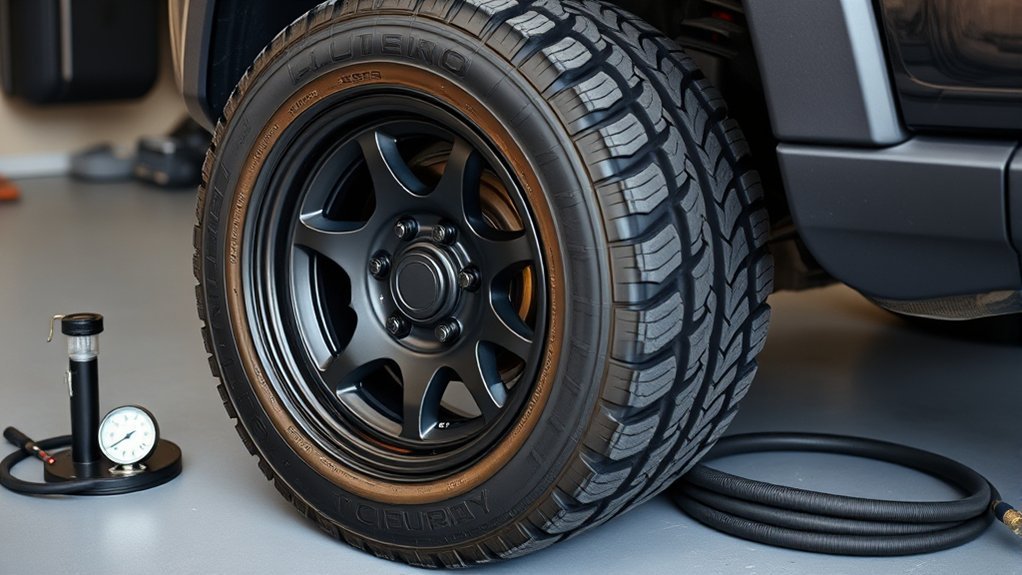
The best tire pressure for a 285/70R17 is the pressure that safely supports your vehicle’s weight and load, not one universal PSI number. The National Highway Traffic Safety Administration advises drivers to use the vehicle tire placard or owner’s manual for recommended cold tire pressure and tire-size information. That placard is usually on the driver’s door edge or doorpost.
If 285/70R17 is the factory tire size for your vehicle, start with the placard’s cold tire pressure. If 285/70R17 is an upgrade from a smaller stock tire, ask the tire installer or manufacturer to confirm the correct pressure using load-inflation data. LT tires, P-metric tires, C-load, D-load, E-load, and SL versions can require different pressures for the same vehicle load.
| Situation | Best pressure guidance |
|---|---|
| Factory 285/70R17 size | Use the cold PSI on the vehicle placard unless the owner’s manual gives a load-specific adjustment. |
| Upsized from a smaller tire | Confirm equivalent load support with a tire professional or manufacturer load-inflation table. |
| Towing or heavy payload | Use the owner’s manual and load ratings; higher pressure may be needed, but do not exceed tire or wheel limits. |
| Off-road airing down | Air down only for low-speed trail use, avoid sharp impacts, and reinflate before highway driving. |
Check pressure when tires are cold, at least monthly, and before long trips. Under-inflation can increase heat, wear, and fuel use. Over-inflation can reduce ride comfort and shrink the contact patch. The pressure molded on the tire sidewall is a maximum limit for the tire, not automatically the recommended daily-driving pressure for your vehicle.
Warning: Never use the tire sidewall maximum PSI as your default street pressure unless your vehicle manufacturer or tire professional confirms it is correct for your load. Too little or too much pressure can affect heat buildup, handling, braking, and tread wear.
Frequently Asked Questions
Is a 285/70R17 a 33-inch tire?
Not exactly. A 285/70R17 calculates to about 32.71 inches tall, so it is commonly treated as a near-33-inch tire. It is close enough for many comparisons, but it is slightly shorter than a true 33-inch calculated diameter.
What is a 285/70R17 equivalent to?
A 285/70R17 is roughly equivalent to a 33×11.2R17 by calculated dimensions. In shopping terms, people often compare it with 33×10.50R17, 33×12.50R17, 295/70R17, and 305/65R17, but width, load rating, rim width, and clearance can differ.
Is a 285 tire equivalent to a 33?
Only sometimes. “285” only tells you the section width in millimeters. The tire’s height also depends on the aspect ratio and wheel diameter. A 285/70R17 is near 33 inches tall, but a 285/75R17 is taller and a 285/65R17 is shorter.
Is 285/70R17 the same as a 35-inch tire?
No. A 285/70R17 is about 32.7 inches tall, while a 35-inch tire is roughly 35 inches tall by nominal sizing. A true 35 is much larger and usually needs more clearance, gearing consideration, and sometimes suspension or body modifications.
Will 285/70R17 tires rub?
They can rub on some vehicles, especially at full steering lock or under suspension compression. Rubbing depends on wheel offset, backspacing, suspension height, fender liner shape, mud-flap position, control-arm clearance, body-mount clearance, and the tire’s actual tread width.
What rim width fits 285/70R17 tires?
Many 285/70R17 tires are approved for wheels around 7.5 to 9 or 9.5 inches wide, but this varies by tire model and load range. Always use the approved rim-width range listed on the specific tire manufacturer’s spec sheet.
Do I need a lift for 285/70R17 tires?
Some vehicles can clear 285/70R17 tires at stock height, while others need a leveling kit, lift, trimming, or a different wheel offset. The answer depends on the exact vehicle, suspension, wheel specs, and tire model.
What PSI should I run in 285/70R17 tires?
Use the vehicle placard if 285/70R17 is the factory size. If it is an upgrade, confirm pressure with a tire professional or load-inflation data so the tire safely supports the vehicle. Do not use the tire sidewall maximum as your normal driving pressure.
Conclusion
A 285/70R17 is a practical near-33-inch tire size: about 32.7 inches tall, 11.2 inches wide, and built for a 17-inch wheel. It gives many trucks and SUVs a taller stance, useful sidewall, and strong all-terrain potential without jumping all the way to a wider 33×12.50R17 or a much larger 35.
The best choice depends on complete fitment, not just size. Check clearance, wheel width, offset, load index, speed rating, speedometer change, spare-tire space, and correct tire pressure before installing 285/70R17 tires. When the vehicle, wheel, and tire specs all match, this size can offer a strong balance of daily drivability, trail capability, and road presence.
Sources
- Tire Industry Association — Reading a Tire Sidewall — supports section width, aspect ratio, radial-construction, rim-diameter, load-index, and speed-symbol explanations.
- Tire Industry Association — Tire Replacement — supports following the vehicle placard, owner’s manual, load index, speed rating, and professional guidance for custom tire and wheel packages.
- NHTSA TireWise — supports tire-size selection, tire placard use, cold tire-pressure guidance, TPMS information, and regular pressure checks.
- Continental Tire — How to Read Your Tire Sidewall — supports tire section-width, aspect-ratio, radial-construction, and wheel-diameter explanations.
- Goodyear — Tires That Fit Size 285/70R17 — shows current examples of 285/70R17 tires with different tread categories, load ranges, and speed ratings.

