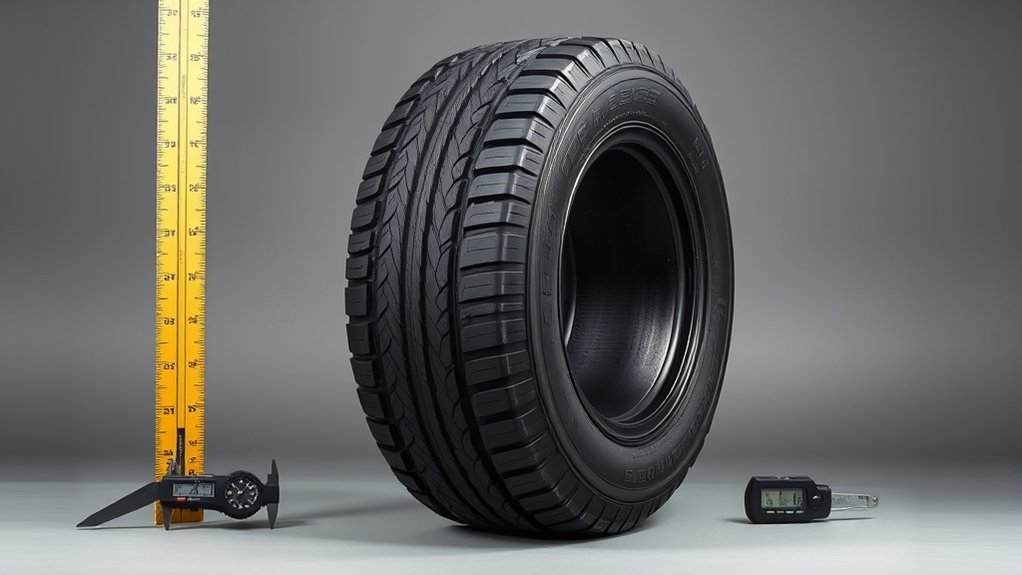
A 265/70R17 tire is about 31.6 inches tall, 10.4 inches wide, and fits a 17-inch wheel. Its sidewall is about 7.3 inches tall, and its calculated circumference is about 99.3 inches. That puts it close to a 32-inch tire, not a true 33-inch tire.
Last updated: August 18, 2026
Quick Answer
A 265/70R17 tire measures about 31.6 inches in overall diameter, 10.4 inches in nominal section width, and 7.3 inches in sidewall height by tire-size calculation. It is commonly rounded to a 32-inch tire, but it is not a true 33-inch tire. Actual published dimensions can vary slightly by tire model and measuring rim.
Key Takeaways
- A 265/70R17 tire is about 31.6 inches tall, which makes it closer to a 32-inch tire than a 33-inch tire.
- The 265 means the tire has a nominal section width of 265 mm, or about 10.4 inches.
- The 70 means the sidewall height is 70% of the tire’s section width, or about 7.3 inches.
- The calculated circumference is about 99.3 inches, with about 638 calculated revolutions per mile.
- Compared with a 265/65R17, a 265/70R17 is about 1.04 inches taller by size-code math.
- Before changing to this size, check your vehicle placard, owner’s manual, load rating, speed rating, wheel width, and clearance.
What Is a 265/70R17 Tire?
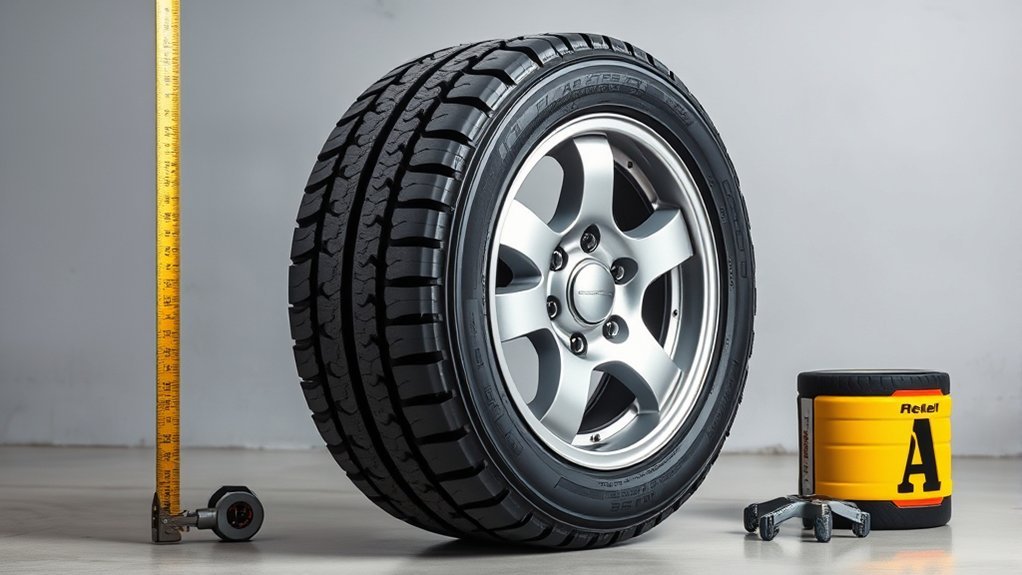
A 265/70R17 tire is a radial tire built for a 17-inch wheel. The size code tells you the tire’s nominal section width, sidewall ratio, construction type, and wheel diameter.
- 265 = nominal section width in millimeters, measured from sidewall to sidewall.
- 70 = aspect ratio, meaning the sidewall height is 70% of the section width.
- R = radial construction.
- 17 = wheel diameter in inches.
This size is widely offered for trucks and SUVs. Its 70-series aspect ratio gives it a relatively tall sidewall while retaining a moderate nominal width on a 17-inch wheel.
Note: The number 265 is the tire’s nominal section width, not its exact tread width. Actual mounted section width can vary by tire model, measuring rim width, load range, inflation, and manufacturer specifications.
How Big Is a 265/70R17 Tire?
A 265/70R17 calculates to about 31.6 inches in overall diameter. Its nominal section width is about 10.4 inches, while one sidewall measures about 7.3 inches. In metric units, the calculated diameter is 802.8 mm and the sidewall height is 185.5 mm.
Exact Tire Dimensions
| Measurement | Inches | Millimeters |
|---|---|---|
| Overall diameter | 31.6 | 802.8 |
| Section width | 10.4 | 265 |
| Sidewall height | 7.3 | 185.5 |
| Circumference | 99.3 | 2,522 |
| Calculated revolutions per mile | 638 | — |
How to Calculate 265/70R17 Tire Size
You can calculate the basic nominal dimensions from the tire-size code:
- Convert width to inches: 265 ÷ 25.4 = 10.43 inches.
- Find one sidewall: 265 × 0.70 = 185.5 mm, or 7.30 inches.
- Find total diameter: 17 + 7.30 + 7.30 = about 31.6 inches.
- Find circumference: 31.606 × 3.1416 = about 99.3 inches.
- Find theoretical revs per mile: 63,360 ÷ 99.3 = about 638 revolutions per mile.
A 265/70R17 is best described as a calculated 31.6-inch tire, or roughly a 32-inch-class tire. It is not a true 33-inch tire.
Width and Sidewall
With a nominal 265 mm section width, a 265/70R17 is about 10.4 inches wide. Its 70 aspect ratio creates a sidewall about 7.3 inches tall. That is taller than the sidewall on a 265/65R17 while keeping the same nominal section width.
Ride feel still depends on the specific tire’s construction, load range, tread design, inflation pressure, wheel width, and vehicle suspension, so the size code alone cannot predict exactly how a tire will feel on the road.
Real-World Dimensions Can Vary
The math gives a reliable nominal baseline, but actual tire specifications can vary. Two tires labeled 265/70R17 can have different published overall diameters, measured section widths, tread depths, weights, approved rim-width ranges, and revolutions per mile. For exact fitment, check the manufacturer’s specification sheet for the specific tire model you plan to install.
How Wide Is a 265/70R17 Tire?
A 265/70R17 tire has a nominal section width of 265 mm, equal to about 10.43 inches. That figure describes nominal section width rather than tread width.
[Products Worth Considering]

The SAFELIFE dial tire tread depth gauge measures tread depth in 1/32 inch increments with clear, easy-to-read 2-inch dial face. Color zones using a traffic light system help you quickly judge whether tread is low, marginal, or ample for safer driving. Built with a durable zinc cast body and a metal detect probe for precise, comfortable use across cars, motorcycles, trucks, and buses.

Keep your tires properly inflated with this analog VONDIOR tire pressure gauge, designed for fast, easy readings without batteries. The swiveling, two-axis hose and large glow dial help you measure at any tire angle with instant visibility. Built with a protective rubber shield, it supports durable, low-maintenance use for cars and trucks.

Measure tire tread depth quickly and accurately with this LUMITECO dial gauge that reads in 1/32" increments up to 14/32". The color-coded green/yellow/red zones make it easy to judge tire wear and know when replacement is needed. A rugged, compact design with a protective pouch helps keep the gauge ready for use on cars, trucks, motorcycles, and more.
265 mm Width Explained
The 265 in 265/70R17 does not guarantee an exact mounted width of 265 mm on every tire. Actual section width can shift with the approved wheel width and the tire’s casing design.
Width and construction can affect:
- Clearance: A wider mounted tire may sit closer to the fender liner, upper control arm, sway bar, mud flap, or body mount.
- Steering feel: Tire weight, construction, tread pattern, and width can all change steering response.
- Rolling resistance: Tire construction, tread compound, inflation pressure, weight, and tread design can affect energy use.
- Traction: Width is only one factor; compound, tread design, inflation, surface, and vehicle setup also matter.
Width in Inches
Measured in inches, 265 mm equals about 10.43 inches. For quick comparisons, that is normally rounded to 10.4 inches.
| Spec | Approximate Size | What It Means |
|---|---|---|
| Width | 10.4 inches | Nominal section width |
| Height | 31.6 inches | Calculated overall diameter |
| Sidewall | 7.3 inches | 70% of 265 mm |
Width Compared to Alternatives
When the aspect ratio and wheel diameter stay at 70 and 17 inches, increasing the first number makes the tire both wider and taller.
- 265/70R17: about 10.4 inches nominal section width.
- 275/70R17: about 10.8 inches, roughly 0.4 inch wider.
- 285/70R17: about 11.2 inches, roughly 0.8 inch wider than 265/70R17.
The practical effect of moving wider depends on wheel offset, measuring rim width, tire construction and the clearance available on the specific vehicle.
265/70R17 vs 275/70R17 vs 285/70R17
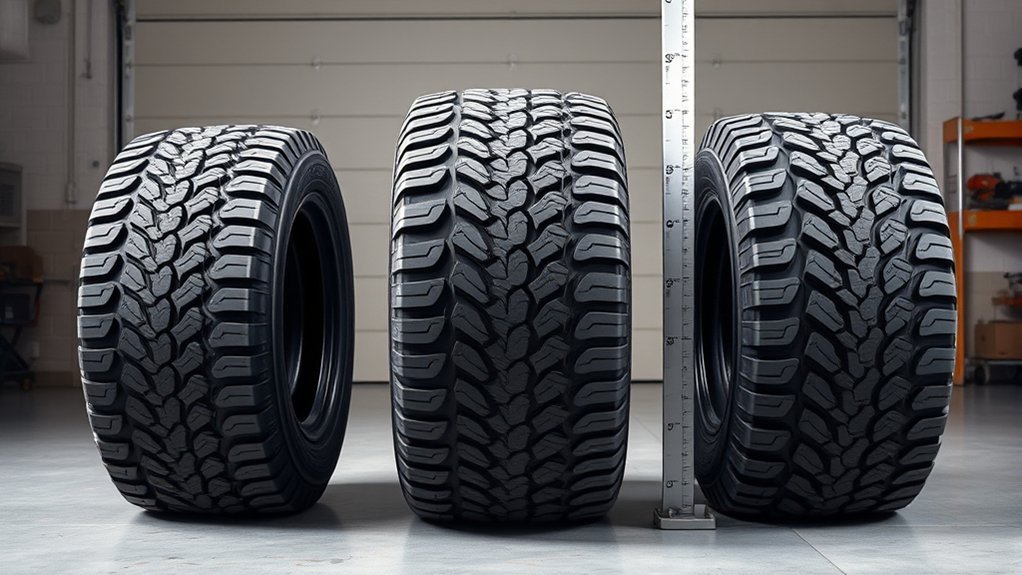
All three sizes fit a 17-inch wheel and use a 70 aspect ratio, but increasing section width also increases sidewall height and overall diameter. The table below uses nominal size-code calculations rather than measurements from a specific tire model.
| Tire Size | Width | Sidewall | Diameter | Calculated Revs/Mile |
|---|---|---|---|---|
| 265/70R17 | 10.4 in | 7.3 in | 31.6 in | 638 |
| 275/70R17 | 10.8 in | 7.6 in | 32.2 in | 627 |
| 285/70R17 | 11.2 in | 7.9 in | 32.7 in | 617 |
The jump from 265/70R17 to 275/70R17 adds about 0.6 inch of calculated diameter. Moving from 265/70R17 to 285/70R17 adds about 1.1 inches of diameter and about 0.8 inch of nominal section width. For more detail on the larger size, see our 285/70R17 dimensions guide.
Pro Tip: Compare the new tire with the size your vehicle is currently calibrated to use. Clearance, gearing, speedometer error, ride feel and drivetrain behavior depend on the starting size, not just the new tire.
[Products Worth Considering]

These M14x1.5 closed-end chrome lug nuts are a one-piece replacement designed for secure fitment on compatible GM, Ford, and select Chrysler/Dodge models. Featuring a 60-degree conical seat and anti-rust chrome plating, they help resist corrosion and maintain a bright look for everyday driving. Built for long-term durability, they include OEM-style part references and are backed by 12 months of support.

Check tire pressure with the Milton S-925 pencil gauge built for trucks, RVs, and bicycles. It features a single-head chuck with a built-in deflator valve, and it displays readings in both PSI and kPa for convenient use. The gauge is designed for accurate, repeatable pressure checks within its working range.

This professional wheel and rim cleaning brush set lifts brake dust, grime, and dirt with soft, scratch-free microfiber and synthetic wool fibers. The rim brush bends up to 360 degrees for easy access to hard-to-reach areas around spokes, lips, and faces. Ideal for thorough cleaning of car, truck, motorcycle, bicycle, RV, and more wheel and tire surfaces.
265/65R17 vs 265/70R17: How Much Bigger Is It?
A 265/70R17 is about 1.04 inches taller than a 265/65R17 by nominal size-code calculation. A 265/65R17 calculates to about 30.56 inches in diameter, while a 265/70R17 calculates to about 31.61 inches. Both have the same nominal 265 mm section width and fit a 17-inch wheel.
| Measurement | 265/65R17 | 265/70R17 | Difference |
|---|---|---|---|
| Nominal width | 265 mm | 265 mm | 0 mm |
| Calculated diameter | 30.56 in | 31.61 in | +1.04 in |
| Diameter change | — | — | About +3.4% |
| Nominal radius increase | — | — | About +0.52 in |
Because ground clearance changes by roughly half the diameter difference, the nominal increase at the axle is about 0.52 inch. Real loaded clearance will vary with the actual tire model, inflation, tread depth and vehicle load.
If a vehicle were calibrated for a 265/65R17 and changed to a nominal 265/70R17 without recalibration, an indicated 65 mph would correspond to about 67.2 mph by diameter ratio. Fitment is not guaranteed simply because the width and wheel diameter match.
Is a 265/70R17 a 33-Inch Tire?
No. A 265/70R17 is not a true 33-inch tire. Its calculated overall diameter is about 31.6 inches, which places it much closer to 32 inches.
- 265/70R17: about 31.6 inches calculated diameter.
- 275/70R17: about 32.2 inches calculated diameter.
- 285/70R17: about 32.7 inches calculated diameter.
If your goal is a tire genuinely close to 33 inches, a 285/70R17 is much closer by size-code math. However, the wider and taller size can require additional clearance depending on the vehicle, wheel offset, wheel width and suspension setup.
Will 265/70R17 Tires Fit My Vehicle?
A 265/70R17 may fit many trucks and SUVs, but the size code alone cannot confirm fitment. Start with the Tire and Loading Information Label and owner’s manual, then confirm the specific tire’s wheel-width range, load index, speed rating and available clearance.
Warning: Do not choose a replacement tire by diameter alone. Follow the size, load index, speed rating and other tire requirements specified by the vehicle or tire manufacturer. A tire that physically fits the wheel well is not automatically an approved replacement.
[Products Worth Considering]
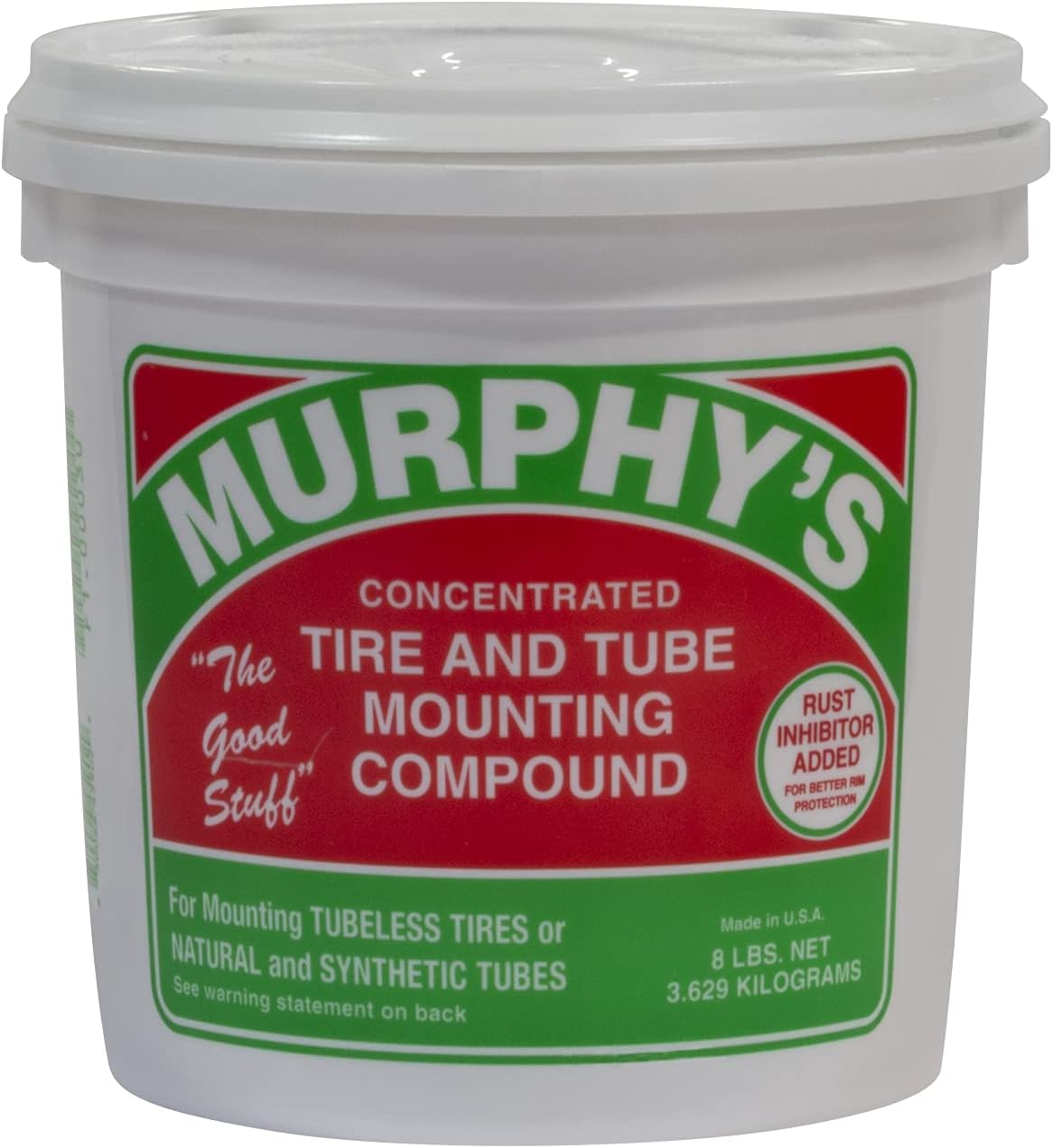
A concentrated tire and tube mounting compound designed to help simplify mounting rubber tires and tubes on passenger, semi truck, construction, and OTR applications. Its ultra-thick formula packs beads effectively and includes rust inhibitors to help protect against corrosion during use.

This universal wheel alignment tool helps you accurately restore tire tilt angles after tire or suspension repairs using an adjustable camber gauge. It features a powerful magnetic base that firmly attaches to brake rotors for stationary, slip-free readings, improving consistency during measurement. Built from durable PC plastic, it resists wear and corrosion and is compact enough for car, truck, RV, and motorcycle alignment tasks.

Secure a full-size spare on your trailer with this powder-coated steel spare tire mount bracket. It fits most 4-, 5-, and 6-lug wheel bolt patterns and mounts to trailer tongues up to 4 in wide and 5 in tall. Built for reliable carry with a max 150 lb load rating and includes zinc-plated hardware for straightforward installation.
Fitment Checklist
- Vehicle placard: Check the Tire and Loading Information Label on the driver-side door edge or post.
- Owner’s manual: Confirm the manufacturer’s tire-size and cold-pressure guidance.
- Wheel diameter: A 265/70R17 requires a 17-inch wheel.
- Approved rim-width range: Check the tire manufacturer’s specification sheet for the exact tire model.
- Load index: Use a tire that meets the vehicle or tire manufacturer’s required load specification.
- Speed rating: Follow the speed-rating specification recommended for the vehicle.
- Clearance: Check the fender liner, mud flap, suspension components, body mounts and other nearby components through the full steering and suspension range.
- Spare tire: Confirm the spare-tire strategy and any drivetrain restrictions in the owner’s manual.
- TPMS and calibration: Determine whether a tire-size change requires TPMS service or speedometer/odometer recalibration on your vehicle.
How 265/70R17 Tires Affect Speedometer and MPG
A 265/70R17 affects speedometer accuracy only when its rolling diameter differs from the size the vehicle is calibrated to use. Replacing an existing 265/70R17 with the same nominal size does not create the same theoretical size-change error as upsizing from a smaller diameter.
When a taller tire replaces a smaller one, it travels farther for each wheel revolution. Without recalibration, the vehicle can therefore travel faster than the indicated speed. A basic diameter-ratio estimate is:
Actual speed = indicated speed × new tire diameter ÷ old tire diameter
For example, a 265/65R17 calculates to about 30.56 inches in diameter, while a 265/70R17 calculates to about 31.61 inches. That is an increase of about 3.4%. Using those nominal diameters, an indicated 65 mph would correspond to about 67.2 mph. Actual vehicle readings can differ because real rolling circumference is not identical to unloaded size-code geometry.
Fuel economy may also change, but there is no universal MPG-loss figure for changing to 265/70R17. Tire weight, tread design, rolling resistance, inflation, vehicle gearing, road conditions and whether the odometer has been recalibrated can all influence the result. Use the cold inflation pressure specified by the vehicle manufacturer rather than the maximum pressure molded on the tire sidewall.
Frequently Asked Questions
How tall are 285/70R17 tires?
A 285/70R17 tire is about 32.7 inches tall by nominal size-code calculation. That makes it much closer to a 33-inch tire than a 265/70R17, which calculates to about 31.6 inches.
How much taller is a 70 tire than a 65?
It depends on tire width. On a 265 mm tire, a 70 aspect ratio gives a 185.5 mm sidewall, while a 65 aspect ratio gives a 172.25 mm sidewall. The difference is 13.25 mm, or about 0.52 inch per sidewall, adding about 1.04 inches to calculated overall diameter.
Can I replace 265/65R17 tires with 265/70R17 tires?
Do not assume they are interchangeable. A 265/70R17 is about 1.04 inches taller, or roughly 3.4% larger in calculated diameter, than a 265/65R17. Confirm that 265/70R17 is permitted for your vehicle and that the load index, speed rating, wheel width and clearance meet the vehicle and tire manufacturer’s requirements.
Is a 265/70R17 a 33-inch tire?
No. A 265/70R17 calculates to about 31.6 inches tall, so it is closer to a 32-inch tire. A 285/70R17, at about 32.7 inches by nominal calculation, is much closer to 33 inches.
Are 275 tires taller than 265 tires?
They are taller when the aspect ratio and wheel diameter remain the same. A 275/70R17 calculates to about 32.2 inches tall, while a 265/70R17 calculates to about 31.6 inches. The 275 size is also about 0.4 inch wider in nominal section width.
What is the circumference of a 265/70R17 tire?
The calculated circumference of a 265/70R17 is about 99.3 inches, or about 2,522 mm. Actual rolling circumference can differ by tire model, tread depth, inflation pressure and load.
How many revolutions per mile is a 265/70R17?
Pure size-code geometry gives about 638 revolutions per mile for a 265/70R17. A tire manufacturer may publish a different revolutions-per-mile specification because real rolling radius depends on the tire design, tread, inflation and operating load.
Conclusion
A 265/70R17 tire calculates to about 31.6 inches tall, 10.4 inches in nominal section width, and 7.3 inches of sidewall. It is closer to a 32-inch tire than a true 33-inch tire. If you are changing from 265/65R17 or another size, compare the diameters first, then confirm the vehicle placard, owner’s manual, load and speed requirements, approved wheel width, and physical clearance before installation.
Sources
- NHTSA TireWise: Tire Safety Ratings and Awareness — supports vehicle tire-label, recommended-size, pressure and tire-safety guidance.
- Michelin: Tire Markings Explained — supports nominal section width, aspect ratio, radial construction, wheel diameter, load and speed ratings, and vehicle pressure guidance.
- Tire Industry Association: Reading a Tire Sidewall — supports section-width, aspect-ratio, radial-construction and rim-diameter definitions.
- U.S. Tire Manufacturers Association: Replacing Tires — supports following vehicle or tire manufacturer recommendations for replacement size, load index and speed rating.
- Tire Size Calculator: 265/70R17 Tire Size — supports the calculated 265/70R17 diameter, width, sidewall, circumference and theoretical revolutions-per-mile figures.
- Tire Rack: How Do I Check Speedometer Accuracy? — supports the relationship between tire-diameter changes and speedometer readings.