
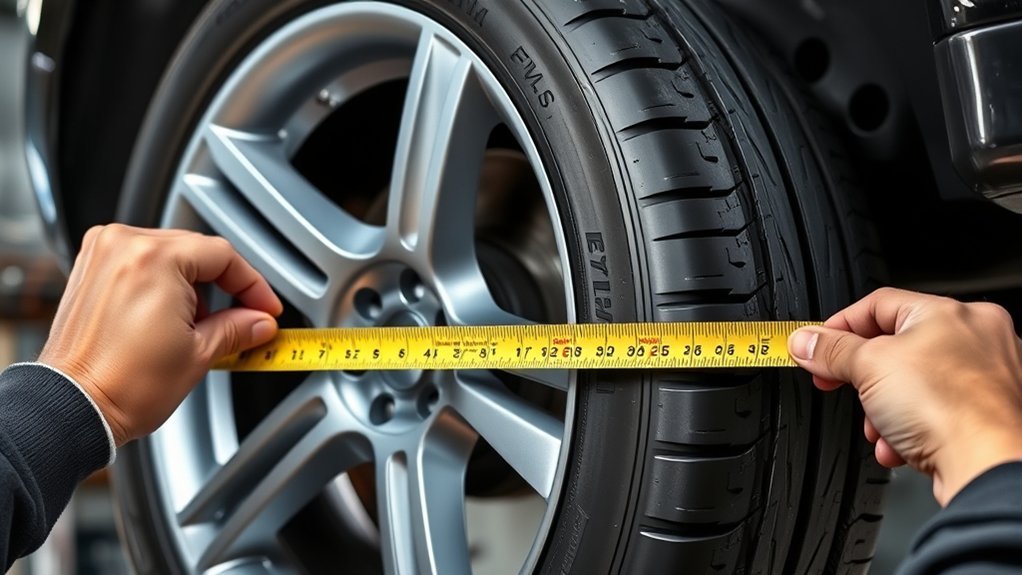
A tire size such as P225/70R16 gives you enough information to estimate the tire’s overall diameter, but the final number is not the full tire height. The “16” identifies the wheel diameter in inches. To find the tire’s approximate outside diameter, you must also calculate the height of both sidewalls. You should then compare the result with the vehicle’s approved tire specifications before buying or installing a replacement.
Quick Answer
The last number in a metric tire size such as P225/70R16 is the 16-inch wheel diameter, not the tire’s full outside diameter. To estimate overall diameter, calculate both sidewalls and add the wheel diameter. Confirm any replacement against the vehicle placard, owner’s manual, and the tire manufacturer’s specifications.
Key Takeaways
- In P225/70R16, the “16” is the wheel diameter, while the estimated overall tire diameter is about 28.4 inches.
- Use the driver-side door placard or owner’s manual to identify the vehicle manufacturer’s approved tire size and pressure.
- Overall diameter depends on section width, aspect ratio, and wheel diameter.
- Load index, speed rating, wheel width, offset, and clearance must also be checked before changing sizes.
- A different overall diameter can affect the speedometer, odometer, gearing, ABS, stability control, TPMS, and available clearance.
At a Glance
| Time Required | About 2–5 minutes |
| Difficulty | Easy for reading and calculating; professional verification is recommended for a size change |
| Tools Needed | Tire sidewall, vehicle placard or owner’s manual, calculator, and tire manufacturer’s specification sheet |
| Cost | Free to check or calculate |
Where to Find Your Tire Size
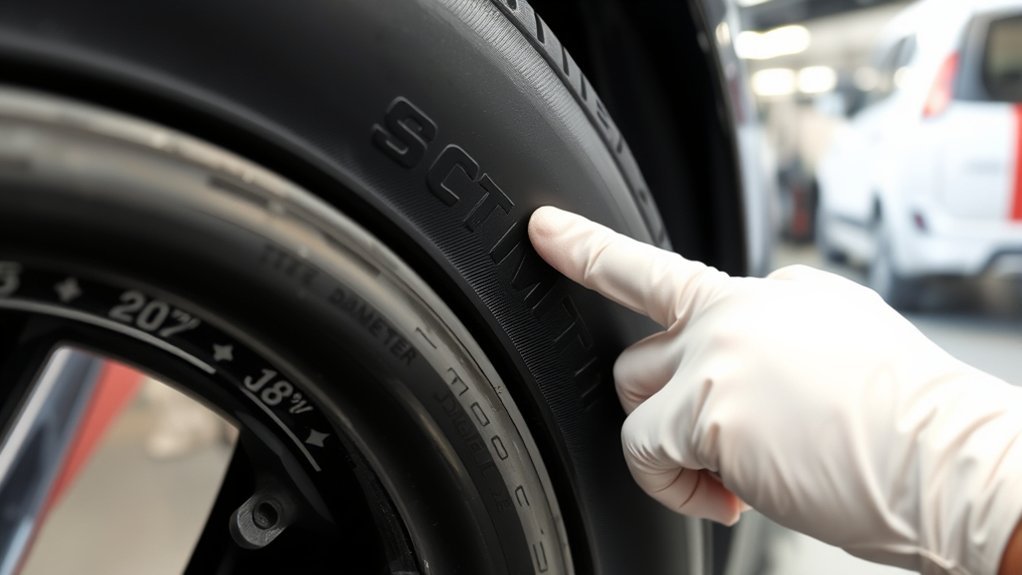
The tire size is molded into the sidewall and usually appears as a code such as P225/70R16 98H. That code tells you the tire category, nominal section width, aspect ratio, construction, wheel diameter, load index, and speed rating.
The sidewall tells you what is installed now, but it does not always prove that the tire is correct for the vehicle. A previous owner may have changed the wheels or tires. For the approved original size, check the Tire and Loading Information label on the driver-side door edge or door post. The owner’s manual may list additional approved fitments.
The National Highway Traffic Safety Administration recommends using the vehicle label or owner’s manual to identify the correct tire size. Some vehicles have different front and rear sizes, so check both positions instead of assuming all four tires are identical.
Note: Use the cold inflation pressure printed on the vehicle placard or specified in the owner’s manual. The pressure molded on a tire sidewall is generally a maximum-related marking, not the normal pressure recommendation for your vehicle.
How Do You Read Tire Size?
Read a metric tire code from left to right. Using P225/70R16 98H as an example:
| Code part | Meaning | What it tells you |
|---|---|---|
| P | Passenger tire designation | The tire uses the P-metric passenger-tire format. |
| 225 | Nominal section width | The tire is approximately 225 millimeters wide at its section, not necessarily across the tread. |
| 70 | Aspect ratio | Each sidewall is nominally 70% as tall as the section width. |
| R | Radial construction | The body cords run radially across the tire. |
| 16 | Wheel diameter | The tire fits a 16-inch wheel. This is not the tire’s overall diameter. |
| 98 | Load index | The numerical code maps to a maximum load capacity in a standardized table. |
| H | Speed rating | The letter identifies a tested speed capability under specified conditions. |
The Michelin tire-marking guide confirms that the width is stated in millimeters, the aspect ratio describes sidewall height as a percentage of width, “R” means radial construction, and the final size number is the wheel diameter in inches.
Rim Diameter vs. Overall Tire Diameter
Wheel or rim diameter is the size of the wheel opening the tire is designed to fit. Overall tire diameter is the full distance from the tread on one side of the tire to the tread on the opposite side.
In P225/70R16, the “16” means a 16-inch wheel. The tire’s estimated overall diameter is about 28.4 inches.
The wheel occupies the center of the tire. One sidewall sits above the wheel and another sits below it, so both sidewall heights must be added when calculating overall diameter.
How to Calculate Overall Tire Diameter
Use this formula for a metric size such as 225/70R16:
Overall diameter in inches ≈ wheel diameter + 2 × [(section width in mm × aspect ratio ÷ 100) ÷ 25.4]
The number 25.4 converts millimeters to inches.
P225/70R16 Worked Example
- Find one sidewall’s height: 225 × 0.70 = 157.5 millimeters.
- Convert the sidewall to inches: 157.5 ÷ 25.4 = approximately 6.20 inches.
- Account for both sidewalls: 6.20 × 2 = approximately 12.40 inches.
- Add the wheel diameter: 12.40 + 16 = approximately 28.40 inches.
A P225/70R16 tire therefore has a calculated nominal diameter of about 28.4 inches.
Pro Tip: Use the calculation for an initial comparison, then check the exact tire model’s specification sheet. Actual published diameter can vary slightly because of tread design, approved rim width, manufacturing tolerances, inflation, and measurement method.
Example Tire Diameter Calculations
| Tire size | Sidewall height | Estimated overall diameter |
|---|---|---|
| 225/70R16 | 6.20 inches | 28.40 inches |
| 235/35R20 | 3.24 inches | 26.48 inches |
| 285/70R17 | 7.85 inches | 32.71 inches |
| 275/35R19 | 3.79 inches | 26.58 inches |
Why Calculated and Published Diameters Can Differ
The formula uses nominal numbers from the sidewall. Those numbers describe a standardized size, but they are not a precision measurement of every tire model. Two tires labeled 225/70R16 may have slightly different published overall diameters or revolutions per mile.
For the closest comparison, use the tire manufacturer’s published dimensions for the exact model and size. Those specifications may include overall diameter, section width, approved rim-width range, tread depth, load capacity, and revolutions per mile.
What Do the Width, Aspect Ratio, and Rim Diameter Mean?
Each dimension affects fit and can influence how the vehicle feels, but no single number guarantees better handling, comfort, traction, or fuel economy.
- Section width: The first number is the tire’s nominal width in millimeters when mounted on a specified rim. A wider size may require a wider wheel and additional suspension or fender clearance.
- Aspect ratio: The second number gives sidewall height as a percentage of section width. A 70-series tire has a taller sidewall relative to its width than a 35-series tire.
- Wheel diameter: The final size number must match the wheel diameter exactly. A tire designed for a 17-inch wheel cannot be installed on a 16- or 18-inch wheel.
- Overall diameter: Width, aspect ratio, and wheel diameter work together to determine the tire’s approximate full height.
A lower aspect ratio often produces a shorter, less flexible sidewall, while a taller sidewall may provide more impact cushioning. Actual ride, grip, steering response, and efficiency also depend on the tire’s construction, compound, tread, pressure, load, wheel width, and vehicle suspension.
What Do P-Metric, LT, ST, and Flotation Sizes Mean?
The letters and format around a tire size help identify its intended application and sizing system:
- P-metric: A size beginning with “P,” such as P225/70R16, uses a passenger-tire designation.
- Metric with no prefix: A size such as 225/70R16 may be used on passenger vehicles, crossovers, or other applications, but it is not automatically identical to a P-metric tire in every load calculation.
- LT-metric: A size beginning with “LT,” such as LT285/70R17, identifies a light-truck tire designed around light-truck load and inflation requirements.
- ST: “ST” identifies Special Trailer service. An ST tire is intended for trailer applications and should not be treated as interchangeable with an LT or passenger tire simply because the dimensions look similar.
- High flotation: A size such as 31×10.50R15LT uses inches. The first number is the nominal overall diameter, the second is nominal section width, “R” means radial, and 15 is the wheel diameter.
Different categories can use different load and inflation standards. Match the tire type specified by the vehicle or trailer manufacturer rather than choosing by physical size alone.
What Do Load Index and Speed Rating Tell You?
The load index and speed rating appear after the dimensional size, as in 225/70R16 98H. Together, they form the tire’s service description.
- Load index: A numerical code that corresponds to the maximum load one properly inflated tire can support under the applicable standard.
- Speed rating: A letter representing a tested speed capability under defined conditions. It is not a recommended road speed and does not override posted limits or driving conditions.
Use the vehicle placard, owner’s manual, or approved fitment data to determine the required service description. The Michelin load and speed rating guide recommends verifying both ratings when replacing tires.
Warning: Do not install a tire with less load capacity than the vehicle manufacturer requires. Do not downgrade the required speed rating unless the vehicle or tire manufacturer provides an approved exception for that specific use.
How Does Tire Diameter Affect Fit?
Overall diameter is only one part of fitment. A replacement tire and wheel combination must also provide adequate space around the fender, suspension, steering, brakes, and body throughout the full range of steering and suspension movement.
A larger overall diameter may:
- Reduce clearance inside the wheel well
- Increase the chance of rubbing during turns or suspension compression
- Raise ground clearance by roughly half of the diameter increase
- Make the speedometer and odometer read lower than the vehicle’s actual speed and distance
- Reduce effective gearing, which can affect acceleration and drivetrain load
A smaller overall diameter may increase the space around the tire, but it can reduce ground clearance, raise engine speed at a given road speed, and make the speedometer read higher than the vehicle’s actual speed.
Section width, wheel width, wheel offset, backspacing, and tire shape also matter. A tire can have a similar overall diameter and still rub because it is wider or positioned farther inward or outward.
[Products Worth Considering]
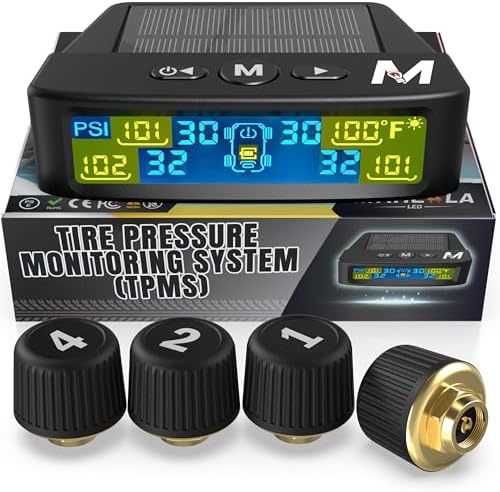
Marcala’s TPMS set of four sensors helps you monitor tire pressure and temperature in real time while driving, with updates every second. The bright color LCD uses auto-dimming for easy viewing, powered by dual solar and USB charging, and offers six alarm modes. Built for trailers, RVs, campers, trucks, and towing setups, the sensors support monitoring 1-4 wheels up to 98 PSI with IP67 waterproof protection.

Replace worn or malfunctioning GM TPMS sensors with this 433MHz pre-programmed sensor set designed for compatibility with many Chevrolet, Buick, GMC, and Cadillac models. It includes guidance for proper OBDII relearning/pairing after installation and supports reliable long-term operation with a high-performance CR2032 battery. Quality tested for durability and performance to help restore accurate tire pressure monitoring.
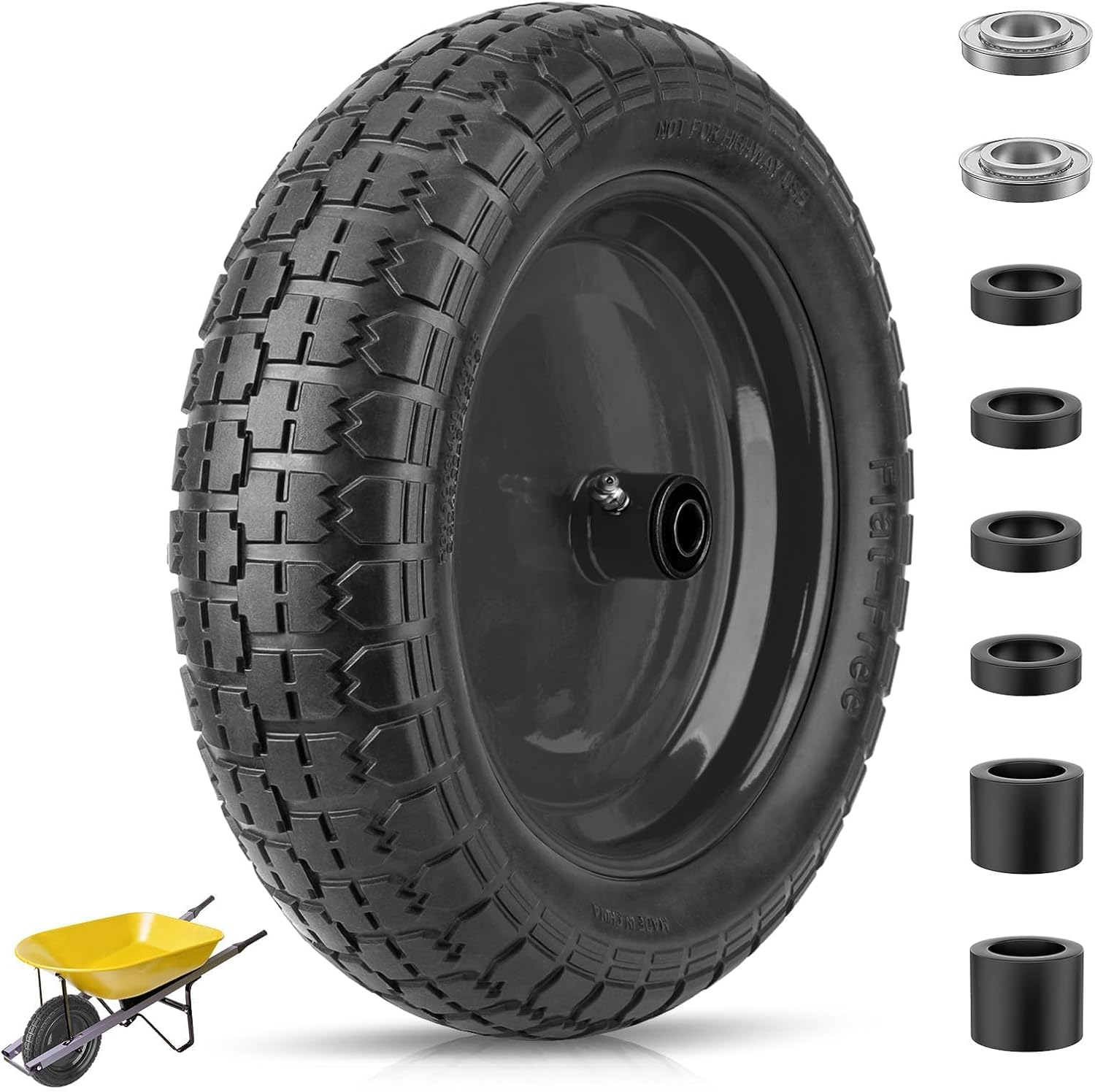
This flat-free TICONN wheelbarrow tire features durable polyurethane foam construction that never needs inflation, helping prevent punctures and reducing maintenance on rough outdoor terrain. With a 300 lb max load capacity and stable steel rim design, it supports safer transport for yard work and hauling tasks. An adapter kit with ball bearings and nylon spacers is included for easier fit and customization across common wheelbarrow and cart axle setups.
How Do Tire Size Changes Affect Driving?
Modern vehicles use wheel-speed information for more than the speedometer. A meaningful change in tire circumference may affect the anti-lock braking system, electronic stability control, traction control, transmission behavior, driver-assistance features, and tire-pressure monitoring system.
Continental’s fitment guidance notes that overall diameter and clearance affect the speedometer, odometer, ABS, stability control, suspension clearance, and tire-to-wheel fit.
[Products Worth Considering]

Replace worn or missing TPMS sensors with a pre-programmed 4-pack designed for compatible GM vehicles. These 315MHz sensors provide real-time tire pressure monitoring and alert you if pressure is too high, too low, or if a rapid air leak occurs. Most installations are ready with minimal relearn effort after mounting, helping improve safety and driving confidence.

This 3-piece wheel brush set makes it easy to clean wheels and tires with soft, scratch-free brushes designed for lifting brake dust and grime. The flexible rim brush bends up to 360 degrees to reach hard-to-access areas for a thorough clean, while the comfortable grip helps control during detailing. A dedicated detailing brush supports gentle cleaning for sensitive surfaces, including interior use.

This professional wheel and rim cleaning brush set lifts brake dust, grime, and dirt with soft, scratch-free microfiber and synthetic wool fibers. The rim brush bends up to 360 degrees for easy access to hard-to-reach areas around spokes, lips, and faces. Ideal for thorough cleaning of car, truck, motorcycle, bicycle, RV, and more wheel and tire surfaces.
How to Calculate Speedometer Error
Use this formula when comparing an original tire with a replacement:
Approximate actual speed = indicated speed × new tire diameter ÷ original tire diameter
For example, if the new tire is 2% larger in diameter, an indicated 60 mph corresponds to approximately 61.2 mph. If the replacement is 2% smaller, the actual speed is approximately 58.8 mph when the speedometer shows 60 mph.
There is no universal rule that every one-inch diameter change causes exactly 3% error. The percentage depends on the original tire’s diameter.
Can You Change Tire Size Safely?
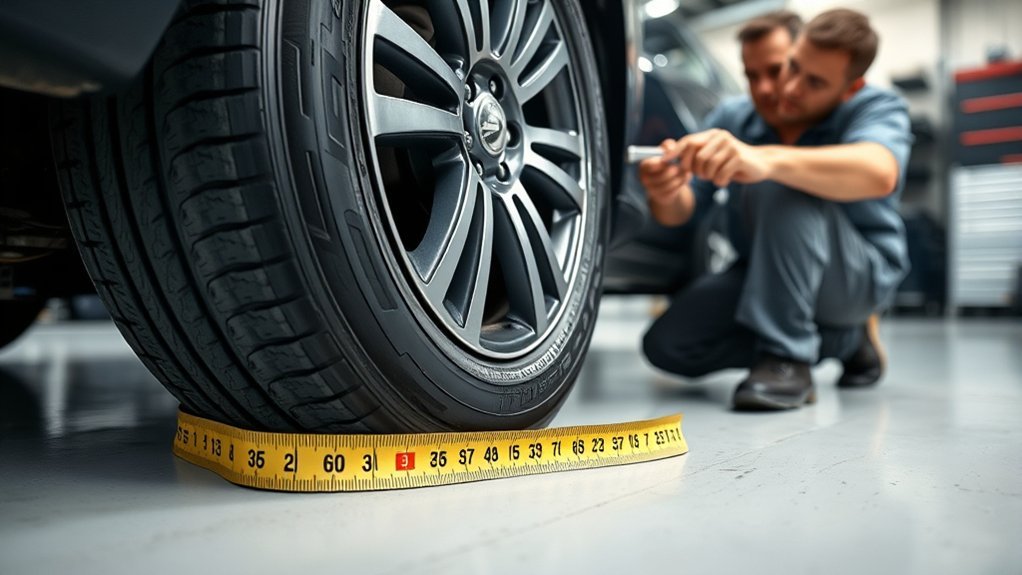
You can sometimes use a different tire size, but the safest starting point is a size approved by the vehicle manufacturer. Michelin advises checking manufacturer restrictions because changes in tire or wheel diameter can affect gearing, braking, traction and stability systems, and speedometer readings.
Before approving a different size, verify all of the following:
- The tire is approved for the wheel’s diameter and width.
- The wheel has the correct load rating, bolt pattern, offset, and center-bore fit.
- The tire meets the required load index and speed rating.
- The tire clears the brakes, suspension, body, and fender liner.
- Clearance remains adequate at full steering lock and through suspension travel.
- The new circumference is acceptable for the speedometer, ABS, ESC, transmission, and driver-assistance systems.
- The cold inflation pressure has been determined for the alternate tire and load requirement.
- The TPMS sensors are compatible and can be reset or relearned if needed.
- The front and rear sizes match the vehicle’s approved configuration.
Warning: AWD and four-wheel-drive vehicles can be sensitive to differences in rolling circumference between tires. Follow the owner’s manual limits for matching size, model, tread depth, and inflation. An unapproved mismatch can cause poor system operation or drivetrain wear.
Have a qualified tire professional inspect the complete wheel-and-tire combination before installation when the size is not listed by the vehicle manufacturer. Do not rely only on a generic percentage calculator.
How to Check Actual Tire Diameter
The most reliable method is to find the exact tire model and size on the manufacturer’s website or technical data sheet. Look for “overall diameter,” “outside diameter,” or “revolutions per mile.”
If you need a rough physical measurement, measure around the center of the tread to find the circumference, then divide that number by pi:
Diameter ≈ circumference ÷ 3.1416
Inflation, wheel width, load, tread wear, and tire deflection affect a physical measurement. Measuring from the ground to the top of a tire while the vehicle’s weight is on it gives a loaded height, not the same unloaded overall diameter normally shown in a catalog.
What Tools Help You Compare Tire Sizes?
[Products Worth Considering]

Monitor tire tread wear with a smart, color-coded depth gauge that shows clear condition ranges at a glance. The bar is range marked for fast, easy readings, helping you maintain safer traction and performance. Each gauge is portable with a pocket clip, and the set includes 20 units for daily use and sharing.
A concentrated tire and tube mounting compound designed to help simplify mounting rubber tires and tubes on passenger, semi truck, construction, and OTR applications. Its ultra-thick formula packs beads effectively and includes rust inhibitors to help protect against corrosion during use.

Masoll Gen 2 external TPMS sensors are a DIY replacement set of 4 for select GM vehicles made after 2006, helping you shut off the TPMS warning light quickly. Simply screw the sensors onto the tire valves and sync to your car ECU using the included EL-50448 relearn tool. Dual-frequency 315/433 MHz design provides OEM-level performance with accurate readings and replaceable batteries for about two years.
Online Tire Size Calculators
A tire-size calculator can quickly compare nominal diameter, sidewall height, circumference, revolutions, and estimated speedometer difference. It is useful for screening possible sizes, but it cannot confirm wheel width, offset, brake clearance, load capacity, or vehicle-system compatibility.
Enter the complete original and proposed sizes rather than comparing only the final wheel-diameter number. Whenever possible, replace calculated dimensions with the exact specifications published for each tire model.
Vehicle and Dealer Fitment Charts
Vehicle-manufacturer data, authorized tire-retailer systems, and dealer fitment charts can identify original equipment sizes and tested alternatives for a particular year, make, model, trim, and wheel package.
Enter the full vehicle configuration. Different trims can use different brakes, suspension parts, wheels, and tire sizes. A size listed for one trim is not automatically approved for another.
Frequently Asked Questions
How do you tell a tire’s diameter size?
Read the width, aspect ratio, and wheel diameter from the sidewall. For a metric size, calculate one sidewall as width × aspect ratio, convert it to inches, double it, and add the wheel diameter. The exact tire model’s specification sheet provides the best published overall diameter.
Is the last number in a tire size the overall diameter?
No. In a size such as P225/70R16, the final number means the tire fits a 16-inch wheel. The calculated overall tire diameter is approximately 28.4 inches.
What is the diameter of a 235/35R20 tire?
A 235/35R20 tire has a calculated nominal diameter of approximately 26.48 inches. Each sidewall is about 3.24 inches tall: 235 × 0.35 ÷ 25.4 = 3.24, and 20 + 3.24 + 3.24 = 26.48.
What is the diameter of a 285/70R17 tire?
A 285/70R17 tire has a calculated nominal diameter of approximately 32.71 inches. Each sidewall is about 7.85 inches tall, and the tire fits a 17-inch wheel.
What does 275/35R19 mean?
It means the tire has a nominal section width of 275 millimeters, a sidewall height equal to 35% of that width, radial construction, and a 19-inch wheel diameter. Its calculated nominal overall diameter is approximately 26.58 inches.
Can two tires with the same sidewall size have different diameters?
Yes. The nominal size can be the same while the published overall diameter, section width, tread depth, and revolutions per mile differ slightly between tire models. Compare the manufacturers’ specification sheets when matching tires closely.
How close must a replacement tire’s diameter be?
There is no single percentage that is safe for every vehicle. Use a manufacturer-approved size whenever possible. Acceptable variation can depend on the vehicle’s ABS, stability control, gearing, AWD system, available clearance, wheel specifications, and recalibration requirements.
Conclusion
The easiest way to avoid tire-size confusion is to separate wheel diameter from overall tire diameter. The final number in P225/70R16 tells you the tire fits a 16-inch wheel. To estimate the full tire height, calculate both sidewalls and add them to that wheel diameter, which gives about 28.4 inches in this example.
Use that calculation as a comparison tool, not final fitment approval. Confirm the vehicle placard, load index, speed rating, wheel width, offset, clearance, inflation requirements, and electronic-system compatibility. When changing from an approved size, have the complete setup checked by a qualified tire professional.
Sources
- NHTSA TireWise — approved tire size, vehicle placard, inflation pressure, replacement, and tire-safety guidance.
- Michelin: Tire Markings Explained — section width, aspect ratio, radial construction, wheel diameter, and sidewall-code definitions.
- Michelin: Tire Load and Speed Ratings — service-description, load-index, and speed-rating guidance.
- Michelin: Performance Upgrades and Plus Sizing — effects of alternate sizes on gearing, braking, stability systems, and speedometer readings.
- Michelin Tire FAQs — metric, light-truck, high-flotation, and overall-diameter measurement information.
- Continental: Wide Tires vs. Narrow Tires — overall diameter, wheel fitment, clearance, ABS, ESC, and vehicle-system considerations.

