
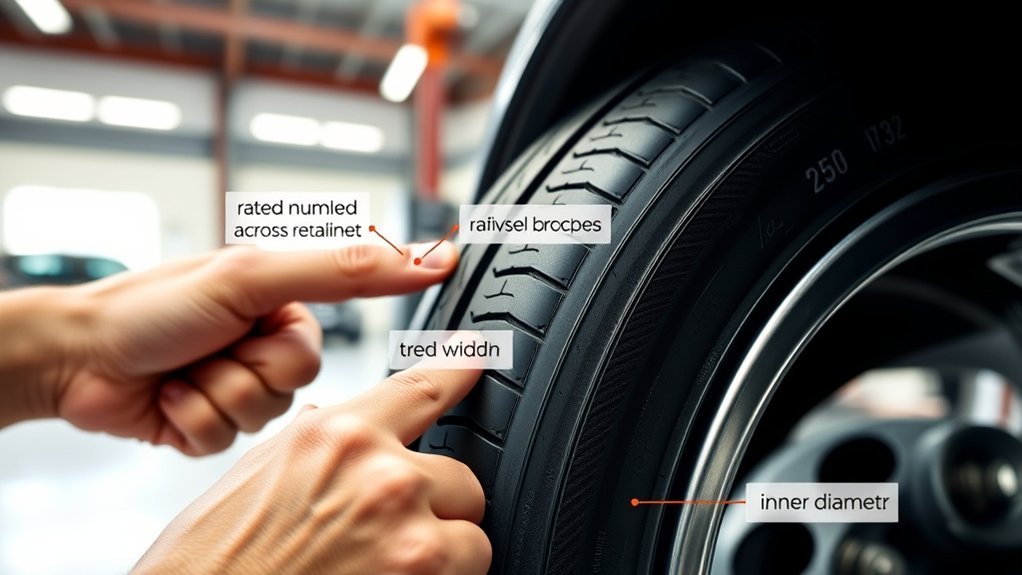
Tire dimensions tell you whether a tire fits your vehicle and how it may affect ride comfort, handling, load capacity, and speedometer accuracy. A size such as P225/70R16 91H is not just a random code: it identifies the tire type, width, sidewall height, construction, wheel diameter, load index, and speed symbol.
Quick Answer
Tire dimensions are the numbers and letters molded on the sidewall. In P225/70R16 91H, P means passenger tire, 225 is width in millimeters, 70 is aspect ratio, R means radial, 16 is wheel diameter in inches, 91 is load index, and H is the speed symbol.
Key Takeaways
- The tire size code shows width, aspect ratio, construction, rim diameter, load index, and speed symbol.
- The first three-digit number is the tire’s nominal section width in millimeters.
- The aspect ratio tells you sidewall height as a percentage of tire width.
- The final number after the construction letter is the rim diameter in inches, not the tire’s total diameter.
- Always confirm replacement tire size, load capacity, inflation pressure, and speed rating with the vehicle placard or owner’s manual.
At a Glance
| Time Required | 5–10 minutes to decode a tire size |
| Difficulty | Easy once you know the code order |
| Tools Needed | Tire sidewall, driver-side door placard, or owner’s manual |
| Cost | Free to read; tire replacement cost depends on vehicle and tire type |
What Do Tire Dimensions Mean?
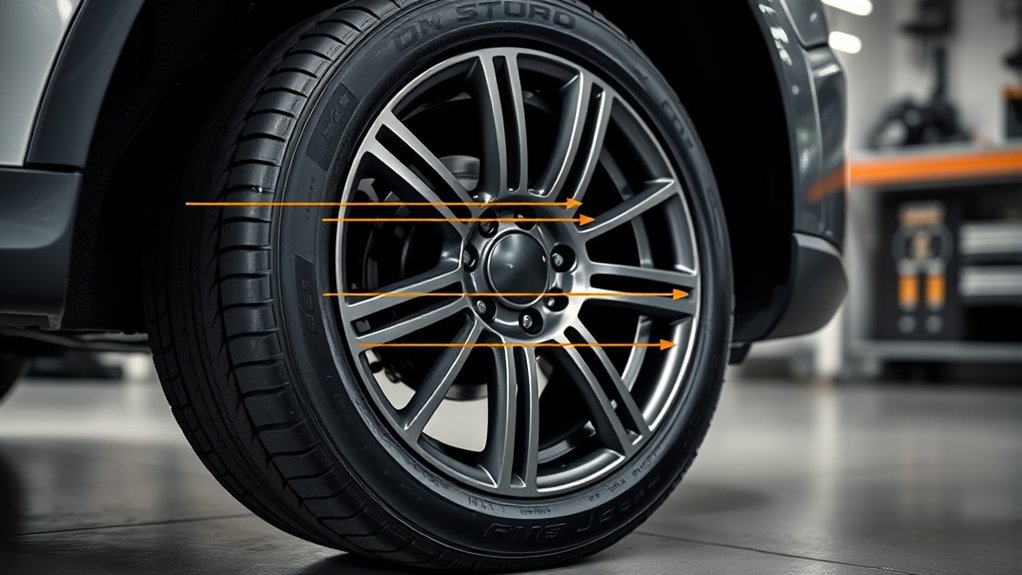
Tire dimensions describe the physical size and service limits of a tire. On most passenger vehicles, the size is written in a format like P225/70R16 91H. Read it from left to right:
| P | Passenger vehicle tire |
| 225 | Nominal section width in millimeters |
| 70 | Aspect ratio: sidewall height is 70% of the tire width |
| R | Radial construction |
| 16 | Rim diameter in inches |
| 91H | Service description: load index 91 and speed symbol H |
This code gives you the baseline for fitment. It does not replace the vehicle manufacturer’s tire placard, which lists the recommended tire size and cold inflation pressure for your specific vehicle.
Warning: Do not choose a replacement tire only because it “looks close.” Match the vehicle manufacturer’s approved size, load capacity, speed rating, and inflation guidance. If you are changing size, wheel diameter, or tire type, confirm clearance and load capacity with a qualified tire professional.
How Do You Read Tire Width?
You read tire width from the first three-digit number in the size code. In P225/70R16, the 225 means the tire has a nominal section width of 225 millimeters from sidewall to sidewall.
Width affects more than appearance. A wider tire may provide a larger contact patch, which can help grip in some conditions, but it can also affect steering feel, rolling resistance, fuel economy, road noise, and clearance inside the wheel well. The right width must match the wheel width range and the vehicle’s fitment requirements.
Note: Tire width is nominal. The actual measured width can vary by tire model and by the wheel width the tire is mounted on.
What Does Tire Aspect Ratio Tell You?
The aspect ratio is the number after the slash. In P225/70R16, the 70 means the sidewall height is 70% of the tire’s width.
For this example:
- 225 mm × 0.70 = 157.5 mm sidewall height
- 157.5 mm ÷ 25.4 = about 6.2 inches of sidewall height
A higher aspect ratio usually means a taller sidewall, which can improve ride comfort and impact absorption. A lower aspect ratio usually means a shorter sidewall, which can improve steering response but may make the ride firmer and increase wheel damage risk on potholes.
How Does Tire Construction Affect Fit?
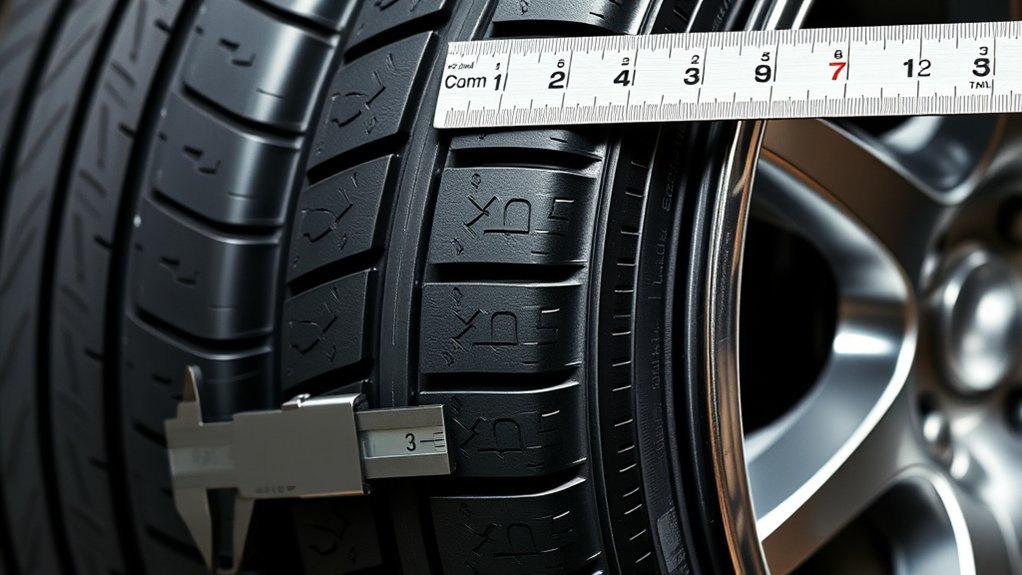
The construction letter shows how the tire’s internal cords are arranged. Most modern passenger and light truck tires use R for radial construction. Radial tires have cords that run from bead to bead, generally perpendicular to the direction of travel.
[Products Worth Considering]

Keep your tires properly inflated with this analog VONDIOR tire pressure gauge, designed for fast, easy readings without batteries. The swiveling, two-axis hose and large glow dial help you measure at any tire angle with instant visibility. Built with a protective rubber shield, it supports durable, low-maintenance use for cars and trucks.

The 22800 wheel stud installer makes replacing wheel studs quick and secure, saving time and effort during tire service. It uses a ratchet or impact wrench to pull new studs firmly into place, helping when existing studs are too long. Compatible with most automotive wheels and light-duty truck wheel studs, it’s designed for easy, tool-assisted installation.

TP-M13W combination repair unit kit includes wrapped stems with matching patches for fast, reliable tire repairs. It’s suitable for both radial and bias ply tires and is designed for chemical or heat vulcanization. Gray vulcanizing gum with blue backing helps create a strong bond, with the stem portion wrapped for added effectiveness.
Radial vs. Bias Construction
The most common construction codes are:
- R: Radial construction. This is the standard for most passenger and light truck tires.
- D, B, or “-”: Diagonal or bias-ply construction. This appears more often in specialty, trailer, vintage, or certain off-road applications.
- RF: Sometimes used to indicate a run-flat or reinforced tire, depending on manufacturer marking.
- ZR: Indicates a radial tire with a high-speed capability; the full service description still matters.
Do not mix radial and bias-ply tires on the same vehicle unless the vehicle or tire manufacturer specifically allows it. Mixing construction types can change handling, braking, and stability.
Construction and Sidewall Flex
Construction works together with sidewall height, load rating, inflation pressure, and tire design. A performance tire with a short, stiff sidewall may respond quickly but ride firmly. A touring tire with a taller sidewall may absorb bumps better but feel less sharp in hard cornering.
| Factor | What It Can Affect |
|---|---|
| Radial construction | Stability, tread contact, rolling resistance, and everyday ride quality |
| Bias-ply construction | Specialty fitments, trailer use, vintage vehicles, and specific load applications |
| Stiffer sidewall | Sharper response, firmer ride, and less sidewall flex |
| Taller sidewall | More bump absorption, more sidewall movement, and a softer feel |
Fitment Impacts on Vehicles
Tire construction affects how the tire works with suspension, steering, braking, and load. Even when two tires appear close in size, their construction, load range, tread design, and sidewall stiffness can make them behave differently.
For everyday replacement, the safest starting point is the original equipment size or another size approved by the vehicle manufacturer. If you use a different size, check wheel width, fender clearance, suspension clearance, brake clearance, load capacity, and speed rating.
Where Can You Find Wheel Diameter?
Wheel diameter appears after the construction letter. In P225/70R16, the 16 means the tire fits a 16-inch rim. This is the rim diameter code, not the overall tire diameter.
You can verify the correct wheel diameter in three places:
- Driver-side door placard: Also called the Tire and Loading Information Label.
- Owner’s manual: Lists approved tire sizes and inflation pressures.
- Current tire sidewall: Useful for checking what is installed now, but it may not be original or correct.
The National Highway Traffic Safety Administration recommends checking the owner’s manual or the Tire and Loading Information Label to find the correct size for your vehicle.
What Do Tire Type Prefixes Mean?
The first letters in a tire size tell you the tire category. Not every tire has a prefix, but when one appears, it matters.
| Prefix | Meaning | Common Use |
|---|---|---|
| P | P-metric passenger tire | Cars, minivans, crossovers, some SUVs |
| LT | Light truck tire | Trucks, towing, hauling, commercial use |
| ST | Special trailer tire | Trailer axles only |
| T | Temporary spare | Compact spare tires |
| C | Commercial/light-duty commercial tire | Vans and some commercial vehicles |
| No prefix | Metric or Euro-metric sizing | Many passenger vehicles |
What Is a Tire Load Index?
The load index is the number after the size code that tells you the tire’s maximum load capacity when used correctly. In P225/70R16 91H, the 91 is the load index.
Load index is not the weight itself; it is a code that corresponds to a load value on a chart. For example, load index 91 commonly corresponds to 1,356 pounds per tire. The correct value depends on the tire’s service description and official load tables.
Never replace a tire with one that has a lower load index than the vehicle manufacturer requires. This is especially important for SUVs, pickups, vans, towing, hauling, and vehicles that carry heavy passengers or cargo.
What Do Tire Speed Ratings Mean?
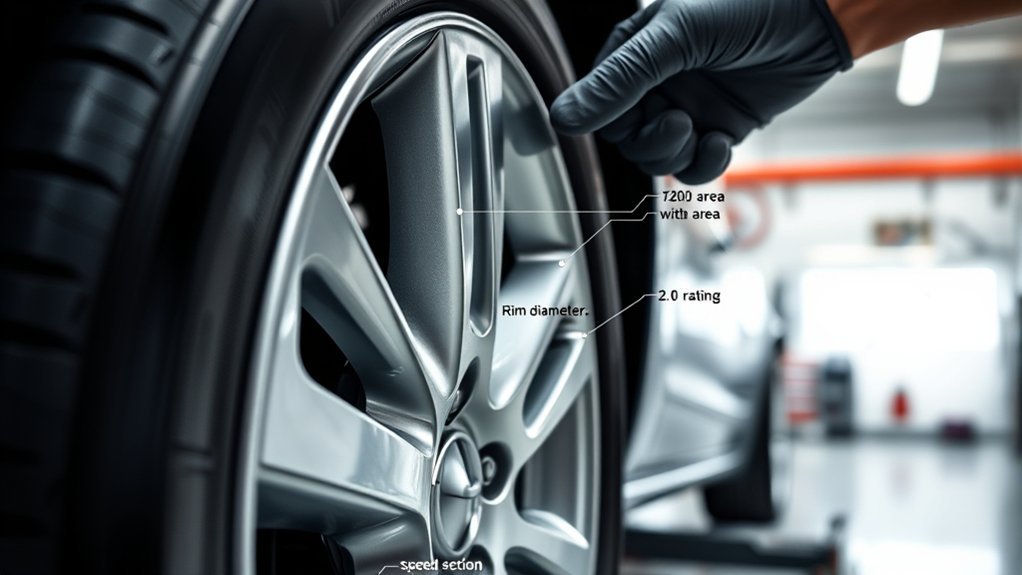
The speed symbol is the letter after the load index. In P225/70R16 91H, the H is the speed symbol. It identifies a speed category tested under controlled conditions, not a recommendation to drive at that speed.
| Speed Symbol | Maximum Speed Category | Common Use |
|---|---|---|
| S | 112 mph | Some passenger and touring tires |
| T | 118 mph | Many passenger tires |
| H | 130 mph | Touring and performance-oriented tires |
| V | 149 mph | Performance tires |
| W | 168 mph | High-performance tires |
| Y | 186 mph | Ultra-high-performance tires |
Warning: A speed rating is valid only when the tire is properly inflated, not overloaded, undamaged, and used under suitable conditions. It does not mean the vehicle can safely or legally be driven at that speed.
How Is Tire Size Calculated?
To estimate overall tire diameter, you need width, aspect ratio, and rim diameter. The key is to keep the units consistent.
Tire Code Breakdown
Using P225/70R16:
- Width: 225 mm
- Aspect ratio: 70%, written as 0.70 in the formula
- Rim diameter: 16 inches
Width, Aspect, Diameter Formula
Use this formula for an approximate overall diameter in inches:
Overall tire diameter = rim diameter + 2 × [(section width × aspect ratio) ÷ 25.4]
For P225/70R16:
- 225 × 0.70 = 157.5 mm sidewall height
- 157.5 ÷ 25.4 = 6.20 inches
- 16 + 2 × 6.20 = 28.4 inches overall diameter
This is an estimate. Actual tire dimensions can vary slightly by manufacturer, tread design, load, inflation pressure, and measuring rim width. For tight fitments, use the tire manufacturer’s published specifications.
Size Change Effects
Changing tire dimensions can affect:
- Speedometer and odometer readings
- Transmission shift behavior
- ABS and stability control calibration
- Ground clearance and ride height
- Wheel well, fender, suspension, and brake clearance
- Load capacity and towing safety
Pro Tip: When comparing sizes, calculate overall diameter and revolutions per mile, then confirm the tire’s published specs. Two tires with the same printed size can still measure slightly differently.
What Happens When You Upsize Tires?
Upsizing means installing a tire and wheel package that differs from the original size, often with a larger wheel diameter and a lower-profile tire. It can improve steering response or appearance, but it can also create problems if the total diameter, load rating, wheel offset, or clearance is wrong.
| Change | Possible Benefit | Possible Risk |
|---|---|---|
| Wider tire | More contact patch | Rubbing, heavier steering, lower fuel economy |
| Lower aspect ratio | Sharper response | Firmer ride, more wheel damage risk |
| Larger overall diameter | More ground clearance in some builds | Speedometer error, gearing changes, clearance issues |
On AWD and 4WD vehicles, mismatched tire diameters can stress drivetrain components. Replace tires in matched sets when required by the manufacturer, and follow the vehicle manual for rotation and replacement rules.
[Products Worth Considering]

The TOOLITIN floor bike pump delivers high pressure performance with an easy-to-read gauge so you can dial in the right tire pressure for safer rides. It is compatible with both Presta and Schrader valves and features a stable, durable design for efficient pumping. Suitable for road, MTB, and hybrid tires as well as inflating sports balls and other inflatables, it also includes ball and bladder needles and convenient accessory storage.

These aluminum alloy tire valve stem caps with an O-ring seal help protect valve stems from corrosion while adding a clean, stylish look to your vehicle. The universal fit works across cars, trucks, motorcycles, bicycles, and more, making them an easy upgrade for everyday driving and off-road use. Installation is quick, and the included four-pack keeps all your tires dressed and protected.

The Tymate TM12 RV TPMS delivers real-time tire pressure and temperature monitoring with a stable 433Hz display for safer long-distance driving. It supports simultaneous monitoring across vehicle and trailer zones, includes six alarm modes for pressure, temperature, leakage, battery, and signal loss, and features easy DIY installation with auto calibration. Power is supplied via USB-C charging or solar recharging, with a wide 0–144 PSI range and up to 50 ft signal coverage for RVs and towable trailers.
How Do Tire Dimensions Affect Handling?
Tire dimensions influence how your vehicle feels, turns, stops, and absorbs bumps. The biggest effects usually come from width, sidewall height, overall diameter, and tire construction.
- Width: A wider tire may increase grip, but it can also reduce fuel economy and increase road noise.
- Aspect ratio: A lower ratio can sharpen steering; a higher ratio can improve comfort.
- Overall diameter: A larger or smaller diameter can affect gearing, speedometer readings, and clearance.
- Construction and load rating: These affect stability, sidewall stiffness, and how the tire handles weight.
The best tire dimension is not always the widest or the lowest-profile size. It is the size that matches your vehicle, driving conditions, load needs, wheel size, and manufacturer recommendations.
[Products Worth Considering]
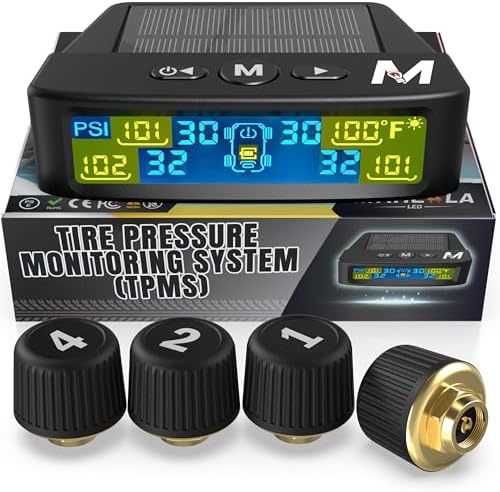
Marcala’s TPMS set of four sensors helps you monitor tire pressure and temperature in real time while driving, with updates every second. The bright color LCD uses auto-dimming for easy viewing, powered by dual solar and USB charging, and offers six alarm modes. Built for trailers, RVs, campers, trucks, and towing setups, the sensors support monitoring 1-4 wheels up to 98 PSI with IP67 waterproof protection.

The SAFELIFE dial tire tread depth gauge measures tread depth in 1/32 inch increments with clear, easy-to-read 2-inch dial face. Color zones using a traffic light system help you quickly judge whether tread is low, marginal, or ample for safer driving. Built with a durable zinc cast body and a metal detect probe for precise, comfortable use across cars, motorcycles, trucks, and buses.

Measure tire tread depth quickly and accurately with this LUMITECO dial gauge that reads in 1/32" increments up to 14/32". The color-coded green/yellow/red zones make it easy to judge tire wear and know when replacement is needed. A rugged, compact design with a protective pouch helps keep the gauge ready for use on cars, trucks, motorcycles, and more.
What Is the DOT Tire Date Code?
The DOT Tire Identification Number, often called the TIN, helps identify the tire for certification and recall purposes. The last four digits show the week and year the tire was made. For example, a tire ending in 2613 was made in the 26th week of 2013.
The date code may appear on only one side of the tire, so you may need to check both sidewalls. When buying tires, check the date code along with tread depth, condition, load index, and speed symbol.
What Are UTQG Ratings?
UTQG stands for Uniform Tire Quality Grading. For many passenger tires sold in the United States, UTQG compares three areas:
- Treadwear: A relative number for tread wear comparison.
- Traction: Wet straight-line stopping traction grade, commonly AA, A, B, or C.
- Temperature: Heat resistance grade, commonly A, B, or C.
UTQG can help compare tires, but it is not a full safety rating or a guarantee of tread life. Driving style, road surface, alignment, rotation, inflation pressure, and vehicle type all affect real-world tire life.
Should You Use the Sidewall Pressure or Door Placard Pressure?
Use the vehicle manufacturer’s recommended cold tire pressure from the door placard or owner’s manual for normal driving. The maximum pressure molded on the tire sidewall is not the same as the recommended pressure for your vehicle.
Check pressure when tires are cold, usually before driving or after the vehicle has been parked for several hours. Proper inflation helps the tire carry load, wear evenly, handle predictably, and resist heat buildup.
Frequently Asked Questions
What does 225/65R17 mean?
225/65R17 means the tire is 225 mm wide, the sidewall height is 65% of that width, the tire uses radial construction, and it fits a 17-inch rim. The full service description may also include a load index and speed symbol after the size.
What size tire does a Toyota Tacoma use?
Toyota Tacoma tire size depends on model year, trim, wheel size, and package. Common examples include 245/75R16, 265/70R16, 265/65R17, and 265/60R18, but you should verify the exact size on the driver-side door placard or in the owner’s manual.
What does LT mean on a tire?
LT means Light Truck. LT tires are designed for higher load demands than many passenger tires and are common on pickups, vans, towing setups, and work vehicles. In a size such as LT275/65R20, the 20 means the tire fits a 20-inch rim; LT does not mean 20-inch width.
Can I use a different tire size than the one on my car?
You can use a different size only if it is approved for your vehicle or verified by a qualified tire professional. The replacement must maintain proper load capacity, speed rating, wheel fit, brake clearance, suspension clearance, and speedometer accuracy.
What size tire does Tadej Pogačar use?
That question refers to bicycle tires, which use a different sizing system than car tires. A road bike tire may be marked with sizes such as 700x28c or 28-622. Those numbers should not be compared directly with automotive sizes such as P225/70R16.
Where is the best place to find my correct tire size?
The best places are the Tire and Loading Information Label on the driver-side door edge or door post and the owner’s manual. The tire sidewall shows what is currently installed, but that tire may not be the original or correct size.
Conclusion
Tire dimensions are a quick way to understand whether a tire fits your vehicle, how tall the sidewall is, what wheel it mounts to, and how much load and speed it is designed to handle. Start with the full sidewall code, then confirm the correct size, pressure, load index, and speed symbol with your vehicle placard or owner’s manual.
If you are staying with the original size, the process is simple. If you are changing tire width, aspect ratio, wheel diameter, or tire type, treat it as a fitment decision, not a cosmetic guess. The right dimensions keep your vehicle predictable, comfortable, and safe.
Sources
- NHTSA TireWise — tire ratings, placard guidance, tire safety, and maintenance basics
- NHTSA Tire Safety Brochure — tire size, pressure, tread, UTQG, and sidewall marking guidance
- U.S. Tire Manufacturers Association Care and Service Manual — tire size designations, service descriptions, load index, and speed symbols
- Bridgestone: How to Read and Determine Tire Size — tire width, aspect ratio, construction, and rim diameter explanations
- Tire Rack: How to Calculate Tire Dimensions — section width, sidewall height, unit conversion, and overall diameter formula
- 49 CFR § 575.104 — Uniform Tire Quality Grading standards

