
Toyota Tundra Stock Wheel Offset by Trim Level: SR5, TRD, and Platinum
The stock wheel offset for a Toyota Tundra is not one universal number. It depends on the model year, generation, wheel size, trim, package, and sometimes the exact OEM wheel part number. Most 2007–2021 Tundra OEM 18-inch and 20-inch wheels are commonly listed around ET60 (+60 mm), while the 2022+ Tundra uses a different 6-lug platform with several stock-style offsets depending on the wheel.
Quick Answer
Most 2007–2021 Toyota Tundra OEM wheels are listed around ET60 (+60 mm), including many 18×8 and 20×8 setups. The 2022+ Tundra changed to a 6-lug platform, and stock offsets can vary by wheel, commonly about +47.5, +55, or +60 mm. Always confirm by year, wheel size, and part number.
Key Takeaways
- 2007–2021 Tundra: many stock 18×8 and 20×8 wheels are commonly listed as ET60, with a 5×150 bolt pattern.
- 2022+ Tundra: the truck moved to a 6×139.7 bolt pattern, and stock-style offsets vary by wheel and package.
- TRD does not automatically mean low offset: +25 to +35 mm is usually an aftermarket stance range, not a universal stock TRD offset.
- Verify before buying: check the wheel stamp, OEM part number, hub bore, lug-seat type, brake clearance, and tire clearance at full steering lock.
At a Glance
| Time Required | 10–30 minutes to check the wheel stamp or measure backspacing |
| Difficulty | Easy if the wheel stamp is visible; moderate if the wheel must be removed |
| Tools Needed | Flashlight, tape measure, straightedge, caliper, lug wrench, jack and stands if removing the wheel |
| Cost | $0 if checking markings; about $10–$30 if buying a basic measuring tool |
Understanding Stock Wheel Offset for the Toyota Tundra
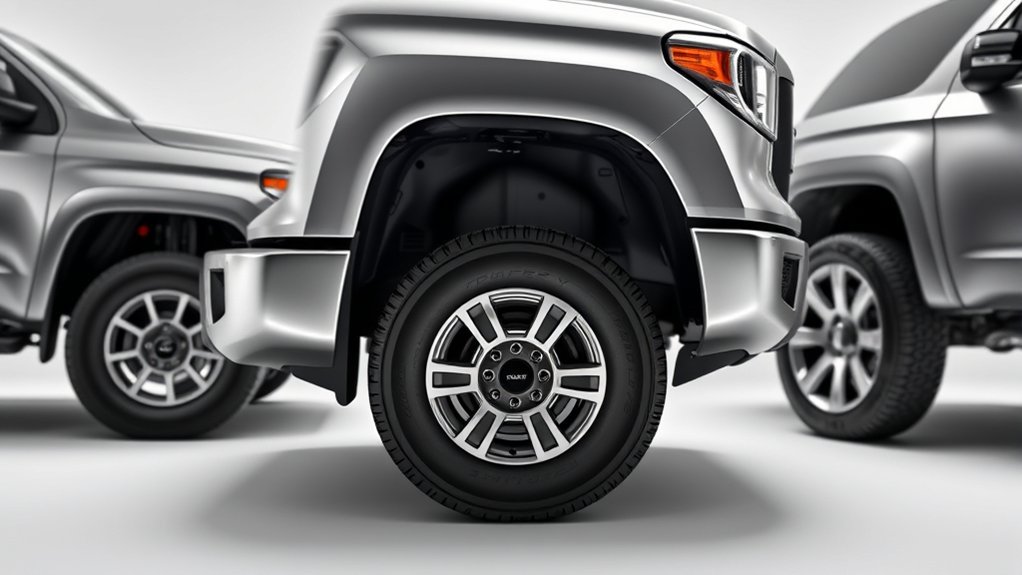
Wheel offset is the distance between the wheel’s mounting surface and the wheel’s centerline. A positive offset means the mounting surface sits closer to the outside face of the wheel, pulling the wheel inward. A lower positive offset or negative offset pushes the wheel outward for a wider stance.
That small millimeter number matters because it changes how the tire sits near the fender, suspension, brake caliper, upper control arm, mud flap, and inner liner. It also affects scrub radius, steering feel, and the chance of tire rubbing.
Note: Toyota brochures usually confirm factory wheel and tire sizes, but they do not always publish every wheel’s offset. For the exact stock offset on your Tundra, check the wheel stamping, OEM part number, VIN-based Toyota parts listing, or a trusted fitment database before ordering wheels.
[Products Worth Considering]

These M14x1.5 closed-end chrome lug nuts are a one-piece replacement designed for secure fitment on compatible GM, Ford, and select Chrysler/Dodge models. Featuring a 60-degree conical seat and anti-rust chrome plating, they help resist corrosion and maintain a bright look for everyday driving. Built for long-term durability, they include OEM-style part references and are backed by 12 months of support.

These aluminum alloy tire valve stem caps with an O-ring seal help protect valve stems from corrosion while adding a clean, stylish look to your vehicle. The universal fit works across cars, trucks, motorcycles, bicycles, and more, making them an easy upgrade for everyday driving and off-road use. Installation is quick, and the included four-pack keeps all your tires dressed and protected.

These universal tire valve stem caps help protect valve cores from dust, debris, and moisture while helping maintain stable tire pressure. The corrosion-resistant metal construction and sealed design provide reliable protection in road grime, mud, and winter conditions. Twist-on installation makes them quick to fit on cars, SUVs, trucks, and motorcycles.
Common Stock Toyota Tundra Wheel Offset by Generation
The safest way to answer “What is the stock Toyota Tundra wheel offset?” is to start with the model year. The table below gives the common factory-style fitment ranges owners are most likely to see.
| Tundra years | Common bolt pattern | Common OEM wheel sizes | Common stock-style offset | What to know |
|---|---|---|---|---|
| 2000–2006 | 6×139.7 mm | 16-inch and 17-inch wheels | Often around ET15 on many OEM-style listings | First-generation fitment is very different from 2007–2021 Tundra wheels. |
| 2007–2021 | 5×150 mm | 18×8 and 20×8 wheels | Commonly ET60 (+60 mm) | This is the generation most people mean when they mention a +60 mm stock Tundra offset. |
| 2022 and newer | 6×139.7 mm | 18-inch, 20-inch, and 22-inch wheels | Commonly around +47.5, +55, or +60 mm depending on wheel | Do not use 2007–2021 5-lug wheels on a 2022+ Tundra. |
The most important fitment rule is simple: match the wheel to your Tundra’s model year, bolt pattern, hub bore, lug-seat style, brake clearance, load rating, and tire size—not just the offset number.
What Wheel Offset Is Best for Your Driving Style?
For a daily-driven Toyota Tundra, the best wheel offset is usually close to the factory offset for your year and wheel size. Staying near OEM keeps steering feel, brake clearance, tire coverage, and suspension clearance closer to what Toyota intended.
If you want a mild off-road stance, a lower positive offset can move the wheel outward and create a wider look. But this is where fitment gets more sensitive. A wheel in the +25 mm to +35 mm range may work on some aftermarket setups, but it is not a universal stock TRD offset. It can also increase tire poke and rubbing, especially with wider tires.
Warning: Do not choose wheels by offset alone. A wheel with the wrong bolt pattern, hub bore, lug-seat type, load rating, or brake clearance can be unsafe even if the offset looks close on paper.
Toyota Tundra SR5 Trim: Wheel Offset and Performance Insights
The Toyota Tundra SR5 is one of the trims most often discussed because it has been offered with several wheel and package combinations. For 2007–2021 trucks, many SR5 factory-style 18-inch and 20-inch wheels are commonly listed around ET60. Toyota’s 2021 brochure shows SR5 availability with 18-inch styled steel wheels, optional 18-inch alloy wheels, TRD Off-Road wheels, and TRD Sport 20-inch wheels depending on package.
For 2022+ SR5 trucks, the answer changes because the platform uses a 6-lug pattern and different wheel packages. Toyota’s current-generation brochures list SR5 with 18-inch or 20-inch wheel options depending on configuration and package, so the exact stock offset should be verified by wheel part number or wheel stamp.
Here’s a safer SR5 overview:
| SR5 generation | Common wheel context | Offset guidance |
|---|---|---|
| 2007–2021 SR5 | 18-inch and 20-inch factory-style wheels; 5×150 bolt pattern | Many OEM-style listings show ET60, but confirm the wheel part number. |
| 2022+ SR5 | 18-inch or 20-inch wheels depending on package; 6×139.7 bolt pattern | Offset varies by wheel; do not assume the older 5-lug ET60 setup applies. |
Toyota Tundra TRD Trim: Off-Road Features
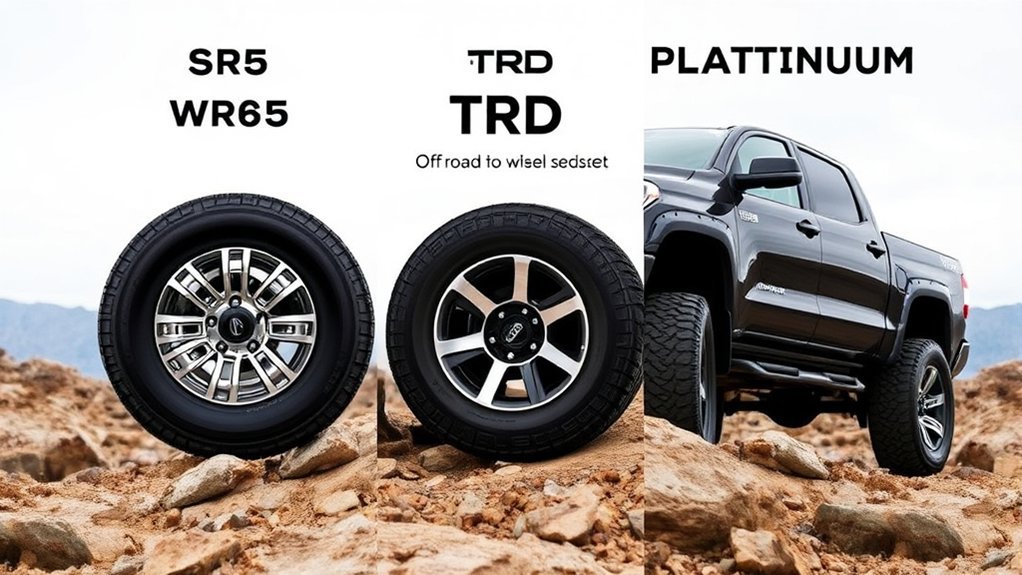
TRD fitment needs extra care because “TRD” can mean different things: TRD Off-Road Package, TRD Sport Package, or TRD Pro. These packages can use different wheels, tires, suspension tuning, and trim availability.
For 2021 Tundra, Toyota listed TRD Pro with 18-inch BBS forged-aluminum wheels and Michelin P275/65R18 tires. Toyota also listed the TRD Off-Road Package with 18-inch TRD Off-Road alloy wheels and P275/65R18 all-terrain tires. For 2024 Tundra, Toyota lists the TRD Off-Road Package with 265/70R18 Michelin LTX Trail all-terrain tires and TRD Pro with 285/65R18 Falken Wildpeak all-terrain tires.
So, the right answer is not “TRD equals low offset.” A stock TRD wheel can still sit close to OEM fitment. Lower-offset aftermarket wheels can create a more aggressive stance, but they may also create rubbing at the liner, mud flap, cab/body mount area, or upper control arm.
Pro Tip: If you are keeping stock suspension, choose the tire size before the wheel offset. A moderate offset with a very wide tire can rub more than a lower-looking wheel with a narrower tire.
Toyota Tundra Platinum Trim: Luxury Meets Functionality
The Toyota Tundra Platinum trim is more about premium equipment than a single unique wheel offset. Older Platinum models and current Platinum models use different platforms, wheel options, and powertrains, so it is not accurate to say every Platinum has a +55 mm or +60 mm offset.
For 2021, Toyota’s brochure confirms the 5.7L i-FORCE V8 at 381 hp and 401 lb-ft of torque, and it lists Platinum with premium interior features and 20-inch wheel equipment. For 2022 and newer trucks, Toyota moved to the newer i-FORCE twin-turbo V6 and i-FORCE MAX hybrid powertrain family, so current Platinum fitment should be checked separately from 2007–2021 Platinum fitment.
| Platinum context | What to verify |
|---|---|
| 2007–2021 Platinum | 5×150 bolt pattern, wheel size, OEM part number, and whether the wheel is a 20-inch factory wheel. |
| 2022+ Platinum | 6×139.7 bolt pattern, 20-inch package wheel, TRD Off-Road Package option if equipped, and exact stamped offset. |
[Products Worth Considering]

The Tymate TM2 RV tire pressure monitoring system keeps you informed with a color LCD display, automatic backlight, and solar charging for dependable operation. It supports up to 10 tire positions with four pre-paired sensors, while offering multiple alarm modes for fast leak detection, pressure extremes, temperature alerts, and low-signal warnings. Built-in monitoring uses accurate readings and reliable 433.92MHz communication to help protect your RV, trailer, truck, or SUV.

The 22800 wheel stud installer makes replacing wheel studs quick and secure, saving time and effort during tire service. It uses a ratchet or impact wrench to pull new studs firmly into place, helping when existing studs are too long. Compatible with most automotive wheels and light-duty truck wheel studs, it’s designed for easy, tool-assisted installation.

Upgrade your Toyota tire setup with these corrosion-resistant, leak-proof valve stem caps designed to help protect the valve core from water, snow, and road grime. The caps feature a snug rubber seal and durable copper alloy construction to resist rust and oxidation while maintaining stable tire pressure. Ideal for replacing worn original caps and keeping your wheels looking clean and stylish.
How to Find Your Exact Toyota Tundra Wheel Offset
If you are buying replacement wheels or comparing aftermarket fitment, do not rely only on trim names. Use this process to confirm your exact wheel offset.
- Confirm your model year and generation. A 2021 Tundra and a 2024 Tundra do not use the same wheel platform.
- Check the wheel size. Look for markings such as 18x8J, 20x8J, or 18×8.5J.
- Look for the offset stamp. Many wheels are stamped on the back side with “ET” followed by the offset number, such as ET60.
- Check the OEM part number. Toyota Genuine Parts pages and dealer VIN lookup can help match the wheel to your truck.
- Measure backspacing if needed. Lay the wheel face down, place a straightedge across the inner lip, and measure from the mounting pad to the straightedge.
- Use the offset formula. Offset in millimeters = (backspacing in inches − half of the wheel’s overall width in inches) × 25.4.
When measuring, remember that advertised wheel width is measured between bead seats, not outer lip to outer lip. The overall wheel width is usually about one inch wider than the advertised width, so measure carefully if you need an exact number.
Aftermarket Wheel Offset and Tire Fitment Checklist
Aftermarket wheels can work well on a Toyota Tundra, but the “right” offset depends on the full setup. A lower offset can create a wider stance, while a high positive offset keeps the wheel tucked inward. Both can cause problems if paired with the wrong width or tire.
- Brake clearance: confirm the wheel clears the caliper, especially with smaller-diameter wheels.
- Upper control arm clearance: check the inner tire sidewall at full steering lock.
- Fender liner and mud flap clearance: inspect at full left and full right turn.
- Compression clearance: rubbing may appear only when the suspension compresses off-road or over bumps.
- Hub bore: use hub-centric wheels or proper hub-centric rings when required.
- Lug-seat type: Toyota OEM wheels and aftermarket wheels may use different lug-seat designs.
- TPMS compatibility: make sure the wheel accepts the correct tire pressure sensors.
- Load rating: choose wheels rated for the truck’s weight and intended towing/hauling use.
Warning: After installing wheels, check for rubbing, verify lug-nut seating, torque the wheels to the correct specification from your owner’s manual, and recheck the wheel nuts after driving. Toyota also advises checking aluminum-wheel nuts after tire rotation, repair, or tire changes.
Frequently Asked Questions
What is the stock wheel offset on a Toyota Tundra?
For many 2007–2021 Toyota Tundra OEM 18-inch and 20-inch wheels, the common stock offset is about ET60 (+60 mm). First-generation 2000–2006 trucks and 2022+ trucks use different wheel platforms, so always verify by model year, wheel size, and wheel part number.
Can I change my Tundra’s wheel offset without affecting performance?
You can change offset, but it can affect steering feel, tire clearance, scrub radius, wheel bearing load, and rubbing. Small changes near factory fitment are usually easier to manage than aggressive low-offset wheels. Always check clearance and alignment after changing wheels.
Is +25 mm to +35 mm offset stock on TRD Tundra models?
No, not as a universal stock rule. +25 mm to +35 mm is more often an aftermarket stance range. Some TRD factory wheels are much closer to normal OEM fitment, so check the exact TRD wheel part number before assuming the offset.
What tools do I need to measure wheel offset?
You need a straightedge, tape measure or ruler, and ideally a caliper. If the offset is stamped on the wheel, a flashlight may be enough. If you need to measure backspacing, remove the wheel safely and support the truck with proper jack stands.
How does wheel offset impact tire selection?
Offset changes where the tire sits. A higher positive offset pulls the tire inward and can reduce inner suspension clearance. A lower offset pushes the tire outward and can create fender, liner, and mud-flap rubbing. Tire width matters as much as tire height.
Are aftermarket wheels compatible with stock offsets?
Yes, many aftermarket wheels are available near stock offset. But compatibility also depends on wheel width, bolt pattern, hub bore, lug-seat type, load rating, brake clearance, and tire size. A stock-like offset does not guarantee perfect fitment by itself.
Will 2007–2021 Tundra wheels fit a 2022 or newer Tundra?
No, not directly. Many 2007–2021 Tundras use a 5×150 bolt pattern, while 2022+ Tundras use a 6×139.7 bolt pattern. The bolt pattern difference alone makes those wheels incompatible without unsafe or impractical adapters.
What is the process for adjusting wheel offset?
The proper process is to choose wheels with the offset you want. Wheel spacers can reduce effective offset, but they add another fitment and safety variable. Use only high-quality hub-centric spacers, correct studs, and proper torque if you go that route.
Conclusion
Understanding the stock wheel offset for your Toyota Tundra starts with the year and wheel, not just the trim badge. For many 2007–2021 trucks, +60 mm is the common factory-style number, but first-generation and 2022+ Tundras are different. Before buying wheels, confirm the bolt pattern, wheel size, offset stamp, hub bore, lug-seat type, brake clearance, and tire clearance. That extra check can save you from rubbing, poor fitment, or unsafe wheel installation.
Sources
- Toyota 2021 Tundra eBrochure — backs up 2021 Tundra wheel/tire packages, TRD wheel references, and 5.7L V8 output.
- Toyota 2024 Tundra eBrochure — backs up current-generation wheel, tire, TRD Off-Road, TRD Pro, and powertrain context.
- Toyota Owners Manual — Wheels — backs up Toyota wheel precautions and wheel-nut recheck guidance.
- Toyota Genuine TRD 18-inch Forged BBS Wheel — backs up Toyota’s fitment, offset, and brake-clearance design language for TRD wheels.
- Wheel-Size 2021 Toyota Tundra Fitment Data — backs up common 2007–2021-style ET60 fitment references.
- Avto Reference 2024 Toyota Tundra Fitment Data — backs up current-generation 6×139.7 fitment and multiple stock-style offset examples.
[Products Worth Considering]

Upgrade your wheels with MIKKUPPA M12x1.5 mag seat lug nuts built for secure, corrosion-resistant performance. These closed-end chrome lug nuts are a direct replacement for select Toyota models, including Camry, Corolla, RAV4, Sienna, Avalon, Highlander, Matrix, Venza, and Prius. Triple-chromium plating and cold-forged, heat-treated steel help deliver strength for daily driving and replacement needs.

The Dr.Roc spare tire tool kit helps you release, lower, or raise your spare tire with reliable extension tools and a lug nut wrench. It is made from rustproof automotive-grade steel and includes an organized carry case for convenient storage. Designed for compatibility with select GM models from the late 1990s through 2019, it uses upgraded extension components to install and remove spare tires with less hassle.

Upgrade your wheels with MIKKUPPA closed-end lug nuts designed for reliable fit and corrosion resistance. The one-piece, cold-forged and heat-treated steel construction helps resist rust and stripping, while the integrated finish delivers a durable black appearance. Built to OEM standards with a conical 60-degree seat, these nuts provide a secure solution for compatible Ford, Honda, Jeep, and Chevrolet models.

Related Articles
Toyota Tundra Tire and Wheel Package: What to Consider Before Buying
Unlock the secrets to choosing the perfect tire and wheel package for your Toyota Tundra—essential tips await to enhance your ride.
Read More
Do Bigger Tires Void a Toyota Tundra Warranty? Magnuson-Moss Act Explained
Bigger tires might not void your Toyota Tundra warranty, but understanding the Magnuson-Moss Act is crucial—discover how to protect your investment effectively.
Read More
Toyota Tundra Tire Rack Setup: Garage Storage Ideas for Seasonal Sets
Better tire storage for your Toyota Tundra awaits—discover essential tips to maximize space and protect your seasonal sets in the garage!
Read More