
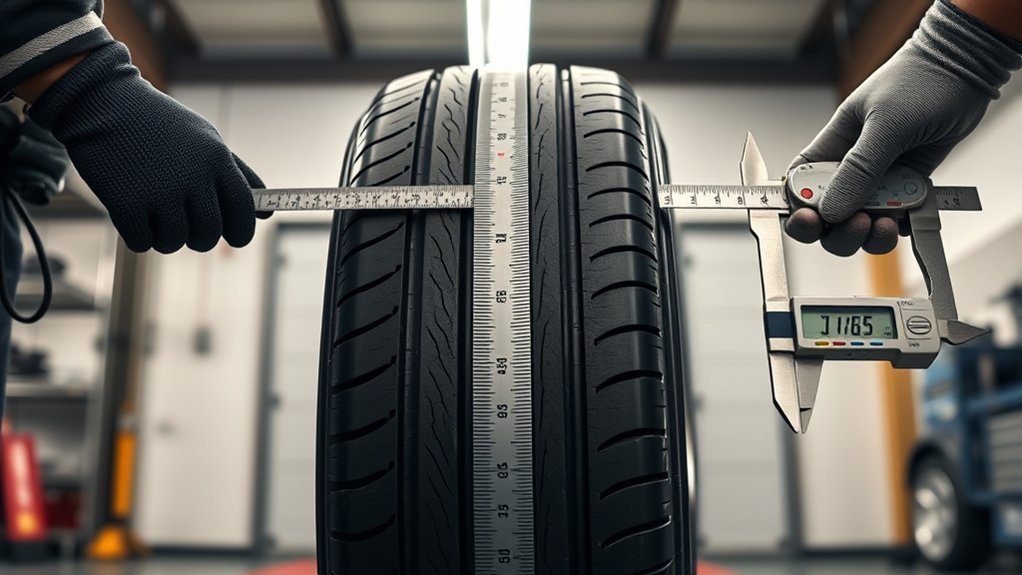
Measuring tire diameter is simple once you know which number you need: the tire’s real mounted height, its circumference-based diameter, or its calculated nominal size from the sidewall. Use a cold, properly inflated tire, measure from the center tread, and compare your result with the tire manufacturer’s specs before making any fitment decision.
Quick Answer
To measure tire diameter, inflate the tire to the vehicle’s recommended cold PSI, place it on level ground, and measure straight up from the ground to the top of the center tread. For a cross-check, measure circumference around the center tread and divide by π. For a calculated estimate, use the sidewall size formula.
Key Takeaways
- Use the vehicle placard or owner’s manual for the recommended cold PSI, not the tire sidewall’s maximum pressure.
- The fastest physical method is a straight vertical measurement from level ground to the top of the center tread.
- The most consistent DIY cross-check is circumference ÷ π.
- Metric tire diameter is calculated as: rim diameter + 2 × sidewall height.
- Calculated size is nominal; real mounted size can vary by brand, tread depth, rim width, inflation pressure, and load.
At a Glance
| Time Required | 5–10 minutes per tire |
| Difficulty | Easy |
| Tools Needed | Tire pressure gauge, tape measure, string, chalk or marker, calculator |
| Cost | Usually $0 if you already have basic measuring tools |
What Tire Diameter Means
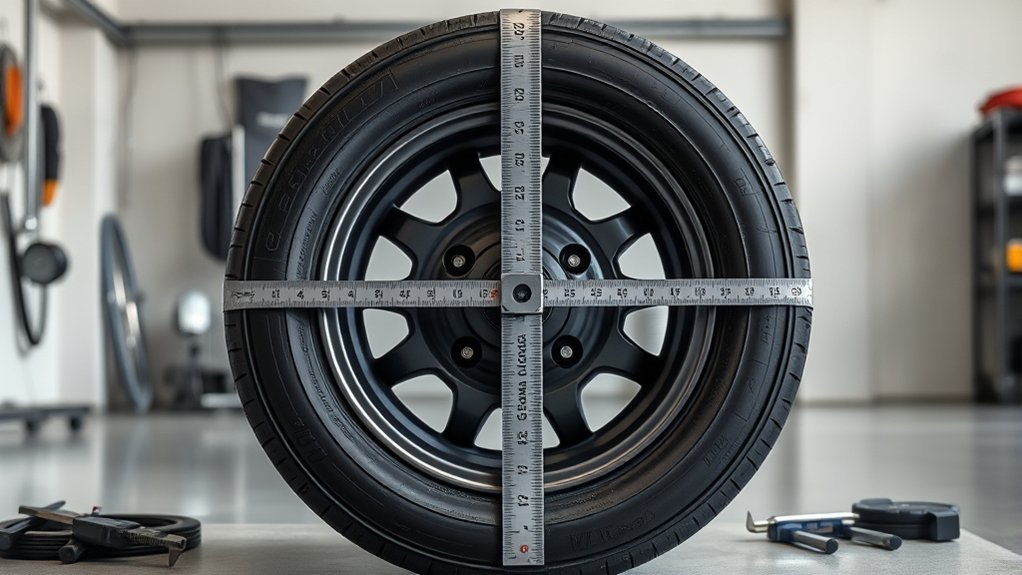
Tire diameter, also called overall diameter, is the tire’s total height from the bottom of the tread to the top of the tread. It matters because it affects ground clearance, wheel-well clearance, speedometer accuracy, gearing, and how the vehicle feels on the road.
There are two practical ways to think about diameter:
- Measured diameter: the physical height you measure with the tire mounted and inflated.
- Calculated diameter: the nominal size you calculate from the sidewall numbers, such as 225/70R16.
Note: Calculated tire diameter is an estimate. Actual tire dimensions can differ by manufacturer, tread design, rim width, inflation pressure, load, and tread wear.
Tools Needed to Measure Tire Diameter
You do not need special shop equipment for a useful home measurement. Gather these items first:
- Tire pressure gauge to confirm cold PSI.
- Tape measure for height and circumference checks.
- String if your tape measure will not wrap smoothly around the tire.
- Chalk or marker to mark where the string overlaps.
- Calculator for circumference and sidewall-size formulas.
Warning: Do not use the tire sidewall’s “MAX PRESS” number as the normal operating pressure. Use the recommended cold tire pressure on the vehicle tire placard or in the owner’s manual.
[Products Worth Considering]

This 12-inch LUMITECO dual head tire pressure gauge features an integrated straight-on chuck and a 30° reverse chuck to reach hard-to-access dual wheel valves. Its 10–150 PSI / 1–10 BAR range with a clear, two-sided scale helps you quickly check tire pressure for safer, smoother driving. Heavy-duty construction and a simple no-battery design make it a reliable tool for trucks, cars, RVs, and motorcycles.

This tire inflator with pressure gauge delivers long-lasting performance with a durable rubber-protected gauge and sturdy build. The longer hose and 360 swivel air chuck help you seal the valve securely and keep your hands free while measuring, inflating, or deflating. It’s battery-free for reliable use and provides ±2 PSI accuracy in the mid-range for most typical tires, with universal compatibility for 1/4 NPT compressor outputs.
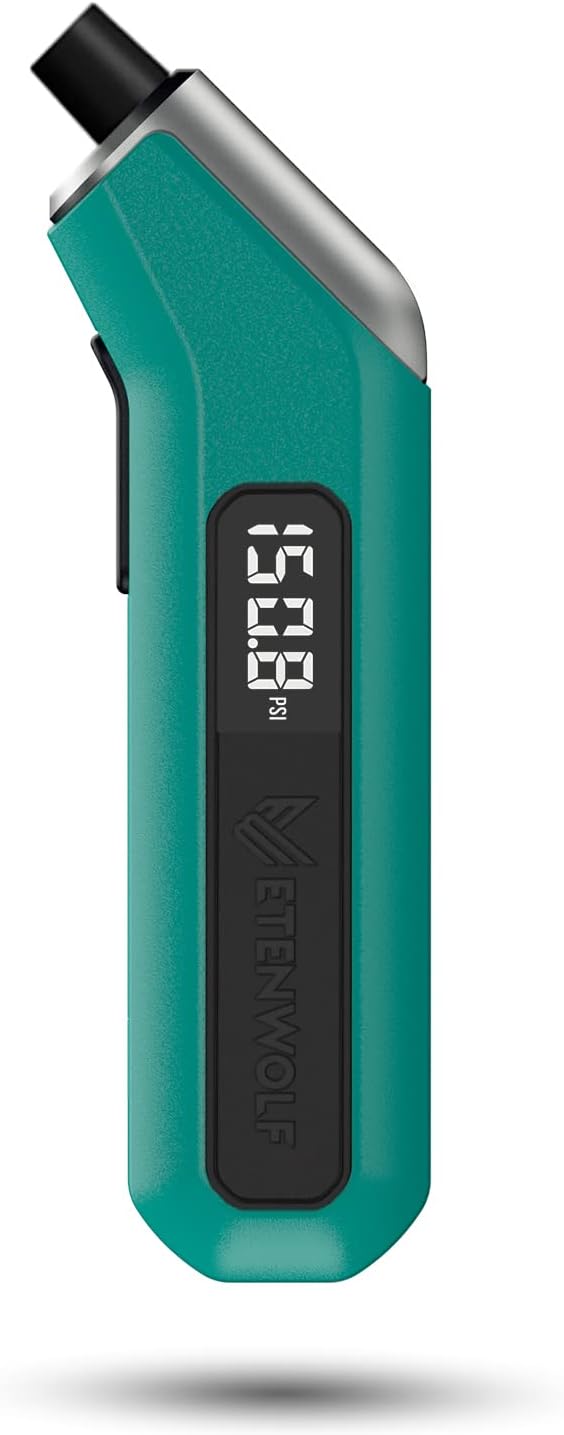
ETENWOLF T300 is a calibrated digital tire pressure gauge designed for reliable readings across low and high pressure ranges. It includes thermal compensation for stable performance in extreme cold or heat, an LED light for visibility, and an auto shut-off to help preserve battery life. Ideal for pickups, RVs, and heavy-duty vehicles, it delivers accurate PSI measurements with sturdy durability.
How to Measure Tire Diameter
The best method depends on what you need. For a quick physical check, measure height. For a more repeatable DIY check, measure circumference. For a size comparison before buying tires, calculate diameter from the sidewall size.
Method 1: Measure Height From Ground to Tread
- Park the vehicle on a flat, level surface.
- Let the tires cool if the vehicle has been driven. A cold reading is more reliable.
- Set the tire pressure to the vehicle manufacturer’s recommended cold PSI.
- Place the tape measure on the ground at the centerline of the tire.
- Measure straight up to the highest point of the center tread.
- Keep the tape vertical, not angled, and record the reading.
- Repeat once or twice and average the measurements if they vary.
This gives you the tire’s loaded height if the tire is mounted on the vehicle. It is useful for clearance checks, but it can be slightly shorter than the tire’s unloaded overall diameter because the vehicle’s weight compresses the tire at the contact patch.
Method 2: Measure Circumference and Divide by Pi
For a strong cross-check, measure around the tire instead of straight up.
- Wrap a string or flexible tape around the center of the tread.
- Keep it flat, snug, and centered all the way around.
- Mark where the string overlaps.
- Lay the string flat and measure its length.
- Divide the circumference by π, or 3.1416.
Formula: Diameter = Circumference ÷ π
For example, if the tire circumference is 89.2 inches, the estimated diameter is:
89.2 ÷ 3.1416 = 28.4 inches
Pro Tip: If your tire has chunky tread blocks or uneven wear, take two or three circumference readings and average them. That reduces error from tread irregularities.
Method 3: Calculate Tire Diameter From the Sidewall
If the tire size is written as 225/70R16, you can calculate its nominal diameter from the section width, aspect ratio, and rim diameter.
| SW | Section width in millimeters |
| AR | Aspect ratio as a whole number |
| RD | Rim diameter in inches |
Sidewall height in inches: (SW × AR) ÷ 2540
Overall diameter: RD + 2 × sidewall height
You may also write the full formula as:
D = RD + 2 × ((SW × AR) ÷ 2540)
Example Tire Diameter Calculations
Example: P225/70R16
- Section width: 225 mm
- Aspect ratio: 70
- Rim diameter: 16 inches
Sidewall height = (225 × 70) ÷ 2540 = 6.20 inches
Diameter = 16 + (2 × 6.20) = 28.4 inches
Example: 235/35R20
- Section width: 235 mm
- Aspect ratio: 35
- Rim diameter: 20 inches
Sidewall height = (235 × 35) ÷ 2540 = 3.24 inches
Diameter = 20 + (2 × 3.24) = 26.5 inches
Tire size math gives you a nominal diameter. For tight clearance, staggered fitments, or modified suspension, confirm the exact tire model’s published specs before buying.
How to Measure a Mounted Tire
A mounted tire can be measured on the vehicle or off the vehicle, but the results are not always identical. A tire on the vehicle is under load, so the bottom sidewall flattens slightly against the ground.
[Products Worth Considering]

This 3-piece wheel and tire brush set makes it easy to clean light, medium, and heavy dirt from wheels, rims, tires, and exterior surfaces. It includes both soft and stiff bristle options for gentle scrubbing and tough grime removal, helping lift brake dust and road buildup. The long-handle design supports comfortable cleaning across cars, trucks, SUVs, RVs, motorcycles, and more, with simple care instructions to restore brush shape.

Measure tire tread depth quickly and accurately with this LUMITECO dial gauge that reads in 1/32" increments up to 14/32". The color-coded green/yellow/red zones make it easy to judge tire wear and know when replacement is needed. A rugged, compact design with a protective pouch helps keep the gauge ready for use on cars, trucks, motorcycles, and more.

The Milton S-693 straight foot dual head air chuck is designed for accurate tire pressure checks and quick, secure valve-core engagement with lock-on threads on both ends. With a 1/4" FNPT connection and a maximum 150 PSI rating, it’s built for use on inner duals and common vehicle tires, including trucks and RVs.
Check Tire Pressure
Start with pressure because underinflation or overinflation changes the tire’s shape. Check the pressure when the tire is cold, then compare it with the vehicle tire placard or owner’s manual. The sidewall’s maximum pressure is a limit for the tire, not the vehicle’s recommended operating pressure.
Measure the Center Tread
Measure at the center tread, not the shoulder. If you measure from an outside edge or at an angle, the reading can be off. For the height method, hold the tape straight up from level ground to the top of the tire. For the circumference method, keep the tape or string centered around the tread.
Account for Load
If the tire is supporting the vehicle, the height measurement includes load deflection. That is fine for checking fender clearance, but it is not the same as the tire’s unloaded overall diameter. If you need a cleaner physical diameter, measure the tire off the vehicle or use the circumference method.
Check Tire Width and Aspect Ratio
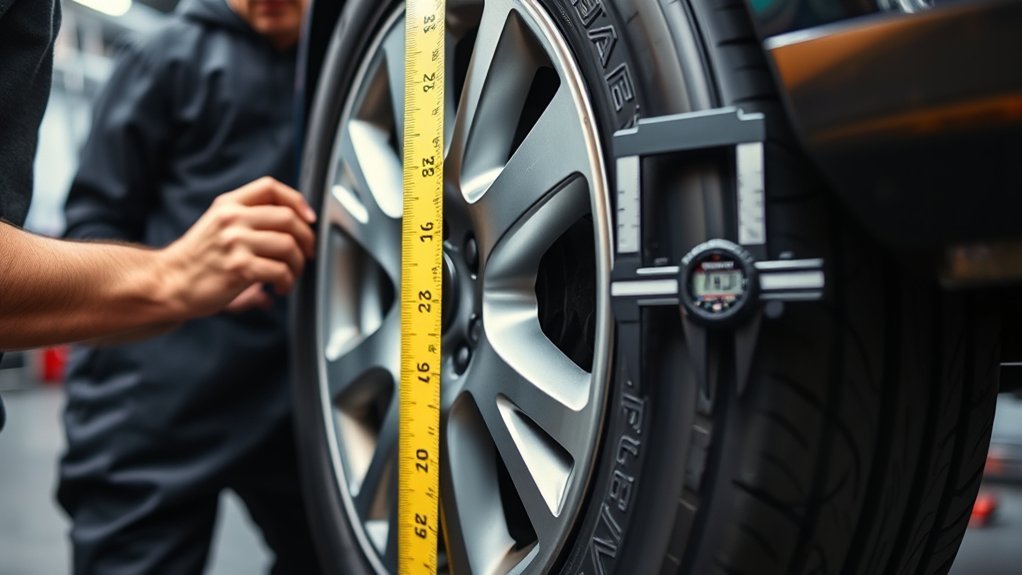
The sidewall size tells you more than diameter. In a size like 225/70R16:
- 225 is the nominal section width in millimeters.
- 70 is the aspect ratio, meaning the sidewall height is 70% of the section width.
- R means radial construction.
- 16 is the wheel or rim diameter in inches.
Width and aspect ratio affect ride quality, steering response, clearance, and appearance. A lower aspect ratio usually means a shorter sidewall and sharper response, while a higher aspect ratio usually gives more sidewall cushion.
Why Measured Tire Size Differs
The measured tire size can differ from the number on the sidewall because the sidewall size is a nominal designation, not a promise that every tire will measure exactly the same. Differences can come from:
- Manufacturer tolerances: two brands in the same size can measure differently.
- Tread depth and tread design: aggressive tread can add height when new.
- Rim width: mounting the same tire on a wider or narrower rim can change its shape.
- Inflation pressure: pressure affects sidewall shape and measured height.
- Vehicle load: weight compresses the tire at the contact patch.
- Tread wear: a worn tire has a smaller effective diameter than a new one.
That is why a calculated value is best for planning, while a physical measurement is best for checking what is actually on the vehicle.
Avoid Common Measurement Errors
Small measuring mistakes can create confusing results. Avoid these common errors:
- Measuring a warm tire: tire pressure rises after driving, which can affect the result.
- Using the sidewall max pressure: use the vehicle’s recommended cold PSI instead.
- Holding the tape at an angle: keep it vertical for height or centered for circumference.
- Measuring from the tire shoulder: use the center tread for repeatable readings.
- Trusting one reading: repeat the measurement and average close results.
- Ignoring tread wear: old tires can measure smaller than new tires of the same size.
How Tire Diameter Affects Fitment
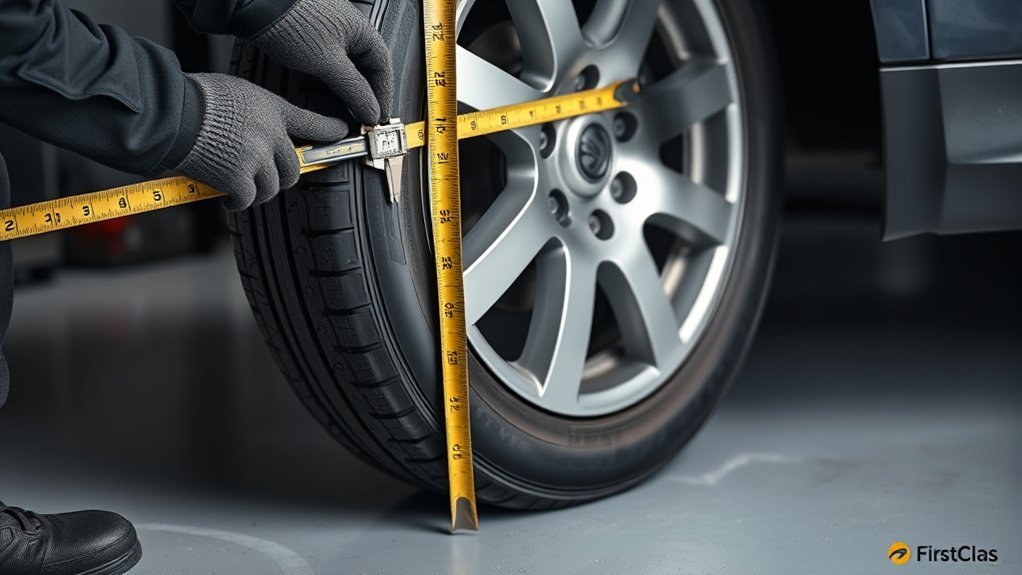
Tire diameter has a direct effect on fitment. A taller tire can raise ground clearance, but it can also rub the fender liner, suspension, mud flaps, or bumper when the wheel turns or the suspension compresses.
Before changing tire size, check:
- Wheel-well clearance at full steering lock.
- Suspension clearance under compression.
- Brake and wheel clearance if changing wheels too.
- Load index to make sure the new tire can carry the vehicle’s required load.
- Speed rating to make sure it meets or exceeds the vehicle requirement.
- Speedometer and odometer effect because tire circumference changes distance per revolution.
- ABS, traction control, and stability systems because large diameter changes can affect speed-dependent systems.
A common tire-sizing guideline is to stay close to the original overall diameter, often within about 3% for many passenger-vehicle replacements. Treat that as a rule of thumb, not a universal guarantee. Always verify the vehicle manufacturer’s recommendations and the exact tire model’s specifications.
[Products Worth Considering]

Monitor tire tread wear with a smart, color-coded depth gauge that shows clear condition ranges at a glance. The bar is range marked for fast, easy readings, helping you maintain safer traction and performance. Each gauge is portable with a pocket clip, and the set includes 20 units for daily use and sharing.

Upgrade your 2024-2026 Tesla Model 3 Highland with REEVAA all-weather mud flaps designed for seamless fit along the original body lines. The set of four delivers strong splash protection against mud, gravel, and road debris while using OEM-grade durable materials. Installation is non-destructive with original hole positions and snap-in clips, and the aerodynamic design helps minimize impact on efficiency.

The Topeak SmartGauge D2 delivers precise digital tire pressure readings for bikes, motorcycles, and sports equipment up to 250 psi (17 bar). Its rotating SmartHead works with both Presta and Schrader valves, so you can check pressure quickly without adapters. The LCD display makes it easy to read results in psi, bar, or kg/cm² with an included CR2032 battery for immediate use.
How to Compare a New Tire Size to Stock
To compare a replacement tire with your stock size, calculate both diameters, then use this formula:
Percent difference = ((new diameter − original diameter) ÷ original diameter) × 100
Example: if the original tire is 28.0 inches and the new tire is 28.6 inches:
((28.6 − 28.0) ÷ 28.0) × 100 = 2.1%
A larger tire travels farther per revolution, so the vehicle may be moving slightly faster than the speedometer shows. A smaller tire does the opposite.
Frequently Asked Questions
How do you properly measure tire diameter?
Inflate the tire to the vehicle’s recommended cold PSI, place it on level ground, and measure straight from the ground to the top of the center tread. For a second check, wrap a string around the center tread, measure the circumference, and divide by π.
What is the 3% rule for tires?
The 3% rule is a common fitment guideline that says a replacement tire should stay within about 3% of the original tire’s overall diameter. It helps limit speedometer error and fitment problems, but it is not a substitute for checking the vehicle manufacturer’s tire-size recommendations.
What is the diameter of a 235/35R20 tire?
A 235/35R20 tire has a calculated diameter of about 26.5 inches. The sidewall height is (235 × 35) ÷ 2540 = 3.24 inches. Add two sidewalls to the 20-inch rim: 20 + 3.24 + 3.24 = 26.48 inches.
Is a 285 tire the same as a 33-inch tire?
No. In metric tire sizing, 285 is the section width in millimeters, not the tire diameter. A 285/70R17 calculates to about 32.7 inches, while a 285/75R17 calculates to about 33.8 inches. The aspect ratio and rim diameter decide the final diameter.
Is tire height the same as tire diameter?
In everyday tire sizing, yes, tire height usually means overall diameter. However, a mounted tire measured on the vehicle may show a slightly shorter loaded height because the tire compresses where it meets the ground.
Why does my measured tire diameter not match the calculator?
A calculator gives nominal diameter from the sidewall size. Your real tire can measure differently because of brand design, tread depth, rim width, air pressure, vehicle load, and wear. For tight fitment, use the tire manufacturer’s published specs for the exact model.
Conclusion
To measure tire diameter accurately, start with a cold, properly inflated tire and choose the right method for your goal. Use a ground-to-tread measurement for a quick height check, circumference ÷ π for a strong physical cross-check, and the sidewall formula for planning tire-size comparisons. Then verify fitment, load rating, speed rating, and manufacturer specs before changing sizes.
Sources
- Tire Rack — How Do I Calculate Tire Dimensions? — backs up the section width, aspect ratio, rim diameter, and nominal diameter calculation method.
- NHTSA TireWise — backs up cold tire pressure guidance and vehicle placard pressure recommendations.
- Michelin — Tire Markings Explained — backs up sidewall markings, section width, aspect ratio, rim diameter, load rating, and pressure-placard guidance.
- Tire Rack — What Are Plus Size Wheels & Tires? — backs up overall-diameter fitment, speedometer, ABS, traction control, and stability-system considerations.
- The Tire and Rim Association — backs up U.S. tire, rim, valve, and allied-parts standards context.

