
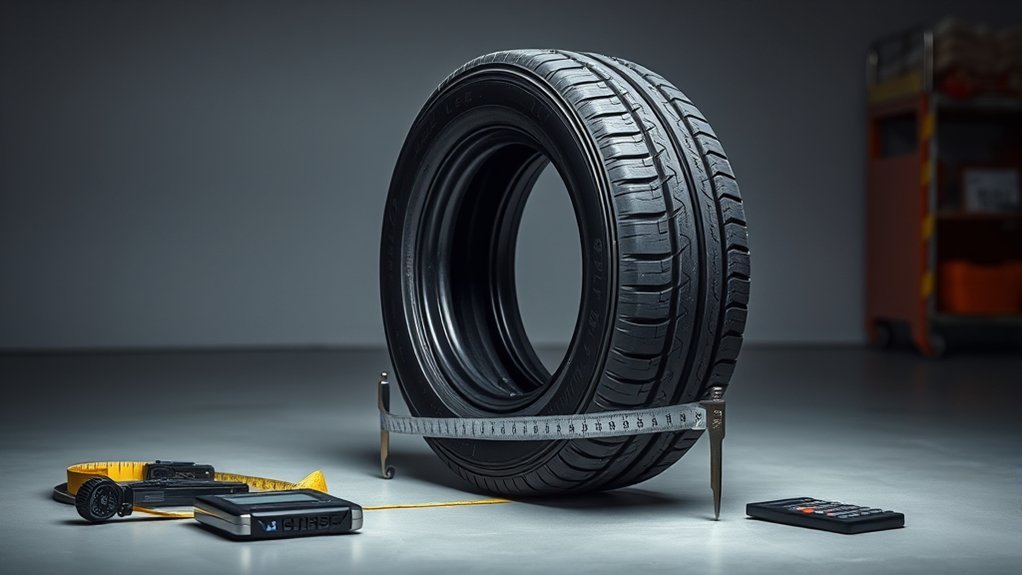
You can calculate tire diameter from the tire size printed on the sidewall. In a size like 225/50R17, the 225 is the section width in millimeters, the 50 is the aspect ratio, and the 17 is the wheel diameter in inches. Once you know those three numbers, the math is simple: calculate the sidewall height, double it, then add the wheel diameter.
Quick Answer
To calculate tire diameter, multiply the tire width by the aspect ratio to get sidewall height, convert that height to inches, double it, then add the wheel diameter. Formula: overall diameter = wheel diameter + 2 × sidewall height. A 225/50R17 tire is about 25.86 inches tall.
Key Takeaways
- A tire size like 225/50R17 means 225 mm width, 50% aspect ratio, radial construction, and a 17-inch wheel.
- Sidewall height = tire width × aspect ratio as a decimal.
- Overall tire diameter = wheel diameter + two sidewalls.
- A 225/50R17 tire calculates to about 656.8 mm, or 25.86 inches, in overall diameter.
- Before changing tire size, compare the new diameter with the OE size and check the vehicle placard, owner’s manual, load index, speed rating, rim width, and clearance.
At a Glance
| Time Required | 2 to 5 minutes |
| Difficulty | Easy |
| Tools Needed | Tire size from the sidewall, calculator, vehicle placard or owner’s manual |
| Cost | Free |
How Do You Calculate Tire Diameter?
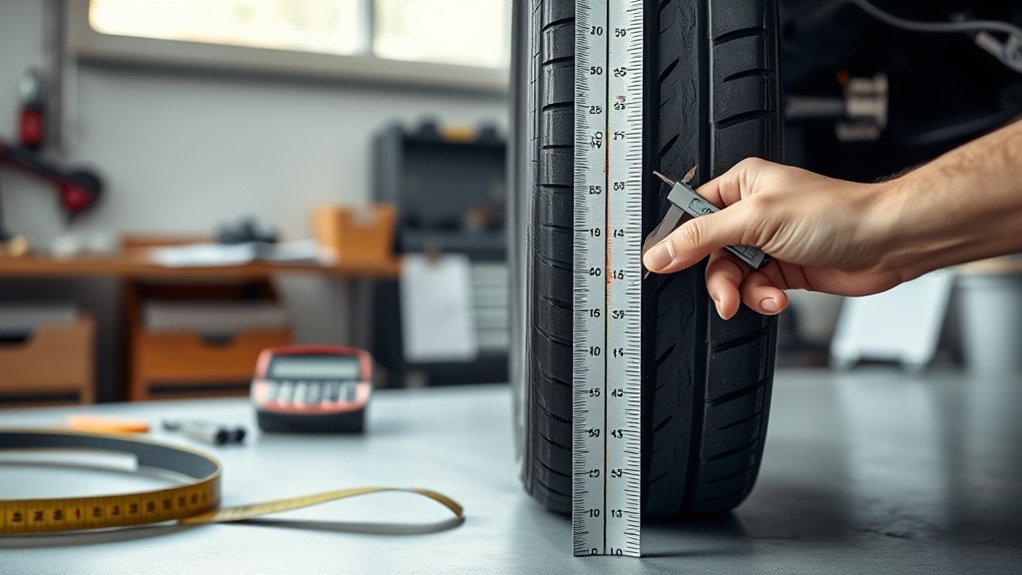
To calculate tire diameter, use this formula:
Overall tire diameter = wheel diameter + 2 × sidewall height
The only tricky part is that tire width is listed in millimeters, while wheel diameter is usually listed in inches. You can work in either unit as long as you convert before adding the numbers.
Tire Diameter Formula in Inches
Use this version when you want the final answer in inches:
| Step | Formula |
| 1. Sidewall height in mm | section width × aspect ratio ÷ 100 |
| 2. Sidewall height in inches | sidewall height in mm ÷ 25.4 |
| 3. Overall diameter in inches | wheel diameter + 2 × sidewall height in inches |
Tire Diameter Formula in Millimeters
Use this version when you want the final answer in millimeters:
Overall diameter in mm = wheel diameter in inches × 25.4 + 2 × sidewall height in mm
This is the same calculation, just converted into millimeters before the final addition. Tire Rack, Bridgestone, and the Tire Industry Association all describe tire dimensions using the same basic width, aspect-ratio, and rim-diameter relationship.
How to Read Tire Size Numbers
Most passenger tire sizes follow this pattern: XXX/YYRZZ. For example, in 225/50R17:
- 225 = section width in millimeters
- 50 = aspect ratio, meaning the sidewall height is 50% of the tire width
- R = radial construction
- 17 = wheel or rim diameter in inches
Some tires also include a prefix and service description, such as P225/50R17 94H. The prefix may identify the tire type, while the number and letter after the size show the load index and speed rating. Those ratings matter when replacing tires, because the new tires should meet the vehicle manufacturer’s requirements.
Note: High-flotation tire sizes, such as 35×12.50R17, use a different format. In that style, the first number is already the approximate overall tire diameter in inches.
Tire Size Number Breakdown
- Find the width. The first number is the tire’s section width in millimeters.
- Convert the aspect ratio. Turn the second number into a decimal. For example, 50 becomes 0.50.
- Calculate one sidewall. Multiply width by aspect ratio.
- Add both sidewalls to the wheel. A tire has one sidewall above the wheel and one below it, so double the sidewall height before adding the wheel diameter.
Diameter Calculation Formula
Here is the full calculation for a 225/50R17 tire:
| Input | Value |
| Section width | 225 mm |
| Aspect ratio | 50% or 0.50 |
| Sidewall height | 225 × 0.50 = 112.5 mm |
| Sidewall height in inches | 112.5 ÷ 25.4 = 4.43 inches |
| Overall diameter | 17 + 4.43 + 4.43 = 25.86 inches |
| Overall diameter in mm | 25.86 × 25.4 = 656.8 mm |
A tire size calculator can confirm the result quickly, but knowing the formula helps you catch mistakes before buying tires.
Calculate Sidewall Height From Tire Size
The sidewall height is the vertical distance from the rim to the outer tread surface. To calculate it, multiply the section width by the aspect ratio as a decimal.
For a 225/50R17 tire:
- Section width = 225 mm
- Aspect ratio = 50% or 0.50
- Sidewall height = 225 × 0.50 = 112.5 mm
- Sidewall height in inches = 112.5 ÷ 25.4 = 4.43 inches
A higher aspect ratio usually means a taller sidewall when the section width stays the same. For example, a 225/60 tire has a taller sidewall than a 225/50 tire because 60% of 225 mm is greater than 50% of 225 mm.
Pro Tip: Do not compare aspect ratio alone. A 245/45 tire can have a similar sidewall height to a 225/50 tire because width and aspect ratio work together.
Add Wheel Diameter to Get Total Size
After you calculate one sidewall, double it and add the wheel diameter. That gives you the tire’s approximate unloaded overall diameter.
Wheel Diameter Formula
The wheel diameter is the last number in the tire size. In 225/50R17, the wheel diameter is 17 inches. Because the wheel diameter is already in inches, the easiest method is to convert the sidewall height to inches before adding:
17 + (4.43 × 2) = 25.86 inches
Total Tire Height
Total tire height and tire diameter mean the same thing in this context. Both describe the tire’s outside diameter from the bottom of the tread to the top of the tread.
For a 225/50R17 tire, the calculated total tire height is about 25.86 inches. In millimeters, it is about 656.8 mm.
Note: The calculated diameter is an estimate. Actual published tire diameter can vary slightly by tire model, tread design, rim width, inflation pressure, load, and tread depth. For exact fitment, check the tire manufacturer’s specification sheet.
Compare Tire Diameter to OE Size
Before buying a different tire size, compare the new tire diameter with the original equipment size. The safest starting point is the tire information placard, usually located on the driver’s door jamb, and the vehicle owner’s manual. NHTSA advises choosing the same tire size as the original tires or another size recommended by the vehicle manufacturer.
Use this formula to compare tire diameter change:
Percent difference = (new diameter – original diameter) ÷ original diameter × 100
Example comparison:
| Size | Calculated Diameter | Difference vs. 205/60R16 |
| 205/60R16 | 25.69 inches | Baseline |
| 225/50R17 | 25.86 inches | About +0.66% |
A common fitment guideline is to keep replacement tire diameter within about 3% of the original size, but that is only a screening rule. It does not replace the vehicle manufacturer’s recommendations, tire placard, owner’s manual, or a professional fitment check.
Warning: Do not choose a tire only because the diameter is close. The tire must also match the wheel diameter, fit the rim width, clear the fenders and suspension, and meet or exceed the required load index and speed rating.
[Products Worth Considering]

Monitor tire tread wear with a smart, color-coded depth gauge that shows clear condition ranges at a glance. The bar is range marked for fast, easy readings, helping you maintain safer traction and performance. Each gauge is portable with a pocket clip, and the set includes 20 units for daily use and sharing.

The SAFELIFE dial tire tread depth gauge measures tread depth in 1/32 inch increments with clear, easy-to-read 2-inch dial face. Color zones using a traffic light system help you quickly judge whether tread is low, marginal, or ample for safer driving. Built with a durable zinc cast body and a metal detect probe for precise, comfortable use across cars, motorcycles, trucks, and buses.

Accurately measure tire tread depth with a calibrated gauge marked from 0 to 1 inch in 1/32 inch increments. The color-coded bar helps you quickly identify tread condition ranges, supporting safe driving for trucks, motorcycles, automobiles, and passenger vehicles.
How New Tires Affect Your Speedometer
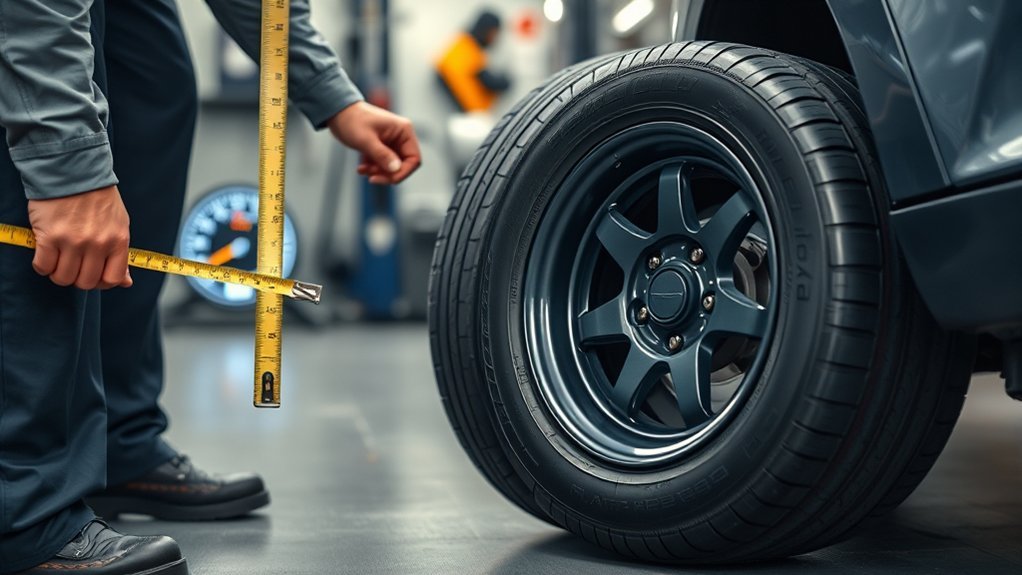
Changing tire diameter changes the distance the vehicle travels with each wheel revolution. A larger tire travels farther per revolution, so the actual road speed can be higher than the speedometer shows. A smaller tire travels less distance per revolution, so the speedometer can read higher than the actual speed.
Use this formula for an estimate:
Actual speed = indicated speed × new tire diameter ÷ original tire diameter
Example: if the original tire is 205/60R16 at 25.69 inches and the new tire is 225/50R17 at 25.86 inches, then at an indicated 60 mph:
- Actual speed = 60 × 25.86 ÷ 25.69
- Actual speed = about 60.4 mph
That is a small difference, but larger tire changes can affect speedometer readings, odometer readings, gearing feel, braking behavior, clearance, and driver-assistance systems that expect the original tire size range.
Stay Within the 3% Tire Size Rule
The 3% tire size rule is a common guideline for comparing overall diameter. It means the new tire’s diameter should be within about 3% of the original tire’s diameter. Staying close helps reduce speedometer error and fitment problems, but it does not guarantee a safe or approved tire swap.
For example, if the original tire diameter is 25.69 inches, then a 3% range is roughly:
- Lower limit: 25.69 × 0.97 = 24.92 inches
- Upper limit: 25.69 × 1.03 = 26.46 inches
That means a 225/50R17 tire at about 25.86 inches is close in diameter to a 205/60R16 tire. Still, you should verify the full tire size, wheel diameter, rim width, load index, speed rating, and clearance before buying.
Note: All-wheel-drive and four-wheel-drive vehicles can be more sensitive to tire diameter differences between tires. Follow the owner’s manual for replacement rules, rotation, and matching tread depth.
[Products Worth Considering]

Measure tire tread depth quickly and accurately with this LUMITECO dial gauge that reads in 1/32" increments up to 14/32". The color-coded green/yellow/red zones make it easy to judge tire wear and know when replacement is needed. A rugged, compact design with a protective pouch helps keep the gauge ready for use on cars, trucks, motorcycles, and more.

This professional wheel and rim cleaning brush set lifts brake dust, grime, and dirt with soft, scratch-free microfiber and synthetic wool fibers. The rim brush bends up to 360 degrees for easy access to hard-to-reach areas around spokes, lips, and faces. Ideal for thorough cleaning of car, truck, motorcycle, bicycle, RV, and more wheel and tire surfaces.

This 15-inch tire spoons kit makes tire removal and installation easier with added leverage, reducing time and effort for everyday repairs. It includes tire spoons, rim protectors, a valve tool, and valve cores/caps, helping protect rims and streamline deflation and re-sealing. Built with durable hardened steel and a non-slip ergonomic grip for confident use on motorcycles, dirt bikes, ATVs, and lawn equipment.
What to Check Before Changing Tire Size
Tire diameter is only one part of fitment. Before switching sizes, check these items:
- Vehicle placard: Confirms the OE tire size and recommended cold inflation pressure.
- Owner’s manual: Lists approved sizes or special rules for your vehicle.
- Wheel diameter: The tire must match the rim diameter exactly.
- Rim width range: The tire must be approved for your wheel width.
- Load index: The tire must support the vehicle’s required load.
- Speed rating: The tire should meet the vehicle manufacturer’s requirement.
- Clearance: Check fenders, suspension, brakes, and steering lock.
- Systems calibration: Large changes can affect speedometer, odometer, ABS, stability control, and TPMS behavior.
If you are unsure, use the calculated diameter as a starting point, then confirm the final choice with a tire professional or the vehicle manufacturer’s approved fitment data.
[Products Worth Considering]

Measure tyre tread depth precisely with a digital gauge that reads in both MM and inches, helping you monitor safe driving conditions. The large LCD screen is easy to operate, and the compact tool fits for cars, trucks, and motorcycles. It provides high accuracy with a 0-25.4mm range and includes a 1-year warranty for added peace of mind.

Secure your trailer or RV tires with a scissor-style wheel chock stabilizer that applies opposing force to help prevent wheel shift. It fits tight wheel gaps from 3.5 inches up to 12 inches and works for travel trailers, campers, fifth wheels, toy haulers, and heavy-duty trucks. The surface uses new electrophoretic technology to help prevent rust for reliable travel use.

ETENWOLF T300 is a calibrated digital tire pressure gauge for accurate readings from 3 to 200 PSI across light and heavy-duty vehicles. It includes thermal compensation for reliable performance in extreme cold or heat, with an auto shut-off to extend battery life and an LED for easier reading. The sturdy design supports rugged everyday use, making it ideal for pickups, RVs, and industrial applications.
Why Calculated Diameter Can Differ From Real Tire Specs
The formula gives a reliable estimate, but it does not always match a tire maker’s published overall diameter exactly. That is normal. Real tire dimensions can change based on:
- tread depth and tread design
- actual casing shape
- measuring rim width
- inflation pressure
- vehicle load
- manufacturing tolerances
For everyday size comparison, the formula is usually enough. For tight clearance, gearing changes, speedometer calibration, or performance fitment, use the tire manufacturer’s published specs, especially overall diameter and revolutions per mile.
Frequently Asked Questions
How do I calculate tire diameter?
Calculate sidewall height first: section width × aspect ratio. Convert that number from millimeters to inches, double it, then add the wheel diameter. For 225/50R17, the sidewall is 112.5 mm, or 4.43 inches. The total diameter is 17 + 4.43 + 4.43 = about 25.86 inches.
What is the diameter of 235/35R20?
A 235/35R20 tire is about 26.48 inches in diameter. The sidewall height is 235 × 0.35 = 82.25 mm. Double that sidewall, add the 20-inch wheel, and the total is 672.5 mm, or about 26.48 inches.
What is the 3% rule for tires?
The 3% rule is a common guideline that says a replacement tire’s overall diameter should stay within about 3% of the original tire diameter. It helps limit speedometer and fitment issues, but it is not a substitute for the vehicle placard, owner’s manual, load index, speed rating, and professional fitment checks.
What is the diameter of a 285/70R17 tire?
A 285/70R17 tire is about 32.71 inches in diameter. The sidewall height is 285 × 0.70 = 199.5 mm. Two sidewalls equal 399 mm, and the 17-inch wheel equals 431.8 mm, giving a total of 830.8 mm, or about 32.71 inches.
Is tire diameter the same as rim diameter?
No. Rim diameter is the wheel size the tire mounts on, such as 17 inches. Tire diameter is the full outside height of the tire, including the wheel plus the two sidewalls. A 225/50R17 tire fits a 17-inch rim, but its total tire diameter is about 25.86 inches.
Do larger tires make the speedometer read wrong?
Yes, larger tires can make the speedometer read lower than the actual road speed because the vehicle travels farther with each tire revolution. Smaller tires can make the speedometer read higher than actual speed. The size of the error depends on the diameter difference between the original and replacement tires.
Conclusion
You can calculate tire diameter by reading the tire size, finding the sidewall height, doubling it, and adding the wheel diameter. For a 225/50R17 tire, the calculated diameter is about 25.86 inches. That number helps you compare tire sizes, estimate speedometer change, and avoid obvious fitment mistakes.
Before changing tire size, do not rely on diameter alone. Check the vehicle placard, owner’s manual, load index, speed rating, rim width, and clearance. Precise tire sizing protects speedometer accuracy, handling, braking behavior, and overall vehicle safety.
Sources
- Tire Rack — How Do I Calculate Tire Dimensions? — supports the tire-dimension calculation method.
- Bridgestone Americas — How to Read & Determine Tire Size — supports tire size code definitions.
- Tire Industry Association — Reading a Tire Sidewall — supports aspect ratio and sidewall interpretation.
- NHTSA Tire Safety Brochure — supports replacement tire safety and OE-size guidance.
- eCFR 49 CFR § 571.110 — supports vehicle tire placard and tire selection requirements.
- Michelin — Tire Load Rating and Speed Rating — supports load index and speed rating guidance.

