
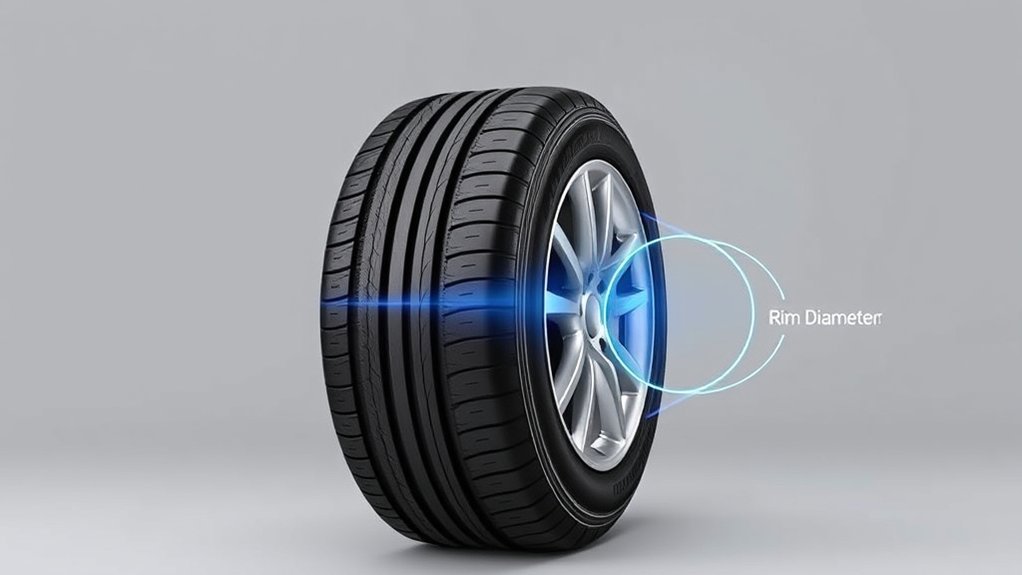
The number that helps show tire height is the second number in the tire size, called the aspect ratio. In a size like 215/65R16, the 65 means the sidewall height is 65% of the tire width. That does not give the full tire height by itself, but it gives you the key number needed to calculate it.
Quick Answer
The second number in a tire size shows the aspect ratio, which helps determine tire height. In 215/65R16, 65 means the sidewall height is 65% of the 215 mm width. To find full tire height, calculate both sidewalls and add the 16-inch wheel diameter.
Key Takeaways
- The second number in a tire size is the aspect ratio, not the full tire height.
- Aspect ratio shows sidewall height as a percentage of tire width.
- In 215/65R16, the sidewall height is 215 × 0.65, or 139.75 mm.
- Full tire diameter equals wheel diameter plus two sidewalls.
- Always match tire size, load index, speed rating, and approved fitment to your vehicle placard or owner’s manual.
At a Glance
| Time Required | 2 to 5 minutes |
| Difficulty | Easy |
| Tools Needed | Tire sidewall code, calculator or phone, and your vehicle owner’s manual or tire placard |
| Cost | No purchase required for the calculation |
What Number Is the Height of a Tire?
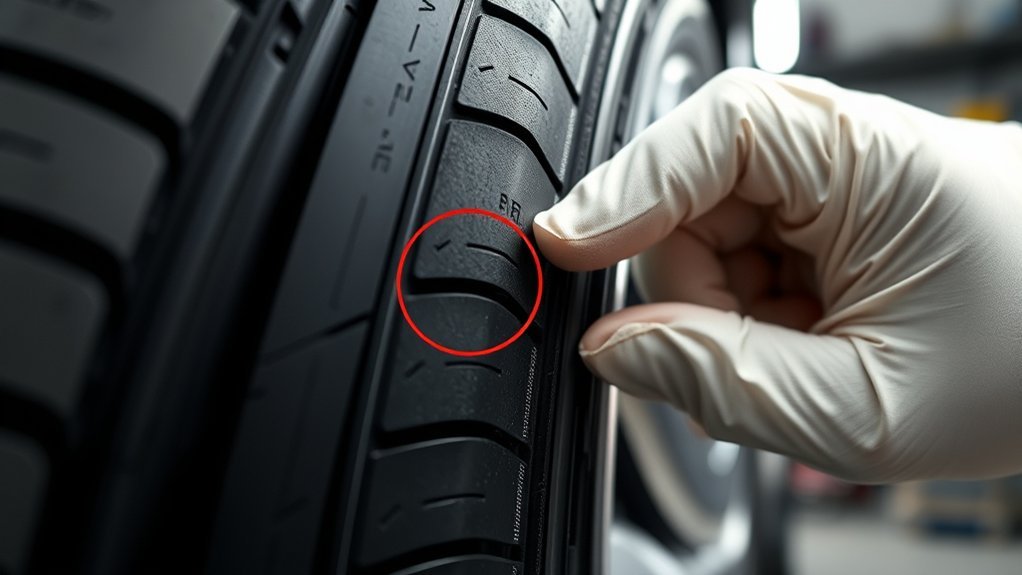
The second number in the tire size helps you find tire height. This number is the aspect ratio, and it tells you the sidewall height as a percentage of the tire width.
For example, in 215/65R16, the 65 means the sidewall height is 65% of 215 mm. The sidewall height is 215 × 0.65, which equals 139.75 mm. That is about 5.5 inches from the wheel rim to the tread.
The full tire height, also called overall diameter, needs one more step. You add the wheel diameter plus two sidewalls because a tire has one sidewall above the wheel and one below it.
Note: Tire-size math gives a close nominal size. Actual mounted height can vary slightly by tire model, tread depth, inflation pressure, load, and measuring method.
What Each Tire Size Number Means
A tire size such as 215/65R16 98H gives you several fitment details. The first number is the tire width in millimeters. The second number is the aspect ratio. The letter shows construction, and the next number shows the wheel diameter in inches.
The National Highway Traffic Safety Administration explains that standardized tire sidewall markings include tire width, aspect ratio, construction, rim diameter, load index, speed symbol, DOT identification, and other safety information.
| Code part | Example | What it means |
|---|---|---|
| Width | 215 | Nominal tire width in millimeters |
| Aspect ratio | 65 | Sidewall height as a percentage of tire width |
| Construction | R | Radial construction |
| Wheel diameter | 16 | Wheel or rim diameter in inches |
| Service description | 98H | Load index and speed rating |
How to Find Tire Height on the Sidewall
Look for the size code molded into the tire sidewall. You may see a code like 215/65R16, P225/60R16, or 275/70R18. The number after the slash is the aspect ratio.
If the aspect ratio is 65, the sidewall height equals 65% of the tire width. If the aspect ratio is 70, the sidewall height equals 70% of the tire width. When the width stays the same, the higher aspect ratio gives you the taller sidewall.
The Bridgestone tire-size guide defines aspect ratio as the number after the slash and explains that it tells you how tall the tire profile is as a percentage of tire width.
Pro Tip: Do not compare only the second number when two tires have different widths. A 285/65 tire can be taller than a 275/65 tire because the percentage is applied to a wider tire.
How to Calculate Tire Height From Tire Size
To calculate tire height from the size code, break the size into width, aspect ratio, and wheel diameter. Then calculate sidewall height first. After that, add the wheel diameter and both sidewalls to estimate the full tire diameter.
Tire Size Breakdown
Use 215/65R16 as the example. The width is 215 mm. The aspect ratio is 65%. The wheel diameter is 16 inches. The R means radial construction, so it does not change the height calculation.
- Find the width: 215 mm.
- Convert the aspect ratio: 65% becomes 0.65.
- Calculate one sidewall: 215 × 0.65 = 139.75 mm.
- Convert sidewall height to inches: 139.75 ÷ 25.4 = 5.50 inches.
- Calculate overall diameter: 16 + 5.50 + 5.50 = about 27.0 inches.
Height Calculation Formula
Use this formula for metric tire sizes:
Sidewall height = tire width × aspect ratio. Overall tire diameter = wheel diameter + two sidewall heights.
For 215/65R16, the sidewall height is about 5.5 inches and the full tire diameter is about 27.0 inches. This estimate helps you compare sizes, but it does not prove that a different size is approved for your vehicle.
What Tire Width Means for Height
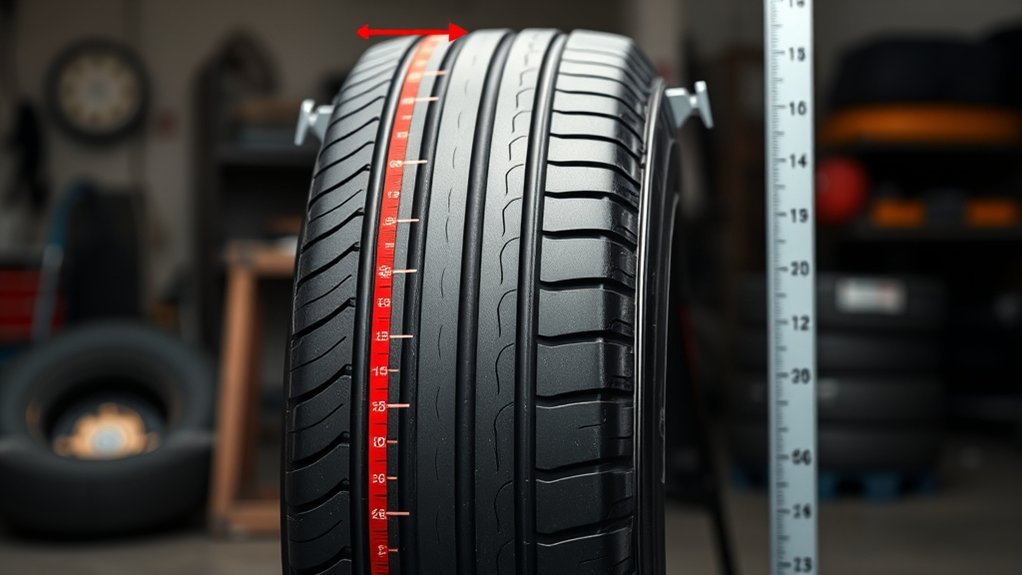
Tire width matters because the aspect ratio is a percentage of width. A wider tire with the same aspect ratio usually has a taller sidewall.
For example, a 275/70 tire has a sidewall height of 192.5 mm. A 285/70 tire has a sidewall height of 199.5 mm. The aspect ratio is the same, but the wider tire creates a taller sidewall.
[Products Worth Considering]

This professional wheel and rim cleaning brush set lifts brake dust, grime, and dirt with soft, scratch-free microfiber and synthetic wool fibers. The rim brush bends up to 360 degrees for easy access to hard-to-reach areas around spokes, lips, and faces. Ideal for thorough cleaning of car, truck, motorcycle, bicycle, RV, and more wheel and tire surfaces.

The SAFELIFE dial tire tread depth gauge measures tread depth in 1/32 inch increments with clear, easy-to-read 2-inch dial face. Color zones using a traffic light system help you quickly judge whether tread is low, marginal, or ample for safer driving. Built with a durable zinc cast body and a metal detect probe for precise, comfortable use across cars, motorcycles, trucks, and buses.

Measure tire tread depth quickly and accurately with this LUMITECO dial gauge that reads in 1/32" increments up to 14/32". The color-coded green/yellow/red zones make it easy to judge tire wear and know when replacement is needed. A rugged, compact design with a protective pouch helps keep the gauge ready for use on cars, trucks, motorcycles, and more.
Width and Sidewall Height
Width and aspect ratio work together. You cannot judge tire height from one number alone unless the other number stays the same.
| Tire size | Sidewall calculation | Sidewall height |
|---|---|---|
| 215/65R16 | 215 × 0.65 | 139.75 mm |
| 215/70R16 | 215 × 0.70 | 150.5 mm |
| 225/65R16 | 225 × 0.65 | 146.25 mm |
Aspect Ratio Explained
The aspect ratio is the second number in the tire size. It tells you how tall the sidewall is compared with the tire width. Higher numbers usually mean more sidewall cushion. Lower numbers usually mean a shorter, firmer sidewall.
| Aspect ratio | Sidewall effect | Typical result |
|---|---|---|
| High | Taller sidewall | More ride comfort and impact cushion |
| Mid | Balanced sidewall | Good mix of comfort and response |
| Low | Shorter sidewall | Sharper steering feel with a firmer ride |
How Rim Diameter Affects Tire Fit
Rim diameter is the last number in the main tire size. In 215/65R16, the 16 means the tire is designed for a 16-inch wheel. That number must match the wheel diameter exactly.
The Tire Industry Association explains that the rim or bead diameter shows the wheel diameter the tire is designed to fit. A tire made for a 16-inch wheel should not be mounted on a 17-inch wheel or a 15-inch wheel.
Warning: Tire-size math does not approve a tire for your vehicle. Before changing size, check the Tire and Loading Information Label on the driver’s door jamb, your owner’s manual, or a qualified tire professional.
[Products Worth Considering]

This manual duck head tire changer kit makes tire installation and removal simpler by letting you embed the duck head into the tire with applied pressure. The integrated design and durable steel construction help reduce friction and improve efficiency and safety during use. Suitable for 16–21 inch wheels, it’s convenient for cars, trucks, SUVs, and ATV tires, with 24-hour after-sales support.

This 15-inch tire spoons kit makes tire removal and installation easier with added leverage, reducing time and effort for everyday repairs. It includes tire spoons, rim protectors, a valve tool, and valve cores/caps, helping protect rims and streamline deflation and re-sealing. Built with durable hardened steel and a non-slip ergonomic grip for confident use on motorcycles, dirt bikes, ATVs, and lawn equipment.

This 3-piece wheel and tire brush set makes it easy to clean light, medium, and heavy dirt from wheels, rims, tires, and exterior surfaces. It includes both soft and stiff bristle options for gentle scrubbing and tough grime removal, helping lift brake dust and road buildup. The long-handle design supports comfortable cleaning across cars, trucks, SUVs, RVs, motorcycles, and more, with simple care instructions to restore brush shape.
Rim Diameter and Rim Width Are Different
Rim diameter tells you the wheel size the tire mounts to, such as 16 inches. Rim width tells you how wide the wheel is from bead seat to bead seat. Both affect fitment.
A tire can match the wheel diameter but still be wrong for the wheel if the rim is too narrow or too wide for that tire. That is why tire makers publish approved rim-width ranges for each tire size. When you shop for tires, confirm both the diameter and the approved rim-width range.
What Load Index and Speed Rating Mean
After the rim diameter, many tire sizes include a service description, such as 98H or 91V. The number is the load index, and the letter is the speed rating.
The load index is a code for how much weight one tire can carry when properly inflated. For example, load index 89 equals 1,279 pounds per tire. The speed rating is a letter that shows the tire’s maximum speed capability under specified conditions. NHTSA lists an H speed rating at 130 mph, but that is not a recommended cruising speed.
Michelin advises that replacement tires should meet or exceed the load and speed ratings specified by the vehicle manufacturer. A higher load index does not increase your vehicle’s legal or mechanical weight rating.
How Tire Profile Changes Ride Feel
Tire profile affects how the vehicle feels over bumps, during steering, and in corners. A taller sidewall can flex more, so it often gives a smoother ride on rough pavement. A shorter sidewall usually feels firmer and can sharpen steering response.
- Lower aspect ratios, often 50 or below, tend to feel firmer and more responsive.
- Higher aspect ratios, often 70 or above, tend to add sidewall cushion.
- Taller sidewalls can help absorb pothole impacts, but they may feel less sharp in quick turns.
- Changing overall tire diameter can affect clearance, gearing feel, speedometer readings, and driver-assistance calibration.
The right profile depends on the vehicle, wheel size, load needs, road conditions, and approved manufacturer fitment.
Common Tire Height Mistakes
Many tire-size mistakes happen because the numbers look simpler than they are. Watch for these common errors before you compare sizes.
- Mistake 1: Thinking the second number is inches or millimeters. It is a percentage.
- Mistake 2: Comparing 65 and 70 without checking tire width.
- Mistake 3: Assuming a wider tire always fits because the rim diameter matches.
- Mistake 4: Ignoring load index and speed rating when changing sizes.
- Mistake 5: Using overall diameter math as a substitute for the vehicle manufacturer’s approved tire size.
What to Check Before You Buy Tires
Before you buy tires, check the full tire size, wheel diameter, approved rim-width range, load index, speed rating, tire type, and vehicle placard. NHTSA tells drivers to use the owner’s manual or the Tire and Loading Information Label on the driver’s side door edge or post to find the correct tire size.
| Check | What it means | Why it matters |
|---|---|---|
| Aspect ratio | Sidewall height percentage | Affects ride, clearance, and diameter |
| Rim diameter | Wheel diameter in inches | Must match the wheel exactly |
| Load index | Maximum load code | Helps protect stability and tire structure |
| Speed rating | Maximum speed capability under specified conditions | Reflects heat and performance capability |
| Vehicle placard | Factory tire and pressure guidance | Confirms the manufacturer-approved starting point |
[Products Worth Considering]

This metal-free wheel and tire cleaning brush uses dense, fluffy synthetic wool to safely clean rims, spokes, fenders, and engine areas without worrying about damaging surfaces. Its flexible, comfortable design helps you reach detailed areas while maintaining durability, and the extra absorbent fibers work well with wheel spray cleaners for faster cleanup. Reusable and washable performance helps prevent grime and build-up for cleaner vehicles and easier maintenance at home.

This VEVOR tire bead breaker uses a slide-hammer impact and wedge tip to separate tire beads from rims quickly and efficiently without damaging hub surfaces. The long handle and sturdy steel construction help reduce user strain while providing reliable, portable tire changing for cars, trucks, and more. Ideal for home mechanics and repair shops handling multiple vehicle tire sizes.

This wheel brush kit delivers pro-level cleaning at home, lifting dirt, grime, and brake dust to help restore wheel appearance. It includes multiple brush styles and applicator pads for tackling different wheel surfaces, with gentle, metal-free bristles designed to reduce scratching risk. The flat and double-ended brushes are built for comfort and reach, making wheel care easier for cars, trucks, and RVs.
Frequently Asked Questions
Which tire is taller, 45 or 50?
A 50-series tire is taller than a 45-series tire when the width and wheel diameter are the same. The number is the aspect ratio, so 50 means the sidewall is 50% of the tire width. A 45-series tire has a shorter sidewall and usually feels firmer.
Which tire is taller, 275 or 285?
A 285 tire is usually taller than a 275 tire only when the aspect ratio and wheel diameter stay the same. For example, 285/70R18 has a taller sidewall than 275/70R18 because 70% of 285 mm is more than 70% of 275 mm.
Is the second number how tall a tire is?
The second number is not the full tire height. It is the aspect ratio, which shows sidewall height as a percentage of tire width. To calculate full tire height, you need the width, aspect ratio, and wheel diameter.
Which tire is taller, a 65 or 70?
A 70-series tire is taller than a 65-series tire when both tires have the same width and wheel diameter. The 70 sidewall equals 70% of the width, while the 65 sidewall equals 65% of the width.
Does rim diameter count as tire height?
Yes, rim diameter is part of overall tire height. Full tire diameter equals the wheel diameter plus the upper and lower sidewalls. However, rim diameter is not the same as sidewall height.
Can I change tire height safely?
Sometimes, but you should not rely on tire math alone. Changing tire height can affect clearance, speedometer accuracy, load capacity, braking, gearing feel, and driver-assistance systems. Check your vehicle placard, owner’s manual, or a tire professional before changing size.
Conclusion
The tire-height number you are looking for is the aspect ratio, which is the second number in a tire size. It tells you sidewall height as a percentage of tire width. To find total tire height, calculate one sidewall, double it, and add the wheel diameter.
For 215/65R16, the sidewall is about 139.75 mm, or 5.5 inches. The full tire diameter is about 27.0 inches. Before you buy a different size, check the tire placard, owner’s manual, load index, speed rating, rim diameter, and approved rim-width range.
Sources
- NHTSA TireWise — correct tire size guidance and vehicle placard advice
- NHTSA Tire Safety Brochure — tire sidewall markings, aspect ratio, rim diameter, load index, and speed rating basics
- Bridgestone Americas Tire Size Guide — tire width, aspect ratio, construction, rim diameter, load index, and speed rating explanation
- Tire Industry Association: Reading a Tire Sidewall — sidewall code definitions and service description explanation
- Michelin Load Rating and Speed Rating Guide — replacement tire load and speed rating guidance
- Tires Plus Load Index Chart — load index values, including 89 equals 1,279 pounds
