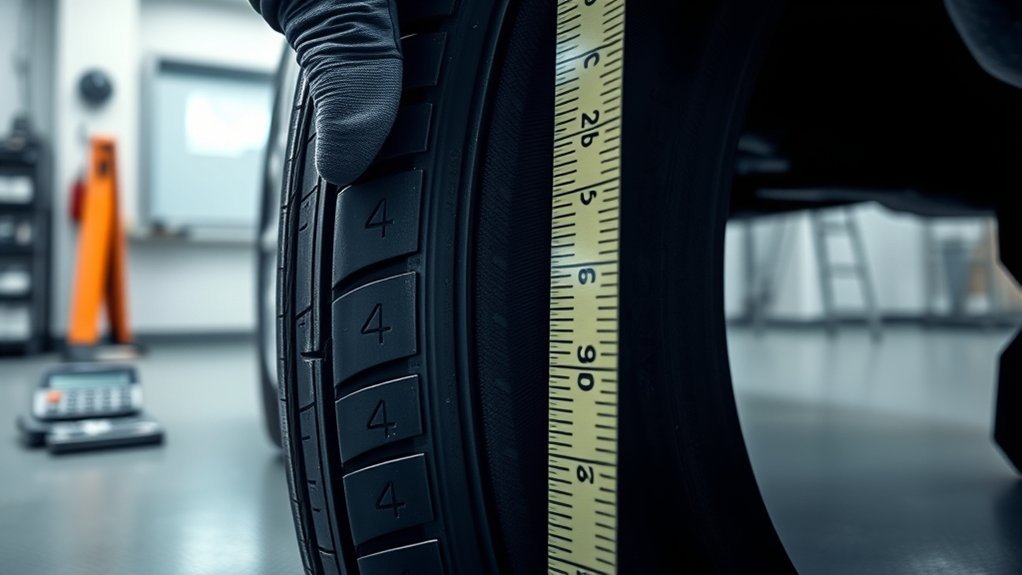
You can estimate tire height by reading the size code on the sidewall, such as 225/70R15. The first number gives the tire’s nominal section width in millimeters, the second number gives the sidewall height as a percentage of that width, and the final number gives the wheel diameter in inches. Once you know those three values, you can calculate approximate overall tire height and compare sizes before you buy.
Quick Answer
To calculate tire height, multiply the tire width by the aspect ratio to get one sidewall height. Double that number, add the wheel diameter converted to millimeters, then divide the total by 25.4. A 225/70R15 tire is about 27.4 inches tall.
Key Takeaways
- Read a metric tire code from left to right: width, aspect ratio, construction, and wheel diameter.
- Sidewall height equals tire width multiplied by the aspect ratio percentage.
- Total tire height equals two sidewalls plus the wheel diameter.
- Use 25.4 to convert between inches and millimeters.
- Before changing size, check your owner’s manual, tire placard, load index, speed rating, wheel fit, and clearance.
At a Glance
| Time Required | 2 to 5 minutes per tire size |
| Difficulty | Easy if you know the sidewall code |
| Tools Needed | Calculator, tire size code, and your vehicle owner’s manual or tire placard |
| Cost | Free for the calculation |
How Tire Height Is Calculated
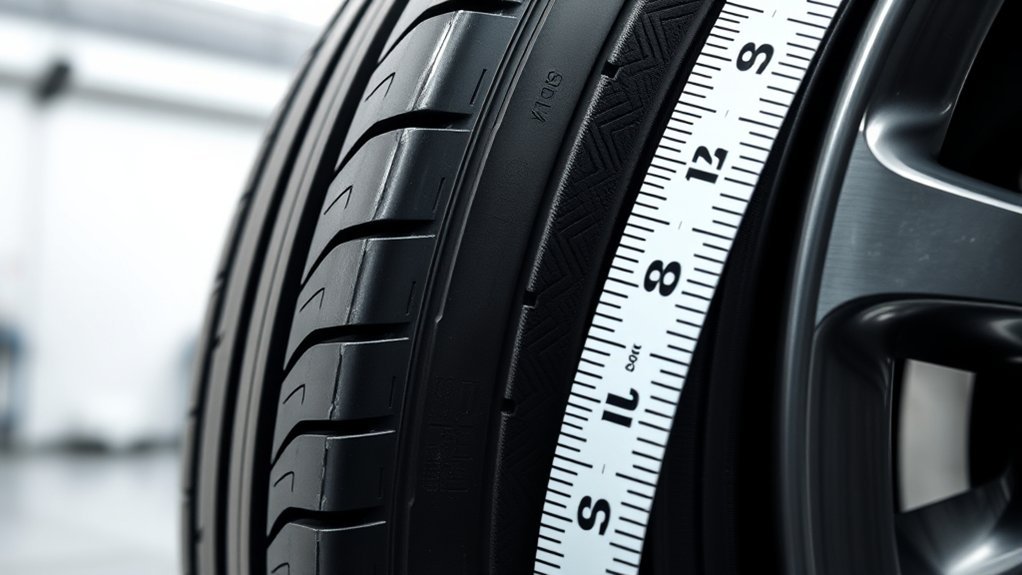
To calculate tire height, add the height of both sidewalls to the wheel diameter. The sidewall height comes from the width and aspect ratio. The wheel diameter must be converted from inches to millimeters before you add it to the sidewall measurements.
The reusable formula is:
Overall tire height in inches = [(tire width × aspect ratio × 2) ÷ 100 ÷ 25.4] + wheel diameter
For example, a 225/70R15 tire has a 225 mm width, a 70 aspect ratio, and a 15-inch wheel diameter. The sidewall height is 225 × 0.70, which equals 157.5 mm. Double that sidewall height to get 315 mm. Then convert the 15-inch wheel to millimeters: 15 × 25.4 = 381 mm. Add 315 mm and 381 mm to get 696 mm. Divide 696 by 25.4, and the tire height is about 27.4 inches.
Note: This formula gives a close theoretical height. Actual mounted height can vary slightly by tire model, tread depth, inflation pressure, load, and measuring rim width.
Find the Tire Size on the Sidewall
You’ll find the tire size printed on the sidewall in a code such as 225/70R15, P225/70R16, or LT245/75R17. Read it left to right. In the 225/70R15 example, 225 is the nominal section width in millimeters, 70 is the aspect ratio, R means radial construction, and 15 is the wheel diameter in inches. Continental explains that the load index and speed rating usually appear after the tire size and describe carrying capacity and speed capability, not tire height: Continental tire sidewall guide.
Here is what each part means:
- 225: the tire’s nominal section width in millimeters. This is sidewall-to-sidewall width, not tread width.
- 70: the sidewall height as a percentage of the tire width.
- R: radial construction. Some tires may show other construction letters, but R is common on modern passenger tires.
- 15: the wheel diameter in inches.
- Load index and speed rating: capacity and speed information, usually shown after the size, such as 95H or 91V.
For height, you only need width, aspect ratio, and wheel diameter. Still, do not ignore load index and speed rating when choosing tires. They help confirm whether a tire can safely support your vehicle and match its intended performance.
Which Tire Size Formats Use This Formula?
The formula works for common metric tire sizes that show width, aspect ratio, and wheel diameter. That includes many P-Metric, Euro-Metric, LT-Metric, and C-Type commercial sizes. Bridgestone explains that these metric formats use the same basic number structure, even though prefixes, suffixes, load ranges, and load indexes can differ by tire type: Bridgestone tire size guide.
- P225/70R16: Use 225, 70, and 16 in the formula. The P means passenger tire.
- 225/70R16: Use 225, 70, and 16 in the formula. This is a Euro-Metric-style size with no P prefix.
- LT245/75R17: Use 245, 75, and 17 in the formula. The LT means light truck, so load capacity and inflation rules matter more.
- 235/65R16C: Use 235, 65, and 16 in the formula. The C marks a commercial-type tire, so check the correct load data.
- T125/80D16: Use 125, 80, and 16 for an estimate, but treat it as a temporary spare and follow the spare-tire limits on the tire and in the owner’s manual.
- ST205/75R15: Use 205, 75, and 15 for an estimate. The ST means special trailer, so do not treat it like a passenger-car tire.
Flotation sizes work differently. If you see a size such as 33×12.50R17LT, the first number already gives the approximate overall tire diameter in inches. In that example, the tire is marketed as about 33 inches tall. You do not need the metric sidewall formula for the height, but you still need to check load capacity, rim width, clearance, and manufacturer fitment guidance.
Convert Tire Width, Sidewall Height, and Rim Size
Tire sizes mix metric and inch measurements, so keep the units straight. Width and sidewall height use millimeters. Wheel diameter uses inches. Since 1 inch equals 25.4 millimeters, multiply the wheel size by 25.4 before adding it to the sidewall measurements.
Use this step-by-step process:
- Convert the aspect ratio to a decimal. For a 70 aspect ratio, use 0.70.
- Find one sidewall height. Multiply width by the aspect ratio: 225 × 0.70 = 157.5 mm.
- Double the sidewall height. A tire has a sidewall above and below the wheel: 157.5 × 2 = 315 mm.
- Convert wheel diameter to millimeters. For a 15-inch wheel: 15 × 25.4 = 381 mm.
- Add the numbers. 315 + 381 = 696 mm.
- Convert back to inches. 696 ÷ 25.4 = 27.4 inches.
Pro Tip: When comparing two sizes, calculate both diameters and compare the percentage difference. A small change can still affect clearance, gearing, odometer readings, and speedometer readings.
Calculate Tire Height in Inches
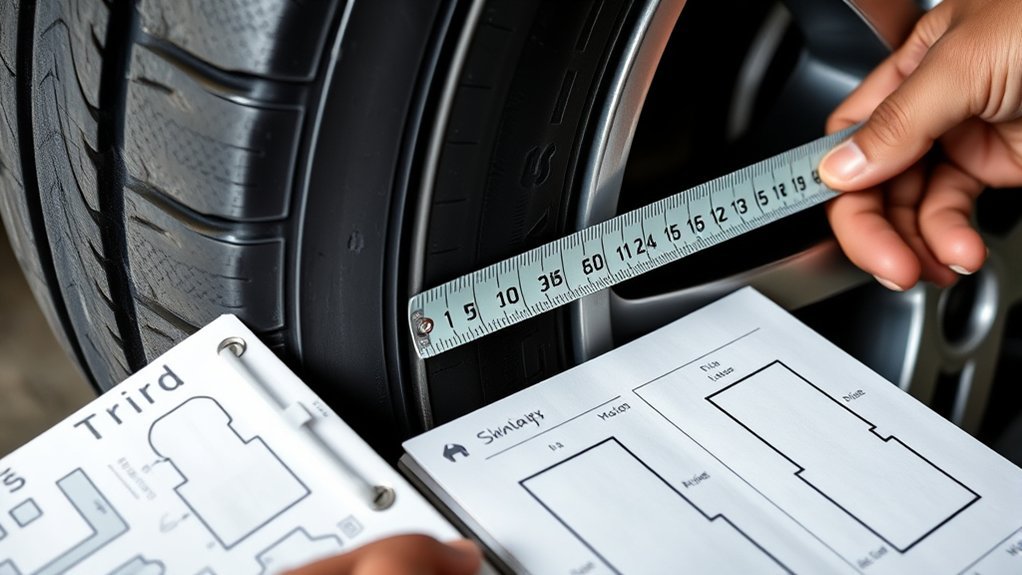
Once you have the total tire height in millimeters, divide by 25.4 to convert it to inches. For a 225/70R15 tire, the total height is 696 mm. That gives you 27.40 inches when rounded to two decimal places.
You can also use a shorter inch-based version of the formula:
Tire height in inches = (width × aspect ratio ÷ 1270) + wheel diameter
For 225/70R15, the quick formula is (225 × 70 ÷ 1270) + 15. That equals about 27.40 inches. This shortcut works because 1270 combines the percentage conversion, the two sidewalls, and the 25.4 mm-per-inch conversion into one number.
Calculated Height vs. Actual Measured Height
Calculated height is the best quick estimate from the sidewall code, but it is not always the exact height of a real mounted tire. Tire makers publish product-specific dimensions, and two tires with the same printed size can measure slightly differently because of tread design, casing shape, rim width, and manufacturing choices.
For shopping and size comparison, use the formula to estimate diameter. For a final fitment decision, check the tire manufacturer’s published overall diameter and approved rim-width range. If you need a real-world measurement, mount the tire on the correct wheel, inflate it to the vehicle’s recommended cold pressure, place it on a flat surface, and measure from the ground to the top of the tire. A loaded tire may sit lower than its full unloaded diameter because the sidewall compresses under vehicle weight.
Note: Tire height, section width, and loaded radius are related but not identical. Use the formula for comparison, then confirm exact dimensions with the tire maker or a qualified tire dealer.
Compare Two Tire Sizes Before You Swap
Calculating one tire height helps you understand the size. Comparing two tire heights helps you decide whether a replacement size is close enough to consider. Start with your current tire size, calculate its height, then calculate the height of the new size. Compare the difference in inches and as a percentage.
Use this comparison formula:
Percentage difference = [(new tire height − original tire height) ÷ original tire height] × 100
For example, if your current tire is 27.4 inches tall and the new tire is 28.0 inches tall, the difference is 0.6 inch. Divide 0.6 by 27.4, then multiply by 100. The result is about 2.2%. That change may look small, but it can affect wheel-well clearance, speedometer readings, odometer readings, shift feel, and how the vehicle drives.
| Tire Size | Approx. Height | Change vs. 225/70R15 |
| 225/70R15 | 27.40 inches | Original example |
| 225/75R15 | 28.29 inches | About 3.2% taller |
| 235/70R15 | 27.95 inches | About 2.0% taller |
Tire circumference changes in the same direction as tire height. A taller tire travels farther per wheel rotation, while a shorter tire travels less distance per rotation. That is why tire height changes can affect speedometer and odometer readings.
Warning: Do not choose a different tire size from the height calculation alone. NHTSA recommends buying the same size as the original tires or another size recommended by the vehicle manufacturer. Check the owner’s manual or Tire and Loading Information Label before you buy: NHTSA TireWise.
[Products Worth Considering]

This manual duck head tire changer kit makes tire installation and removal simpler by letting you embed the duck head into the tire with applied pressure. The integrated design and durable steel construction help reduce friction and improve efficiency and safety during use. Suitable for 16–21 inch wheels, it’s convenient for cars, trucks, SUVs, and ATV tires, with 24-hour after-sales support.

The 22800 wheel stud installer makes replacing wheel studs quick and secure, saving time and effort during tire service. It uses a ratchet or impact wrench to pull new studs firmly into place, helping when existing studs are too long. Compatible with most automotive wheels and light-duty truck wheel studs, it’s designed for easy, tool-assisted installation.

Vigorder rubber cement glue delivers superior adhesion and cures quickly within about 30 seconds for seamless rubber bonding. Once cured, it helps provide a strong, durable, waterproof seal that holds up to vehicle weight, pressure, and heat. Suitable for cars, motorcycles, trucks, bicycles, and off-road tires, it’s designed for emergency patch and maintenance repairs.
How Taller or Shorter Tires Affect Your Vehicle
Taller tires can increase ground clearance and may help in some off-road situations, but they also change the tire’s overall diameter and rolling circumference. That can affect acceleration, braking feel, effective gearing, wheel-well clearance, and speedometer accuracy.
Shorter tires can lower the vehicle slightly and may sharpen steering response because there is less sidewall flex. They can also reduce ground clearance and make the ride firmer. A shorter tire can make the speedometer read higher than your actual road speed, while a taller tire can make it read lower than your actual road speed.
Tire height changes can also affect tire pressure needs, TPMS behavior, ABS and traction-control behavior, and suspension clearance. Federal tire placard rules in 49 CFR § 571.110 require the vehicle placard to show original tire size and manufacturer-recommended cold tire inflation pressure information, which is why the placard is a key starting point before changing size.
[Products Worth Considering]

This 3-piece wheel and tire brush set makes it easy to clean light, medium, and heavy dirt from wheels, rims, tires, and exterior surfaces. It includes both soft and stiff bristle options for gentle scrubbing and tough grime removal, helping lift brake dust and road buildup. The long-handle design supports comfortable cleaning across cars, trucks, SUVs, RVs, motorcycles, and more, with simple care instructions to restore brush shape.

This wheel brush kit delivers pro-level cleaning at home, lifting dirt, grime, and brake dust to help restore wheel appearance. It includes multiple brush styles and applicator pads for tackling different wheel surfaces, with gentle, metal-free bristles designed to reduce scratching risk. The flat and double-ended brushes are built for comfort and reach, making wheel care easier for cars, trucks, and RVs.

Measure tire tread depth quickly and accurately with this LUMITECO dial gauge that reads in 1/32" increments up to 14/32". The color-coded green/yellow/red zones make it easy to judge tire wear and know when replacement is needed. A rugged, compact design with a protective pouch helps keep the gauge ready for use on cars, trucks, motorcycles, and more.
Safe Tire Size Swap Checklist
Use the height calculation as a comparison tool, not as final approval. Before you buy a different size, check these fitment points:
- Original tire size: Match the owner’s manual or Tire and Loading Information Label unless the vehicle manufacturer or a qualified tire professional confirms another size.
- Load index or load range: Make sure the replacement tire can safely carry the vehicle load.
- Speed rating: Choose a speed rating that matches the vehicle’s requirements and your tire dealer’s recommendation.
- Wheel diameter: A 15-inch tire fits a 15-inch wheel only. Tire and wheel diameter must match.
- Rim width range: Check the tire maker’s approved rim-width range for that exact tire size.
- Clearance: Check fender, suspension, brake, and steering clearance at full turn and over bumps.
- Drivetrain needs: All-wheel-drive and four-wheel-drive vehicles may require closely matched tire diameters.
- Cold tire pressure: Use the vehicle manufacturer’s recommended cold pressure unless a qualified tire professional provides a safe adjustment for the new size.
[Products Worth Considering]

Suds Lab WB Premium Detailing Wheel Brush delivers a scratch-free clean using ultra-soft microfiber bristles that lift brake dust, dirt, and grime without swirling. The ergonomic non-slip handle helps you deep-clean rims, wheels, and tires with reduced hand fatigue while reaching tight contours. It’s reusable and machine washable for long-term detailing, and works across cars, trucks, SUVs, and motorcycles plus multi-purpose cleaning tasks.

This metal-free wheel and tire cleaning brush uses dense, fluffy synthetic wool to safely clean rims, spokes, fenders, and engine areas without worrying about damaging surfaces. Its flexible, comfortable design helps you reach detailed areas while maintaining durability, and the extra absorbent fibers work well with wheel spray cleaners for faster cleanup. Reusable and washable performance helps prevent grime and build-up for cleaner vehicles and easier maintenance at home.

The SAFELIFE dial tire tread depth gauge measures tread depth in 1/32 inch increments with clear, easy-to-read 2-inch dial face. Color zones using a traffic light system help you quickly judge whether tread is low, marginal, or ample for safer driving. Built with a durable zinc cast body and a metal detect probe for precise, comfortable use across cars, motorcycles, trucks, and buses.
Common Tire Height Calculation Mistakes
Small math mistakes can create a wrong tire-height estimate. Watch for these common errors:
- Using 70 instead of 0.70: The aspect ratio must be treated as a percentage when you calculate sidewall height.
- Forgetting the second sidewall: Total tire height includes sidewall above and below the wheel.
- Adding inches to millimeters: Convert the wheel diameter to millimeters before adding it to sidewall height.
- Confusing tread width with section width: The first number is nominal section width, measured sidewall to sidewall, not the width of the tread patch.
- Ignoring tire prefixes: P, LT, ST, T, and C markings can change the tire’s intended use, load rules, and fitment requirements.
- Ignoring load index and speed rating: These do not change tire height, but they matter for safe fitment.
- Assuming calculated height is exact: The formula gives a useful estimate, not a guaranteed measured dimension for every tire model.
Frequently Asked Questions
Is a 70 or 75 tire taller?
A 75 aspect-ratio tire is taller than a 70 aspect-ratio tire if the width and wheel diameter are the same. For example, on a 225-width tire, a 75 sidewall is 168.75 mm and a 70 sidewall is 157.5 mm. Since the tire has two sidewalls, the 75 tire is 22.5 mm taller overall before converting to inches.
How much taller is a 65 tire than a 55?
A 65 aspect ratio is 10 percentage points higher than a 55 aspect ratio, but the actual height difference depends on tire width. On a 225-width tire, the sidewall difference is 22.5 mm per side because 225 × 0.10 = 22.5. Since there are two sidewalls, the total diameter difference is 45 mm, or about 1.77 inches.
How tall is a 50 sidewall?
A 50 sidewall means the sidewall height is 50% of the tire width. For a 225/50 tire, one sidewall is 112.5 mm because 225 × 0.50 = 112.5. To calculate full tire height, double that sidewall height and add the wheel diameter after converting the wheel size to millimeters.
What tire is taller, 65 or 70?
A 70 tire is taller than a 65 tire when both tires have the same width and wheel diameter. The higher aspect ratio creates a taller sidewall. That can add ride comfort and ground clearance, but it can also affect clearance, steering response, speedometer accuracy, and fitment.
Does tire height affect speedometer accuracy?
Yes. A taller tire travels farther with each rotation, so your vehicle may be moving faster than the speedometer shows. A shorter tire travels less distance per rotation, so the speedometer may read higher than your actual speed. The larger the diameter change, the larger the effect.
Is calculated tire height the same as actual measured height?
Not always. The formula gives a close theoretical height from the sidewall code. Actual tire height can vary by design, tread depth, inflation pressure, vehicle load, and rim width. Use the formula for comparison, then confirm exact specifications with the tire manufacturer or a qualified tire dealer.
Can I use tire height alone to choose a replacement tire?
No. Tire height is only one part of fitment. You also need the correct wheel diameter, load index or load range, speed rating, approved rim width, tire pressure guidance, and physical clearance. Start with the size listed on your vehicle’s Tire and Loading Information Label or owner’s manual.
Conclusion
Now you can read the sidewall numbers and estimate tire height without guessing. Use the width, aspect ratio, and wheel diameter to calculate overall height, then compare the result with your original tire size. Before you change sizes, check your owner’s manual, Tire and Loading Information Label, load index, speed rating, wheel fit, clearance, and tire pressure needs. The math helps you compare options, but safe fitment still depends on your vehicle’s approved specifications.
Sources
- Continental Tire Sidewall Guide — supports tire width, aspect ratio, rim diameter, load index, speed rating, and the 25.4 mm-per-inch conversion.
- Bridgestone Tire Size Guide — supports P-Metric, Euro-Metric, LT-Metric, C-Type, T, ST, and flotation tire-size explanations.
- NHTSA TireWise — supports using the original or manufacturer-recommended tire size and checking the owner’s manual or Tire and Loading Information Label.
- 49 CFR § 571.110 — supports vehicle placard requirements for original tire size and recommended cold tire inflation pressure.