Change your Toyota Camry from winter tires to summer tires when daily temperatures consistently stay above 45°F (7°C), the risk of snow or freezing conditions has passed, and you do not expect to drive into colder areas. The calendar alone cannot determine the right date. Depending on your climate and elevation, the change may happen from late March through early May.
Quick Answer
Switch your Toyota Camry to summer tires after average daily temperatures remain above 45°F for about a week and freezing weather is no longer expected. Check the forecast, your planned travel, tire condition, size, pressure, and TPMS before installation. Do not use summer tires in snow or ice.
Key Takeaways
- Use 45°F (7°C) as a practical temperature guide, not a rigid date on the calendar.
- Wait if frost, snow, ice, or cold-weather travel remains likely.
- Install four compatible summer tires rather than mixing seasonal tire types.
- Confirm the correct size, load rating, pressure, wheel hardware, and torque specification for your Camry model year.
- Check the TPMS, pressure, vibration, and handling after the change.
At a Glance
| Time Required | About 30–60 minutes for a complete wheel-set swap; longer when tires must be mounted and balanced |
| Difficulty | Moderate for an experienced DIY owner; straightforward for a tire shop |
| Tools Needed | Wheel chocks, approved jack, jack stands, lug wrench, calibrated torque wrench, tire-pressure gauge, and your Camry owner’s manual |
| Cost | Varies by location, wheel size, TPMS service, balancing needs, and whether the tires are already mounted on wheels |
How to Decide When to Switch to Summer Tires

Start with the temperature trend. Michelin and Continental use approximately 45°F or 7°C as the practical crossover point. Summer-tire compounds are designed for warm roads, while their grip falls as the rubber stiffens in colder conditions.
Do not switch because of one warm afternoon. Review daytime and overnight temperatures for the coming week. A useful approach is to wait until average daily temperatures remain above 45°F and overnight freezing conditions are no longer expected.
Use This Decision Checklist
- Temperature: Daily temperatures have stayed above 45°F for several days.
- Forecast: No snow, freezing rain, frost, or extended cold snap is expected.
- Travel: You do not plan to drive into mountains or colder regions where winter conditions remain possible.
- Road conditions: Roads are clear of snow and ice during the times you normally drive.
- Tire condition: Your summer tires have adequate tread and no cracks, bulges, exposed cords, punctures, or unusual wear.
Warning: Summer tires should not be used on snow or ice. Their warm-weather compound and tread design cannot provide the cold-weather traction of properly rated winter tires.
Install a complete set of four compatible summer tires. Mixing summer tires with winter or all-season tires can create different grip levels between the front and rear axles, producing unpredictable behavior during braking or emergency steering.
Before installing studded tires or delaying their removal, check your state, province, or local transport authority. Seasonal restrictions differ by location, and no single national cutoff date applies everywhere.
How Climate Affects When to Switch to Summer Tires
Climate changes the switching date because temperature, elevation, and storm patterns vary widely. In many lower-elevation areas, the change may happen from late March into April. Northern or mountain regions may remain too cold until late April or early May. These are broad examples rather than fixed deadlines.
Use the conditions where you drive, not only the conditions around your home. A Camry used for a mountain commute may need winter tires longer than one used entirely in a warm urban area.
Climate and Travel Factors That Matter
- Overnight lows: Repeated freezing nights are a reason to wait.
- Elevation: Higher roads can remain colder and receive snow after nearby cities warm up.
- Morning travel: Bridges and shaded roads can remain icy after daytime temperatures rise.
- Storm variability: A late cold front can temporarily make summer tires unsuitable.
- Local law: Studded-tire and traction-device rules vary by jurisdiction.
Note: A seven-day forecast is more useful than the date on the calendar. Delay the change when several nights below 45°F or any frozen precipitation remains likely.
Ideal Timing for Changing Tires
The ideal time combines warm temperatures, low winter-weather risk, and a road-ready summer tire set. Do not wait until winter tires show obvious heat-related wear, but do not change so early that you lose cold-weather traction.
Best Temperature Guidelines
Switch when average daily temperatures consistently remain above 45°F. Summer tires provide their intended warm-weather handling and braking performance above this range. Below it, the compound may stiffen, reducing traction even on a dry road.
The 45°F guideline is not a guarantee that every summer tire behaves identically. Some ultra-high-performance products have stricter storage or operating restrictions. Check the tire manufacturer’s instructions when your tire is designed for track use or has a specialized compound.
Local Weather Considerations
Use the following table to decide whether to switch now or wait:
| Current Conditions | Best Choice |
|---|---|
| Temperatures remain above 45°F, with no frost or snow expected | Switch to summer tires if the set passes inspection |
| Warm afternoons but repeated cold nights | Wait and monitor the forecast |
| Possible mountain travel or late-season snow | Keep winter tires until the trip or weather risk passes |
| Mild climate with no meaningful winter conditions | Consider suitable all-season tires if you do not need maximum summer performance |
| Variable winters but you want one year-round set | Consider all-weather tires carrying the Three-Peak Mountain Snowflake marking |
What to Expect From Summer Tire Performance
Summer tires are designed to deliver responsive steering, stable cornering, and strong braking on warm dry or wet pavement. They usually use larger tread blocks, fewer fine sipes than winter tires, and compounds developed to remain stable under summer heat.
Wet-road performance comes from the complete tire design. Properly designed circumferential and lateral grooves move water away from the contact patch, while the compound supports grip. Fewer grooves do not automatically prevent hydroplaning. According to Continental’s aquaplaning guidance, speed, standing-water depth, inflation pressure, tire condition, and remaining tread all affect the risk.
Summer tires can provide excellent warm-weather wet traction, but no tire can prevent hydroplaning when speed is too high for the water depth and available tread.
Do not assume every summer tire will improve fuel economy. Rolling resistance varies by tire model, size, pressure, construction, tread depth, and vehicle setup. Select a tire based on verified specifications and the balance of grip, comfort, noise, tread life, and efficiency that fits your driving.
[Products Worth Considering]

This ecocstm ratchet wrench is designed to make emergency and routine tire changes faster with a 360° rotating head and quick forward/reverse switching. The extended handle provides extra leverage to reduce effort and hand fatigue, while the adapter helps fit many scissor jacks on cars, SUVs, trucks, and vans. Built for reliable performance with durable construction, it’s a practical travel essential for on-the-road preparedness.

The Kurgo Seasonal Tire Tote helps protect your car interior, clothes, and garage from tire grime, brake dust, and residue during seasonal tire changes. Its universal design fits most passenger tires between 22" and 31" in diameter, making storage and transport simpler with less mess. Built for rugged, repeated use, it’s machine washable for easy care and comes with a lifetime warranty.
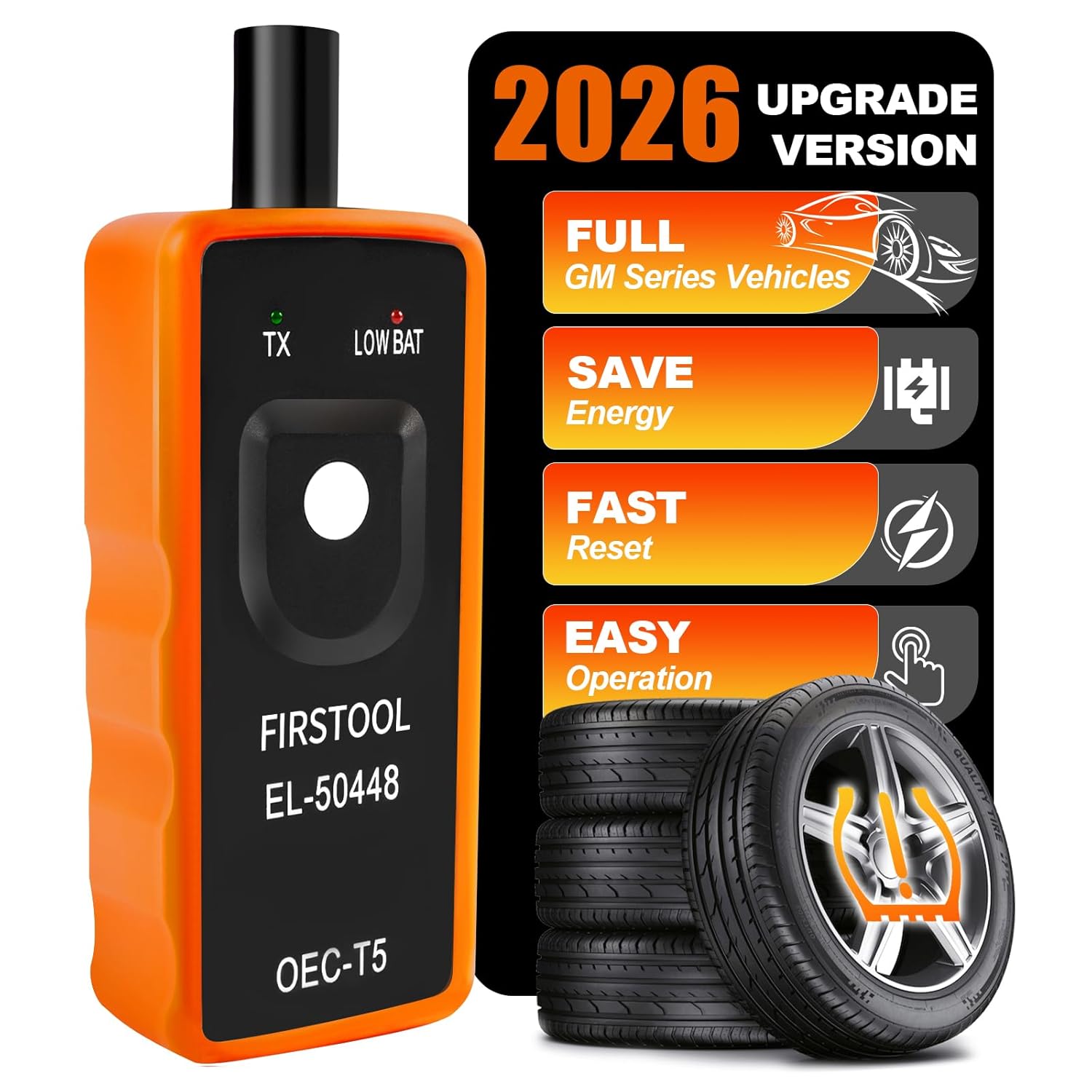
This TPMS relearn tool helps you quickly activate, match, and reset GM tire pressure sensors to keep the vehicle monitoring system working properly. It clears tire pressure alarms and dashboard warning lights after sensor replacement or tire rotation, and supports learning for common 315/433 MHz TPMS sensors. Designed for simple one-button operation, it can help you avoid unnecessary trips to repair shops.
Inspect the Summer Tires Before Installation
- Measure tread depth at several points across each tire.
- Look for cracks, cuts, bulges, exposed cords, punctures, or flat spots.
- Check for uneven shoulder or center wear that may indicate pressure or alignment problems.
- Confirm that the tire size, load index, and speed rating are suitable for your Camry.
- Check the tire identification date code and follow the manufacturer’s inspection guidance for older tires.
- Have a qualified tire professional inspect any tire that has questionable damage or severe aging.
The National Highway Traffic Safety Administration states that tires should be replaced when tread reaches 2/32 inch. However, wet-weather performance may become unacceptable before that minimum, especially when the tire has uneven wear.
Cost of Switching to Summer Tires
The cost of switching depends on whether your summer tires are already mounted on a second set of wheels. Swapping complete wheel-and-tire assemblies is normally simpler than removing winter tires from the original wheels, mounting the summer tires, balancing them, and servicing the TPMS.
[Products Worth Considering]

The VEHLIVE SU-50448 II TPMS relearn tool provides a fast activation reset to restore accurate tire pressure monitoring after sensor replacement or tire rotation. It supports 315 MHz and 433 MHz GM series sensors and helps clear dashboard pressure warnings. With simple two-button operation and horn-confirmed relearning order, you can reprogram sensors conveniently at home.

Steelman white tire marking crayons provide high-contrast, semi-permanent marks for repairing and inspecting tires and equipment. They write on wet or dry, smooth or coarse surfaces including rubber, metal, glass, and wood, making them ideal for puncture location and damage outlining. The lead- and zinc-free crayons resist weather and fading yet wipe away when you no longer need the marks.

Marsflex brand TPMS replacement sensors help restore tire pressure monitoring for compatible Toyota, Lexus, Scion, and Pontiac models. Each sensor is pre-programmed for the vehicle application and includes a long-life battery for up to 8 years of normal use. Designed to replace common OE numbers and requires relearning using a TPMS scan tool after installation.
What Affects the Switching Cost?
- Wheel diameter and tire construction
- Whether mounting and balancing are required
- TPMS sensor replacement, registration, or service
- New valve stems or service kits
- Wheel condition and required hardware
- Seasonal tire storage
- Local labor rates and taxes
- Alignment or repair work discovered during inspection
A second wheel set can lower the labor required for future seasonal changes, but the initial purchase may include wheels, TPMS sensors, compatible lug hardware, and storage equipment. Compare the total ownership cost rather than assuming a fixed percentage of savings.
Pro Tip: Ask the shop for an itemized quote covering mounting, balancing, TPMS work, valve service, disposal fees, storage, and taxes. This makes local estimates easier to compare.
Proper Techniques for Changing Tires
Changing complete wheel assemblies can be a reasonable DIY job when you have the correct equipment and experience. Mounting a loose tire onto a wheel requires specialized machinery and should be performed by a qualified tire shop.
Warning: Never work under a vehicle supported only by its emergency jack. Use the lift points, wheel hardware, tightening pattern, and torque specification listed for your exact Camry model year. Stop if you cannot identify the correct procedure.
Before Lifting the Camry
- Park on a level, solid surface away from traffic.
- Shift into Park, engage the parking brake, turn off the vehicle, and keep the key away from the car.
- Place wheel chocks around a wheel that will remain on the ground.
- Confirm the summer wheels and tires match the required size, load capacity, offset, bolt pattern, center bore, and brake clearance.
- Check whether each tire is directional or asymmetric. Follow the rotation arrow or “inside/outside” sidewall marking.
- Find the approved lift points and wheel-fastener torque in your Toyota owner’s manual and maintenance guide.
- Loosen each wheel fastener slightly before lifting, without removing it.
Wheel-Change Steps
- Raise the vehicle using the approved lift point.
- Support it with a correctly rated jack stand at an approved support location.
- Remove the fasteners and wheel while keeping your body out from beneath the vehicle.
- Inspect the wheel-mounting surface, studs or bolts, brake components, and tire for visible damage.
- Install the summer wheel by hand and start every fastener without cross-threading.
- Snug the fasteners in a crisscross pattern.
- Lower the vehicle until the tire contacts the ground and cannot rotate freely.
- Tighten the fasteners in a crisscross pattern using a calibrated torque wrench set to the specification for your exact Camry.
- Repeat the process for the remaining wheels.
After the Wheel Change
- Set all tires to the recommended cold pressure on the driver’s-door placard, not the maximum pressure printed on the tire sidewall.
- Check that directional tires rotate in the correct direction and asymmetric tires face outward correctly.
- Confirm that no TPMS warning remains after the system has had time to recognize the wheels.
- Follow the model-year manual if TPMS initialization, wheel-set selection, or sensor registration is required.
- Drive slowly at first and listen for rubbing, knocking, or other unusual sounds.
- Stop and obtain professional help if the Camry pulls, vibrates, develops a warning light, or feels unstable.
- Follow Toyota’s manual or your wheel-service provider’s instruction for any required wheel-fastener recheck.
Tips for Extending the Life of Your Summer Tires
Check tire pressure at least monthly when the tires are cold. NHTSA defines a cold tire as one that has not been driven for at least three hours. Use the pressure on the vehicle placard or in the owner’s manual rather than the maximum molded on the tire sidewall.
Rotate the tires according to the maintenance schedule and rotation pattern for your exact Camry, drivetrain, and tire configuration. Do not use one universal mileage interval when the owner’s manual or tire manufacturer specifies something different.
Summer Tire Maintenance Checklist
- Measure cold pressure monthly and before long trips.
- Inspect tread, sidewalls, and valve areas for damage.
- Address vibration, pulling, or uneven wear promptly.
- Have balancing and alignment checked when symptoms or wear patterns indicate a problem.
- Avoid overloading the vehicle beyond the capacity shown on its label.
- Reduce speed in heavy rain and standing water.
- Record each tire’s wheel position before seasonal removal.
How to Store Seasonal Tires
Clean the removed tires and wheels with water, dry them completely, and remove stones from the tread. Mark each tire’s previous position so you can follow the appropriate rotation plan at the next installation.
Michelin recommends storing tires in a cool, dark, dry indoor location away from direct sunlight, heat, electric motors, generators, fuel, oil, and solvents.
- Tires mounted on wheels: Stack them safely or hang them from suitable wheel supports.
- Unmounted tires: Store them upright rather than hanging or stacking them for extended periods.
- All tires: Keep them clean, dry, protected from ozone, and away from sharp objects or chemicals.
Choosing Between Summer and All-Season Tires

Choose summer tires when you prioritize warm-weather steering response, braking, and cornering and can maintain a separate cold-weather set. Choose all-season tires when your climate is moderate and convenience matters more than maximum performance at either seasonal extreme.
All-weather tires provide another option. They are intended for year-round use and carry the Three-Peak Mountain Snowflake symbol when they meet the applicable severe-snow traction standard. They can suit drivers who encounter genuine winter conditions but do not want to manage two sets, although they still involve performance compromises compared with dedicated seasonal tires.
[Products Worth Considering]

The Trivd Frol 1/2" air impact wrench delivers high performance torque up to 1500 ft-lbs with a twin hammer impact mechanism for strong, balanced blows. It features an ergonomic grip, compact lightweight design, and quick-stop control with 3 forward speeds up to 8000 RPM plus a reverse speed. Built for demanding automotive repair and tire shop work, the rear exhaust helps keep debris away from the surface.

Upgrade your wheels with MIKKUPPA M12x1.5 mag seat lug nuts built for secure, corrosion-resistant performance. These closed-end chrome lug nuts are a direct replacement for select Toyota models, including Camry, Corolla, RAV4, Sienna, Avalon, Highlander, Matrix, Venza, and Prius. Triple-chromium plating and cold-forged, heat-treated steel help deliver strength for daily driving and replacement needs.

Replace worn or malfunctioning GM TPMS sensors with this 433MHz pre-programmed sensor set designed for compatibility with many Chevrolet, Buick, GMC, and Cadillac models. It includes guidance for proper OBDII relearning/pairing after installation and supports reliable long-term operation with a high-performance CR2032 battery. Quality tested for durability and performance to help restore accurate tire pressure monitoring.
Performance Differences
- Summer tires: Strong warm-weather dry and wet performance, but unsuitable for snow, ice, or sustained cold.
- All-season tires: Balanced performance for moderate climates, with less specialization at temperature extremes.
- All-weather tires: Year-round convenience with certified severe-snow traction when marked with the Three-Peak Mountain Snowflake.
- Winter tires: Best suited to sustained cold, snow, slush, and ice.
Weather Adaptability
| Criteria | Summer Tires | All-Season Tires | All-Weather Tires |
|---|---|---|---|
| Best temperature range | Consistently above about 45°F | Moderate year-round conditions | Broad year-round conditions, including meaningful winter weather |
| Warm dry handling | Most specialized | Balanced | Balanced with winter capability |
| Snow and ice | Not suitable | Limited, depending on tire | Better when 3PMSF-rated, but not identical to every dedicated winter tire |
| Seasonal changes | Required in cold-winter climates | Usually unnecessary in mild climates | Usually unnecessary |
Frequently Asked Questions
When should I switch my winter tires to summer tires?
Switch after average daily temperatures consistently remain above 45°F, freezing weather is no longer expected, and you do not plan to travel into colder or snowy areas. Use the forecast and driving conditions rather than a fixed calendar date.
What does Toyota recommend for tire rotation?
Toyota’s required interval and rotation pattern can vary by Camry model year, drivetrain, wheel size, and tire configuration. Follow the warranty and maintenance guide for your exact vehicle and any additional instructions supplied by the tire manufacturer.
Is October too early for winter tires?
Not necessarily. October may be appropriate where average daily temperatures are approaching or falling below 45°F, particularly when frost, snow, or mountain travel is likely. In a warmer climate, installation may be premature. Use temperature trends rather than the month alone.
Can I install only two summer tires on my Camry?
Do not mix summer and winter tires across the vehicle. Different seasonal grip levels can make handling unpredictable. Use four compatible tires of the correct size and specifications unless Toyota and the tire manufacturer provide an approved alternative for your exact configuration.
Does the TPMS need to be reset after changing wheels?
It depends on the Camry model year and the sensors installed in the second wheel set. Some vehicles recognize registered sensors, while others require initialization, wheel-set selection, or sensor registration. Follow the model-specific owner’s manual and confirm that the warning light turns off.
Conclusion
Switch your Toyota Camry to summer tires when temperatures consistently remain above 45°F, winter-weather risk has passed, and your summer set is safe and compatible. Inspect all four tires, follow the model-specific pressure and torque specifications, confirm TPMS operation, and drive cautiously after installation. When cold conditions remain possible, waiting is safer than relying on a calendar date.
Sources
- Michelin: Summer vs. Winter vs. All-Season Tires — seasonal temperature guidance and tire-category differences
- Continental: Summer Tires vs. Winter Tires — warm-weather compounds, tread design, and the 7°C threshold
- NHTSA TireWise — cold inflation checks, tread inspection, TPMS, rotation, balancing, and replacement guidance
- Toyota Owner’s Manuals and Maintenance Guides — model-specific tire pressure, lifting, wheel, torque, rotation, and TPMS procedures
- Michelin Tire Storage Guidance — cleaning, positioning, and protection from sunlight, heat, chemicals, and ozone