
Toyota Camry Recommended Tire Maintenance Schedule: A Complete Overview
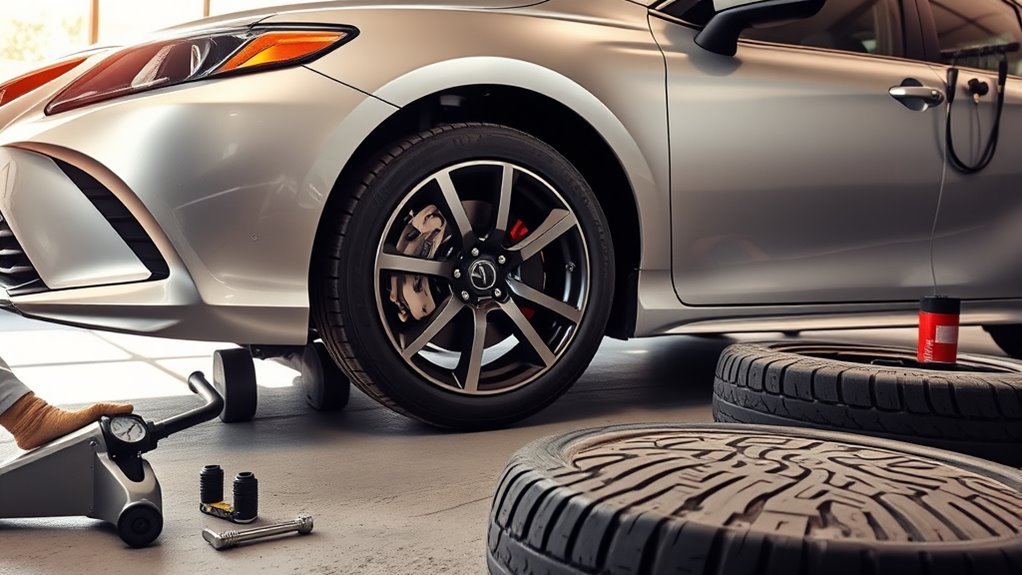
Your Toyota Camry tire maintenance schedule is simple when you break it into repeatable checks: pressure, rotation, tread, balance, alignment, and replacement timing. Use your exact model-year owner’s manual and the tire placard on the driver’s door jamb as the final authority, because tire size, trim, load rating, and recommended PSI can vary.
Quick Answer
For most late-model Toyota Camrys, follow Toyota’s 5,000-mile or six-month maintenance rhythm: check cold tire pressure monthly and before trips, rotate tires at each 5,000-mile service, inspect tread and sidewalls often, and replace any tire at 2/32 inch or when treadwear bars show. Always confirm with your model-year manual.
Key Takeaways
- Use the PSI on your Camry’s driver-door tire placard, not the maximum pressure printed on the tire sidewall.
- Rotate tires every 5,000 miles or six months on many late-model Camrys, unless your owner’s manual gives a different interval.
- Balance tires when vibration, uneven wear, new tire installation, or wheel service points to imbalance.
- Check tread across the inner, center, and outer grooves; replace tires at the legal minimum of 2/32 inch, or sooner for rain, snow, damage, or age.
At a Glance
| Time Required | 5 minutes for pressure and tread checks; 30–60 minutes for a professional rotation; longer if alignment or replacement is needed. |
| Difficulty | Easy for inspections; moderate or professional for rotation, balancing, and alignment. |
| Tools Needed | Tire pressure gauge, tread-depth gauge or penny, flashlight, owner’s manual, and service records. |
| Cost | Basic checks are usually free; rotation, balancing, alignment, and tire replacement costs vary by shop, tire size, and service package. |
Camry Tire Maintenance Schedule Basics
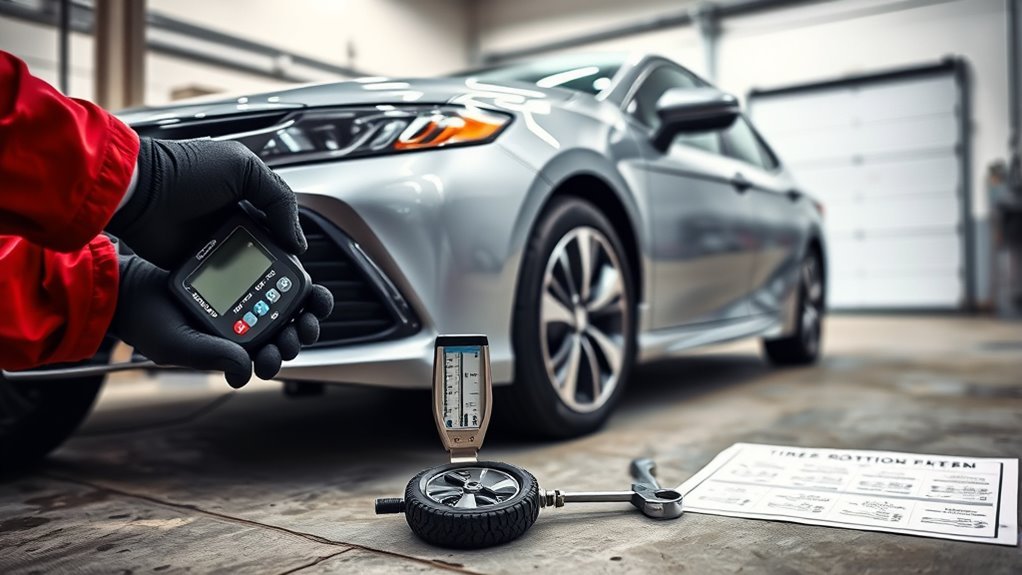
A good Camry tire schedule starts with Toyota’s factory maintenance rhythm, then adds owner checks between service visits. The 2025 Toyota Camry Warranty & Maintenance Guide lists scheduled maintenance every 5,000 miles or six months, whichever comes first, and includes tire rotation at each 5,000-mile interval. If you drive an older Camry, check your exact guide because intervals can differ by model year and tire type.
| Maintenance Item | Best Schedule | Why It Matters |
| Tire pressure | Monthly and before long trips | Protects handling, braking, tread life, and fuel economy. |
| Tire rotation | Every 5,000 miles or six months on many late-model Camrys | Helps even out front-to-rear wear and extends usable tread life. |
| Tread and sidewall inspection | Monthly, seasonally, and before road trips | Finds low tread, cuts, bulges, cracks, nails, and uneven wear early. |
| Balancing | When vibration, uneven wear, or new tire installation calls for it | Reduces shake and helps the tire roll evenly. |
| Alignment | When the car pulls, the wheel is off-center, tires wear unevenly, or after hard impacts | Keeps the Camry tracking straight and prevents rapid edge wear. |
Keep a record of tire rotations, alignments, pressure checks, and replacements. Toyota’s maintenance guide explains that records can help document proper maintenance if you ever need warranty support or sell the vehicle.
[Products Worth Considering]

The JACO FlowPro Tire Inflator measures, inflates, and airs down tires up to 100 PSI with battery-free operation and ±2% accuracy after calibration. It features a glowing pressure dial for night visibility, a heavy-duty steel build with a hybrid hose, and a precision push-to-inflate thumb trigger. The patented Lightning Air Chuck locks on for a secure seal, and the kit includes quick-connect hardware for easy inline use with your air compressor.

EVOULTES heavy duty tire inflator with an integrated gauge delivers accurate pressure readings from 10–120 PSI, helping you inflate, deflate, and check tires in one tool. The 16.5-inch extended dual-head air chuck with swivel base reaches hard-to-access dual wheel valves on trucks and RVs. A brass trigger core and side-mounted air release valve make operation smooth, with standard 1/4" NPT threading and quick-connect compatibility for easy setup.

This portable cordless tire inflator delivers up to 160 PSI with fast 17 L/min airflow to help you quickly top up tires and get back on the road. It features dual power mode, running on a 21V rechargeable battery or a 12V DC adapter for convenient roadside use. An automatic shut-off with digital pressure gauge helps prevent overinflation, and a built-in LED light improves visibility in low-light conditions.
Check Camry Tire Pressure the Right Way
Check your Camry’s tire pressure when the tires are cold, ideally before driving or after the car has been parked for about three hours. Use the recommended pressure on the driver-side door-jamb tire placard or your owner’s manual. Do not inflate to the maximum PSI printed on the tire sidewall unless that number also matches your vehicle placard; the sidewall number is the tire’s maximum rating, not your Camry’s normal operating pressure.
- Park on level ground and let the tires cool.
- Find the recommended cold PSI on the driver-door placard.
- Press a reliable tire gauge firmly onto the valve stem.
- Add or release air in small amounts.
- Recheck the PSI and reinstall the valve cap.
- Repeat on all four tires and check the spare tire if your Camry has one.
FuelEconomy.gov says under-inflated tires can lower gas mileage by about 0.2% for every 1 psi drop in the average pressure of all tires, while proper inflation can improve mileage by 0.6% on average and up to 3% in some cases.
Note: A tire pressure monitoring system is helpful, but it is not a substitute for a manual gauge. Check pressure yourself monthly and before long highway trips, especially during large temperature swings.
Rotate Camry Tires Every 5,000 Miles
For many late-model Toyota Camrys, rotating tires every 5,000 miles or six months lines up with Toyota’s scheduled maintenance chart. Rotation matters because the front tires on a Camry often carry steering and braking loads differently than the rear tires. Moving tire positions helps the tread wear more evenly and can delay replacement.
Choose the Right Rotation Pattern
The correct pattern depends on your Camry’s drivetrain, tire size, and tire type:
- Front-wheel-drive Camry with same-size, non-directional tires: many shops use a forward-cross pattern.
- All-wheel-drive Camry: many shops use an X-pattern or the pattern shown in the service information.
- Directional tires: they usually stay on the same side of the vehicle unless remounted.
- Staggered tire sizes: front-to-rear rotation may not be possible.
When in doubt, follow your owner’s manual, tire sidewall direction arrows, and tire-shop guidance. Rotation is also a good time to inspect tread depth, sidewalls, valve stems, and lug nuts.
Warning: If you rotate tires at home, use the approved jacking points, a level surface, wheel chocks, and properly rated jack stands. Never work under a vehicle supported only by a jack, and torque lug nuts to the Toyota specification for your model year.
How to Spot Uneven Tire Wear

You can spot uneven tire wear by comparing the inner edge, center, and outer edge of each tire. Do not check only one groove. Uneven wear can hide on the inside shoulder where it is harder to see from a standing position.
Tread Wear Patterns
- Center wear: often points to over-inflation or repeated high-pressure use.
- Both-edge wear: often points to under-inflation or frequent heavy loading.
- One-edge wear: often points to alignment problems, worn suspension parts, or camber/toe issues.
- Cupping or scalloping: may point to worn suspension, imbalance, or shock/strut problems.
- Bald spots: can come from locked-wheel braking, tire defects, or severe suspension issues.
Use a tread-depth gauge for the most accurate reading. A penny test can screen for the 2/32-inch threshold, but a gauge is better when wear is uneven or when you drive often in rain or snow.
Alignment and Inflation
- Compare tread depth across all four tires.
- Check pressure before deciding the tire is defective.
- Look for steering pull, vibration, or an off-center steering wheel.
- Rotate tires on schedule so one axle does not wear out early.
- Ask a qualified shop to inspect alignment and suspension if the same wear pattern returns.
Pro Tip: Take a quick photo of each tire’s tread every rotation. Comparing photos over time makes it easier to catch inside-edge wear, cupping, or a pressure problem before the tire is ruined.
When Camry Tires Need Balancing

Tire balancing corrects uneven weight distribution in the wheel-and-tire assembly. It is different from alignment. Balance affects vibration and smooth rolling; alignment affects wheel angles and how the tires meet the road.
Signs of Imbalance
Have the tires checked for balance if you notice any of these symptoms:
- Steering-wheel vibration: shaking at certain speeds, especially on smooth roads.
- Seat or floor vibration: vibration from the rear of the car can point to rear wheel imbalance.
- Patchy tread wear: cupping or scalloping can be related to balance, suspension, or shock issues.
- Recent tire or wheel service: new tires, repaired tires, or bent wheels should be checked.
Balance During Rotations
You do not always need a full rebalance at every rotation. However, a rotation appointment is a smart time to ask the technician to check for vibration complaints, missing wheel weights, bent wheels, uneven tread, or tire damage. If the Camry felt smooth before and the tires are wearing evenly, rotation alone may be enough.
Schedule Service Checks
Get service sooner if vibration appears suddenly after hitting a pothole, curb, or road debris. A hard impact can bend a wheel, shift a tire belt, damage a sidewall, or knock alignment out of specification. Do not keep driving on a tire with a bulge, exposed cords, or a repeated pressure loss.
Get a Wheel Alignment Once a Year
A yearly alignment check is a useful preventive habit if you drive on rough roads, hit potholes, or notice uneven tire wear. It should not be treated as a universal Toyota requirement for every Camry in every situation. The more important rule is to align the vehicle when symptoms appear.
Schedule an alignment inspection if:
- Your Camry pulls left or right on a flat road.
- The steering wheel sits off-center while driving straight.
- One edge of a tire wears faster than the other.
- You feel wandering, instability, or unusual steering response.
- You hit a curb, pothole, or road hazard hard enough to jar the car.
- You install new tires and want to protect the new tread from uneven wear.
Alignment helps the tires roll straight instead of scrubbing across the pavement. That protects tread life, improves steering feel, and can reduce unnecessary rolling resistance.
Choose the Right Tires for Your Camry
Choosing the right tires for a Toyota Camry starts with the specifications on the tire placard and owner’s manual: tire size, load index, speed rating, and cold inflation pressure. If your current tires are not the original size, ask a qualified tire shop to confirm that the replacement size is safe for your Camry’s wheels, suspension, speedometer, and load rating.
- Match the size and load rating: never downsize load capacity just to save money.
- Choose the tire type for your climate: all-season, all-weather, summer, or winter.
- Check treadwear and warranty: longer treadwear ratings can help commuters, but traction and braking matter too.
- Keep tires matched by axle: avoid mixing different constructions or heavily mismatched tread depths on the same axle.
- Use the right seasonal tire: winter tires with the Three-Peak Mountain Snowflake symbol are designed for severe snow service.
If you are replacing only two tires, ask the tire shop where they should be installed for your Camry and driving conditions. Many shops place the better pair on the rear axle to reduce the chance of oversteer in wet conditions.
[Products Worth Considering]

This AUTOWN flat tire repair kit is designed for quick, reliable puncture repairs using a plug kit and spiral probe tool to simplify installation. Built for durability and...
Winter and Summer Tire Care for Camry Drivers
Cold weather changes tire pressure. AAA explains that tire pressure decreases about 1 PSI for every 10°F drop in temperature and rises at roughly the same rate when temperatures increase. That is why a Camry that was properly inflated in mild weather can show low pressure after a cold night.
For winter driving, check pressure more often, inspect tread depth before the first storm, and consider winter tires when daily temperatures consistently fall below 45°F. Michelin notes that winter tire rubber compounds are designed to stay flexible in cold weather. If you use winter tires, switch back to all-season or summer tires when temperatures stay above the winter-tire range to reduce heat-related wear.
For summer driving, check pressure before road trips, inspect sidewalls for cracks or bulges, and avoid overloading the vehicle. Heat, heavy loads, and under-inflation all increase tire stress.
Note: Store off-season tires in a cool, dry place away from direct sunlight, petroleum products, and electric motors. If the tires are mounted on wheels, clean them first and follow the tire shop’s storage advice.
When to Replace Camry Tires
Replace Camry tires when the tread reaches 2/32 inch, when treadwear indicators are flush with the tread, or when the tire has unsafe damage. Toyota’s tire guidance says to check treadwear indicators, uneven wear, and spare tire condition and pressure. NHTSA’s TireWise resource also recommends checking tire age and tire recalls.
Replace or professionally inspect a tire immediately if you see:
- Tread at or below 2/32 inch anywhere across the tire.
- Visible treadwear bars.
- Sidewall bulges, bubbles, cracks, or cuts.
- Exposed cords or steel belts.
- Repeated air loss after inflation.
- A puncture in the shoulder or sidewall area.
- Uneven wear that returns after pressure, rotation, and alignment are corrected.
- Old age based on the DOT date code, even if tread remains.
To read tire age, find the DOT Tire Identification Number on the sidewall. The last four digits show the week and year of manufacture. For example, “2424” means the tire was made in the 24th week of 2024. Some vehicle and tire manufacturers recommend replacing tires after six to 10 years regardless of tread depth, so check your owner’s manual and tire-maker guidance.
Camry Tire Maintenance Tips That Save Money
Smart tire maintenance lowers long-term running costs because tires last longer when they are inflated, rotated, aligned, and inspected on time. The biggest savings come from preventing premature replacement, not from stretching unsafe tires past their limit.
- Check cold PSI monthly: proper pressure improves safety and helps fuel economy.
- Rotate on schedule: even wear helps you use the full tread life of the set.
- Fix alignment issues early: one bad edge-wear pattern can ruin a tire quickly.
- Balance when symptoms appear: vibration is not just annoying; it can point to uneven rolling or wheel damage.
- Measure tread instead of guessing: a low-cost tread-depth gauge is more reliable than looking from a distance.
- Keep records: rotation and alignment records help with tire warranty claims and resale confidence.
Do not save money by ignoring sidewall damage, bald tread, or repeated pressure loss. A tire that is unsafe should be replaced before it puts the vehicle, passengers, or other road users at risk.
Frequently Asked Questions
What does Toyota recommend for tire rotation?
For the 2025 Toyota Camry, Toyota’s maintenance guide lists scheduled maintenance every 5,000 miles or six months, whichever comes first, and includes tire rotation at those 5,000-mile service intervals. Check your own model-year guide because older Camrys and special tire setups may differ.
What PSI should Toyota Camry tires be?
Use the cold PSI printed on your Camry’s driver-side door-jamb tire placard or listed in your owner’s manual. Do not use the maximum PSI printed on the tire sidewall as your normal target pressure.
Do Camry tires need balancing every time they are rotated?
Not always. Balance the tires when you install new tires, feel vibration, see uneven wear, repair a tire, replace a wheel, or suspect a wheel weight is missing. A rotation appointment is a good time to ask the shop to check for imbalance symptoms.
When should I replace Toyota Camry tires?
Replace tires at 2/32 inch tread depth, when treadwear indicators show, or sooner if there is sidewall damage, exposed cords, bulges, repeated air loss, unsafe punctures, severe uneven wear, or age-related cracking. For frequent rain or winter driving, start shopping before the legal minimum.
Are winter tires worth it for a Toyota Camry?
Winter tires are worth considering if you regularly drive in snow, ice, or temperatures that stay below about 45°F. They use rubber compounds and tread designs made for cold-weather grip. If your winters are mild, a quality all-season or all-weather tire may be more practical.
Conclusion
A strong Camry tire maintenance schedule is not complicated: check cold pressure monthly, rotate tires around Toyota’s 5,000-mile or six-month service rhythm when your model guide calls for it, inspect tread and sidewalls often, and respond quickly to vibration, pulling, uneven wear, or pressure loss. Use the door placard for PSI, keep records, and replace tires before low tread or damage reduces control.
Sources
- Toyota 2025 Camry Warranty & Maintenance Guide — scheduled maintenance interval and tire rotation schedule.
- Toyota Owners: 2025 Camry Tires — treadwear indicators, uneven wear checks, and spare tire condition guidance.
- FuelEconomy.gov: Gas Mileage Tips — tire inflation and fuel-economy impact.
- NHTSA TireWise — tire safety, tire aging, tread, pressure, and recall resources.
- AAA Club Alliance: How Temperature Changes Affect Tire Pressure — cold-pressure checks, PSI changes with temperature, and door-jamb PSI guidance.
- Michelin: Winter Tire Timing & PSI Tips — winter tire timing around 45°F and cold-weather tire guidance.

Related Articles

Toyota Camry All-Season Tires Explained: What They Can and Can’t Do
In exploring Toyota Camry all-season tires, discover their benefits and limitations—are they really the right choice for your driving needs?
Read More
Toyota Camry Tire Traction in Ice and Snow: A Practical Winter Driving Guide
Learn essential tips for maximizing tire traction on ice and snow in your Toyota Camry, ensuring your winter driving is safe and confident. Discover more now!
Read More
Do Toyota Camry Tires Need Snow Chains? When They Help and When They Don’t
How do snow chains enhance your Toyota Camry's winter driving safety, and when should you avoid using them? Discover the essential details inside!
Read More