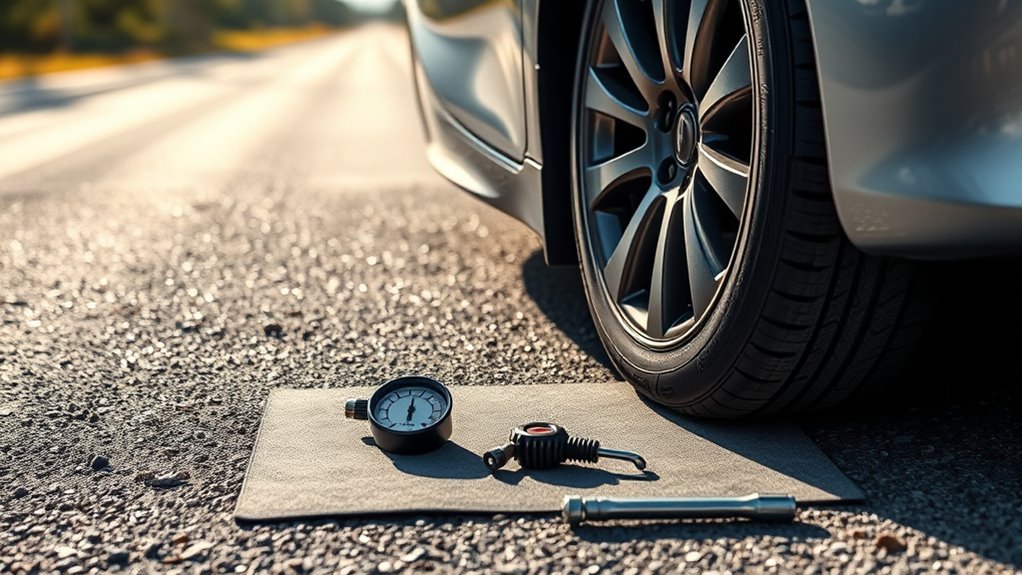
Your Toyota Camry’s tires can last a long time, but mileage is a planning range, not a promise. Many Camry owners can expect roughly 40,000 to 70,000 miles from everyday all-season or touring tires, while high-mileage replacement tires may last longer when they are correctly inflated, rotated, aligned, and driven gently. The safest approach is to track tread depth, tire age, pressure, and wear pattern instead of waiting for a specific odometer number.
Quick Answer
Toyota Camry tires usually last about 40,000 to 70,000 miles, depending on tire type, road conditions, driving style, pressure, rotation, and alignment. Touring and long-warranty all-season tires often last the longest. Replace tires at 2/32 inch tread, sooner for poor wet grip, visible damage, or old age.
Key Takeaways
- A realistic Camry tire-life range is about 40,000 to 70,000 miles, but premium touring tires can last longer with good care.
- Follow your Camry maintenance schedule and rotate the tires regularly; Toyota’s current Camry maintenance guide uses 5,000-mile or six-month service intervals.
- Check cold tire pressure monthly using the driver-door placard or owner’s manual, not the maximum PSI molded on the tire sidewall.
- Replace tires at 2/32 inch tread, after serious damage, when wet-road traction drops, or when age becomes a concern even if tread remains.
- Uneven wear usually points to pressure, alignment, balance, suspension, or rotation problems that should be fixed before a new set wears out early.
At a Glance
| Time Required | 10 to 15 minutes for a monthly pressure and tread check; longer for shop rotation, balancing, or alignment |
| Difficulty | Easy for inspection and pressure checks; moderate to professional for rotation and alignment |
| Tools Needed | Tire pressure gauge, tread-depth gauge or penny, flashlight, and your Camry’s driver-door tire placard or owner’s manual |
| Cost | Low for DIY checks; shop rotation, balancing, alignment, and replacement costs vary by tire size and location |
How Long Do Camry Tires Last?
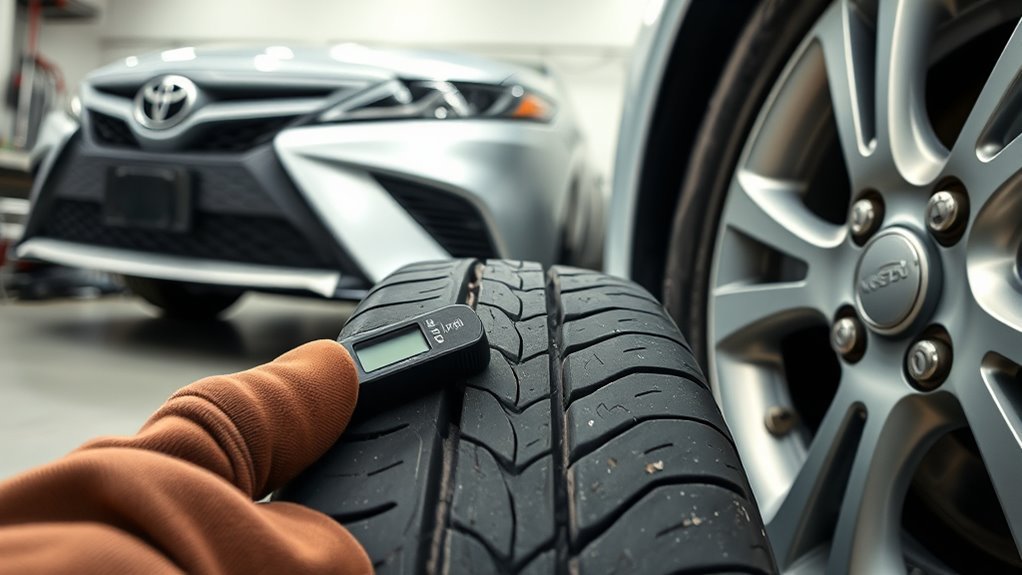
Toyota Camry tires commonly last about 40,000 to 70,000 miles, but the exact number depends on the tire you buy and how you use it. A comfort-focused original-equipment tire, a budget all-season tire, a long-warranty touring tire, and a performance tire can all wear at different rates on the same car.
For many drivers, the best target is not “one magic mileage.” Instead, use the tire’s treadwear warranty, your maintenance records, and monthly inspections. The National Highway Traffic Safety Administration says tire pressure, treadwear, damage, rotation, balance, and alignment all affect tire safety and life. Toyota also recommends regular maintenance and tire rotation in its 2025 Camry Warranty & Maintenance Guide.
| Tire type | Planning range | Best for |
|---|---|---|
| Original-equipment all-season tires | Often 30,000 to 60,000 miles | Balanced comfort, efficiency, and factory fit |
| Touring or grand-touring all-season tires | Often 50,000 to 80,000 miles | Long commutes, low noise, and long tread life |
| Performance all-season tires | Often 30,000 to 50,000 miles | Sharper handling with a tread-life tradeoff |
| Winter tires | Varies by seasonal use and storage | Cold, snow, and ice; not year-round hot-weather use |
Some long-warranty tires provide useful benchmarks. For example, the Michelin Defender2 carries an 80,000-mile treadwear warranty and Michelin cites a 94,400-mile internal treadwear test estimate under specific test conditions. That does not mean every Camry will get that mileage, but it shows why durable touring tires are a strong choice for drivers who care most about long service life.
Mileage warranties are useful shopping tools, but your Camry’s real tire life comes down to pressure, rotation, alignment, road quality, climate, load, and driving style.
What Shortens Camry Tire Life?
Your Camry’s tire life drops fastest when the tread is forced to scrub, flex, or overheat. Hard braking, abrupt acceleration, high cornering force, low pressure, heavy loads, pothole impacts, skipped rotations, and poor alignment can all shorten service life. The good news is that most of these causes are easy to control.
Aggressive Driving Habits
Aggressive driving wears Camry tires because it increases heat and friction at the tread. Hard launches, late braking, fast lane changes, and sharp turns scrub rubber away faster than smooth inputs. Most Camrys also place heavy work on the front tires because the front axle steers and handles much of the braking load. On front-wheel-drive Camrys, the front tires also handle drive torque; AWD Camrys still need regular rotation because both axles share work differently.
Drive smoothly, keep a steady speed, brake early, and avoid turning the steering wheel while the car is stopped. Those habits reduce tread scrub and help the tires wear evenly across the full contact patch.
Road And Weather Damage
Potholes, broken pavement, curbs, gravel, construction debris, and road shoulders can damage the tread, sidewall, belts, or wheel. Sometimes impact damage is visible as a bubble or bulge. Other times the tire may look normal but vibrate, lose air, or wear unevenly later.
Weather also matters. Heat can accelerate aging and pressure changes, while cold weather can lower tire pressure. Sunlight, ozone, and long outdoor storage can age rubber over time. Wet and icy roads do not directly “erase” tread in one drive, but shallow tread raises hydroplaning and traction risk.
Poor Tire Maintenance
- Check cold tire pressure at least once a month.
- Use the PSI listed on the driver-door placard or owner’s manual.
- Rotate tires on the schedule in your Camry maintenance guide.
- Have alignment checked if the car pulls, the steering wheel is off-center, or one edge wears faster.
- Balance the tires if you feel vibration at speed.
- Inspect the sidewalls and tread for cracks, cuts, punctures, bulges, and exposed cords.
Warning: Do not keep driving on a tire with a sidewall bulge, exposed cord, severe vibration, repeated pressure loss, or tread worn to 2/32 inch. Have it inspected or replaced before normal driving.
Which Tires Last Longest on a Camry?
For most Camry drivers, touring, grand-touring, and long-warranty all-season tires last the longest. They are built for steady commuting, lower noise, comfort, and even treadwear. Performance tires usually trade some tread life for sharper steering and higher grip.
[Products Worth Considering]

Accurately measure tire tread depth with a calibrated gauge marked from 0 to 1 inch in 1/32 inch increments. The color-coded bar helps you quickly identify tread condition ranges, supporting safe driving for trucks, motorcycles, automobiles, and passenger vehicles.

The SAFELIFE dial tire tread depth gauge measures tread depth in 1/32 inch increments with clear, easy-to-read 2-inch dial face. Color zones using a traffic light system help you quickly judge whether tread is low, marginal, or ample for safer driving. Built with a durable zinc cast body and a metal detect probe for precise, comfortable use across cars, motorcycles, trucks, and buses.

Measure tire tread depth quickly and accurately with this LUMITECO dial gauge that reads in 1/32" increments up to 14/32". The color-coded green/yellow/red zones make it easy to judge tire wear and know when replacement is needed. A rugged, compact design with a protective pouch helps keep the gauge ready for use on cars, trucks, motorcycles, and more.
Touring Tire Longevity
Touring tires are a strong fit for a Toyota Camry because the car is usually used for commuting, highway travel, errands, and family driving. A durable touring tire can give you long tread life without making the ride harsh.
- Look for a strong treadwear warranty from the tire manufacturer.
- Compare the UTQG treadwear rating, but remember it is a relative rating, not a guaranteed mileage number.
- Choose the correct size, load index, and speed rating for your Camry.
- Match the tire to your climate: all-season for mild climates, all-weather or winter tires for regular snow and ice.
- Keep proof of rotation and maintenance if you ever need a treadwear warranty adjustment.
All-Season Tire Choices
All-season tires usually give Camry owners the best mix of year-round usability, comfort, tread life, and cost. If long life is your top goal, compare long-warranty touring all-season tires first.
The Michelin Defender2 is a long-tread-life example with an 80,000-mile mileage warranty. The Michelin CrossClimate2 is a different kind of choice: it carries a 60,000-mile mileage warranty and focuses more on all-weather braking and 3PMSF-rated winter capability. That makes it useful if you want stronger cold-weather confidence, but it should not be described as a 95,000-mile tire.
Camry Tire Wear Factors
The longest-lasting tire can still wear early if maintenance is poor. Before blaming the tire, check the basics:
- Pressure: Underinflation increases heat, fuel use, edge wear, and failure risk.
- Alignment: A small toe or camber issue can shave one edge fast.
- Rotation: Skipping rotations lets one axle wear faster than the other.
- Balance: Imbalance can cause vibration and cupped wear.
- Load: Heavy cargo and repeated high-speed driving create extra heat.
- Roads: Potholes and rough pavement shorten tire and suspension life.
How to Maintain Camry Tires for Longer Life

To get the most life out of your Camry tires, build a simple routine: check pressure monthly, inspect tread and sidewalls, rotate on schedule, and fix alignment or balance problems early. Toyota explains that the correct pressure is found on the driver-door jamb sticker, in the owner’s manual, or in Toyota’s online manuals, and that routine pressure inspection helps tire wear and performance.
[Products Worth Considering]

Monitor tire tread wear with a smart, color-coded depth gauge that shows clear condition ranges at a glance. The bar is range marked for fast, easy readings, helping you maintain safer traction and performance. Each gauge is portable with a pocket clip, and the set includes 20 units for daily use and sharing.

ETENWOLF’s tire pressure gauge helps you quickly and accurately check tire PSI across cars, trucks, motorcycles, bikes, and more. It’s manually calibrated to ANSI B40.1 Grade A for reliable readings, includes a large glow dial for easy nighttime viewing, and features a 360-degree swivel chuck for use at any valve angle. The gauge also works consistently in extreme hot or cold weather.

Upgrade your Toyota tire setup with these corrosion-resistant, leak-proof valve stem caps designed to help protect the valve core from water, snow, and road grime. The caps feature a snug rubber seal and durable copper alloy construction to resist rust and oxidation while maintaining stable tire pressure. Ideal for replacing worn original caps and keeping your wheels looking clean and stylish.
Check Cold Tire Pressure Monthly
- Park the Camry for at least three hours so the tires are cold.
- Find the recommended PSI on the driver-door placard or in the owner’s manual.
- Remove the valve cap and press a tire pressure gauge firmly onto the valve stem.
- Add or release air until the reading matches the recommended cold PSI.
- Check all four tires and the spare tire if your Camry has one.
- Recheck pressure before long trips or when carrying extra passengers or cargo.
Note: The PSI printed on the tire sidewall is usually the tire’s maximum pressure, not the recommended pressure for your Camry. Use the vehicle placard or owner’s manual for normal driving.
Rotate Tires on Schedule
Rotation helps spread wear across all four tires. Toyota’s current Camry maintenance guide uses 5,000-mile or six-month maintenance intervals and lists tire rotation in the maintenance log. If your tire shop or tire warranty asks for a specific rotation interval, follow the stricter schedule and keep receipts.
Many Camrys with same-size front and rear tires can use a front-to-rear or cross-rotation pattern, but the correct pattern depends on drivetrain, tire direction, tire size, and wheel setup. Directional tires, staggered tire sizes, or some specialty setups may limit rotation options. When in doubt, follow the owner’s manual or ask a qualified technician.
Measure Tread Depth
Use a tread-depth gauge for the most accurate reading. Check the inner, center, and outer grooves on each tire because uneven wear can hide on one edge. You can also use the penny test: place a penny into the tread with Lincoln’s head upside down. If the top of his head is visible, the tread is at or near the 2/32-inch replacement point.
Also look for treadwear indicator bars. These raised bars sit in the grooves and become flush with the tread when the tire is worn out. Plan earlier replacement if you often drive in heavy rain, snow, or standing water, because wet traction can drop before the legal minimum.
Pro Tip: Put a recurring reminder on the first weekend of every month to check pressure, tread depth, sidewall condition, and the DOT date code. A 10-minute check can catch problems before they ruin a full set.
When to Replace Camry Tires
Replace your Camry tires when tread, age, damage, or performance says they are no longer safe. Do not wait for all four tires to look bald. One damaged or badly worn tire can still create a safety problem.
Replace the tire or have it inspected immediately if you see:
- tread at 2/32 inch or flush with the wear bars
- exposed cord or fabric
- sidewall bulges, bubbles, deep cuts, or cracks
- repeated pressure loss
- vibration, thumping, or a pull that appears after impact
- uneven tread wear on one shoulder, the center, or both edges
- noticeably weaker wet-road grip or hydroplaning
- age near the tire or vehicle manufacturer’s limit, even with usable tread
To check tire age, find the DOT Tire Identification Number on the sidewall. The last four digits show the week and year of manufacture. For example, “2321” means the tire was made in the 23rd week of 2021. NHTSA notes that some vehicle and tire manufacturers recommend replacing tires that are six to 10 years old regardless of treadwear. Toyota tire warranty guidance also recommends regular inspection after five years of service and replacement of tires more than 10 years old.
Driving Habits That Help Camry Tires Last Longer
Once your tires are properly inflated and aligned, your driving style becomes the next major factor. Smooth driving keeps tread temperature and scrub under control.
- Accelerate gently: Fast starts grind the tread, especially on front-wheel-drive models.
- Brake early: Late hard braking loads the front tires and increases heat.
- Turn smoothly: Sharp turns and quick lane changes scrub the shoulders.
- Slow down for potholes: Impact damage can harm tires, wheels, alignment, and suspension.
- Avoid overloading: Extra weight increases heat and stress.
- Use cruise control wisely: Steady highway speed can reduce unnecessary acceleration and braking, but avoid cruise control in heavy rain, snow, or slippery conditions.
What Uneven Tire Wear Means
Uneven tire wear is one of the clearest signs that something needs attention. Catch it early and you may save the current set. Ignore it and the next set may wear out early too.
| Wear pattern | Likely cause | What to do |
|---|---|---|
| Both outer edges worn | Underinflation or hard cornering | Set cold pressure to the placard PSI and drive smoother turns. |
| Center tread worn | Overinflation or wrong pressure habit | Use the Camry placard PSI, not the tire sidewall maximum. |
| One shoulder worn | Alignment or suspension issue | Get an alignment check and inspect suspension parts. |
| Cupping or scalloping | Imbalance, worn shocks/struts, or suspension wear | Balance the tires and inspect suspension. |
| Front tires much more worn | Skipped rotations, steering load, braking load, or FWD torque | Rotate on schedule and inspect alignment. |
How to Choose Long-Lasting Tires for a Camry
To get the best mileage from your next set, choose tires for your actual driving instead of buying only by price or brand name.
- Confirm the exact size: Use the tire placard, owner’s manual, or a qualified tire dealer.
- Match load index and speed rating: Do not install a tire with a lower load capacity than your Camry requires.
- Compare treadwear warranties: Long warranties are useful, but they still require proper inflation, alignment, and rotation records.
- Check the UTQG treadwear grade: A higher number suggests slower relative wear, but it should be compared within the same tire category.
- Choose the right category: Touring all-season tires usually last longer than performance tires.
- Match the climate: In mild climates, all-season tires are practical. In regular snow and ice, consider winter or all-weather tires.
- Read the warranty details: Some mileage warranties are reduced if the tires cannot be rotated normally, such as staggered or directional setups.
[Products Worth Considering]

Add style while helping protect your tire valve stems with handmade crystal rhinestone caps and a durable plastic insert. These caps resist corrosion and help keep out rain, snow, and muddy water, extending tire life. Textured non-slip design makes them easy to grip for quick install and removal when checking tire pressure.

Measure tyre tread depth precisely with a digital gauge that reads in both MM and inches, helping you monitor safe driving conditions. The large LCD screen is easy to operate, and the compact tool fits for cars, trucks, and motorcycles. It provides high accuracy with a 0-25.4mm range and includes a 1-year warranty for added peace of mind.

Milton S-921 pencil tire pressure gauge helps you maintain optimal tire pressure for passenger cars with accurate readings in PSI and kPa. It features a built-in deflator valve for convenient pressure adjustments, plus a single chuck head and nylon indicator bar for easy use on the go. Built from durable plated brass and designed for reliable performance, it’s a practical road trip and cold-weather maintenance tool.
Frequently Asked Questions
What determines how long a tire will last?
Tire life depends on tire quality, tread compound, UTQG rating, pressure, rotation, alignment, balance, load, road surface, climate, and driving habits. You can extend tire life by keeping cold pressure at the vehicle spec, rotating on schedule, fixing alignment problems, and driving smoothly.
How often should I rotate Toyota Camry tires?
A safe Toyota-specific default is to rotate your Camry tires at the scheduled maintenance interval, commonly every 5,000 miles or six months on current Camry maintenance guidance. Follow your owner’s manual, tire warranty terms, and technician advice if your tire setup needs a different pattern.
What tire pressure should a Toyota Camry use?
Use the cold tire pressure listed on your Camry’s driver-door placard or in the owner’s manual. Do not use the maximum PSI printed on the tire sidewall as your normal target. Check pressure monthly when the tires are cold.
Should I replace Camry tires at 2/32 inch or earlier?
Replace tires at 2/32 inch because that is the minimum end-of-life tread depth. Plan earlier replacement if you drive often in rain, snow, or standing water, or if traction feels weak before the tire reaches the wear bars.
Do I need to replace all four Camry tires at once?
Replacing all four tires is best when they are similar in age and wear. If only one or two tires are damaged, a tire professional should check tread depth, tire type, size, speed rating, and drivetrain needs before mixing new and worn tires. AWD models may be more sensitive to tread-depth differences.
How do I know if my Camry tires are too old?
Check the DOT date code on the sidewall. The last four digits show the week and year the tire was made. If the tires are around six years old, inspect them more closely and follow the vehicle or tire manufacturer’s guidance. Tires more than 10 years old should generally be replaced even if tread remains.
Conclusion
Your Toyota Camry tires will usually give the best value when you treat them as a maintained safety item, not a set-and-forget part. Plan for about 40,000 to 70,000 miles from many everyday tires, choose touring or long-warranty all-season tires if tread life is your priority, and check pressure, tread depth, sidewalls, rotation records, and tire age regularly. Smooth driving, correct inflation, timely rotation, and quick attention to alignment problems can help every set last longer and perform better.
Sources
- NHTSA TireWise — tire pressure, tread depth, rotation, aging, UTQG ratings, and tire safety guidance
- Toyota 2025 Camry Warranty & Maintenance Guide — Camry maintenance intervals and tire rotation schedule
- Toyota: How To Check Tire Pressure — cold tire pressure checks and driver-door placard guidance
- Michelin Defender2 — Defender2 warranty and treadwear test information
- Michelin CrossClimate2 — CrossClimate2 mileage warranty and all-weather performance information
- Bridgestone: How to Check Tire Tread Depth — penny test, tread-depth gauge, wear bars, and wet-weather tread guidance