Worn RAV4 tires can look fine at a glance and still lose grip when rain, heat, or age puts them under stress. You protect handling, braking, and fuel economy when you track tread depth, tire age, pressure, and wear patterns together. Use the guide below to decide when to replace, rotate, repair, or inspect your Toyota RAV4 tires.
What’s in This Article
- Quick Answer: When Should You Replace RAV4 Tires?
- Tread Depth Guide: 2/32 Inch, 4/32 Inch, and How to Measure
- Toyota RAV4 Service Intervals That Affect Tire Checks
- When Tire Age Matters for RAV4 Tires
- Driving Habits That Shorten RAV4 Tire Life
- Tire-Specific Factors: Type, Load Rating, Alignment, and Rotation
- How to Inspect RAV4 Tires at Home and During Service
- When to Get a Professional Tire Inspection
- Replace vs Repair: When to Swap, Rotate, or Patch Tires
- Choosing the Right Replacement RAV4 Tires
- How to Confirm Your RAV4 Tire Size Before Buying
- Where to Buy RAV4 Tires in St. Louis
- Frequently Asked Questions
- Conclusion
Quick Answer: When Should You Replace RAV4 Tires?
You should plan to replace your RAV4 tires when tread drops to 2/32 inch, when damage affects the tread or sidewall, or when age makes the rubber unsafe. Many RAV4 tires last about 40,000 to 70,000 miles, but tire type, road conditions, alignment, pressure, and driving style can shorten that range. Inspect tire age from the Department of Transportation (DOT) date code, and have a technician check tires near six years from manufacture. Rotate your tires every 5,000 to 7,500 miles unless your tire maker or Toyota service schedule says otherwise.
Key Takeaways
- Replace RAV4 tires at 2/32 inch of tread, or sooner if wet grip feels weak.
- Check tire age from the DOT sidewall code and treat six years as a serious inspection point.
- Rotate tires every 5,000 to 7,500 miles to reduce uneven wear.
- Replace tires with sidewall bulges, deep cuts, exposed cords, or dry rot cracks.
- Match replacement tires to your RAV4’s size, load index, speed rating, and climate.
Tread Depth Guide: 2/32 Inch, 4/32 Inch, and How to Measure
Check tread depth at least once a month and before long trips. Replace a tire when tread reaches 2/32 inch, because shallow tread cannot channel water well and can raise the risk of hydroplaning. Consider replacing tires around 4/32 inch if you drive often in rain, since wet braking and grip can drop before the legal minimum.
Use a tread depth gauge for the most precise reading. Measure the center, inner shoulder, and outer shoulder of each tire so you can spot uneven wear early. If you do not have a gauge, use the penny test: place Lincoln’s head upside down in the tread groove, and replace the tire if you can see all of his head.
Warning: Do not keep driving on tires with exposed cords, bulges, or deep sidewall cuts, even if the tread still looks deep.
Record tread depth across all four tires. A large difference between shoulders or between front and rear tires can point to alignment, inflation, suspension, or rotation issues.
Toyota RAV4 Service Intervals That Affect Tire Checks
Many RAV4 service plans pair tire rotation with routine maintenance at about 5,000-mile intervals. These visits give you a simple chance to check tread depth, tire pressure, uneven wear, brakes, and alignment clues. Ask the technician to record tread readings so you can track wear over time.
Tire Rotation Frequency
Rotate RAV4 tires every 5,000 to 7,500 miles in most driving conditions. This schedule helps spread wear across all four tires and protects steering, braking, and ride comfort. Follow the tire maker’s rotation pattern if it differs from the general Toyota service plan.
Rotation matters more if you drive with heavy cargo, tow, make many short trips, or spend time on rough roads. These habits can wear front and rear tires at different rates. Regular rotation delays early replacement and helps you get full value from the tire set.
Early Wear Inspection
A 5,000- to 10,000-mile service window helps you catch uneven wear before it gets worse. Measure tread depth, compare shoulder wear, verify tire pressure, and look for cupping, feathering, or center wear. If brake or suspension problems cause uneven wear, fix those issues before they ruin a newer tire set.
| Item | Purpose |
|---|---|
| Rotation | Even tire wear |
| Tread check | Remaining tire life |
| Brake check | Prevents uneven tire wear |
When Tire Age Matters for RAV4 Tires
Mileage does not tell the whole story. Rubber ages from heat, sunlight, oxygen, storage conditions, and road use. Check the DOT date code on each sidewall, and ask a qualified tire technician to inspect tires that approach six years from their manufacture date.
Tire Age Versus Mileage
A tire with deep tread can still become unsafe if the rubber hardens, cracks, or loses strength. Treat six years as a serious inspection point, and follow the tire maker’s maximum age guidance. Replace older tires sooner if you see cracks, bulges, vibration, or air loss.
- Find the DOT code on the sidewall.
- Read the last four digits as the manufacture week and year.
- Schedule a professional inspection near six years from manufacture.
- Replace the tire if age, cracks, or structure problems affect safety.
Signs of Dry Rot
Dry rot can show up as fine cracks, a weathered surface, brittle rubber, or small pieces of tread breaking away. These signs mean the tire has lost strength, even when tread depth looks acceptable. Heat, sunlight, ozone, and long storage can speed up this damage.
| Sign | Risk | Action |
|---|---|---|
| Sidewall cracks | High | Replace or inspect right away |
| Flaky tread | Medium | Inspect |
| Rubber separation | High | Replace |
| Weathered look | Medium | Monitor closely |
Manufacturer Date Codes
The DOT code helps you confirm tire age. The last four digits show the week and year of manufacture. For example, a code ending in 2222 means the tire came from the 22nd week of 2022.
- Read the last four digits of the DOT code.
- Compare that date with your tire maker’s age guidance.
- Inspect more often after the tire reaches six years old.
- Replace the tire right away if you see cracks, bulges, or exposed cords.
Driving Habits That Shorten RAV4 Tire Life

Aggressive driving shortens tire life. Fast starts, hard braking, sharp cornering, and long high-speed drives raise tire temperature and grind down tread. Smooth inputs help your RAV4 tires last longer and keep handling more stable.
Rough roads, potholes, gravel, and overloaded cargo can also damage tread blocks and sidewalls. Keep tire pressure at the level shown on the driver’s door placard, not the maximum pressure printed on the sidewall. Check pressure monthly, because low pressure causes edge wear and heat buildup.
Tire-Specific Factors: Type, Load Rating, Alignment, and Rotation
The tire you choose affects how soon you replace it. All-season touring tires often aim for longer tread life, while winter and performance tires trade some mileage for grip in specific conditions. Match tire type to your climate, road surface, and driving habits.
Tire Type Effects
All-season tires fit many RAV4 owners who drive in mixed weather and mild winters. Winter tires make more sense when temperatures often drop below 45 degrees Fahrenheit or when snow and ice affect your roads. Performance tires can improve steering feel, but they often wear faster under hard driving.
- Choose all-season tires for balanced year-round use in mild climates.
- Choose winter tires for cold weather, snow, and ice.
- Choose performance tires only if sharper handling matters more than tread life.
- Check the treadwear warranty, because tire life varies by model.
Load, Alignment, Rotation
Use tires with a load index and speed rating that meet or exceed your RAV4’s requirements. Under-rated tires, heavy cargo, or low pressure can raise heat and speed up wear. Check your driver’s door placard and owner’s manual before you buy.
Alignment also controls tire life. Poor toe, camber, or caster can wear one edge long before the rest of the tread. Rotate, balance, and align your tires when wear patterns show a problem or when your service schedule calls for it.
How to Inspect RAV4 Tires at Home and During Service
A monthly tire inspection can catch small problems before they become safety risks. Check each tire after the vehicle has been parked for a while, because cold pressure gives a more reliable reading. Use the door placard for the correct pressure setting.
- Measure tread depth and record the reading for each tire.
- Check pressure monthly and before long trips.
- Inspect sidewalls and tread for cuts, bulges, nails, or cracks.
- Ask for balancing and a professional wear check during service visits.
Pay attention to how your RAV4 feels on the road. Pulling, vibration, humming, or a steering wheel shake can point to tire, balance, alignment, or suspension issues.
When to Get a Professional Tire Inspection
Schedule a professional tire inspection if you hit a pothole, curb, or road debris hard enough to worry you. A technician can check for internal damage, bent wheels, belt separation, and alignment problems that you may not see at home.
Get help right away if one tire loses air more often than the others. Slow leaks can come from punctures, valve stems, wheel corrosion, or bead seal problems. Do not rely on tire pressure monitoring system (TPMS) alerts as your only safety check.
Replace vs Repair: When to Swap, Rotate, or Patch Tires
Start with the damage location. A repair may work for a small puncture in the main tread area, but sidewall and shoulder damage usually require replacement. A tire shop should remove the tire from the wheel and inspect the inside before making a safe repair.
Replace the tire if tread reaches 2/32 inch, if age or dry rot affects the rubber, or if damage reaches cords or inner structure. Rotate tires when wear remains even and tread depth still supports safe traction. Patch only when the puncture size, location, and tire condition meet repair standards.
Pro tip: Ask the shop to use an internal patch-plug repair for a safe repairable puncture, not an outside string plug alone.
Fix the cause of uneven wear before you install new tires. Alignment, worn suspension parts, bad wheel balance, or incorrect pressure can damage a new set quickly.
Choosing the Right Replacement RAV4 Tires
Choose replacement tires that match your RAV4’s original equipment specs and your driving conditions. Check rim size, tire size, load index, speed rating, and season rating before you compare brands. The wrong size or rating can affect handling, speedometer accuracy, ride comfort, and safety systems.
- Verify fitment: Match tire size, rim size, load index, and speed rating.
- Match the season: Choose all-season tires for mixed use or winter tires for cold snow conditions.
- Check tread design: Look for tread that fits your rain, snow, highway, or rough-road needs.
- Protect the new set: Rotate, balance, align, and maintain pressure on schedule.
[Products Worth Considering]
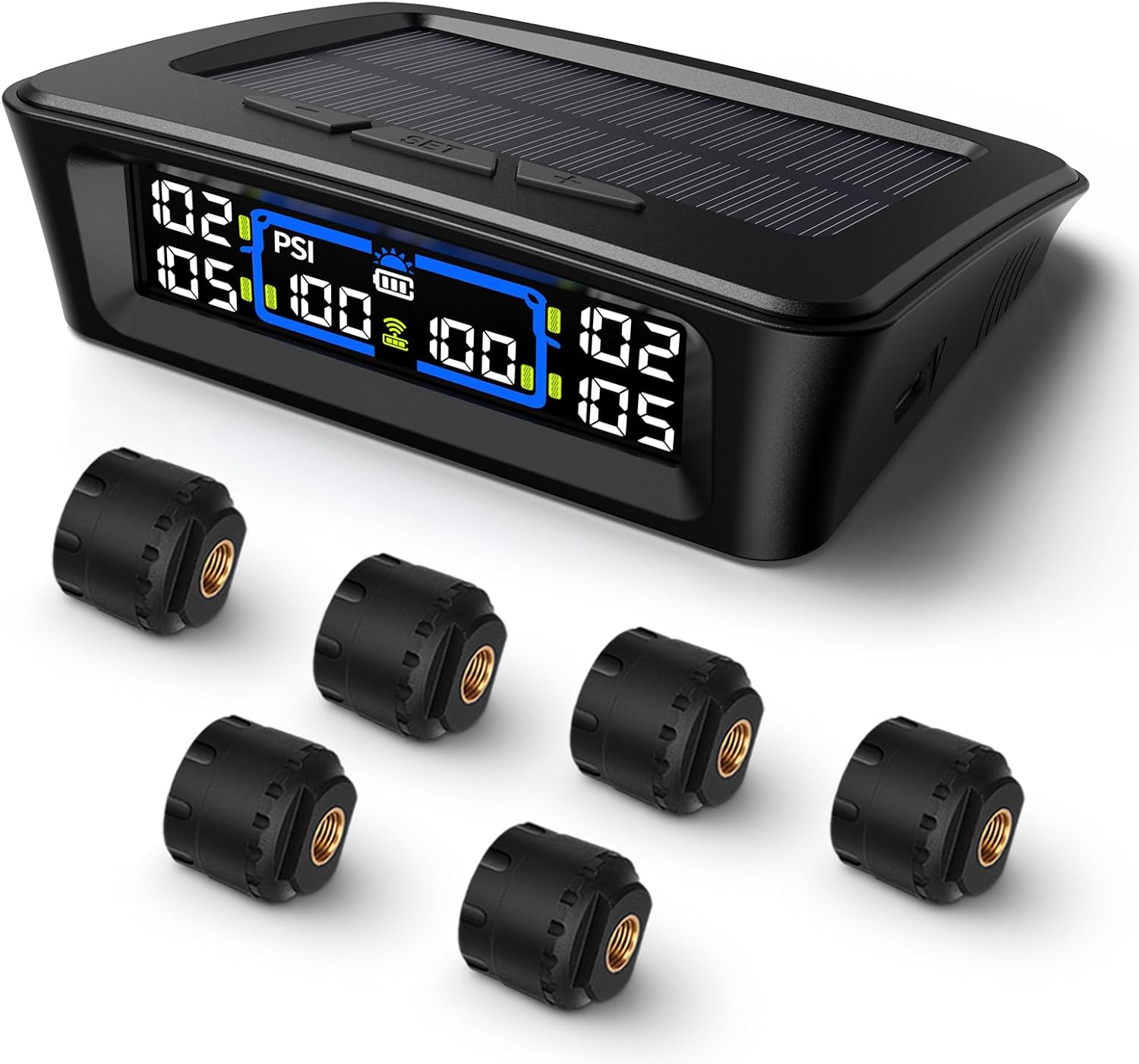
The Tymate TM12 RV TPMS delivers real-time tire pressure and temperature monitoring with a stable 433Hz display for safer long-distance driving. It supports simultaneous monitoring across vehicle and trailer zones, includes six alarm modes for pressure, temperature, leakage, battery, and signal loss, and features easy DIY installation with auto calibration. Power is supplied via USB-C charging or solar recharging, with a wide 0–144 PSI range and up to 50 ft signal coverage for RVs and towable trailers.

Monitor tire tread wear with a smart, color-coded depth gauge that shows clear condition ranges at a glance. The bar is range marked for fast, easy readings, helping you maintain safer traction and performance. Each gauge is portable with a pocket clip, and the set includes 20 units for daily use and sharing.

Measure tire tread depth quickly and accurately with this LUMITECO dial gauge that reads in 1/32" increments up to 14/32". The color-coded green/yellow/red zones make it easy to judge tire wear and know when replacement is needed. A rugged, compact design with a protective pouch helps keep the gauge ready for use on cars, trucks, motorcycles, and more.
How to Confirm Your RAV4 Tire Size Before Buying
Find your RAV4 tire size on the driver’s door placard, the owner’s manual, or the sidewall of the current tire. The placard gives the safest starting point because it reflects the vehicle’s original fitment and pressure guidance.
Do not assume every RAV4 trim uses the same size. Wheel size can vary by model year, trim, and package. If you use aftermarket wheels, confirm clearance, load rating, offset, and overall tire diameter before you buy.
[Products Worth Considering]

The SAFELIFE dial tire tread depth gauge measures tread depth in 1/32 inch increments with clear, easy-to-read 2-inch dial face. Color zones using a traffic light system help you quickly judge whether tread is low, marginal, or ample for safer driving. Built with a durable zinc cast body and a metal detect probe for precise, comfortable use across cars, motorcycles, trucks, and buses.

Steelman white tire marking crayons provide high-contrast, semi-permanent marks for repairing and inspecting tires and equipment. They write on wet or dry, smooth or coarse surfaces including rubber, metal, glass, and wood, making them ideal for puncture location and damage outlining. The lead- and zinc-free crayons resist weather and fading yet wipe away when you no longer need the marks.

Replace worn or malfunctioning GM TPMS sensors with this 433MHz pre-programmed sensor set designed for compatibility with many Chevrolet, Buick, GMC, and Cadillac models. It includes guidance for proper OBDII relearning/pairing after installation and supports reliable long-term operation with a high-performance CR2032 battery. Quality tested for durability and performance to help restore accurate tire pressure monitoring.
Where to Buy RAV4 Tires in St. Louis
If you shop for RAV4 tires in St. Louis, compare local tire shops, dealership service departments, warehouse clubs, and online tire retailers that ship to installers. Ask each seller to confirm fitment, tire age, warranty terms, installation cost, balancing, disposal fees, and alignment options.
Common all-season options for many RAV4 owners include the Michelin Defender family, Goodyear Assurance WeatherReady line, and Bridgestone Dueler highway touring line. Confirm the exact size, load index, and speed rating for your specific RAV4 before you choose any model. Inventory, pricing, and rebates can change, so compare quotes before scheduling installation.
[Products Worth Considering]

Replace your worn or missing TPMS sensors with pre-programmed, direct-fit sensors for compatible Ford, Lincoln, and select Mazda models. Each sensor comes ready to activate with a scan tool, helping restore accurate tire pressure monitoring and trouble-free installation. Built with a long-life CR2032 battery and tested before factory release, this set provides dependable performance with a one-year warranty.

Accurately measure tire tread depth with a calibrated gauge marked from 0 to 1 inch in 1/32 inch increments. The color-coded bar helps you quickly identify tread condition ranges, supporting safe driving for trucks, motorcycles, automobiles, and passenger vehicles.

The TYAMATE TM8 solar-powered wireless TPMS delivers real-time tire pressure and temperature monitoring with six alarm modes for safer driving. A vibrant color LCD display shows readings clearly while windshield mounting keeps it hands-free and easy to read. With a wide 0–87 PSI range, strong 433.92 MHz signal transmission, and quick sensor pairing, it’s ideal for RV, sedan, SUV, MPV, and truck use.
Frequently Asked Questions
How does tire warranty coverage affect replacement decisions for RAV4 owners?
A treadwear warranty can help with cost if a tire wears out too soon under covered conditions. Keep rotation records, pressure records, and alignment receipts because many tire makers require proof of maintenance. Replace tires sooner if safety margins shrink, even when warranty coverage remains unclear.
Can TPMS sensor issues influence when tires should be replaced?
TPMS sensor issues do not directly mean you need new tires. They can still hide pressure problems if a warning light fails, a sensor battery dies, or the system needs service. Check pressure with a gauge monthly, even when the TPMS light stays off.
What impact do seasonal storage practices have on spare RAV4 tire lifespan?
Storage affects tire age because heat, sunlight, ozone, and moisture can speed rubber breakdown. Store spare or seasonal tires in a cool, dry, shaded place away from electric motors and chemicals. Keep them clean, covered, and off the ground when possible.
Are run-flat or self-sealing tires available for the RAV4?
You may find run-flat or self-sealing tires in some RAV4 sizes, but availability depends on your wheel size and tire requirements. Confirm load index, speed rating, ride quality, repair rules, and TPMS compatibility before you buy. Do not choose these tires only for convenience if they compromise fitment or comfort.
How do aftermarket wheel sizes affect tire wear and replacement timing?
Aftermarket wheel sizes can change tire wear if they alter offset, alignment, tire width, or overall diameter. Larger wheels often use lower-profile tires, which can ride harder and suffer more damage from potholes. Have a fitment specialist confirm clearance and alignment settings before installation.
Safety Disclaimer: This article gives general tire safety information and does not replace advice from a qualified tire technician or Toyota service professional. Have a professional inspect any tire with damage, severe wear, air loss, vibration, or age-related cracking.
Conclusion
Your RAV4 tires need replacement when tread, damage, age, or wear patterns reduce safety. Check tread depth, pressure, and sidewalls every month, and rotate the tires on a steady service schedule. Use the DOT date code and a professional inspection to judge older tires, even when tread remains. When you choose the right replacement tire and maintain it well, your RAV4 stays safer, steadier, and ready for the road.
References
- Tires – National Highway Traffic Safety Administration
- Owner’s Manuals and Warranty Guides – Toyota
- Tire Care and Safety – U.S. Tire Manufacturers Association