Toyota Camry Uneven Tire Wear: What Causes It and How to Correct It
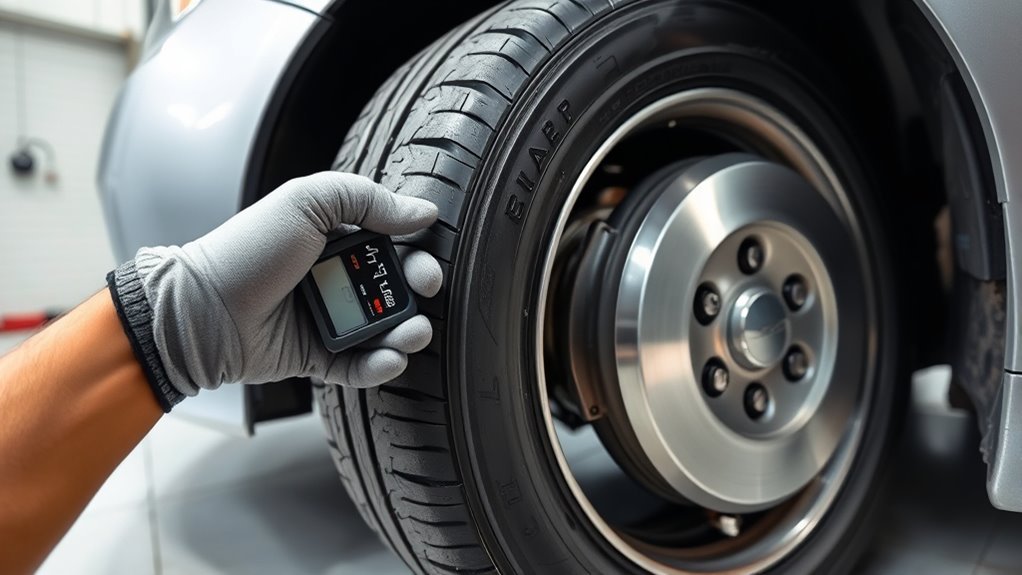
Uneven tire wear on your Toyota Camry is usually a sign that something is off with tire pressure, wheel alignment, wheel balance, suspension parts, rotation habits, or driving conditions. The good news is that most causes can be found early by checking tread depth, reading the wear pattern, and scheduling rotation, balancing, alignment, or suspension service before the tire is ruined.
Quick Answer
Toyota Camry tires wear unevenly when the tread is not contacting the road evenly. The most common causes are incorrect cold tire pressure, missed rotations, poor alignment, wheel imbalance, worn shocks or struts, damaged suspension parts, hard braking, aggressive cornering, pothole impacts, or mismatched tires.
Key Takeaways
- Center tread wear usually points to overinflation; both-edge wear usually points to underinflation.
- One-sided shoulder wear, feathering, pulling, or an off-center steering wheel often means the Camry needs an alignment check.
- Cupping or scalloping can come from worn shocks, struts, bushings, ball joints, wheel imbalance, or skipped rotations.
- Use the cold PSI on the driver-door tire placard or owner’s manual, not the maximum PSI printed on the tire sidewall.
- Rotate Camry tires on the schedule in the owner’s manual; many Camry maintenance schedules call for rotation around every 5,000 miles or six months.
At a Glance
| Time Required | 5–10 minutes for a driveway tire check; 30–90 minutes for rotation, balance, or alignment at a shop |
| Difficulty | Easy for inspection and pressure checks; professional service recommended for alignment, balancing, and suspension diagnosis |
| Tools Needed | Tire pressure gauge, tread depth gauge, flashlight, and the tire placard or owner’s manual |
| Cost | DIY inspection is usually free after buying a gauge; shop costs vary by tire size, service, location, and whether parts are needed |
Why Toyota Camry Tires Wear Unevenly
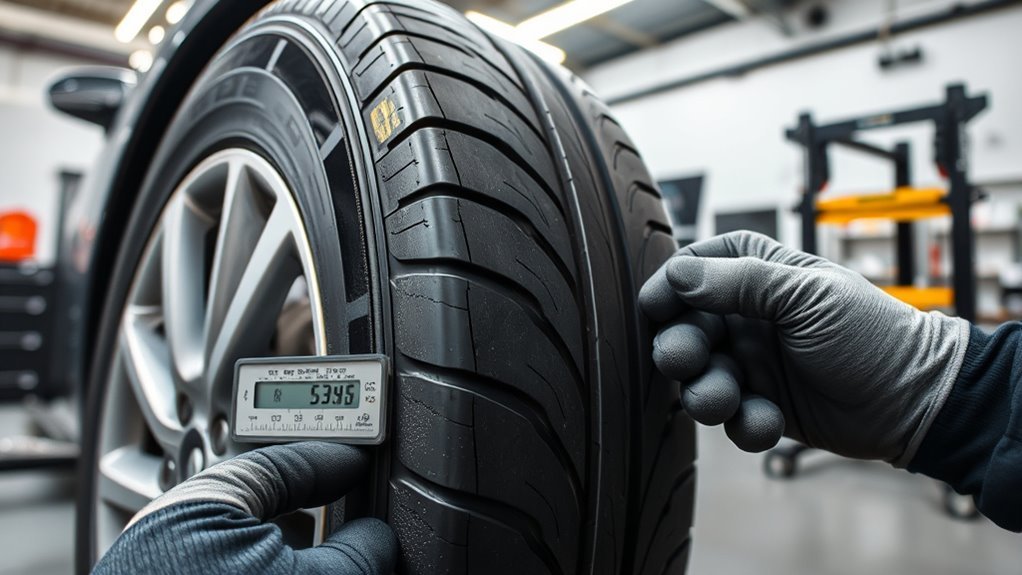
Toyota Camry tires wear unevenly when the load across the tread is not balanced. That can happen because of incorrect inflation, poor alignment, wheel imbalance, worn suspension or steering parts, hard driving inputs, heavy loads, pothole damage, or inconsistent tire rotation.
The tread pattern usually gives the first clue. A Camry with too much air pressure may wear the center of the tread faster. A Camry with low pressure may wear both shoulders faster. A Camry with bad toe or camber alignment may scrub one edge or create a feathered, sawtooth feel across the tread. A Camry with worn shocks, struts, bushings, or unbalanced wheels may develop cupping or scalloped dips.
For safe baseline maintenance, the National Highway Traffic Safety Administration recommends checking tire pressure at least monthly when tires are cold, checking tread at the same time, and using rotation, balance, and alignment to help tires last longer.
[Products Worth Considering]

The JACO FlowPro Tire Inflator measures, inflates, and airs down tires up to 100 PSI with battery-free operation and ±2% accuracy after calibration. It features a glowing pressure dial for night visibility, a heavy-duty steel build with a hybrid hose, and a precision push-to-inflate thumb trigger. The patented Lightning Air Chuck locks on for a secure seal, and the kit includes quick-connect hardware for easy inline use with your air compressor.

EVOULTES heavy duty tire inflator with an integrated gauge delivers accurate pressure readings from 10–120 PSI, helping you inflate, deflate, and check tires in one tool. The 16.5-inch extended dual-head air chuck with swivel base reaches hard-to-access dual wheel valves on trucks and RVs. A brass trigger core and side-mounted air release valve make operation smooth, with standard 1/4" NPT threading and quick-connect compatibility for easy setup.

This portable cordless tire inflator delivers up to 160 PSI with fast 17 L/min airflow to help you quickly top up tires and get back on the road. It features dual power mode, running on a 21V rechargeable battery or a 12V DC adapter for convenient roadside use. An automatic shut-off with digital pressure gauge helps prevent overinflation, and a built-in LED light improves visibility in low-light conditions.
Toyota Camry Tire Wear Pattern Chart
Use the tread pattern as a starting point, not a final diagnosis. More than one problem can create similar wear, so a technician may need to inspect pressure, alignment angles, tire balance, wheel damage, and suspension parts together.
| Wear Pattern | Likely Cause | What To Do First |
|---|---|---|
| Center tread worn faster | Overinflation or pressure set above the vehicle placard | Set cold pressure to the driver-door placard specification and monitor wear. |
| Both inner and outer shoulders worn | Underinflation, slow leak, overloading, or long-term low pressure | Check for leaks, inflate cold, and inspect the tire for heat damage or sidewall damage. |
| Inside or outside edge worn faster | Camber or toe alignment problem; possible worn suspension part | Schedule an alignment and ask for a suspension inspection before replacing tires. |
| Feathered or sawtooth tread blocks | Toe alignment issue or tire scrubbing sideways | Have toe settings checked and corrected; inspect tie rods and bushings. |
| Cupping or scalloped dips | Worn shocks, struts, bushings, ball joints, wheel imbalance, or skipped rotations | Inspect suspension and steering parts, then check balance and alignment. |
| Flat spot on one part of tread | Hard braking, skid, lockup event, or tire impact damage | Inspect for vibration, tire damage, and brake issues; replace if unsafe. |
How to Spot Uneven Tire Wear Early
You should inspect each Camry tire across the full tread width and around the full circumference. Do not only look at the outer shoulder, because inner-edge wear can hide until the tire is badly worn.
Check Tread Patterns
Start with a tread depth gauge. Measure the inner shoulder, center rib, and outer shoulder on each tire. Write down the readings or take photos, then compare the same positions across all four tires.
- Use a tread depth gauge for the most accurate reading.
- Use the penny test as a quick 2/32-inch minimum check. If the top of Lincoln’s head is visible, replace the tire.
- Use the quarter test as an earlier wet-weather warning. If all of Washington’s head is visible, the tire is around 4/32 inch and it is smart to start shopping, especially if you drive in rain.
- Inspect the built-in wear bars. If tread is flush with the bars, the tire has reached the minimum replacement point.
Warning: Do not keep driving on a tire with exposed cords, a bulge, a deep cut, rapid air loss, severe vibration, or tread at or below 2/32 inch. Install the spare if safe and have the tire inspected or replaced.
Feel For Tire Changes
Uneven wear often shows up through the steering wheel before it is obvious by sight. While driving, watch for these changes:
- Steering pull on a straight, level road.
- Shimmy or vibration through the steering wheel, seat, or floor.
- New humming, droning, or thumping road noise.
- Harshness over small bumps.
- A steering wheel that no longer sits centered.
If the symptoms appear after a pothole hit, curb strike, tire rotation, or new tire installation, have the tire balance, wheel condition, and alignment checked promptly.
Tire Pressure Issues That Hurt Tread Life
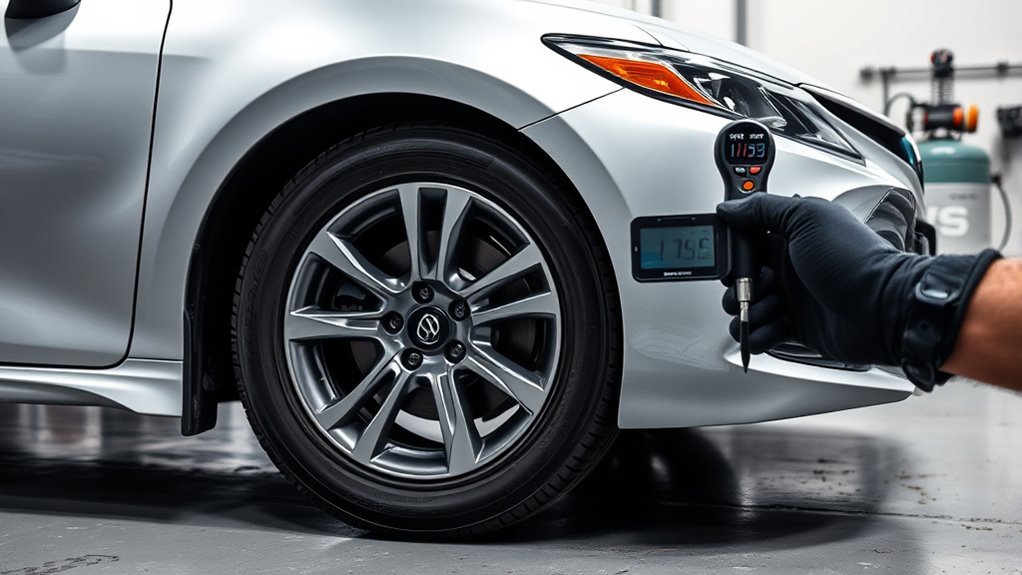
Tire pressure has a direct effect on how your Toyota Camry’s tread meets the road. When pressure is too high, the center of the tread can carry more load and wear faster. When pressure is too low, the shoulders can flex and scrub harder, which increases edge wear, heat, and fuel use.
Check pressure when the tires are cold, meaning the car has been parked long enough for the tires to cool. The correct PSI is listed on the Tire and Loading Information Label on the driver-side door edge or B-pillar, and it is also available in the owner’s manual. Do not use the maximum PSI molded on the tire sidewall as your target pressure.
Check all four tires at least monthly and before long trips. Also check the spare tire if your Camry has one, because some tire pressure monitoring systems do not monitor the spare.
Pro Tip: If one tire keeps losing pressure faster than the others, do not just keep adding air. Have the valve stem, bead seal, wheel, and tread checked for a slow leak.
How Alignment Problems Wear Tires
When a Toyota Camry’s wheels are out of alignment, the tires no longer roll at the angles Toyota intended. Instead of tracking straight, the tread can scrub across the road or carry too much load on one shoulder.
Common alignment-related signs include:
- Inner-edge or outer-edge wear.
- Feathered tread that feels smooth one way and sharp the other way.
- Steering pull or drifting.
- An off-center steering wheel.
- Uneven wear after hitting a pothole or curb.
Alignment does not restore rubber that is already worn away, but it can stop the same pattern from damaging the next set of tires. If the tire is badly worn on one edge, ask the shop to inspect suspension and steering parts before performing the alignment. Worn bushings, tie rods, control arms, ball joints, or bent parts can prevent the alignment from holding.
How Wheel Imbalance Wears Tires
When a wheel and tire assembly is out of balance, it can vibrate as it spins. That vibration reduces smooth road contact and can contribute to irregular tread wear, driver fatigue, and extra stress on suspension components.
Vibration Causes Uneven Wear
A balanced tire should feel smooth at normal driving speeds. If your Camry shakes at highway speed, develops a steering-wheel shimmy, or starts thumping after a rotation or new tire installation, have the tires balanced and the wheels inspected.
- Note the speed where the vibration appears.
- Check tire pressure first.
- Inspect for bent wheels, bulges, missing wheel weights, or uneven tread.
- Schedule wheel balancing if the vibration remains.
Balance Affects Tire Contact
Balancing helps the tire rotate evenly. It is especially important when tires are installed, when a tire has been repaired, when wheel weights are lost, or when vibration appears after a pothole impact or tire service.
| Symptom | Possible Result |
|---|---|
| Steering wheel vibration | Irregular tread wear and reduced comfort |
| Seat or floor shake | Possible rear tire imbalance or wheel issue |
| Cupping or patchy wear | Balance, alignment, suspension, or rotation problem |
| Vibration after tire service | Tire may need rebalancing or wheel inspection |
Rotate Tires With Balance
Rotation and balancing are different services, but they work well together when uneven wear or vibration is present. Rotation moves the tires to new positions so they share steering, braking, and drivetrain loads. Balancing corrects uneven weight around each wheel and tire assembly.
If the tires are wearing evenly and the ride is smooth, follow the Camry maintenance schedule. If vibration appears, do not wait for the next scheduled service; have the balance and tire condition checked.
How Suspension Problems Affect Tire Wear
Suspension problems can quickly turn into uneven tire wear because the tire needs steady contact with the road. Toyota states that 2025 Camry models use MacPherson strut front suspension and multi-link rear suspension, so the most relevant wear-related parts include struts, rear shock absorbers, bushings, control arms, ball joints, wheel bearings, and steering components.
Cupped or scalloped tread often means the tire is bouncing, vibrating, or moving unevenly instead of staying planted on the road.
Have the suspension checked if you notice:
- Cupping or scalloped dips around the tire.
- Clunking over bumps.
- Uneven ride height.
- Excessive bouncing after a bump.
- Loose steering or wandering.
- Uneven tire wear that returns after alignment.
Replacing a worn tire without fixing the suspension problem can cause the new tire to wear the same way.
How Driving Habits Speed Up Wear
Driving style changes how much force the tires absorb. Smooth braking, steady steering, and slower corner entry help the tread wear more evenly.
[Products Worth Considering]

The Fanttik X10 Pro is a cordless portable tire inflator that reaches up to 150 PSI and can inflate an R15 tire in about 35 seconds for quick roadside or home top-ups. With AccuInFlate auto-stop and smart start/stop controls, it helps maintain accurate pressure and frees your hands once the target is reached. A high-visibility digital display and preset modes make it easy to set and monitor inflation for cars, motorcycles, bikes, and balls.
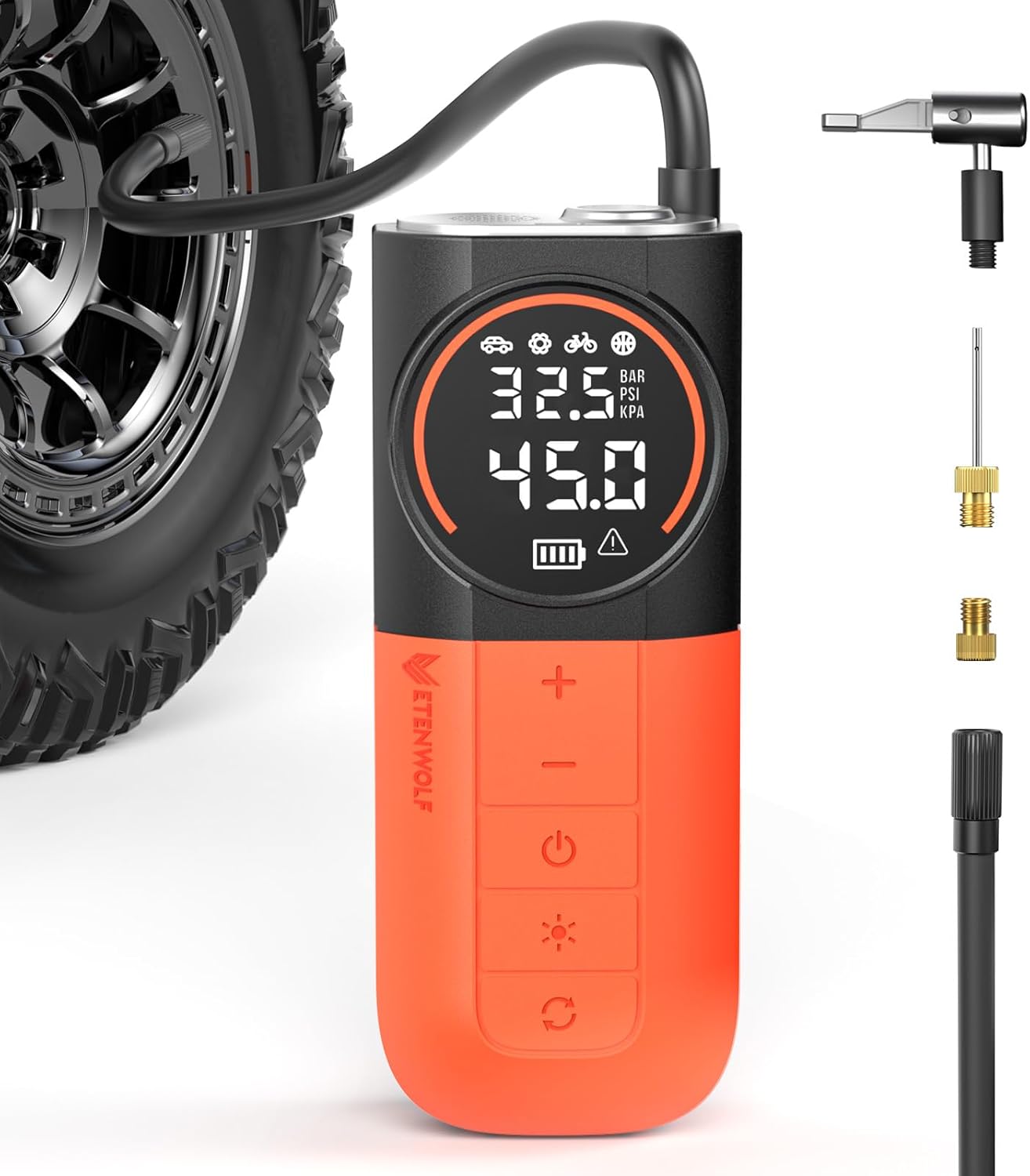
The ETENWOLF S1 cordless tire inflator delivers ultra-fast inflation with up to 160 PSI and a 20 L/min airflow for quicker tire top-offs. Its 5200mAh battery and cooling system support inflating many tires and sports balls on a single charge, while the digital pressure gauge and multi-unit display help you reach the right pressure accurately. With preset modes, pressure memory, an auto-stop feature, and an LED flashlight, it’s built for easy roadside and everyday use.
Aggressive Braking Habits
Hard braking loads the front tires heavily and can create flat spots if a tire skids. Even when the tire does not lock up, repeated sudden stops can accelerate tread wear on the leading edges of tread blocks.
To reduce braking-related wear:
- Look farther ahead in traffic.
- Brake earlier and more smoothly.
- Avoid following too closely.
- Inspect tires after any skid, emergency stop, or ABS event that leaves vibration behind.
Hard Cornering Impacts
Hard cornering pushes extra load onto the outside shoulders of the tires. If the Camry is already underinflated or misaligned, fast cornering can make shoulder wear worse.
Enter corners smoothly, hold a steady line, and avoid braking hard while the steering wheel is turned. If you regularly drive on winding roads, rotate tires on schedule and check shoulder tread depth more often.
How Road Conditions, Loads, and Wheels Affect Wear
Roads and vehicle setup matter too. Potholes, rough pavement, curb strikes, and debris can bend wheels, knock alignment out of specification, damage internal tire structure, or create slow leaks.
Heavy cargo can also change how the tread carries load. Check the tire placard and owner’s manual before carrying heavy items, and never exceed the vehicle’s load rating.
Aftermarket wheels can increase uneven tire wear if the size, offset, load rating, or tire fitment is wrong. If you install aftermarket wheels or a non-factory tire size, have the setup checked by a qualified tire professional and schedule an alignment afterward.
Note: Camry AWD models need especially consistent tire maintenance. Keep tire size, type, pressure, and tread depth closely matched, and ask a Toyota service department or tire professional before mixing new and heavily worn tires.
When Camry Tires Need Rotating
Many Toyota Camry maintenance schedules call for service every 5,000 miles or six months, and tire rotation is commonly listed at those intervals. Always follow the schedule for your exact model year, drivetrain, tire size, and tire type.
| Mileage / Time | Action | Benefit |
|---|---|---|
| About 5,000 miles or 6 months | Rotate tires if your schedule calls for it | Helps even out front, rear, steering, braking, and drivetrain wear |
| Sooner than scheduled | Inspect and rotate if uneven wear appears | Catches pressure, alignment, or balance issues early |
| After new tires or repair | Confirm balance, pressure, and rotation plan | Prevents a new set from developing the same pattern |
Use the rotation pattern shown in the owner’s manual. Some tire setups cannot be rotated in a normal front-to-rear pattern, especially if tire sizes or tread directions differ.
When to Get a Camry Tire Inspection
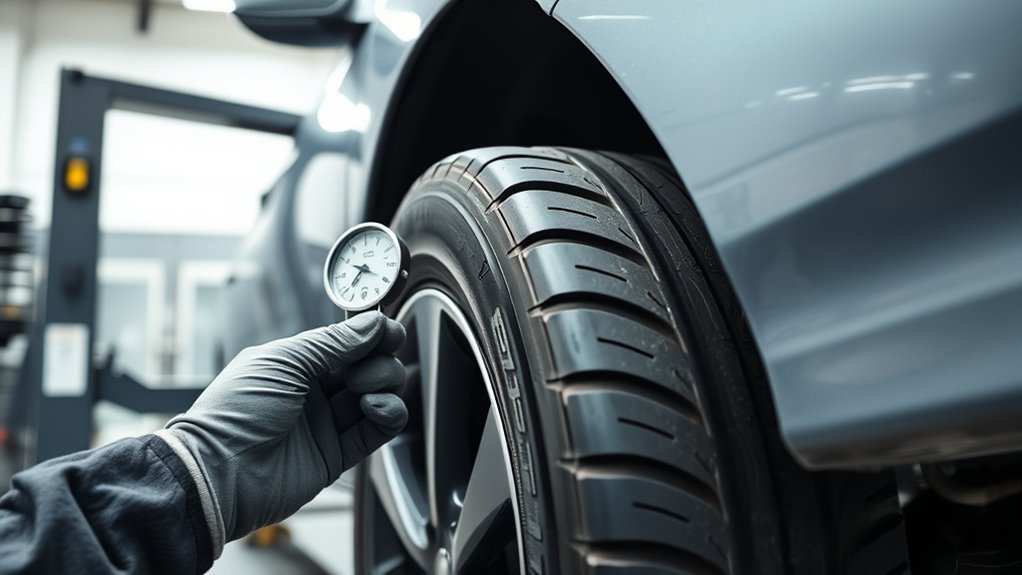
Inspect your Camry’s tires at least monthly when you check pressure, before long trips, and at each scheduled maintenance visit. Get a professional inspection sooner if anything changes suddenly.
Schedule a tire, alignment, balance, or suspension inspection if you notice:
- One shoulder wearing faster than the other.
- Center wear or both-edge wear.
- Feathering, cupping, scalloping, or flat spots.
- Steering-wheel vibration or seat vibration.
- Pulling, drifting, or off-center steering.
- Repeated pressure loss in one tire.
- A bulge, crack, deep cut, exposed cords, or sidewall damage.
- Tread near 4/32 inch if you drive in rain, or 2/32 inch at any time.
Should You Replace Two Tires or All Four?
If all four Camry tires are worn evenly and near the end of life, replacing all four is usually the cleanest choice. If only two tires are worn and the other two still have healthy tread, you may be able to replace two, but they should match the remaining tires as closely as possible in size, type, speed rating, load rating, and overall condition.
On front-wheel-drive Camry models, many tire shops install the better pair on the rear axle to help rear traction in wet conditions. On AWD Camry models, tread-depth mismatch matters more because the drivetrain is designed around closely matched rolling diameters. Before replacing only two tires on an AWD Camry, check the owner’s manual or ask a Toyota dealer or tire professional.
Always fix the cause of uneven wear before installing new tires. A new tire placed on a misaligned or worn suspension will start wearing unevenly again.
How to Prevent Uneven Tire Wear
Preventing uneven tire wear on your Toyota Camry comes down to consistent tire and suspension maintenance.
- Check cold tire pressure monthly. Use the driver-door placard or owner’s manual, not the tire sidewall maximum.
- Measure tread depth monthly. Compare inner shoulder, center, and outer shoulder readings.
- Rotate tires on schedule. Follow the owner’s manual and rotate sooner if uneven wear starts.
- Balance tires when needed. Balance new tires and rebalance if vibration appears.
- Check alignment after impacts. Potholes, curbs, and suspension repairs can change alignment.
- Inspect suspension and steering parts. Worn struts, shocks, bushings, bearings, and ball joints can destroy tread.
- Drive smoothly. Avoid repeated hard braking, sharp turns, and rapid steering inputs.
- Match tires carefully. Keep size, type, and tread depth consistent, especially on AWD models.
Frequently Asked Questions
How often should Camry tire pressures be checked in cold weather?
Check Camry tire pressure at least monthly when tires are cold, and check more often during cold snaps. Cold weather can lower tire pressure, and the TPMS light may appear when pressure drops below the warning threshold.
Can aftermarket wheels increase uneven tire wear on a Camry?
Yes. Aftermarket wheels can contribute to uneven wear if the offset, width, diameter, load rating, or tire size is wrong. Poor fitment can also affect alignment, steering feel, and suspension clearance. Have the setup checked by a tire professional.
Does all-wheel drive affect tire wear on Toyota Camry models?
AWD can make tire matching more important because the tires should stay close in size and rolling diameter. Rotate AWD Camry tires on schedule, keep pressures even, and ask a Toyota dealer or tire professional before mixing new tires with heavily worn ones.
Should I replace two tires or all four after uneven wear?
Replace all four if tread depths are low, tires are old, or wear is widespread. If only two are damaged and the other two are still healthy, replacing two may be possible, but the new tires should closely match the remaining pair. Fix alignment, pressure, balance, or suspension problems first.
Can road conditions alone cause premature Camry tire wear?
Rough roads, potholes, and curb strikes can accelerate tire wear, but they often do so by damaging wheels, changing alignment, or stressing suspension parts. If wear appears after an impact, inspect the tire, wheel, balance, alignment, and suspension.
What tread depth means my Camry tires need replacement?
Replace tires at 2/32 inch at the latest. If you drive in rain, start planning replacement around 4/32 inch because wet stopping distance and hydroplaning resistance can get worse before the legal minimum.
Can an alignment fix uneven tire wear?
An alignment can correct the cause of many one-sided or feathered wear patterns, but it cannot replace tread that is already gone. If a tire is deeply worn, damaged, cupped, or near minimum tread depth, replacement may still be needed.
Is it safe to drive on cupped Camry tires?
It depends on severity. Light cupping may be drivable for a short time if tread depth and tire structure are still safe, but severe cupping, vibration, noise, or handling changes should be inspected quickly. The underlying balance, alignment, or suspension problem also needs repair.
Conclusion
If your Camry’s tires are wearing unevenly, treat the pattern like an early warning. Center wear points you toward pressure. One-edge wear or feathering points you toward alignment. Cupping points you toward balance, suspension, or skipped rotations. The faster you measure the tread, correct the cause, and replace unsafe tires, the more tread life, grip, and stability you keep.
Sources
- NHTSA TireWise Tire Safety — tire pressure, tread depth, alignment, balancing, rotation, TPMS, and tire safety guidance
- Toyota 2025 Camry Warranty & Maintenance Guide — Camry maintenance intervals and tire rotation schedule
- Toyota USA Newsroom: 2025 Camry — Camry suspension layout and AWD overview
- Bridgestone Tire Tread Wear & Causes — improper inflation, alignment, tread-depth, and irregular wear guidance
- Bridgestone Tire Cupping Guide — cupping causes, suspension issues, imbalance, skipped rotations, and prevention
- AAA Worn Tires Wet-Weather Study — 4/32-inch tread depth, wet stopping distance, and quarter-test guidance

Related Articles

Toyota Camry All-Season Tires Explained: What They Can and Can’t Do
In exploring Toyota Camry all-season tires, discover their benefits and limitations—are they really the right choice for your driving needs?
Read More
Toyota Camry Tire Traction in Ice and Snow: A Practical Winter Driving Guide
Learn essential tips for maximizing tire traction on ice and snow in your Toyota Camry, ensuring your winter driving is safe and confident. Discover more now!
Read More
Do Toyota Camry Tires Need Snow Chains? When They Help and When They Don’t
How do snow chains enhance your Toyota Camry's winter driving safety, and when should you avoid using them? Discover the essential details inside!
Read More