
Can Bad Struts Cause Uneven Tire Wear? Signs & Solutions
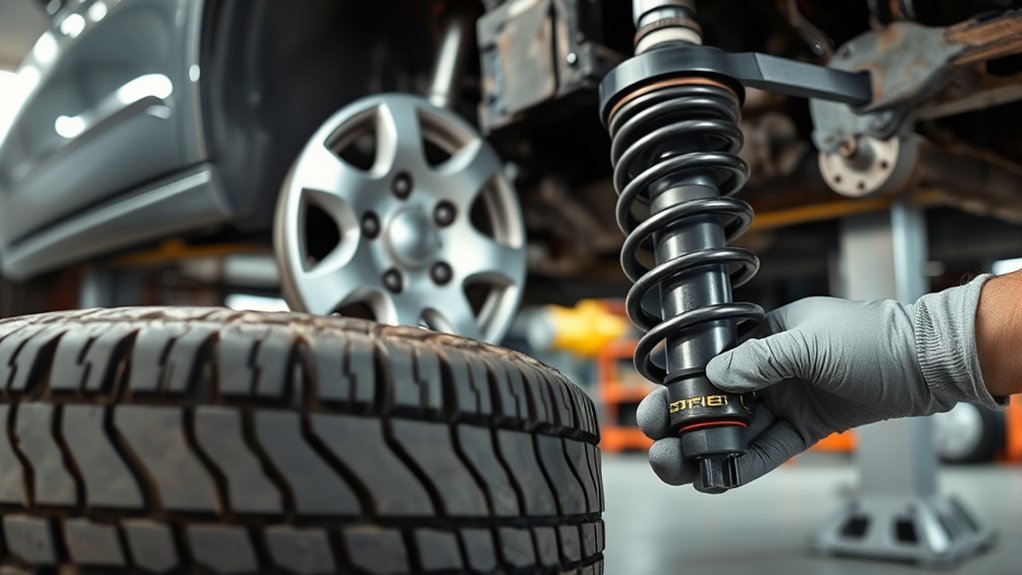
Yes—bad struts can cause uneven tire wear by letting your tires bounce and lose steady road contact. You may notice cupping, scalloping, extra body bounce, nose dive under braking, sway in turns, clunking, or fluid leaks on the strut body. Alignment and rotation won’t fully fix it until you replace worn struts. Check suspension, alignment, and balance early to protect tire life and handling, and you’ll see what else to inspect next.
Key Takeaways
- Yes, bad struts can cause uneven tire wear by letting tires bounce and lose consistent contact with the road.
- Common signs include excessive bouncing, nose dive during braking, body sway, clunking noises, and steering vibrations.
- Bad struts often cause cupping or scalloping, creating low and high tread spots from repeated impacts.
- Wheel alignment and tire balancing issues can also cause uneven wear, so they should be checked too.
- Replacing worn struts and checking alignment promptly helps restore handling and extend tire life.
Can Bad Struts Cause Uneven Tire Wear?
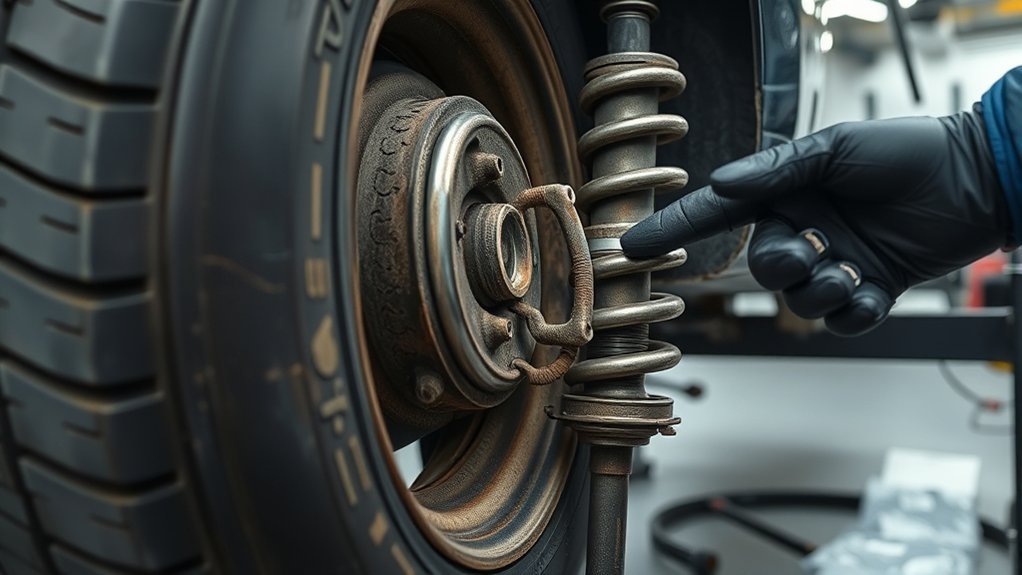
Yes—bad struts can definitely cause uneven tire wear because they stop the suspension from controlling wheel movement properly. When you drive with worn struts or bad shocks, the tires lose consistent contact with the road. That lets impacts and oscillation transfer directly into the tread, creating cupping, scalloping, and other uneven tire wear patterns. You may also get wheel misalignment, which spreads load unevenly across the tire surface and accelerates tread loss. The result isn’t just shorter tire life; it’s poorer handling, less stability, and higher replacement costs. If you want control over your vehicle and your budget, inspect struts regularly and replace deteriorated units quickly. Prompt action keeps pressure distribution balanced, preserves tire-road contact, and helps you drive with more safety and freedom. Additionally, choosing the right tire tread patterns can also play a crucial role in mitigating wear caused by suspension issues.
Signs Your Struts Are Worn Out
Worn struts usually give you clear warning signs before tire damage gets severe. If your vehicle keeps bouncing after a bump, the dampers aren’t controlling motion well, and the tire may lose steady contact with the road. You can also notice more nose dive during braking and extra sway in turns, which means the suspension isn’t keeping load balanced. Those symptoms often show up as uneven tire wear because the tires aren’t sharing force evenly. Check the strut bodies for fluid leaks; oil residue means the seal’s failing. If you feel new steering wheel vibration or hear clunking over rough pavement, inspect the struts and mounts right away. Compared with worn shocks, bad struts usually make the whole front end feel less controlled. Additionally, using winter tires can help improve traction and handling, reducing the risk of uneven wear. Don’t wait for the wear pattern to get worse; test the suspension, replace failed parts, and restore stable, confident handling.
Why Bad Struts Cause Cupping and Scalloping
When your struts lose damping, your tires can’t stay planted over bumps, so the tread starts wearing in irregular patches. That loss of control often creates cupping, where the tread shows repeated low spots from bouncing impacts. It can also cause scalloping, with alternating high and low sections as the load shifts unevenly across the tire. Additionally, tire performance ratings are crucial for understanding how various tires respond under different conditions.
Strut Damping Loss
Bad struts lose damping, so your tires can’t stay planted firmly on the road as they roll over bumps and cracks. When struts weaken, they stop absorbing shock, and the tire bounces instead of rolling with steady pressure. That bounce creates uneven tire wear because each tread block loads and unloads irregularly. You may feel extra vibration, and the suspension can drift out of alignment, compounding the damage. If you ignore the problem, the tread can wear faster and lose service life well before replacement is due. Inspect your struts regularly, and replace worn units promptly. Restoring damping helps your tires track smoothly, maintain consistent contact, and deliver the stable, efficient road control you deserve.
Tire Cupping Patterns
Tire cupping often appears as a series of uneven dips and raised edges across the tread, and it’s a common sign that worn struts aren’t controlling vertical wheel movement effectively. When you let damping fade, the tire loses steady contact, and wear concentrates in patches. | Pattern | Cause | Result |
| — | — | — |
|---|---|---|
| Cups | Excess bounce | Irregular wear |
| Scallops | Poor stability | Reduced grip |
| Early spots | Hard braking/turns | Faster tire wear |
You can inspect tread blocks for repeating hollows, then check strut condition before the damage spreads. Bad struts can’t hold the wheel down during road impacts, so the tire skips instead of rolling cleanly. That instability cuts traction and accelerates wear. Replace worn struts promptly, and you’ll restore control, extend tire life, and drive with more freedom and confidence.
Scalloping From Bounce
As struts wear out, they can’t control wheel movement as effectively, and that extra bounce keeps your tires from staying in steady contact with the road. When your shocks and struts lose damping, the tire pounds the pavement in uneven intervals, and the tread starts to scallop. You’ll see dips, raised edges, and a rough surface where the rubber can’t distribute load evenly. That bounce doesn’t just feel loose; it creates uneven tire wear by forcing the tread to flex and recover too fast. If you ignore it, cupping grows worse and grip drops. Inspect your struts regularly, and replace worn parts before the road steals more tread. Better control means cleaner contact, longer tire life, and more freedom from avoidable repair cycles.
Other Causes of Uneven Tire Wear
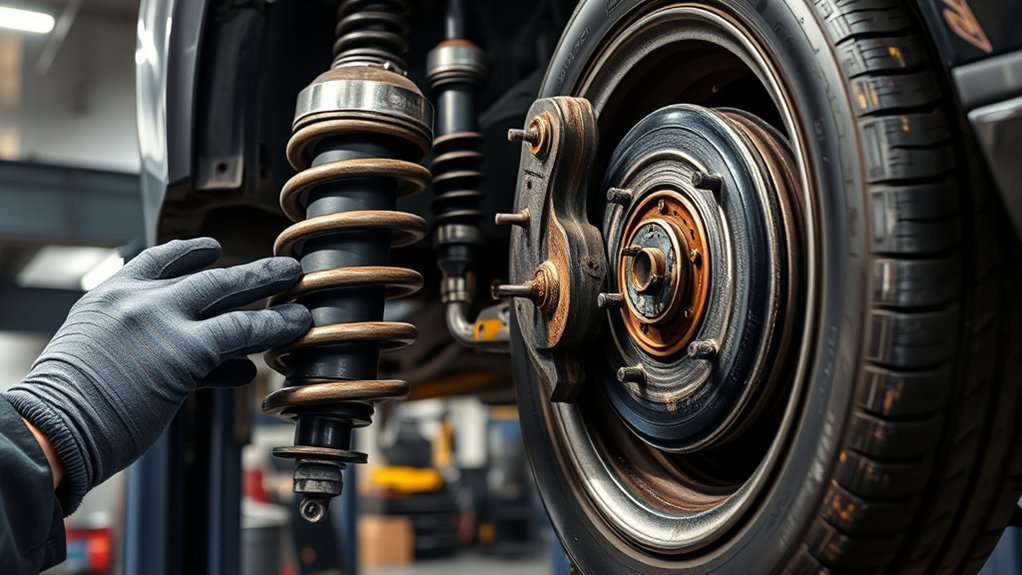
Bad struts aren’t the only cause of uneven tire wear; you also need to check wheel alignment and tire balance. If your wheels are out of alignment, they can change contact angles and wear one side of the tread faster. If your tires aren’t balanced, vibration can create localized wear patterns and reduce tire life. Additionally, improper tread depth can significantly impact traction and lead to uneven wear.
Wheel Alignment Problems
Wheel alignment problems can also cause uneven tire wear because misaligned wheels place uneven pressure on the tread, which accelerates wear on one or more tire edges. You may notice your vehicle pulling left or right, an off-center steering wheel, or scalloped tread. Hit a pothole, clip a curb, or replace suspension parts, and your wheel alignment can drift. Worn-out shocks can worsen the problem by letting the tires bounce and load unevenly. Check alignment regularly, especially after tire or suspension work, so you keep handling sharp and wear even.
- Straight road, drifting vehicle
- Steering wheel tilted off-center
- Feathered tread along one edge
- Curb strike, bent geometry
- Alignment rack in a service bay
Tire Balance Issues
Tire balance issues can also cause uneven tire wear, especially when weight distribution across the wheel and tire assembly isn’t even. When you drive with an unbalanced tire, one side of the tread takes more friction, creating uneven wear patterns and excessive wear. You may also feel vibrations at certain speeds; that’s a practical warning that the wheel assembly needs correction. Even a small imbalance, as little as 1 ounce, can change how the tire contacts the road and reduce handling precision. If you ignore tire balance issues, the tread can develop cupping or scalloping, which signals localized wear. Regular balancing checks and adjustments help you protect your tires, extend service life, and keep your vehicle stable.
Check Shocks, Alignment, and Balance
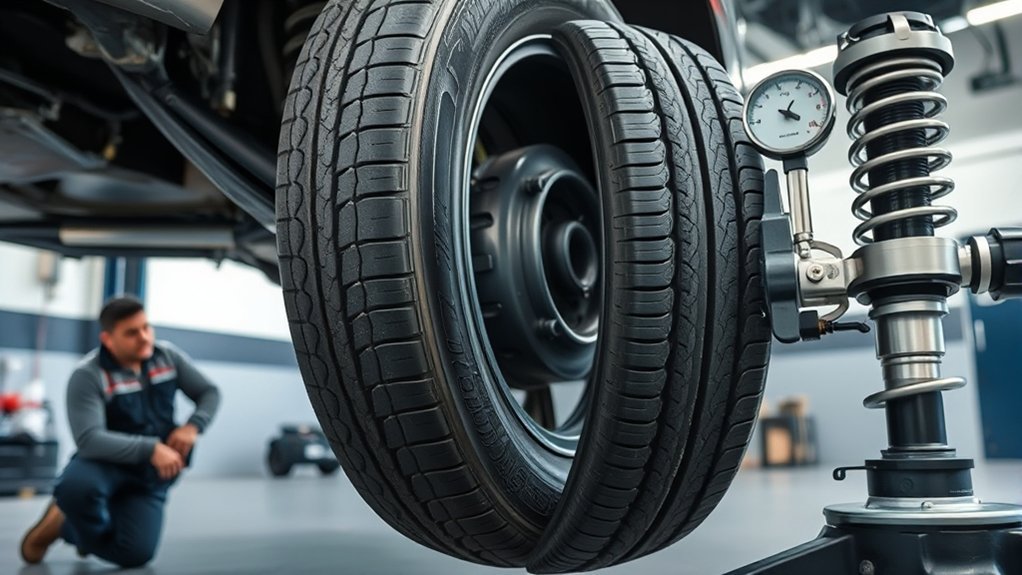
If your struts are worn, they can let the suspension bounce too much, which makes the tires lose consistent contact with the road and wear unevenly. You should inspect shocks, alignment, and wheel balance together, because each one shapes how load hits the tread. Worn struts can cause cupping, scalloping, and patchy shoulder wear by letting the wheel hop and drift. Correcting alignment restores straight tracking and spreads force evenly across the tire face. Checking balance matters too; an out-of-balance tire adds vibration that magnifies strut-related wear.
- A tire skipping over cracked pavement
- Uneven tread blocks on a rotating wheel
- A steering wheel held dead straight
- Laser alignment gear on a lift
- Small vibration ripples at highway speed
Don’t wait for the car to pull hard or shake; act early. When you fix shocks, alignment, and balance, you reclaim control, extend tire life, and drive with more freedom and less waste. Additionally, tire maintenance practices can greatly enhance the longevity and performance of your vehicle’s tires.
When to Rotate or Replace Tires
A good rotation schedule keeps wear even, so plan to rotate your tires every 5,000 to 7,500 miles and inspect them for cupping, scalloping, or other irregular patterns. You should also check tread depth during each inspection; if it’s below 2/32 of an inch, replace the tire now. Watch tire pressure closely, because persistent loss or fluctuation can drive uneven wear and force immediate rotation or replacement. Seasonal shifts, especially winter, can change grip, traction, and wear rates, so adjust your service interval when conditions demand it. If one tire shows faster wear than the others, don’t ignore it—your car’s stability depends on timely action, not delay. Rotation buys you time; replacement restores safety when wear has already crossed the limit. Treat tire service as component replacement with purpose, so you keep control, reduce waste, and move with confidence. Additionally, selecting tires with a long treadwear warranty can help ensure that you maximize your investment and performance over time.
Fix Tire Wear Caused by Bad Struts
Even with regular rotations and alignment checks, bad struts can keep creating uneven wear, especially cupping, because they can’t control wheel motion or keep the tire planted on the road. You need to inspect each strut for leaks, dents, or loose mounts, then replace worn parts before they turn minor tread damage into costly uneven tire wear. Worn struts let the tire bounce, lose contact, and scuff the tread on every impact.
Bad struts can cause cupping and uneven wear, even with rotations—inspect for leaks, damage, and worn mounts.
- A tire hopping over cracked pavement
- Feathered tread blocks forming shallow dips
- Oil streaks on a leaking strut body
- A wheel shimmying through a pothole
- A mechanic swapping struts in a clean bay
Rotating tires and checking alignment can slow the damage, but they won’t cure bad struts. For real relief, you should have a professional replace failed units and verify the suspension. That restores control, improves ride comfort, and helps your tires wear evenly again.
Keep Tires Wearing Evenly
To keep your tires wearing evenly, you need to control the factors that accelerate tread loss when struts start to fail. When bad struts can’t absorb road shocks, your suspension lets the tires bounce and vibrate, which drives uneven tire wear and cupping. Rotate your tires every 5,000 to 7,500 miles so each one shares the load instead of letting one corner wear out first. Check tire pressure regularly; underinflation or overinflation can amplify wear patterns and reduce stability. You should also inspect struts and related suspension parts on a schedule, because early detection keeps small faults from becoming expensive tire damage. Watch for high and low spots on the tread, since they signal inconsistent road contact. If you catch those signs early and maintain pressure, rotation, and inspection discipline, you’ll preserve tread life, improve control, and keep your vehicle moving with less waste and more freedom. Additionally, using reliable all-season tires can enhance traction and stability, further reducing uneven wear.
Frequently Asked Questions
What Does Tire Wear From Bad Shocks Look Like?
Tire wear from bad shocks often shows as cupping, scalloping, or zigzag dips across the tread. You’ll also see feathered edges, plus inner or outer shoulder wear when tire alignment shifts under weak shock absorption. The tread may feel smooth one way and rough the other. Inspect tires regularly, because these patterns signal instability early. Fixing worn shocks helps you protect grip, reduce waste, and drive with confidence.
What Are the Early Signs of Bad Struts?
Strut inspection can save you from a world of trouble. You’ll notice early bad struts when your vehicle nosedives during braking, bounces more than once after bumps, or sways too much in corners. You may also hear clunks or see uneven tire wear. For practical suspension maintenance, check strut leaks, mounting wear, and tire patterns regularly. Catching these signs early helps you stay in control and move freely.
What Causes One Tire to Wear Unevenly?
One tire wears unevenly when you’ve got tire alignment errors, suspension issues, or incorrect inflation on that wheel. A bent control arm, worn bushing, or failing strut can shift load and scrub tread faster. You’ll also see this if you overfill, underfill, or skip rotations. Check camber, toe, and tire pressure, then inspect the affected corner for play, damage, or leakage before the wear spreads.
Will Bad Struts Wear Your Tires Out?
Yes—bad struts can wear your tires out fast, like a wheel skipping across rough pavement. You’ll feel extra bounce, and the tires won’t stay planted, so tread cups and scallops form. That stress often throws off tire alignment, too. If you ignore it, you’ll burn through rubber and handling. Schedule strut replacement soon, inspect alignment, and regain control of your ride before the damage spreads.
Conclusion
Bad struts can absolutely cause uneven tire wear by letting your tires bounce instead of staying planted. For example, if your sedan develops cupping on the front tires after 20,000 miles, worn struts may be the culprit even if your alignment looks fine. Check for leaks, bouncing, and poor handling, then inspect shocks, alignment, and tire balance. Replacing bad struts early helps you stop irregular wear, extend tire life, and keep your ride stable.

Related Articles
Why Is There Chalk on My Tire? What It Means at the Dealership
Service chalk on your tire often signals a dealership check, but its exact meaning may reveal more than you expect.
Read More
Why Is the Outside of My Tire Wearing? Alignment & Pressure Fixes
Tire wear on the outside often points to pressure, alignment, or suspension issues—find out what’s causing it before it gets worse.
Read More
What Is Done During a Tire Inspection? What to Expect
Just what do technicians look for during a tire inspection, and which hidden issues could mean repair or replacement?
Read More