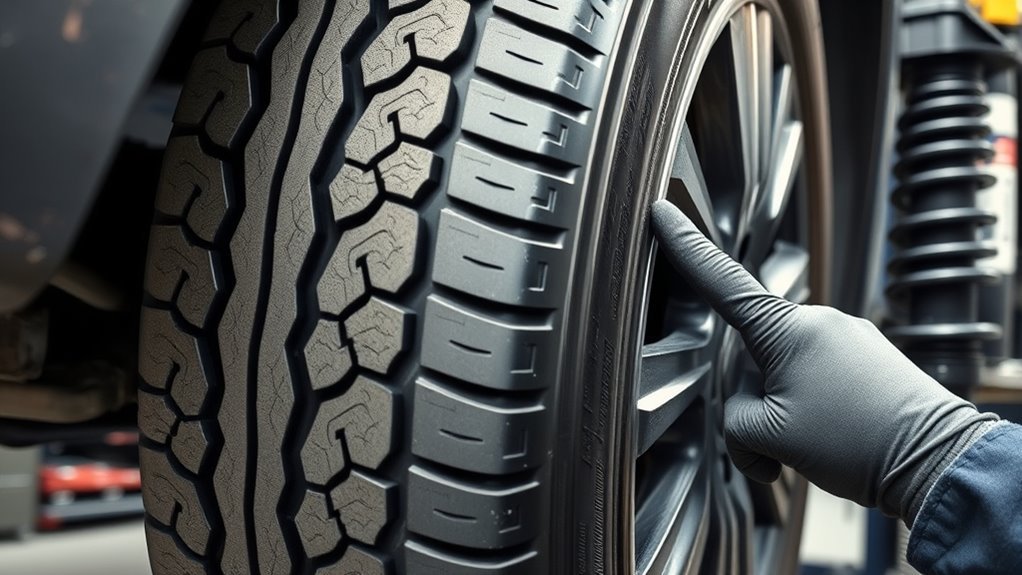
Toyota Camry tire cupping is uneven, scalloped tread wear that can cause humming noise, steering wheel vibration, rough ride quality, and pulling. It usually means the tire is not staying in smooth, even contact with the road. Common causes include misalignment, worn shocks or struts, loose suspension or steering parts, wheel imbalance, incorrect tire pressure, and skipped rotations.
Quick Answer
Toyota Camry tire cupping is a scalloped tread pattern caused by uneven tire contact. Check pressure, tread depth, suspension, wheel balance, and alignment. Light cupping may be driven carefully to a shop, but severe vibration, low tread, bulges, exposed cords, or poor wet grip means the tire should be inspected before more driving.
Key Takeaways
- Cupping looks and feels like repeating high-and-low spots across the tread.
- The most common root causes are alignment problems, worn suspension parts, wheel imbalance, wrong tire pressure, and missed rotations.
- You can fix the cause, but the worn tread pattern usually cannot be fully restored.
- Toyota lists tire rotation at 5,000 miles or 6 months for the 2024 Camry; check your own owner’s manual for your model year.
- Have the tire inspected promptly if vibration, humming, pulling, low tread, or visible damage appears.
At a Glance
| Time Required | 10–15 minutes for a driveway inspection; longer if a shop checks suspension, balance, and alignment. |
| Difficulty | Easy for visual checks; professional help recommended for suspension, balancing, and alignment diagnosis. |
| Tools Needed | Tire pressure gauge, tread depth gauge or penny, flashlight, gloves, and a flat safe parking area. |
| Cost | Driveway inspection costs nothing if you already own basic gauges; shop costs vary for balancing, alignment, suspension repair, and tire replacement. |
What Is Tire Cupping on a Toyota Camry?
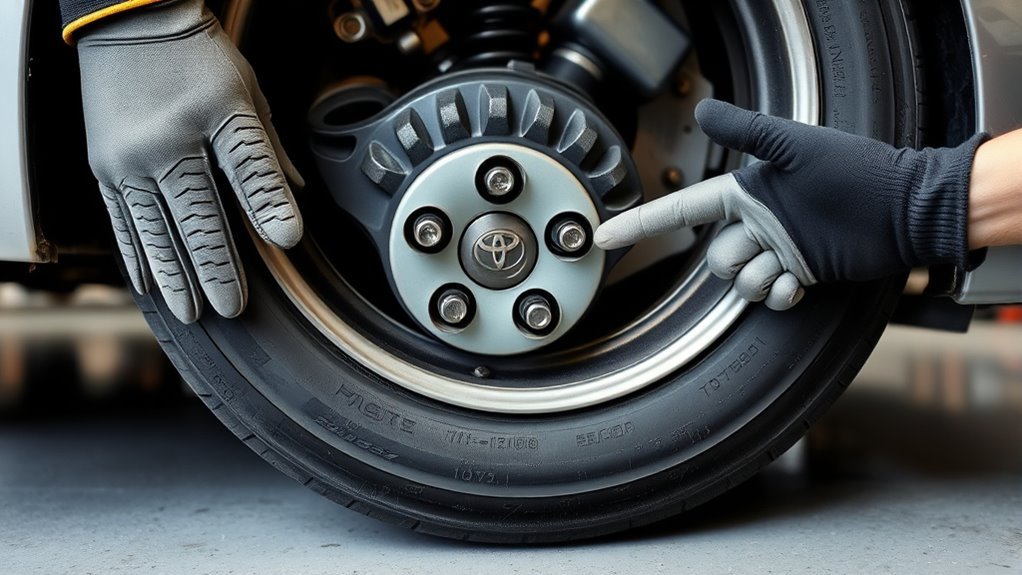
Tire cupping on a Toyota Camry is an irregular tread wear pattern where parts of the tire look scooped, dipped, or scalloped. You may see repeating low spots every few inches around the tire. You may also feel a wavy surface when you run your hand lightly across the tread.
Because the tread no longer meets the pavement evenly, the tire can make a rhythmic humming, growling, or thumping sound. The steering wheel or seat may vibrate, especially at highway speeds. A cupped tire can also make the Camry feel less stable during lane changes, braking, or wet-weather driving.
Tire cupping is not only a tire problem. It is a clue that something may be wrong with tire pressure, wheel balance, alignment, suspension, steering parts, or rotation history. Bridgestone describes cupping as scalloped wear caused by conditions that prevent smooth, consistent road contact, so the best diagnosis looks at the tire, wheel, alignment, suspension, and maintenance history together.
What Causes Tire Cupping on a Camry?
A Camry tire cups when it repeatedly loads and unloads against the road instead of rolling with steady pressure. More than one issue can be involved, so do not stop after finding the first possible cause.
Wheel Alignment Issues
Incorrect camber, caster, or toe settings can keep the tire from rolling squarely on the road. That can create uneven tread contact, edge wear, feathering, and sometimes cupping. Common alignment symptoms include pulling to one side, uneven tread wear, an off-center steering wheel, or vibration.
Do not rely on a fixed “every few thousand miles” alignment rule. A better approach is to check alignment at least annually, when tires are replaced, after hitting a curb or pothole, or any time the Camry pulls, drifts, or wears tires unevenly.
Worn Shocks, Struts, and Suspension Parts
Worn shocks or struts can let the tire bounce after bumps instead of staying planted. Each bounce can scrub one part of the tread harder than the next, creating the scalloped pattern known as cupping. Loose or worn bushings, ball joints, control arms, wheel bearings, and steering linkage can make the same problem worse.
Watch for repeated bouncing after bumps, nose-diving during braking, clunking noises, fluid leakage on shocks or struts, uneven ride height, or a rough ride. If these symptoms appear with cupped tires, have the suspension inspected before buying new tires. New tires can cup again if the worn part is not fixed.
Unbalanced Tires or Wheels
An unbalanced tire and wheel assembly can create vibration as the tire rotates. That repeated vibration may contribute to uneven wear and can make existing cupping feel much worse. Balance is especially worth checking after tire installation, tire rotation, wheel repair, pothole impact, or any new highway-speed vibration.
Incorrect Tire Pressure
Too little or too much air changes the tire’s contact patch. Underinflation can make the tire flex and heat more than it should, while overinflation can reduce the amount of tread touching the road. Both conditions can speed up irregular wear.
Check pressure when the tires are cold, meaning the car has been parked for at least three hours. Use the pressure listed on the Camry’s driver-side tire placard or owner’s manual, not the maximum pressure printed on the tire sidewall. The NHTSA TireWise guide recommends checking tire pressure at least once a month.
Missed or Irregular Tire Rotations
Front and rear tires do different jobs. Front tires handle more steering load and a large share of braking force, so they may wear differently from rear tires. Regular rotation helps spread wear more evenly.
The 2024 Toyota Camry Warranty & Maintenance Guide lists tire rotation at 5,000 miles or 6 months and says to check for tire damage and uneven wear during rotation. Your exact model year, tire type, driving conditions, and tire manufacturer guidance may vary, so follow your own owner’s manual when available.
Note: If only one tire is badly cupped, look closely at that corner of the vehicle. A single worn shock, bent wheel, damaged tire, or loose suspension part can cause one tire to wear much faster than the others.
How Can You Spot Tire Cupping Early?
Check for tire cupping during every wash, fuel stop, or tire pressure check. Early cupping is easier to catch by touch than by sight.
- Park safely on level ground. Turn the steering wheel to improve access to the front tires.
- Look across the tread. Search for wavy, scalloped, patchy, or scooped tread blocks.
- Feel the tread lightly. Run your hand over the tire surface. High-and-low spots, sharp feathered edges, or a washboard feel can point to irregular wear.
- Check tread depth in several spots. Use a tread depth gauge around the tire, not just in one groove. Uneven readings help confirm the pattern.
- Listen during a road test. A cupped tire often makes a humming, growling, or thumping sound that changes with vehicle speed.
- Notice vibration or pulling. Steering wheel shake, seat vibration, or drifting can point to a tire, balance, alignment, or suspension issue.
NHTSA recommends inspecting tires monthly for uneven wear, cracks, foreign objects, and other signs of damage. It also states that tires should be replaced when tread reaches 2/32 inch.
Cupping vs. Other Tire Problems
Not every noisy or uneven tire is cupped. Use the pattern and symptoms below to narrow the cause before you spend money on parts.
| Problem | What You Notice | Likely Cause |
|---|---|---|
| Cupping / scalloping | Repeating dips, humming, thumping, vibration | Suspension wear, imbalance, alignment, pressure, missed rotations |
| Feathering | Tread feels smooth one way and sharp the other | Toe alignment problem |
| One-edge wear | Inside or outside shoulder wears faster | Camber issue, worn parts, or aggressive cornering |
| Center wear | Middle of tread wears faster | Often overinflation or tire/loading mismatch |
| Both-edge wear | Both shoulders wear faster than center | Often underinflation or heavy cornering |
| Wheel bearing noise | Growl changes when loading one side in a turn | Possible hub or bearing issue; needs inspection |
Why Are Cupped Tires a Safety Risk?
Cupped tires are a safety concern because the tread is not contacting the road evenly. That can reduce ride comfort, steering precision, and traction confidence. The risk is greater in rain, during emergency braking, or when changing lanes at highway speeds.
Reduced Traction
Uneven tread reduces consistent road contact. On wet or slippery pavement, that can make the Camry feel less predictable. If the tire is also worn close to the treadwear indicators, the safety margin is even smaller. NHTSA states that tire tread provides the gripping action that helps prevent slipping and sliding, especially on wet or icy roads.
Driving Instability
Cupped tires can transmit vibration through the steering wheel, floor, or seat. That vibration can make the car feel nervous, especially if the cupping is paired with misalignment or worn suspension parts. Pulling, wandering, or an off-center wheel should be checked quickly because the tire may not be the only problem.
Warning: Do not keep driving at highway speeds on a tire with exposed cords, bulges, sidewall cracks, very low tread, severe vibration, or sudden loss of pressure. Install the spare if appropriate for your Camry and have the tire inspected before continuing.
Can Tire Cupping Be Fixed?
The cause of tire cupping can often be fixed, but the worn tread pattern usually cannot be fully restored. That is the key difference.
If cupping is light and the tire still has safe tread depth with no structural damage, a technician may correct the cause, rotate the tire to a less sensitive position, rebalance the wheel, and monitor it. Noise may improve, but the tread will not become new again.
If cupping is deep, noisy, or paired with low tread depth, poor wet grip, exposed belts, bubbles, sidewall damage, or strong vibration, replacement is usually the safer answer. Replacing the tire without repairing the root cause can waste money because the new tire may cup too.
[Products Worth Considering]

The Ziopetru adjustable magnetic wheel alignment tool helps you check and restore camber and caster positioning after removing and reinstalling undercarriage components. With a clear leveling/bubble measurement system and an easy zeroing adjustment knob, it supports precise horizontal angle checking. The strong magnetic base mounts to metal surfaces for convenient use at home on cars, motorcycles, trucks, vans, and SUVs.

Monitor tire tread wear with a smart, color-coded depth gauge that shows clear condition ranges at a glance. The bar is range marked for fast, easy readings, helping you maintain safer traction and performance. Each gauge is portable with a pocket clip, and the set includes 20 units for daily use and sharing.

Measure tire tread depth quickly and accurately with this LUMITECO dial gauge that reads in 1/32" increments up to 14/32". The color-coded green/yellow/red zones make it easy to judge tire wear and know when replacement is needed. A rugged, compact design with a protective pouch helps keep the gauge ready for use on cars, trucks, motorcycles, and more.
Best Repair Sequence for Cupped Camry Tires
Use this order so you do not mask the symptom while missing the real problem:
- Check pressure cold. Set each tire to the placard pressure for your Camry.
- Inspect tread and sidewalls. Look for cupping, cracks, punctures, bulges, exposed cords, and uneven tread depth.
- Check suspension and steering parts. Inspect shocks, struts, bushings, ball joints, control arms, wheel bearings, and steering linkage for looseness, leaks, or damage.
- Balance the wheel and tire assembly. This is important if vibration appears at speed or after tire service.
- Check alignment. Correct camber, caster, and toe if readings are out of specification.
- Decide whether to rotate or replace. Light cupping may be monitored; severe cupping or low tread calls for replacement.
- Road-test and recheck. Confirm that vibration, pulling, and noise have improved.
Pro Tip: Ask the shop to show you the old alignment readings, balance results, and any loose suspension parts. The printout and inspection notes help prove whether the root cause was fixed.
[Products Worth Considering]

The SAFELIFE dial tire tread depth gauge measures tread depth in 1/32 inch increments with clear, easy-to-read 2-inch dial face. Color zones using a traffic light system help you quickly judge whether tread is low, marginal, or ample for safer driving. Built with a durable zinc cast body and a metal detect probe for precise, comfortable use across cars, motorcycles, trucks, and buses.

Replace or upgrade your zero-turn lawn mower tires with a universal fit flat-free tire and wheel assembly in a convenient 2-pack. Smooth tread front-caster style helps turning with reduced turf damage, while flat-free design eliminates the maintenance and downtime of air-filled flats. The included adapter kit supports 5/8-inch axles and hub lengths from 3.4 to 5 inches for compatibility across most ZTR mowers.

Accurately measure tire tread depth with a calibrated gauge marked from 0 to 1 inch in 1/32 inch increments. The color-coded bar helps you quickly identify tread condition ranges, supporting safe driving for trucks, motorcycles, automobiles, and passenger vehicles.
How Do Suspension Problems Cause Camry Tire Cupping?
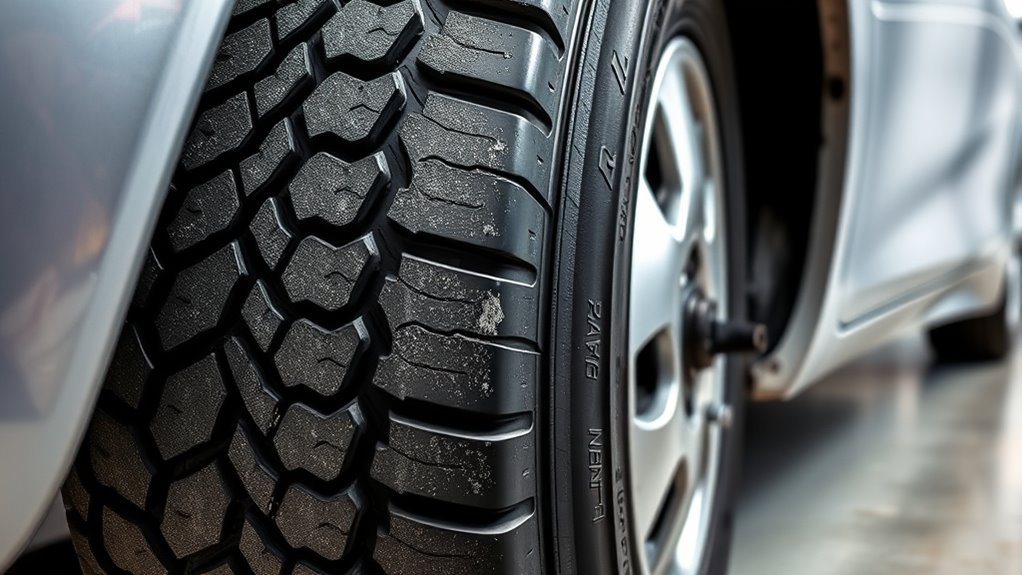
Your Camry’s suspension is designed to keep the tires pressed against the road while absorbing bumps. When shocks, struts, bushings, ball joints, or control arms wear out, the tire can bounce, tilt, or scrub instead of rolling smoothly. That uneven contact removes rubber in patches.
Suspension-related cupping often comes with other clues. You may hear clunks over bumps, feel the car float after dips, notice uneven ride height, or see oil leakage on a strut. On rough roads, the tire may skip across the pavement and create a repeating scalloped pattern.
Do not assume rotation alone will solve suspension-related cupping. Rotation can spread wear, but it will not tighten loose parts or restore weak damping. A proper repair starts with the suspension and steering inspection, then balance and alignment.
How Do You Prevent Tire Cupping on a Camry?
Preventing tire cupping means keeping each tire in steady, even contact with the road. The best routine is simple but consistent.
| Control | Interval | Effect |
|---|---|---|
| Tire pressure check | Monthly and before long trips | Keeps the contact patch correct |
| Tire rotation | Follow owner’s manual; 2024 Camry lists 5,000 miles or 6 months | Equalizes tread wear |
| Tread and damage inspection | Monthly | Catches cupping early |
| Wheel balance | When vibration appears or tires are serviced | Reduces vibration-related wear |
| Alignment check | At least annually or when symptoms appear | Keeps tires tracking straight |
| Suspension inspection | When noise, bounce, leaks, cupping, or rough ride appears | Keeps tires planted on the road |
When Should You Take Your Camry to a Mechanic?
Take your Camry to a mechanic if you see scalloped tread, feel steering wheel vibration, hear rhythmic humming, notice pulling, or find uneven tread depth. Do the same if the tire has a bubble, sidewall crack, exposed cord, puncture near the shoulder, or tread near 2/32 inch.
You should also schedule an inspection if the cupping comes back after rotation or replacement. Recurring cupping usually means the root cause was not corrected. Ask the technician to inspect tire pressure, tread depth, wheel balance, alignment, wheel bearings, shocks, struts, bushings, ball joints, control arms, and steering linkage.
Cupped tires are not just “noisy tires.” They are a wear pattern that can point to a mechanical problem affecting ride quality, tire life, and control.
[Products Worth Considering]

Measure tyre tread depth precisely with a digital gauge that reads in both MM and inches, helping you monitor safe driving conditions. The large LCD screen is easy to operate, and the compact tool fits for cars, trucks, and motorcycles. It provides high accuracy with a 0-25.4mm range and includes a 1-year warranty for added peace of mind.

This universal wheel alignment tool helps you accurately restore tire tilt angles after tire or suspension repairs using an adjustable camber gauge. It features a powerful magnetic base that firmly attaches to brake rotors for stationary, slip-free readings, improving consistency during measurement. Built from durable PC plastic, it resists wear and corrosion and is compact enough for car, truck, RV, and motorcycle alignment tasks.

Steelman white tire marking crayons provide high-contrast, semi-permanent marks for repairing and inspecting tires and equipment. They write on wet or dry, smooth or coarse surfaces including rubber, metal, glass, and wood, making them ideal for puncture location and damage outlining. The lead- and zinc-free crayons resist weather and fading yet wipe away when you no longer need the marks.
Frequently Asked Questions
What is the most common cause of cupping tires on a Toyota Camry?
The most common causes are worn suspension parts, wheel imbalance, misalignment, incorrect pressure, and skipped rotations. Many cupped tires have more than one contributing issue, so a full inspection is better than guessing.
Can I drive if my Camry tires are cupping?
It depends on severity. A lightly cupped tire with safe tread depth may be driven carefully to a shop. Avoid long trips, highway speeds, heavy rain, or aggressive driving if the tire is noisy, vibrating, low on tread, bulging, cracked, or visibly damaged.
Can tire cupping be prevented?
Yes. Check tire pressure monthly, rotate tires on schedule, inspect tread often, rebalance tires when vibration appears, keep alignment in specification, and repair worn suspension or steering parts promptly.
Will an alignment fix cupped tires?
An alignment can fix one possible cause, but it will not restore rubber already worn from the tread. If the cupping came from weak shocks, loose suspension parts, imbalance, or pressure problems, those issues must be corrected too.
Why are my rear Camry tires cupping?
Rear tire cupping can come from rear alignment issues, worn rear shocks, irregular rotation habits, tire imbalance, or incorrect pressure. If the same rear corner keeps cupping, have that suspension corner inspected closely.
Should I replace all four tires if one tire is cupped?
Not always. Replacement depends on tread depth, tire age, damage, drivetrain, and how closely the tires match. If one tire is severely cupped, the shop should inspect the vehicle first, then decide whether one tire, a pair, or a full set is needed.
Conclusion
Toyota Camry tire cupping is a warning sign, not just a cosmetic tread issue. The tire may be bouncing, scrubbing, vibrating, or rolling out of alignment. Start with simple checks: pressure, tread depth, visible damage, noise, vibration, and pulling. Then have a technician inspect balance, alignment, suspension, steering parts, and wheel bearings if symptoms point to a deeper problem.
Act early and you may save the tire, protect the next set, and restore a quieter ride. Ignore the pattern and the Camry may keep wearing tires unevenly until the root cause is repaired.
Sources
- Toyota 2024 Camry Warranty & Maintenance Guide — tire rotation interval and uneven-wear inspection guidance.
- NHTSA TireWise — tire pressure, tread depth, balance, alignment, and tire safety guidance.
- NHTSA Tire Safety: Everything Rides on It — monthly tire inspection and cold-pressure checking guidance.
- AAA Guide to Vehicle Wheel Alignment and Suspension — alignment symptoms and annual/symptom-based alignment checks.
- Bridgestone Tire Cupping Guide — cupping definition, causes, prevention, and repair limitations.